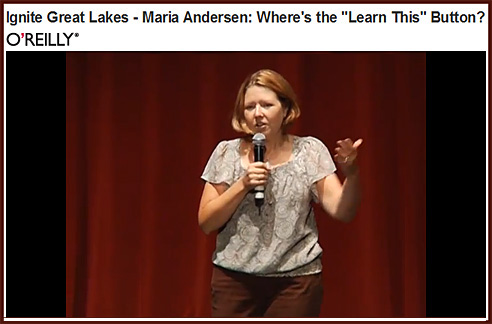
Ignite Great Lakes – Maria Andersen: Where’s the “Learn This” Button? — my thanks to Mr. Paul Simbeck-Hampson for this resource

Dr. Maria H. Andersen is the Learning Futurist for the LIFT Institute and a Math Professor at Muskegon Community College, where she organizes Ignite MCC. She writes the “Teaching with Tech” column for MAA Focus and has recently published articles in Educause Review and The Futurist. Lately she has been spending a lot of time building games for teaching math and musing about the future of learning and higher education. You can find Maria blogging on the Internet at TeachingCollegeMath.com or on Twitter at @busynessgirl.
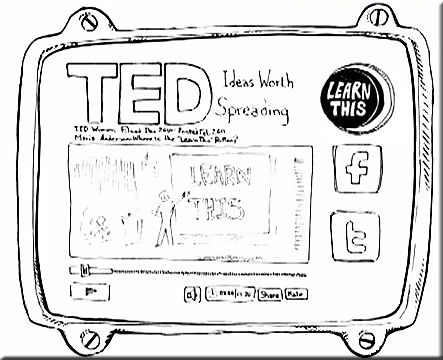


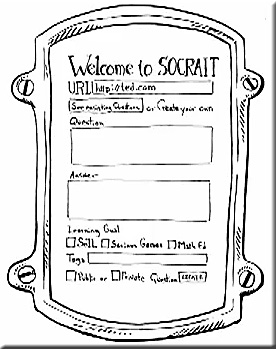
Maria Andersen: Where's the "Learn This" Button?


SOCRAIT — a new learning layer on the Internet:

  • SOC for social
  • AI for artificial intelligence
  • IT for information technology
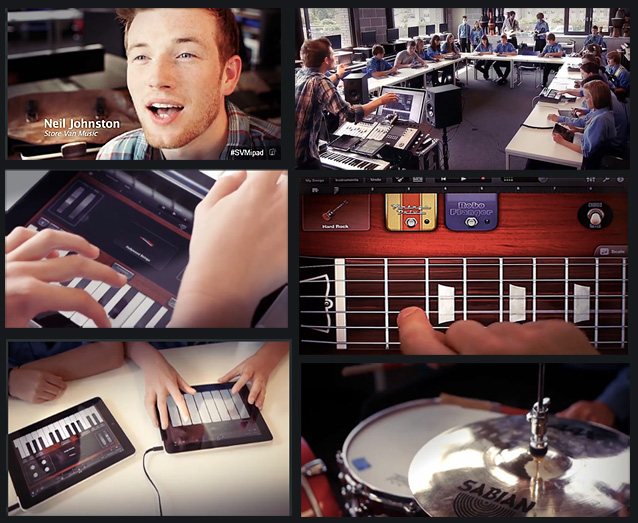


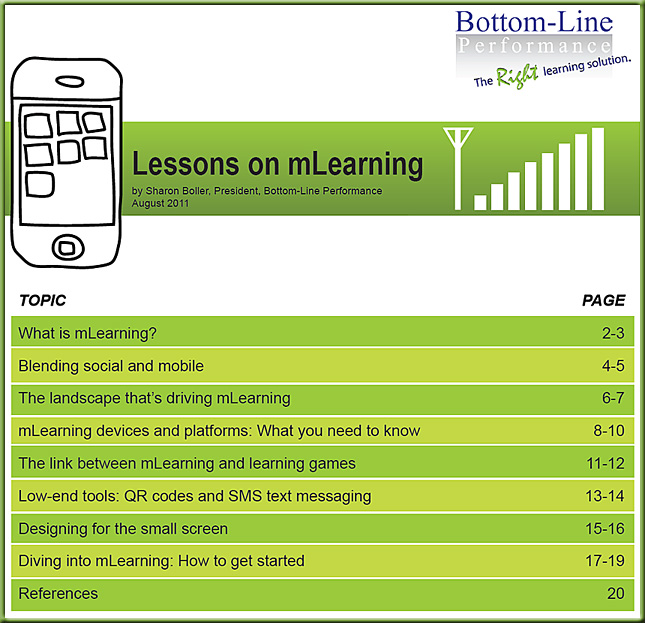
Lessons on mLearning

Also see:

    How I use Google Docs as a student — from Google’s Student Blog by Shep McAllister

    Also see:

    From Daniel Christian: Fasten your seatbelts! An accelerated ride through some ed-tech landscapes.


    From DSC:
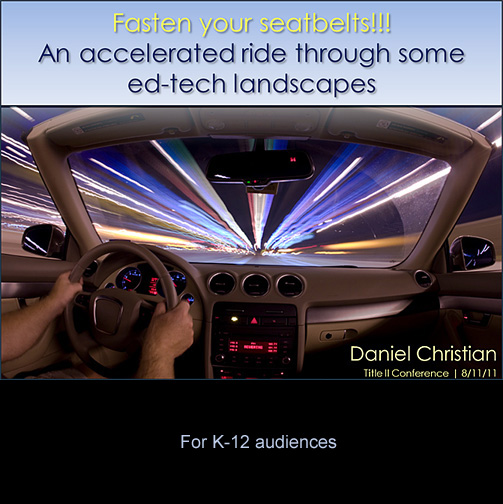
    Immediately below is a presentation that I did for the Title II Conference at Calvin College back on August 11, 2011
    It is aimed at K-12 audiences.


    Daniel S. Christian presentation -- Fasten your seatbelts! An accelerated ride through some ed-tech landscapes (for a K-12 audience)


    From DSC:
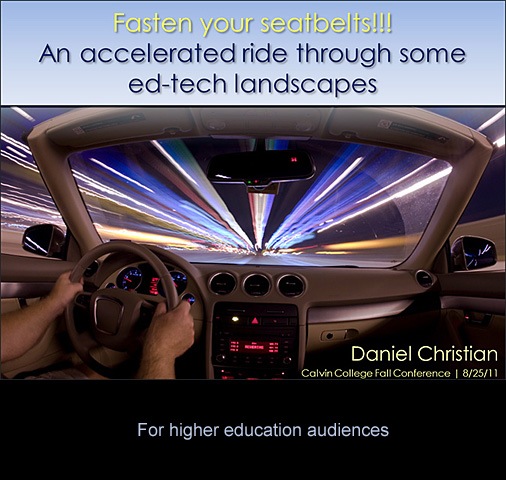
    Immediately below is a presentation that I did today for the Calvin College Fall 2011 Conference.
    It is aimed at higher education audiences.


     Daniel S. Christian presentation -- Fasten your seatbelts! An accelerated ride through some ed-tech landscapes (for a higher ed audience)


    Note from DSC:

    There is a great deal of overlap here, as many of the same technologies are (or will be) hitting the K-12 and higher ed spaces at the same time. However, there are some differences in the two presentations and what I stressed depended upon my audience.

    Pending time, I may put some audio to accompany these presentations so that folks can hear a bit more about what I was trying to relay within these two presentations.


    Tagged with: • • • • • • • • • • • • • • • • • • • • • • • • • • • • • • • • • • • • • • • • • • • • • • • • • • • • • • • • • • • • • • • • • • • • • • • • • • • • • • • • • • • • • • • • • • • • •  

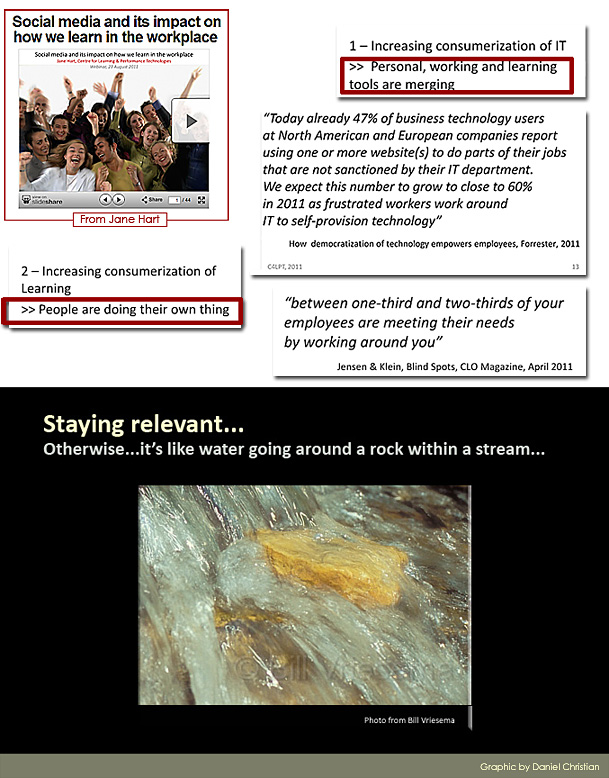
    Social media and its impact on how we learn in the workplace — from C4PLT by Jane Hart


    From DSC:
    One reflection that jumped out at me from Jane’s excellent presentation…and that I believe is a universal truth:

    If an organization doesn’t respond to changing conditions, needs, desires, preferences, best interests, and/or the requirements of its customers, that organization will diminish in usefulness and will most likely (albeit eventually) go out of business.

    I know I’m not introducing a new thought here and the above statement seems very self-evident, but do we heed this advice in corporate L&D? Corporate IT? IT within higher education? In higher education as an industry?


    Inkling 2.0: When a textbook becomes more than a textbook — from hackeducation.com by Audrey Watters

    From DSC:
    Audrey explores the trend that “books” are becoming more “app” like — and will likely be increasingly available as downloads via the Internet/cloud.


    The Singularity: Five technologies that will change the world (and one that won’t) — from MaximumPC.com by David Gerrold; originally saw this in Steve Knode’s July 2011 Newsletter

    Excerpt I want to comment on:

    Now, let’s try a thought experiment. If we apply Moore’s law and assume that the rate of scientific advancement doubles at the same rate as the computer power that we apply to research, then we can project that we will likely accomplish a whole 20th century’s worth of scientific advancement in 5 years—by 2015. As the rate continues to double, we’ll accomplish a century’s work in 2.5 years, then 1.25 years, 7.5 months, 3 months and 3 weeks, then a smidge less than two months, one month, two weeks, one week, then 3.5 days, 1.75 days, and if you ignore Zeno’s paradox, by the end of 2020 we will be accomplishing a century’s worth of research every day, and two weeks later, every second. And after that…?

    From DSC:

    This is why it is critical that all of us are tapping into streams of content. We can’t be dealing with damned up “water” — but we need to access ever-flowing-streams of content. We need to learn how to learn — and like learning! We’ll also need to know how to manage learning agents in order to sort through the information overload coming at us.

    What's the best way to deal with ever-changing streams of content? When information has shrinking half-lives?


    Also mentioned in the above article:

    • Graphene
    • Robots
    • Bio-Fabbing
    • Universal Smart Tech

    Also from Steve Knode:


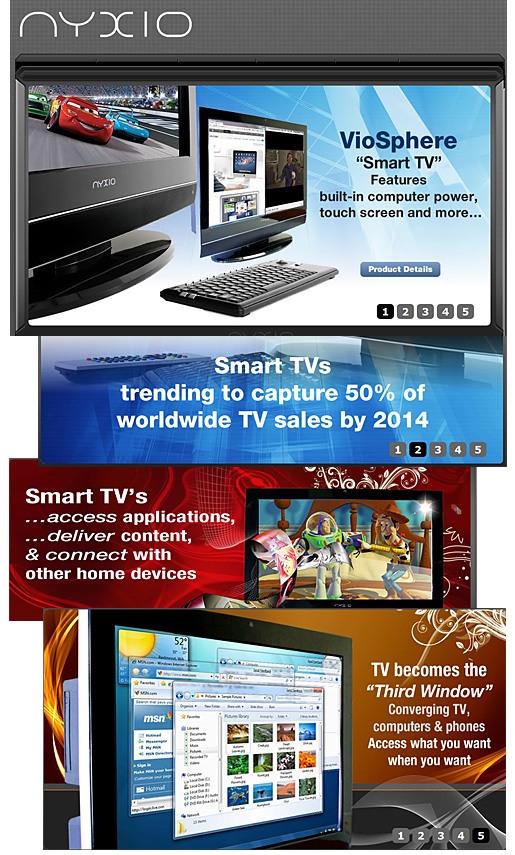
    Intel predicts Smart TV is the device of the future — from nyxiotechnologies.com’s blog
    Chipmaker Intel believes that the Smart TV is the electronic device of the future, in the living room anyway.

    Excerpt:

    The Smart TV is already upon us, in its various forms from various manufacturers. It has arrived with 3D capabilities, web browsing and social networking and applications. Currently Samsung and LG seem to be two of the big players pushing the Smart TV to consumers.

    Also see:


    The state of the Internet - July 2011

    RTS game runs on a 20 foot-wide multi-touch LCD wall — from gizmag.com by Pawel Piejko

    A graduate student has developed an RTS game played on a 20-foot wide LCD multi-touch wall...

    A graduate student has developed an RTS game played on a 20-foot wide LCD multi-touch wall
    (Image: University of Illinois)

    From DSC:
    What about if others from another college, university, school, etc. could partake in this as well?


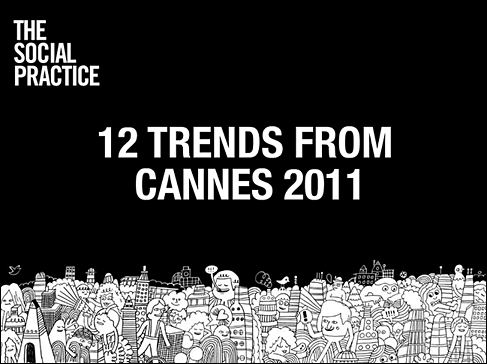
    12 Trends from Cannes 2011 - from The Social Practice


    1. Social TV
    2. Digital storytelling
    3. HTML 5 and the rise of web apps
    4. Collaboration and co-creation
    5. The power of real-time
    6. The rise of social business
    7. Designing for networks and understanding social spread
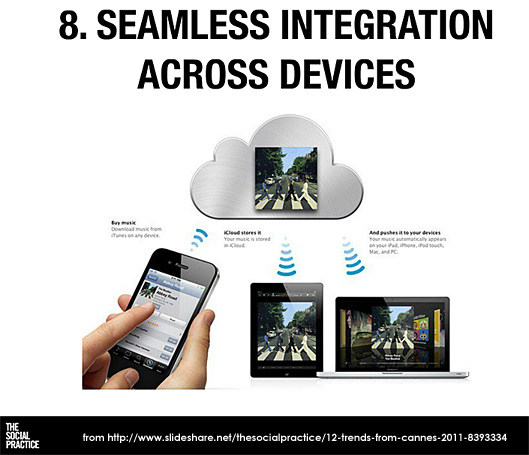
    8. Seamless integration across devices
    9. The power of the tangible / creating social objects
    10. The rise of the tablet
    11. Getting creative with players and browsers
    12. Socially connected objects


    See also:

    Reflections from DSC (additional emphasis by DSC):

    I ran across Braden Kelley’s posting over at Blogging Innovation that’s entitled, “An Innovation Perfect Storm? In that posting, Braden lays out a powerful vision that he’s had for at least 2 years:

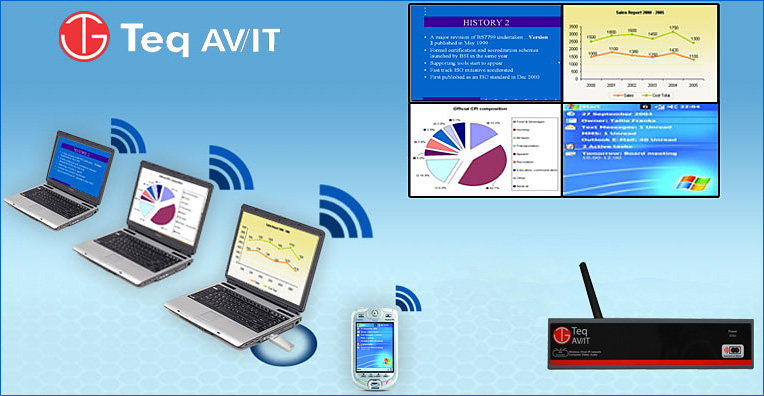
    I believed two years ago and still believe that what the world needs is not more smart devices, but more flexible and plentiful dumb devices that are driven by the one smart device to rule them all – an extensible smart phone that can not only drive multiple display and input devices wirelessly, but also augment its processing and storage capabilities via wireless devices or the cloud.

    Besides mentioning Motorola’s Atrix, RIM’s Blackberry Playbook , and Nintendo’s WiiU, Braden focuses on Apple’s product line. But later on in his posting, he provides a link to Teq’s WiD410 product — a conference room flat panel solution:


    TEQ AV/IT June-2011 -- might be a part of the future smart classroom


    Braden’s vision caused me to piggyback on my vision for what I’d like to see in our Smart Classrooms — the ability for students to quickly and easily project/”play” their content for others in the class to see — without interrupting the flow of the class.

    This concept holds true for corporate conference rooms & training centers as well.


    Addendum/see also:


    © 2025 | Daniel Christian