Gen AI Is Going Mainstream: Here’s What’s Coming Next — from joshbersin.com by Josh Bersin

I just completed nearly 60,000 miles of travel across Europe, Asia, and the Middle East meeting with hundred of companies to discuss their AI strategies. While every company’s maturity is different, one thing is clear: AI as a business tool has arrived: it’s real and the use-cases are growing.

A new survey by Wharton shows that 46% of business leaders use Gen AI daily and 80% use it weekly. And among these users, 72% are measuring ROI and 74% report a positive return. HR, by the way, is the #3 department in use cases, only slightly behind IT and Finance.

What are companies getting out of all this? Productivity. The #1 use case, by far, is what we call “stage 1” usage – individual productivity. 

.


From DSC:
Josh writes: “Many of our large clients are now implementing AI-native learning systems and seeing 30-40% reduction in staff with vast improvements in workforce enablement.

While I get the appeal (and ROI) from management’s and shareholders’ perspective, this represents a growing concern for employment and people’s ability to earn a living. 

And while I highly respect Josh and his work through the years, I disagree that we’re over the problems with AI and how people are using it: 

Two years ago the NYT was trying to frighten us with stories of AI acting as a romance partner. Well those stories are over, and thanks to a $Trillion (literally) of capital investment in infrastructure, engineering, and power plants, this stuff is reasonably safe.

Those stories are just beginning…they’re not close to being over. 


“… imagine a world where there’s no separation between learning and assessment…” — from aiedusimplified.substack.com by Lance Eaton, Ph.D. and Tawnya Means
An interview with Tawnya Means

So let’s imagine a world where there’s no separation between learning and assessment: it’s ongoing. There’s always assessment, always learning, and they’re tied together. Then we can ask: what is the role of the human in that world? What is it that AI can’t do?

Imagine something like that in higher ed. There could be tutoring or skill-based work happening outside of class, and then relationship-based work happening inside of class, whether online, in person, or some hybrid mix.

The aspects of learning that don’t require relational context could be handled by AI, while the human parts remain intact. For example, I teach strategy and strategic management. I teach people how to talk with one another about the operation and function of a business. I can help students learn to be open to new ideas, recognize when someone pushes back out of fear of losing power, or draw from my own experience in leading a business and making future-oriented decisions.

But the technical parts such as the frameworks like SWOT analysis, the mechanics of comparing alternative viewpoints in a boardroom—those could be managed through simulations or reports that receive immediate feedback from AI. The relational aspects, the human mentoring, would still happen with me as their instructor.

Part 2 of their interview is here:


“OpenAI’s Atlas: the End of Online Learning—or Just the Beginning?” [Hardman] + other items re: AI in our LE’s

OpenAI’s Atlas: the End of Online Learning—or Just the Beginning? — from drphilippahardman.substack.com by Dr. Philippa Hardman

My take is this: in all of the anxiety lies a crucial and long-overdue opportunity to deliver better learning experiences. Precisely because Atlas perceives the same context in the same moment as you, it can transform learning into a process aligned with core neuro-scientific principles—including active retrieval, guided attention, adaptive feedback and context-dependent memory formation.

Perhaps in Atlas we have a browser that for the first time isn’t just a portal to information, but one which can become a co-participant in active cognitive engagement—enabling iterative practice, reflective thinking, and real-time scaffolding as you move through challenges and ideas online.

With this in mind, I put together 10 use cases for Atlas for you to try for yourself.

6. Retrieval Practice
What:
Pulling information from memory drives retention better than re-reading.
Why: Practice testing delivers medium-to-large effects (Adesope et al., 2017).
Try: Open a document with your previous notes. Ask Atlas for a mixed activity set: “Quiz me on the Krebs cycle—give me a near-miss, high-stretch MCQ, then a fill-in-the-blank, then ask me to explain it to a teen.”
Atlas uses its browser memory to generate targeted questions from your actual study materials, supporting spaced, varied retrieval.


From DSC:
A quick comment. I appreciate these ideas and approaches from Katarzyna and Rita. I do think that someone is going to want to be sure that the AI models/platforms/tools are given up-to-date information and updated instructions — i.e., any new procedures, steps to take, etc. Perhaps I’m missing the boat here, but an internal AI platform is going to need to have access to up-to-date information and instructions.


From DSC:
I love the graphic below of the Dunning-Kruger Effect:


— graphic via a teacher at one of our daughters’ schools
.


The Dunning-Kruger effect is a cognitive bias where people with low ability in a task tend to overestimate their own competence, while high-ability individuals often underestimate theirs. This happens because those with low competence lack the metacognitive skills to recognize their own shortcomings, leading them to believe they are performing better than they are. Examples include a new driver who thinks they are better than average, or a novice who is confident in their ability to diagnose a medical issue based on a quick online search.

Examples in different fields

  • Driving: Many drivers believe they are above average, a statistical impossibility.
  • Healthcare: Patients may overestimate their ability to self-diagnose serious conditions after a quick search and disregard expert medical advice.
  • Workplace: Employees may overestimate their performance compared to their colleagues.
  • Social Media: The Dunning-Kruger effect can be seen online, where individuals with a superficial understanding of a topic may argue confidently with experts.
 

10 Tips from Smart Teaching Stronger Learning — from Pooja K. Agarwal, Ph.D.

Per Dr. Pooja Agarwal:

Combining two strategies—spacing and retrieval practice—is key to success in learning, says Shana Carpenter.


On a somewhat related note (i.e., for Instructional Designers, teachers, faculty members, T&L staff members), also see:


Making Retrieval Practice a Classroom Routine — from edutopia.org
By regularly working in activities that get students to recall content they’ve learned in the past and apply it, teachers can ensure deeper understanding.

Also see:

  • The Teaching Tips section out at RetrievalPractice.org
    Retrieval practice is a simple research-based teaching strategy that dramatically raises students’ grades. When students retrieve and bring information to mind, this mental challenge produces durable long-term learning. Easy learning leads to easy forgetting. Stop cramming, reviewing, and re-teaching. Instead, simply ask students what they remember. No prep, no grading, just powerful teaching. The science of learning exists. It’s time to unleash it.
 

ChatGPT: the world’s most influential teacher — from drphilippahardman.substack.com by Dr. Philippa Hardman; emphasis DSC
New research shows that millions of us are “learning with AI” every week: what does this mean for how (and how well) humans learn?

This week, an important piece of research landed that confirms the gravity of AI’s role in the learning process. The TLDR is that learning is now a mainstream use case for ChatGPT; around 10.2% of all ChatGPT messages (that’s ~2BN messages sent by over 7 million users per week) are requests for help with learning.

The research shows that about 10.2% of all messages are tutoring/teaching, and within the “Practical Guidance” category, tutoring is 36%. “Asking” interactions are growing faster than “Doing” and are rated higher quality by users. Younger people contribute a huge share of messages, and growth is fastest in low- and middle-income countries (How People Use ChatGPT, 2025).

If AI is already acting as a global tutor, the question isn’t “will people learn with AI?”—they already are. The real question we need to ask is: what does great learning actually look like, and how should AI evolve to support it? That’s where decades of learning science help us separate “feels like learning” from “actually gaining new knowledge and skills”.

Let’s dive in.


What does ‘age appropriate’ AI literacy look like in higher education? — from timeshighereducation.com by Fun Siong Lim
As AI literacy becomes an essential work skill, universities need to move beyond developing these competencies at ‘primary school’ level in their students. Here, Fun Siong Lim reflects on frameworks to support higher-order AI literacies

Like platforms developed at other universities, Project NALA offers a front-end interface (known as the builder) for faculty to create their own learning assistant. An idea we have is to open the builder up to students to allow them to create their own GenAI assistant as part of our AI literacy curriculum. As they design, configure and test their own assistant, they will learn firsthand how generative AI works. They get to test performance-enhancement approaches beyond prompt engineering, such as grounding the learning assistant with curated materials (retrieval-augmented generation) and advanced ideas such as incorporating knowledge graphs.

They should have the opportunity to analyse, evaluate and create responsible AI solutions. Offering students the opportunity to build their own AI assistants could be a way forward to develop these much-needed skills.


How to Use ChatGPT 4o’s Update to Turn Key Insights Into Clear Infographics (Prompts Included) — from evakeiffenheim.substack.com by Eva Keiffenheim
This 3-step workflow helps you break down books, reports, or slide-decks into professional visuals that accelerate understanding.

This article shows you how to find core ideas, prompt GPT-4o3 for a design brief, and generate clean, professional images that stick. These aren’t vague “creative visuals”—they’re structured for learning, memory, and action.

If you’re a lifelong learner, educator, creator, or just someone who wants to work smarter, this process is for you.

You’ll spend less time re-reading and more time understanding. And maybe—just maybe—you’ll build ideas that not only click in your brain, but also stick in someone else’s.


SchoolAI Secures $25 Million to Help Teachers and Schools Reach Every Student — from globenewswire.com
 The Classroom Experience platform gives every teacher and student their own AI tools for personalized learning

SchoolAI’s Classroom Experience platform combines AI assistants for teachers that help with classroom preparation and other administrative work, and Spaces–personalized AI tutors, games, and lessons that can adapt to each student’s unique learning style and interests. Together, these tools give teachers actionable insights into how students are doing, and how the teacher can deliver targeted support when it matters most.

“Teachers and schools are navigating hard challenges with shrinking budgets, teacher shortages, growing class sizes, and ongoing recovery from pandemic-related learning gaps,” said Caleb Hicks, founder and CEO of SchoolAI. “It’s harder than ever to understand how every student is really doing. Teachers deserve powerful tools to help extend their impact, not add to their workload. This funding helps us double down on connecting the dots for teachers and students, and later this year, bringing school administrators and parents at home onto the platform as well.”


AI in Education, Part 3: Looking Ahead – The Future of AI in Learning — from rdene915.com by Dr. Rachelle Dené Poth

In the first and second parts of my AI series, I focused on where we see AI in classrooms. Benefits range from personalized learning and accessibility tools to AI-driven grading and support of a teaching assistant. In Part 2, I chose to focus on some of the important considerations related to ethics that must be part of the conversation. Schools need to focus on data privacy, bias, overreliance, and the equity divide. I wanted to focus on the future for this last part in the current AI series. Where do we go from here?


Anthropic Education Report: How University Students Use Claude — from anthropic.com

The key findings from our Education Report are:

  • STEM students are early adopters of AI tools like Claude, with Computer Science students particularly overrepresented (accounting for 36.8% of students’ conversations while comprising only 5.4% of U.S. degrees). In contrast, Business, Health, and Humanities students show lower adoption rates relative to their enrollment numbers.
  • We identified four patterns by which students interact with AI, each of which were present in our data at approximately equal rates (each 23-29% of conversations): Direct Problem Solving, Direct Output Creation, Collaborative Problem Solving, and Collaborative Output Creation.
  • Students primarily use AI systems for creating (using information to learn something new) and analyzing (taking apart the known and identifying relationships), such as creating coding projects or analyzing law concepts. This aligns with higher-order cognitive functions on Bloom’s Taxonomy. This raises questions about ensuring students don’t offload critical cognitive tasks to AI systems.

From the Kuali Days 2025 Conference: A CEO’s View of Planning for AI — from campustechnology.com by Mary Grush
A Conversation with Joel Dehlin

How can a company serving higher education navigate the changes AI brings to the ed tech marketplace? What will customers expect in this dynamic? Here, CT talks with Kuali CEO Joel Dehlin, who shared his company’s AI strategies in a featured plenary session, “Sneak Peek of AI in Kuali Build,” at Kuali Days 2025 in Anaheim.


How students can use generative AI — from aliciabankhofer.substack.com by Alicia Bankhofer
Part 4 of 4 in my series on Teaching and Learning in the AI Age

This article is the culmination of a series exploring AI’s impact on education.

Part 1: What Educators Need outlined essential AI literacy skills for teachers, emphasizing the need to move beyond basic ChatGPT exploration to understand the full spectrum of AI tools available in education.

Part 2: What Students Need addressed how students require clear guidance to use AI safely, ethically, and responsibly, with emphasis on developing critical thinking skills alongside AI literacy.

Part 3: How Educators Can Use GenAI presented ten practical use cases for teachers, from creating differentiated resources to designing assessments, demonstrating how AI can reclaim 5-7 hours weekly for meaningful student interactions.

Part 4: How Students Can Use GenAI (this article) provides frameworks for guiding student AI use based on Joscha Falck’s dimensions: learning about, with, through, despite, and without AI.


Mapping a Multidimensional Framework for GenAI in Education — from er.educause.edu by Patricia Turner
Prompting careful dialogue through incisive questions can help chart a course through the ongoing storm of artificial intelligence.

The goal of this framework is to help faculty, educational developers, instructional designers, administrators, and others in higher education engage in productive discussions about the use of GenAI in teaching and learning. As others have noted, theoretical frameworks will need to be accompanied by research and teaching practice, each reinforcing and reshaping the others to create understandings that will inform the development of approaches to GenAI that are both ethical and maximally beneficial, while mitigating potential harms to those who engage with it.


Instructional Design Isn’t Dying — It’s Specialising — from drphilippahardman.substack.com by Dr. Philippa Hardman
Aka, how AI is impacting role & purpose of Instructional Design

Together, these developments have revealed something important: despite widespread anxiety, the instructional design role isn’t dying—it’s specialising.

What we’re witnessing isn’t the automation of instructional design and the death of the instructional designer, but rather the evolution of the ID role into multiple distinct professional pathways.

The generalist “full stack” instructional designer is slowly but decisively fracturing into specialised roles that reflect both the capabilities of generative AI and the strategic imperatives facing modern organisations.

In this week’s blog post, I’ll share what I’ve learned about how our field is transforming, and what it likely means for you and your career path.

Those instructional designers who cling to traditional generalist models risk being replaced, but those who embrace specialisation, data fluency, and AI collaboration will excel and lead the next evolution of the field. Similarly, those businesses that continue to view L&D as a cost centre and focus on automating content delivery will be outperformed, while those that invest in building agile, AI-enabled learning ecosystems will drive measurable performance gains and secure their competitive advantage.


Adding AI to Every Step in Your eLearning Design Workflow — from learningguild.com by George Hanshaw

We know that eLearning is a staple of training and development. The expectations of the learners are higher than ever: They expect a dynamic, interactive, and personalized learning experience. As instructional designers, we are tasked with meeting these expectations by creating engaging and effective learning solutions.

The integration of Artificial Intelligence (AI) into our eLearning design process is a game-changer that can significantly enhance the quality and efficiency of our work.

No matter if you use ADDIE or rapid prototyping, AI has a fit in every aspect of your workflow. By integrating AI, you can ensure a more efficient and effective design process that adapts to the unique needs of your learners. This not only saves time and resources but also significantly enhances the overall learning experience. We will explore the needs analysis and the general design process.


Do I Need a Degree in Instructional Design? It Depends. — from teamedforlearning.com

It’s a common question for those considering a career in instructional design: Do I need a degree to land a job? The answer? It depends.

Hiring managers aren’t just looking for a degree—they want proof that you have the knowledge, skills, and abilities to succeed. In fact, most employers focus on 3 key factors when assessing candidates. You typically need at least 2 of these to be considered:

  1. A Credential – A degree or certification in instructional design, learning experience design, or a related field.
  2. Relevant Work Experience – Hands-on experience designing and developing learning solutions.
  3. Proof of Abilities – A strong portfolio showcasing eLearning modules, course designs, or learning strategies.

The good news? You don’t have to spend years earning a degree to break into the field. If you’re resourceful, you can fast-track your way in through volunteer projects, contract work, and portfolio building.

Whether you’re a recent graduate, a career changer, or a working professional looking for your next opportunity, focusing on these key factors can help you stand out and get hired.


From DSC:
[For those folks who use Google Chrome]

When you keep getting distracted from all of the extraneous items — such as those annoying videos and advertisements — that appear when you launch a web page, there is a solution to quickly hiding all of those items. It’s called Postlight Reader. I’ve been using it for years and wanted to put this information out there for folks who might not have heard about it.


I highly recommend it if you are having trouble reading an article and processing the information that it contains. Instructional Designers will know all about Extraneous Load (one of the types of Cognitive Load) and how it negatively impacts one’s learning and processing of the information that really counts (i.e., the Germane Cognitive Load).

Note the differences when I used Postlight Reader on an article out at cbsnews.com:


The page appears with all kinds of ads and videos going on…I can hardly
process the information on the article due to these items:


Then, after I enabled this extension in Chrome and click on
the icon for Postlight Reader, it strips away all of those items
and leaves me with the article that I wanted to read:


If you aren’t using it, I highly recommend that you give it a try.


Postlight Reader – Clear away the clutter from all of your articles. Instantly.

The Postlight Reader extension for Chrome removes ads and distractions, leaving only text and images for a clean and consistent reading view on every site. Features:

  • Disable surrounding webpage noise and clutter with one click
  • Send To Kindle functionality
  • Adjust typeface and text size, and toggle between light or dark themes
  • Quick keyboard shortcut (Cmd + Esc for Mac users, Alt + ` for Windows users) to switch to Reader on any article page
  • Printing optimization
  • Sharing through Facebook, Twitter and Email
 

What Students Want When It Comes To AI — from onedtech.philhillaa.com by Glenda Morgan
The Digital Education Council Global AI Student Survey 2024

The Digital Education Council (DEC) this week released the results of a global survey of student opinions on AI. It’s a large survey with nearly 4,000 respondents conducted across 16 countries, but more importantly, it asks some interesting questions. There are many surveys about AI out there right now, but this one stands out. I’m going to go into some depth here, as the entire survey report is worth reading.

.

.


AI is forcing a teaching and learning evolution — from eschoolnews.com by Laura Ascione
AI and technology tools are leading to innovative student learning–along with classroom, school, and district efficiency

Key findings from the 2024 K-12 Educator + AI Survey, which was conducted by Hanover Research, include:

  • Teachers are using AI to personalize and improve student learning, not just run classrooms more efficiently, but challenges remain
  • While post-pandemic challenges persist, the increased use of technology is viewed positively by most teachers and administrators
  • …and more

From DSC:
I wonder…how will the use of AI in education square with the issues of using smartphones/laptops within the classrooms? See:

  • Why Schools Are Racing to Ban Student Phones — from nytimes.com by Natasha Singer; via GSV
    As the new school year starts, a wave of new laws that aim to curb distracted learning is taking effect in Indiana, Louisiana and other states.

A three-part series from Dr. Phillippa Hardman:

Part 1: Writing Learning Objectives  
The Results Part 1: Writing Learning Objectives

In this week’s post I will dive into the results from task 1: writing learning objectives. Stay tuned over the next two weeks to see all of the the results.

Part 2: Selecting Instructional Strategies.
The Results Part 2: Selecting an Instructional Strategy

Welcome back to our three-part series exploring the impact of AI on instructional design.

This week, we’re tackling a second task and a crucial aspect of instructional design: selecting instructional strategies. The ability to select appropriate instructional strategies to achieve intended objectives is a mission-critical skill for any instructional designer. So, can AI help us do a good job of it? Let’s find out!

Part 3: How Close is AI to Replacing Instructional Designers?
The Results Part 3: Creating a Course Outline

Today, we’re diving into what many consider to be the role-defining task of the instructional designer: creating a course design outline.


ChatGPT Cheat Sheet for Instructional Designers! — from Alexandra Choy Youatt EdD

Instructional Designers!
Whether you’re new to the field or a seasoned expert, this comprehensive guide will help you leverage AI to create more engaging and effective learning experiences.

What’s Inside?
Roles and Tasks: Tailored prompts for various instructional design roles and tasks.
Formats: Different formats to present your work, from training plans to rubrics.
Learning Models: Guidance on using the ADDIE model and various pedagogical strategies.
Engagement Tips: Techniques for online engagement and collaboration.
Specific Tips: Industry certifications, work-based learning, safety protocols, and more.

Who Can Benefit?
Corporate Trainers
Curriculum Developers
E-Learning Specialists
Instructional Technologists
Learning Experience Designers
And many more!

ChatGPT Cheat Sheet | Instructional Designer


5 AI Tools I Use Every Day (as a Busy Student) — from theaigirl.substack.com by Diana Dovgopol
AI tools that I use every day to boost my productivity.
#1 Gamma
#2 Perplexity
#3 Cockatoo

I use this AI tool almost every day as well. Since I’m still a master’s student at university, I have to attend lectures and seminars, which are always in English or German, neither of which is my native language. With the help of Cockatoo, I create scripts of the lectures and/or translations into my language. This means I don’t have to take notes in class and then manually translate them afterward. All I need to do is record the lecture audio on any device or directly in Cockatoo, upload it, and then you’ll have the audio and text ready for you.

…and more


Students Worry Overemphasis on AI Could Devalue Education — from insidehighered.com by Juliette Rowsell
Report stresses that AI is “new standard” and universities need to better communicate policies to learners.

Rising use of AI in higher education could cause students to question the quality and value of education they receive, a report warns.

This year’s Digital Education Council Global AI Student Survey, of more than 3,800 students from 16 countries, found that more than half (55 percent) believed overuse of AI within teaching devalued education, and 52 percent said it negatively impacted their academic performance.

Despite this, significant numbers of students admitted to using such technology. Some 86 percent said they “regularly” used programs such as ChatGPT in their studies, 54 percent said they used it on a weekly basis, and 24 percent said they used it to write a first draft of a submission.

Higher Ed Leadership Is Excited About AI – But Investment Is Lacking — from forbes.com by Vinay Bhaskara

As corporate America races to integrate AI into its core operations, higher education finds itself in a precarious position. I conducted a survey of 63 university leaders revealing that while higher ed leaders recognize AI’s transformative potential, they’re struggling to turn that recognition into action.

This struggle is familiar for higher education — gifted with the mission of educating America’s youth but plagued with a myriad of operational and financial struggles, higher ed institutions often lag behind their corporate peers in technology adoption. In recent years, this gap has become threateningly large. In an era of declining enrollments and shifting demographics, closing this gap could be key to institutional survival and success.

The survey results paint a clear picture of inconsistency: 86% of higher ed leaders see AI as a “massive opportunity,” yet only 21% believe their institutions are prepared for it. This disconnect isn’t just a minor inconsistency – it’s a strategic vulnerability in an era of declining enrollments and shifting demographics.


(Generative) AI Isn’t Going Anywhere but Up — from stefanbauschard.substack.com by Stefan Bauschard
“Hype” claims are nonsense.

There has been a lot of talk recently about an “AI Bubble.” Supposedly, the industry, or at least the generative AI subset of it, will collapse. This is known as the “Generative AI Bubble.” A bubble — a broad one or a generative one — is nonsense. These are the reasons we will continue to see massive growth in AI.


AI Readiness: Prepare Your Workforce to Embrace the Future — from learningguild.com by Danielle Wallace

Artificial Intelligence (AI) is revolutionizing industries, enhancing efficiency, and unlocking new opportunities. To thrive in this landscape, organizations need to be ready to embrace AI not just technologically but also culturally.

Learning leaders play a crucial role in preparing employees to adapt and excel in an AI-driven workplace. Transforming into an AI-empowered organization requires more than just technological adoption; it demands a shift in organizational mindset. This guide delves into how learning leaders can support this transition by fostering the right mindset attributes in employees.


Claude AI for eLearning Developers — from learningguild.com by Bill Brandon

Claude is fast, produces grammatically correct  text, and outputs easy-to-read articles, emails, blog posts, summaries, and analyses. Take some time to try it out. If you worry about plagiarism and text scraping, put the results through Grammarly’s plagiarism checker (I did not use Claude for this article, but I did send the text through Grammarly).


Survey: Top Teacher Uses of AI in the Classroom — from thejournal.com by Rhea Kelly

A new report from Cambium Learning Group outlines the top ways educators are using artificial intelligence to manage their classrooms and support student learning. Conducted by Hanover Research, the 2024 K-12 Educator + AI Survey polled 482 teachers and administrators at schools and districts that are actively using AI in the classroom.

More than half of survey respondents (56%) reported that they are leveraging AI to create personalized learning experiences for students. Other uses included providing real-time performance tracking and feedback (cited by 52% of respondents), helping students with critical thinking skills (50%), proofreading writing (47%), and lesson planning (44%).

On the administrator side, top uses of AI included interpreting/analyzing student data (61%), managing student records (56%), and managing professional development (56%).


Addendum on 8/14/24:


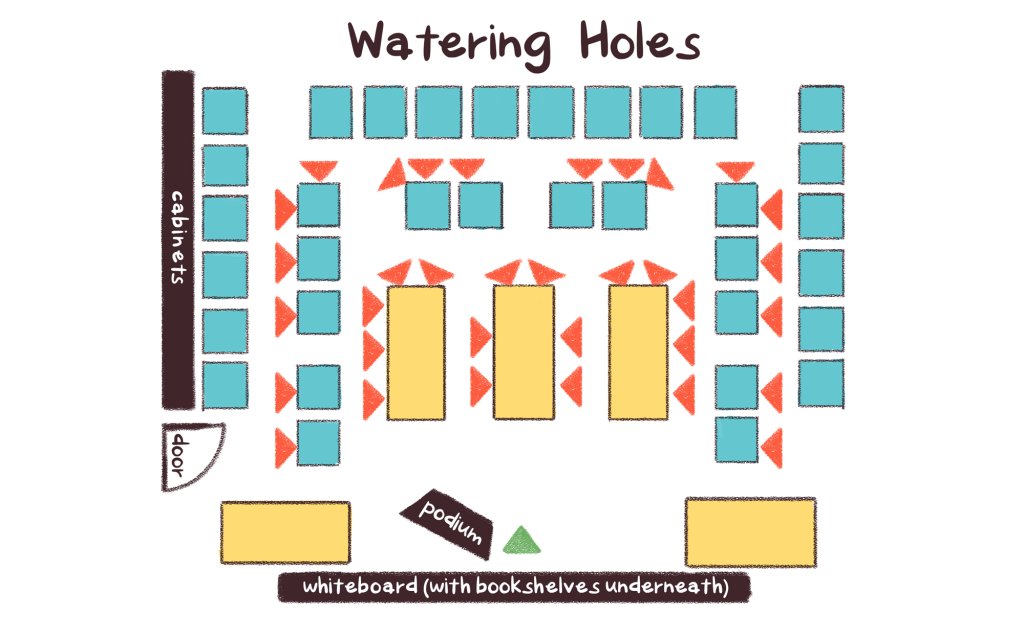
Designing your classroom — from edutopia.org

Resources for designing your classroom/learning space

As back-to-school season approaches, we know you’re gearing up to design your next classroom. It can be daunting to craft a space that does it all: boosts academic achievement, fosters collaboration, *and* makes students feel welcome and included.

That’s why we’ve curated a brand-new collection of 25 articles and videos—packed with research-backed insights and actionable strategies—to help find a layout that works best for you and your students. Topics range from optimizing your classroom walls to creating an environment that supports a wide range of executive functioning skills. Whether you’re a teacher or an administrator, these essential resources are designed to guide you through every stage of classroom setup.

Also from edutopia.org, see:

A Starter Pack of Resources for New Teachers — from edutopia.org
We’ve pulled together articles and videos in which educators—both veteran and new—share what they wish they knew on day one about classroom design, assessment, working with parents, and more.

A Starter Pack of Resources for New Teachers


Also re: the K-12 learning ecosystem, see:


Learning Engineering: New Profession or Transformational Process? A Q&A with Ellen Wagner — from campustechnology.com by Mary Grush and Ellen Wagner

“Learning is one of the most personal things that people do; engineering provides problem-solving methods to enable learning at scale. How do we resolve this paradox? 

—Ellen Wagner

Wagner: Learning engineering offers us a process for figuring that out! If we think of learning engineering as a process that can transform research results into learning action there will be evidence to guide that decision-making at each point in the value chain. I want to get people to think of learning engineering as a process for applying research in practice settings, rather than as a professional identity. And by that I mean that learning engineering is a bigger process than what any one person can do on their own.


From DSC:
Instructional Designers, Learning Experience Designers, Professors, Teachers, and Directors/Staff of Teaching & Learning  Centers will be interested in this article. It made me think of the following graphic I created a while back:
.

We need to take more of the research from learning science and apply it in our learning spaces.


The Musician’s Rule and GenAI in Education — from opencontent.org by David Wiley

We have to provide instructors the support they need to leverage educational technologies like generative AI effectively in the service of learning. Given the amount of benefit that could accrue to students if powerful tools like generative AI were used effectively by instructors, it seems unethical not to provide instructors with professional development that helps them better understand how learning occurs and what effective teaching looks like. Without more training and support for instructors, the amount of student learning higher education will collectively “leave on the table” will only increase as generative AI gets more and more capable. And that’s a problem.

From DSC:
As is often the case, David put together a solid posting here. A few comments/reflections on it:

  • I agree that more training/professional development is needed, especially regarding generative AI. This would help achieve a far greater ROI and impact.
  • The pace of change makes it difficult to see where the sand is settling…and thus what to focus on
  • The Teaching & Learning Groups out there are also trying to learn and grow in their knowledge (so that they can train others)
  • The administrators out there are also trying to figure out what all of this generative AI stuff is all about; and so are the faculty members. It takes time for educational technologies’ impact to roll out and be integrated into how people teach.
  • As we’re talking about multiple disciplines here, I think we need more team-based content creation and delivery.
  • There needs to be more research on how best to use AI — again, it would be helpful if the sand settled a bit first, so as not to waste time and $$. But then that research needs to be piped into the classrooms far better.
    .

We need to take more of the research from learning science and apply it in our learning spaces.


How to Make the Dream of Education Equity (or Most of It) a Reality — from nataliewexler.substack.com by Natalie Wexler
Studies on the effects of tutoring–by humans or computers–point to ways to improve regular classroom instruction.

One problem, of course, is that it’s prohibitively expensive to hire a tutor for every average or struggling student, or even one for every two or three of them. This was the two-sigma “problem” that Bloom alluded to in the title of his essay: how can the massive benefits of tutoring possibly be scaled up? Both Khan and Zuckerberg have argued that the answer is to have computers, maybe powered by artificial intelligence, serve as tutors instead of humans.

From DSC:
I’m hoping that AI-backed learning platforms WILL help many people of all ages and backgrounds. But I realize — and appreciate what Natalie is saying here as well — that human beings are needed in the learning process (especially at younger ages). 

But without the human element, that’s unlikely to be enough. Students are more likely to work hard to please a teacher than to please a computer.

Natalie goes on to talk about training all teachers in cognitive science — a solid idea for sure. That’s what I was trying to get at with this graphic:
.

We need to take more of the research from learning science and apply it in our learning spaces.

.
But I’m not as hopeful in all teachers getting trained in cognitive science…as it should have happened (in the Schools of Education and in the K12 learning ecosystem at large) by now. Perhaps it will happen, given enough time.

And with more homeschooling and blended programs of education occurring, that idea gets stretched even further. 

K-12 Hybrid Schooling Is in High Demand — from realcleareducation.com by Keri D. Ingraham (emphasis below from DSC); via GSV

Parents are looking for a different kind of education for their children. A 2024 poll of parents reveals that 72% are considering, 63% are searching for, and 44% have selected a new K-12 school option for their children over the past few years. So, what type of education are they seeking?

Additional polling data reveals that 49% of parents would prefer their child learn from home at least one day a week. While 10% want full-time homeschooling, the remaining 39% of parents desire their child to learn at home one to four days a week, with the remaining days attending school on-campus. Another parent poll released this month indicates that an astonishing 64% of parents indicated that if they were looking for a new school for their child, they would enroll him or her in a hybrid school.


Conditions that trigger behaviour change — from peoplealchemy.com by Paul Matthews; via Learning Now TV

“Knowing is not enough; we must apply. Willing is not enough; we must do.”

Johann Wolfgang von Goethe

Learning Transfer’s ultimate outcome is behaviour change, so we must understand the conditions that trigger a behaviour to start.

According to Fogg, three specific elements must converge at the same moment for a specific behaviour to occur. Given that learning transfer is only successful when the learner starts behaving in the desired new ways, Fogg’s work is critical to understanding how to generate these new behaviours. The Fogg Behavioural Model [*1] states that B=MAP. That is, a specific behaviour will occur if at the same moment there is sufficient motivation, sufficient ability and sufficient prompt. If the behaviour does not occur, at least one of these three elements is missing or below the threshold required.

The prompt is, in effect, a call to action to do a specific behaviour. The prompt must be ‘loud’ enough for the target person to perceive it and be consciously aware of it. Once aware of a prompt, the target immediately, and largely unconsciously, assesses their ability to carry out the requested behaviour: how difficult would this be, how long will it take, who can help me, and so on. They base this on their perception of the difficulty of the requested behaviour, and their ability, as they see it, to achieve that behaviour.

 
© 2025 | Daniel Christian