


The recorded presentations for the Kaltura Video Summit for Enterprise and Education 2013 are now available for on-demand viewing at:
.
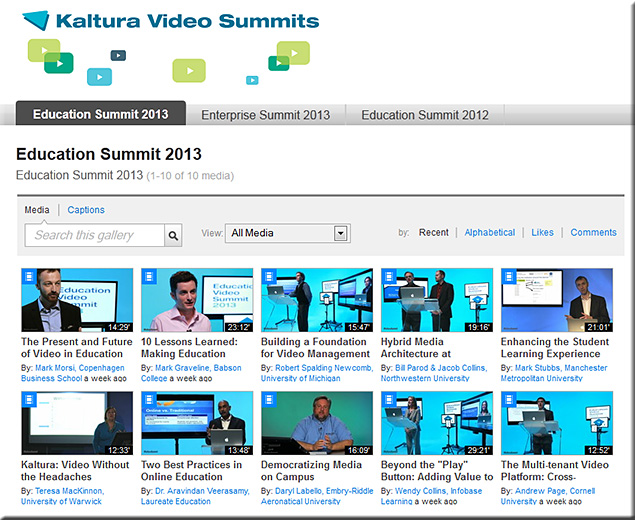
The recorded presentations for the Kaltura Video Summit for Enterprise and Education 2013 are now available for on-demand viewing at:
.
60 beautiful examples of websites with full-blown video backgrounds — from hongkiat.com by Nancy Young
.
From DSC:
Yes, you read that right. Video-based backgrounds — motion pictures. Another great example of the convergence that’s been happening with the TV, the telephone, and the computer.
From DSC:
Well…how about using one of these devices in order to do so!
New video collaboration robot: TelePresence gets moving — from cisco.com by Dave Evans
Excerpt:
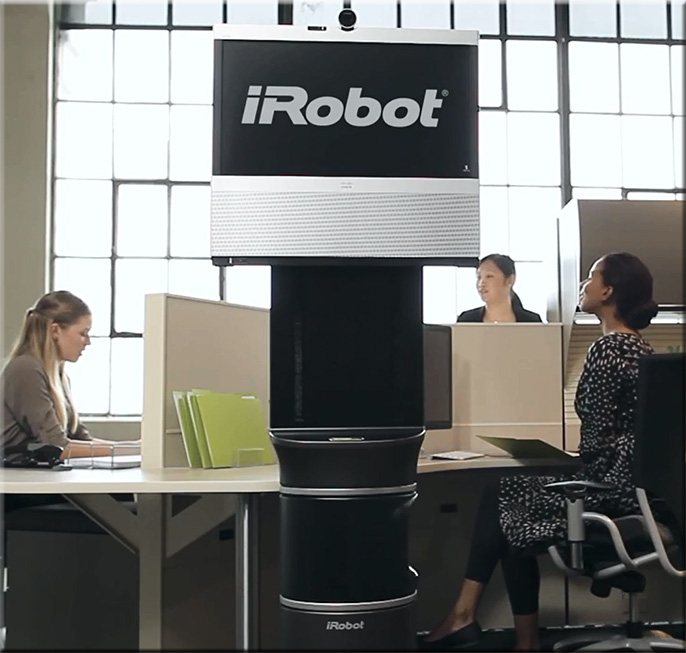
That is why Cisco’s new joint effort with iRobot—demonstrated publicly this week for the first time—is so exciting: We’ve created a mobile Cisco TelePresence unit that brings collaboration to you—or, conversely, brings you to wherever you need to collaborate. Called iRobot Ava 500, this high-definition video collaboration robot combines Cisco TelePresence with iRobot’s mobility and self-navigation capabilities, enabling freedom of movement and spontaneous interactions with people thousands of miles away.
.
.
iRobot Ava™ 500 Video Collaboration Robot — published on Jun 10, 2013
iRobot and Cisco have teamed to bring the Ava 500 video collaboration robot to market. The robot blends iRobot’s autonomous navigation with Cisco’s TelePresence to enable people working off-site to participate in meetings and presentations where movement and location spontaneity are important. The new robot is also designed to enable mobile visual access to manufacturing facilities, laboratories, customer experience centers and other remote facilities.
.

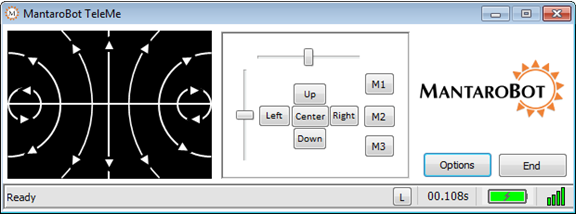
From Attack of the Telepresence Robots! — from BYTE by Rick Lehrbaum
.

 |
 |
 |
 |
| MantaroBot “TeleMe” | VGo Communications “VGo” | Anybots “QB” | Suitable Technologies “Beam” |
.

Also see:

Also see:


.
Below are some great resources re: creating your own e-books / streams of content — with thanks to Mr. Michael Haan, Technology Integration Specialist/Purchasing at Calvin College, for these resources
.
.
From DSC:
You might also want to check out Lynda.com for the relevant training materials.
.
.
Let’s create our own streams of content — always up-to-date — plus we could help our students save big $$! And, as Michael pointed out, such tools could also be used internally for training-related and communications-related purposes.
Thanks Michael!!!

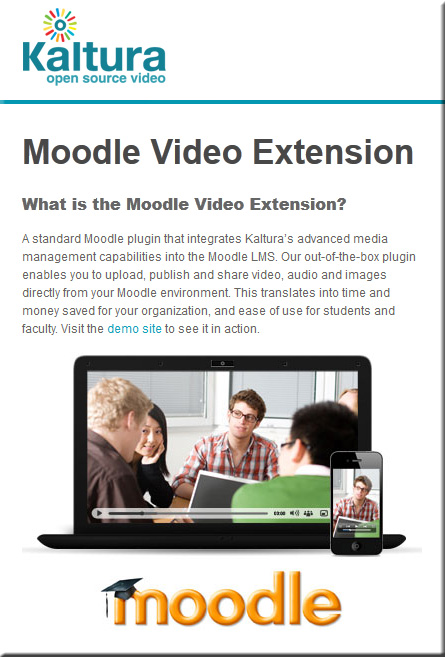
UK University deploys open source video platform for teaching and learning — from campustechnology.com by Leila Meyer
.
.
.
.
From the Oblong.com website:
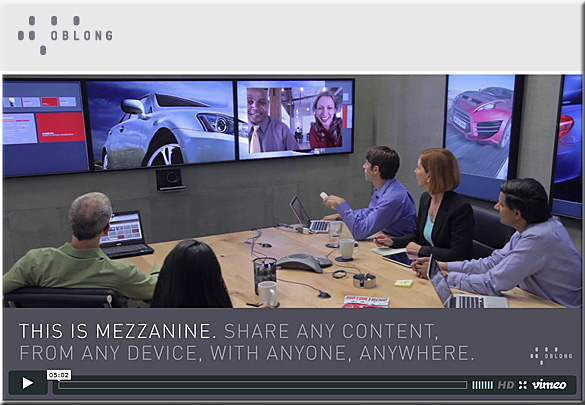
Mezzanine™ is a collaborative conference room solution that introduces multi-user, multi-screen, multi-device collaboration. This is next-generation communication: share any content from any device with anyone, anywhere.
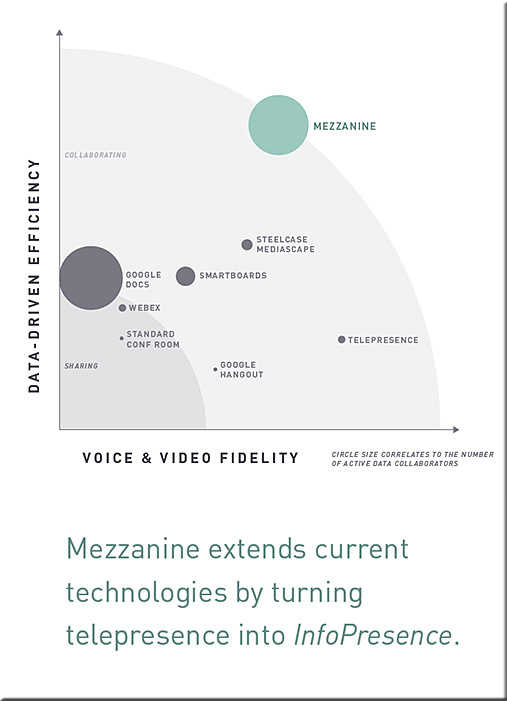
Mezzanine transforms creative teamwork, executive meetings, and sales presentations into real-time, collaborative work sessions. Mezzanine expands on existing telepresence technology by providing what we call InfoPresence™—the incorporation of multiple users, multiple devices, and multiple streams of information in the collaboration environment. The future of conference room collaboration is here.
A Mezzanine workspace lets any person on a network bring their own device and share content and applications with any colleague, anywhere in the world, interactively. Mezzanine is a collaborative conference room solution combining presentation design and delivery, application sharing, whiteboard capture, and video conferencing, all within a framework of multi-participant control.
.
Also see:
Interactive whiteboards are front and center in college classrooms — from edtechmagazine.com
A look at whiteboards at New York’s Touro College.
.
From DSC:
We currently have 3 types of Interactive WhiteBoards (IWB’s) on our campus: Epson BrightLinks, SMART Boards, and/or an Eno Board from PolyVision.
However, the idea of using mobile interactive whiteboards is becoming increasingly popular — i.e. being able to annotate on an iPad, for example, and having everyone in the class see these annotations. I’ve seen some K-12 folks use Apple TV for this type of thing, but Apple’s multi-cast wireless protocol doesn’t work as well for us in a campus environment. I’ve also seen/heard of people using one of the following solutions listed below as well. (I wish I had more time to check each of them out, but I’ll simply list them for you here.)
Lake Forest school unveils high-tech classroom — from by Danielle Gensburg
Excerpt (emphasis DSC):
The new space, previously home to administrative offices, is colored with blues, greens, oranges and yellows and contains movable furniture, a green room for recording and filming movie projects, three large monitors, iPads, computers, digital recording equipment and library bookshelves.
“They wanted it to be set up where it would be more of a learning lab for life-long learners to engage and have student-directed learning,” Zeeman said.
.
Deerpath Middle School unveiled “The Cube,” a new technology classroom, in April.
Also see:
.
From DSC:
Reminds me of this graphic/idea I was thinking of a while back…
.
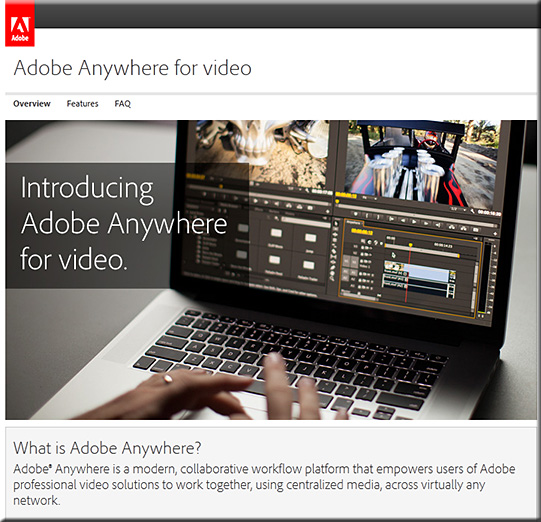
Adobe launches collaboration platform for video pros — from creativebloq.com
The software giant lends a hand to teams using its professional video tools with the launch of new service ‘Adobe Anywhere for Video’.

Adobe Anywhere for video aims to make your life easier
Excerpt:
Adobe have been keen to attract the attention of web designers this week, announcing updates to Flash Pro, Edge Reflow and Dreamweaver. But video professionals haven’t been forgotten, with the big news being the launch of Adobe Anywhere.
.
Also see (from Adobe’s site):
Social video with Vyclone — from esuid.wordpress.com by Joseph Kern
Create dynamic, instantly-edited video collages
From website:
With Vyclone you can:
From DSC:
In his video, Joseph covers some potential apps for education. Thanks for putting this out there Joseph. I like the apparent ease of use of this tool.
A history of media streaming and the future of connected TV — from guardian.co.uk by Alex Zambelli
We’re close to broadly available HD streaming which could trigger mass adoption of connected TV.
.

A precursor to…
![The Living [Class] Room -- by Daniel Christian -- July 2012 -- a second device used in conjunction with a Smart/Connected TV](http://danielschristian.com/learning-ecosystems/wp-content/uploads/2012/07/The-Living-Class-Room-Daniel-S-Christian-July-2012.jpg)
5 ways to add interactive elements to your videos — from freetech4teachers.com by Richard Byrne