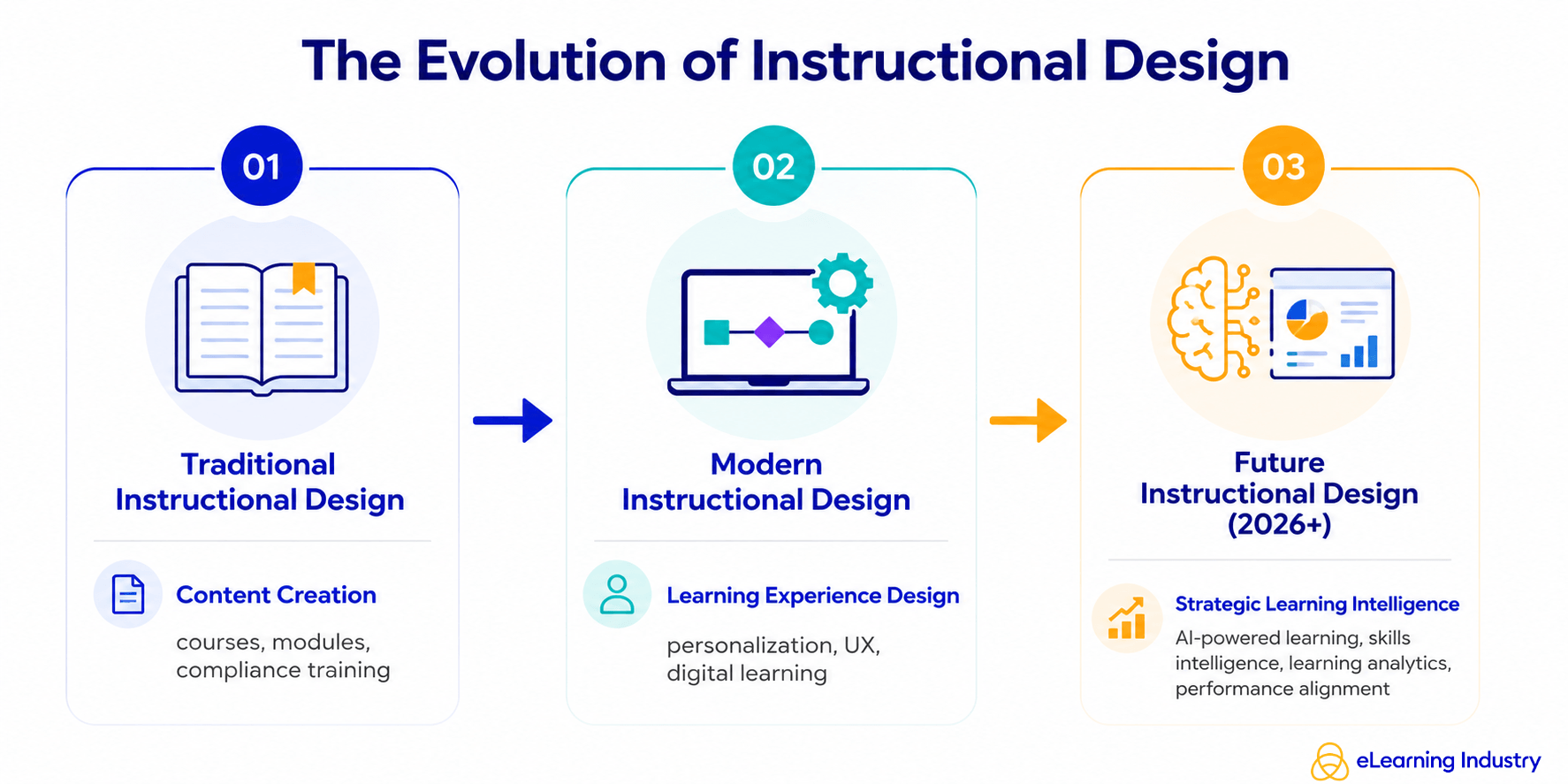
Instructional Design Trends: What’s Shaping The Future Of Learning? — from elearningindustry.com by Christopher Pappas

Table of contents

1. Why Instructional Design Is Entering A New Era
2. The State Of Instructional Design Today
3. Top Instructional Design Trends Shaping 2026
4. The Future Of Instructional Design And Technology


Also from elearningindustry.com, see:

The Future Of Personalized Learning And The Leaders Being Trained To Deliver It — by Ryan Ayers

Table of contents

1. Personalized Learning For Future Leaders
2. Where Personalized Learning Is Heading
3. What Implementing Personalized Learning At Scale Actually Requires
4. The Educational Leaders Being Trained To Deliver This Future
5. Conclusion


6 Tips for Easily Incorporating Games in Your Learning — from learningguild.com

To help you incorporate game elements into your learning, we’ve asked our Game-Based Learning Online Conference speakers to share their best tips:

  1. The game design process can support the instructional designer during design and development. …
  2. One of the biggest mistakes in game-based learning is starting with the game instead of the performance objective. …
  3. By redefining the success of gamification as the transition from information to skill, we’ll see a transformation from the well-known initial engagement driver to a tool that helps guarantee long-term encoding. …
    .
    …and more
 

10 Elearning Interaction Ideas You May Not Have Thought Of Yet — from theelearningcoach.com by Connie Malamed

Is click-to-reveal always bad for learning?
Not necessarily. Click-to-reveal interactions can be useful when you want to manage cognitive load, reveal information gradually, or work within limited screen space. In those cases, clicking supports the presentation of information.

However, from an instructional perspective, clicking alone does not make an interaction meaningful. An interaction adds value when it asks learners to think, not just trigger more content.

The interaction ideas below require learners to analyze, judge, predict, or diagnose. These are the types of mental actions learners perform in real work settings. Each one includes a short, real-world question to show how the idea might be used in practice.


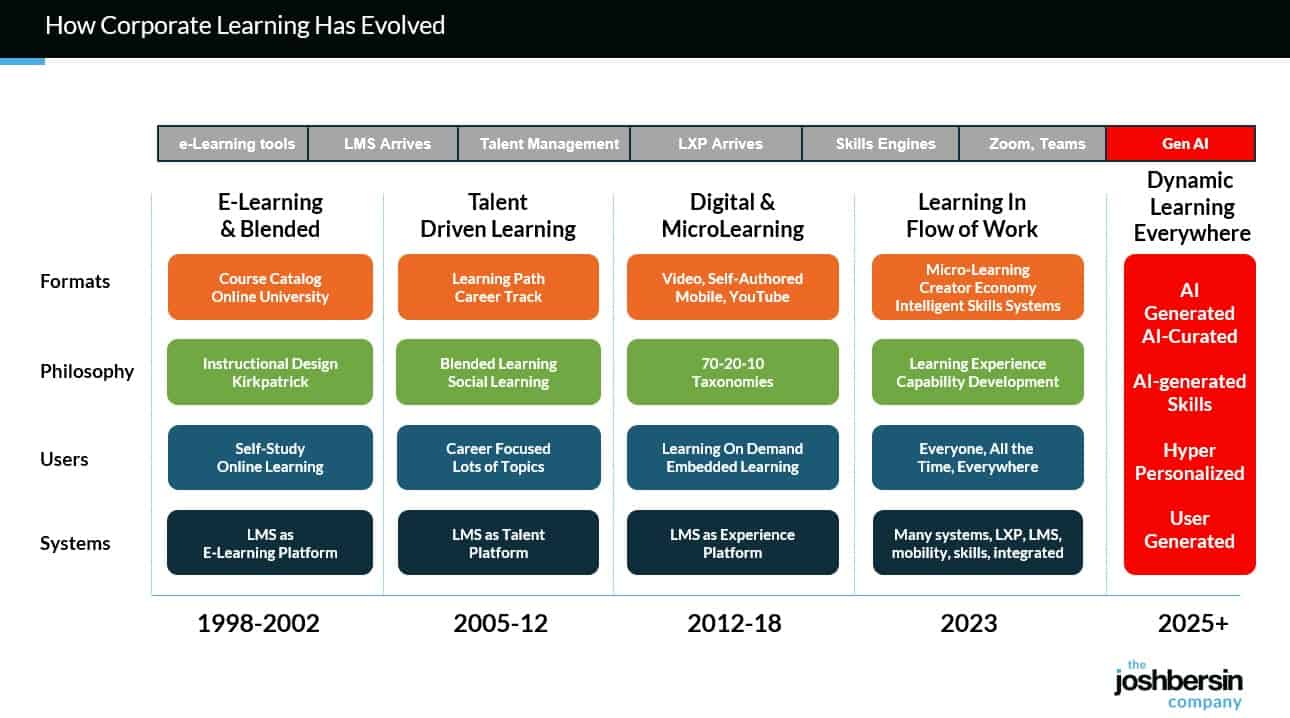
Workday Acquires Sana To Transform Its Learning Platform And Much More— from joshbersin.com by Josh Bersin

Well now, as the corporate learning market shifts to AI, (read the details in our study “The Revolution in Corporate Learning” ), Workday can jump ahead. This is because the $400 billion corporate training market is moving quickly to an AI-Native dynamic content approach (witness OpenAI’s launch of in-line learning in its chatbot). We’re just finishing a year-long study of this space and our detailed report and maturity model will be out in Q4.
.

.
With Sana, and a few other AI-native vendors (Uplimit, Arist, Disperz, Docebo), companies can upload audios, videos, documents, and even interviews with experts and the system build learning programs in minutes. We use Sana for Galileo Learn (our AI-powered learning academy for Leadership and HR), and we now have 750+ courses and can build new programs in days instead of months.

And there’s more; this type of system gives every employee a personalized, chat-based experience to learn. 


Introducing the 2025 State of the L&D Industry Report — from community.elearningacademy.io

What’s changing is not the foundation—it’s the ecosystem. Teams are looking to create more flexible, scalable, and diverse learning experiences that meet people where they are.

What Did We Explore?
Everyone seems to have a take on what’s happening in L&D these days. From bold claims about six-figure roles to debates over whether portfolios or degrees matter more, everyone seems to have a take. So, we wanted to get to the heart of it by exploring five of the biggest, most debated areas shaping our work today:

  • Salaries: Are compensation trends really keeping pace with the value we deliver?
  • Hiring: What skills are managers actually looking for—and are those ATS horror stories true?
  • Portfolios: Are portfolios helping candidates stand out, and what are hiring managers actually looking for?
  • Tools & Modalities: What types of training are teams building, and what tools are they using to build it?
  • Artificial Intelligence: Who’s using it, how, and what concerns still exist?

These five areas are shaping the future of instructional design—not just for job seekers, but for team leaders, hiring managers, and the entire ecosystem of L&D professionals.

The takeaway? A portfolio is more than a collection of projects—it’s a storytelling tool. The ones that stand out highlight process, decision-making, and results—not just pretty screens.


Building a learning ecosystem that drives business results — from chieflearningofficer.com by Nick Romanowski
How SAX combined adaptive e-learning and experiential workshops to accelerate capability development and impact the bottom line.

At SAX, we know that to succeed in today’s market, we need professionals who can learn quickly, apply that learning effectively and continuously adapt as client needs evolve.

Yet traditional training methods were no longer enough. Our firm faced familiar challenges: helping staff meet continuing professional education requirements efficiently, uncovering knowledge gaps to guide development and building a more capable, more client-ready workforce.

We found our solution in a flipped learning model that blends adaptive e-learning with live, experiential workshops. The results were transformative. We accelerated CPE credit completion by more than 50 percent, reclaimed 173 billable hours and equipped our people with deeper capabilities.

Here’s how we did it, and what we learned along the way.

Blend technology and human touch: Adaptive e-learning addresses individual knowledge gaps efficiently. Live workshops enable skill development through practice and feedback. Together, they drive both learning efficiency and behavior change.


The Learning & Development Global Sentiment Survey 2025 — from donaldhtaylor.co.uk by Don Taylor

The L&D Global Sentiment Survey, now in its 12th year, once again asked two key questions of L&D professionals worldwide:

  • What will be hot in workplace learning in 2025?
  • What are your L&D challenges in 2025?

For the obligatory question on what they considered ‘hot’ topics, respondents voted for one to three of 15 suggested options, plus a free text ‘Other’ option. Over 3,000 voters participated from nearly 100 countries. 85% shared their challenges for 2025.

The results show more interest in AI, a renewed focus on showing the value of L&D, and some signs of greater maturity around our understanding of AI in L&D.


Side Hustles for Educators — from drlukehobson.com by Luke Hobson

Anyway, let’s say you work in education, and you want to start a side hustle. What are your options? I’ve seen folks take a few different approaches with this so, let’s go over a few options:

  • Adjunct Positions…
  • Presentations and Workshops…
  • Consulting and Client Work…
  • Digital Courses and Coaching…
 

What DICE does in this posting will be available 24x7x365 in the future [Christian]

From DSC:
First of all, when you look at the following posting:


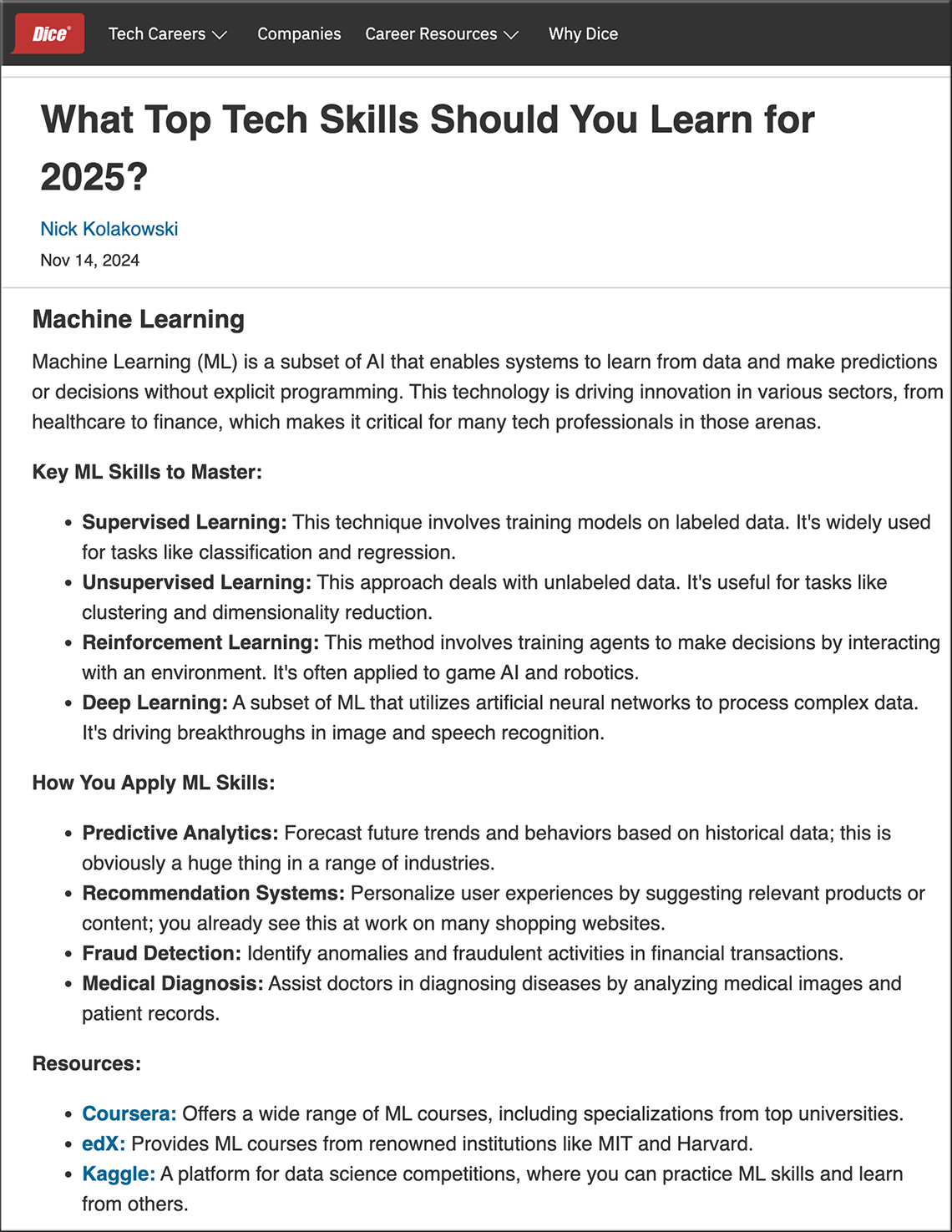
What Top Tech Skills Should You Learn for 2025? — from dice.com by Nick Kolakowski


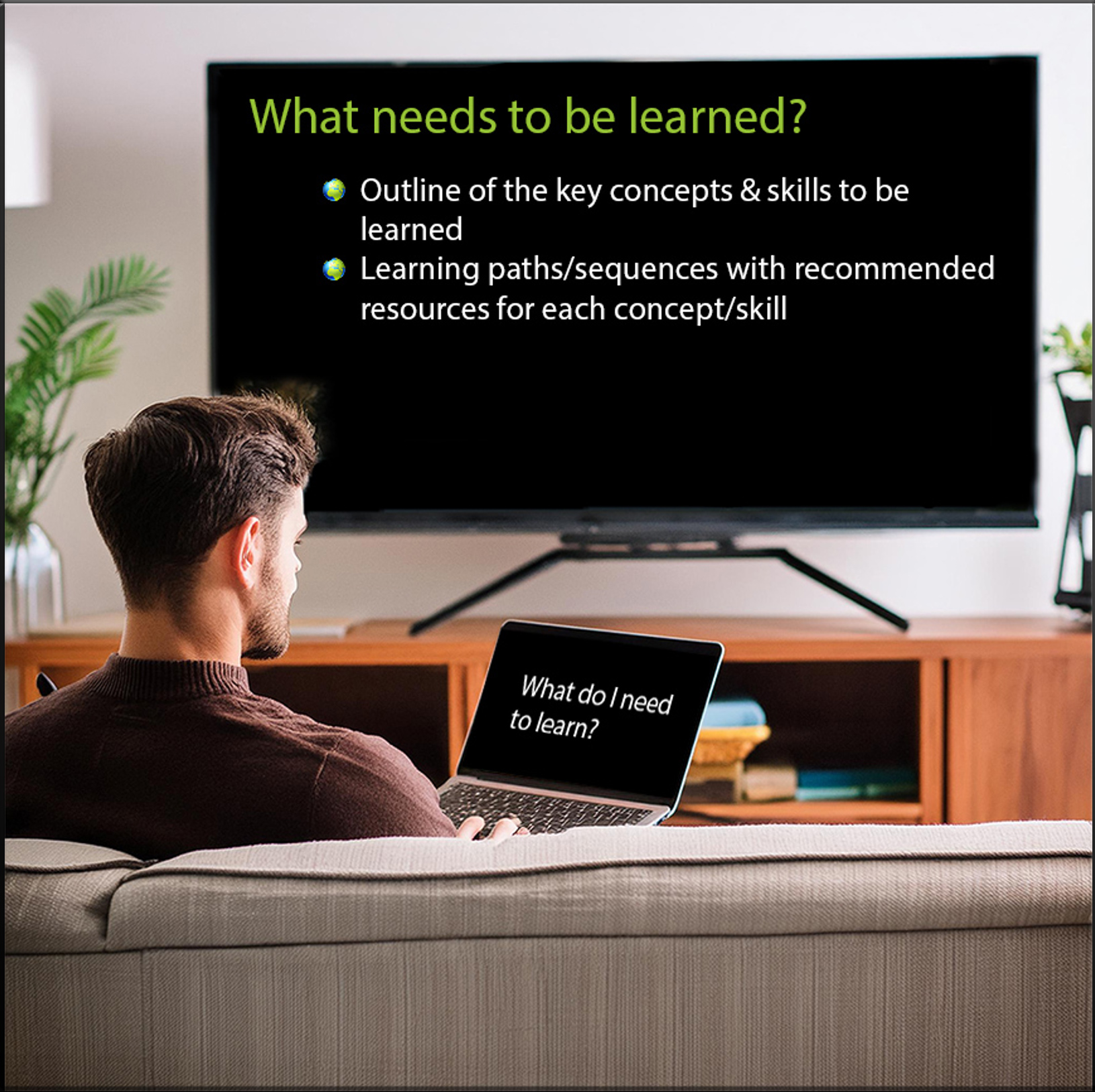
…you will see that they outline which skills you should consider mastering in 2025 if you want to stay on top of the latest career opportunities. They then list more information about the skills, how you apply the skills, and WHERE to get those skills.

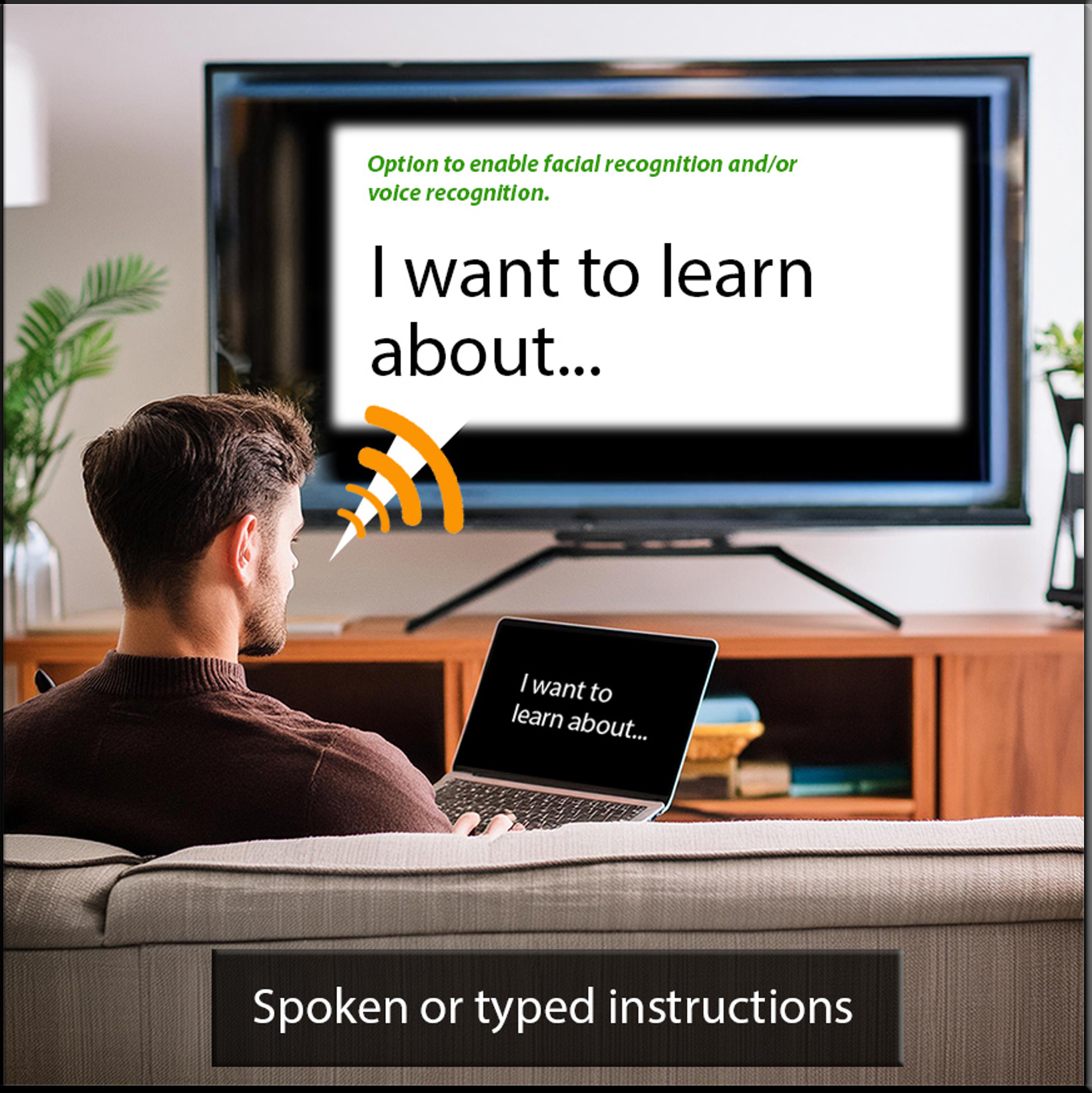
I assert that in the future, people will be able to see this information on a 24x7x365 basis.

  • Which jobs are in demand?
  • What skills do I need to do those jobs?
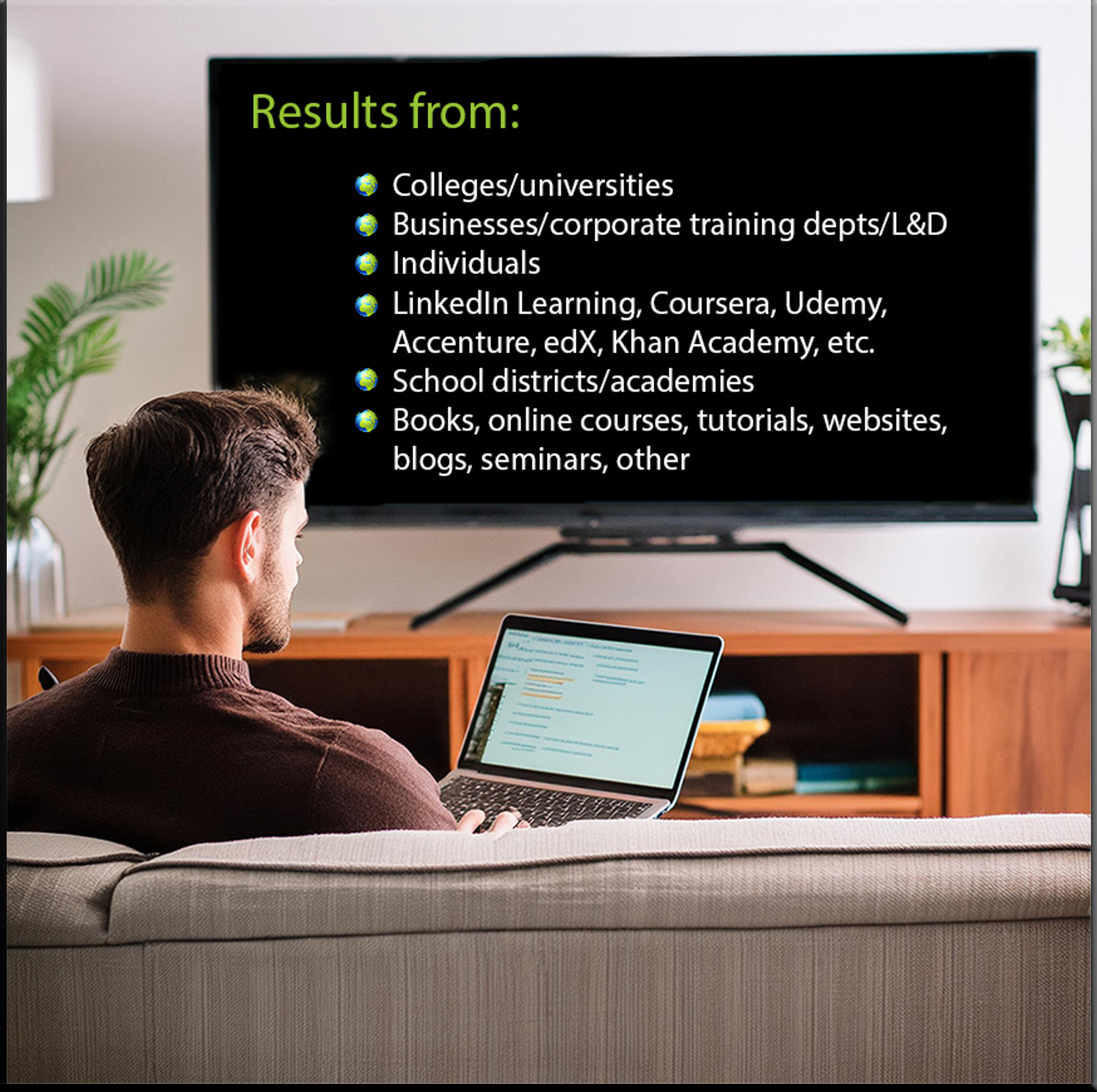
  • WHERE do I get/develop those skills?


And that last part (about the WHERE do I develop those skills) will pull from many different institutions, people, companies, etc.

BUT PEOPLE are the key! Oftentimes, we need to — and prefer to — learn with others!


What Students Want When It Comes To AI — from onedtech.philhillaa.com by Glenda Morgan
The Digital Education Council Global AI Student Survey 2024

The Digital Education Council (DEC) this week released the results of a global survey of student opinions on AI. It’s a large survey with nearly 4,000 respondents conducted across 16 countries, but more importantly, it asks some interesting questions. There are many surveys about AI out there right now, but this one stands out. I’m going to go into some depth here, as the entire survey report is worth reading.

.

.


AI is forcing a teaching and learning evolution — from eschoolnews.com by Laura Ascione
AI and technology tools are leading to innovative student learning–along with classroom, school, and district efficiency

Key findings from the 2024 K-12 Educator + AI Survey, which was conducted by Hanover Research, include:

  • Teachers are using AI to personalize and improve student learning, not just run classrooms more efficiently, but challenges remain
  • While post-pandemic challenges persist, the increased use of technology is viewed positively by most teachers and administrators
  • …and more

From DSC:
I wonder…how will the use of AI in education square with the issues of using smartphones/laptops within the classrooms? See:

  • Why Schools Are Racing to Ban Student Phones — from nytimes.com by Natasha Singer; via GSV
    As the new school year starts, a wave of new laws that aim to curb distracted learning is taking effect in Indiana, Louisiana and other states.

A three-part series from Dr. Phillippa Hardman:

Part 1: Writing Learning Objectives  
The Results Part 1: Writing Learning Objectives

In this week’s post I will dive into the results from task 1: writing learning objectives. Stay tuned over the next two weeks to see all of the the results.

Part 2: Selecting Instructional Strategies.
The Results Part 2: Selecting an Instructional Strategy

Welcome back to our three-part series exploring the impact of AI on instructional design.

This week, we’re tackling a second task and a crucial aspect of instructional design: selecting instructional strategies. The ability to select appropriate instructional strategies to achieve intended objectives is a mission-critical skill for any instructional designer. So, can AI help us do a good job of it? Let’s find out!

Part 3: How Close is AI to Replacing Instructional Designers?
The Results Part 3: Creating a Course Outline

Today, we’re diving into what many consider to be the role-defining task of the instructional designer: creating a course design outline.


ChatGPT Cheat Sheet for Instructional Designers! — from Alexandra Choy Youatt EdD

Instructional Designers!
Whether you’re new to the field or a seasoned expert, this comprehensive guide will help you leverage AI to create more engaging and effective learning experiences.

What’s Inside?
Roles and Tasks: Tailored prompts for various instructional design roles and tasks.
Formats: Different formats to present your work, from training plans to rubrics.
Learning Models: Guidance on using the ADDIE model and various pedagogical strategies.
Engagement Tips: Techniques for online engagement and collaboration.
Specific Tips: Industry certifications, work-based learning, safety protocols, and more.

Who Can Benefit?
Corporate Trainers
Curriculum Developers
E-Learning Specialists
Instructional Technologists
Learning Experience Designers
And many more!

ChatGPT Cheat Sheet | Instructional Designer


5 AI Tools I Use Every Day (as a Busy Student) — from theaigirl.substack.com by Diana Dovgopol
AI tools that I use every day to boost my productivity.
#1 Gamma
#2 Perplexity
#3 Cockatoo

I use this AI tool almost every day as well. Since I’m still a master’s student at university, I have to attend lectures and seminars, which are always in English or German, neither of which is my native language. With the help of Cockatoo, I create scripts of the lectures and/or translations into my language. This means I don’t have to take notes in class and then manually translate them afterward. All I need to do is record the lecture audio on any device or directly in Cockatoo, upload it, and then you’ll have the audio and text ready for you.

…and more


Students Worry Overemphasis on AI Could Devalue Education — from insidehighered.com by Juliette Rowsell
Report stresses that AI is “new standard” and universities need to better communicate policies to learners.

Rising use of AI in higher education could cause students to question the quality and value of education they receive, a report warns.

This year’s Digital Education Council Global AI Student Survey, of more than 3,800 students from 16 countries, found that more than half (55 percent) believed overuse of AI within teaching devalued education, and 52 percent said it negatively impacted their academic performance.

Despite this, significant numbers of students admitted to using such technology. Some 86 percent said they “regularly” used programs such as ChatGPT in their studies, 54 percent said they used it on a weekly basis, and 24 percent said they used it to write a first draft of a submission.

Higher Ed Leadership Is Excited About AI – But Investment Is Lacking — from forbes.com by Vinay Bhaskara

As corporate America races to integrate AI into its core operations, higher education finds itself in a precarious position. I conducted a survey of 63 university leaders revealing that while higher ed leaders recognize AI’s transformative potential, they’re struggling to turn that recognition into action.

This struggle is familiar for higher education — gifted with the mission of educating America’s youth but plagued with a myriad of operational and financial struggles, higher ed institutions often lag behind their corporate peers in technology adoption. In recent years, this gap has become threateningly large. In an era of declining enrollments and shifting demographics, closing this gap could be key to institutional survival and success.

The survey results paint a clear picture of inconsistency: 86% of higher ed leaders see AI as a “massive opportunity,” yet only 21% believe their institutions are prepared for it. This disconnect isn’t just a minor inconsistency – it’s a strategic vulnerability in an era of declining enrollments and shifting demographics.


(Generative) AI Isn’t Going Anywhere but Up — from stefanbauschard.substack.com by Stefan Bauschard
“Hype” claims are nonsense.

There has been a lot of talk recently about an “AI Bubble.” Supposedly, the industry, or at least the generative AI subset of it, will collapse. This is known as the “Generative AI Bubble.” A bubble — a broad one or a generative one — is nonsense. These are the reasons we will continue to see massive growth in AI.


AI Readiness: Prepare Your Workforce to Embrace the Future — from learningguild.com by Danielle Wallace

Artificial Intelligence (AI) is revolutionizing industries, enhancing efficiency, and unlocking new opportunities. To thrive in this landscape, organizations need to be ready to embrace AI not just technologically but also culturally.

Learning leaders play a crucial role in preparing employees to adapt and excel in an AI-driven workplace. Transforming into an AI-empowered organization requires more than just technological adoption; it demands a shift in organizational mindset. This guide delves into how learning leaders can support this transition by fostering the right mindset attributes in employees.


Claude AI for eLearning Developers — from learningguild.com by Bill Brandon

Claude is fast, produces grammatically correct  text, and outputs easy-to-read articles, emails, blog posts, summaries, and analyses. Take some time to try it out. If you worry about plagiarism and text scraping, put the results through Grammarly’s plagiarism checker (I did not use Claude for this article, but I did send the text through Grammarly).


Survey: Top Teacher Uses of AI in the Classroom — from thejournal.com by Rhea Kelly

A new report from Cambium Learning Group outlines the top ways educators are using artificial intelligence to manage their classrooms and support student learning. Conducted by Hanover Research, the 2024 K-12 Educator + AI Survey polled 482 teachers and administrators at schools and districts that are actively using AI in the classroom.

More than half of survey respondents (56%) reported that they are leveraging AI to create personalized learning experiences for students. Other uses included providing real-time performance tracking and feedback (cited by 52% of respondents), helping students with critical thinking skills (50%), proofreading writing (47%), and lesson planning (44%).

On the administrator side, top uses of AI included interpreting/analyzing student data (61%), managing student records (56%), and managing professional development (56%).


Addendum on 8/14/24:


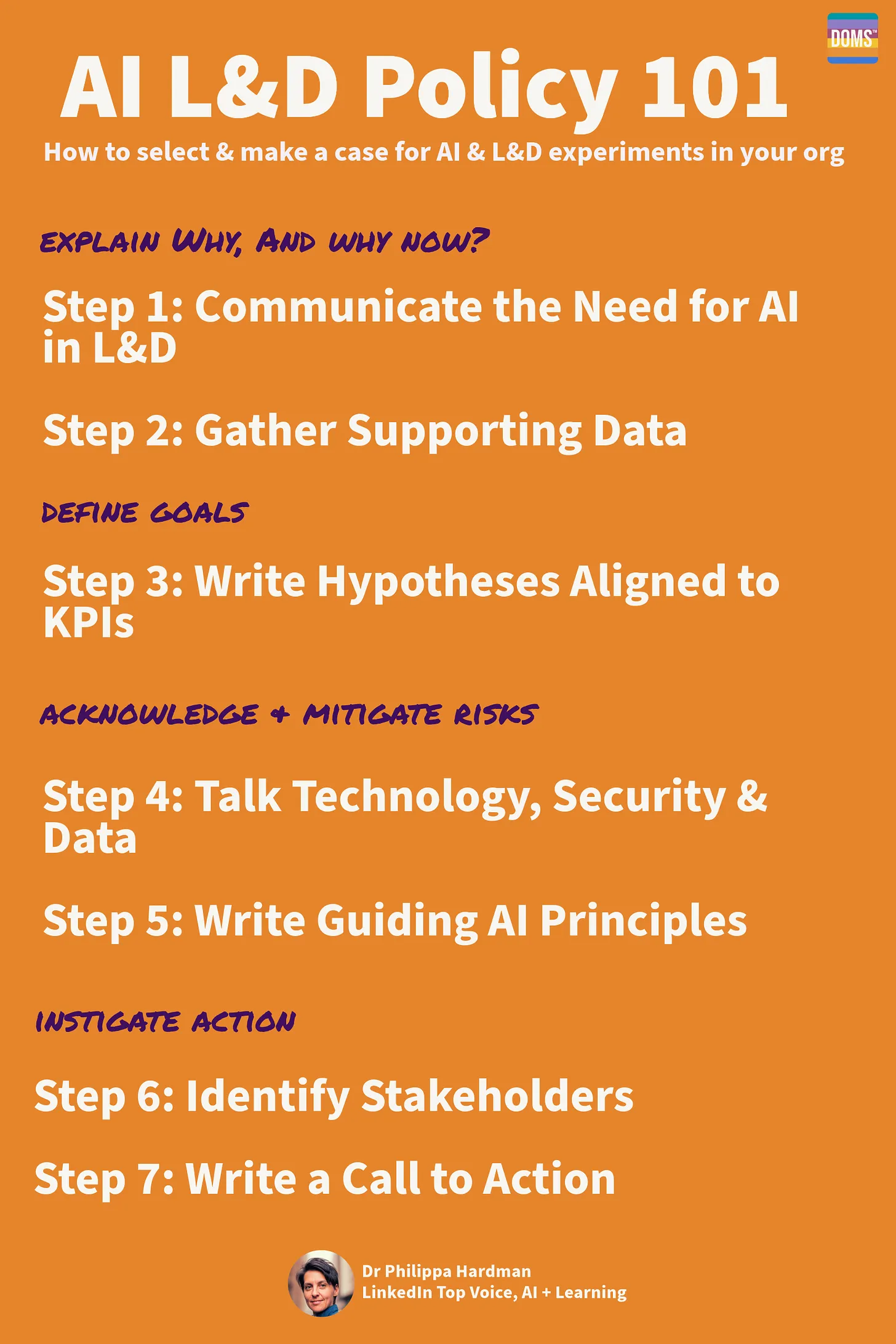
AI Policy 101: a Beginners’ Framework — from drphilippahardman.substack.com by Dr. Philippa Hardman
How to make a case for AI experimentation & testing in learning & development


6 AI Tools Recommended By Teachers That Aren’t ChatGPT — from forbes.com by Dan Fitzpatrick

Here are six AI tools making waves in classrooms worldwide:

  • Brisk Teaching
  • SchoolAI
  • Diffit
  • Curipod
  • Skybox by Blockade Labs in ThingLink
  • Ideogram

With insights from educators who are leveraging their potential, let’s explore them in more detail.


AI Is Speeding Up L&D But Are We Losing the Learning? — from learningguild.com by Danielle Wallace

The role of learning & development
Given these risks, what can L&D professionals do to ensure generative AI contributes to effective learning? The solution lies in embracing the role of trusted learning advisors, guiding the use of AI tools in a way that prioritizes achieving learning outcomes over only speed. Here are three key steps to achieve this:

1. Playtest and Learn About AI
2. Set the Direction for AI to Be Learner-Centered…
3. Become Trusted Learning Advisors…


Some other tools to explore:

Descript: If you can edit text, you can edit videos. — per Bloomberg’s Vlad Savov
Descript is the AI-powered, fully featured, end-to-end video editor that you already know how to use.

A video editor that works like docs and slides
No need to learn a new tool — Descript works like the tools you’ve already learned.

Audeze | Filter — per Bloomberg’s Vlad Savov


AI Chatbots in Schools Findings from a Poll of K-12 Teachers, Students, Parents, and College Undergraduates — from Impact Research; via Michael Spencer and Lily Lee

Key Findings

  • In the last year, AI has become even more intertwined with our education system. More teachers, parents, and students are aware of it and have used it themselves on a regular basis. It is all over our education system today.
  • While negative views of AI have crept up over the last year, students, teachers, and parents feel very positive about it in general. On balance they see positive uses for the technology in school, especially if they have used it themselves.
  • Most K-12 teachers, parents, and students don’t think their school is doing much about AI, despite its widespread use. Most say their school has no policy on it, is doing nothing to offer desired teacher training, and isn’t meeting the demand of students who’d like a career in a job that will need AI.
  • The AI vacuum in school policy means it is currently used “unauthorized,” while instead people want policies that encourage AI. Kids, parents, and teachers are figuring it out on their own/without express permission, whereas all stakeholders would rather have a policy that explicitly encourages AI from a thoughtful foundation.

The Value of AI in Today’s Classrooms — from waltonfamilyfoundation.org

There is much discourse about the rise and prevalence of AI in education and beyond. These debates often lack the perspectives of key stakeholders – parents, students and teachers.

In 2023, the Walton Family Foundation commissioned the first national survey of teacher and student attitudes toward ChatGPT. The findings showed that educators and students embrace innovation and are optimistic that AI can meaningfully support traditional instruction.

A new survey conducted May 7-15, 2024, showed that knowledge of and support for AI in education is growing among parents, students and teachers. More than 80% of each group says it has had a positive impact on education.


Where a developing, new kind of learning ecosystem is likely headed [Christian]

From DSC:
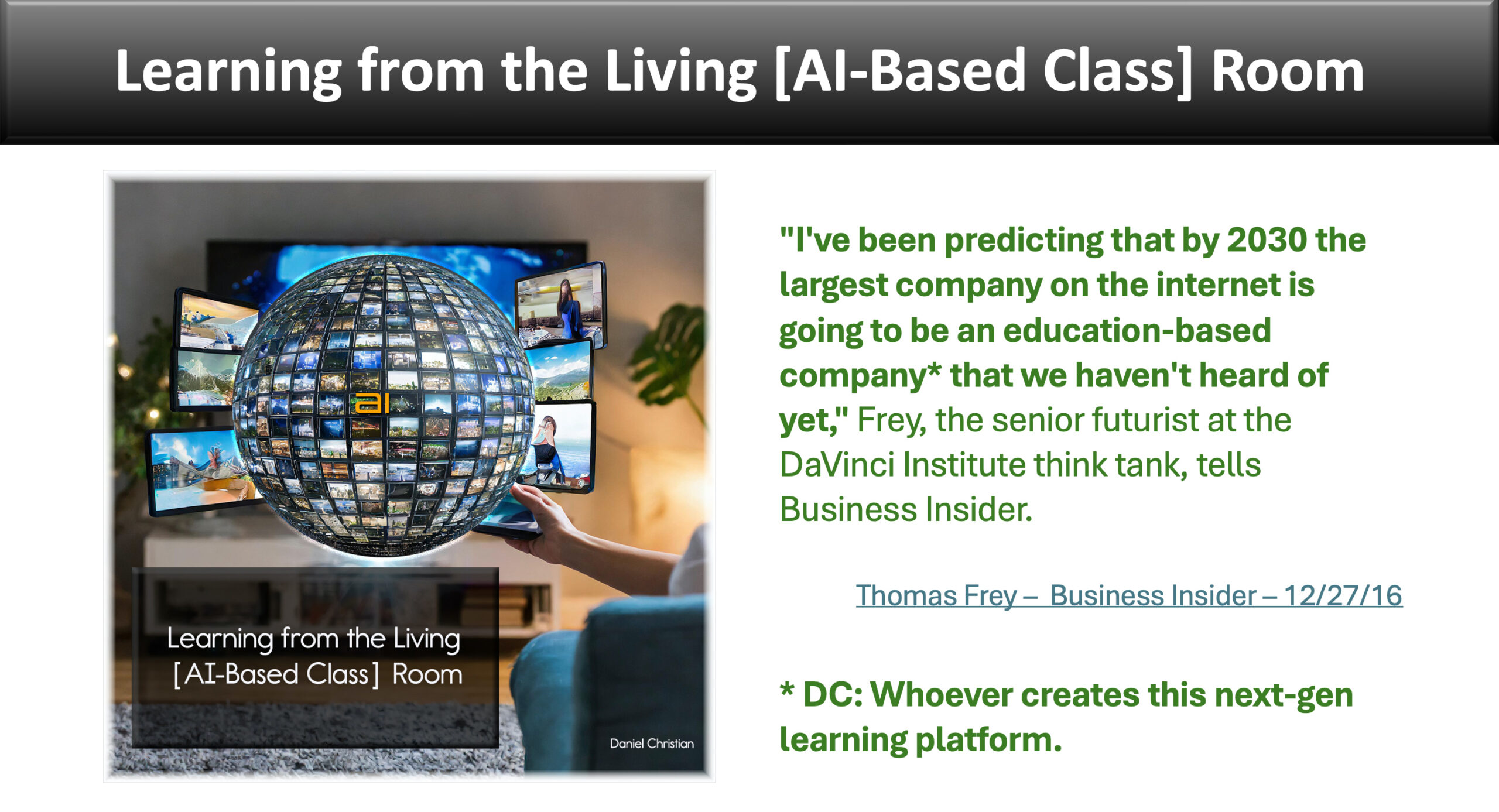
As I’ve long stated on the Learning from the Living [Class]Room vision, we are heading toward a new AI-empowered learning platform — where humans play a critically important role in making this new learning ecosystem work.

Along these lines, I ran into this site out on X/Twitter. We’ll see how this unfolds, but it will be an interesting space to watch.

Project Chiron's vision: Our vision for education Every child will soon have a super-intelligent AI teacher by their side. We want to make sure they instill a love of learning in children.


From DSC:
This future learning platform will also focus on developing skills and competencies. Along those lines, see:

Scale for Skills-First — from the-job.beehiiv.com by Paul Fain
An ed-tech giant’s ambitious moves into digital credentialing and learner records.

A Digital Canvas for Skills
Instructure was a player in the skills and credentials space before its recent acquisition of Parchment, a digital transcript company. But that $800M move made many observers wonder if Instructure can develop digital records of skills that learners, colleges, and employers might actually use broadly.

Ultimately, he says, the CLR approach will allow students to bring these various learning types into a coherent format for employers.

Instructure seeks a leadership role in working with other organizations to establish common standards for credentials and learner records, to help create consistency. The company collaborates closely with 1EdTech. And last month it helped launch the 1EdTech TrustEd Microcredential Coalition, which aims to increase quality and trust in digital credentials.

Paul also links to 1EDTECH’s page regarding the Comprehensive Learning Record


How do you create and maintain an e-learning portfolio without pitfalls? — from linkedin.com by various authors

If you are an e-learning professional, you know how important it is to showcase your skills and projects to potential clients, employers, or collaborators. An e-learning portfolio is a collection of your best work that demonstrates your abilities, creativity, and experience in designing, developing, and delivering online learning solutions. But how do you create and maintain an e-learning portfolio without pitfalls? In this article, you will learn some tips and best practices to help you avoid common mistakes and make your portfolio stand out.


Speaking of career-related postings, I thought this was an interesting article:

In Praise of the Meandering Career — from every.to by Simone Stolzoff
Build a compass, not a map

Midjourney prompt/"meandering career" Midjourney prompt/”meandering career”

There’s a common misconception that our résumés ought to tell a linear story, free from breaks, twists, and turns. But this assumption is not borne out in reality. Nearly three out of every four college graduates work in a field unrelated to their major. The average worker holds over a dozen jobs by their fifties. And over half of today’s college students will work jobs that don’t yet exist.

Taking a nontraditional path will force you to grapple with what matters
The greatest benefit of a nontraditional path is that you have to figure out what you care about. Rather than an employer telling you what you should value, you have to do the hard work of determining what you value for yourself.


Will one of our future learning ecosystems look like a Discord server type of service? [Christian]

 
© 2025 | Daniel Christian