



.

.
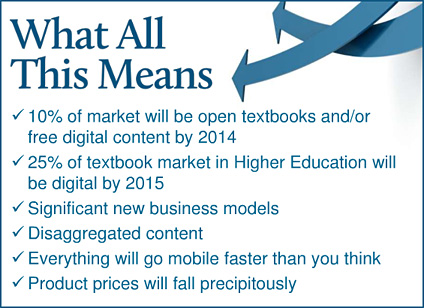
This is a presentation prepared for the “What College Students Think: Making Information Pay for Higher Ed Publishing” conference sponsored by the Book Industry Study Group on February 9.
.
.
This is a presentation prepared for the “What College Students Think: Making Information Pay for Higher Ed Publishing” conference sponsored by the Book Industry Study Group on February 9.
.
Brief summary/notes from DSC:
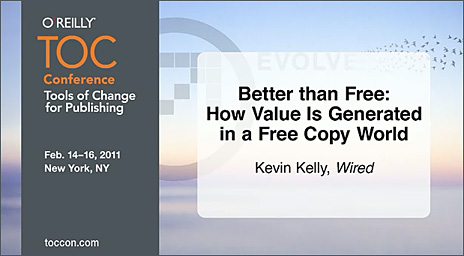
Per Kevin Kelly (Feb 2011), the future is about 6 verbs:
- immediacy
- personalization
- authentication
- findability
- embodiment
- interpretation
- accessibility
- attention
Originally from — and see:
The following airs Sunday, February 13, 2011 at 10:30 p.m. ET/PT:
Digital Media – New Learners Of The 21st Century Digital Media: Chapter 1
Chapter 1 features experts in the field of digital media and its use in education.
Chapter one of Digital Media: New Learners of the 21st Century criss-crosses the nation to highlight real-life examples of how digital media is exploding in educational environments.
Originally seen at startl.org
Semantic technologies and learning — from Steve Wheeler
Excerpt:
The January special issue of Interactive Learning Environments is out right now. Our guest editors have done a great job drawing together 5 excellent papers under the banner of ‘Semantic Technologies for Multimedia Enhanced Learning Environments’ and for Learning with ‘e’s readers, here is the editorial in full, with excellent summaries of all the papers by our special issue editors Marco Bertini, Vladan Devedzic, Dragan Gasevic and Carlo Torniai…
…
This special issue solicited papers focused on the use of semantic technologies in multimedia-enhanced learning environments. In this call, we were especially interested in publishing research reports and lessons learned in the following research tasks:
- Ontologies and semantic annotations for multimedia learning objects.
- Collaborative tagging and folksonomies for multimedia learning objects.
- Semantic social networking in multimedia-based learning environments.
- Semantic technologies for enabling pedagogical theories in multimedia-enhanced learning environments.
- Semantic-enhanced learning designs in multimedia-enhanced learning.
- Semantic technologies for personalization and adaptation of multimedia-enhanced learning.
- Semantic-rich service-oriented architectures for multimedia learning environments.
- Semantic multimedia content for (collaborative) mobile learning.
An overview of HTML5 — from Integrated Learning Services
Also see:
London: Videos from the Learning Without Frontiers Festival now online
Learning Without Frontiers is a global platform for disruptive thinkers and practitioners from the education, digital media, technology and entertainment sectors who come together to explore how new disruptive technologies can drive radical efficiencies and improvements in learning whilst providing equality of access.
If you were unable to attend the recent LWF Festival of Learning & Technology in London we’re pleased to let you know that videos from the conference are now online for your personal or group viewing pleasure. There are a number of ways to view these videos so just choose the one you prefer.
To view, comment & join the discussions you can visit the video pages on the LWF site here
Amongst the alternatives, they are available on the following platforms:
iTunes (download to your PC, iPad or iPhone)*
And for users of Apple TV simply search for the Learning Without Frontiers channel under podcasts.
*You can also search for Learning Without Frontiers in the iTunes store – they are FREE!
Who needs textbooks? — from Newsweek.com
How Washington State is redesigning textbooks for the digital age.

Jessie Sellers, a student at Tacoma Community College in Washington state, was puzzled when he logged onto his school’s website last December to figure out which book he needed for his upcoming English class. Whereas for all his previous courses, the 24-year-old education major could simply click on a link to view the name of the required textbook, this time there were no books listed at all. It was no mistake: thanks to an ambitious pilot program aimed at reducing the cost of textbooks at public colleges, Sellers and hundreds of other students across the state won’t have to buy textbooks for more than three dozen courses offered this winter.
Washington’s Open Course Library is the largest state-funded effort in the nation to make core college course materials available on the Web for $30 or less per class. Financed with $750,000 from the state of Washington and a matching grant from the Bill & Melinda Gates Foundation, the goal isn’t just to reduce student costs, says program architect Cable Green. It’s also to create engaging, interactive learning materials that will help improve course completion rates. By the time the project is completed in 2012, digitized textbook equivalents for some 81 high-enrollment classes will be available online for the more than 400,000 students enrolled in Washington’s network of community and technical colleges. Even better, the materials can be shared across the globe, largely for free, because they will be published in an open format that avoids the most onerous licensing restrictions. To keep costs at a minimum, the teachers developing the materials are relying primarily on either existing material in the public domain or embarking on the painstaking task of developing materials from scratch.
U. of Notre Dame reports on experiment to replace textbooks with iPads — from The Chronicle
Also see:
From DSC:
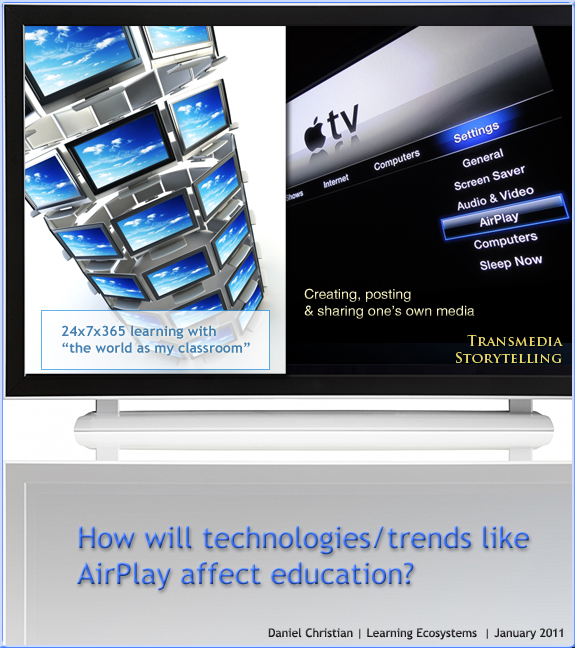
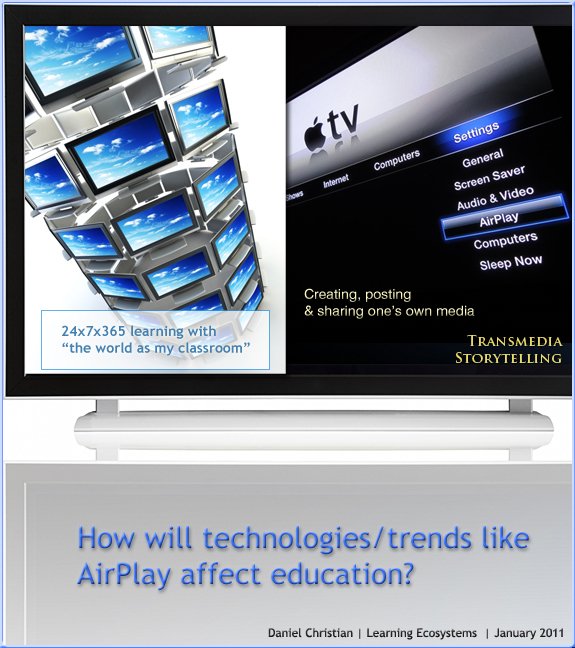
The other day, I created/posted the top graphic below. Take the concepts below — hook them up to engines that use cloud-based learner profiles — and you have some serious potential for powerful, global, ubiquitous learning! A touch-sensitive panel might be interesting here as well.
Come to think of it, add social networking, videoconferencing, and web-based collaboration tools — the power to learn would be quite impressive. Multimedia to the nth degree.
Then add to that online marketplaces for teaching and learning — where you can be both a teacher and a learner at the same time — hmmm…
.
.
From DSC:
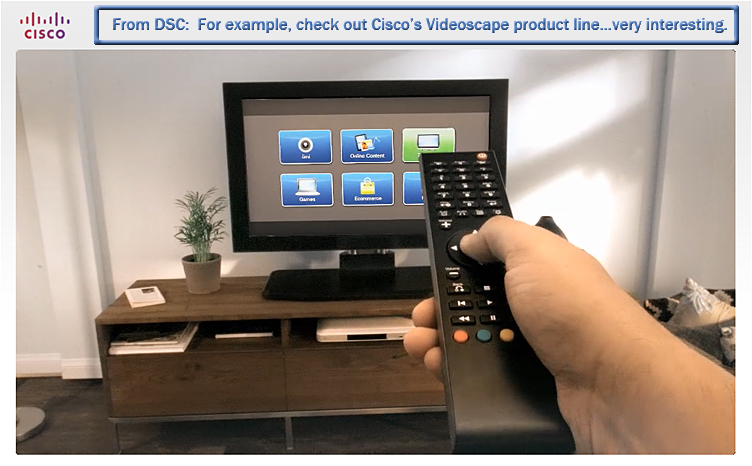
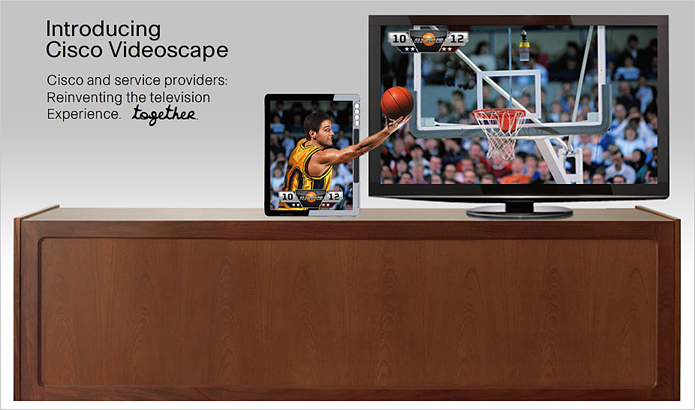
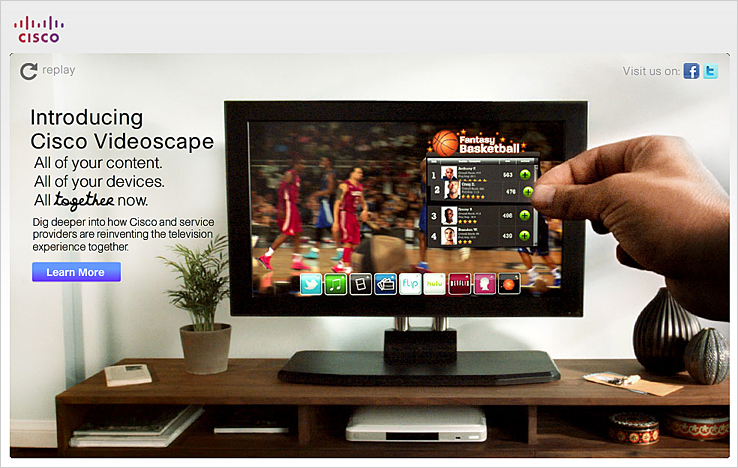
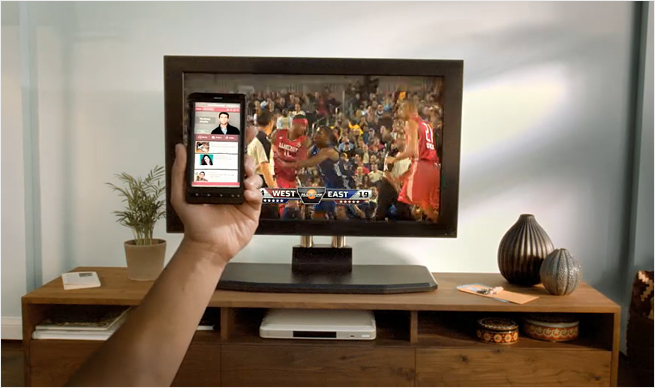
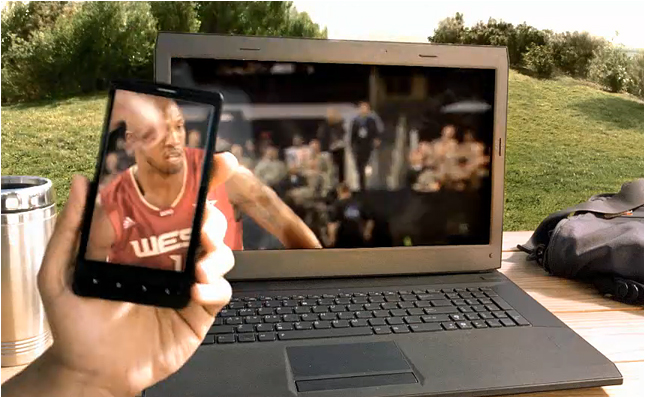
Then today, I saw Cisco’s piece on their Videoscape product line! Check it out!
.
 .
.
.
.
.

.
Addendum on 1-20-11:
The future of the TV is online — from telegraph.co.uk
Your television’s going to get connected, says Matt Warman
100+ online resources that are transforming education — from Mashable
.
From DSC:
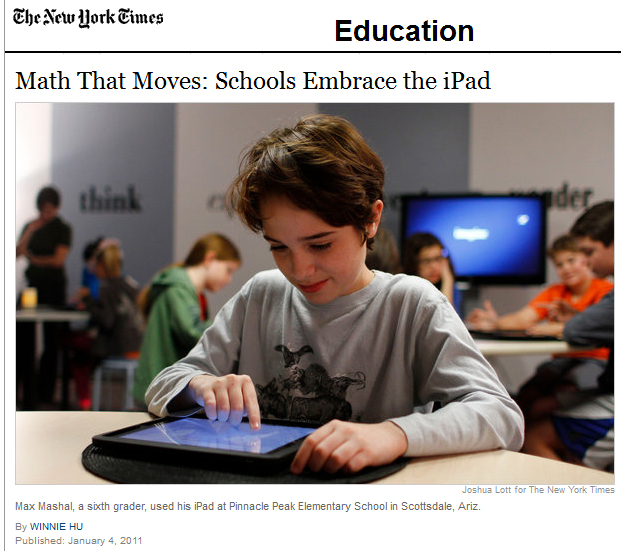
I post this here — with higher ed included in the tags/categories — because if the trend within K-12 continues (i.e. that of using such technologies as the iPad, digital textbooks, mobile learning devices, etc.), students’ expectations WILL be impacted. When they hit our doorsteps, they will come with their heightened sets of expectations. The question is, will we in higher ed be ready for them?
Textbook publishers and rich media — from Higher Education Management Group
The competitive landscape of textbook publishing has changed and it’s not going to get easier for the traditional parties. However, I think it’s possible for the industry to regain the advantage that made them such a strong presence for decades in education. To do this, publishers will need to determine how – given the new market conditions – their competencies, brand and infrastructure can produce a competitive advantage – and to ensure that this new market position meets the needs of the new higher education market. Easier said than done, right? But the funny thing is that this new strategy will mean the publishers return to what made them the great presence in the first place. Let me attempt to unpack this before I get anymore abstract.

