


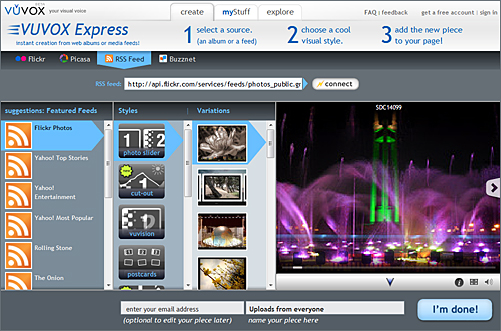
Vuvox: A tool for digital storytelling — from Instructional Design Fusions by Dianne Rees
 .
.
Dianne mentions that Vuvox provides some helpful videos to get you started:
From DSC:
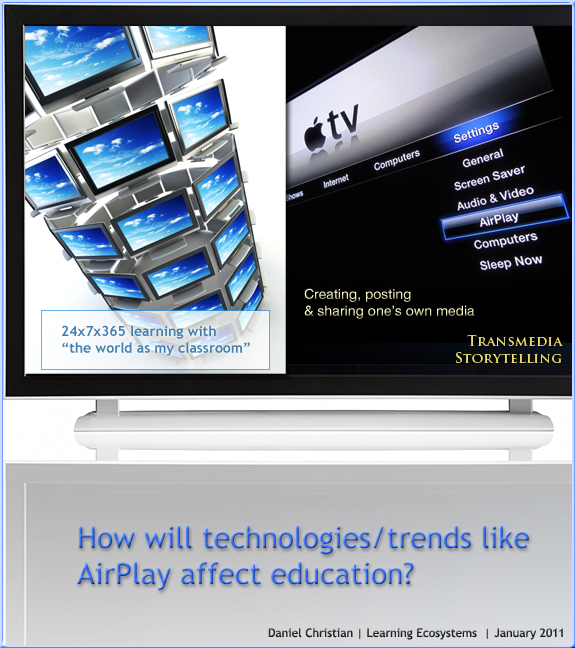
A global push continues to be evident in some of the things that Pearson has been up to in the last year:
.
Addendum on 1-20-11:
The future of the TV is online — from telegraph.co.uk
Your television’s going to get connected, says Matt Warman
.
From DSC:
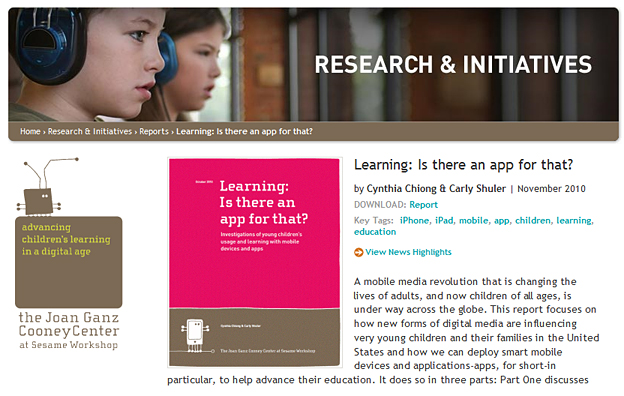
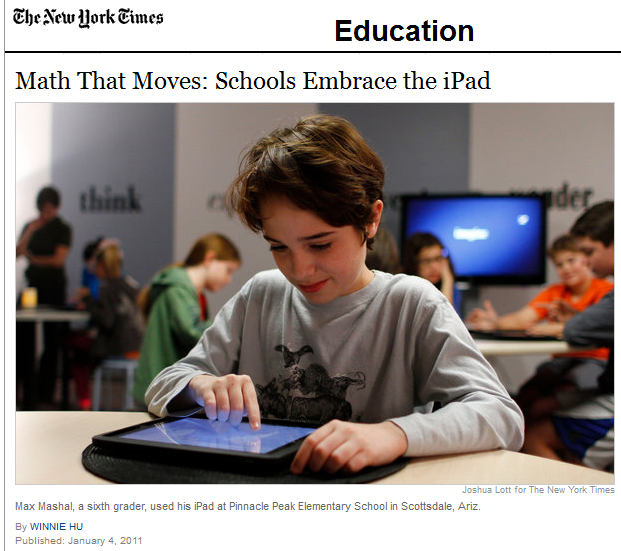
I post this here — with higher ed included in the tags/categories — because if the trend within K-12 continues (i.e. that of using such technologies as the iPad, digital textbooks, mobile learning devices, etc.), students’ expectations WILL be impacted. When they hit our doorsteps, they will come with their heightened sets of expectations. The question is, will we in higher ed be ready for them?
Towards a new-digital learning ecosystem based on autonomic Web services — from IEEEXplore Digital Library (emphasis below from DSC)
Abstract
With the latest advances in information and communication technologies, learners can now engage in continuous and rich learning-sessions that characterize today’s digital learning ecosystems. In these ecosystems, learning resources are pervasive and dynamic. A key challenge is to develop a scalable learning system that addresses the inherent complexity of learning sessions and cater for the specific needs and requirements of individual learners. In this paper, we adopt autonomic Web services to capture disparate learning resources and build an autonomic digital learning ecosystem that reconfigures itself in response to changes in the environment such as learners’ profiles, resource availabilities, and type of instructional material. The use of autonomic Web services permits to abstract the learning resources into distributed and uniformly structured objects and to record learners’ attributes into a packaged profile. These Web services sense the learning context and coach learners in their pursuit of constructive instructional sessions. A service-oriented architecture is proposed to connect learning resources, learners’ profiles, and contextual indicators. A prototype is, also, illustrated in the paper to show the feasibility of the proposed solutions.
Also see:
Global Grid for Learning – 1 million-plus resources — from MJO
Hugh John checks out a BETT newbie, online service provider Global Grid for Learning
 .
.
Global Grid for Learning (GGfL) aims to connect teachers and students at all stages in education to single sources of digital multimedia learning resources from multiple providers.
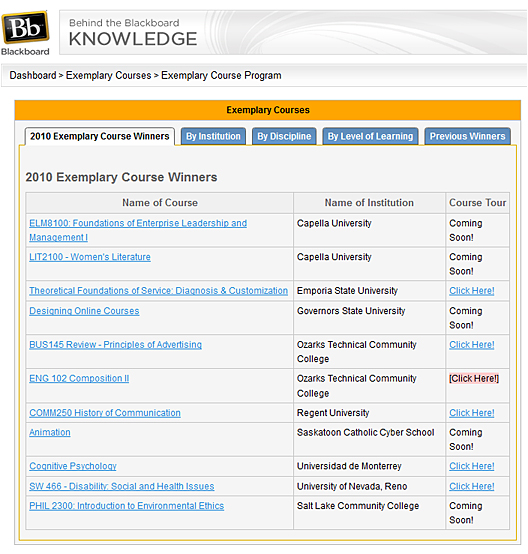
Example excerpts from 2010 University of Nevada, Reno
Best Practices
When asked to identify three best practices achieved by this course, one course reviewer wrote: “In all honesty this course is so well done that choosing three is like saying you have a favourite child. I really can’t do it.”
Organized and intriguing layout
Innovative use of technology
Interesting content
Textbook publishers and rich media — from Higher Education Management Group
The competitive landscape of textbook publishing has changed and it’s not going to get easier for the traditional parties. However, I think it’s possible for the industry to regain the advantage that made them such a strong presence for decades in education. To do this, publishers will need to determine how – given the new market conditions – their competencies, brand and infrastructure can produce a competitive advantage – and to ensure that this new market position meets the needs of the new higher education market. Easier said than done, right? But the funny thing is that this new strategy will mean the publishers return to what made them the great presence in the first place. Let me attempt to unpack this before I get anymore abstract.