Report shows U.S. schools can’t meet technology demands of teachers, students— from The Journal by Scott Aronowitz

Few people will be surprised to learn of research that shows K-12 institutions throughout the United States have become heavily dependent on technology, and that this dependency continues to increase with each passing year. What may surprise even the most jaded among us, however, is that, given that many view this a “good” dependency with a wealth of immediate and long-term benefits for teachers, students, and staff, we’re doing an inadequate job of feeding the habit.

At the FETC 2011 show in Orlando, FL, PBS and research firm Grunwald Associates released a national research report on digital media usage among educators entitled “Deepening Commitment: Teachers Increasingly Rely on Media and Technology.” The report is based on a survey conducted in August 2010 of 1,401 preK-12 teachers from various regions and demographics throughout the United States. Its primary conclusions are:

  • Teachers are, owing to both interest and circumstance, increasing their use and knowledge of technology in the classroom; and
  • U.S. schools provide an insufficient capacity of computing devices and technology infrastructure to support teachers’ Internet-based instruction needs.
The following airs Sunday, February 13, 2011 at 10:30 p.m. ET/PT:

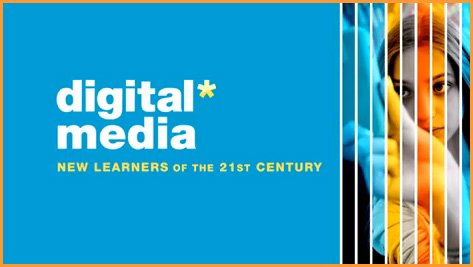
Digital Media -- to be on PBS 2-13-11

Digital Media – New Learners Of The 21st Century  Digital Media: Chapter 1

Chapter 1 features experts in the field of digital media and its use in education.
Chapter one of Digital Media: New Learners of the 21st Century criss-crosses the nation to highlight real-life examples of how digital media is exploding in educational environments.

Originally seen at startl.org

Cambridge Global Grid for Learning Partner with Moodlerooms
Leading broker and aggregator of digital educational content has established a joint partnership with proven provider of enterprise Moodle-based e-learning solutions to improve access to digital content.

Baltimore, MD — Moodlerooms, Inc., the provider of proven, enterprise Moodle-based e-learning solutions has established a joint partnership with leading broker and aggregator of digital educational content, Cambridge Global Grid for Learning (GGfL), a wholly owned subsidiary of Cambridge University Press, one of the world’s most respected publishers, to further the effort of providing educators and learners across the world with a safe and reliable environment to search, stream and download high quality and copyright-cleared learning resources from multiple content providers.

Over 40 content providers are currently available through GGfL, including Cambridge University Press, Intel, Science Photo Library, Classical Comics, Corbis, Reuters, EduPuzzles, and Bridgeman Education, making it one of the most comprehensive digital educational content collections in the world.

Rest of article…

Tagged with: • • •  

Semantic technologies and learning — from Steve Wheeler

Excerpt:

The January special issue of Interactive Learning Environments is out right now. Our guest editors have done a great job drawing together 5 excellent papers under the banner of ‘Semantic Technologies for Multimedia Enhanced Learning Environments’ and for Learning with ‘e’s readers, here is the editorial in full, with excellent summaries of all the papers by our special issue editors Marco Bertini, Vladan Devedzic, Dragan Gasevic and Carlo Torniai…

…

This special issue solicited papers focused on the use of semantic technologies in multimedia-enhanced learning environments. In this call, we were especially interested in publishing research reports and lessons learned in the following research tasks:

  • Ontologies and semantic annotations for multimedia learning objects.
  • Collaborative tagging and folksonomies for multimedia learning objects.
  • Semantic social networking in multimedia-based learning environments.
  • Semantic technologies for enabling pedagogical theories in multimedia-enhanced learning environments.
  • Semantic-enhanced learning designs in multimedia-enhanced learning.
  • Semantic technologies for personalization and adaptation of multimedia-enhanced learning.
  • Semantic-rich service-oriented architectures for multimedia learning environments.
  • Semantic multimedia content for (collaborative) mobile learning.

Digital Media and Technology in Afterschool Programs, Libraries, and Museums
Becky Herr-Stephenson, Diana Rhoten, Dan Perkel, and Christo Sims — with contributions from Anne Balsamo, Maura Klosterman, and Susana Smith Bautista
© 2011 Massachusetts Institute of Technology | The MIT Press | Cambridge, Massachusetts | London, England

Excerpt:

This report synthesizes research and examples of the diverse ways in which organizations approach and integrate digital media and technology into their youth programs, practices, and philosophies. We aim to clarify a framework for understanding organizational efforts related to digital media and technology and to establish a foundation for future research in this area. Our guiding questions for this report are:

  • How have digital media and technology been incorporated into youth programs within educational, civic, and cultural organizations, including afterschool programs, libraries, and museums?
  • What types of participation and learning do digital media and technology support and/or complicate within these organizations?
  • How can research in the area of digital media and learning contribute to better integration of technology within individual organizations and better coordination via technology among organizations?

An overview of HTML5 — from Integrated Learning Services

Also see:

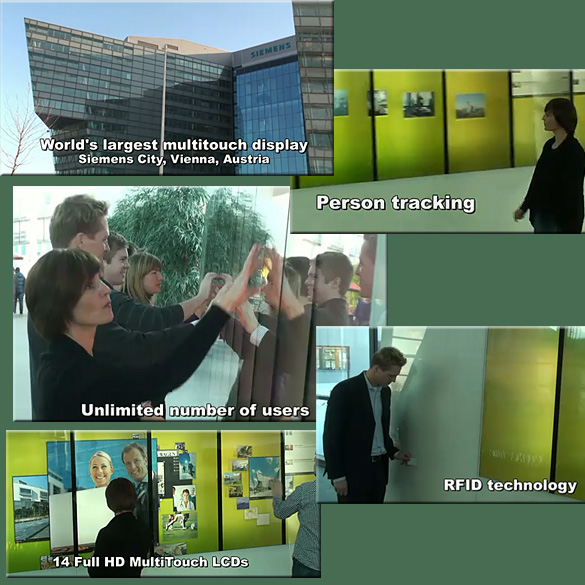
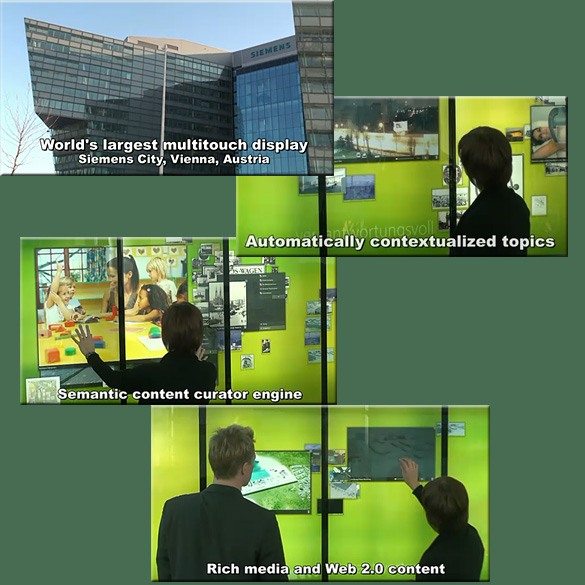
As of Feb 1, 2011 -- the world's largest multitouch display

.

Again..can you imagine the power of this in a smart classroom setting?

.

See also:

From DSC:

I’ll wager that in the future, this is the type of “wall” that will be in many classrooms. Students will be able to hold up their devices to send their files to it…then interact with the various programs/files on the displays. Such a “wall” will read/process QR codes as well.


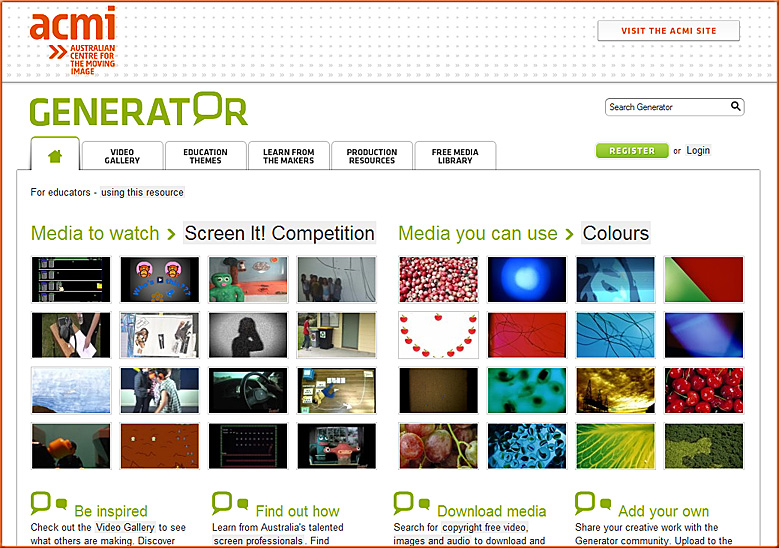
ACMI -- Australia

.

.


Also see:
ACMI’s blog
.


Tagged with: • • • • • • • •  

From DSC:
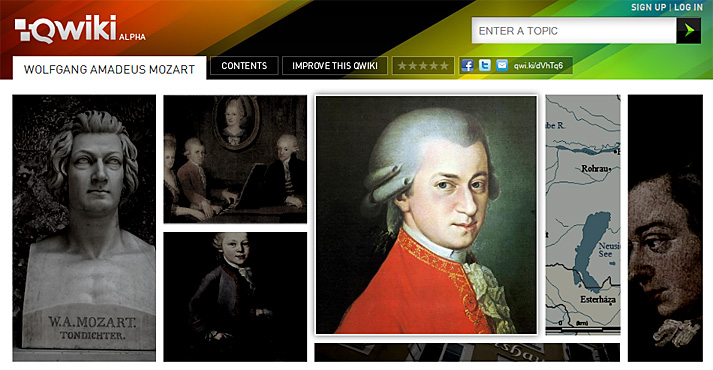
Not only is this a slick way to learn about a musician and about history…but it made me think…how about having students create something like this? Project-based learning with a great splash of creativity!

— apologies…I can’t recall where I first saw this.


.
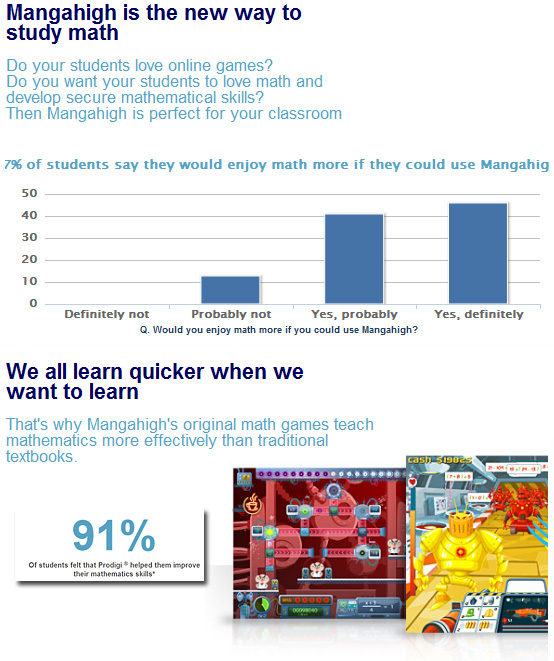
“Every Prodigi ® lesson begins with Easy questions that review prerequisite concepts and get students warmed up. Based on student performance, questions increase in difficulty to Medium, and then to Hard (examination level), and finally Extreme (recreational). Not only that, but students have live access to hints and worked solutions to plug any gaps in their knowledge”

London: Videos from the Learning Without Frontiers Festival now online

Learning Without Frontiers is a global platform for disruptive thinkers and practitioners from the education, digital media, technology and entertainment sectors who come together to explore how new disruptive technologies can drive radical efficiencies and improvements in learning whilst providing equality of access.

If you were unable to attend the recent LWF Festival of Learning & Technology in London we’re pleased to let you know that videos from the conference are now online for your personal or group viewing pleasure.  There are a number of ways to view these videos so just choose the one you prefer.

To view, comment & join the discussions you can visit the video pages on the LWF site here

Amongst the alternatives, they are available on the following platforms:

iTunes (download to your PC, iPad or iPhone)*

YouTube

Blip.TV

And for users of Apple TV simply search for the Learning Without Frontiers channel under podcasts.

*You can also search for Learning Without Frontiers in the iTunes store – they are FREE!

Who needs textbooks? — from Newsweek.com
How Washington State is redesigning textbooks for the digital age.

Who needs textbooks? How Washington State is redesigning textbooks for the digital age.

Jessie Sellers, a student at Tacoma Community College in Washington state, was puzzled when he logged onto his school’s website last December to figure out which book he needed for his upcoming English class. Whereas for all his previous courses, the 24-year-old education major could simply click on a link to view the name of the required textbook, this time there were no books listed at all. It was no mistake: thanks to an ambitious pilot program aimed at reducing the cost of textbooks at public colleges, Sellers and hundreds of other students across the state won’t have to buy textbooks for more than three dozen courses offered this winter.

Washington’s Open Course Library is the largest state-funded effort in the nation to make core college course materials available on the Web for $30 or less per class. Financed with $750,000 from the state of Washington and a matching grant from the Bill & Melinda Gates Foundation, the goal isn’t just to reduce student costs, says program architect Cable Green. It’s also to create engaging, interactive learning materials that will help improve course completion rates. By the time the project is completed in 2012, digitized textbook equivalents for some 81 high-enrollment classes will be available online for the more than 400,000 students enrolled in Washington’s network of community and technical colleges. Even better, the materials can be shared across the globe, largely for free, because they will be published in an open format that avoids the most onerous licensing restrictions. To keep costs at a minimum, the teachers developing the materials are relying primarily on either existing material in the public domain or embarking on the painstaking task of developing materials from scratch.

Simple tools for digital classroom — from November Learning by guest blogger Geoff Gevalt
The hardest thing for teachers to do is make the transition from paper and pencils to online media: Not enough computers, not enough knowledge, not enough time and a whole new way of doing things. We work with hundreds of teachers in the same situation and we offer this advice:

  • Take small steps.
  • Find a couple of tech-savvy kids in each of your classes to help.
  • Explore the digital world on your own.
  • Seek out people in the school or in professional development spheres to mentor you.
  • Don’t be afraid to fail.
  • Don’t be afraid if you don’t have all the answers – your kids will help.

Teacher Knowledge — Exploring, a few links…

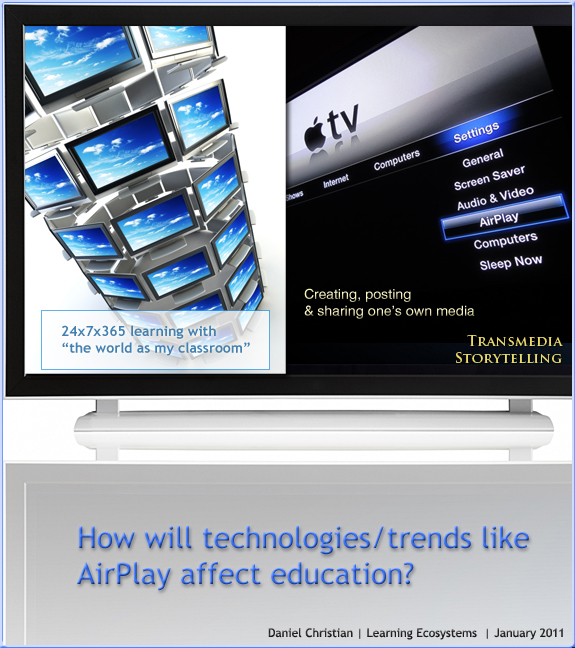
Millions of TV’s (as completely converged/Internet-connected devices) = millions of learners?!?

From DSC:

The other day, I created/posted the top graphic below. Take the concepts below — hook them up to engines that use cloud-based learner profiles — and you have some serious potential for powerful, global, ubiquitous learning! A touch-sensitive panel might be interesting here as well.

Come to think of it, add social networking, videoconferencing, and web-based collaboration tools — the power to learn would be quite impressive.  Multimedia to the nth degree.

Then add to that online marketplaces for teaching and learning — where you can be both a teacher and a learner at the same time — hmmm…

.

.

From DSC:
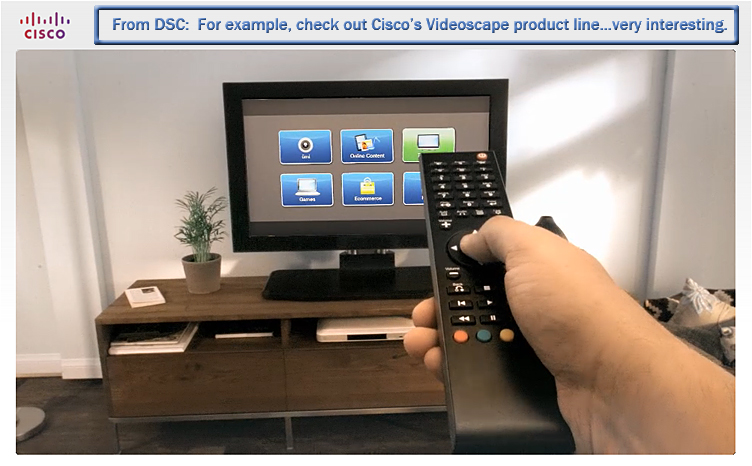
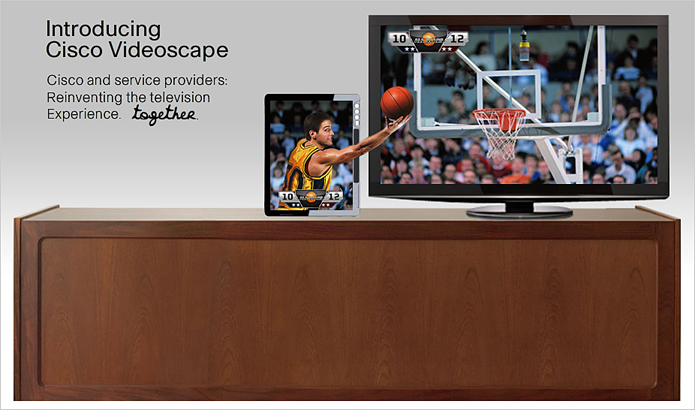
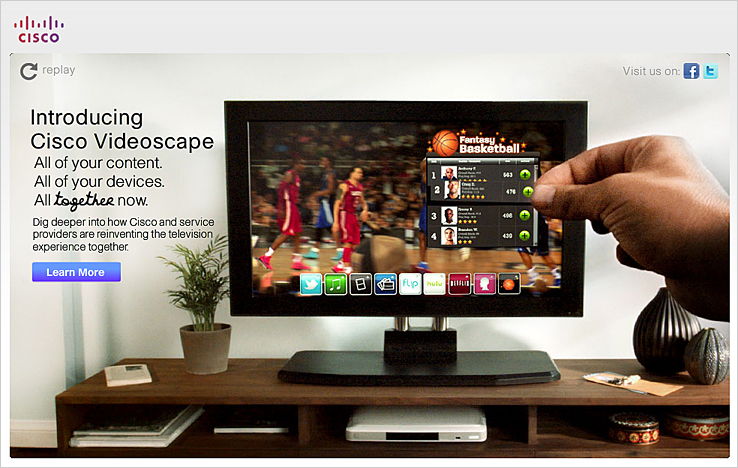
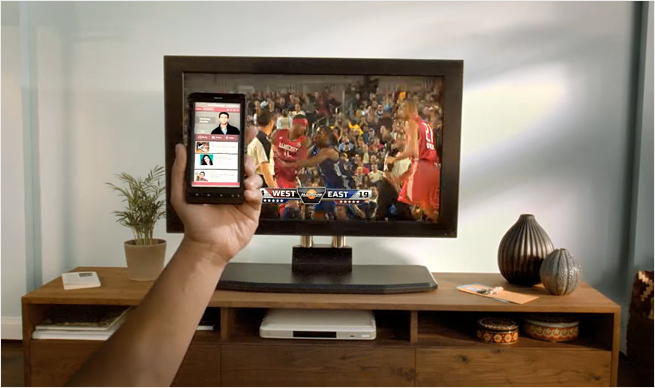
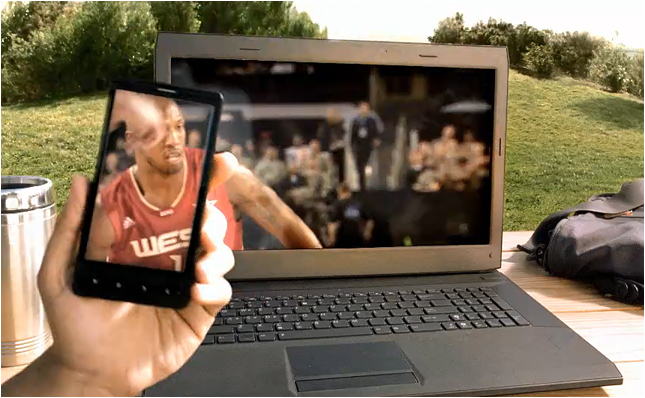
Then today, I saw Cisco’s piece on their Videoscape product line! Check it out!

.

.


.

.

.

.

© 2025 | Daniel Christian