When textbooks and social media collide — CampusTechnology.com by Bridget McCrea
A professor at a Christian liberal arts college in Michigan puts textbooks together with social networking to get students jazzed about historical events.

Right around the time that the term “social networking” was starting to roll off the tongues of school administrators and teachers, Christian Spielvogel was already deep in the throes of a project that would combine the next concept with traditional textbooks.

The year was 2007, and Spielvogel, now an associate professor of communication at Hope College in Holland, MI, was experimenting with the idea of implementing gaming and computer simulations while on sabbatical at the University of Virginia. Having conducted intensive research into the public memory of the Civil War period, Spielvogel wanted to “un-romanticize” public perception of the conflict and create a more realistic, engaging, and even risky learning experience for high school and college students.

Using the University of Virginia’s Valley of the Shadow digital archive as a guide–and funding from the National Endowment for the Humanities and Virginia Foundation for the Humanities for financial support–Spielvogel developed an online reenactment and multiplayer role-playing simulation that takes place during the American Civil War.

Little did Spielvogel know at the time, but his creation would become an early example of how computer gaming can be successfully combined with education. “At the time, there had already been some efforts made to develop games and simulations with most of them based on single-player models,” said Spielvogel, “but the whole idea of a multiplayer experience that allowed a group to become involved in the game and interact online was still pretty new.”
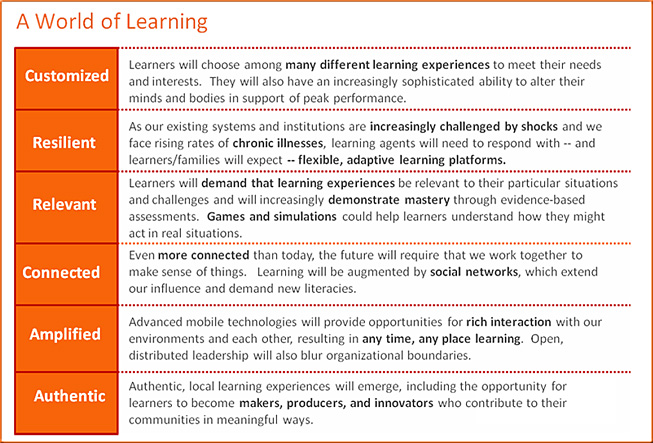

Models for the Future of Learning — from KnowledgeWorks by Katherine Prince, Jesse Moyer, Lisa Scheerer, and Jamie Feltner
January 2011
This report was prepared for, and with the support of, Yellow Springs School District as part of a series of engagements related to its Class of 2020 initiative.


IEEE Transactions on Learning Technologies TLT is a scholarly archival journal published quarterly using a delayed open access publication model.

IEEE Transactions on Learning Technologies (TLT) is an archival journal published quarterly. TLT covers research on such topics as Innovative online learning systems, Intelligent tutors, Educational software applications and games, and Simulation systems for education and training.

The Web revolution, the popularity of on-line learning, and the broad availability of computers in schools, colleges, universities, workplaces and in other social settings has caused a qualitative change in the field of learning technologies. Both the variety and the complexity of e-learning tools have increased dramatically over the last 10 years. A number of new conferences emerged to provide a forum for researchers and practitioners in the field of learning technologies to discuss their work. Yet, there are very few journals, which embrace the field as a whole and provide a space to publish archival quality papers. The goal of IEEE Transactions on Learning Technologies (TLT) is to bridge this gap.TLT covers all advances in learning technologies, including but not limited to the following topics:

  • Innovative online learning systems
  • Intelligent tutors
  • Educational software applications and games
  • Simulation systems for education and training
  • Collaborative learning tools
  • Devices and interfaces for learning
  • Interactive techniques for learning
  • Personalized and adaptive learning systems
  • Tools for formative and summative assessment
  • Ontologies for learning systems
  • Standards and web services that support learning
  • Authoring tools for learning materials
  • Computer support for peer tutoring
  • Learning via discovery, field, and lab work
  • Learning with mobile devices
  • Social learning techniques
  • Social networks and infrastructures for learning and knowledge sharing
  • Creation and management of learning objects

IEEE Transactions on Learning Technologies
The IEEE Transactions on Learning Technologies will publish archival research papers and critical survey papers. Topics within the scope include technology advances in online learning systems; intelligent tutors; educational software applications and games; simulation systems for education and training; collaborative learning tools, devices and interfaces for learning; interactive techniques for learning; tools for formative and summative assessment; ontologies for learning systems; standards and web services that support learning; authoring tools for learning materials; computer support for peer tutoring and learning via discovery or project work or field or lab work; and creation and management of learning objects. A paper must either describe original research or offer a critical review of the state of the art in a particular area. Papers concerned with evaluation of technology are only appropriate if the technology itself is novel or if significant technical insights are provided. In order to best serve the community, the TLT will be published online, using a delayed open-access policy under which paying subscribers and per-article purchasers have access to newly published content, and then 12 months after the publication of each issue, all readers will have access to the content, free of charge.

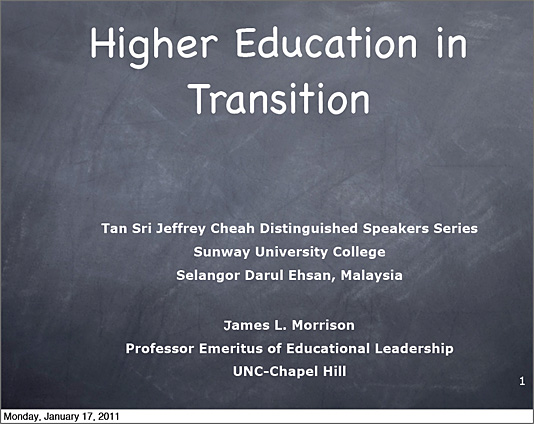
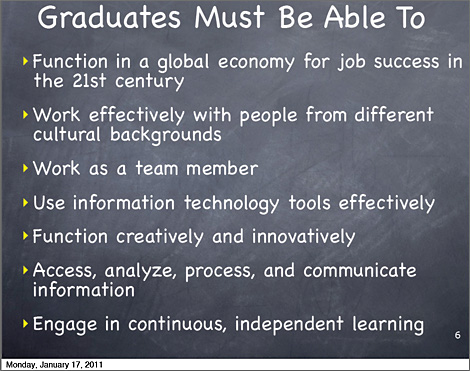
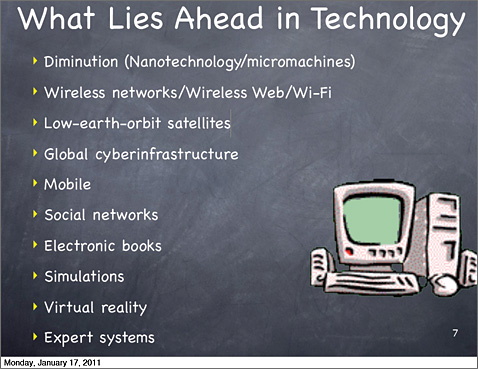
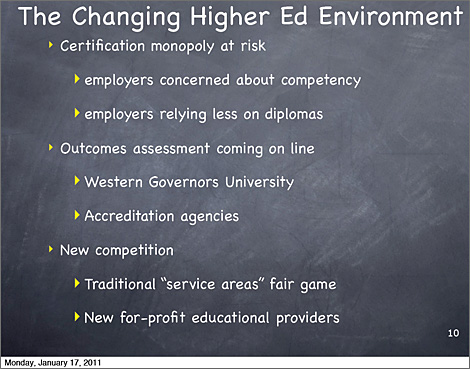
James Morrison -- Higher Education in Transition

Example slides/excerpts:

.

.

.

.

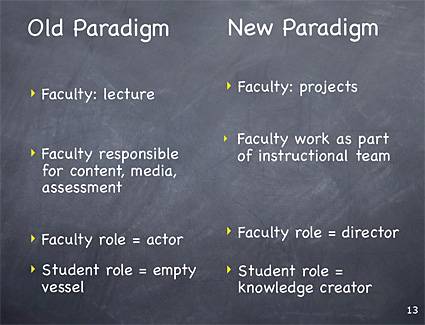
One example — of several great slides — regarding the old vs. the new paradigm:

.

.


.

From DSC:
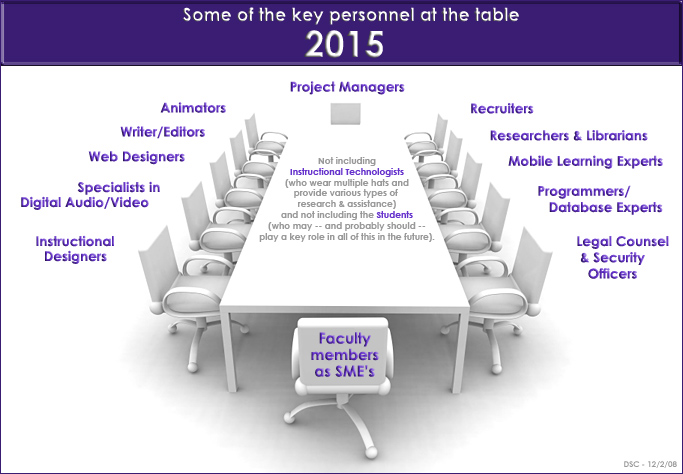
Re: one of the bullet points on the last slide — i.e. “Faculty work as part of instructional team” — here’s my take on what that team increasingly needs to look like in order to engage our students and to compete:

.


7 Ways to Spot Tomorrow’s Trends Today — from the World Future Society’s Forecasts for the Next 25 Years

In the more than 40 years since the World Future Society was founded, futurists have developed a range of techniques to study the future. Here are a few techniques futurist use to spot new opportunities and potential problems. These methods give individuals and organizations an edge to help them succeed in a fast-changing world:

  1. Scan the Media to Identify Trends—Futurists often conduct an ongoing and systematic surveys of news media and research institutes. These surveys help spot significant trends and technology breakthroughs. Futurists call this environmental scanning.
  2. Analyze and Extrapolate Trends—After the trends are identified, the next step is to plot the trends to show their direction and development into the future. Trend analysis and extrapolation can show the nature, causes, speed, and potential impacts of trends.
  3. Develop Scenarios—Futurists often describe the future development of a trend, a strategy, or a wild-card event in story form. These scenarios can paint a vivid picture that can help you visualize possible future developments and show how you can prepare effectively for future risks and opportunities. Scenarios help you to blend what you know about the future with imagination about the uncertain. Scenarios help you move from dreaming to planning and then to accomplishment.
  4. Ask Groups of Experts—Futurists also conduct “Delphi Polls” which are carefully structured surveys of experts. Polling a wide range of experts in a given field can yield accurate forecasts and suggestions for action.
  5. Use Computer Modeling—Futurists often use computer models to simulate the behavior of a complex system under a variety of conditions. For example, a model of the U.S. economy might show the effects of a 10 percent increase in taxes.
  6. Explore Possibilities with Simulations—Futurists create simulations of a real-world situations by means of humans playing different roles. For example, in war games, generals test out tactics they may later use on the battlefield, or corporate executives can explore the possible results of competitive strategies.
  7. Create the Vision—Futurists help organizations and individuals systematically develop visions of a desirable future. Visioning creates the big picture of the possibilities and prepares the way for goal setting and planning.
Tagged with:  

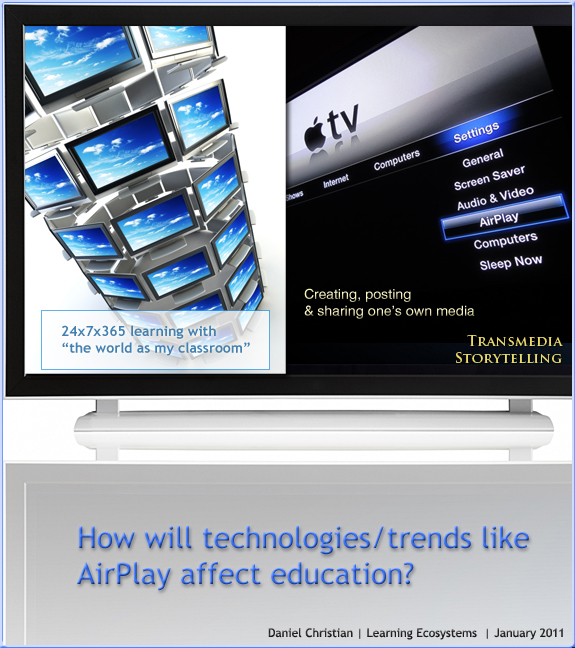
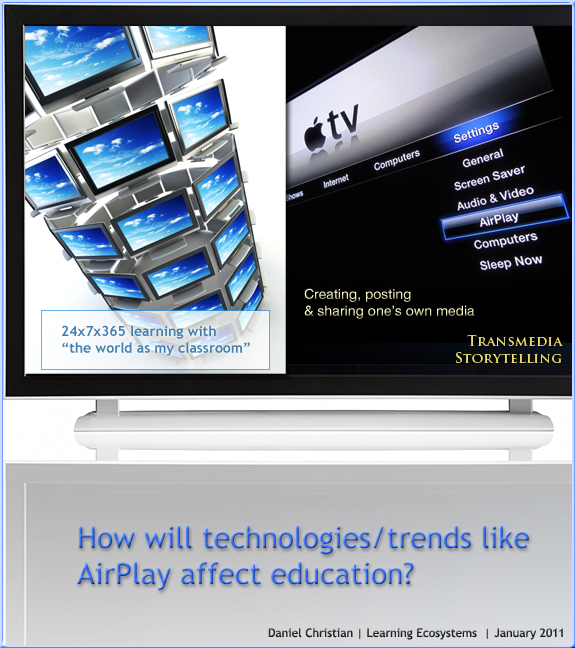
Millions of TV’s (as completely converged/Internet-connected devices) = millions of learners?!?

From DSC:

The other day, I created/posted the top graphic below. Take the concepts below — hook them up to engines that use cloud-based learner profiles — and you have some serious potential for powerful, global, ubiquitous learning! A touch-sensitive panel might be interesting here as well.

Come to think of it, add social networking, videoconferencing, and web-based collaboration tools — the power to learn would be quite impressive.  Multimedia to the nth degree.

Then add to that online marketplaces for teaching and learning — where you can be both a teacher and a learner at the same time — hmmm…

.

.

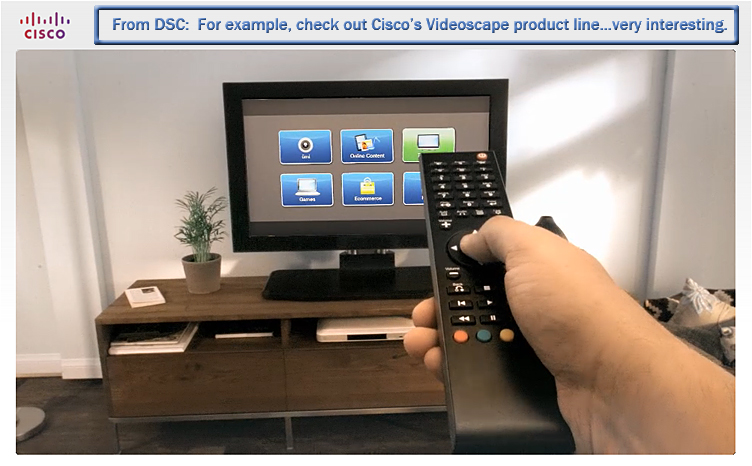
From DSC:
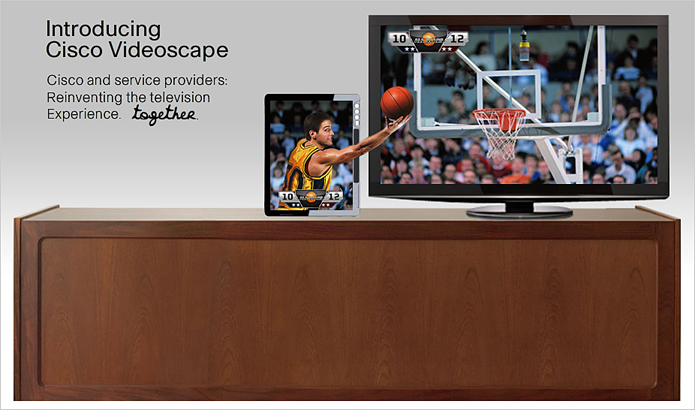
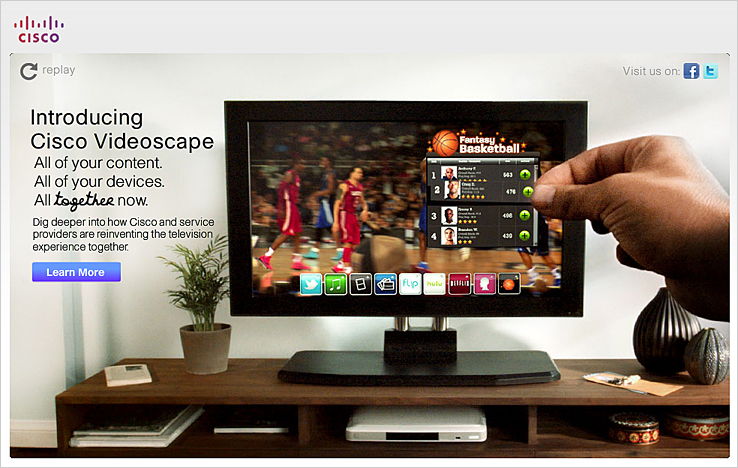
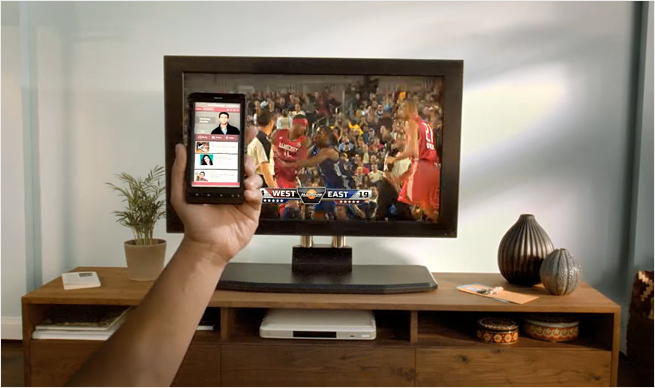
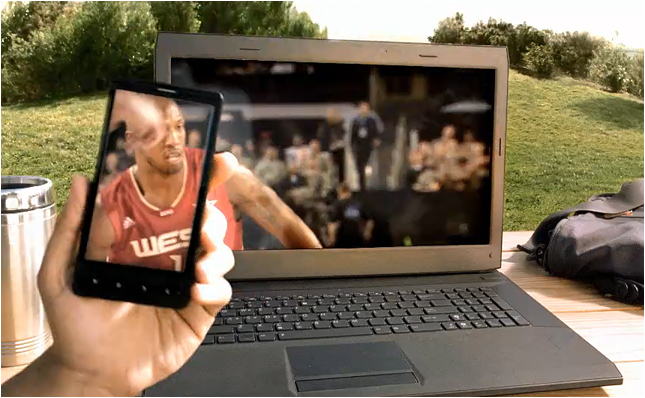
Then today, I saw Cisco’s piece on their Videoscape product line! Check it out!

.

.


.

.

.

.

How will technologies like AirPlay affect education? I suggest 24x7x365 access on any device may be one way. By Daniel S. Christian at Learning Ecosystems blog-- 1-17-11.

.


Addendum on 1-20-11:
The future of the TV is online
— from telegraph.co.uk
Your television’s going to get connected, says Matt Warman


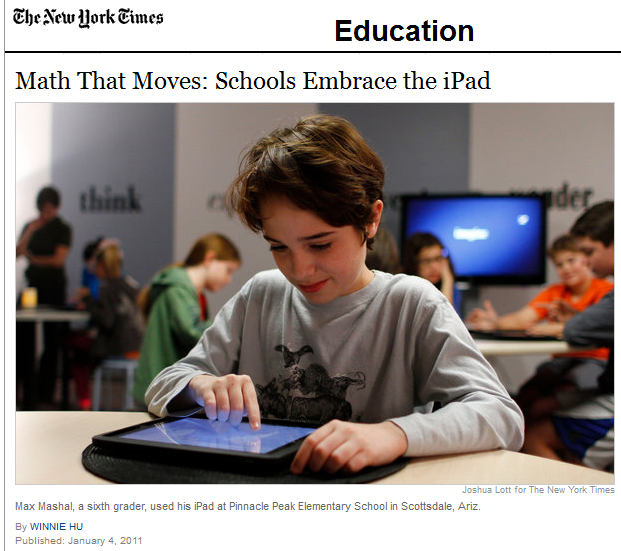
Math that moves -- the use of the iPad in K-12 -- from the New York Times

.

From DSC:
I post this here — with higher ed included in the tags/categories — because if the trend within K-12 continues (i.e. that of using such technologies as the iPad, digital textbooks, mobile learning devices, etc.), students’ expectations WILL be impacted. When they hit our doorsteps, they will come with their heightened sets of expectations. The question is, will we in higher ed be ready for them?

.
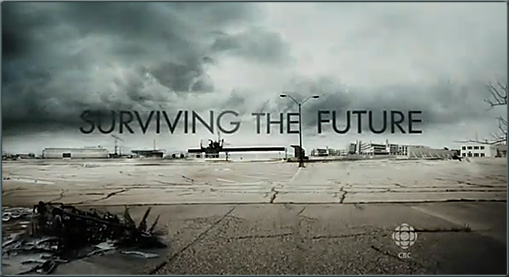
Surviving the future is an unsettling glimpse into the human psyche right now, as our culture staggers between a fervent belief in futuristic utopian technologies on the one hand, and dreams of apocalyptic planetary payback on the other. Thought provoking and visually stunning, Surviving the Future looks at the stark and extreme choices facing our species as we prepare ourselves for the most challenging and consequential period in our history.”

— from http://www.cbc.ca/documentaries/doczone/2010/survivingthefuture/

.

As seen as CBC-TV on Thursday Oct-21-2010

Surviving the Future -- as seen on CBS on 10/21/10

.

Surviving the future

.

— originally from http://geraldcelentechannel.blogspot.com/2010/11/surviving-future.html

From DSC:
Although I don’t agree with many things in this piece, it’s important to reflect upon some of the sometimes exciting and sometimes disturbing things in this piece. Looking at some of the enormous challenges and potential directions ahead of us this century, it’s all the more important that our hearts are hearts of flesh, not hearts of stone!

UMC packs 3-D visuals into cutting-edge research lab — from grandforksherald.com by Ryan Johnson

$145,000 virtual immersion lab creates realistic 3-D simulations
Think virtual reality, only more realistic. Add to that cutting edge-technology and the ability to interact with and walk around 3-D holograms and you get the newest addition to the University of Minnesota-Crookston, complete with special effects impressive enough to put the 2009 blockbuster film “Avatar” to shame

— Dr. Adel Ali from grandforksherald.com

The Coming Golden Age of Open Educational Simulations — from Mike Caulfield

From DSC:
Thanks Mike for sharing this information, these lessons and reflections. Although your posting stopped me in my tracks, it was good to reflect upon. It made me wonder about such things as…

  • If we could get a billion from the fortunes that Gates, Buffett, and other billionaires are donating, could we create open learning objects/courses and make them available worldwide? Or would that not work?
  • Were you all ahead of your time?
  • Where does this leave us? That is, is it a wise goal to create interactive, professionally-done, engaging, multimedia-based applications? If so, under what conditions?
  • If we pursue this goal, who and how should we do it?
  • If open source models are followed, should we move towards the use of consortiums to create the learning objects? i.e. to spread out the development costs?
  • What would you say to instructional designers if they are following similar endeavors/efforts? How can one know all of the context that speaks to each individual taking the course?
  • Will “The Reusability Paradox” be a show-stopper for us?
  • What should our strategy and vision be?
  • Or did I miss the whole point here?!

The Pivot to Digital Learning: 40 Predictions — from Tom Vander Ark, Partner, Revolution Learning — via EdNet Insights

From DSC:
That posting includes predictions for changes that we’ll see in the next 1, 5 and 10 years…with some excerpts below:

3. Lingering budget woes will cause several districts and charter networks, particularly in California, to flip to a blended model, with a shift to online or computer-based instruction for a portion of the day to boost learning and operating productivity.

9. The instant feedback from content-embedded assessment, especially learning games, simulations, virtual environments, and MMOs (massively multiplayer online games), will be widely used in formal and informal learning and will build persistence and time on task.

10. Adaptive content will result in more time on task (in some cases, two times the productive learning time over the course of a year), and better targeted learning experiences will boost achievement, particularly among low-income and minority students.

11. Comprehensive learner profiles will gather keystroke data from learning platforms, content-embedded applications, as well as after-school, summer school, tutoring, and test prep providers. Students and families will manage privacy using Facebook-like profiles.

12. Most learning platforms will feature a smart recommendation engine, like iTunes Genius, that will build recommended learning playlists for students.

18. All U.S. students will have access to online courses for Advanced Placement, high-level STEM courses, and any foreign language (this should happen next year, but it will take us five years to get out of our own way).

23. Second-generation online learning will replace courseware with adaptive components in a digital content library (objects, lessons, units, and sequences).

27. Most high school students will do most of their learning online and will attend a blended school.

28. More than one-third of all learning professionals will be in roles that do not exist today; more than 10% will be in organizations that do not exist today.

29. The higher ed funding bubble will burst, and free and low-cost higher education alternatives will displace a significant portion of third tier higher education (emphasis DSC).

37. There will be several DIY High options—online high schools with an engaging and intuitive merit badge sequence that will allow students to take ownership of and direct their own learning. They will still benefit from adult assessment, guidance, and mentorship but in a more student-directed fashion.

From DSC:
Below are some notes and reflections after reading Visions 2020.2:  Student Views on Transforming Education and Training Through Advanced Technologies — by the U.S. Department of Commerce, U.S. Department of Education, and NetDay

Basic Themes

  • Digital Devices
  • Access to Computers and the Internet
  • Intelligent Tutor/Helper
  • Ways to Learn and Complete School Work Using Technology

Several recurring words jumped off the page at me, including:

  • Voice activation
  • A rugged, mobile, lightweight, all-convergent communications and entertainment device
  • Online classes
  • Interactive textbooks
  • Educational games
  • 3D virtual history enactments — take me there / time machine
  • Intelligent tutors
  • Wireless
  • 24x7x365 access
  • Easy to use
  • Digital platforms for collaborating and working with others on schoolwork/homework
  • Personalized, optimized learning for each student
  • Immersive environments
  • Augmented reality
  • Interactive
  • Multimedia
  • Virtual
  • Simulations
  • Digital diagnostics (i.e. analytics)
  • Wireless videoconferencing

Here are some quotes:

Math and reading were often cited specifically as subjects that might benefit from the use of learning technologies. (p. 5)

No concept drew greater interest from the student responders than some sort of an intelligent tutor/helper. Math was the most often mentioned subject for which tutoring help was needed. Many students desired such a tutor or helper for use in school and at home. (p. 17)

…tools, tutors, and other specialists to make it possible to continuously adjust the pace, nature and style of the learning process. (p.27)

So many automated processes have been built in for them: inquiry style, learning style, personalized activity selection, multimedia preferences, physical requirements, and favorite hardware devices. If the student is in research mode, natural dialogue inquiry and social filtering tools configure a working environment for asking questions and validating hypotheses. If students like rich multimedia and are working in astronomy, they automatically are connected to the Sky Server which accesses all the telescopic pictures of the stars, introduces an on-line expert talking about the individual constellations, and pulls up a chatting environment with other students who are looking at the same environment. (p.28)

— Randy Hinrichs | Research Manager for Learning Science and Technology | Microsoft Research Group

From DSC:
As I was thinking about the section on the intelligent tutor/helper…I thought, “You know…this isn’t just for educators. Pastors and youth group leaders out there should take note of what students were asking for here.”

  • Help, I need somebody
  • Help me with ____
  • Many students expressed interest in an “answer machine,” through which a student could pose a specific question and the machine would respond with an answer. <– I thought of online, Christian-based mentors here, available 24x7x365 to help folks along with their spiritual journeys


Great middle school simulation: Civics — from Kristen Swanson

“…Argument Wars, a simulation from iCivics, and I think it is perfect for middle school students. Students can argue their case, learn about their rights as students, and earn points for valid arguments. I think it would be a fantastic complement to any middle school social studies class! Enjoy!”

Symposium on Progress in Information and Communication Technology (SPICT’10)

Conference date: 12-13 Dec,2010
Conference venue:
The Royale Bintang, Kuala Lumpur
Conference country:
Malaysia

SPICT’10 aims to bring together scientists, industry practitioners and students to exchange the latest fundamental advances and trends, and identify emerging research topics in the field of information and communication technology.

Activities:

* Agent & Multi-agent Systems
* Antennas & Propagation
* Artificial Intelligence
* Bioinformatics & Scientific Computing
* Business Intelligence
* Communication Systems and Networks
* Complex Systems: Modeling and Simulation
* Computer Vision
* Database and Application
* Geographical Information Systems
* Grid and Utility Computing
* Image Processing
* Information indexing & retrieval
* Information Systems
* Intelligent Systems
* Internet Technology
* Knowledge Management
* Mobile Communication Services
* Multimedia Technology and Systems
* Natural Language Processing
* Network Management and services
* Ontology and Web Semantic
* Optical Communications and Networks
* Parallel and Distributed Computing
* Pattern Recognition
* Pervasive Computing
* Real-Time and Embedded Systems
* Remote Sensing
* Robotic Technologies
* Security and Cryptography
* Sensor Networks
* Service Computing
* Signal Processing
* Software Engineering
* Strategic Information Systems

© 2025 | Daniel Christian