We use Lynda.com and the feedback has been excellent. Back in 1997, I took a 1-day seminar from Lynda Weinman out at SFSU’s Multimedia Studies Program. I learned more from her in a few hours then I have in many courses. She knows how to make things very understandable…and she’s a great teacher. If she doesn’t know the topic, she selects people who know how to explain that topic in easy-to-understand terms.

So when I saw this item — Connect@NMC: Panel Discussion Led By Laurie Burruss of Lynda.com – Implementing Lynda.com Campus-Wide — I felt that I should pass it along.

.
The type of learning materials that can be produced by an organization such as Virtual Heroes is the type/quality of material that will be produced in a vision that I have been calling “The Forthcoming Walmart of Education.

.

http://virtualheroes.com/index.asp

.

Also see:

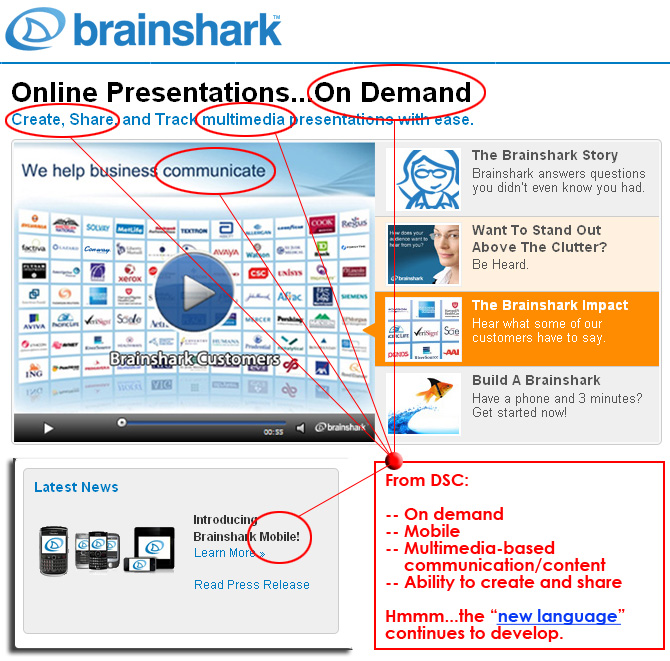
From DSC:
This is why I would encourage the U.S. government to see if they can get 1-2 billion — from the billionaires who are donating much of their wealth to charitable causes — in order to create such professionally-done, interactive, engaging, team-created learning materials.
Then make those materials available — free of charge — throughout the world.


Rags to Riches — from ilearntechnology.com

What it is: Rags to Riches takes Lemonade Tycoon to a whole new level with simulated business.  In Rags to Riches, students are working to make their band a success.  Students play the part of a new band going on tour with a few new songs.  As they play the Rags to Riches game simulation, students must make decisions about what the band should do.  They have to decide which cities are best for them to play in, what venues to play, how much money to spend on publicity and how much to charge for tickets.  Students start out with $100 and must make wise decisions to continue in the simulation.  When they run out of money, the game ends and they must start again.

How to integrate Rags to Riches into the classroom: If you teach students like mine, breaking out Lemonade Tycoon in the classroom is met by cheers from some and with eye rolls by others who are “way too cool” for a lemonade stand.  For those students, Rags to Riches is in order…

Effective use of Guerra Scale in Moodle — from E-TeachUK

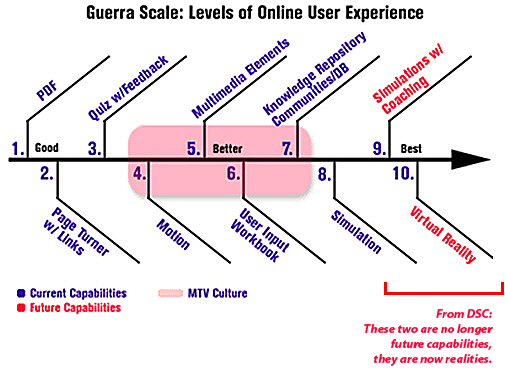
I have just finished producing a short manual “Guerra Scale and Moodle” after coming a across a short article in an article by ASTD “The Guerra Scale”” by Tim Guerra & Dan Heffernan http://www.astd.org/LC/2004/0304_guerra.htm (2004) . This got me thinking about linking their concept with Moodle.

The basic concept behind the Guerras Scale is the scale outlines the range of content that can be found and used online. It is a scale of one to ten with an increase in interactivity, in which one involves the common experience of simply reading notes/text on screen and ten which denotes total virtual reality.

From DSC:
Though this diagram is now out of date, I still like it because it nicely illustrates how deep an online-based “item” can be in terms of the interaction and experience it provides — as well as the difficulty, skillsets, and costs involved in creating such an item.


http://muppetmasteruk.blogspot.com/2010/06/effective-use-of-guerra-scale-in-moodle.html


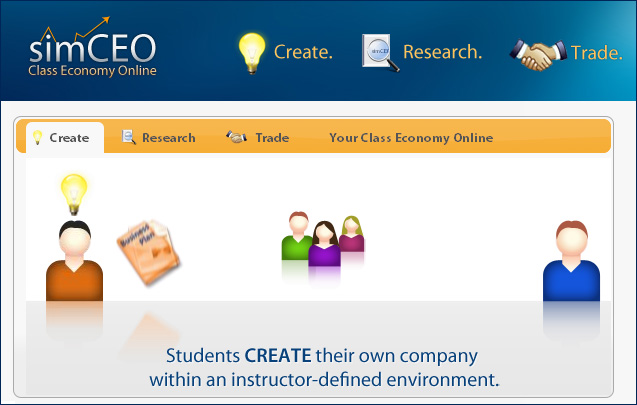
simCEO

simCEO

Tagged with:  

Teaching Tools: Using Online Simulations and Games — from Edutopia.org

But why not bring gaming into the classroom? Could teachers tap that same passion to spark learning? Gaming remains new territory for most schools. As the following examples show, educators on the frontiers are eager to share what they’re learning. Here are just a few examples.

Excerpts from Future of Learning Technology – 2015 — The Upside Learning Solutions Blog

5. Games (and simulations) will become integral part of workplace learning. Overall the culture of gaming is becoming pervasive and the cost of game development is decreasing. Both these trends are increasing the acceptance of games for workplace learning, an area where cost of development and delivery have always been a concern. As the focus of learning departments change to being facilitators rather than providers of training, engaging solutions like games will become crucial.

6. Birth of new Authoring Tools. We will also see new authoring tools which allow designers to make application scenarios easily and quickly. Tools like thinking worlds are great for quickly creating 3D based decision simulations (or even simple 3D games). Dr. Michael Allen (creator of Authorware) is working on a new tool called Zebra (which he talks about herefrom DSC ID’s should check that video out) that would make engaging eLearning creation easy with drag and drop objects.

Michael Allen describes the future of authoriing

Dr. Michael Allen -- discussing their new authoring tool -- Zebra

7. Emergence of Personal Learning Agents. As the semantic web finally starts to form and common ontologies for various types learning content are developed, intelligent personal learning software agents will emerge as learning content mediators. Having a software agent that runs on a personal computing device such as a mobile phone or tablet and constantly monitors content streams on the internet to provide up-to-date information based on personal preferences, workplace conditions, or for the task at hand will make a good performance support and learning assistance system.

IBM's City One -- coming in the fall of 2010

CityOne: A Smarter Planet game
Think you know what it takes to make the energy systems that serve a city more efficient? Given the opportunity, could you make the city’s water cleaner and more plentiful, its banks more robust and customer-centric and its retail stores more innovative?

Your mission
Level-Up your skills and discover how to make our Planet smarter, revolutionize industries and solve real-world business, environmental and logistical problems using IBM solutions.

New Game Demo featured in Agility @ Work Lounge at IMPACT 2010.

Tagged with:  
Tagged with:  

The International Journal of Multimedia & Its Applications (IJMA) is a quarterly open access journal that publishes articles which contribute new results in all areas of the Multimedia & its applications. The journal focuses on all technical and practical aspects of Multimedia and its applications. The goal of this journal is to bring together researchers and practitioners from academia and industry to focus on understanding recent developments this arena, and establishing new collaborations in these areas.

Authors are solicited to contribute to the journal by submitting articles that illustrate research results, projects, surveying works and industrial experiences that describe significant advances in the areas of Multimedia & its applications. Topics of interest include, but are not limited to, the following

  • Audio, image, video processing
  • Digital Multimedia Broadcasting
  • Education and Training
  • Multimedia analysis and Internet
  • Multimedia and Artificial Intelligence
  • Multimedia Applications
  • Multimedia Communication and Networking
  • Multimedia Content Understanding
  • Multimedia Databases and File Systems
  • Multimedia human-machine interface and interaction
  • Multimedia Interface and Interaction
  • Multimedia security and content protection
  • Multimedia Signal Processing
  • Multimedia standards and related issues
  • Multimedia Systems and Devices
  • Operating system mechanisms for multimedia
  • Virtual reality and 3-D imaging
  • Wireless, Mobile Computing and Multimedia
Tagged with:  

Simulation Technologies in Higher Education: Uses, Trends, and Implications — from Educause by David A. Damassa (Tufts University) and Toby D. Sitko (EDUCAUSE)

“This ECAR research bulletin focuses on the rapid growth in the use of simulation technologies in higher education and the implications this will have for information technology planning and policy decisions.”

Tagged with:  

Trends in Personal Learning — from Stephen Downes

From Stephen:
February 4, 2010 — [Slides][Audio] Audio and slides from my presentation last night, Trends in Personal Learning [presentation delivered to  Canberra, Australia, online via Wimba]. Review of major trends in technology – personal access, content creation, presentation and conferencing, networking and community, immersion and simulation, augmented reality – and discussion of how these define and inform personal learning.

From DSC:
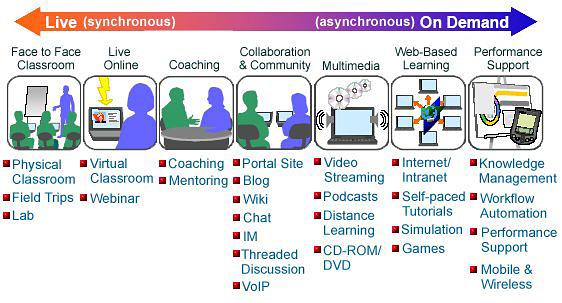
One of the slides is seen below — another good example that we are talking about an ever-changing range of tools, techniques, and methods of teaching and learning:

As Stephen mentions, this graphic is from:
http://cognitivedesignsolutions.com/ELearning/BlendedLearning.htm
© 2025 | Daniel Christian