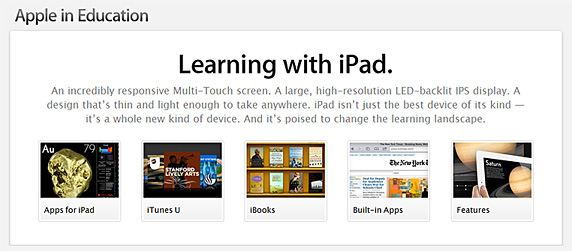
iPad studies at Abilene Christian U. dig deep into learning outcomes — from ConvergeMag.com by Tanya Roscorla
From DSC:
This posting evolved after having read $500 billion TV market new battlefield for Internet companies (from forbes.com and the Trefis Team therein) as well as the posting at Future TV disruption – Forbes says it’s worth half a trillion dollars for Internet companies (from appmarket.tv).
As the convergence — and the movement of data/apps/content/services towards the cloud — continues, I wanted to jot down some thoughts re: the current field:
- Apple, Google, Cisco and Microsoft seem to be solid players to watch in terms of cloud-based computing architectures, tools, and functionality — something to keep in mind when planning for the future directions of your organization’s set of tools and technologies.
- Personally, I vote for vendors that “get the web.” Apple and Google have traditionally been very solid innovators on the web and have turned in solid report cards in terms of innovation, performance, and web-based applications. (Adobe — with their Macromedia purchase years ago and their current lineup of tools — has also done a pretty good job, but doesn’t have the arsenal to make my top 4 picks here.)
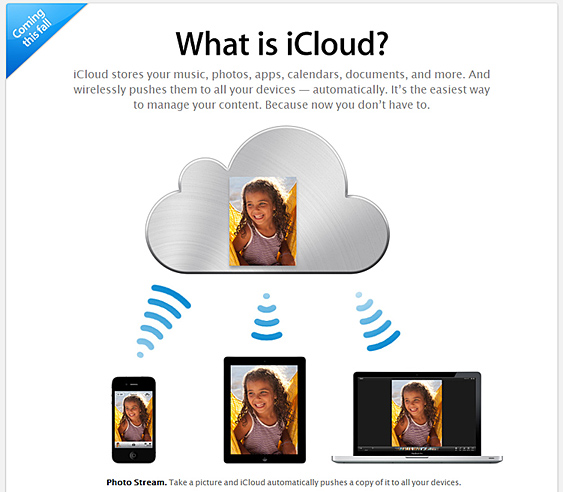
- I don’t need to say much about Apple in terms of innovation — as they have out innovated every company on the planet while becoming the world’s most valuable company in terms of market cap. Apple is on the verge of adding enormously powerful, cloud-based functionality and apps to their ecosystem when they introduce iCloud this fall (and perhaps a web-connected/smart TV type of device in the future). They have proven themselves to be #1 in terms of working with multimedia-based content — its creation and distribution. Given the continuing trend of the convergence taking place with computers, telephones, and televisions, the ability to create and work with multimedia is key for many technology-related vendors, and, in my mind, Apple leads in this area.
- Google has shown themselves to be solid innovators as well — and they “get the web.” Their current set of web-based apps — including Google Docs, Calendar, Hangouts, Reader, Alerts, etc. — provide a solid menu of web-based apps to choose from.
- Cisco has proven themselves to be innovative as well, and owns some powerful technologies in their WebEx Meeting Center, Videoscape, networking infrastructures, and some of its other tools.
- Though traditionally not a leader/innovator on the web, I think that Microsoft has deep pockets and they are a savvy business (having just purchased Skype as an example). So with SharePoint, Skype and Office 365, Microsoft is laying the foundation for a solid, web-based collaboration space.
Having said this, one can see that it is getting harder to practice the KISS principle in the IT departments out there. But where we can do so, it makes sense to do so — as there is less finger pointing and more accountability. It’s easier to support a fewer amount of tools and, often times, it seems that things simply work better with a reduced amount of vendors/technologies involved.
- Web-based collaboration tools such as videoconferencing, shared interactive whiteboards, shared document creation, calendars/scheduling, form creation and reporting tools, chat, other
- Cloud-based content/data/apps/services
- Synchronization across multiple types of devices
- Web-based updates (think publishers’ content in addition to apps)
- Storage plans and pricing
- Types of integration and tools a vendor provides on the cloud
- The end user experience and the usability of proposed solutions
- A vendor’s strategic direction(s) for the future
Elgato EyeTV Mobile dongle brings live TV to the iPad 2 — from engadget.com by Terrence O’Brien
Abilene Christian U supports teachers through Digital Learning Institute — from convergemag.com by Tanya Roscorla
Excerpt:
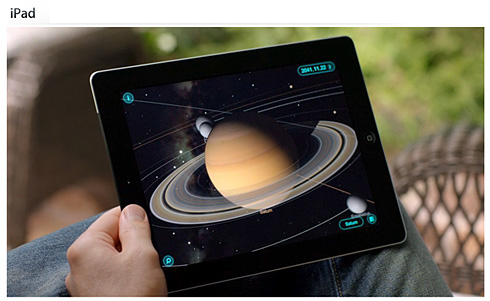
This summer, Abilene Christian University in Texas hosted its first K-12 Digital Learning Institute for teachers. And this school year, the university will observe teachers’ lessons as they apply what they learned about mobile technology to their classes.
Near Field Communication (NFC): A Quick Guide to the Future of Mobile — from Mashable.by Sarah Kessler
Excerpt:
NFC allows a device, usually a mobile phone, to collect data from another device or NFC tag at close range. In many ways, it’s like a contactless payment card that is integrated into a phone. In other ways, it’s similar to Bluetooth, except that instead of programming two devices to work together, they can simply touch to establish a connection.
So why are some of the world’s most influential companies so excited about it? We’ve compiled notes on what NFC is, why its useful and how it’s starting to permeate the product world.
Also see:
- Machine-to-Machine Communications as a Subset of Internet of Things — from cisco.com by Monique Morrow
MIT launches Center for Mobile Learning with support from Google — from readwriteweb.com by Jon Mitchell
Excerpt:
The Massachusetts Institute of Technology has announced the creation of a new Center for Mobile Learning. The center will be housed at the MIT Media Lab. Google supported the creation of the center with a grant from Google University Relations. The center’s first project will be the adoption and further development of App Inventor for Android, a do-it-yourself tool for building apps for Google’s Android mobile OS with no programming skills required.
From the announcement
The Center, housed at the Media Lab, will focus on the design and study of new mobile technologies and applications, enabling people to learn anywhere anytime with anyone. Research projects will explore location-aware learning applications, mobile sensing and data collection, augmented reality gaming, and other educational uses of mobile technologies.
The rise of the mobile workforce [Infographic from Gist] — from Mashable.com by Ben Parr