Digital learning: What kids really want — from The Journal by Chris Riedel

Excerpt:

According to [Project Tomorrow CEO Julie] Evans, the data from those surveys indicated that students:

  • Have a growing interest in social-based learning;
  • Want to connect with and develop a personal network of expert resources;
  • Are looking for tools that increase untethered learning; and
  • Want a digitally rich learning environment, unencumbered by traditional rules.

Also:

Other things students at all grade levels are looking for include access to online tutoring, the ability to take online classes, access to real-word data and databases, greater access to teachers using SMS/text messaging, education-based virtual reality and games, and increased access to digital collaboration tools.

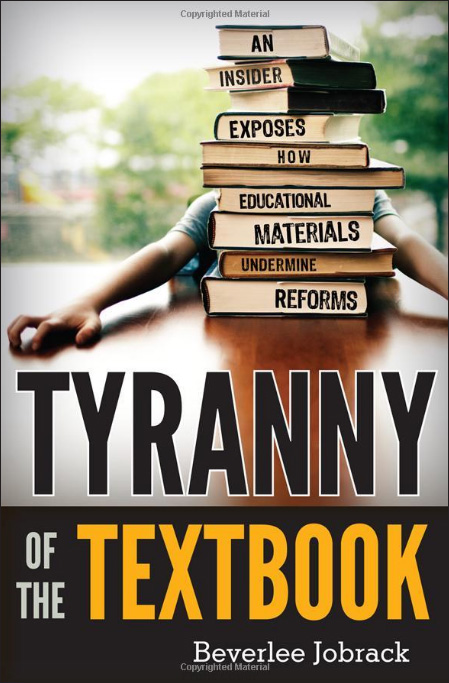
Tyrrany-of-the-textbook----Jobrack- 2011.

Book Description
Publication Date: December 16, 2011 | ISBN-10: 1442211415 | ISBN-13: 978-1442211414

Excerpt:

Educational reforms and standards have been a topic of public debate for decades, with the latest go-round being the State Common Core Curriculum Standards. But time and again those reforms have failed, and each set of standards, no matter how new and different, has had little impact on improving student achievement. Why? The textbooks. Textbooks sell based on design and superficial features, not because they are based on the latest research on how children learn and how well they promote student achievement. In Tyranny of the Textbook, Beverlee Jobrack, retired from educational publishing, sheds light on why this happens. She gives an engaging and fascinating look behind-the-scenes of how K-12 textbooks are developed, written, adopted, and sold. And, perhaps most importantly, she clearly spells out how the system can change so that reforms and standards have a shot at finally being effective.

Did you Know?

  • Reform efforts have focused on writing and rewriting standards and tests, but these rarely have any effect on the core curriculum that is published.
  • School districts and states don’t use effectiveness as a criterion for evaluating and purchasing textbooks.
  • Publishers don’t offer textbooks with better content or the latest teaching methods because teachers don’t want textbooks that require them to change their practices.
  • Teachers report that they don’t rely on a textbook in their class, but research shows that they do.
  • Three companies publish 75 percent of the K-12 educational materials.
  • Those three companies are producing similar programs with the same instructional strategies, none of which require teachers to change their practices significantly.
  • Publishers write textbooks for California and Texas. All the other markets have to make do with books only superficially adjusted for their states.

From DSC:
I originally saw this at:

http://www.wired.com/images_blogs/epicenter/2012/01/Top-Publishers-2011-PW.jpg

Data via Wischenbart; Graphic via Publishers Weekly

.
Also see:

How iBooks Author Stacks Up to the Competition [CHART] — from Mashable.com by Chelsea Stark

Author, Author! Apple, Apple! — from The Journal by Therese Mageau
Apple’s new interactive textbook authoring system might just revolutionize the way districts develop their own curriculum. 

iTunes U vs. Blackboard – A Look at Apple’s New Online System — from padgadget.com

Thanks to iPads and Kindles, E-Book Lending at Libraries Explodes — from ReadWriteWeb.com by John Paul Titlow

Why textbooks of the future are not books — from gigaom.com by Erica Ogg

Apple Jumps Into Textbooks — from the WSJ
With More iPads in Classrooms, Education Push Would Help Fend Off Android-Device Competition

Apple’s iTunes U Morphs Into a Tool for Full Online Classes — from Mashable.com by Sarah Kessler

Reinventing Textbooks: A Hard Course — from the New York Times by David Streitfeld


Also see:

.

Donald Chan/Reuters
People flooded Foxconn Technology with résumés at a 2010 job fair in Henan Province, China.

AcademicPub adds 22 new publishers to its content library — from edukwest.com by Kirsten Winkler

Excerpt:

AcademicPub is an online platform for college professors that enables them to create custom print or digital textbooks. This way professors can pick the content relevant to their course only which leads to much lower prices for the students when they purchase the books.

Launched in April 2011 by SharedBook Inc., AcademicPub started with less than 20 publishers but the platform quickly attracted new partners and now offers copyright-cleared material from over 100 publishers including…


Why tablet publishing is poised to revolutionize higher education — from Mashable.com by Trevor Bailey

Excerpt (emphasis DSC):

Richer than their print counterparts, digital textbooks include a number of interactive features. They are not limited to static pictures, but can integrate video, audio, animation, interactive simulations and even 360-degree rotations and panoramas. In addition, universities have the ability to create custom, institutionally branded viewers with unique displays and navigation options.

…

Digital publishing allows professors or subject matter experts to self-publish their own educational materials or research findings and distribute the information on tablet devices. Teachers can iterate content quickly, better keeping pace in a world where knowledge evolves every instant. On a smaller scale, they can post lesson documents online for students, versus relying on hard-copy materials.


From DSC:
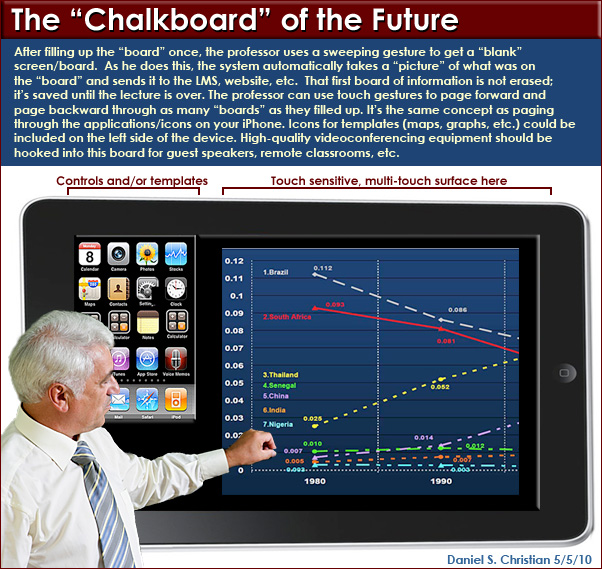
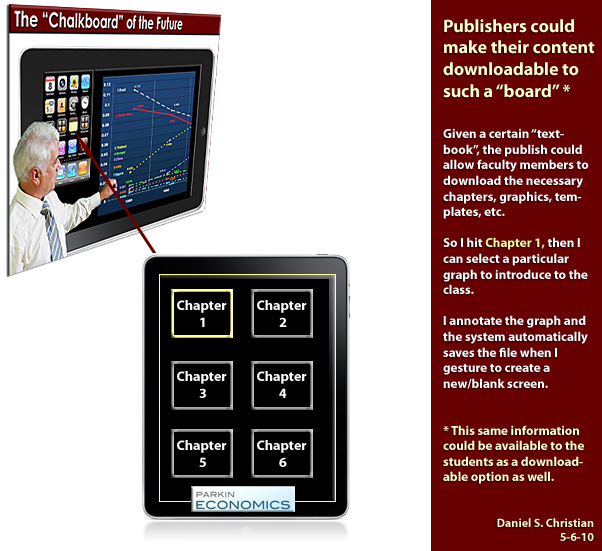
…and we’ll see what Apple says about this topic later this month; 2012 should be an interesting year indeed. I would like to see more of our professors’ e-books/self-published materials up on the Chalkboard of the Future:


.

One part of the board could provide downloadable, discipline-specific templates


.


Teaching resources could be downloaded by faculty and by students -- compliements of the publishers


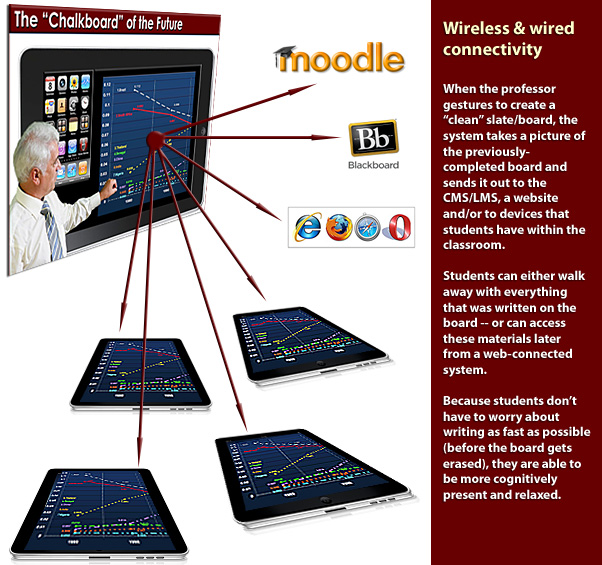
From Daniel Christian: The future chalkboard is connected to various other systems and devices -- wirelessly and via wired connections.

.


.

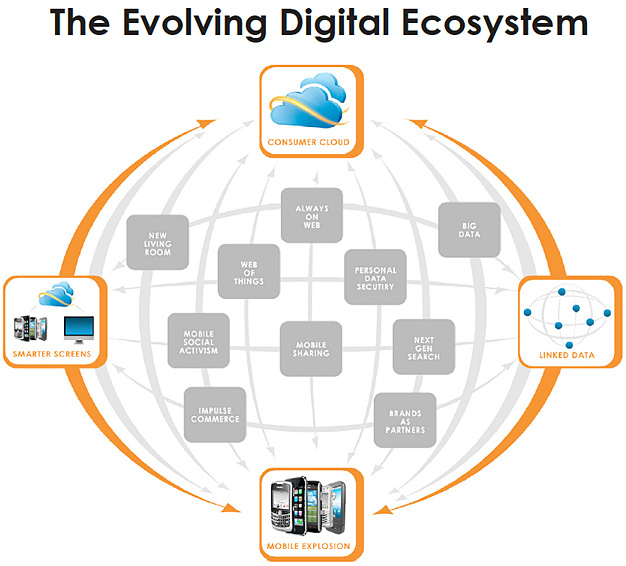
The Evolving Digital Ecosystem - from Moxie's Trends for 2012

  • The Always On Web
  • Web of Things
  • Big Data
  • Next Gen Search
  • Mobile Sharing
  • Mobile Social Activism
  • Impulse Commerce
  • Brands As Partners
  • The New Living Room  <– From DSC: This is one of those key areas that I’m trying to keep a pulse check on for re: our learning ecosystems of the future 
  • Personal Data Security


Also see:


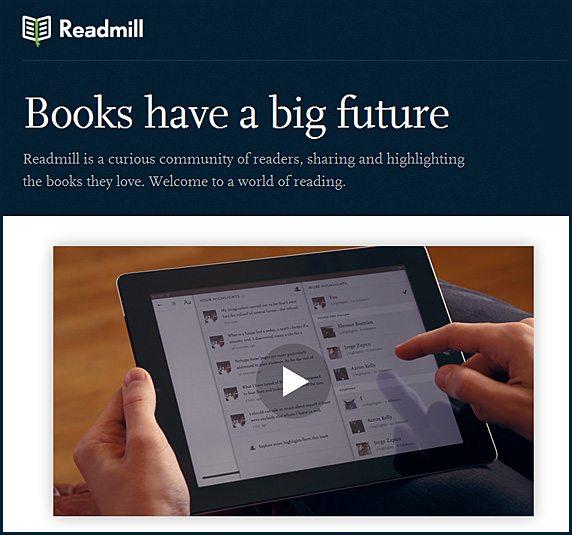
readmill.com


From DSC:
I originally saw this at:

Educational content and learning experiences wirelessly delivered to home TV console — from marketwatch.com

Excerpt:

DALLAS, Dec. 6, 2011 /PRNewswire via COMTEX/ — Don’t touch that dial. A new variety of interactive educational content for the youngsters in the household is headed to a TV near you.

AT&T* today announced an agreement with TVTextbook to provide mobile broadband connectivity to TVTextbook’s eLearning connected device portfolio. TVTextbook (TVT) delivers high-quality K-12 curriculum that is distributed through a learning console connected to the television. Only TVTextbook leverages basic television-a product found in virtually every U.S. household-to help school districts deliver a digital education to 100% of their students. AT&T’s connectivity will bring a seamless, wireless connection between school and home.

From DSC:
Do I think this will be excellent in 2012? No. Do I think it’s innovative? Yes. Do I think it will be potentially helpful to many? Yes…and so will many apps that are coming to our living rooms in the next 1-3 years.

Also see:


Blowing out the digital book as we know it –– from MindShift by Tina Barseghian

Excerpt (emphasis DSC):

Inkling also produced the epic The Professional Chef by the Culinary Institute of America. The book in its entirety costs $50, but you can also purchase individual chapters for $3 a piece. The new model makes book buying much like buying music — choose only the pieces you like best.  MacInnis fluidly demonstrates how to float from one chapter to the next, launch videos, close in on images, tap on sidebars and recipe instructions. It’s like watching a magician performing sleight-of-hand tricks.

From DSC:
Books — and textbooks — will continue to be more cloud-based, interactive, multimedia-based, and will be able to be completely up-to-date as they move more towards becoming like apps (vs. hard copy books/textbooks). I see more experimentation in terms of the implementation of social media tools as well as in trying out different business models.  However, when all’s said and done (at least for this next phase), I hope that we can get to the iTunes-like purchasing model mentioned above. I think students, faculty, and staff at educational institutions would benefit greatly from this. 

One iPad publishing platform to rule them all — from Mashable.com by Josh Koppel, Co-founder and Chief Creative Officer at ScrollMotion

.

Excerpt:

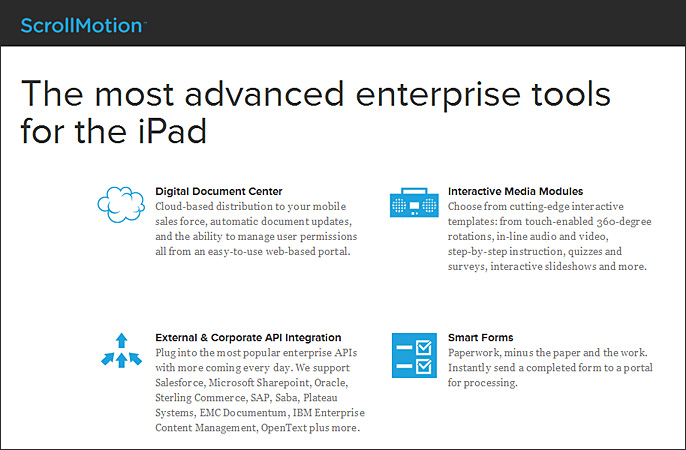
App developer ScrollMotion has created tablet content for some of the world’s largest publishers. At the Mashable Media Summit last Friday, its co-founder and chief creative officer Josh Koppel showed off a single platform built to run the entire gamut of enterprise media publishing.

.Also see:

Scrollmotion.com -- solutions

Digital Publishing: Interlinking publishing’s future with jobs, books, social media, and English majors [11-2-11 presentation] — published with permission from Steven Chevalia [Steven is a senior at Calvin College and recently did an internship at Zondervan]

Agenda/topics covered:

  • What is Digital Media?
  • Legal Jargon (Sneak Peek)
  • e-Readers
  • Tablets vs. e-Readers
  • e-Reading Software
  • Books or Apps?
  • Publishing [publishers / self-publishing]

Addendums later on 11/9/11:

© 2025 | Daniel Christian