From DSC:
Some items that caught my eye (so far) from CES 2012:

  • CES 2012: The convergence of TV and mobile platforms — from readwriteweb.com by Dan Rowinski
    …mobile operating systems are on a path to fundamentally change how content is delivered.
    .
  • Prepare yourself: Kinect is coming to Windows Feb. 1 — from Mashable.com by Sarah Kessler
    .
  • LG unveils giant 84″ TV with voice, gesture control — from Mashable.com by Samantha Murphy

    .
  • Introducing The MakerBot Replicator™
    January 10, 2012 (Brooklyn, NY) – MakerBot Industries is excited to announce the launch of its latest product, The MakerBot Replicator™, which will debut at CES in Las Vegas, NV on Tuesday, January 10th.  The MakerBot Replicator™ is the ultimate personal 3D printer, with MakerBot Dualstrusion™ (2-color printing) and a bigger printing footprint, giving you the superpower to print things BIG! Assembled in Brooklyn by skilled technicians, the MakerBot Replicator™ is ready within minutes to start printing right out of the box. Starting at $1749, The MakerBot Replicator™ is an affordable, open source 3D printer that is compact enough to sit on your desktop. Want to print in two colors? Choose the Dualstrusion™ option!
    .
  • USA Network taps Yap.tv for branded social TV app
    Yap.tv said the deal will make it the first independent social TV developer to create a custom-branded version of its app for the iPad and iPhone for a major network.??
    NEW YORK – NBCUniversal’s USA Network has partnered with Yap.tv, a maker of a social TV guide app for mobile devices, to launch a USA-branded app for its shows and fans as it and other channels continue to expand the use of social media to reach and engage viewers.
    .
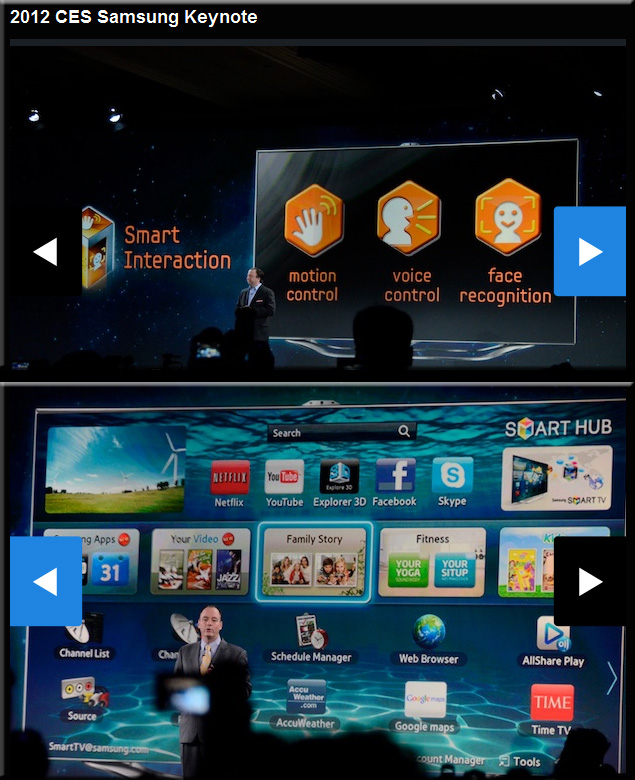
  • Samsung unveils a motion-controlled TV and the U.S. Galaxy Note [PICS]— from Mashable.com by Sarah Kessler
    During its keynote address at CES on Monday, Samsung unveiled a connected TV with voice and gesture recognition, WiFi-enabled cameras and its thinnest ultrabook yet. It also introduced its Galaxy Note smartphone to the U.S. for the first time.

.
 

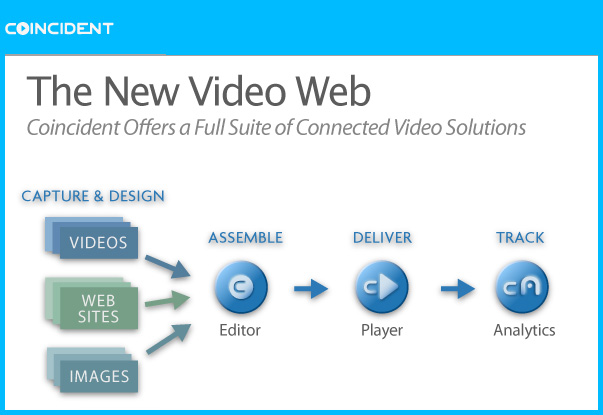
  • Coincident announces ScreenSync TV Technology — from marketwatch.com
    New solution allows companies to create interactive experiences for viewers that synchronize their tablets with shows they are watching on their televisions
    .
    Also see:
    .
.

Dragon TV – Now at your service — from Nuance.com

Excerpt:

Finding ‘what’s on’ television – not the easiest experience with today’s expansive channel options and a non-intuitive means for searching for what you want. Click, click, click, click until you just give up!


Those days are now over thanks to Dragon TV! Just tell Dragon TV what you want to watch and it delivers it instantly! Really, it’s that simple.

Just say…

  • “Go to AMC”
  • “What’s on Sundance Channel at 9 p.m. tonight?”
  • “When is Breaking Bad on?”
  • “I want to watch VH1 Classics”
  • “Find movies with Peter Sellers”

Why tablet publishing is poised to revolutionize higher education — from Mashable.com by Trevor Bailey

Excerpt (emphasis DSC):

Richer than their print counterparts, digital textbooks include a number of interactive features. They are not limited to static pictures, but can integrate video, audio, animation, interactive simulations and even 360-degree rotations and panoramas. In addition, universities have the ability to create custom, institutionally branded viewers with unique displays and navigation options.

…

Digital publishing allows professors or subject matter experts to self-publish their own educational materials or research findings and distribute the information on tablet devices. Teachers can iterate content quickly, better keeping pace in a world where knowledge evolves every instant. On a smaller scale, they can post lesson documents online for students, versus relying on hard-copy materials.


From DSC:
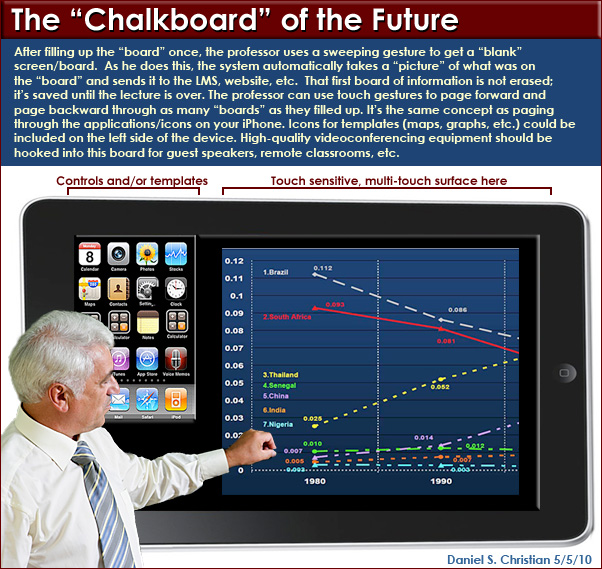
…and we’ll see what Apple says about this topic later this month; 2012 should be an interesting year indeed. I would like to see more of our professors’ e-books/self-published materials up on the Chalkboard of the Future:


.

One part of the board could provide downloadable, discipline-specific templates


.


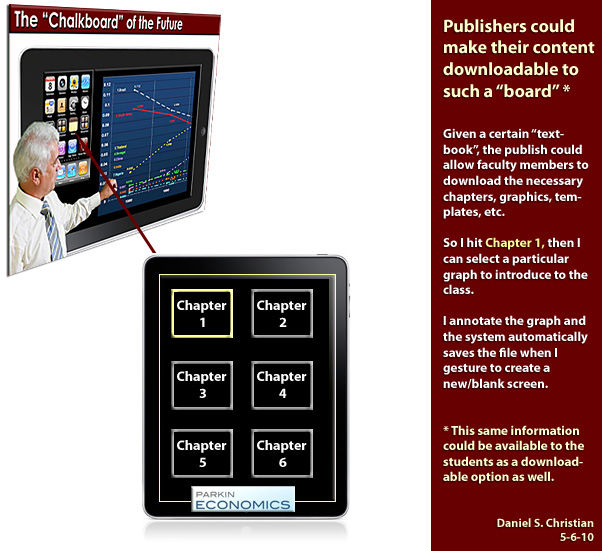
Teaching resources could be downloaded by faculty and by students -- compliements of the publishers


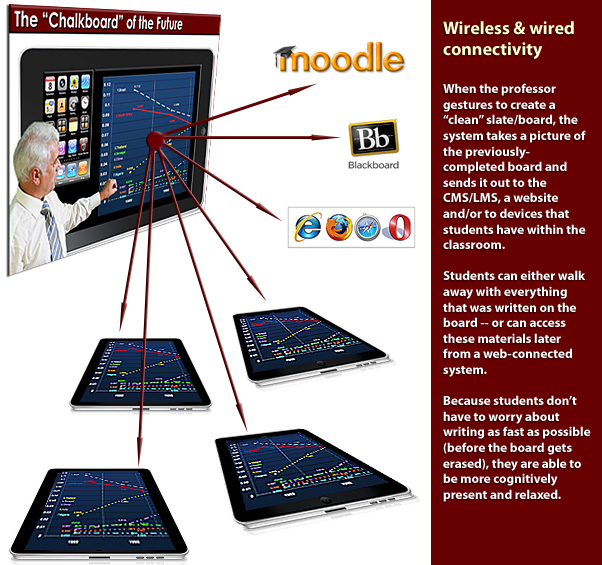
From Daniel Christian: The future chalkboard is connected to various other systems and devices -- wirelessly and via wired connections.

.


.

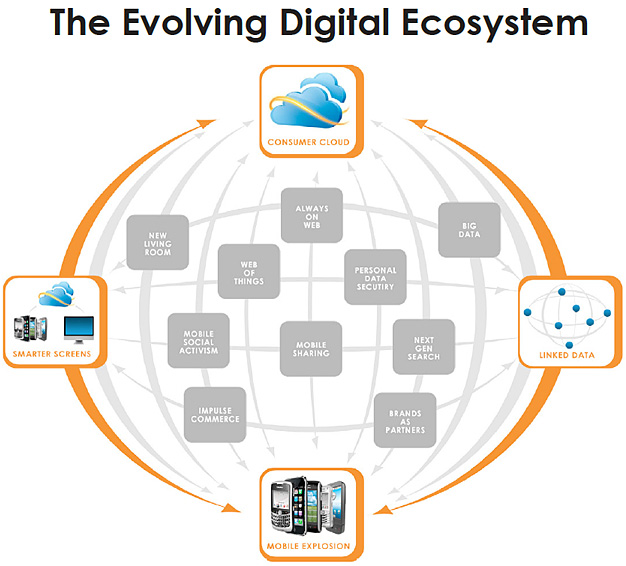
The Evolving Digital Ecosystem - from Moxie's Trends for 2012

  • The Always On Web
  • Web of Things
  • Big Data
  • Next Gen Search
  • Mobile Sharing
  • Mobile Social Activism
  • Impulse Commerce
  • Brands As Partners
  • The New Living Room  <– From DSC: This is one of those key areas that I’m trying to keep a pulse check on for re: our learning ecosystems of the future 
  • Personal Data Security


Also see:


From DSC:

  • Why do I post things like this? Because the infographic below relates to an emerging future and some developing trends whereby we’ll also be able to “Learn from the Living Room” at extremely affordable prices (if not free).


INFOGRAPHIC: Welcome to the Digital Living Room: How is the TV Landscape Changing?


Also see:


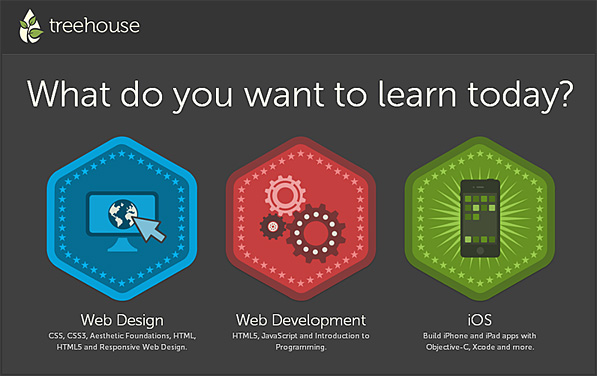
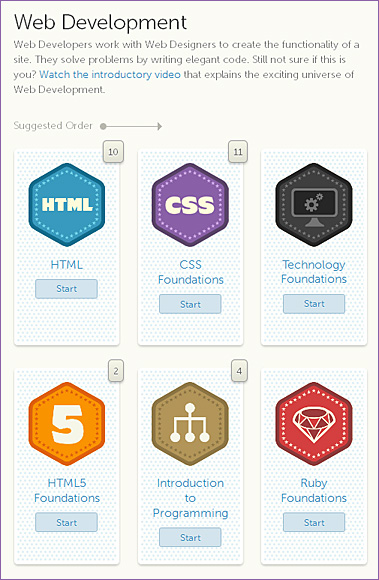
treehouse.com -- learn web design, web development, and iOS development

.


.


.


This time its personal — from The Journal by Jennifer Demski

Excerpt (emphasis DSC):

Leading Through Technology
Thomas Greaves, CEO of The Greaves Group, an educational consulting firm, takes Cator’s point one step further and says that it’s doubtful personalized learning could happen–or at least, happen well–without the right technological tools in place.

“The student, using technology, is better able to personalize their learning than a teacher is,” he says. “Teachers don’t have time to sit down and study each student, each day, in each course to figure out what they’re going to do differently with them. Teacher-driven personalization ends up being very weak, with very few factors, whereas if the students are leading their personalization via technology, then their instruction can be personalized based on a hundred variables instead of one or two.”

Greaves also seems to suggest that tech-driven personalized learning will, by its very nature, enable individualized learning and that holy grail of teaching, differentiated instruction, in which a teacher adapts classroom instruction to the various needs and skill levels of each student. Historically, differentiated instruction, as a practice, has been incredibly difficult, if not impossible, to implement in a teacher-centered learning environment that is driven by a print-based curriculum. Personalized learning may finally allow individualization and differentiation to actually happen in the classroom.

Ideally, tech-driven personalization combines the best of individualized learning–self-paced, diagnostic-driven–with the ability to adapt to a student’s specific learning styles, interests, and backgrounds. Personalization could be as simple as students compensating for any gaps in their pre-existing knowledge by allowing them to unobtrusively Google unknown terms during group instruction rather than raising their hand, or as sophisticated as students entering information about themselves into a piece of software that selects digital content based on the their interests and skill levels.

From DSC:
And with shrinking budgets, class sizes could easily be rising — making it even more difficult for teachers to try and implement customized/personalized learning without some type of assistance.

We may not be there yet…but we’ll get there.  Using a historical analogy:

  • Let’s go back to the early 80’s when the personal computer was just starting to be used much and the DEC’s of the world didn’t think much of them.  But over time, as Clayton Christensen and Michael Horn pointed out in Disrupting Class, these new inventions picked up features and power, and eventually, they crushed DEC. (Seems to me I heard Kodak was going bankrupt too…)


Top 10 Sites for Educational Apps — from Technology Tidbits: Thoughts of a Cyber Hero by dkapuler

Research/report:
Mobile Learning Game Improves 5th Graders’ Fractions Knowledge and Attitudes

— Prepared by Prof. Michelle Riconscente | University of Southern California | published by GameDesk Institute

Also see:

Tagged with: • • • • • •  

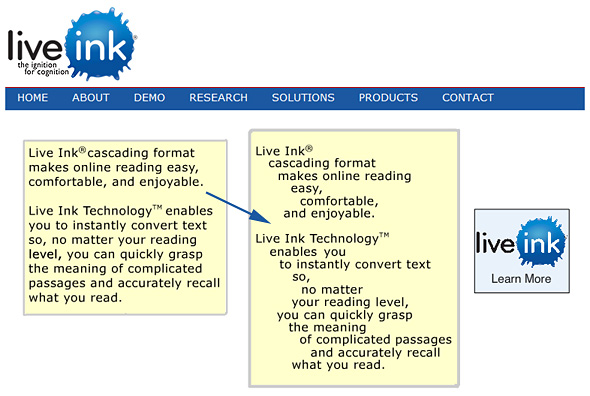
Live Ink -- works for me!

From DSC:
What I take from this:

  • Allow for scanning — there’s too much information to take in when drinking from today’s firehoses!
  • Use white space
  • Be brief as possible
  • Bulleted lists can be helpful
  • Provide bolding to highlight key points/topics

I noticed McGraw-Hill is starting to incorporate this technology:

  • McGraw-Hill’s Connect platform is incorporating Live Ink, a cool technology that converts text into an easy to read cascading format.

— from SmartTech Roundup: 2012 Predictions & Digital Reading

Tagged with: • • • • •  

http://www.microsoft.com/presspass/ImageGallery/Images/Products/Xbox/12-05TVEvolution-Infographic_web.jpg

.

From DSC:
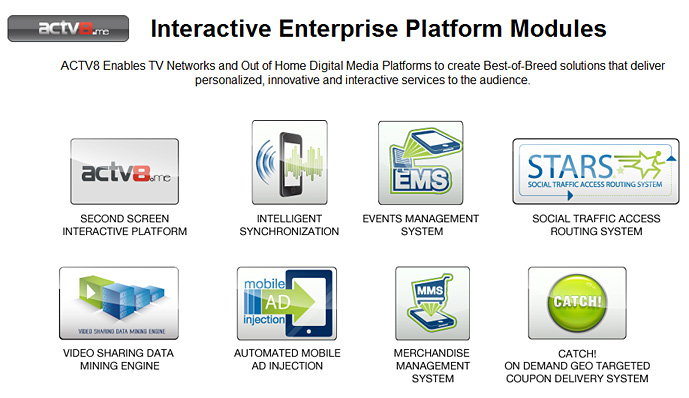
What if educationally-related apps and services were driven by such a platform as
actv8.me? If you want to leapfrog everyone else, then explore this direction.

.


actv8.me/platform.html


Operation Math - looks to be a great, engaging learning game for math

Tagged with: • • •  

Do not underestimate or discount the disruptive power of technology! Daniel S. Christian -- June 2009


From DSC:
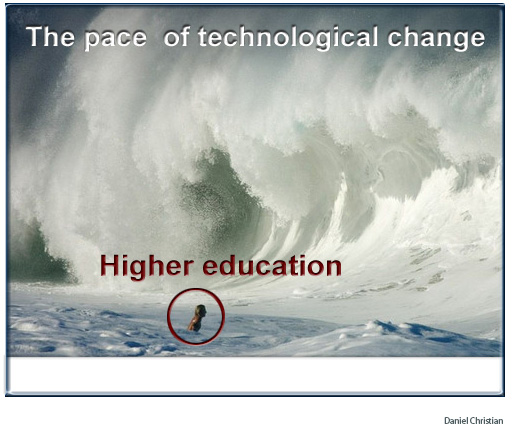
The tidal wave of technological change swept over Blockbuster and the article below shows how it drowned Kodak as well. These players were once at THEE top of their games…now they are either bankrupt or soon to be bankrupt (if things don’t change fast).

This relates to higher education as well, but I don’t think that we’ve seen anything yet (though 2012 may change that). Higher ed may have a limited window of time left before the conversation moves completely out of academia and higher ed as we know it gets left behind. The word “reinvent” and the phrases “staying relevant” as well as “lowering the price” should be at the top of the agendas for boards at most academic institutions of higher education throughout America (and other nations as well). I use the word most here because some folks will likely continue to pay enormous prices to get the name brands that they’ve been paying $50,000+ per year for.

If companies eventually don’t care who accredited your degree but rather what you can DO for them, watch out. The barriers to entry will plummet.


You Press the Button. Kodak Used to Do the Rest. — from technologyreview.com
Kodak saw the shift from analog to digital photography coming. Here’s why it couldn’t win.

.

Excerpt (emphasis from DSC):

But the industry landscape was completely different in the digital era. Barriers to entry were significantly lowered and the industry was flooded by entrants with a background in consumer electronics, such as Casio, Samsung, and Hewlett-Packard, not to mention Japanese camera manufacturers including Canon, Nikon, and Olympus. Large parts of Kodak’s competence base related to chemistry and film manufacturing were rendered obsolete. The vertical integration that had previously been a core asset to Kodak lost its value. Digital cameras became a commodity business with low margins. The problem facing Kodak wasn’t just that film profits had died but that those revenues could not be replaced.

Once images became digital, Kodak’s business model of “doing the rest” was effectively destroyed. Doing the rest used to entail a large and complex process that only a couple of companies in the world could master. Today, it is done by the click of a button.

Related graphic from DSC:

From Daniel S. ChristianAlso see:


12/15/11 addendum re: the conversation moving away from higher ed:

Excerpt (emphasis DSC):

No single blog can adequately capture or represent what was going on at Learning 2011. But if you are intrigued, I suggest you go to www.Learning2011and see what the agenda and the presentations looked like for yourself.
.
What I sensed, and what I am trying to describe here, was an accelerating transition in workforce education from a higher education-centric model to a learner-workplace-centric model. In a world where higher education institutions have dominated, controlled, and driven the conversation about quality, content, access, and results; the balance of power is shifting away from that more monolithic tendency to a far more disaggregated power structure where good information, metrics, and results that can be validated against third party standards are the “coin of the realm”.


© 2025 | Daniel Christian