Questions I’m no longer asking — from elearnspace by George Siemens

Excerpt:

I’m firmly convinced of the following:
1. Learners should be in control of their own learning. Autonomy is key. Educators can initiate, curate, and guide. But meaningful learning requires learner-driven activity
2. Learners need to experience confusion and chaos in the learning process. Clarifying this chaos is the heart of learning.
3. Openness of content and interaction increases the prospect of the random connections that drive innovation
4. Learning requires time, depth of focus, critical thinking, and reflection. Ingesting new information requires time for digestion. Too many people digitally gorge without digestion time.
5. Learning is network formation. Knowledge is distributed.
6. Creation is vital. Learners have to create artifacts to share with others and to aid in re-centering exploration beyond the artifacts the educator has provided.
7. Making sense of complexity requires social and technological systems. We do the former better than the latter.
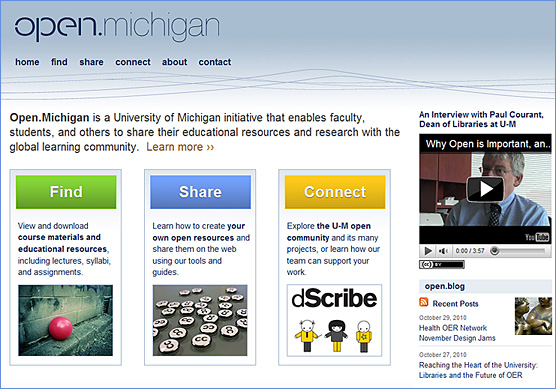
open.umich.edu

— Found originally at blog.oer.sbctc.edu

A World to Change — Stephen Downes at the Huffington Post

Top 100 Tools for Learning 2010: Final list, presentation and more — from Jane Knight

Yesterday I finalised the Top 100 Tools for Learning 2010 list.  Many thanks to the 545 people who shared their Top 10 Tools for Learning and contributed to the building of the list.   Although this list is available online, I also created this presentation which provides the information as a slideset – embedded below.

My Photo

Jane Hart, a Social Business Consultant, and founder
of the Centre for Learning & Performance Technologies.

MIT OpenCourseWare: 2009 Program Evaluation Findings Summary — originally from Catherine Shinners at GetIdeas.org

Note from DSC:
Originally I had made a note that MIT may start charging for these materials but this is not so per a correction/update from Steve Carson who pointed me to this posting: Erroneous Reports of Possible OCW Paywall Appear in News Media

Tagged with:  

Time Warner: Apple TV would ‘jeopardize’ shows — from news.cnet.com

From DSC:
Yes, yes, yes…all the incumbents out there who refuse to reinvent themselves will buck against tech-enabled, innovative companies that introduce new ways of doing things that disrupt their current business model. It’s possible Time Warner will make less, but they could make more depending upon how they play things.

I have it that the same is true for institutions of higher education. There already is — and will continue to be — disruption caused by technological changes and new business models. We can either reinvent ourselves or get our butts kicked.

Relevant examples:

The Khan Academy brings Disrupting Class to life — from Disrupting Class by  Michael Horn

If you haven’t yet seen it, there is a fascinating video of Sal Khan speaking at the Gel 2010 conference. For those who haven’t been following, Khan is the creator of the Khan Academy—a non-profit that has over 1,800 videos for free on the Web that teach topics in Math, Science, the Humanities, and so forth—and have attracted such an impressive following that they have more viewers than even MIT’s open courses on YouTube. The Khan Academy reaches people all over the world with these videos, and recently Google awarded it $2 million to create more videos and translate them into additional languages.

.

University of Florida Considers a Flat Tuition Plan — from StraighterLine.com’s blog

.


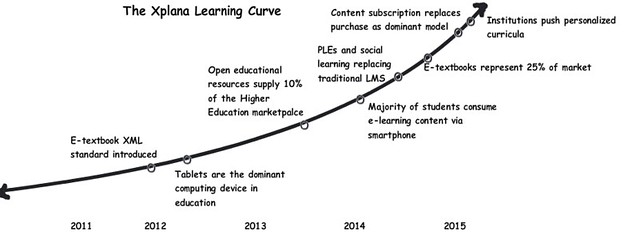
Nine important trends in the evolution of digital textbooks and e-learning content — from xplana.com by Rob Reynolds

Per Rob Reynolds:
I gave a presentation last week in which I talked about nine trends that we’re currently tracing with regards to digital content in Higher Education. These are the critical trends that we believe will determine both growth and innovation in this market. Here are the nine trends along with a brief comment on each.

  1. The increased disaggregation of content and the breaking up of the traditional textbook model
  2. A proliferation of e-content and e-learning apps that support content disaggregation and new product models
  3. A merging of the current rental market and the e-textbook market
  4. A wide range of license/subscription models designed to respond to consumer demands around price and ownership
  5. The growth of Open Education Resource (OER) repositories
  6. The development of a common XML format for e-textbooks, shared by all publishers and educational technology players
  7. The importance of devices and branded devices
  8. The development of e-commerce and new product ecosystems that challenge the traditional college bookstore
  9. A move from evolution to innovation and revolution

.

Also see:
The vanishing line between books and Internet — from Forbes.com by Hugh McGuire 
The inevitability of truly connected books and why publishers need APIs.

But everything exists within the EPUB spec already to make the next obvious but frightening step: Let books live properly within the Internet, along with websites, databases, blogs, Twitter, map systems, and applications.

From DSC:
I’m about to take a class on the future of teaching and learning…and I have to tell you that I was very disappointed to be presented with a syllabus “featuring” a textbook from 2004…geez.


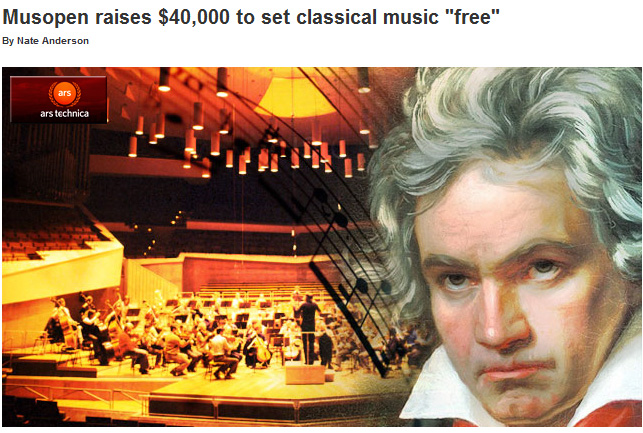
Setting Classical Music Free

Tagged with:  
Who We Are
The Learning Registry project is an informal collaboration among several [U.S.] federal agencies that share the same goal: making federal learning resources and primary source materials easier to find, access and integrate into educational environments.

Key members of the collaboration are:

In addition we have been working with:

While we focus on the availability of federal resources, our approach and goals are shared with others worldwide.  We are talking with and working to leveraging the activities of many others, including:

Thus we hope our results can enable a broad ecosystem of discoverable and accessible learning content and help to build an international community with a shared vision.

Addendum from 9/20/10:

It was only a few weeks ago that we posted about Steve Midgley speaking at the Government 2.0 Summit in Washington, DC.  In this five minute video, Steve explains at a conceptual level what the Learning Registry will enable: discovery of learning resources through a common set of APIs. You can download his slides here: The Learning Registry – How to Find and Use More Resources for Learning Presentation


Royalty-free music: Where to find free music tracks for your video clips — from Robin Good’s Latest News by Daniele Bazzano

As you probably know, it is illegal to use copyrighted commercial music when publishing video clips online. For example, YouTube has developed a copyright-protection system that immediately detects unlicensed uses of copyrighted music tracks inside videos published online and silences them or blocks them from public viewing. So, how can you get a nice background music to place on your videos without infringing the law? The MasterNewMeda research team comes to the rescue with this guide listing all of the best services on the web to get or download open and unrestricted royalty free music.

Also see older posting:
Where can you find royalty free music

100 extensive university libraries from around the world that anyone can access — from mary & mac design

Universities house an enormous amount of information and their libraries are often the center of it all. You don’t have to be affiliated with any university to take advantage of some of what they have to offer. From digital archives, to religious studies, to national libraries, these university libraries from around the world have plenty of information for you. There are many resources for designers as well. Although this is mainly a blog that caters to designers and artists I have decided to include many other libraries for all to enjoy.

DIGITAL LIBRARIES

Capturing images of manuscripts, art, and artifacts, digital libraries are an excellent way of both preserving the past and sharing it with everyone.

  1. Harvard University Library. Browse through 24 different collections ranging from cultural images of eastern Asia to 19th century American trade cards.
  2. Yale University Library: Digital Collections. Find ancient manuscripts or read a classic all preserved digitally courtesy of the Yale University Library.
  3. Indiana University Digital Library Program. Download manuscripts from Isaac Newton or view photographs, film literature, and music from the collections at this library.
  4. Michigan State University Digital and Multimedia Center. Find several texts from authors such as Joseph Conrad, Aesop’s Fables, cookbooks, and texts on orchids or veterinary medicine in PDF format.
  5. Columbia University Libraries Digital Collections. Browse through one of over 10 different digital collections that range from medieval and early Renaissance manuscripts to architectural drawings or visit the online exhibitions for even more.
  6. Rutgers University Digital Library Projects. Learn about the history of alcohol, New Jersey, Italy’s people, and much more in this diverse digital library.
  7. Ohio State University Libraries Collections. See photos of Bird’s expedition to the South Pole, learn about the women of Burlesque, and more in these digital archives.
  8. Syracuse University Digital Library. Find interesting information on the history of the New York area as well as recordings of popular WWII songs.
  9. Ohio University Libraries Digital Exhibits. Learn about Ohio history, visits from important people, read WWII papers, and more in these archives.
  10. Brown University Library, Center for Digital Initiatives. This collection includes such interesting topics ranging from Abraham Lincoln, Napoleon, and African American and Yiddish sheet music.
  11. More here.
Tagged with:  
© 2025 | Daniel Christian