Apple University will train executives to think like Steve Jobs — from good.is by Liz Dwyer

Excerpt:

If you want to honor Steve Jobs’ life by following in his entrepreneurial footsteps, forget heading to business school. The Los Angeles Times reports that an Apple team has been working on a top-secret project to create an executive training program called Apple University. The goal? To train people to think like Steve Jobs.

…

Apple refused to comment on the existence of Apple University, but the Times says that in 2008, Jobs “personally recruited” Joel Podolny, the dean of Yale Business School, to “help Apple internalize the thoughts of its visionary founder to prepare for the day when he’s not around anymore.” Apple analyst Tim Bajarin told the Times that, “it became pretty clear that Apple needed a set of educational materials so that Apple employees could learn to think and make decisions as if they were Steve Jobs.” Though the curriculum is still under wraps, Jobs himself oversaw the creation of the “university-caliber courses.” (emphasis DSC)

 Also see:
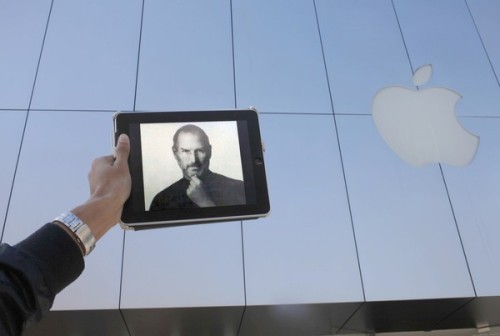
 

Steve Jobs’ virtual DNA to be fostered in Apple University:  To survive its late founder, Apple and Steve Jobs planned a training program in which company executives will be taught to think like him, in “a forum to impart that DNA to future generations.” Key to this effort is Joel Podolny, former Yale Business School dean.
Photo: Steve Jobs helped plan Apple University — an executive training program to help Apple carry on without him. Credit: Michael Robinson Chavez / Los Angeles Times

Steve Jobs helped plan Apple University — an executive training program to help
Apple carry on without him. (Michael Robinson Chavez / Los Angeles Times / October 6, 2011)

From DSC:
If Apple were to choose to disrupt higher education, several other pieces of the puzzle have already been built and/or continue to be enhanced:

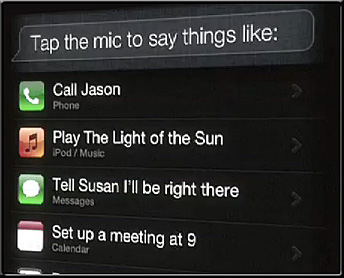
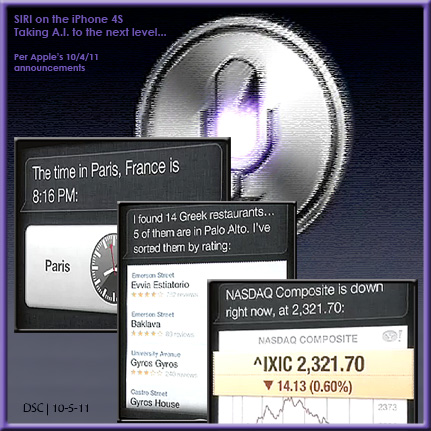
  • Siri — a serious start towards the use of intelligent agents / intelligent tutoring
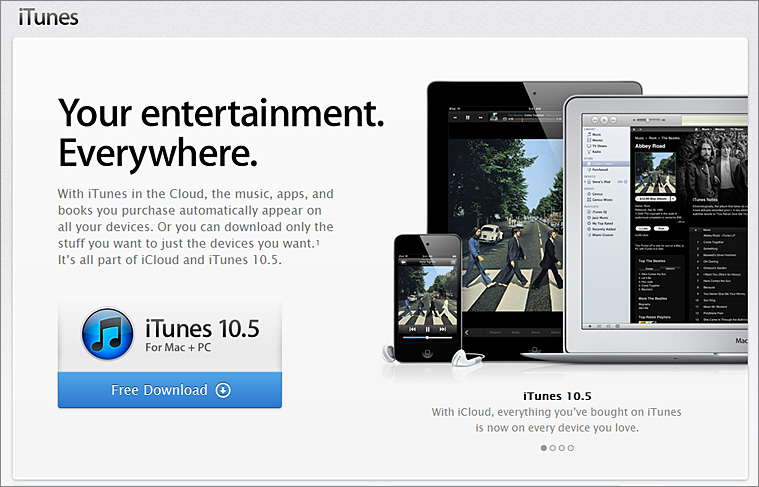
  • An infrastructure to support 24x7x365 access and synchronization of content/assignments/files to a student’s various devices — via iCloud (available today via iTunes 10.5)
  • iTunes U already has millions of downloads and contains content from some of the world’s top universities
  • The internal expertise and teams to create incredibly-rich, interactive, multimedia-based, personalized, customized educational content
  • Students — like employees in the workplace — are looking for information/training/learning on demand — when they need it and on whatever device they need it
  • Apple — or other 3rd parties — could assist publishers in creating cloud-based apps (formerly called textbooks) to download to students’/professors’ devices as well as to the Chalkboards of the Future
  • The iPad continues to be implemented in a variety of education settings, allowing for some seriously interactive, mobile-based learning
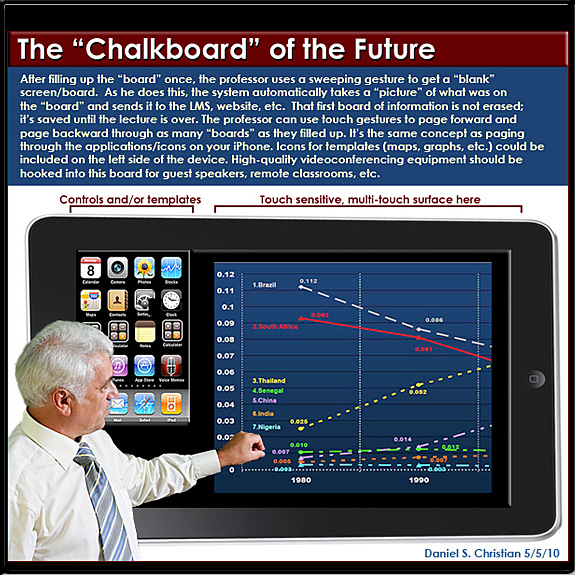


At the least, I might be losing a bit more sleep if I were heading up an MBA program or a business school…
 

Adobe intros iPad app creator for InDesign — from The Journal by Kanoe Namahoe

Excerpt:

Adobe is looking to Single Edition to be an affordable way for freelance designers and organizations of any size to expand their digital publishing efforts, said Todd Teresi, vice president and general manager of Media Solutions at Adobe, in a prepared statement. ” Adding Single Edition to the Digital Publishing Suite family shows Adobe’s commitment to making digital publishing available to businesses of all sizes–from freelance designers to small design firms to large global publishers.”

Indiana U. helps shape economic terms of eText transition — from convergemag.com by Tanya Roscorla

Excerpts:

As course material shifts from print to digital, Indiana University advocates on behalf of students for lower prices, more choices and common software platforms.

…

Based on feedback from students and faculty, Courseload rewrote the platform in HTML5 this summer.

…

When the university asked students why they liked e-textbooks better, 69 percent cited instructor annotations, followed closely by sustainability, cost, weight of books and student annotations.


From DSC: Expectations, today, are getting hard to beat

Since Apple’s event yesterday, I’ve heard some conversations on the radio and reviewed several blog postings and articles about Apple’s announcements…many with a sense of let down (and some with the usual critical viewpoints by the backseat drivers out there who have never tried to invent anything, but who sure like to find fault with everyone else’s inventions and innovations).

It made me reflect on how high our expectations are becoming these days!  It wasn’t enough that iCloud is coming on 10/12 (and who knows the directions that will take society in). It wasn’t enough to introduce some serious software-based innovations such as Siri (which bring some significant advancements in the world of artificial intelligence) or AirPlay for the iPhone.  It wasn’t enough to enter into the multi-billion dollar card industry with their new Cards app for the iPhone.  Wow…tough crowd.

What might these announcements — and expectations — mean for education? 
Well…I can see intelligent tutoring, intelligent agents, machine-to-machine communications, the continued growth of mobile learning, learning from the living room, the initiation of programs/events caused by changes in one’s location, continued convergence of the television/computer/telephone, continued use of videoconferencing on handheld devices, cloud-based textbooks/apps, and more.


Siri on the iPhone 4S -- October 4, 2011


Presentations from the Digital Book 2011 Conference — from idpf.org with a special thanks going out to Mr. Steven Chevalia — who had pointed me to a great presentation by Liisa McCloy-Kelley:

Learning to Juggle and Picking the Right Balls
(AKA adapting organizations for the future of digital publishing)

Liisa McCloy-Kelley

Liisa McCloy-Kelley
VP, Director of eBook Production Strategy & Operations, Random House, Inc

Liisa McCloy-Kelley is VP, Director of eBook Production Strategy & Operations at Random House, Inc. where she has been an eyewitness to an evolution in the way that books are produced, marketed and sold for more than 20 years. She currently leads the team responsible for eBook development and production and keeps Random House on a focused strategic path for digital product development. She has spoken at a variety of conferences and has taught at Wellesley, NYU and Yale. As a digital book evangelist, she has given up reading in print form to become an expert in the variety of digital reading systems and the ways they can present content.

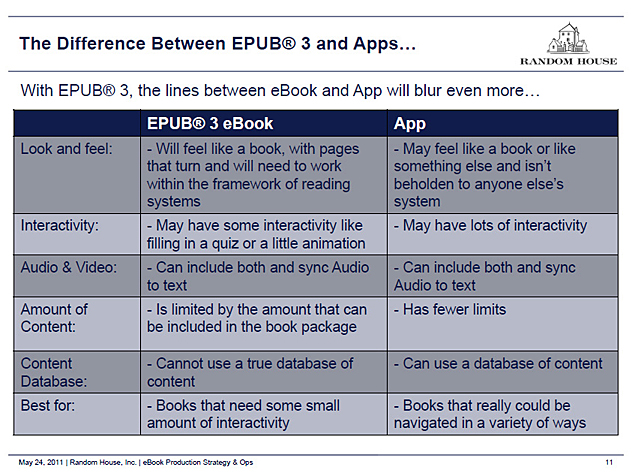
Example slide:


From DSC:
I guess I’m in a reflective mood…but the posting entitled “5 questions to ask yourself before taking your first online class” got me to thinking about online learning and the students who succeed in learning via this approach.

If I were an employer, I would actively seek out those who have done a good deal of their schooling online. Why? Because such students have shown themselves to be:

  • “Self starters” — independent, not needing too much attention
  • Motivated
  • Disciplined
  • Hard-working
  • Tech-savvy enough to work with some of the current tools being used out there

Students really need to have their act together in order to be successful in an online learning environment.  That is not to say that face-to-face students don’t have their act together; but rather, to be successful online, you have to have your act together.


Also see:

  • Online Higher Ed Poised to Break Out? — from The John William Pope Center by Duke Cheston
    Innovative Western Governors University may hold the answers to the problems of distance learning.


Content execs at TheGrill warn: Move aside, Netflix — movies are going into the cloud — from thewrap.com (emphasis below from  DSC)

In this digitized world of renting, streaming and downloading, three executives from major content creators agreed on at least one remedy – monetizing ownership.

That is why Sony’s John Calkins, Warner Bros.’ Thomas Gewecke and CBS’ Jim Lazone took the stage on Tuesday at TheGrill, TheWrap’s annual media conference, to discuss, among other subjects, Ultraviolet, the cloud-based home- entertainment system.

…

UltraViolet will let consumers buy a digital copy of a movie at a standard retailer and upload it to the cloud, making it available whenever they want to watch it.

… UltraViolet not only offers the opportunity for repeated viewing but also a “degree of portability and multiple device interactivity you don’t get” when using something like video-on-demand.


 Also see:


Tagged with: • •  

iPad deployment and teacher PD –– from Langwitches.org by Silvia Rosenthal Tolisano

Excerpt:

I have been reading my fair share of blogs, wikis and other documentation as schools around the world are deploying iPads in their classroom. It is finally our turn at the Martin J. Gottlieb Day School to welcome 20 brand new shiny iPad2s (no cart, just individual iPads).

In the spirit of passing on the trials and errors, as we get the devices ready to be used in the classroom by teachers and students, I am documenting our process.


Also see:

Addendum on 9-22-11:

  • Lessons from an iPad Rollout — from The Journal.com by Bridget McCrea
    Florida’s “first iPad high school” has deployed 1,000 iPads to its high school teachers and students. Thanks to preparations on the infrastructure, training, and security fronts, the fall rollout has proved relatively snag-free. In March and June, THE Journal reported on The Master’s Academy and the challenges it was tackling on the way to becoming Florida’s first iPad school. The private, interdenominational Christian institution in Oviedo has since handed out nearly 1,000 of the devices to students in ninth through 12th grade. According to Mitchell Salerno, principal, the transition to a more digital educational environment has gone surprisingly well so far.
  • 10 Ways to Quickly use the iPad in your Classroom — from Electric Educator

Yale pushes online frontier — from Yale Daily News by David Burt, Drew Henderson [originally saw this at Ray Schroeder’s blog]

Excerpt:

Three Yale Summer Session professors taught their course material not only to students in New Haven, but also to their classmates thousands of miles away.

For the first time this summer, Yale Summer Session offered three online courses, two of them for Yale credit, in which students watched recorded lectures and joined live discussion sections with their professors and online classmates via video chat. With “uniformly positive” feedback from students and faculty, the University is now looking to expand this summer’s program for next summer, though Yale Summer Session Dean William Whobrey said there are no plans to use the technology during the academic year.

© 2025 | Daniel Christian