On 05/17/2012,
in art, cloud-based computing / apps / other cloud-related, creativity, K-12 related, media/film, play, story, storytelling,
by Daniel Christian
Also see:
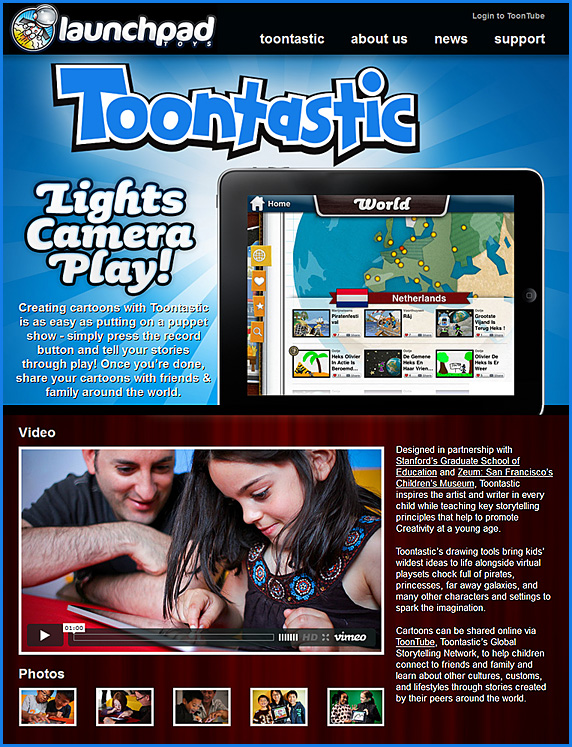
- Planet Earth – Narrated by kids — from the blog at launchpadtoys.com — by Thushan Amarasiriwardena
The Weston Family Learning Centre / Hariri Pontari Architects — from archdaily.com by Diego Hernandez
.
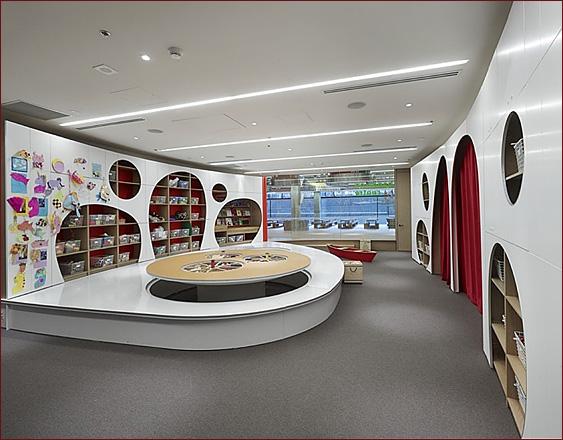
© Tom Arban

© Tom Arban
.
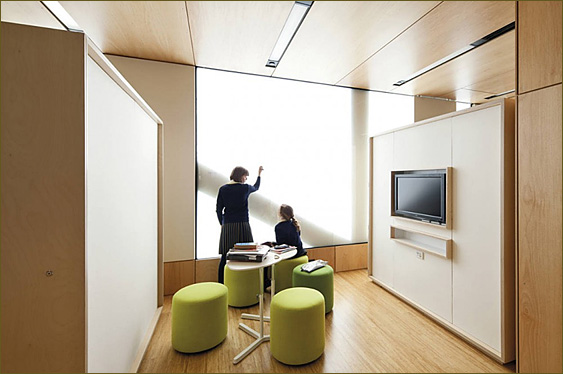
.

Addendum on 5/8/12:
Stockholm’s school without classrooms — interesting piece from architizer.com
.

.

Excerpt:
Children have wild imaginations. Take Max from Maurice Sendak’s illustrated classic Where the Wild Things Are, whose mischievous tantrums cause his room to sprout into a lush, inhabited forest. In a similar experience of my own, I can recall a particular elementary school gym class, in which the gym was transformed into the perilous domain of a sword-wielding ‘gorilla’—played by my gym teacher. The masked predator hid behind colossal trees of rolled blue gymnastic mats and tangled cargo net vines before springing out to prey on us hysterical, spritely youth.

[All photos © Kim Wendt and Rosan Bosch]
.
Addendum on 1/12/12:
- The Pedagogy of Play and the Role of Technology in Learning — from pbs.org/mediashift by Aran Levasseur
On 09/30/2011,
in digital storytelling, human-computer interaction (HCI), K-12 related, play,
by Daniel Christian
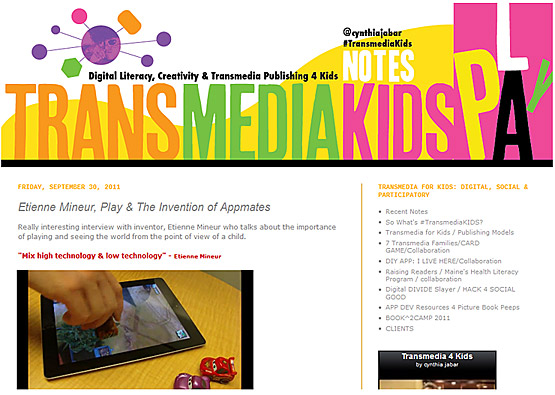
(Small) Playful Learning Spaces — from playfullearning.com
Excerpt:
Many people have asked me about creating playful learning spaces for children in homes or classrooms with limited space. My response is that even small changes can make a big difference. While one option is taking advantage of little nooks around your house (stay tuned for another post on nooks), another option is to fully utilize any wall space you may have available.

On 09/13/2011,
in accessibility / UDL, communications, educational games / serious games, neurodivergent/special needs, play,
by Daniel Christian
On 08/23/2011,
in communities of practice, creativity, education, education technology, hearts -- matters of the heart, K-12 related, love of learning, passions, play,
by Daniel Christian
First day of school: Anastasis Academy #standagain — from iLearnTechnology.com
 Excerpt:
Today was one for the books. We did it! We opened a school with a radical new vision for what a school should look like in light of learning. It was a truly great day!
Mission:
[Anastasis Academy’s mission] is to apprentice children in the art of learning through inquiry, creativity, critical thinking, discernment and wisdom. We strive to provide an educational model that honors and supports children as the unique and creative individuals that God created them to be. We work to shape the development of the whole-child by engaging the mind, body and spirit while inspiring each to personal excellence.
Also see:
Look where you want to go and steer in that direction: How a blog started a school — from Dreams of Education (6/24/11)
From DSC:
24 “The LORD bless you and keep you; 25 the LORD make his face shine on you and be gracious to you; 26 the LORD turn his face toward you and give you peace.” (Numbers 6:24-26) May He bless your efforts as you seek to not only impact the minds of — but also the hearts of — your students.
We really need to impact both in order for our future students to make significant, positive impacts around the globe. Way to go Kelly!
On 07/26/2011,
in 21st century, 24x7x365 access, 3D, A/V -- audio/visual, convergence, corporate universities / corporate training, Daniel S. Christian, digital audio, digital learning, digital storytelling, digital textbooks, digital video, disruption, e-publishing related items (EPUB and more), e-readers, emerging technologies, engagement / engaging students, flipping -- inverted learning, future, future of higher education, global, higher education, homeschooling/homeschoolers, human-computer interaction (HCI), innovation, intelligent systems, intelligent tutoring, internet, K-12 related, learning ecosystem, learning spaces, media/film, multimedia, music, new media literacies, online learning, online media, online tutoring, personalized/customized learning, play, social learning / networks, social media, storytelling, streams of content, technologies for your home, technology (general), telecommunications, telepresence, television, training / L&D, trends, user experience (UX), videoconferencing, virtual field trips, virtual K-12 schools, Virtual Reality (VR) / worlds / learning, virtual tutoring, web-based collaboration,
by Daniel Christian
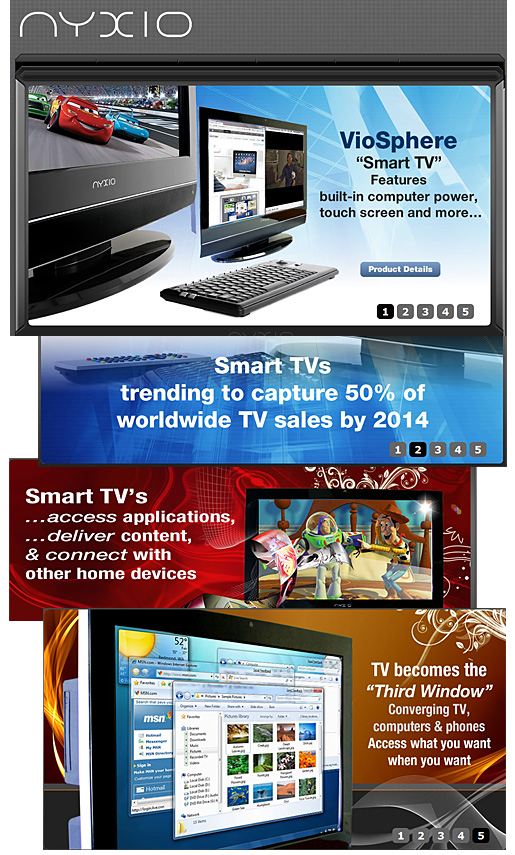
Intel predicts Smart TV is the device of the future — from nyxiotechnologies.com’s blog
Chipmaker Intel believes that the Smart TV is the electronic device of the future, in the living room anyway.
Excerpt:
The Smart TV is already upon us, in its various forms from various manufacturers. It has arrived with 3D capabilities, web browsing and social networking and applications. Currently Samsung and LG seem to be two of the big players pushing the Smart TV to consumers.
Also see:
On 06/20/2011,
in Australia, innovation, interactivity, learning, learning spaces, play, smart classrooms, social learning / networks,
by Daniel Christian

On 06/14/2011,
in A/V -- audio/visual, art, creativity, Europe, innovation, interactivity, music, play,
by Daniel Christian
On 06/14/2011,
in creativity, digital storytelling, media/film, play, story, storytelling,
by Daniel Christian
The Evolution of Transmedia Storytelling
These videos capture a discussion between Frank Rose, Author of “The Art of Immersion” (and a contributing Editor at Wired) and Jeff Gomez, President and CEO of Starlight Runner Entertainment at Ad Age’s “Creativity and Technology” (CaT) Conference in NYC June 9th, 2011.
- The Evolution of Transmedia Storytelling (Part 1 of 3) (5 min introduction)
- The Evolution of Transmedia Storytelling (Part 2 of 3) (15 min)
- The Evolution of Transmedia Storytelling (Part 3 of 3) (14.5 min)
On 05/04/2011,
in 21st century, active learning, assessment, education reform, educational games / serious games, engagement / engaging students, global, ideas, K-12 related, learning ecosystem, love of learning, morals/values, motivation, participation, play, policy, political science, presentations, project-based learning, real-world assignments, relationships, society, sociology, staying relevant, story, storytelling, strategy, student teaching/teacher education, student-related, teaching & learning, vision/possibilities,
by Daniel Christian
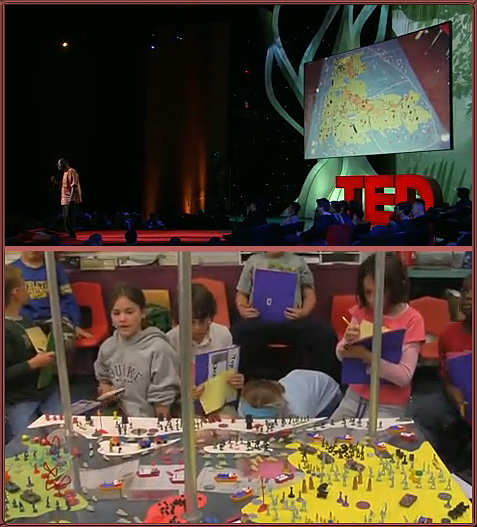
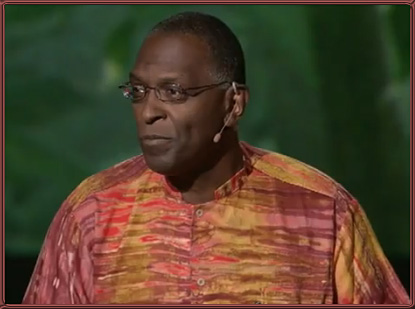
John Hunter on the World Peace Game — TED March 2011 — my thanks to Mr. Joseph and Mrs. Kate Byerwalter for this great presentation
About this talk
John Hunter puts all the problems of the world on a 4’x5′ plywood board — and lets his 4th-graders solve them. At TED2011, he explains how his World Peace Game engages schoolkids, and why the complex lessons it teaches — spontaneous, and always surprising — go further than classroom lectures can.
About John Hunter
Teacher and musician John Hunter is the inventor of the World Peace Game (and the star of the new doc “World Peace and Other 4th-Grade Achievements”).