Also see:
- How a Changing Labor Market Affects Education — from Education Stormfront
Above resource from:
Addendums later on 7/19:
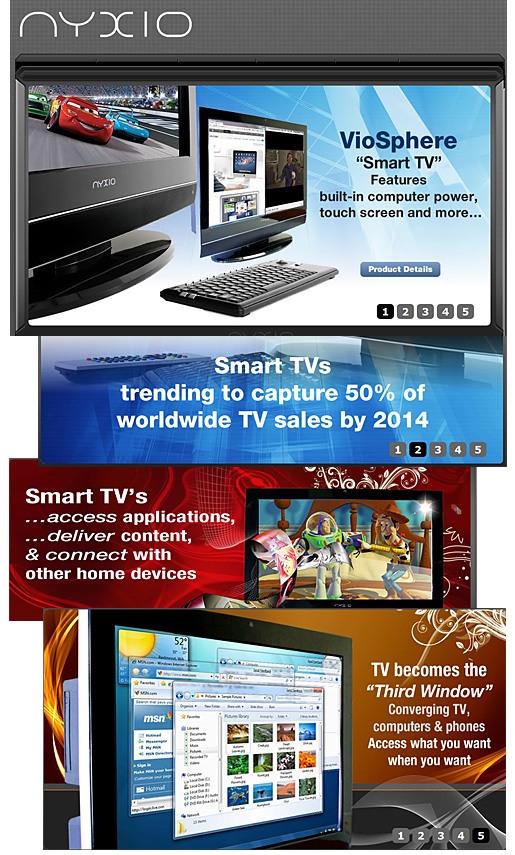
Intel predicts Smart TV is the device of the future — from nyxiotechnologies.com’s blog
Chipmaker Intel believes that the Smart TV is the electronic device of the future, in the living room anyway.
Excerpt:
The Smart TV is already upon us, in its various forms from various manufacturers. It has arrived with 3D capabilities, web browsing and social networking and applications. Currently Samsung and LG seem to be two of the big players pushing the Smart TV to consumers.
Also see:
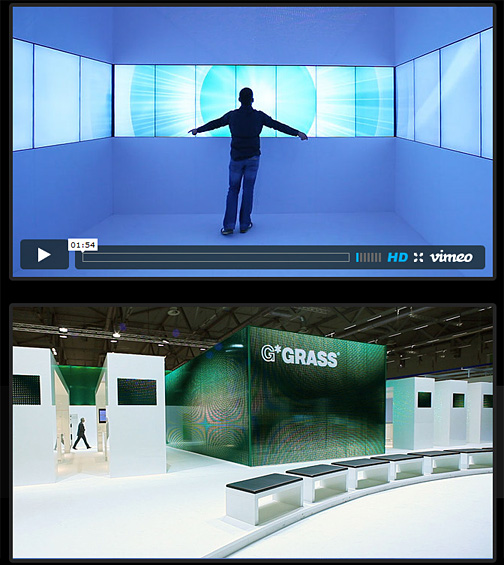
Aruba MOVE delivers high-quality video simultaneously to 100 iPads in a single classroom at the University of Ottawa — from ArrubaNetworks.com
Multimedia applications included Apple Facetime and AirPlay, Blackboard Mobile™ Learn, Distribution Access Learning, HaiVision and Turning Technologies
Excerpt:
SUNNYVALE, Calif., June 13, 2011 – Aruba Networks, Inc. (NASDAQ: ARUN) today announced that it and several application partners delivered the next-generation classroom experience at the University of Ottawa. Validated by the university information technology (IT) department, the classroom experience consisted of six leading multimedia educational applications delivered to 100 iPads, concurrently. Each of the applications was delivered simultaneously to all 100 iPads with the highest quality and without any noticeable jitter, delay or frame loss. 100 percent of the iPads passed the multimedia Service Level Agreement (SLA), as measured by VeriWave WaveInsite, which was also used to objectively verify sustained performance of 1Mbps of multimedia streaming to each iPad.

From DSC:
I think there may be something here for the Smart Classrooms of the future. I can’t help but think of some of our courses in astronomy, for example, and that I think that sometimes we are using the wrong technologies to display images and videos to our students. Without investing an enormous amount of money on very high-end projection systems, we lose too much detail with a variety of images that feature galaxies, constellations, etc. with a projected image.
What about if a student could control where they want to zoom in on an image — and not lose any resolution or brightness? What about if they had such high res images available for viewing directly on their iPads? Sounds very interesting to me.
Also see:
Check out:

Also see:
From DSC:
This also nicely illustrates why I believe we need to use teams of specialists to create and deliver our learning materials (June 2009).
Some items re: Blackboard’s announcement of their Collaborate product:
Forget the next iPhone, your next TV will be on the Internet — from forbes.com by Brian Caulfield
Excerpt:
It looks like we’ve reached an inflection point for Internet-connected televisions. Forty-seven percent of all flat-panel televisions shipped worldwide in 2015 will have some form of Internet connectivity, up from more than 25% today tech tracker DisplaySearch said Tuesday.
From DSC:
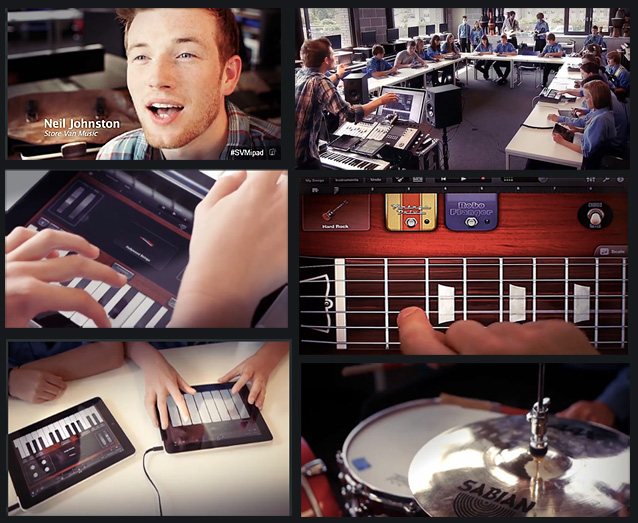
What a great way to engage, inspire, involve students in music!
See:
Also see:
Storytelling gets an upgrade: Beyond tactile stories — from digitalbookworld.com by J.C. Hutchins, novelist and transmedia storyteller
Excerpt:
Over the course of my two previous pieces on storytelling upgrades, I showed how tactile and kinetic features native to the iPad can be linked to traditional narrative devices, such as foreshadowing. However, where it gets really exciting is how the device can unlock a deeply interactive and immersive environment in which the “reader” is an integral part of a nonlinear story—all narrative features that cannot be rendered in print.
Up to now, I had been focusing on the tactile and kinetic, but there are dozens of ways exist to leverage the iPad’s other built-in features, including…
Also see:
StoryWorld Conference + Expo is a timely event for:
Teaching students to be multimedia storytellers — from Spotlight on Digital Media & Learning
From DSC:
With a special congrats out to Laura Fleming on her curation efforts:
We wanted to point Spotlight readers to a new, powerful collection on the National Writing Project’s Digital Is website. Reading and Writing Transmedia is curated by Laura Fleming, a library media specialist in River Edge, N.J., who blogs regularly about the connection between transmedia and education.
The future of TV is social and the revolution is coming ! | SOCIAL MEDIA NEWS | Digital Ministry — from Mark Mayhew
Ynon Kreiz, CEO of the Endemol group the largest independent production company in the world responsible for Big brother said Social TV is going to be huge.
“The ability to create content that will enable people to interface with each other, to connect, to recommend, to share and experience over television, is going to change the landscape of the industry.”
Excerpts:
What is social TV?
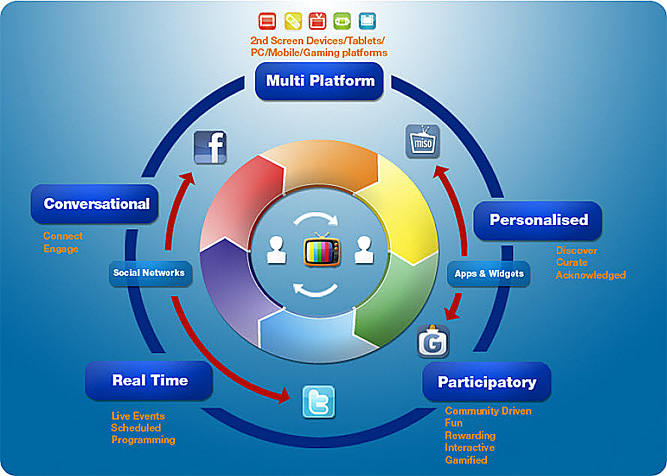
Simply put, it’s about merging your social media networks to the TV. It’s making TV social–again. It’s about taking the water cooler effect and making this virtual, it’s about the empowered consumer viewing content when and where they want, deciding who they want to share it with and being able to do this all in real time.In essence it is a term that describes technology that supports communication and social interaction in either the context of watching television, or related to TV content.Viewers are now using social media to connect with the TV with content that matters to them. Then, as the MIT study shows, they are engaging in massive real-time conversations around those shows and learning to be a part of that conversation and it is a participatory culture as well as a personalised one.TV always been social and on the face of it TV and social media seem like a natural fit but if the TV industry is going to make the most of the opportunities it is going to have change quickly and learn the lessons of the music industry.
…
It is time to rethink TV. It is time to imagine what it could be and redefine it for the participatory culture of tomorrow.
From DSC:
In the graphic below…what thoughts might arise if, instead of entertainment-oriented items, we thought more along the lines of providing materials relating to education, training, professional development?

In science and math classes across the country, digital tools are being used to conduct experiments, analyze data, and run 3-D simulations to explain complex concepts. Language arts teachers are now pushing the definition of literacy to include the ability to express ideas through media. This report, “Multimedia Transformation,” examines the many ways multimedia tools are transforming teaching and learning as schools work to raise achievement and prepare students for careers that require increasingly sophisticated uses of technology.