Adobe launches collaboration platform for video pros — from creativebloq.com
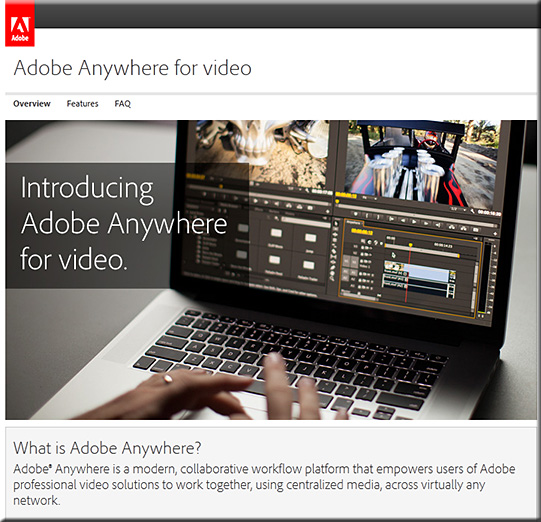
The software giant lends a hand to teams using its professional video tools with the launch of new service ‘Adobe Anywhere for Video’.


adobe advance
Adobe Anywhere for video aims to make your life easier

Excerpt:

Adobe have been keen to attract the attention of web designers this week, announcing updates to Flash Pro, Edge Reflow and Dreamweaver. But video professionals haven’t been forgotten, with the big news being the launch of Adobe Anywhere.

.

Also see (from Adobe’s site):

AdobeAnywhereForVideo-April2013

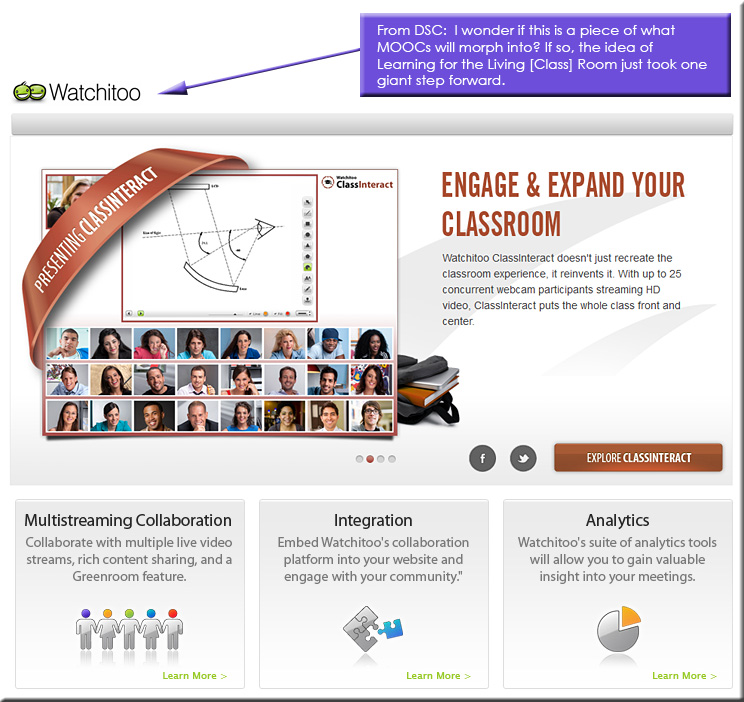
WatchitooClassroom-April2013


Also see:

Watchitoo, Pearson LearningStudio offer real-time HD video chat option for online courses — from thejournal.com by Caitlin Moriarity

Excerpt:

Watchitoo and Pearson eCollege have teamed up to add an integrated collaboration solution, including real-time video chat, to the Pearson LearningStudio SaaS online education platform.

The Device Conundrum – 1:1 vs BYOD — from esheninger.blogspot.com by Eric Sheninger

Excerpt:

As we continue to advance in the digital age schools and districts are beginning to re-think pedagogy and learning environments by instituting either 1:1 device programs or Bring Your Own Device (BYOD) initiatives. In my opinion, schools that wish to create the most relevant and meaningful learning culture will go in one of these directions. It is tough to argue the potential impact of either program that is implemented diligently and with a focus on learning that will not result in the enhancement of essential skills sets that our students need to succeed in today’s digital world. Probably the most significant impact, either 1:1 or BYOD can have is in the area of teaching digital responsibility, citizenship, and the creation of positive footprints online. After all, in the real world that we are preparing our students for, technological literacies and proficiencies are the cornerstones of numerous career paths.


From DSC:
Check out the some solid comments/perspectives from others as well.

4 tips for creating a Sal Khan-style instruction video…from Sal Khan — from fastcompany.com by Anya Kamenetz

Excerpt:

  • Keep things conversational. Emotionless is bad. Don’t talk over your audience’s head, or talk down to them either. “Not even a 6-year-old likes to be talked to like a 6-year-old.”
  • Use visuals and colors–but not too fancy. Khan favors hand-drawn diagrams.
  • Prepare carefully, then speak from your heart. Khan will sometimes write a script and throw it away. He’ll spend an hour walk figuring out how best to visualize a concept, then represent it in a quick sketch.
  • Keep it short. 10 minutes tops. Chunk down a larger concept into smaller pieces, to keep your audience hooked.

Games grow up: Colleges recognize the power of gamification — from edtechmagazine.com by Jacquelyn Bengfort
Universities enliven education through the power of play.

.

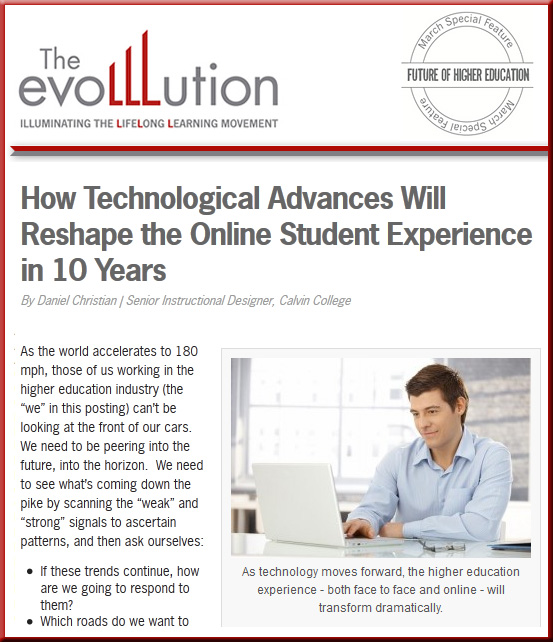
My thoughts on the future of higher education -- March 2013 by Daniel Christian


Also, the PDF file of this article is here.

.

From DSC:
Though the title of this article I wrote says 10 years, it may be more or less (and given the pace of change, I would lean towards sooner rather than later).  

If you haven’t read Christensen’s/Horn’s/Johnson’s work re: disruption — such as Disrupting Class and/or The Innovator’s Dilemma — it would be worth your time to do so. They are right on the mark. What they have been asserting is happening within higher education.  The article briefly addresses face-to-face learning and hybrid learning as well.  Readers of this blog will know that I have been pressing for higher ed to reinvent itself in order to stay relevant. There is danger in the status quo, especially when the conversation continues to move away from traditional higher education.

See other perspectives out at evoLLLution.com as well.


Traditional institutions will close, number of colleges and universities will rise (audio and transcript) — from evoLLLution.com (where LLL stands for lifelong learning) by Richard DeMillo | Director of the Center for 21st Century Universities, Georgia Institute of Technology
Excerpt (emphasis DSC):
.

Well, for me, it always boils down to value. People misunderstand this as assigning value based on salaries or employability, but I mean value in the larger sense. You have to have a reason to ask students to pay more than the marginal costs of delivering education. And with all these revolutions in technology for course delivery, that marginal cost is going to zero very, very quickly [think journalism]. So, every institution that’s going to survive, I think, over the next 50 years, is going to have to make that case. Why is it that tuition at this institution is justified?

The interesting thing about this is it’s going to be accelerated because the old bureaucracies, the old institutional models… are crumbling. At least, their boundaries are crumbling. Let me tell you what I mean by that.

The accrediting agencies, which I think traditionally have had — at least for the last 120 years or so—an institutional focus, are now shifting their focus to students; to competencies, to demonstrations of what students know. And that really starts to cut against institutional entitlement.

I think the conclusion of all this is that, as it becomes harder and harder for… a “Me-Too Institution” to argue for a marginal increase in price, the amount of money that those institutions are going to have available to them to spend on anything but core mission for students is also going to go to zero. So, this is kind of a virtuous cycle; … institutions that are unable to make the value proposition will find themselves more and more strapped for discretionary funds in order to move themselves into a different space. And that’s an ending that’s not very good for most institutions.

From DSC:
How will our/your organization keep from becoming a commodity?  What are we/you all going to bring to the table that’s different, unique, and worth paying for?


WalmartOfEducation-Christian2008


Also see:

Items re: multi-screen media — eventually this trend/convergence enables “Learning from the Living [Class] Room”

PayWizard launches first dedicated payment and subscriber management solution for TV and media industry — from PayWizard

Excerpt:

London, 21 February 2013 – PayWizard, specialists in payment and subscription management, has launched the TV and media industry’s first dedicated, end to end payment and subscription solution. The integrated solution brings together a strong heritage in the Pay-TV market with a deep understanding of the challenges TV operators and media companies face in monetising the multiplatform world.

Using its award-winning modular Payment and Subscription platform, PayWizard combines payment processing, intelligent subscriber management technology and real-time customer service operations to tailor-make solutions that enhance the consumer experience across all screens.

With 16.8 billion video-enabled devices set to be in the global marketplace by 2015, content owners are facing the challenge of enhancing existing services while creating compelling experiences that embrace new routes to market. PayWizard’s comprehensive set of products and services has enabled clients, such as the UK’s biggest commercial broadcaster, ITV, to address these commercial challenges by enabling new monetisation strategies to drive revenue and profitability.


Also see:

.

ConnectedTVSummit-London-2013


.


Nagra-Kudelskidotcom-March2013


.

civolution-march2013

.

Also see:


From DSC:
See the categories listed above for the items/topics/disciplines/trends that are relevant here.


Addendum:

Check this out!

Massive Open Online Course offered by UMass Boston to feature the first adaptive MOOC technology
Enables students to be taught according to individual learning strategies

Excerpt from email:

(Boston, MA) – February 27, 2013 – If you’ve ever been in a course and struggled because you just aren’t “getting it,” the reason might be less your ability than the way in which the material is being presented.

New technology is now allowing online course environments to analyze how individual students learn, customizing instruction to individualized learning strategies. The College of Advancing and Professional Studies (CAPS) at the University of Massachusetts Boston has teamed up with USDLA 21st Century Sponsor, Synaptic Global Learning (SGL), to use the new learning management system, Adaptive Mobile Online Learning (AMOL), to deliver the first adaptive Massive Online Open Course (a-MOOC) ever offered. The course launches March 25.

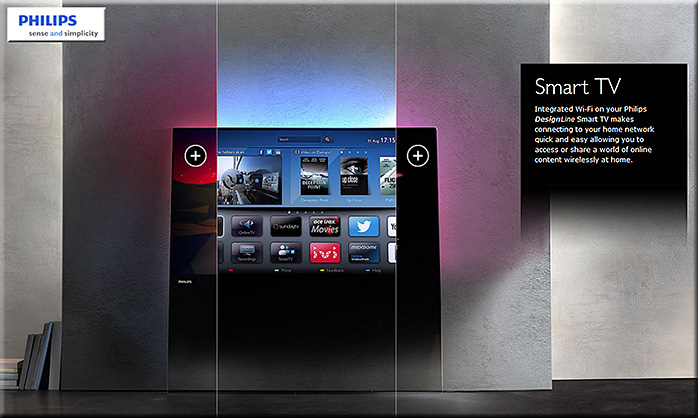
PhilipsSmartTV-March2013

From DSC:
Some reflections onHollywood meets higher ed — a thought-provoking post by Amanda Ripley

Excerpt:

But online classes are different than the in-person kind: Not only do they have a huge potential profit upside, given the ability to attract tens of thousands of students worldwide, but they are, at their best, performances. No one likes to say this out loud in academia, but it’s true: the most impactful MOOCs are also entertaining. The teacher does not need to be a singing, dancing, joke-telling maniac, but the teacher does need to be riveting, one way or another. The production quality needs to be high. Or the students will evaporate, clicking off to Facebook or Twitter or one of the many other online classes multiplying on the Internet.


From DSC:
I post this with a fair amount of hesitation, as mixing the words “higher ed” with Hollywood makes me very uneasy…but Amanda makes some good points in her posting and she highlights yet another potential disruption to the way things are:


creativelive-mardch2013


From DSC:
Lynda.com, an excellent resource, now uses digital playlists.

Here’s an idea.  How about, in the future, students will be able to run through a series of digital playlists:

  • Focusing on a particular topic and/or a course from:
    • A particular college or university
    • A consortium of colleges and universities
    • A group of approved subject matter experts

If and when a person gets stumped — and the artificial intelligence has reached the end of its usefulness — provide a way for that student to connect with a TA, a professor, the subject matter expert, and/or with other students.


A history of media streaming and the future of connected TV — from guardian.co.uk by Alex Zambelli
We’re close to broadly available HD streaming which could trigger mass adoption of connected TV. 

.

internet streaming real shockwave flash netflix


A precursor to…


The Living [Class] Room -- by Daniel Christian -- July 2012 -- a second device used in conjunction with a Smart/Connected TV

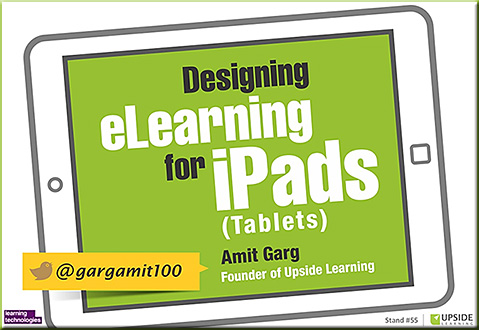
The question of why (not) eLearning on iPads or tablets? — from upsidelearning.com by Amit Garg

Excerpt:

2012 saw the re-emergence of ‘Mobile learning’ or ‘mLearning’ as “new” (ok, not really new) buzzwords in L&D and Training circles around the world. But largely in the wrong context! Mobile Learning is being loosely attributed to any learning activity that is not location bound, which is very surprising! And even more surprising is, more often than not, it is not even referring to mLearning at all! But to things like, making an LMS available on an USB drive so you can track courses while on a plane! Certainly not mobile learning in my opinion.

I believe ‘real’ mobile learning is much more than just learning on a mobile device. I also believe that ”tablet” learning is neither mobile nor eLearning, but actually occupies a position between mLearning and eLearning. So let me lay out my argument for why I believe this!


Also see Amit’s presentation at LT13uk — the full presentation is available here:
http://www.slideshare.net/UpsideLearning/designing-elearning-for-ipads

.

amit-garg-designingelearningforipads-2013


Defiance-FirstVideoGameTVShow-Feb2013


Excerpt:

It’s not unusual for a science fiction television show to spin off a video game. What is unusual is linking the show and the game together on an ongoing basis, with plot elements and characters from each crossing over to the other. In April, gaming company Trion Worlds and the Syfy cable television channel will unveil Defiance, the first such crossover massively multiplayer online game (MMO) and TV show.


From DSC:

Transmedia.

Multimedia.

Interactivity.

Participation.

Gamification.

Sounds like there must be something here for the next gen of learners — and learning from the living room.


Also see:

Here’s how it’ll feel to wear Google Glass –from mashable.com by Pete Pachal


Okglass


New Google Glass UI video shows off search, camera, and voice translation features — from theverge.com by Amar Toor


google glass ui 2 640


Google Glass in the classroom — from Andrew Barras at educationstormfront.wordpress.com

Excerpt:

Did you notice it didn’t have anything about being in a classroom? What would it look like if it did? Tie together facial recognition, speech to text transcription, and IBM’s Watson (or Google’s version of it, Google Now) and what do you get?


Google Glass augmented reality project now open to regular people — from readwrite.com by Dan Rowinski


Also see:


© 2025 | Daniel Christian