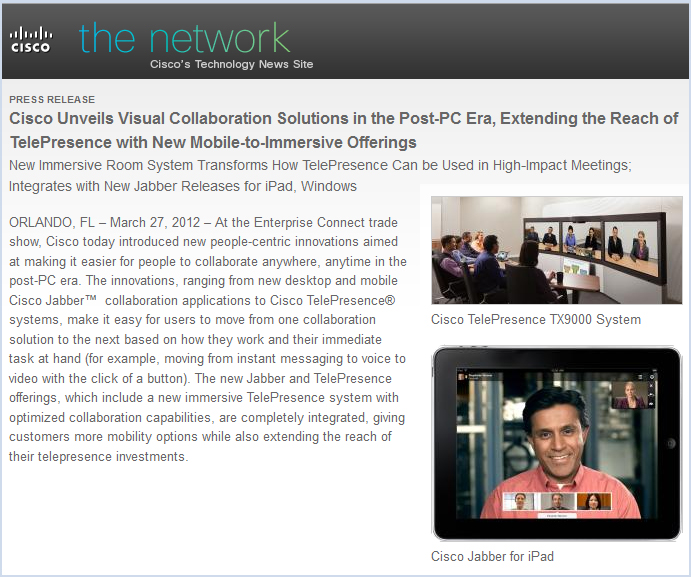
Polycom® RealPresence® Video Content Management Solutions Deliver Live Video Streaming and Video Recordings to Android and Apple Devices
Polycom extends secure user access to video content beyond traditional PCs and laptops to tablets and smartphones, providing easy access to view live and recorded videos on-demand

PLEASANTON, Calif. – May 15, 2012 : Polycom, Inc. (Nasdaq: PLCM), the global leader in open standards-based unified communications (UC), today unveiled updates to Polycom® RealPresence® Video Content Management solutions  that deliver anytime, anywhere secure access to view live-streaming webcasts and video recordings on-demand through a Web portal from any device. New features for RealPresence Video Content Management include updates for Polycom® RSS™ 4000 Recording and Streaming Server and Polycom® RealPresence® Media Manager that make the solution compatible with existing and future technologies, while extending users’ access to video content from traditional computer systems to Android and iOS-based mobile devices. Polycom’s RealPresence Video Content Management solution was recently recognized by Gartner with a “Positive” rating in the latest MarketScope for Video Content Management and Delivery, April 2012.1

Automated grading software in development to score essays as accurately as humans — from singularityhub.com by David J. Hill

See the iphone – Diorama piece at mike-ko.com

Beam me up Scotty: Life-size hologram-like telepods revolutionize videoconferencing — from the Human Media Lab at Queen’s University

Disney Research invents amazing new touch sensing tech — from DVICE.com

A smart city

.

When we think of computer networks, we think of routers and servers and fiber optic cables and laptops and smartphones — we think of the internet. In actuality, though, the visible internet is just the tip of the iceberg. There are secret military networks, and ad hoc wireless networks, and utility companies have sprawling, cellular networks the track


30 specialist (and super smart) search engines — from thenextweb.com by Adam Vincenzini

The home 3-D printer is more real than ever–and costs as much as an iPad — from fastcompany.com by Kit Eaton

A ride on MIT Media Lab’s digital bandwagon — from CNET.com by Martin LaMonica
Digital technologies are reaching deeper into the physical world, opening up new ways for people to interact with their surroundings, say researchers at MIT’s Media Lab.


5 reasons Cisco and Polycom are in trouble in telepresence — from Forbes, guest post by Jeff Cavins

Excerpt:

Due to a variety of technological breakthroughs, from mobile networks and devices to new powerful video technologies, there are five major reasons why the market will be disrupted as we know it, enabling a variety of upstarts to win the business of business meetings…

From DSC: I originally saw this at:
The fuzzy future of telepresence — from http://channelnomics.com by Larry Walsh

Excerpt:

The future of video conferencing is quite bright, and solution providers will have tremendous opportunity to sell and support video products and services. Telepresence, as Cavins argues, is a good idea, but not one that has lasting or sustainable market appeal.

Tagged with: • •  

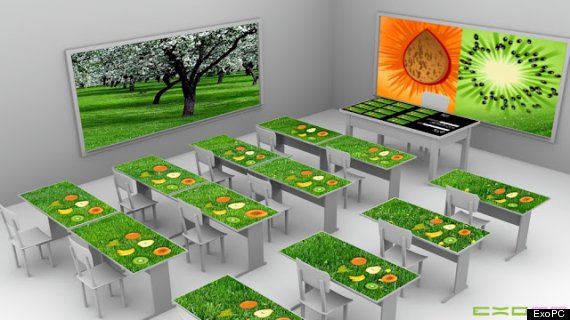
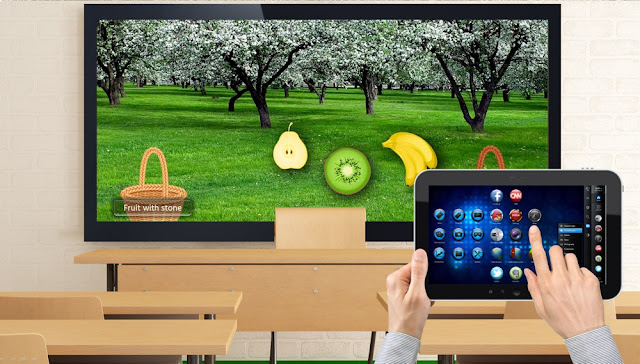
ExoPC and Panama team up to bring ‘tablet desks’ to students— from HuffingtonPost.com and The classroom of the future: Panama wants to give students “tablet desks” — from tabtimes.com by Doug Drinkwater

.

.

The teacher controls the interactive board using an user friendly interface

.

Adobe Photoshop Controller for EXOdesk
Adobe Photoshop TM Controller for EXOdesk makes it possible to control Photoshop TM from an EXOdesk in order to boost your productivity.

.

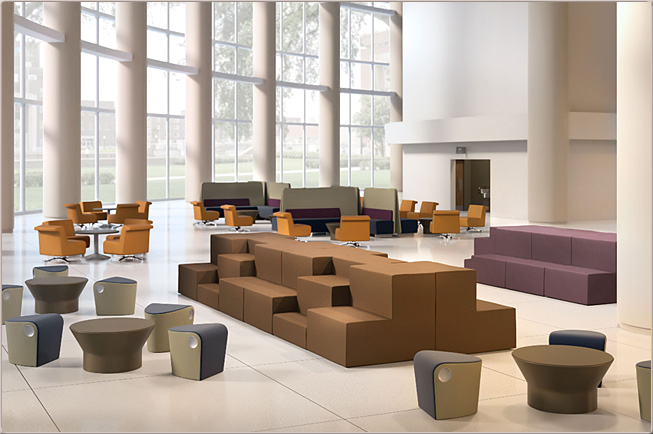
What’s happening in the workplace? — from metropolismag.com by Jan Johnson

.

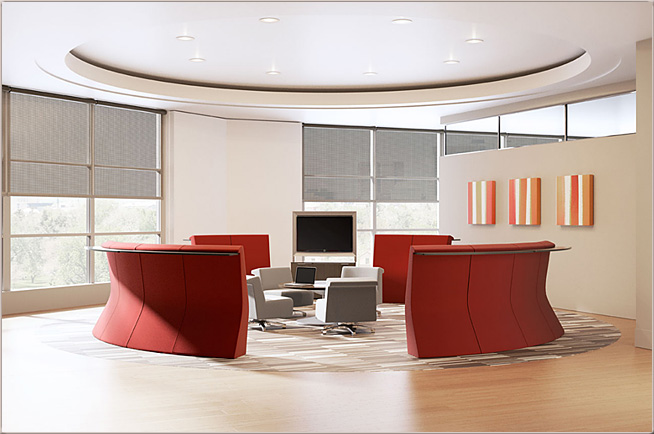
The evolving office in 2012, equipped with Allsteel’s collaborative furniture collection, Gather


.

Marriott Hotels & Resorts, Steelcase, and IDEO Collaborate to Innovate on the Future of Meetings and Work
Marriott Hotels & Resorts Launches “The Future of Work Innovation Co-Labs” To Offer Enhanced Hosted Work Experiences for Gen X and Gen Y Global Travelers.

Excerpt (emphasis DSC):

Los Angeles, Calif. – The nature of work is changing: it’s mobile, fast-paced and global. While most people demand choice and control to work when and how they want, wherever they are, working remotely doesn’t always offer consistent options when it comes to access, comforts and convenience. Marriott Hotels & Resorts, the flagship brand of Marriott International (NYSE:MAR); Steelcase, the world’s leading workplace experience provider; and global design and innovation consultancy, IDEO, today announced a collaboration to design, create and test innovative concepts and solutions for the future of work and meetings in hotels. The collaboration comes to life this week as a showcase of these potential solutions is unveiled at the Marriott Hotels & Resorts Global General Manager Conference in Los Angeles.

 Also see:


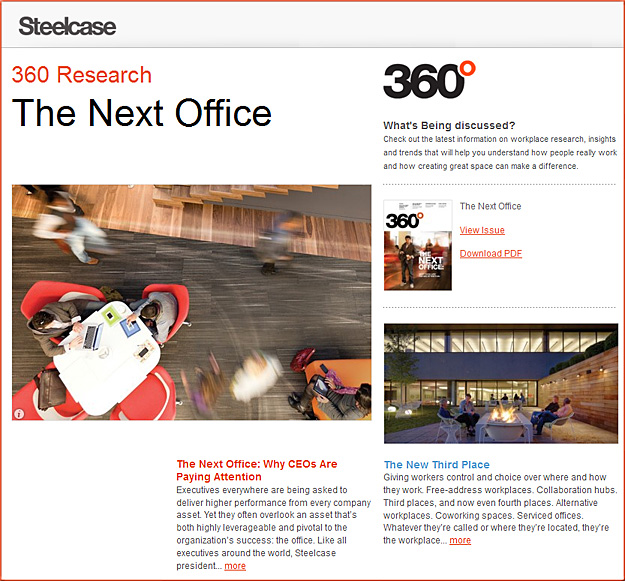
360.steelcase.com -- The Next Office from Steelcase


The new Steelcase space in Strasbourg

Also see:

Also see:


  • .The Pitfalls of sitting too close — from sales-jobs.fins.com by Kelly Eggers
    It sure sounded like a good idea. When Tuft and Lach Law, a small law practice in St. Paul, Minn. opted for open, shared office space, they didn’t expect to hate it. After all, numerous academic studies have shown that workers are more productive in open offices and, in the trendsetting tech industry, open plans are standard. For the law firm, it didn’t work out that way. “We had a receptionist and secretary sharing a workstation,” said Thomas Tuft. “The one with the biggest voice could be heard on the other’s phone calls and in attorney offices by clients on the phone with the attorneys.” If two people had to take a call simultaneously, they were forced to whisper..
    ..
  • Creating Learning Spaces Through Collaboration – The Library is a 3rd Place to Consider — from Aaron Cohen Associates
    .
  • Space-saving dome shaped bookshelf built into workspace ceiling – – from PSFK.com

 .

Space-Saving Dome Shaped Bookshelf Built Into Workspace Ceiling


A sample image from University of Exeter item re: learning spaces

.

The refurbished Forum Library
opens 24 hours a day, seven days a week.

Addendum on 5/24/12:

.

.

.

presencelearning.com -- great, new resource for online-based speech therapy

Excerpt:

Our mission is to make telepractice practical and affordable while providing an extraordinary therapy experience. The PresenceLearning solution includes the latest video-conferencing tools, engaging games and evidence-based activities, and time-saving collaboration and practice management tools.  See videos of how it works

Also:

  • PresenceLearning Wins 2012 BESSIE Award
    Live online speech therapy service recognized in Special Education Website category
    SAN FRANCISCO, April 19, 2012 – PresenceLearning (www.presencelearning.com), the leading provider of live online speech therapy services to K-12 students, was recently named a winner in the Multi-Level: Special Education Website category of The ComputED Gazette’s 18th Annual Best Educational Software Awards (BESSIE Awards). The awards program targets innovative and content-rich programs and websites that provide parents and teachers with the technology to foster educational excellence.

I’ll be in the HoloClass today — from The EvoLLLution (LLL=LifeLongLearning) by Frank Palatnick,  UN Advisor of Global Education, International Agency for Economic Development

From DSC:
A creative and very interesting vision from Frank — the first in the series that The Evolution is running re: education in the mid-21st century.  I can’t help but wonder how this vision impacts jobs/career paths out there. Nice work Frank.

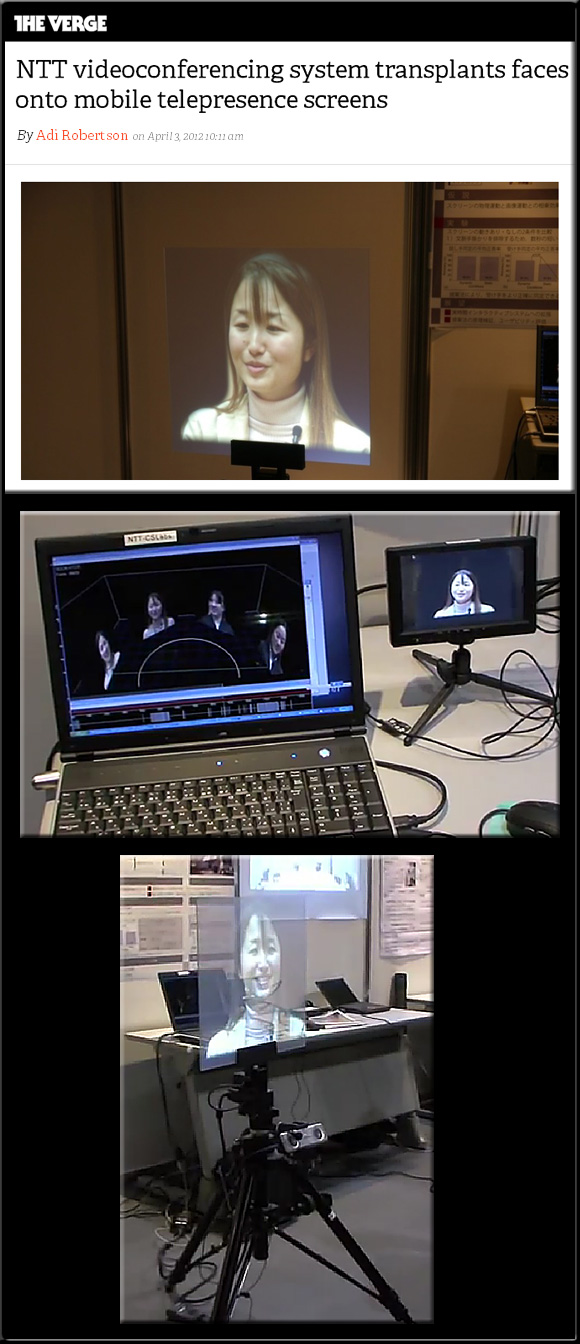
NTT videoconferencing system transplants faces onto mobile telepresence screens


From DSC:

  • Another innovation that aids web-based collaboration.
  • Make that one more movement up the disruptive innovation curve (of online learning).


As an addendum on 3/4, check out:

Items re: the connected living room; relates to what I call a future “learning from the living room” environment

The human voice, as game changer — from nytimes.com by Natasha Singer


Matthew Cavanaugh for The New York Times

Vlad Sejnoha demonstrated Nuance’s Dragon TV system, which obeys spoken commands to
flip channels, for example, or shop on screen on Amazon.com.

Apple’s iCloud will teach Apple’s Smart TV remote new tricks — from patentlyapple.com

6 answers about your next TV, with or without Apple — from forbes.com by Michael Humphrey

10 tech commandments for the TV industry — from thenextweb.com by Martin Bryant

Smart TVs are growing in popularity — from business-news.thestreet.com by Steve Adams

smartTV Quincy gh 032112-284-wihr.jpg

Image from Gary Higgins/The Patriot Ledger

Paul Berrini, a salesman at Hancock T.V.& Appliance in Quincy, demonstrates
some of the new features of “smart” televisions, Wednesday, March 21.

.

10 AirPlay-ready iPad apps that make Apple TV worth it — from  readwriteweb.com by John Paul Titlow

Entertainment and Streaming Media – The Recent Past and the Future — from homesystemintegration.com by Alan Ruby

Connected Living Room 1

.

TVs may soon be used to spy on you — from smartplanet.com by Tuan C. Nguyen


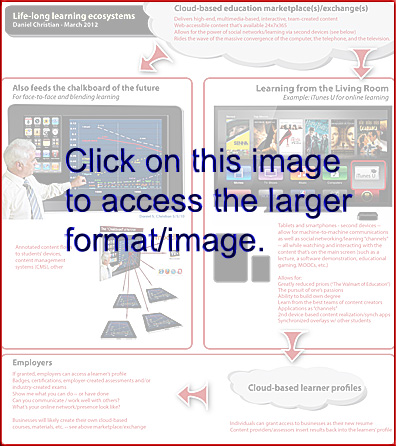
Lifelong learning ecosystems!!! A powerful vision for our future [Daniel Christian]

From DSC:
The vision below involves:
(click on the image below to access it)
 

  • The convergence of the telephone, the television, and the computer
  • Cloud-based education stores/marketplaces/exchanges
  • Second screen devices and machine-to-machine communications
  • Social networking/learning
  • Smart classrooms/learning spaces
  • Content recognition/synchronization applications
  • Apps as “channels”
  • Web-based learner profiles
  • Video overlays
  • New business models in higher ed
  • New jobs/needs for the future
  • A new way for employers to hire highly-effective employees/contractors/consultants
  • …and more


Click this thumbnail image to access the larger image / vision

.


From DSC:
Here are some items related to what I call “Learning from the Living Room” — a trend that continues to develop that involves:

  • Using high-end, personalized, multimedia-based, interactive, team-created content — packed with new reporting tools for better diagnostics/learning analytics — available via a cloud-based “education store”/marketplace/exchange
  • Web-accessible content that’s available 24x7x365
  • The power of social networks/learning
  • Riding the wave of the massive convergence of the computer, the telephone, and the television.

.

Smarter TV: Living room as digital hub from Samsung and Microsoft to Apple and Google — from wired.com by Tim Carmody
Excerpt (emphasis DSC):
  • In the future, the living room will replace the home office as most households’ home for the stationary personal computer. Instead of printers and mice and other corded accessories, networked appliances and post-PC machines share data with one another and with the cloud. Play and productivity both become decentered; gaming and entertainment might be on a tablet or a television, with recipes at the refrigerator, a shopping list for the smartphone, and an instructional video on the television set. All of these experiences will be coherent, continuous and contextual. And like the personal computer at the height of Pax Wintel, the living room will be a platform characterized by triumphant pluralism.“The thing about the living room is that it’s universal; everyone in the household uses it,” Samsung VP Eric Anderson told me at today’s event. “We know that we’re not going to capture every single member of the household. In my family, my wife and my daughter are Apple, me and my sons are Android,” he noted, pointing out that the majority of devices introduced today can interact with either mobile platform.

.

The modern mechanics of app stores: today, tomorrow and connected TV — from guardian.co.uk by Dean Johnson

Excerpt:

What’s next for app stores?
It’s time for each platform to up its game – smart TVs are coming. The small and medium screen experience will shortly be translated to the bigger screen as connectivity and discoverability takes on even greater importance.

Google and Apple will further interweave themselves into our daily lives as iOS and Android seamlessly combine our smartphones and tablets with our new smartTVs. Electronic Program Guides (EPGs) and the programmes themselves will suggest related content, from apps to music to film to books. This must all be presented in an approachable, then browsable manner to encourage additional discovery.

The quest for the perfect meta-data will become increasingly important and voice commands will need to deliver the best search results with the minimum of fuss. This time next year, the battle of the app stores will be fought on the move, on the desktop and on the living room wall.

.

Samsung Launches Smart TVs With Gestures, Voice Control — from by Douglas Perry

Excerpt:

A Kinect-like feature is made possible via camera and microphone integration that comes standard with the LED ES7500, LED ES8000 and Plasma E8000 models. According to Samsung, consumers can launch apps such as Facebook or YouTube, or search the web via voice commands. Waving the hand will move the cursor and select links. The TVs integrate a Samsung dual-core processor as well as a new Webkit-based web browser to improve overall performance. The high-end 7500 and 8000 TVs ship with a remote with an integrated touchscreen. A wireless keyboard that is compatible with Samsung’s TVs as well as the Galaxy Tab tablet is sold as an option.

.

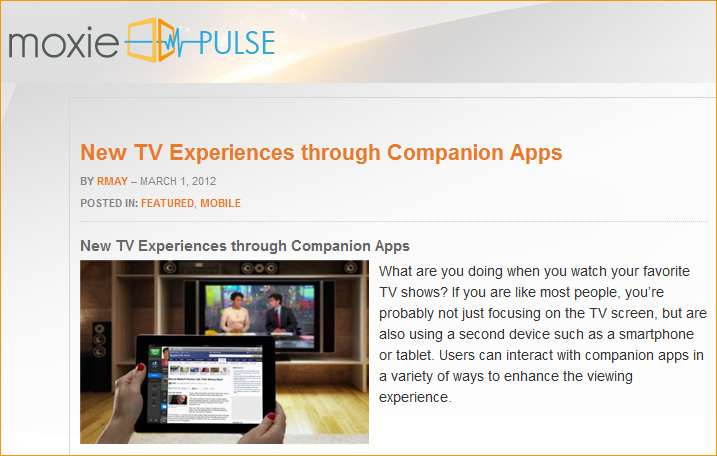
New TV experiences through companion apps — from moxie pulse

.
Is this the future of touchscreen tech? New video [from Corning] will blow your mind — from Mashable! by Samantha Murphy

Excerpt:

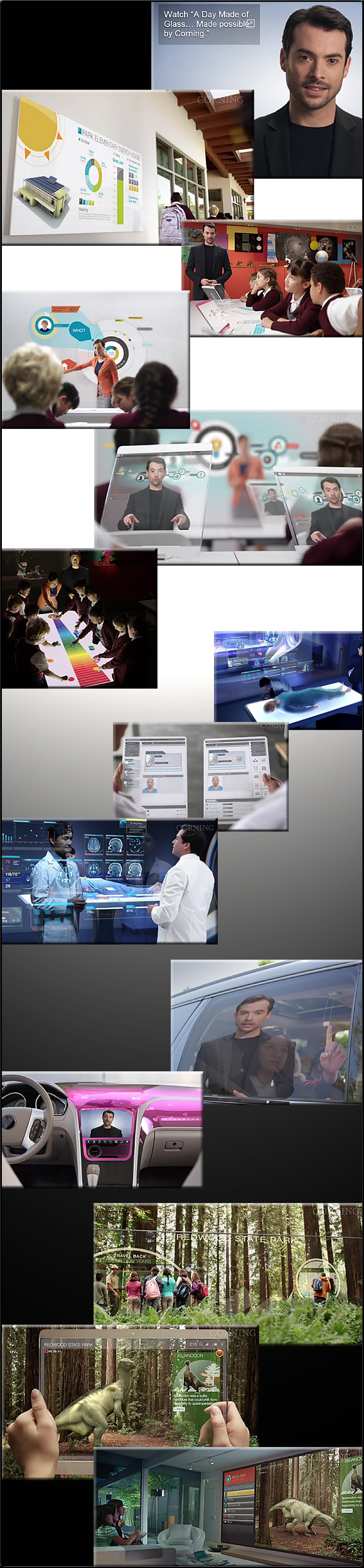
Gorilla Glass manufacturer Corning has unveiled a follow-up YouTube video to its wildly successful “A Day Made of Glass,” providing another look into what the future could be like with the growth of glass touchscreen interfaces, from innovative chalkboards and activity tables in classrooms to uses for it in hospitals.

Corning released two versions of “A Day Made of Glass 2? — one with a narrator and another, abbreviated version without commentary — the video follows the life of young Amy and her family as they go through their day using various products made of glass. Amy does classwork on a glass tablet, controls the temperature of the car from the backseat and even attends a field trip at the Redwood Forrest with an interactive signage that brings learning to life. Her teacher also works with students on interactive touchscreen activity tables. Corning expects these activity tables to be rolled out in the near future.

Sample images (by DSC):

From Corning -- A day made of glass -- Part2 -- Feb 2012


Living room video calling users to surpass 16 million in 2015 — from instat.com

Excerpt:

The video calling market can be divided into three sub-markets depending on the device which is being used to make the call: PCs, Mobile, and living room (digital home) devices.  Living room video calling is a nascent market and currently has a relatively small user base. New NPD In-Stat (www.in-stat) research forecasts that total users will increase from 1.5 million in 2011 to 16.4 million in 2015. Asia Pacific will be the largest market for living room video calling by a significant margin as this is the region with the highest video calling enabled device shipments.

.

From DSC:

  1. The massive convergence of the TV, the computer, and the telephone continues
  2. The current model of higher ed has run it’s course — the model is breaking down
  3. The cost of obtaining an education must decrease; new business models are and will continue to come to fruition
  4. One of those business models is what I call “The Forthcoming Walmart of Education“
  5. One of the pieces of this “Walmart of Education” will involve “learning from the living room“
  6. “Students” will be able to watch one device while interacting with another device (though I could also see everything happening via one device as well)
  7. Learning will likely be more interactive, multimedia-based, available 24x7x365, personalized, customized and backed up by some serious social networking/learning, analytics, artificial intelligence, learning agents, and online-based tutoring
  8. “Textbooks” will flow into the living rooms as well as to tablets, smart phones, and other devices; but they will be more like apps where updates will occur as necessary
  9. Rock-star profs are likely to emerge
  10. Anyway…”stay tuned”


Also see:

A Disrupted Higher-Ed System — from The Chronicle by Jeff Selingo

Excerpt:
Just look at the last month:

  • The Massachusetts Institute of Technology announced that it would create MITx, a self-service learning system in which students can take online tests and earn certificates after watching free course materials posted by the university.
  • StraighterLine, which offers self-paced introductory courses online, said that it would give students access to the Collegiate Learning Assessment and other similar tests, allowing them to take results to employers or colleges to demonstrate their proficiency in certain academic areas.
  • Apple introduced three free pieces of software that allow students to download or create textbooks, and that permit instructors to create a digital curriculum in iTunesU.


© 2025 | Daniel Christian