From DSC:
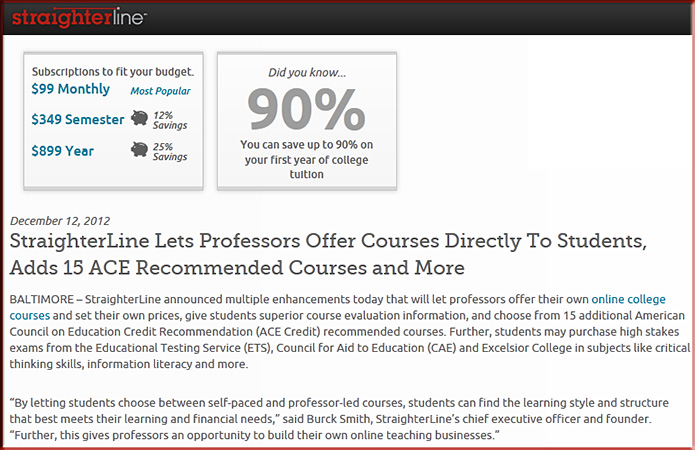
Some reflections on New platform lets professors set prices for their online courses — from InsideHigherEd.com by Jeffrey R. Young

Excerpt:

Professors typically don’t worry about what price point a course will sell at, or what amenities might attract a student to pick one course over another. But a new online platform, Professor Direct, lets instructors determine not only how much to charge for such courses, but also how much time they want to devote to services like office hours, online tutorials, and responding to students’ e-mails.

The new service is run by StraighterLine, a company that offers online, self-paced introductory courses. Unlike massive open online courses, or MOOC’s, StraighterLine’s courses aren’t free. But tuition is lower than what traditional colleges typically charge—the company calls its pricing “ultra-affordable.” A handful of colleges accept StraighterLine courses for transfer credit.
.

StraighterLine-ProfsDirectlyToStudents-12-12-12


From DSC:
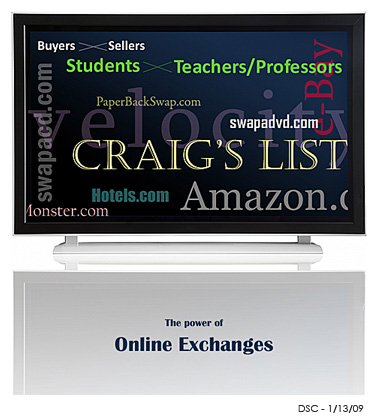
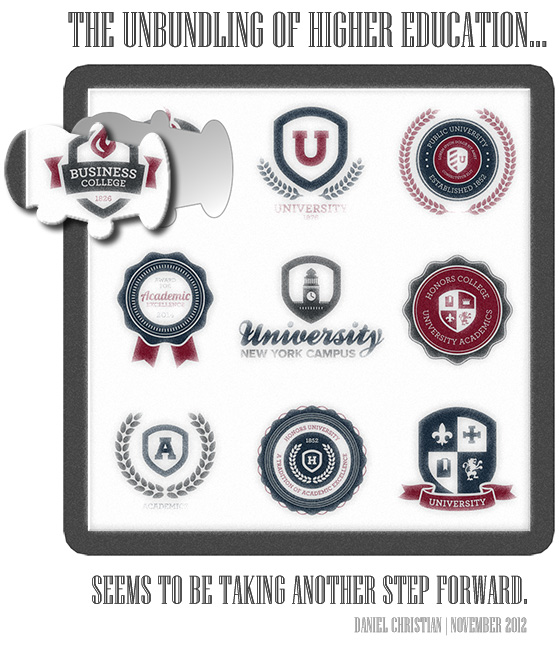
The power of online-based marketplaces. We’ve seen it in other industries.  Are we now going to see more of this within higher education as the unbundling of higher education seems to be a possibility?  Will there be an increased importance of professors’ individual brands? Could be.

The Power of Online Exchanges

.

DanielChristian-The-unbundling-of-higher-education


From DSC:
Congrats Burck & Co. on your continued innovative thinking and business models! Way to help keep a college education accessible to many!


“Mom! Check out what I did at school today!”

If you’re a parent, don’t you love to hear the excitement in your son’s or daughter’s voice when they bring home something from school that really peaked their interest? Their passions?

I woke up last night with several ideas and thoughts on how technology could help students become — and stay — engaged, while passing over more control and choice to the students in order for them to pursue their own interests and passions. The idea would enable students to efficiently gain some exposure to a variety of things to see if those things were interesting to them — perhaps opening a way for a future internship or, eventually, a career.

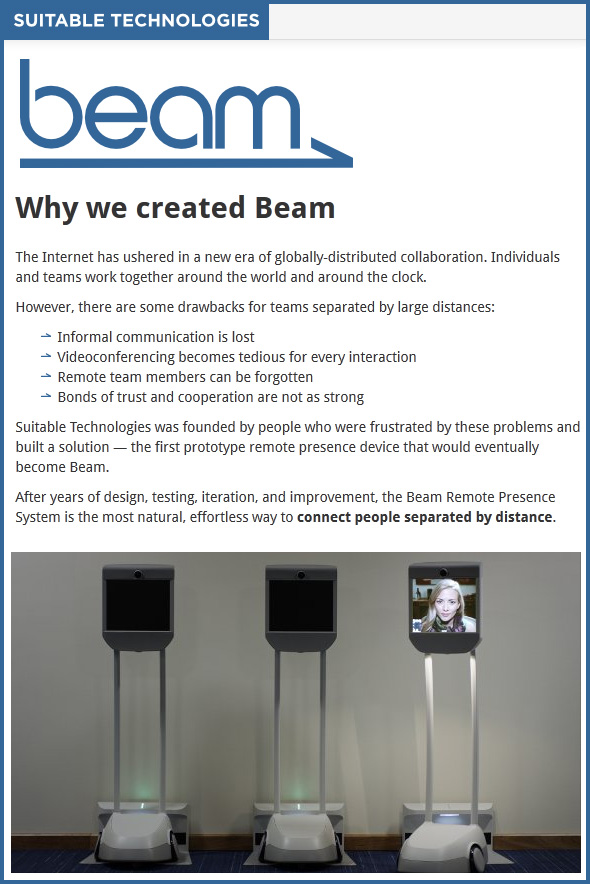
The device I pictured in my mind was the sort of device that I saw a while back out at Double Robotics and/or at Suitable Technologies:

.
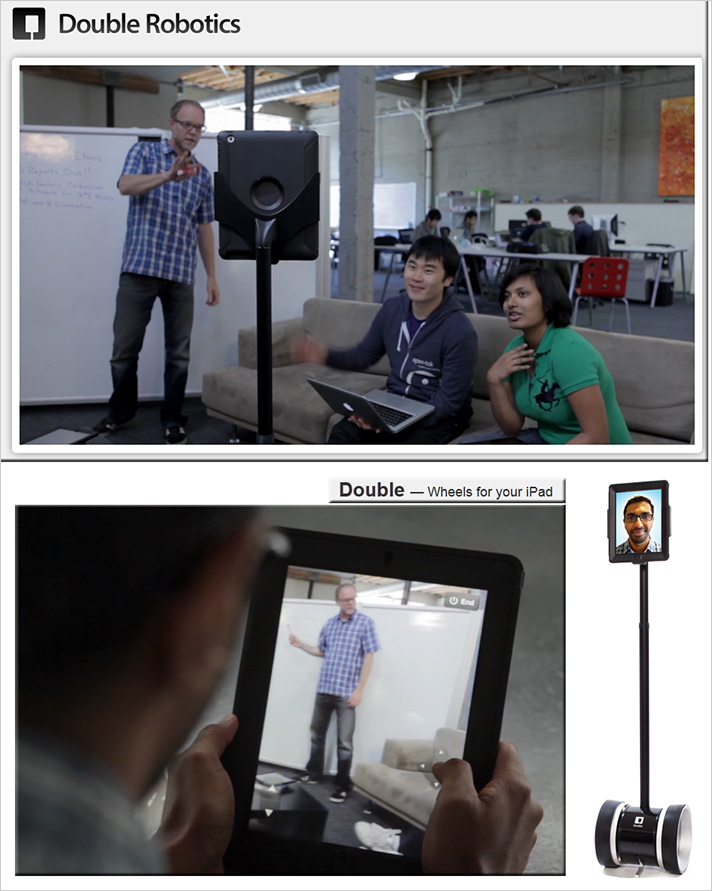
doublerobotics dot com -- wheels for your iPad


Remote presence system called Beam -- from Suitable Technologies - September 2012


The thoughts centered on implementing a growing network of such remote-controlled, mobile, videoconferencing-based sorts of devices, that were hooked up to voice translation engines.  Students could control such devices to pursue things that they wanted to know more about, such as:

  • Touring the Louvre in Paris
  • Being backstage at a Broadway musical or checking out a live performance of Macbeth
  • Watching a filming of a National Geographic Special in the Fiji Islands
  • Attending an IEEE International Conference in Taiwan
  • Attending an Educause Conference or a Sloan C event to get further knowledge about how to maximize your time studying online or within a hybrid environment
  • Touring The Exploratorium in San Francisco
  • Touring the Museum of Science & Industry in Chicago
  • Being a fly on the wall during a Senate hearing/debate
  • Seeing how changes are made in the assembly lines at a Ford plant
  • Or perhaps, when a student wheels their device to a particular area — such as the front row of a conference, the signal automatically switches to the main speaker/event (keynote speakers, panel, etc. via machine-to-machine communications)
  • Inviting guest speakers into a class: pastors, authors, poets, composers, etc.
  • Work with local/virtual teams on how to heighten public awareness re: a project that deals with sustainability
  • Virtually head to another country to immerse themselves in another country’s language — and, vice versa, help them learn the students’ native languages

For accountability — as well as for setting aside intentional time to process the information — students would update their own blogs about what they experienced, heard, and saw.  They would need to include at least one image, along with the text they write about their experience.  Or perhaps a brief/edited piece of digital video or audio of some of the statements that they heard that really resonated with them, or that they had further questions on.  The default setting on such postings would be to be kept private, but if the teacher and the student felt that a posting could/should be made public, a quick setting could be checked to publish it out there for others to see/experience.

Real world. Engaging. Passing over more choice and control to the students so that they can pursue what they are passionate about.


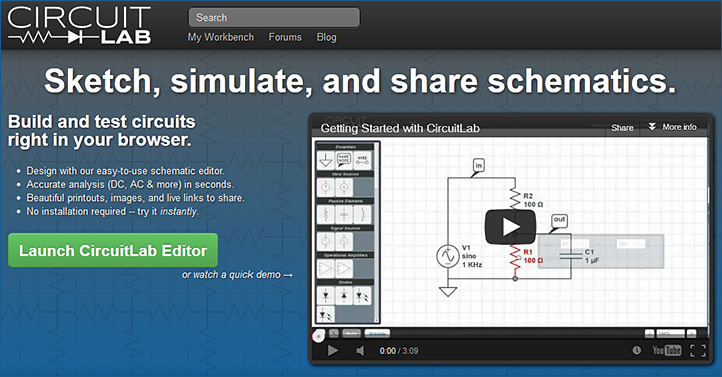
Sketch, simulate, and share schematics -- circuitlab.com


.

Also see/I saw this at:

Tagged with:  

Citing IT skills shortage, IBM wants to expand presence at universities — from wiredacademic.com

Excerpt (emphasis DSC):

“We want to be the scale up partner of choice for these universities,” said Jim Sporher, head of IBM’s university programs. “We want to make sure they have access to technology and understand our strategy.”  He also sees massive open online courses (MOOCs) as a mega-trend and will be considering ways for IBM to be part of the MOOC trend in the future, particularly as many of the MOOC providers such as Udacity and Coursera offer classes in computer science.

As a big blue-chip progenitor of the tech industry, IBM is worth listening to in many regards. For one, corporate computing trends often filter down into the education space. The corporate world often has the money to purchase and deploy game-changing technologies. IBM sees that it also works the other way too, where computing at the university level creates new businesses and ideas that move up into the corporate realm.

.

From DSC:
I wonder…will the corporations develop their own MOOCs?  Their own digital “playlists” and associated exams? (i.e. that someone needs to go through and pass in order to work for them…show me what you can do.)  Hmmm…

Also see:

.

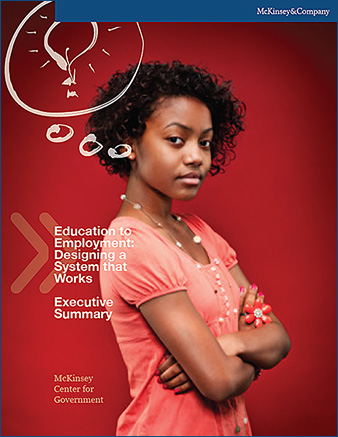
McKinsey and Company -- Education to Employment -- An executive summary


.

Also see:


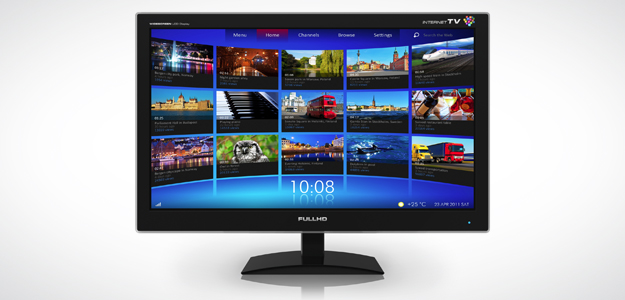
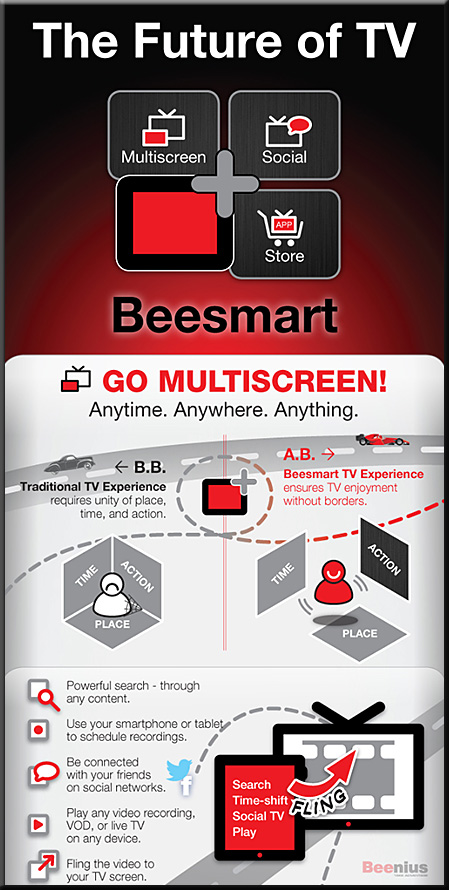
The Future of TV -- an infographic from Beesmart


From DSC:
The educational “store” part of this graphic could take several forms:

  • Online-based exchanges between buyers and sellers (teachers/professors and learners) — professors as their own brand
  • Institutional offerings/brands
  • Team-based content from newly-developed firms, organizations
  • Each of us puts up our own learning materials for others to take (for free or for a price)
  • Other


Excerpts from John Katzman’s Keynote:
Higher ed is made up of a series of smaller markets — niches [From DSC: What’s your niche?]

  • Elite level
  • Mid level
  • Entry level

Might have 2-3 high quality programs; and many smaller programs with lower production levels.

Fewer players of larger size

Consolidation is going to occur w/in higher ed. Besides consolidation, there will be collaboration/pooling of resources, and/or the hollowing out within higher ed.


From DSC:
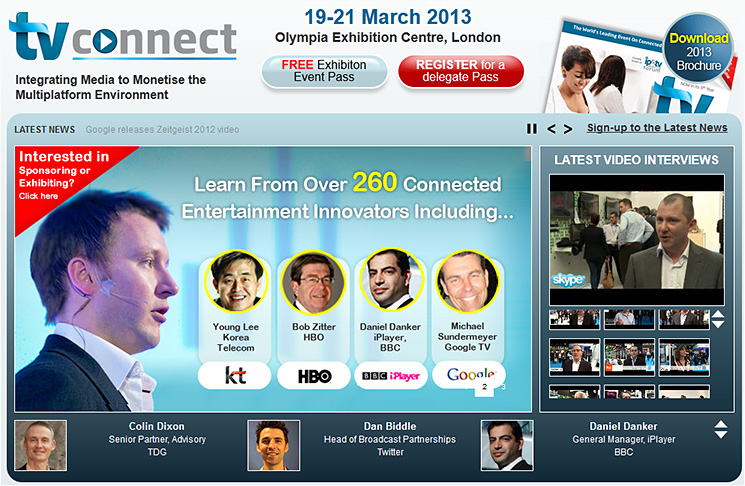
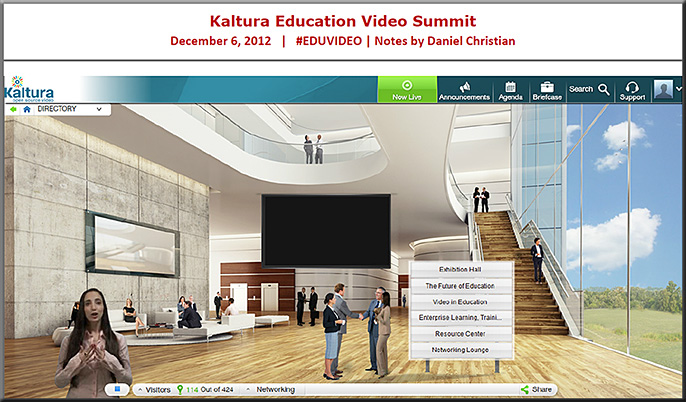
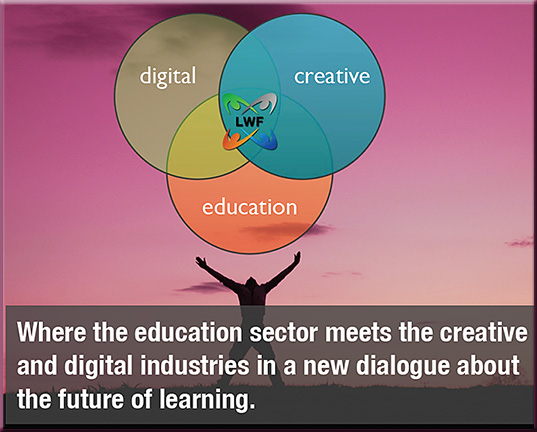
Not that this is new…but looking at the above image, I wonder if more 100% online-based courses and schools will adopt this sort of “space”/interface as a sort of entryway into their institution’s materials.


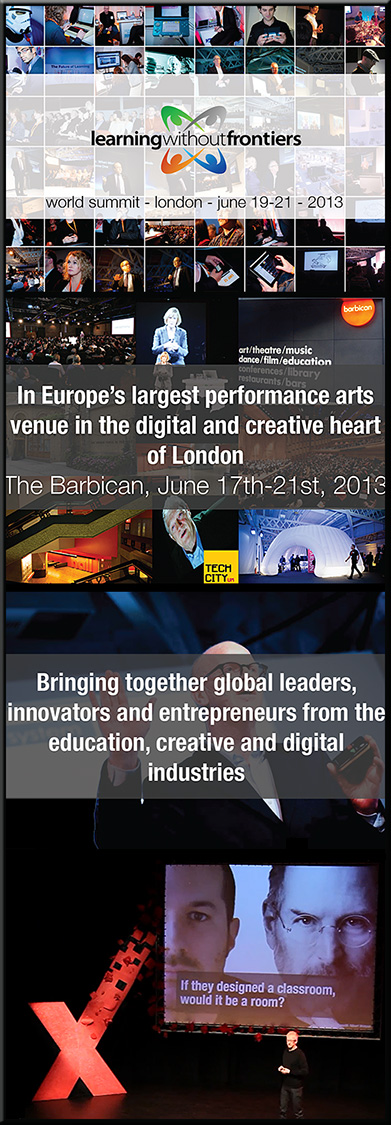
 LWF World Summit – The Barbican – June 17th-21st, 2013


.

Other resources/links

This is Learning Without Frontiers
Learning Without Frontiers (LWF) is a global platform that facilitates the ongoing dialogue about the future of learning. LWF attracts an engaged and open-minded audience who are forward thinking, curious and receptive to new ideas and perspectives about education, teaching and learning.  They are an international audience of thought leaders, policy makers, innovators, entrepreneurs and leading practitioners from across the education, digital media and technology sectors.  They are education leaders, intellectuals, social and political theorists, artists, designers, futurists, architects, publishers, broadcasters, technologists, parents, teachers and learners.  They come to ask the big questions, discuss the big challenges and seek to answer them by innovation, enterprise and an enduring optimism. http://www.learningwithoutfrontiers.com


5 ways to show your iPad on a projector screen


Tagged with:  

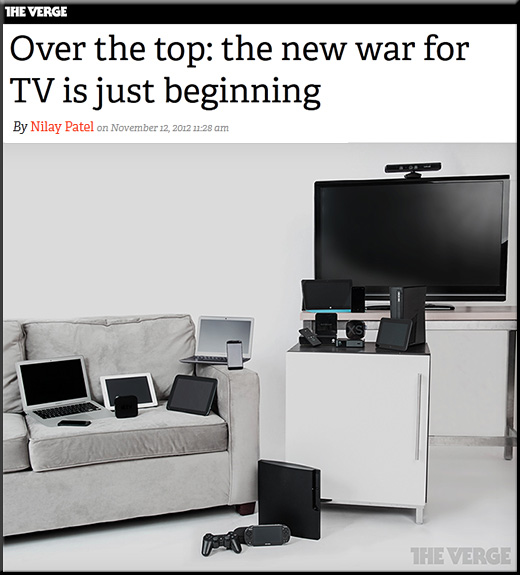
Over the top: the new war for TV is just beginning [Patel]

Over the top: the new war for TV is just beginning  -- from The Verge by Nilay Patel -- November 12 2012


.

 Future of TV


.
The Living [Class] Room -- by Daniel Christian -- July 2012 -- a second device used in conjunction with a Smart/Connected TV


.

From DSC:
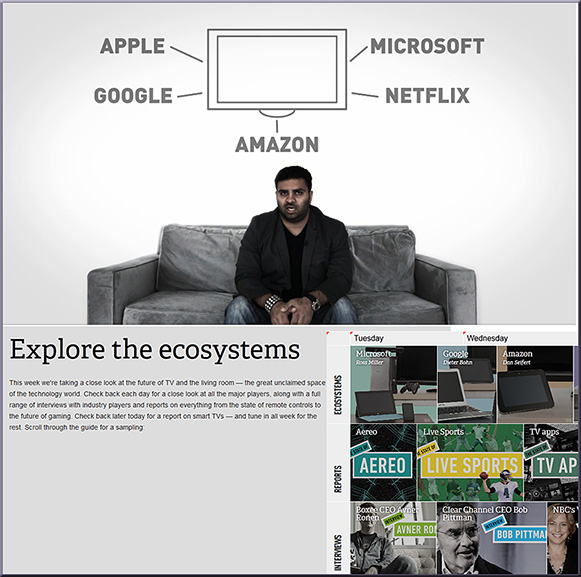
I’m beginning to wonder if many of us will be moving off of Moodle, Sakai, Bb Learn, Desire2Learn, etc. to platforms and ecosystems that are being created by Apple, Google, Amazon, and Microsoft.  Rockstar professors on “primetime” — or anytime. If that happens, you can be sure there will be teams of specialists creating and delivering the content and learning experiences.


From DSC:

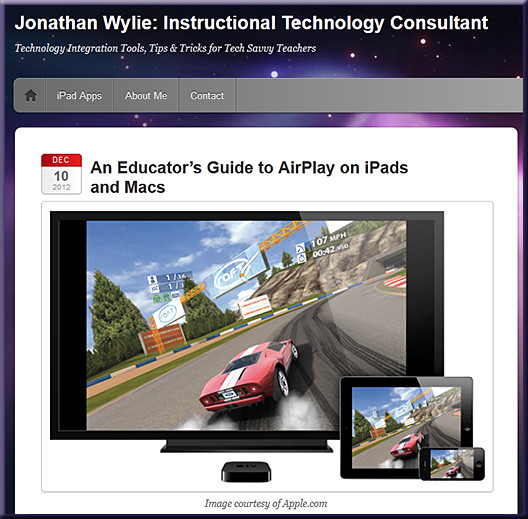
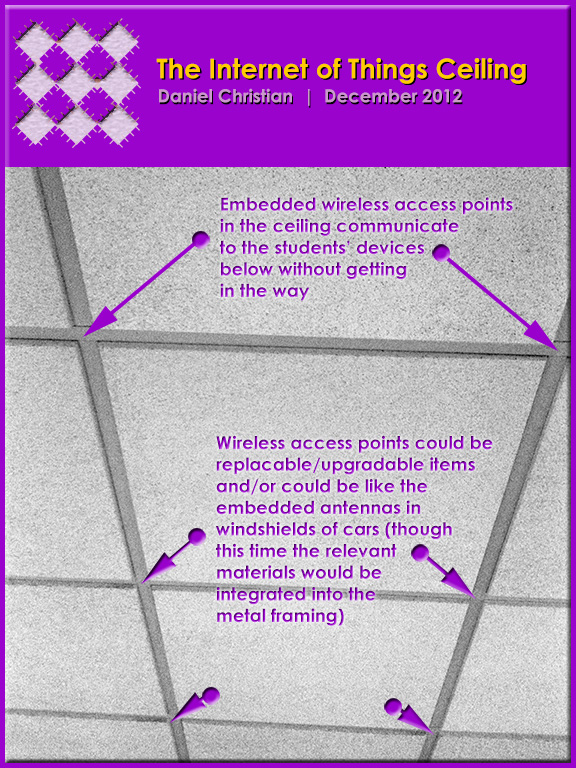
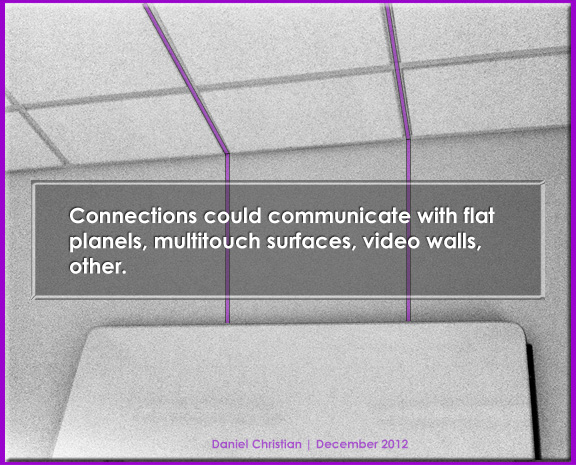
I’ve been trying to figure out the best ways to incorporate a BYOD/BYOT into the Smart Classroom.  That is, how can students’ devices seamlessly communicate with the main displays around the classroom? How can they quickly display a blog posting or a Google doc for example…or play a song they wrote, etc.  So I was excited to wake up this morning with the following concept/idea:


The Internet of Things Ceiling -- A concept for our future Smart Classrooms by Daniel Christian in December 2012

.

The Internet of Things Ceiling -- concept by Daniel Christian -  December 2012

.

.

Other features/thoughts:

  • Line of sight communications — students must be in the room to display something up on the main displays
  • Information travels many ways:  From large multitouch displays/walls to students’ devices and vice versa; so a professor could hit “Save” in order to send his/her annotations to all of the students’ devices (allowing them to be more cognitively present — vs madly writing down what the professor is writing)
  • The Smart Classroom’s infrastructure becomes like a multi-thredded processor — instantaneously and simultaneously handling a far greater amount of data — going in multiple directions
  • What’s an interesting idea here is for discipline-specific, cloud-based storage mechanisms for students who want to contribute their pieces of content to their schools repositories of content
  • This topic reminds me of a graphic I created a while back, re: The “Chalkboard” of the Future:


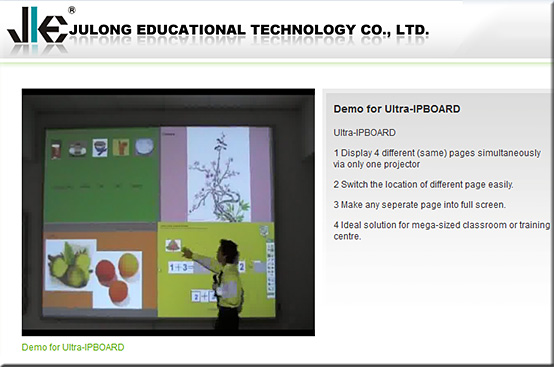
So…what if the 4 screen’s on Julong’s Ultra-IPBOARD were coming from 4 different sources? Perhaps:

  1. One from a publisher’s cloud-based content repository
  2. Another from a stream of content originating from a student’s iPad
  3. Another from a stream of content originating from the Smart Classroom’s PC or Mac
  4. …and the last source originating from a student’s smartphone?


Demo for Ultra-IPBOARD


Also see:

.

The best screencasting apps for the iPad — from jonathanwylie.com

Excerpt:

However, by far my favorite of all the apps is ExplainEverything.  Unlike the three I just mentioned, it is a paid app [$2.99], but you get so much for your money that it is a compelling choice for all schools using iPads. You can record your video over multiple pages, re-record audio as you please, use the page sorter to rearrange or see your pages at a glance. You can have almost any pen color you can imagine, a choice of 5 pen widths, control over pen transparency and choice of two pen tips. The app has a built-in laser pointer, shape tool and text tool with more fonts that you could ever need. You can even insert a web browser and record a live website as part of your screencast.

Also see:


Khan Academy founder proposes a new type of college — from chronicle.com by Alisha Azevedo

The One World Schoolhouse

Excerpt:

Salman Khan’s dream college looks very different from the typical four-year institution.

The founder of Khan Academy, a popular site that offers free online video lectures about a variety of subjects, lays out his thoughts on the future of education in his book, The One World School House: Education Reimagined, released last month. Though most of the work describes Mr. Khan’s experiences with Khan Academy and his suggestions for changing elementary- and secondary-school systems, he does devote a few chapters to higher education.


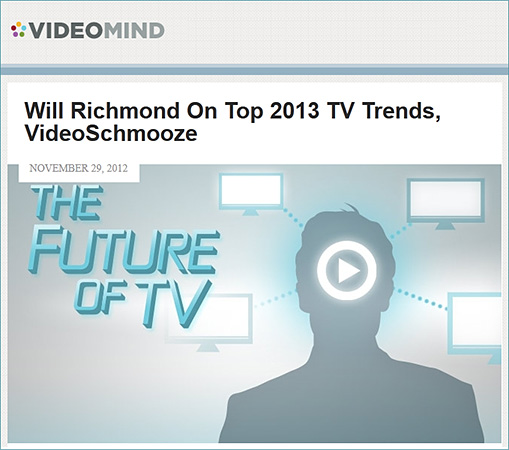
Will Richmond on Top 2013 TV Trends [from Videomind by Greg Franzese]

Will Richmond on Top 2013 TV Trends -- from Videomind by Greg Franzese -- 11-29-2012


From DSC:
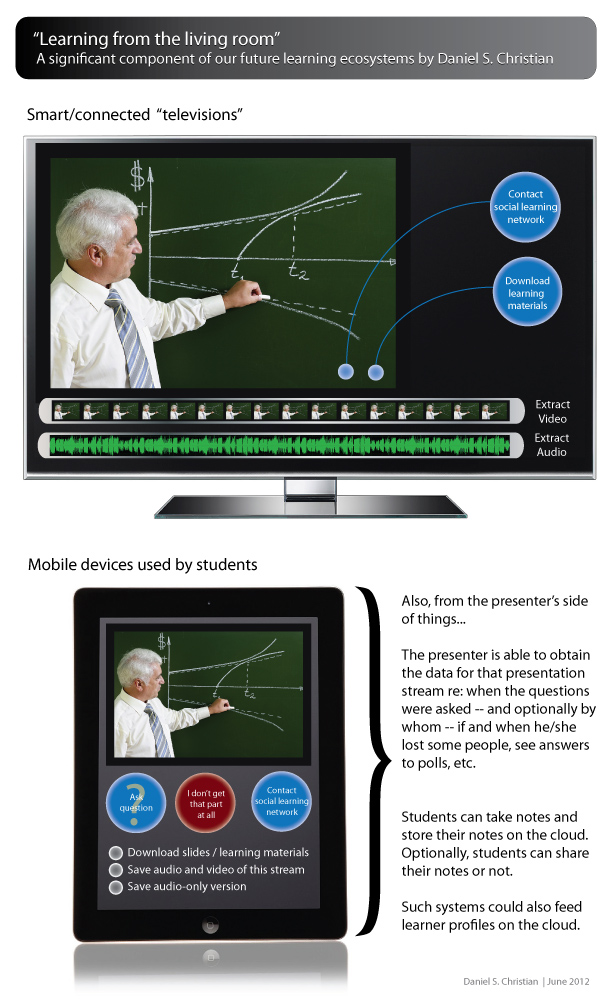
I continue to watch this space as the foundations are being put into place for what I’m calling, “Learning from the Living [Class] Room.”

.

Learning from the living room -- a component of our future learning ecosystems -- by Daniel S. Christian, June 2012


An innovative, sharp concept for a potential Apple TV

An à la carte Apple TV concept integrates Siri, FaceTime, and cable/satellite providers (Gallery) — from 9to5mac.com by Jordan Kahn

Example “screenshots” from this concept:

Apple TV Concept - Nov 2012

.


Also see:


From DSC:
This relates to what I’m calling “Learning from the Living [Class] Room”

.

The Living [Class] Room -- by Daniel Christian -- July 2012 -- a second device used in conjunction with a Smart/Connected TV


© 2025 | Daniel Christian