



On 09/14/2011,
in Augmented Reality (AR), emerging technologies, Europe, innovation, professional development,
by Daniel Christian
On 09/14/2011,
in adult learning, corporate / business world, corporate universities / corporate training, learning ecosystem, lifelong learning, productivity / tips and tricks, professional development, social learning / networks, training / L&D,
by Daniel Christian
Learning 2011 Breakout Session Formats:
- Thought Leader
- Learning Story
- “Learning @” Session
- Targeted Session
- Panel
- Discussion
- Workshops
- FLIP Sessions
- Supplier Showcase
- Ten Ways Session
- Author Sessions
- Learning Café
- Step-by-Step How-To Session

Spotlight Award: iPad as “Game Changer”
The Learning CONSORTIUM is proud to announce that the iPad will receive a special “Game Changer” Learning Spotlight Award at Elliott Masie’s Learning 2011, November 6-9, in Orlando, FL.
On 09/02/2011,
in education technology, educational games / serious games, emerging technologies, mobile learning, mobile technologies, professional development, social learning / networks,
by Daniel Christian
On 08/17/2011,
in CMS/LMS, higher education, K-12 related, presentations, professional development,
by Daniel Christian

On 08/07/2011,
in collaboration, professional development, teachers, teaching & learning, web-based collaboration,
by Daniel Christian
edWeb.net – Networking, resource sharing, collaboration, and professional development for the education community
Also see:
On 08/07/2011,
in 21st century, Artificial Intelligence/Agents/LLMs/and Related, business, career development, corporate / business world, corporate universities / corporate training, creativity, curriculum, design, future, higher education, multimedia, new media literacies, professional development, society, technology (general), training / L&D, web-based collaboration, workplace,
by Daniel Christian

On 08/07/2011,
in digital audio, digital storytelling, digital video, professional development,
by Daniel Christian
Setting the pace while editing: Video 101 — from onlinevideo.net
Sometimes you need a fast cut and sometimes something slow suits the mood. Learn how you can tell your story more effectively by setting the pace.
On 07/26/2011,
in career development, professional development, web design and production, workplace,
by Daniel Christian
Defending the Generalists in the Web Design Industry — from Smashing Magazine by Paul Boag
Excerpt:
In recent years there has been a move away from generalist Web designers to specialists such as content strategists, user experience architects and front-end coders. Where once there was a single job, there are now many, with ever-narrower spheres of responsibility.
While my peers are becoming more specialized, I have stoically refused to do so, remaining a generalist. If anything, my interests have broadened, encompassing subjects such as marketing, psychology and business strategy.
This has drawn criticism from some who view generalists negatively, which is in line with some of what I am reading in the blogosphere.
Where has this negativity come from, and is it justified?
From DSC:
This is a great writeup of the pro’s and con’s, benefits and drawbacks of being a generalist in the web design industry. My experience with web design and production is that it has been extremely difficult to keep up over this last decade — especially when one can not focus solely on web design and production in one’s daily tasks. For example, I’ve had to redirect my resources/energies into other areas, tools, pedagogies, learning theories, trends, systems-related projects, management, etc. — leaving little time to try to keep up with advances and changes within the arenas of front-end design and back-end development. I’ve been forced to be a generalist as well — but a few levels up. 🙂
On 07/24/2011,
in 21st century, career development, internet, professional development, workplace,
by Daniel Christian
Taking a second look at the untapped employment potential of the web — from learnoutlive.com by Andre Klein
Also see:
On 06/27/2011,
in 21st century, A/V -- audio/visual, adjunct faculty, career development, colleges, community colleges, corporate universities / corporate training, digital audio, digital video, faculty/staff, higher education, K-12 related, professional development, student teaching/teacher education, teachers, teaching & learning, tools, training / L&D, vendors,
by Daniel Christian
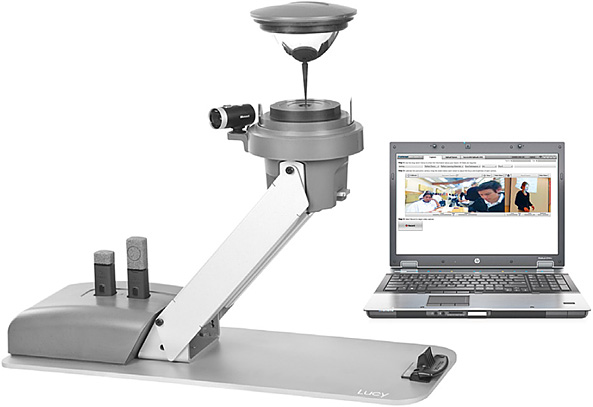
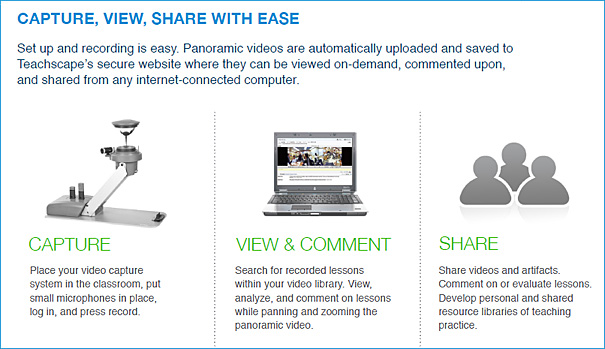
Check out the Teachscape Reflect product — looks very promising!
Excerpt:
What if you could accurately capture everything that happens in the classroom? Imagine being able to catch every detail of teaching and learning, and then being able to review the captured material online anytime, anywhere, to assess instructional practices.
By combining 360-degree video and high-quality audio capture with online collaboration tools featuring research-based frameworks—including Charlotte Danielson’s Framework for Teaching—Teachscape Reflect delivers a classroom observation system and virtual professional learning community anchored in a common definition of teacher effectiveness.
From DSC:
We may be investigating this product for use with supporting remote student teachers. But Reflect can also be used for professional development purposes as well.
Also see:
- Video Tools Take Panoramic View of Classrooms — from EdWeek.org by Ian Quillen

Teachscape’s omnidirectional camera is used to capture in real time a 360-degree classroom scene. In the video stream it creates, both the instructor and the students can be seen. —Zhigang Zhu/Department of Computer Science, City College of New York and CUNY Graduate Center
New software and hardware tools are being developed to help teachers get a more panoramic view of how things are going in their classrooms
On 06/20/2011,
in history, ideas, professional development, student teaching/teacher education, teachers, telepresence, videoconferencing, virtual field trips, virtual tutoring, web-based collaboration,
by Daniel Christian
Telepresence in the classroom: Enhancing breadth and depth of learning — from Cisco by Kerry Best
Excerpt:
All of a sudden, the classrooms lost their walls, and prior geographic and instructional limitations ceased to restrict learning.
- …[telepresence] can bring in teachers for important subjects in which current instructors may not have specialized expertise
- …take students on virtual field trips
- …for teacher education
- …bring historical figures to life
On 06/17/2011,
in adjunct faculty, career development, change, faculty/staff, future of higher education, higher education, professional development, trends,
by Daniel Christian
10 telling employment trends in academia — from bestcollegesonline.com; also saw this at the ASTD.org site

Excerpt:
The job outlook for university professors is a bundle of contradictions, confusing — and threatening — even the most prestigious of teachers. While a generation of professors is retiring and leaving new job openings, the economy is still crumbling, and slashed state budgets and diminished endowments make it difficult for schools to pay competitive salaries, or keep full-time professors on staff. Part-time and online positions are increasing, however, and professors now need to be even savvier about how they track their careers, just like professionals in other fields. Here are 10 telling employment trends for academics.
On 06/15/2011,
in career development, design, digital audio, digital learning, digital video, education technology, educational games / serious games, professional development,
by Daniel Christian

From DSC:
My thanks to Sara McDowell for this resource, which she developed.
Addendums on 6/16/11 — also see:
- Here Comes the Gaming Revolution: Notes from GLS7 — from mindshift.kqed.org by Tina Barseghian
- New Book: Gamification of Learning and Instruction — from Educational Games Research by John Rice