When the technologies behind Watson and Siri get perfected and integrated into the “Learning from the Living [Class] Room” environment [Christian]


From DSC:

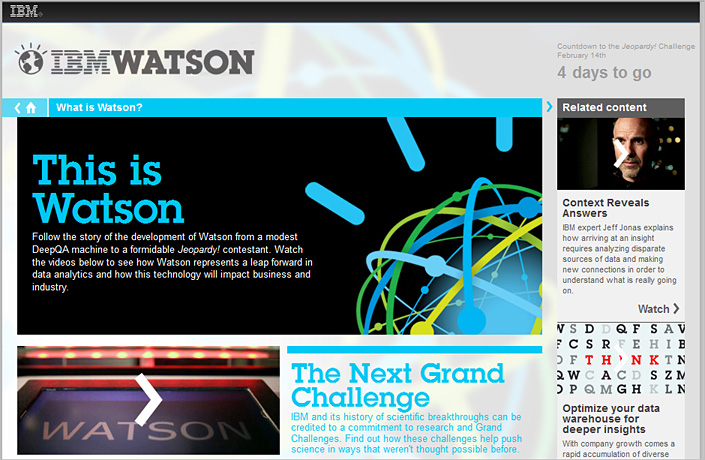
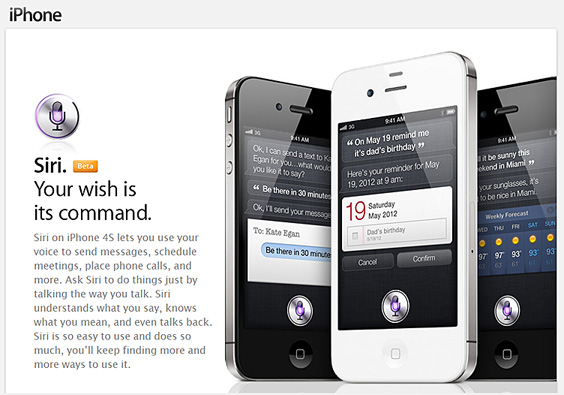
When the technologies behind IBM’s Watson and Apple’s Siri get perfected and integrated into products and services that will make up the near future “Learning from the Living [Class] Room” environment— there will be:


  • A high degree of personalization and customization — available 24x7x365 on multiple kinds of devices
    .
  • The option to turn on tracking and analytics — reporting from which can be moved into the learner’s cloud-based profile upon completion of the unit/activity/badge
    .
  • Students of all ages will have access to their own virtual tutors so to speak
    .
  • When a virtual tutor is unable to resolve or address the student’s issue to the student’s satisfaction, the student will be able to instantly access a human tutor (with the option of keeping the existing work/issue/problems visible to the human tutor)


IBM's Watson -- incredible AI!


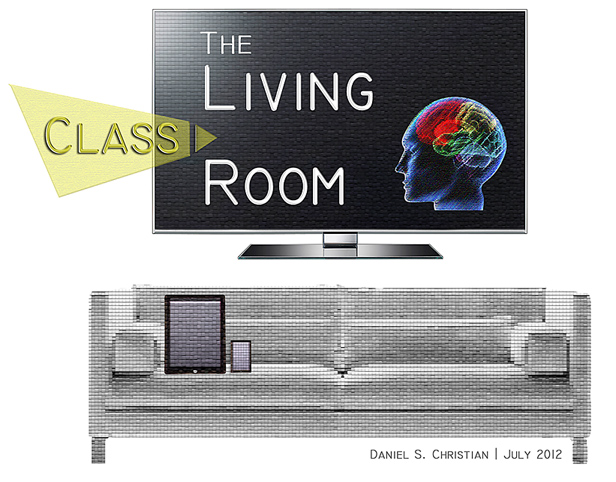
The Living [Class] Room -- by Daniel Christian -- July 2012 -- a second device used in conjunction with a Smart/Connected TV


.

Addendums:


Microsoft buys CNN’s Magic Wall maker — from CNN.com by Erin Kim

Excerpt:

NEW YORK (CNNMoney) — Microsoft is adding a magic touch. Microsoft said Monday that it has agreed to buy Perceptive Pixel Inc., which makes large, multi-touch displays, including CNN’s “Magic Wall.”

CNN's John King used the Magic Wall for his coverage of the Michigan and Arizona primaries this year.

CNN’s John King used the Magic Wall for his coverage of the Michigan and Arizona primaries this year.

.

Why Did Microsoft Buy Giant-Touchscreen-Maker Perceptive Pixel?— from readwriteweb.com by Brian Proffitt


From DSC:
I could easily see a “video wall” in the Smart Classrooms of the near future, integrating this technology and more. Intel’s incorporated/captured such a vision as well in this piece here.

I would like to see such a mechanism be able to obtain files from students, check them for any viruses/malware, and then distribute the files to other students (if they choose to receive the files).


AT&T brings more second-screen features, content to U-verse customers on iPhone, iPad & iPod touch, and online — from prnewswire.com

Excerpt:

DALLAS, July 9, 2012 /PRNewswire/ — The remote control is no longer the main device sitting next to you on the couch. Your iPhone or iPad is quickly becoming an integral part of TV watching, and AT&T* U-verse® TV customers now have access to several new features and content that bring their TV and wireless experiences together, including:

  • An expanded lineup of on demand premium and TV content available through the U-verse App for iPhone and iPod touch and AT&T U-verse App for iPad at no extra charge, including HBO®, Cinemax®, HBO, STARZ, ENCORE, MOVIEPLEX and Music Choice videos.
  • The ability to now link your iPad to your U-verse TV receiver with the AT&T U-verse App to access up to the minute sports companion content and scores from various leagues for today’s games, a review of yesterday’s games, and to see who is playing tomorrow.
  • The ability to now share information about what you are watching with friends on Facebook, and now, on Twitter through the AT&T U-verse App for iPad.
  • The ability to use your iPhone or iPod touch to control your U-verse TV with a full-featured, intuitive U-verse remote control with channel, guide, DVR, interactive app and on-demand controls, now available on the U-verse App for iPhone and iPod touch. The capability is already available today with the AT&T U-verse App for iPad.

From DSC:
Another illustration of convergence as well as another vendor taking one more step towards enabling a “Learning from the Living [Class] Room” piece of our future learning ecosystems.

.

The Living [Class] Room -- by Daniel Christian -- July 2012 -- a second device used in conjunction with a Smart/Connected TV


Addendum:


Bridging Our Future, envisioned by Intel  -- June 2012


Description:

By connecting education with smarter technology, Intel offers a look into the future of K-12 education. Watch as students use technology to collaborate with peers and industry experts to build a bridge model, from the initial design phase through the final structure testing. Intel’s education solutions help teachers provide innovative, personalized and secure learning environments to prepare students for successful futures in the 21st century.

I originally saw this at


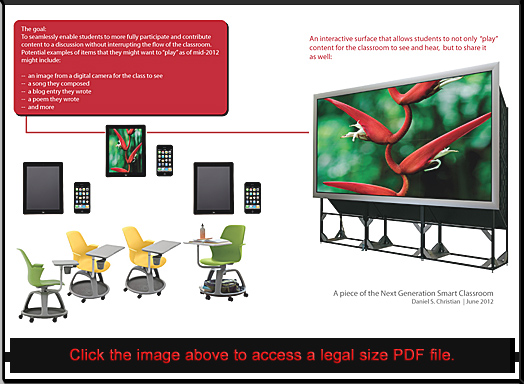
A piece of the Next Generation Smart Classroom -- Daniel Christian -- June 2012


From DSC:
I wonder:

  • If the video wall  pictured above could be a Smart/connected TV and if it can share files as well as play files?
  • If such a setup will involve machine-to-machine communications (NFC, other)?
  • If it will be like banking setups whereby the student’s device must obtain a constantly rotating password to access a resource that expires in ___ seconds — and they must be in that room to get it?
  • If it will be hardware or software based…or both?


“Learning from the living room” — Part I [Christian]

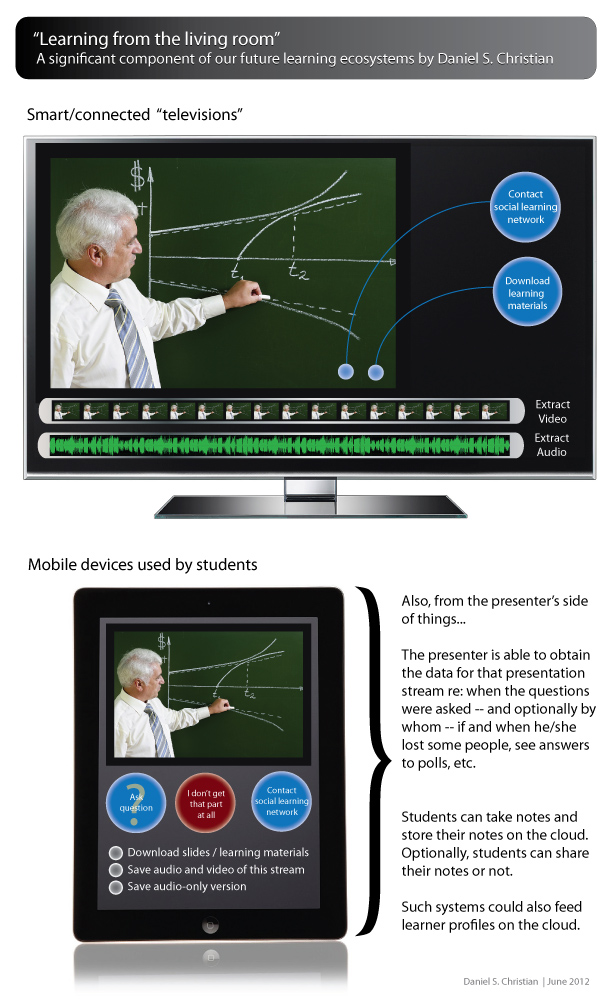
Learning from the living room -- a component of our future learning ecosystems -- by Daniel S. Christian, June 2012


Legal size PDF here


Addendum on 7/3/12 from an article I wrote for EvoLLLution.com (for LifeLong Learning):
Establishing better collaboration between the corporate world and higher education [Christian]

In the near future, perhaps we could have second screen-based activities whereby corporate leaders are giving TED-like presentations or expressing the current issues in their worlds via a program on Smart TVs, and the students are communicating and collaborating about these presentations via tablets or smart phones.  Perhaps there will be electronic means whereby students could submit their ideas and feedback to the presenting companies (and whereby selected ideas could be rewarded in terms of free products or services that the company produces).

Aerohive demos Bonjour Gateway and BYOD on stage at Apple’s WWDC 2012 Conference — from community.spiceworks.com

Excerpt:

What’s the next best thing to being among the anointed few who get to attend Apple’s WWDC 2012? Being on the WWDC stage with Apple, of course!

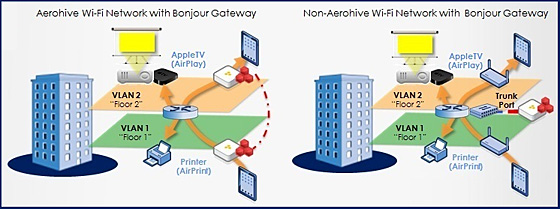
Aerohive took the stage at WWDC 2012 just moments ago [on 6/12/12) when our very own Vice President of Business Development Bill Hoppin stood alongside Apple’s Stuart Cheshire (father of the Bonjour protocol) and demonstrated our slick new product – Bonjour Gateway.

In a session called Simplify Networking with Bonjour […tying into Aerohive’s theme of Simpli-Fi Enterprise Networking ], Bill showed attendees how Aerohive is offering (bring your own device) BYOD management to help with the explosion of iPhones, iPads and other mobile devices in the workplace.

Here’s how the demo went down…

Also see:

.


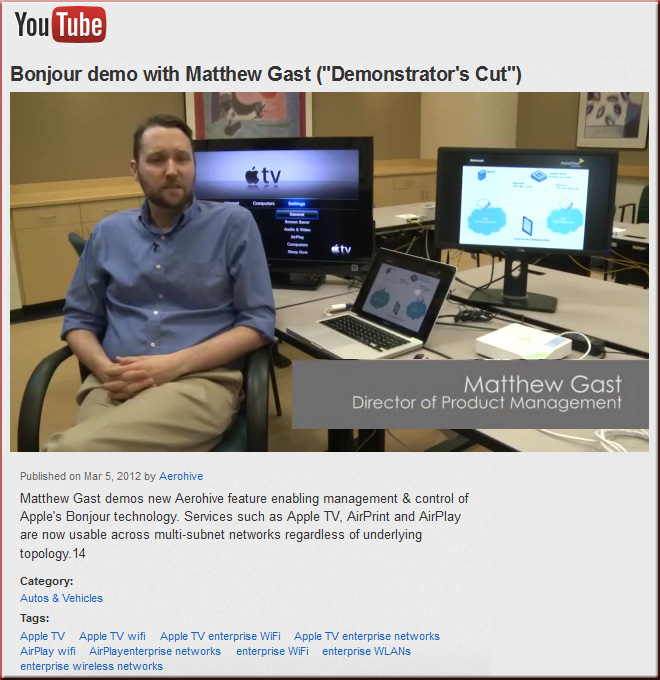
Matt Gast demos Bonjour Gateway -- for handling the BYOD situation

Tagged with: • • • • • • • • •  

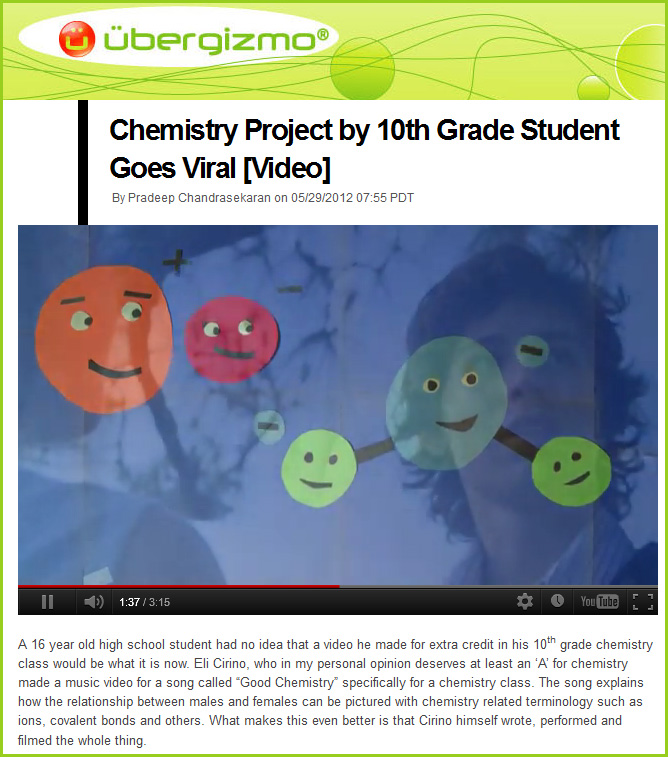
Chemistry project goes viral -- great work Eli Cirino!


From DSC:
Great work Eli Cirino!

It is my hope that we could create more teaching materials like this — i.e. content that uses digital storytelling to create a more last impression…to elicit emotions…to move a piece of information through the gate (i.e. someone’s attention) and then through someone’s working memory and into their long term memory! Great, creative, innovative thinking Eli!


Beyond Smart TV: ‘Surfaces’ prototype reveals the television of tomorrow — from wired.com by Christina Bonnington

Excerpt:

“In a few years’ time, you’ll be able to buy a TV that covers an entire wall, acting like wallpaper,” NDS chief marketing officer Nigel Smith told Wired. In this way, the TV could take the form of a gigantic canvas, providing layers of additional information, as well as different levels of immersion.

Because wall-sized TVs are hard to come by, NDS created a $30,000 setup comprised of six LCDs arranged in a rectangular array. The onscreen system is coded in HTML5 and runs on Chrome. A second screen experience, also coded in HTML5, provides remote control functionality in the browser of an iPad.

 Xbox 360 hailed as a game-changer for Connected TV — from v-net.tv by John Moulding

Excerpt:

The Xbox 360 will be a game-changing device in the Connected TV market now that Microsoft has decided to transform it from a games console into a general entertainment hub. That is the view of Christian Bombrun, Deputy General Manager, Web, at M6, the French broadcaster that last December became the first free French channel to be available via a games console. “The difference between the Xbox and connected TVs is that this device is very well connected. Most people that buy a connected TV do not even know they are getting one and they do not plug it into the Internet,” he argues. “Xbox 360 users have already connected the device to enhance the gaming experience.”


The evolving definition of television  — from readwriteweb.com by John Paul Titlow

Excerpt:

What will be interesting to watch is what evolves around that big screen – everything from the little screens and the apps they contain to the way that real-time communication and other data from the Web are integrated into the experience.

.


Keynote: Changing the user-experience: How will we watch TV in the future? –– keynote by Stefan Jenzowsky, Head of Multimedia, Siemens CMT — at the Connected TV Summit 2012


Ikea’s Uppleva TV will be a smart TV, have video streaming apps — from SlashGear.com by  Mark Raby

.

.

When Smart TV gets smart — from uievolution.com by Pete Schwab, Senior Director, at UIEvolution.

Two-thirds of Americans watch at least one online video per day — from VideoMind.com by Greg Franzese

PANEL: Next steps for Connected TV –– from net.tv


Addendums on 5/17/12:

Tagged with: • • • • • •  

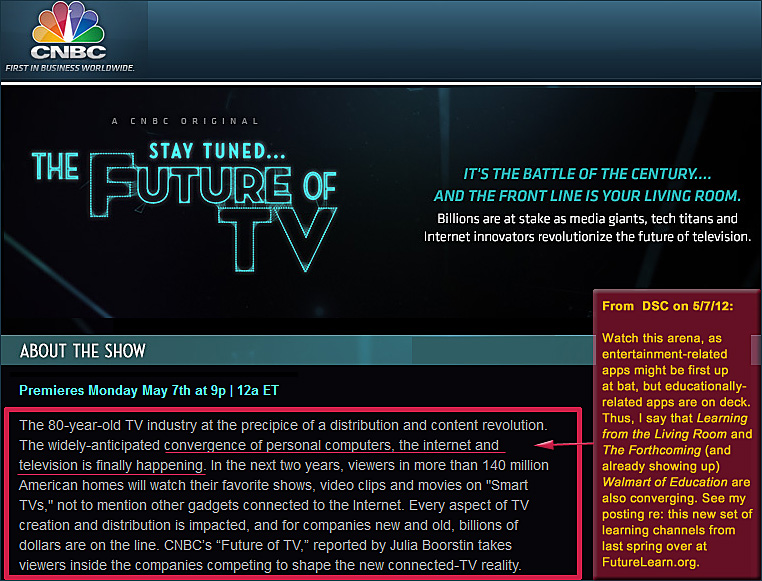
The Future of TV  - special from CNBC which airs tonight - May 7, 2012

.

Also see:

and…


Addendums on 5/8/12:

Double vision: TV gets interactive — from thetowntalk.com by Fraizer Moore

Piers Fawkes: The future of TV — from psfk.com by Piers Fawkes

A solid Q&A with such questions as:

  • The old hierarchical vertical order of: channel – series – episode, seems to be in danger, letting the horizontal disorder take its place. What do you think broadcasters can do to serve people during this shift?
  • The TV channel is being challenged, first by VOD and now by internet based services. How do you think the TV channels’ role will evolve in the next 5 years? Will the traditional push-based model maintain its centrality or will users be looking for search-only and pull-based alternatives?
  • A new form of TV means new revenue models. Who do you think will finance the next successful TV show in 10 years and how? Will the new channels’ role generate new business models? How you imagine them?
  • To protect our brain from information overload we need to filter and recommendations are a form of filtering. How do you think people’s recommendations will shape the future role of TV channels in the next years to come?
  • Artificial Intelligence, Smart Agents and algorithms are directing us into a world of Adaptive User Interfaces capable of recognizing different users and provide them with an anticipated, personalized experience. How do you think the future TV will shape around people’s habits and tastes?

From DSC:
As Brian Crosby points out in the title of his blog — “Learning is Messy.” 

There is no silver bullet in the world of education that can be used to effectively teach everyone. In fact, if you were to get 100 instructional designers/teachers/professors/instructors/trainers in the same room, you will not be able to find anything close to a strong agreement on what constitutes the best and most effective learning theory as well as the practical implementations of applying that learning theory (even if we were to be talking about the same age range of students). In my Master’s work, I was looking for that silver bullet…but I never found one.

It is very difficult for a professor or a teacher to deliver truly personalized/customized learning to each student in their classroom:

  • How can a teacher consistently know and remember what motivates each particular student?
  • Because so much of learning depends upon prior learning, what “hooks” exist — per student — that he/she can use to hang new information on?
  • Then, what’s the most effective method of delivering the content for each particular student that might shift the content from their working memories to their long-term memories? (And in the process, do so in a way that develops a love for learning that will serve the student well over his lifetime)
  • What’s the best way to assess the learning for each student?
  • Which students cognitive loads are being eaten up due to the nervousness around being assessed?
  • What are the best methods of passing along those learnings onto the students’ future teachers’ for the students’ benefit?

In my estimation, the way we have things setup throughout most K-16 education, this is an impossible task. When there’s typically only 1-2 teachers trying to teach to 20-30 students at a time, how can this type of personalized instruction occur?

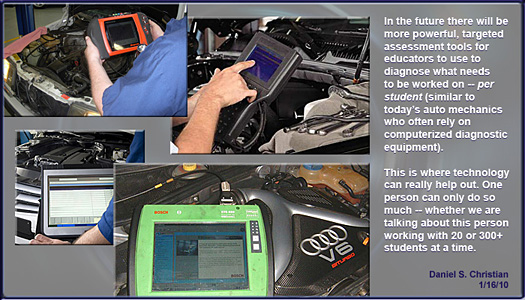
However, I believe digital learning and its surrounding tools/ecosystems hold enormous promise for delivering truly customized/personalized learning opportunities.  Such technologies will be able to learn where a student is at, how to motivate them, how fast to push them, and how they best progress through a type of content.  Such tools will provide real-time, learning-related, diagnostic dashboards for professors or teachers to leverage in order to guide and optimize a student’s education.

.
.

So I believe that the promise is there for delivering truly customized/personalized learning opportunities available 24x7x365 — even though we aren’t completely there yet.  But think of the power a teacher would have if he or she had IBM’s Watson AI-based analysis on each student at their disposal! A “guide on the side” using such diagnostic tools could be a ***potent*** ally for a student.*

As such, I see innovative approaches continuing to come to fruition that will harness the power of serious games, analytics, web-based learner profiles, and multimedia-based/interactive learning content. Eventually, a piece of this type of personalized education will enter in via the Smart/Connected TVs of our living rooms…but that’s a post I’m building out for another day in the near future.

.

*Another hope I have here is that such technologies will
enable students to identify and pursue their passions.


Some items that reinforced this notion for me include:


The key link from Bloom (1913-1999) one e-learning paper you must read plus his taxonomy of learning — an excellent item from Donald Clark Plan B (also see Donald’s archives for postings re: 50 top learning theorists)

The 2 Sigma Problem: The Search for Methods of Group Instruction as Effective as One-to-One Tutoring
Benjamin Bloom
University of Chicago | Northwestern University

Excerpt:
Most striking were the differences in final achievement measures under the three conditions. Using the standard deviation (sigma) or the control (conventional) class, it was typically found that the average student under tutoring was about two standard deviations above the average of the control class (the average tutored student was above 98% of the students in the control class). The average student under mastery learning was about one standard deviation above the average of the control class(the average mastery learning student was above 84% of the students in the control class).

Two key items from EdNet Insight’s Anne Wujcik:

Mapping a Personalized Learning Journey – K-12 Students and Parents Connect the Dots with Digital Learning — from Project Tomorrow

Personalizing Learning in 2012 — The Student & Parent Point of View [infographic] — from Project Tomorrow
Excerpt from Anne’s posting:

This first report focuses on how today’s students are personalizing their own learning, and how their parents are supporting this effort. That personalization centers around three student desires: including how students seek out resources that are digitally-rich, untethered and socially-based. The report share the unfiltered views of K-12 students and parents on these key trends and documents their aspirations for fully leveraging the technologies supporting these trends to transform their learning lives.

Adobe announces Creative Suite 6 and Adobe Creative Cloud on 4-23-12

.

Adobe announces Creative Suite 6 and Adobe Creative Cloud on 4-23-12


.Also see:

From DSC:

  • This last piece from David Nagel addresses my fears and concerns with our current emphasis on standardized tests, common core standards, etc.  The emphasis is on STEM and can lead to a one-size-fits-all type of education that doesn’t allow each student to identify and pursue their own passions enough.


Addendum on 5/2/12:


.

“Hollywood will be destroyed and no one will notice,” Wales said. But it won’t be Wikipedia (or Encarta) that kills the moviemaking industry: ” Collaborative storytelling and filmmaking will do to Hollywood what Wikipedia did to Encyclopedia Britannica,” he said.

— quote from Jimmy Wales to Hollywood: You’re Doomed (And Not Because of Piracy) at wired.com by Ryan Singel

© 2025 | Daniel Christian