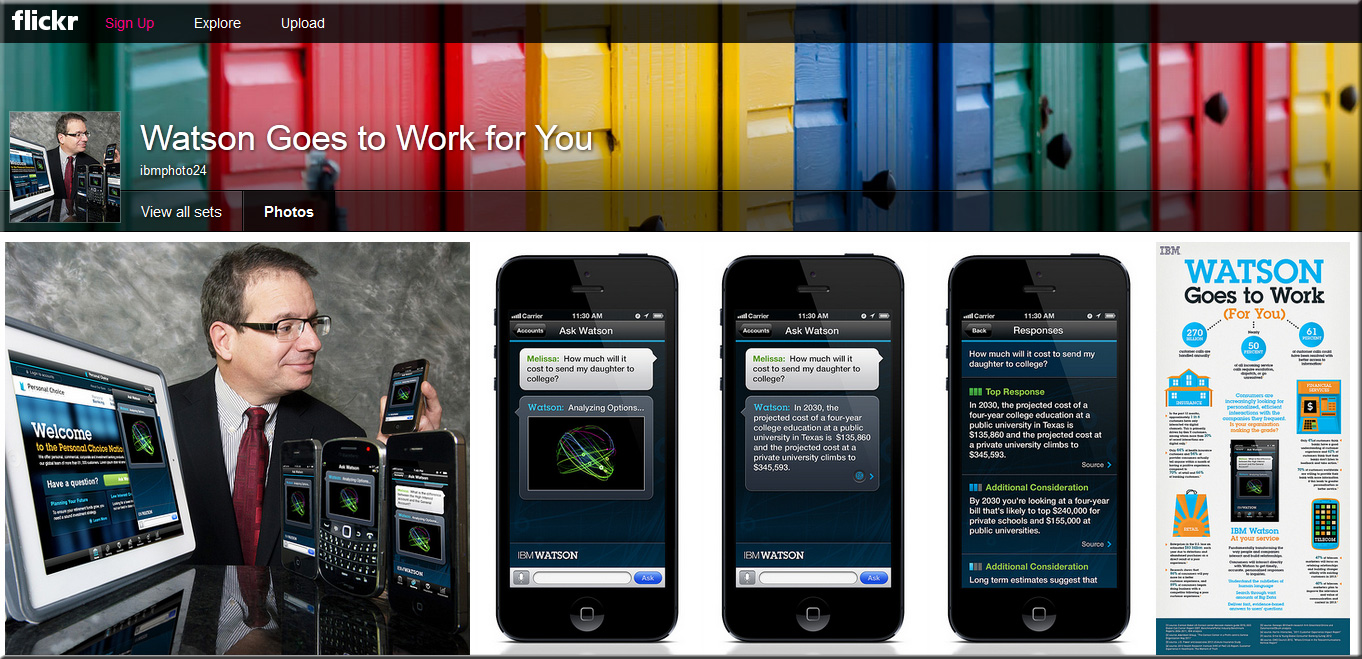
IBM Watson at your service: New Watson breakthrough transforms how brands engage today’s connected consumers — from IBM.com
Delivered from the cloud and into the hands of mobile consumers, Watson provides faster, personalized service for smarter commerce; top brands tap Watson’s ability to crunch big data and provide fast, personalized advice for empowered consumers

.

WatsonGoesToWorkForYouMay2013

.

Also see:


.

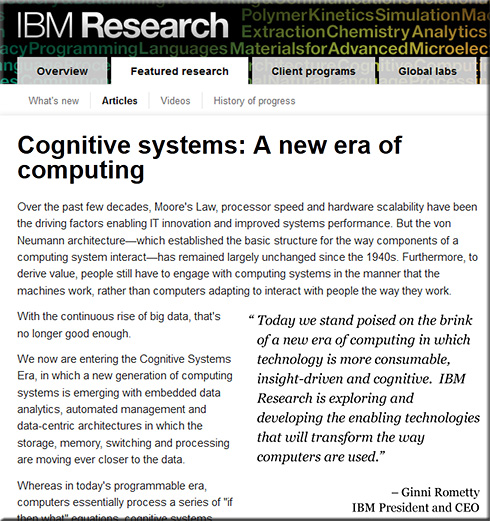
CognitiveSystems-IBMResearch-May2013


.


.

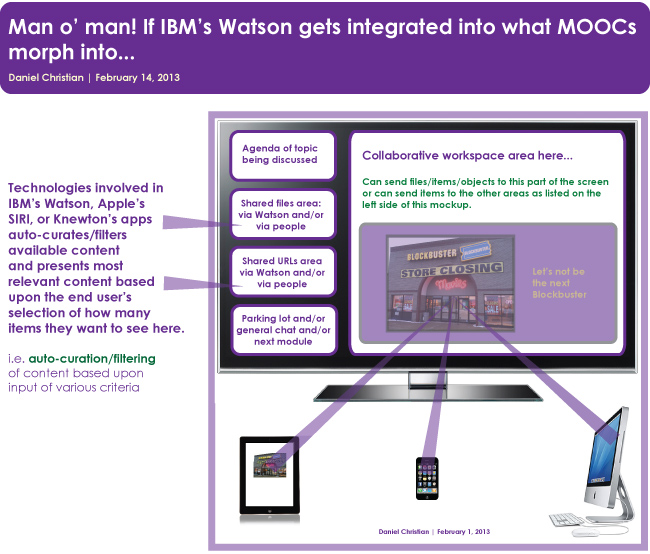
Watson-MOOCs-NewTypesCollaboration-DChristian-2-14-13

.


IBM’s Watson tries to learn…everything — from spectrum.ieee.org by Steven Cherry
What happens when Watson learns a million databases? RPI students and faculty hope to find out.


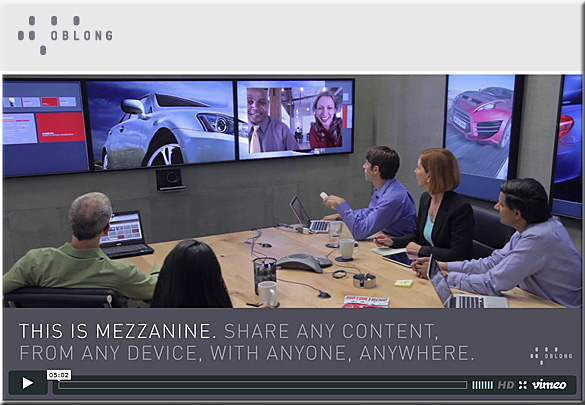
Mezzanine-from-Oblong-May2013


.

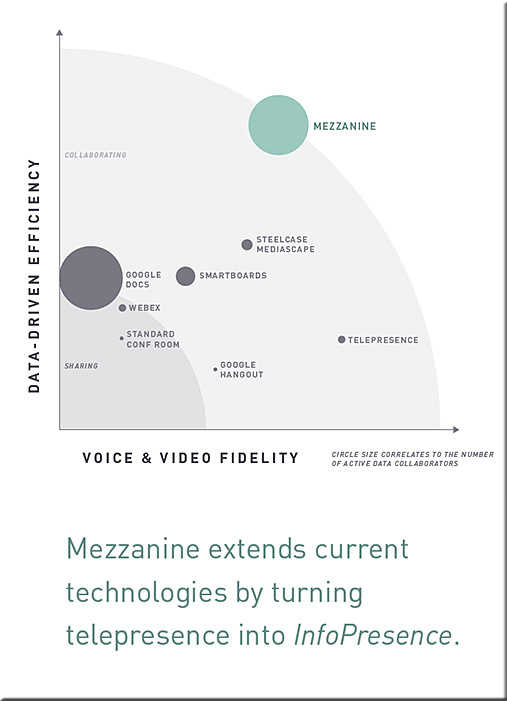
Mezzanine2-from-Oblong-May2013

.

.

From the Oblong.com website:

Mezzanine™ is a collaborative conference room solution that introduces multi-user, multi-screen, multi-device collaboration. This is next-generation communication: share any content from any device with anyone, anywhere.

Mezzanine transforms creative teamwork, executive meetings, and sales presentations into real-time, collaborative work sessions. Mezzanine expands on existing telepresence technology by providing what we call InfoPresence™—the incorporation of multiple users, multiple devices, and multiple streams of information in the collaboration environment. The future of conference room collaboration is here.

A Mezzanine workspace lets any person on a network bring their own device and share content and applications with any colleague, anywhere in the world, interactively. Mezzanine is a collaborative conference room solution combining presentation design and delivery, application sharing, whiteboard capture, and video conferencing, all within a framework of multi-participant control.

.

Also see:

  • Oblong Technovates with LA High School
    .
  • Oblong at OME
    Oblong Industries recently participated at OME, a summit hosted by UC San Francisco.  The two-day summit focused on charting the future of precision medicine—an emerging field combining big data with clinical research and patient care to deliver insights and advances in treatment that is more targeted and enables improved patient outcomes.


The folks needed to create the next generation of learning: Computers can’t touch this. [Christian]

From DSC:
What we need is a major hackathon — or an organization with deep pockets — that can bring together folks from a variety of disciplines including:

  • Subject Matter Experts
  • Instructional Designers
  • Cognitive Psychologists
  • Computer Scientists and/or those exerienced with learning analytics/data mining, Artificial Intelligence (AI)
  • Those gifted in film/media/videography/photography
  • Great storytellers/writers (including writing for transmedia-based learning experiences)
  • Folks who can create engaging, educational games
  • Designers
    • Web
    • Graphic
    • Interface
    • User experience
    • User interaction
    • Those gifted in creating multimedia-based content
  • Musicians
  • Human Computer Interaction (HCI) experts
  • Mobile learning experts
  • Those knowledgeable with second screens/M2M communications
  • Animators
  • Illustrators
  • Social media experts
  • Accessibility experts
  • Researchers
  • Those gifted in creating augmented reality-based apps
  • Legal/copyright experts
  • & others

We need for these specialists to collaborate in order to create the next generation of learning.  Anyone who can bring these skillsets together and experiment with creating materials will have significantly contributed something to the current generations and to future generations! 

And, in the words of M.C. Hammer,  computers “can’t touch this!”  Why? Because “learning is messy!”

What fields did I miss?
Please leave your thoughts and
feedback in the comments section.


Augmented reality is going mobile–and coming to a classroom near you — from thejournal.com by Jennifer Demski

.

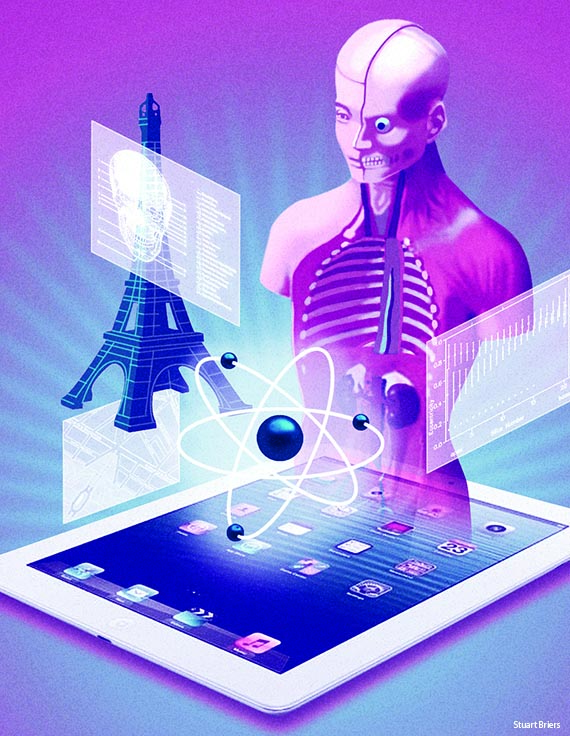
iPad with different images hovering above

This article, with an exclusive video interview,
originally appeared in T.H.E. Journal’s April 2013 digital edition.

BII REPORT: Here’s why the “second screen” industry is set to explode — BusinessInsider.com

BII REPORT: Here’s why the “second screen” industry is set to explode — BusinessInsider.com

Excerpt:

Here’s why the second screen industry will ultimately succeed:

  • Usage is growing rapidly
  • And mass acceptance isn’t even necessary
  • Second screen isn’t really a new activity
  • Second screen apps and sites are bridges


From DSC:
As this article alludes to, I wouldn’t rule the living room out in terms of where interactive, multimedia-based, educationally-related, second screen-based applications will turn up (apps backed up by data mining, AI, and opportunities for social learning). This area is poised for some serious growth. 


The Living [Class] Room -- by Daniel Christian -- July 2012 -- a second device used in conjunction with a Smart/Connected TV


10 developer tips to build a responsive website [infographic] — from readwrite.com by Dan Rowinski

Excerpt:

Responsive design is a concept where you build your website once and then format it so it can adapt to any screen size that accesses it. Designers use HTML5 and CSS to build the sites and set parameters so the content will resize itself whether the user is in vertical or horizontal viewing mode, on a tablet, desktop or smartphone or even a screen as large as a television.


Also see:


Tagged with:  

Items re: multi-screen media — eventually this trend/convergence enables “Learning from the Living [Class] Room”

PayWizard launches first dedicated payment and subscriber management solution for TV and media industry — from PayWizard

Excerpt:

London, 21 February 2013 – PayWizard, specialists in payment and subscription management, has launched the TV and media industry’s first dedicated, end to end payment and subscription solution. The integrated solution brings together a strong heritage in the Pay-TV market with a deep understanding of the challenges TV operators and media companies face in monetising the multiplatform world.

Using its award-winning modular Payment and Subscription platform, PayWizard combines payment processing, intelligent subscriber management technology and real-time customer service operations to tailor-make solutions that enhance the consumer experience across all screens.

With 16.8 billion video-enabled devices set to be in the global marketplace by 2015, content owners are facing the challenge of enhancing existing services while creating compelling experiences that embrace new routes to market. PayWizard’s comprehensive set of products and services has enabled clients, such as the UK’s biggest commercial broadcaster, ITV, to address these commercial challenges by enabling new monetisation strategies to drive revenue and profitability.


Also see:

.

ConnectedTVSummit-London-2013


.


Nagra-Kudelskidotcom-March2013


.

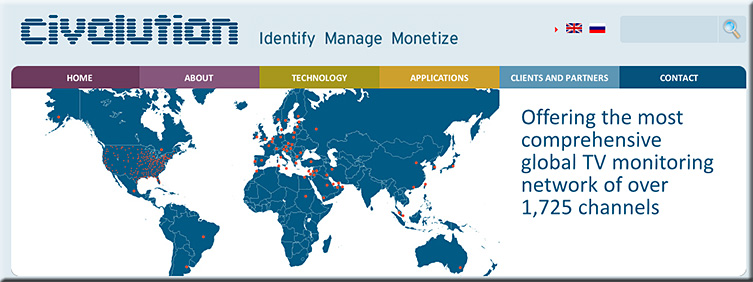
civolution-march2013

.

Also see:


From DSC:
See the categories listed above for the items/topics/disciplines/trends that are relevant here.


Addendum:

Check this out!

Massive Open Online Course offered by UMass Boston to feature the first adaptive MOOC technology
Enables students to be taught according to individual learning strategies

Excerpt from email:

(Boston, MA) – February 27, 2013 – If you’ve ever been in a course and struggled because you just aren’t “getting it,” the reason might be less your ability than the way in which the material is being presented.

New technology is now allowing online course environments to analyze how individual students learn, customizing instruction to individualized learning strategies. The College of Advancing and Professional Studies (CAPS) at the University of Massachusetts Boston has teamed up with USDLA 21st Century Sponsor, Synaptic Global Learning (SGL), to use the new learning management system, Adaptive Mobile Online Learning (AMOL), to deliver the first adaptive Massive Online Open Course (a-MOOC) ever offered. The course launches March 25.

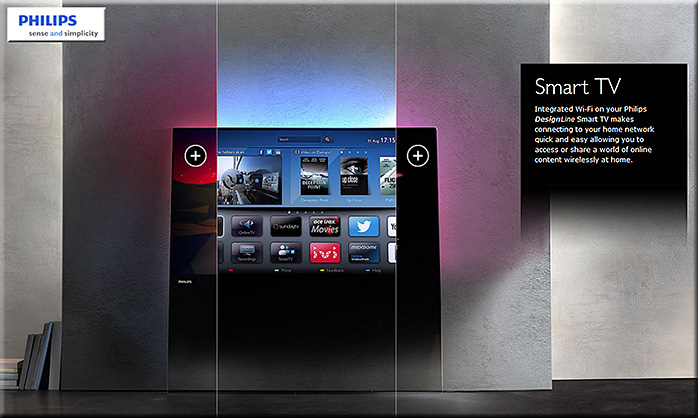
PhilipsSmartTV-March2013

Teens and Technology 2013 — from pewinternet.org by Mary Madden, Amanda Lenhart, Maeve Duggan, Sandra Cortesi, Urs Gasser

Excerpt:

“The nature of teens’ internet use has transformed dramatically — from stationary connections tied to shared desktops in the home to always-on connections that move with them throughout the day,” said Mary Madden, Senior Researcher for the Pew Research Center’s Internet Project and co-author of the report. “In many ways, teens represent the leading edge of mobile connectivity, and the patterns of their technology use often signal future changes in the adult population.”

From DSC:
The worlds of K-12, higher education, and corporate training/development are all seeking solid solutions to the Bring Your Own Device (BYOD) or the Bring Your Own Technology (BYOT) solution.  (The way I see it, it would sure be helpful it Apple worked with the other relevant vendors to establish better wireless networking protocols.)  Anyway, below are some items on this topic:


How to BYOT for Learning? – from shift2future.com by Brian Kuhn

Responding to the “Shift to the Future” — from seanrtech.blogspot.com by Sean Robinson

BYOD: 7 reasons to leave them to their own devices — from Donald Clark Plan B

Ten reasons the iPad is an awesome tool for classrooms and education — from isource.com with thanks to Krista Spahr, Senior Instructional Designer at Calvin College, for this resource

The 4 easiest ways to mirror the iPad (comparison chart) — from edudemic.com by Seth Hansen; working off of a similar posting from Tony Vincent 

Strategies for taking flight with BYOT  — from byotnetwork.com

Excerpt (emphasis DSC):

The Partnership for 21st Century Skills identified 4 critical areas of learning for students that include creativity, critical thinking, communication and collaboration.  In Forsyth County Schools, we’ve been working hard with parents, teachers and students to embrace learning with student-owned technologies; something we call Bring Your Own Technology (BYOT).  What we know for sure is that BYOT is really more like Bring Your Own Learning because we’ve discovered that it is NOT about the technology – it IS about the learning.


From DSC:
This aligns well with Alan November’s replacing “one-to-one” with “one-to-world.”

But whether we use the acronomyns BYOD, BYOT or BYOL (or whatever), it’s all about students being able to contribute content (hopefully that they created) and participate in the discussions.
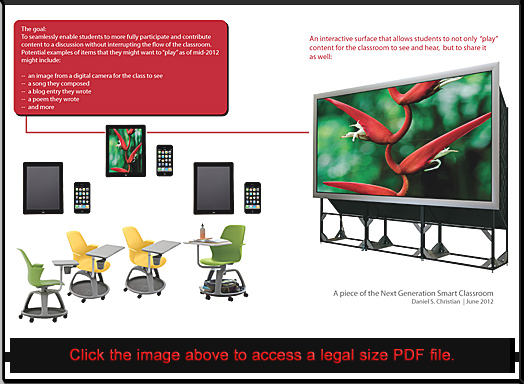
 

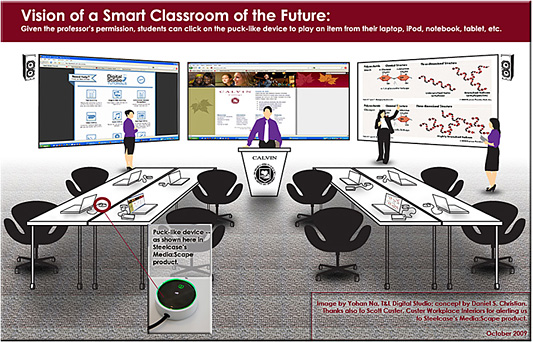
A piece of the Next Generation Smart Classroom -- Daniel Christian -- June 2012

From June 2012


Vision of a Next Gen Smart Classroom from March 2010

 From October 2009:
Building off of Steelcase’s media:scape product line


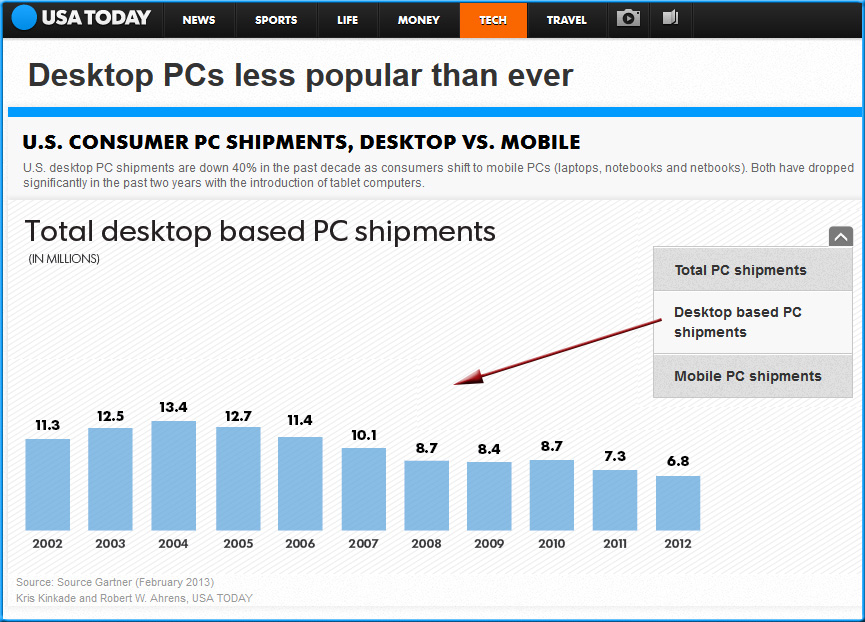
Desktop PCs less popular than ever — from Scott Martin and Jon Swartz, USA TODAY — with thanks to Mr. Rick DeVries at Calvin College for this resource


DesktopPCsLessPopThanEver-Feb2013

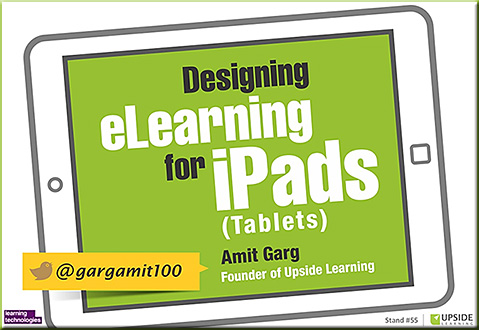
The question of why (not) eLearning on iPads or tablets? — from upsidelearning.com by Amit Garg

Excerpt:

2012 saw the re-emergence of ‘Mobile learning’ or ‘mLearning’ as “new” (ok, not really new) buzzwords in L&D and Training circles around the world. But largely in the wrong context! Mobile Learning is being loosely attributed to any learning activity that is not location bound, which is very surprising! And even more surprising is, more often than not, it is not even referring to mLearning at all! But to things like, making an LMS available on an USB drive so you can track courses while on a plane! Certainly not mobile learning in my opinion.

I believe ‘real’ mobile learning is much more than just learning on a mobile device. I also believe that ”tablet” learning is neither mobile nor eLearning, but actually occupies a position between mLearning and eLearning. So let me lay out my argument for why I believe this!


Also see Amit’s presentation at LT13uk — the full presentation is available here:
http://www.slideshare.net/UpsideLearning/designing-elearning-for-ipads

.

amit-garg-designingelearningforipads-2013


The new basis of competition and the superiority of ecosystem economics — from visionmobile.com by Michael Vakulenko

Also see:

The changing landscape of app discovery — from visionmobile.com by Andreas Pappas

.

VisionMobile - The changing landscape of app discovery


Also see:


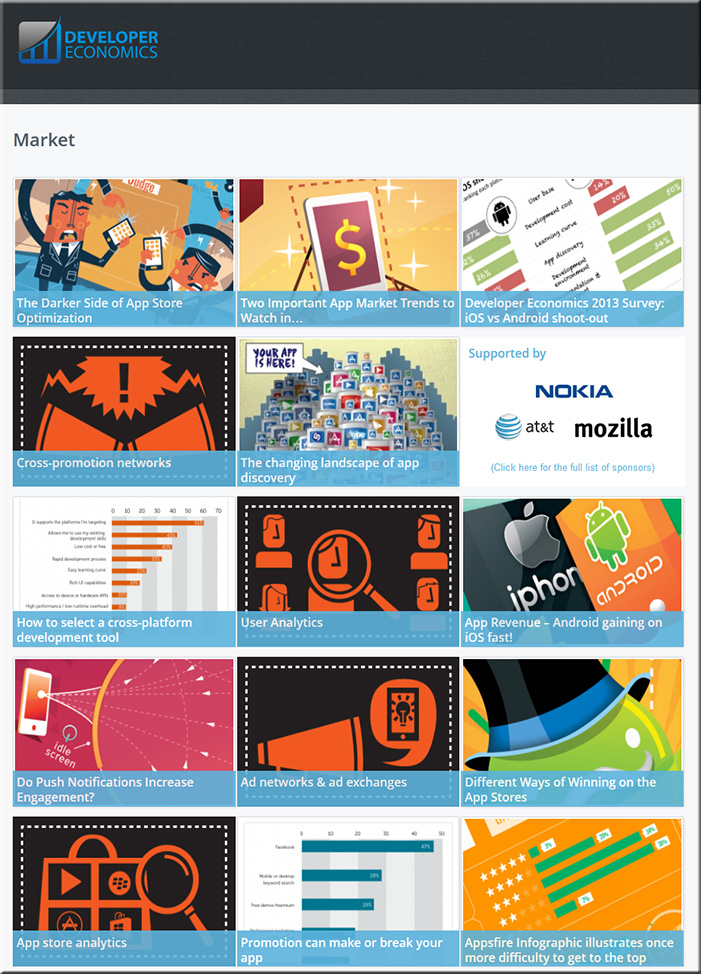
DeveloperEconomics-Feb2013


Also see the following infographic from
OnlinePhDPrograms.com

Making Money with iOS Education Apps

© 2025 | Daniel Christian