Bridging Our Future, envisioned by Intel  -- June 2012


Description:

By connecting education with smarter technology, Intel offers a look into the future of K-12 education. Watch as students use technology to collaborate with peers and industry experts to build a bridge model, from the initial design phase through the final structure testing. Intel’s education solutions help teachers provide innovative, personalized and secure learning environments to prepare students for successful futures in the 21st century.

I originally saw this at


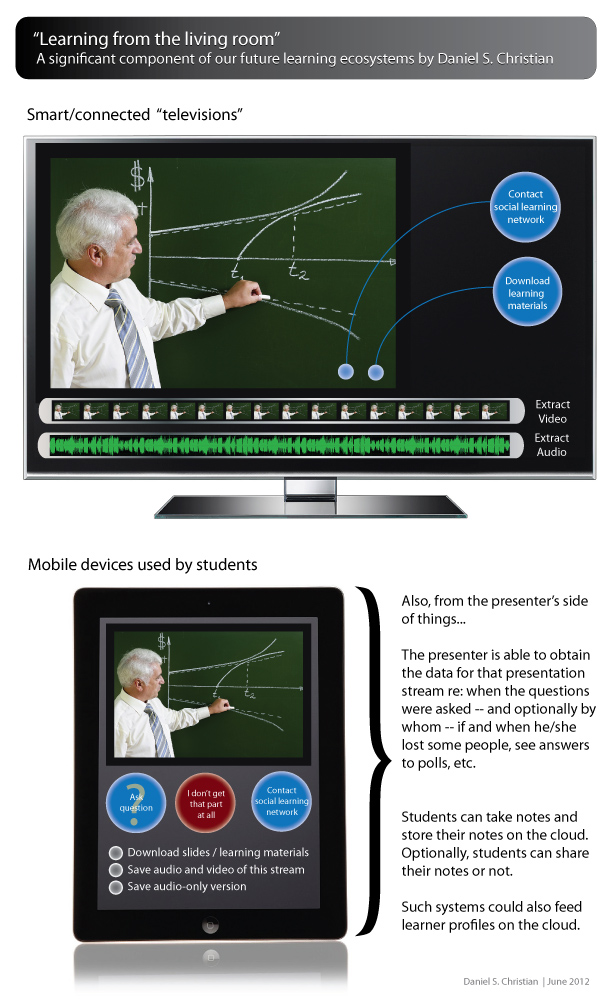
“Learning from the living room” — Part I [Christian]

Learning from the living room -- a component of our future learning ecosystems -- by Daniel S. Christian, June 2012


Legal size PDF here


Addendum on 7/3/12 from an article I wrote for EvoLLLution.com (for LifeLong Learning):
Establishing better collaboration between the corporate world and higher education [Christian]

In the near future, perhaps we could have second screen-based activities whereby corporate leaders are giving TED-like presentations or expressing the current issues in their worlds via a program on Smart TVs, and the students are communicating and collaborating about these presentations via tablets or smart phones.  Perhaps there will be electronic means whereby students could submit their ideas and feedback to the presenting companies (and whereby selected ideas could be rewarded in terms of free products or services that the company produces).


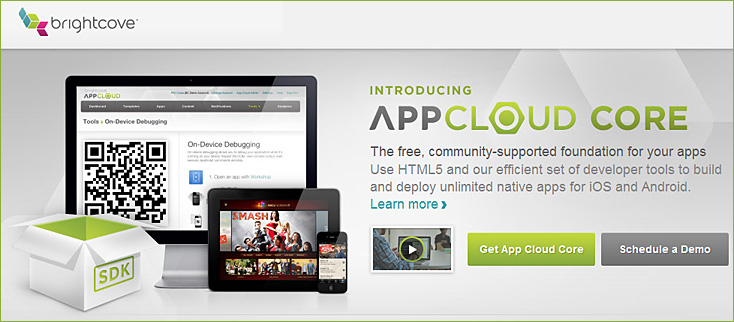
Introducing App Cloud Core – Build and Deploy Mobile Apps for Free

.

brightcove.com/en/content-app-platform

.

Also see:


Also see:

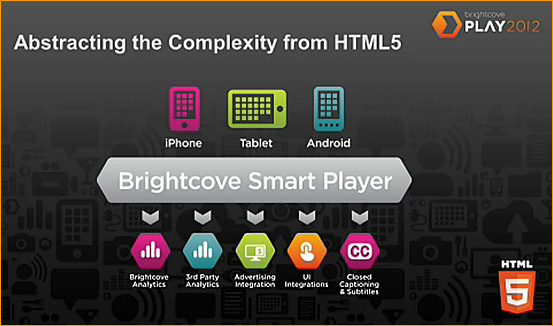
  • Brightcove PLAY is a global gathering of Brightcove customers, partners and industry leaders at the forefront of the digital media revolution. On June 25-27, hundreds of media companies, marketers and developers from around the world will convene in Boston for three action-packed days of hands-on learning, in-depth strategy sessions, next-generation product demos, all-star keynotes, and networking.

The new workplace — from internettime.com by Jay Cross

Excerpt (emphasis by DSC):

Six years ago few people believed that informal learning made much of a difference. Today’s common wisdom is that most workplace learning is experiential, unplanned, social, and informal.

Informal learning tops many training department agendas. Companies are attracted by the low price tag. However, few of them are doing much systematically. They’ve converted a few programs but they’ve failed to improve their learning ecosystems.

We’ve shifted how we think about learning since the Informal Learning book came out. It’s a new ball game and we need to play by new rules. Consider what’s changed…

From DSC:
If this is the case, what could/should that mean for those of us working within higher education?

Survey shows people take training as infrequently as they go to a conference; but they learn continuously in other ways — from Learning in the Social Workplace by Jane Hart

Excerpt:

Although there are probably few surprises in the responses to the four main questions themselves, it is when you view the amalgamated results that you can see the bigger picture.

Addendum on 5/17/12 from Learning TRENDS by Elliott Masie – May 9, 2012 | #722 – Updates on Learning, Business & Technology.

Results of Learning Directions Pulse Survey

* 33% of organizations reported they are SHRINKING the use of face-to-face classrooms.
* Greatest planned growth in learning activity mode is in the use of Webinars.
* Strongest interest in change and updates was in Leadership Development.
* While 40% show a strong interest in Social Learning – only 20.1% plan a growing utilization with a strong piloting base.
* Mobile and Tablet Device use for Learning is being piloted by 30.1%

Only 14% think that company training is an essential way for them to learn in the workplace — from Learning in the Social Workplace by Jane Hart

Excerpt:

That was one of the findings of my recent anonymous survey on how people learn best in the workplace, and even I was surprised by the results.  But I think the biggest take-away from my survey is that we can no longer assume we know how people like to learn in the workplace nor how we think people should learn. So in this blog post, I want to share the data from my survey, some of my thoughts about the results, and the importance of undertaking your own survey.

Items re: the connected living room; relates to what I call a future “learning from the living room” environment

The human voice, as game changer — from nytimes.com by Natasha Singer


Matthew Cavanaugh for The New York Times

Vlad Sejnoha demonstrated Nuance’s Dragon TV system, which obeys spoken commands to
flip channels, for example, or shop on screen on Amazon.com.

Apple’s iCloud will teach Apple’s Smart TV remote new tricks — from patentlyapple.com

6 answers about your next TV, with or without Apple — from forbes.com by Michael Humphrey

10 tech commandments for the TV industry — from thenextweb.com by Martin Bryant

Smart TVs are growing in popularity — from business-news.thestreet.com by Steve Adams

smartTV Quincy gh 032112-284-wihr.jpg

Image from Gary Higgins/The Patriot Ledger

Paul Berrini, a salesman at Hancock T.V.& Appliance in Quincy, demonstrates
some of the new features of “smart” televisions, Wednesday, March 21.

.

10 AirPlay-ready iPad apps that make Apple TV worth it — from  readwriteweb.com by John Paul Titlow

Entertainment and Streaming Media – The Recent Past and the Future — from homesystemintegration.com by Alan Ruby

Connected Living Room 1

.

TVs may soon be used to spy on you — from smartplanet.com by Tuan C. Nguyen


The potential of cloud-based education marketplaces — from evoLLLution.com (LifeLong Learning) by Daniel Christian; PDF-based version here

Excerpt:

Such organizations are being impacted by a variety of emerging technologies and trends – two of which I want to highlight here are:

  • Online-based marketplaces – as hosted on “the cloud”
  • The convergence of the television, telephone, and the computer

One of the powerful things that the Internet provides is online-based marketplaces. Such exchanges connect buyers with sellers and vice versa. You see this occurring with offerings like Craig’s List, e-Bay, PaperBackSwap.com, and others.


Education 2.0 isn’t coming. It’s here. And the way you’re educated will be changed forever. — from bostinno.com by Dave Balter

Excerpt (emphasis DSC):

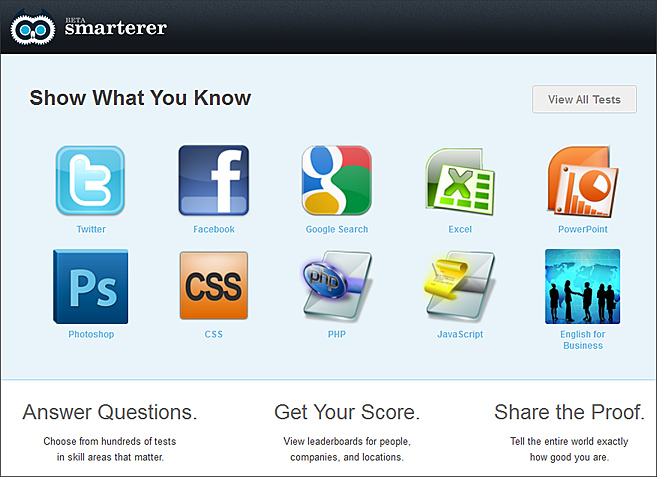
Sometime in late 2010, I sat down with angel investor Josh Abramowitz in NYC.  I asked him to invest in Smarterer, a business whose purpose was to validate people’s digital, social and technical skills.  What I encountered for the next hour wasn’t someone merely evaluating my specific business concept – it was an attack on the entire higher education system.

Josh argued that our higher education system was on the verge of crumbling.  Not because there weren’t marvelous educators or exceptional institutions, but because colleges and universities were charging exorbitant sums that weren’t equal to the return.  Our educators were burying our students with tremendous debt. But increasingly sophisticated learning and credentialing opportunities were emerging online, and they were free or nearly free.  And this disparity would lead to a full-fledged education revolution, he predicted.

…

What the Universities need to know is that what’s coming for education is something like the shift the music industry failed to see until it was too late.  Things will never be the same again.  Instead of griping about how hard it will be to tap their endowments to pay for education, they should be thinking about how to take advantage of the changes.

To save their universities, here’s the three-pronged ecosystem that every University Leader should start thinking about…

Also see:

smarterer.com -- show what you know


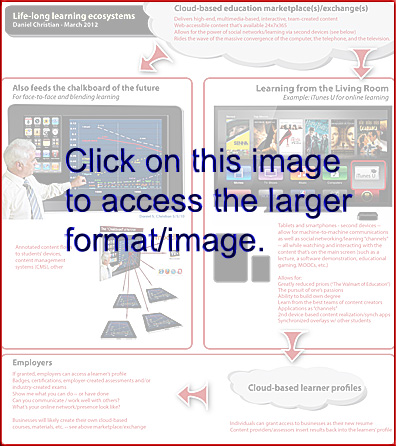
Lifelong learning ecosystems!!! A powerful vision for our future [Daniel Christian]

From DSC:
The vision below involves:
(click on the image below to access it)
 

  • The convergence of the telephone, the television, and the computer
  • Cloud-based education stores/marketplaces/exchanges
  • Second screen devices and machine-to-machine communications
  • Social networking/learning
  • Smart classrooms/learning spaces
  • Content recognition/synchronization applications
  • Apps as “channels”
  • Web-based learner profiles
  • Video overlays
  • New business models in higher ed
  • New jobs/needs for the future
  • A new way for employers to hire highly-effective employees/contractors/consultants
  • …and more


Click this thumbnail image to access the larger image / vision

.


From DSC:
Here are some items related to what I call “Learning from the Living Room” — a trend that continues to develop that involves:

  • Using high-end, personalized, multimedia-based, interactive, team-created content — packed with new reporting tools for better diagnostics/learning analytics — available via a cloud-based “education store”/marketplace/exchange
  • Web-accessible content that’s available 24x7x365
  • The power of social networks/learning
  • Riding the wave of the massive convergence of the computer, the telephone, and the television.

.

Smarter TV: Living room as digital hub from Samsung and Microsoft to Apple and Google — from wired.com by Tim Carmody
Excerpt (emphasis DSC):
  • In the future, the living room will replace the home office as most households’ home for the stationary personal computer. Instead of printers and mice and other corded accessories, networked appliances and post-PC machines share data with one another and with the cloud. Play and productivity both become decentered; gaming and entertainment might be on a tablet or a television, with recipes at the refrigerator, a shopping list for the smartphone, and an instructional video on the television set. All of these experiences will be coherent, continuous and contextual. And like the personal computer at the height of Pax Wintel, the living room will be a platform characterized by triumphant pluralism.“The thing about the living room is that it’s universal; everyone in the household uses it,” Samsung VP Eric Anderson told me at today’s event. “We know that we’re not going to capture every single member of the household. In my family, my wife and my daughter are Apple, me and my sons are Android,” he noted, pointing out that the majority of devices introduced today can interact with either mobile platform.

.

The modern mechanics of app stores: today, tomorrow and connected TV — from guardian.co.uk by Dean Johnson

Excerpt:

What’s next for app stores?
It’s time for each platform to up its game – smart TVs are coming. The small and medium screen experience will shortly be translated to the bigger screen as connectivity and discoverability takes on even greater importance.

Google and Apple will further interweave themselves into our daily lives as iOS and Android seamlessly combine our smartphones and tablets with our new smartTVs. Electronic Program Guides (EPGs) and the programmes themselves will suggest related content, from apps to music to film to books. This must all be presented in an approachable, then browsable manner to encourage additional discovery.

The quest for the perfect meta-data will become increasingly important and voice commands will need to deliver the best search results with the minimum of fuss. This time next year, the battle of the app stores will be fought on the move, on the desktop and on the living room wall.

.

Samsung Launches Smart TVs With Gestures, Voice Control — from by Douglas Perry

Excerpt:

A Kinect-like feature is made possible via camera and microphone integration that comes standard with the LED ES7500, LED ES8000 and Plasma E8000 models. According to Samsung, consumers can launch apps such as Facebook or YouTube, or search the web via voice commands. Waving the hand will move the cursor and select links. The TVs integrate a Samsung dual-core processor as well as a new Webkit-based web browser to improve overall performance. The high-end 7500 and 8000 TVs ship with a remote with an integrated touchscreen. A wireless keyboard that is compatible with Samsung’s TVs as well as the Galaxy Tab tablet is sold as an option.

.

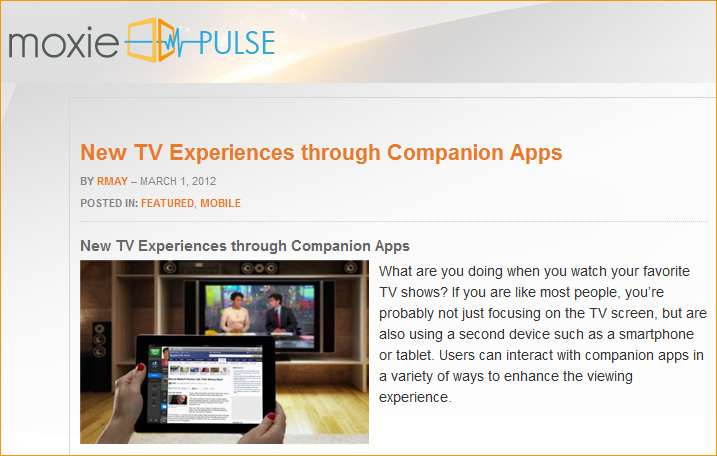
New TV experiences through companion apps — from moxie pulse

.
Subject matter networks –– from Harold Jarche

Excerpt (emphasis DSC):

“I think the singular SME is an antiquated a notion as the solitary game player & our development pipelines need to change.” writes Mark Oehlert, on Twitter. Mark coined the term, subject matter networks, as a change from the industrial concept of subject matter expert, or SME, a term I first heard in the military in the mid-1970’s. But the world has changed and most notably during the past decade.

…

In such an environment, the lone expert is at a disadvantage. He or she cannot learn and adapt as fast as a cooperative network.

We have become connected.


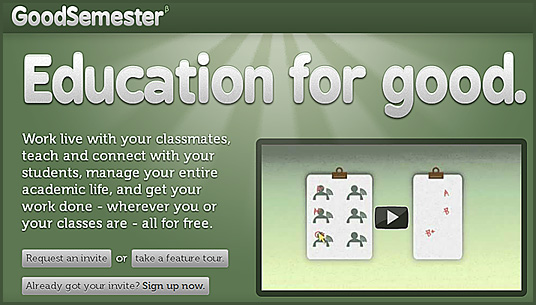
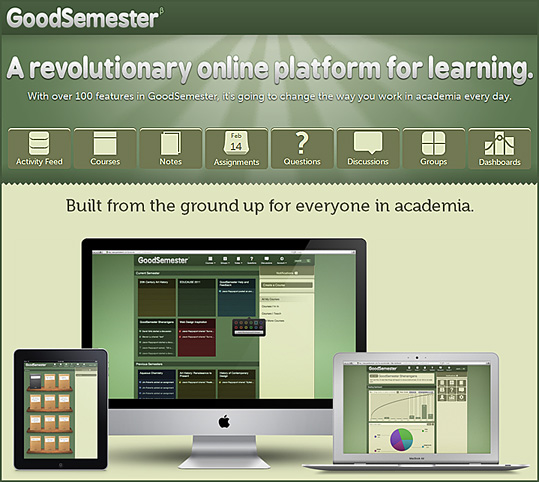
GoodSemester.com

 .

https://www.goodsemester.com/?p=featuretour

From DSC:

  • Tie this type of cloud-based platform in with learning analytics, new types of certifications/assessments/badges, web-based learner profiles, and the ability to continue building your own cloud over a lifetime, and you may find yourself enjoying a very powerful learning ecosystem!!!


The future of internet TV [Europe]

.

From DSC:
Entertainment, some news, and social media at bat — educational apps on deck.

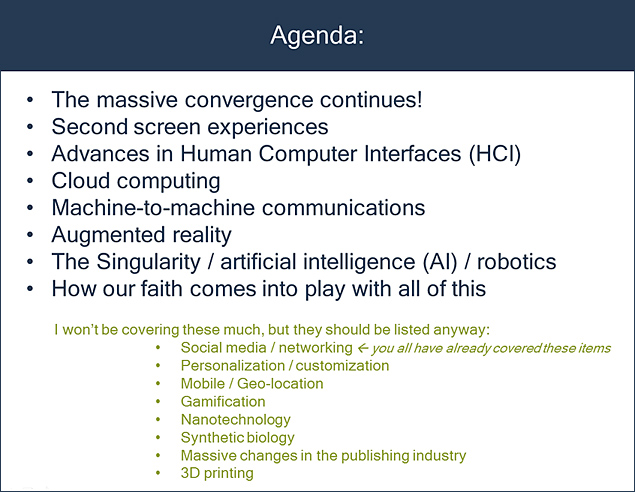
Daniel Christian - Emerging Technologies and Trends - January 20th 2012 Presentation at Calvin College

.

Daniel Christian - Emerging Technologies and Trends - January 20th 2012 Presentation at Calvin College

.

From DSC:
In case it’s helpful, clicking on this link or on one of the images above will link you to a recent presentation that I did for an Interim course at Calvin College entitled, “Social Media for Business?”  As the class had already covered a lot of the topics relating to social media, my job was to focus more on some of the recent emerging trends and technologies.  I will continue to keep pulse checking on those technologies which will allow for ubiquitous, mobile (as well as from the living room), 24x7x365, multimedia-based learning.

NOTE:

  • Almost all of the images on the slides are linked up to web-based resources; so if you see something of interest, go ahead and click on that image/slide in order to learn more about that topic/article/etc.


© 2025 | Daniel Christian