


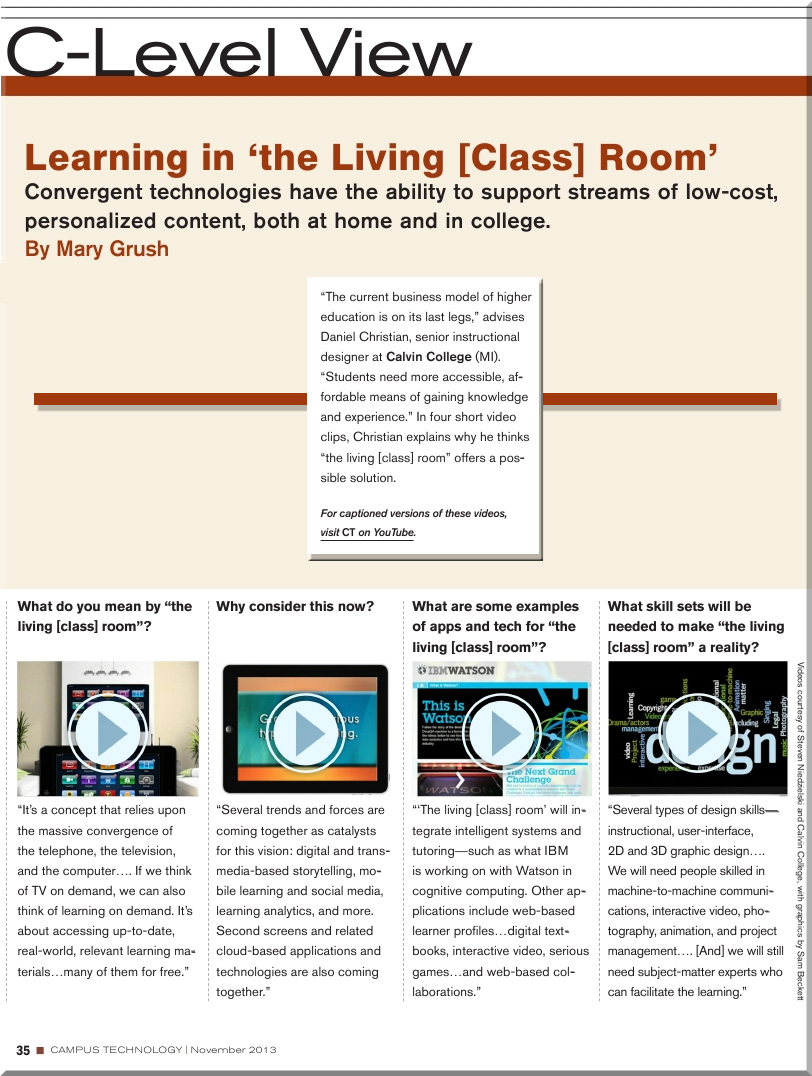
Learning from the Living [Class] Room — from Campus Technology by Daniel Christian and Mary Grush; with a huge thanks also going out to Mr. Steven Niedzielski (@Marketing4pt0) and to Mr. Sam Beckett (@SamJohnBeck) for their assistance and some of the graphics used in making these videos.
From DSC:
These 4 short videos explain what I’m trying to relay with a vision I’m entitling, Learning from the Living [Class] Room. I’ve been pulse checking a variety of areas for years now, and the pieces of this vision continue to come into fruition. This is what I see Massive Open Online Courses (MOOCs) morphing into (though there may be other directions/offshoots that they go in as well).
After watching these videos, I think you will see why I think we must move to a team–based approach.
(It looks like the production folks for Campus Technology had to scale things way back in terms of video quality to insure an overall better performance for the digitally-based magazine.)
To watch these videos in a higher resolution, please use these links:
Alternatively, these videos can be found at:
.
A first look at how educators are really using Google Glass — from by Stephen Noonoo
Excerpts (emphasis DSC):
Per Andrew Vanden Heuvel:
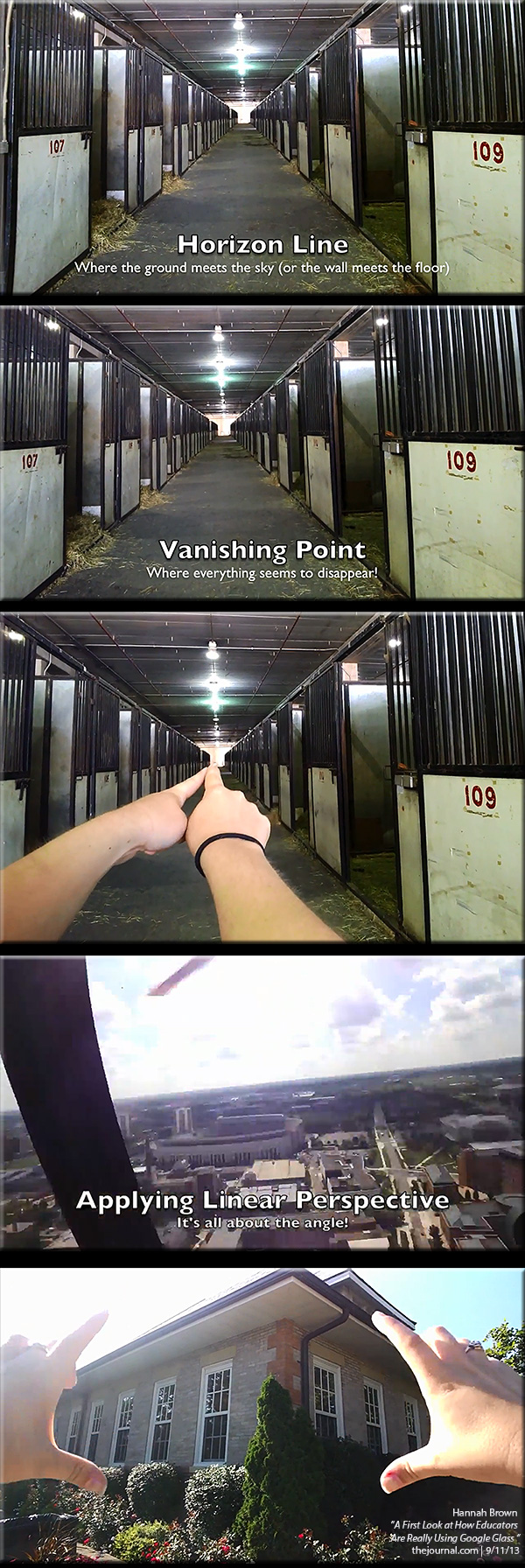
What Glass does offer, Vanden Heuvel said, is a shift in perspective, particularly because teachers can use it as a tool to engage students faster and more easily than before. After returning from Geneva, Vanden Heuvel launched a YouTube channel devoted to his experiments with science–and Glass–called STEMBite. To date, in more than two dozen videos, he’s guided viewers through the physics of ball spin on the tennis court to the polarization of light through (appropriately enough) a pair of glasses.
“What I’m excited by making these videos is not only that they’re filmed with Google Glass, but they’re high engagement videos, so they’re meant to be really short and to get kids to think about how math and science is all around,” he said. “I suppose I could have done that before, but it’s just so easy now.”
Per Hanna Brown:
“I’ve had videos in my classroom before–that’s not a novel thing–but I’ve never been able to take a video from my eye perspective,” said Hannah Brown, another early Glass adopter who works as a high school art teacher at Electronic Classroom of Tomorrow, an all-online statewide charter school in Ohio.
From DSC:
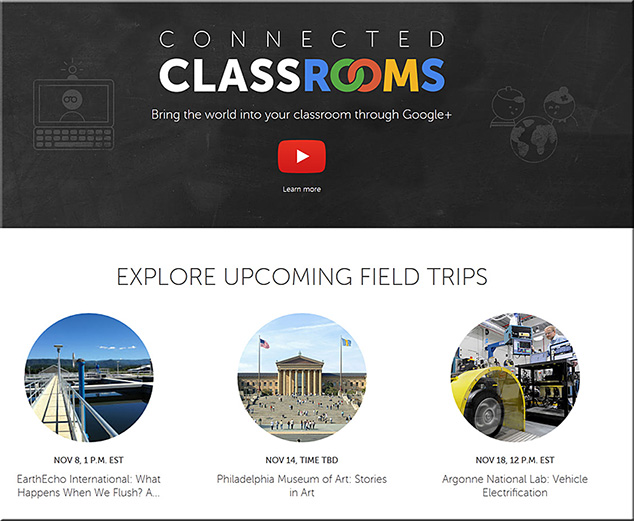
Virtual field trips, mobile learning, videoconferencing, web-based collaboration, Human Computer Interaction (HCI), and other topics come to my mind when I see this.
From DSC:
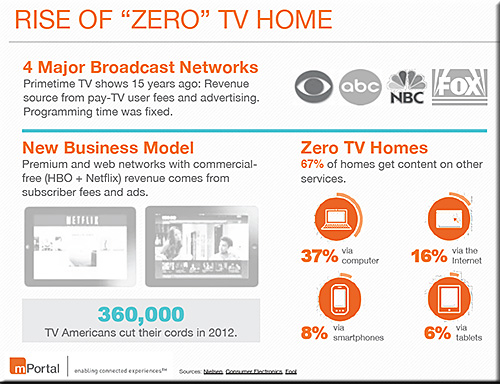
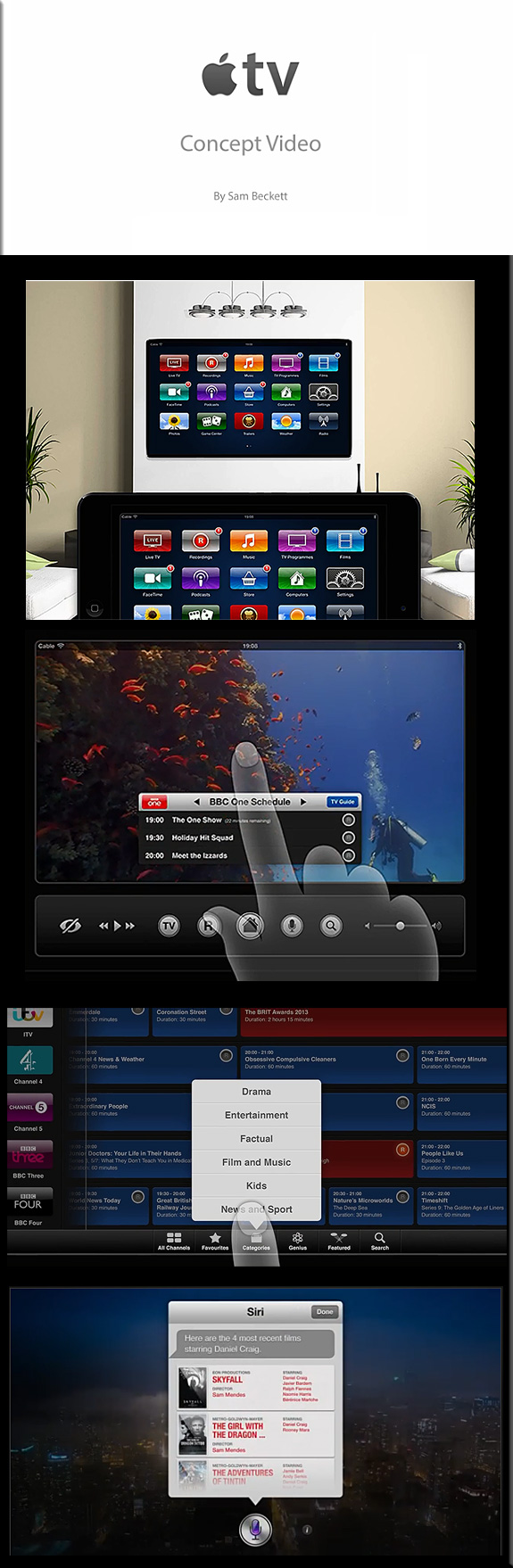
The massive convergence of the telephone, the television, and the computer continues. How that media gets to us is also changing (i.e. the cord cutting continues).
What types of innovative learning experiences can be crafted as “TV” becomes more interactive, participatory, and engaging? What happens if technologies like WebRTC make their way into our browsers and we can videoconference with each other without having to download anything?
What doors open for for us when Google, Apple, or an Amazon.com delivers your “shows” vs. NBC/ABC/CBS/etc.?
The items below cause me to reflect on those questions…
.
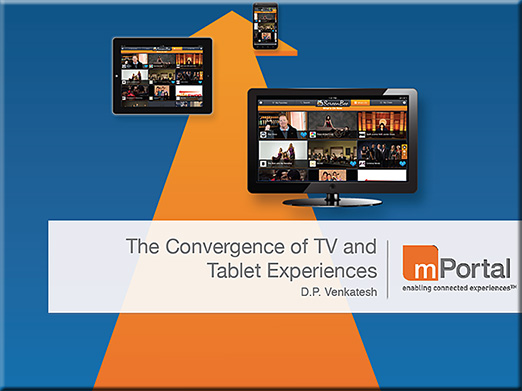
Streaming devices lead the way to Smart TV — from nytimes.com by Brian Stelter

.
Is Google ready to buy its way into TV with an NFL deal? — from allthingsd.com by Peter Kafka
Excerpt:
Here’s a fun combination to ponder: The world’s most powerful media company and America’s most popular sport.
That could happen if Google buys the rights to the NFL’s Sunday Ticket package, the all-you-can-eat subscription-TV service currently owned by DirecTV.
Cord Cliff Coming: What happens to TV when Netflix streams live events? — from allthingsd.com by Ben Elowitz, CEO, Wetpaint
Addendums on 8/22/13:
Here’s why the TV apps economy will be a $14 billion business — from forbes.com by Michael Wolf

.
Excerpt:
According to new research published this week, the TV apps economy is forecasted to reach $14 billion by 2017.
…
Take for example today’s news that Apple will begin selling video advertisements served by iAd through iTunes Radio loaded on Apple TVs. This is only the first move for Apple in this space, and others like Samsung and Google are already investing heavily in connected TV app advertising.
From DSC:
Why post this? Because:
.
![The Living [Class] Room -- by Daniel Christian -- July 2012 -- a second device used in conjunction with a Smart/Connected TV](http://danielschristian.com/learning-ecosystems/wp-content/uploads/2012/07/The-Living-Class-Room-Daniel-S-Christian-July-2012.jpg)
From DSC:
And if this does take off,
$14 billion won’t begin to capture the profits from this new industry.
It will be far larger than that.
Relevant addendum on 6/27/13:

Via: [The Verge] Image Credits: [Venture Beat] [Home Theater]
From DSC:
Well…how about using one of these devices in order to do so!
New video collaboration robot: TelePresence gets moving — from cisco.com by Dave Evans
Excerpt:
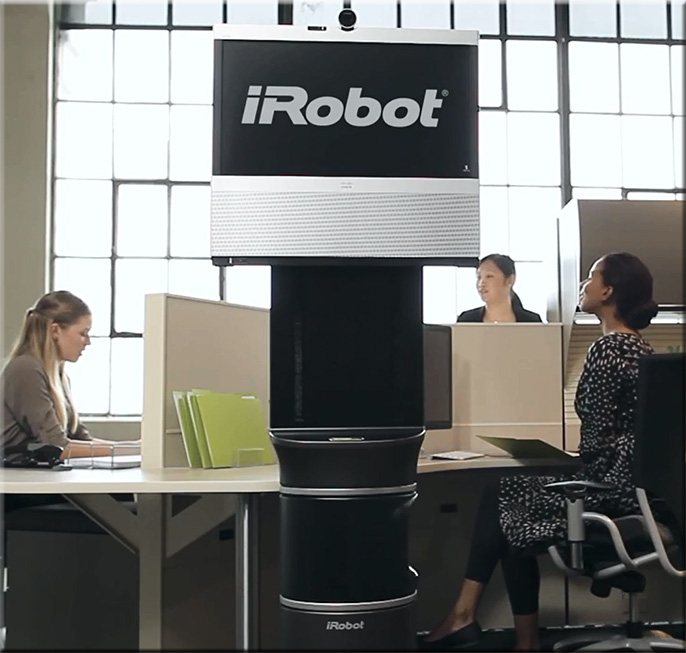
That is why Cisco’s new joint effort with iRobot—demonstrated publicly this week for the first time—is so exciting: We’ve created a mobile Cisco TelePresence unit that brings collaboration to you—or, conversely, brings you to wherever you need to collaborate. Called iRobot Ava 500, this high-definition video collaboration robot combines Cisco TelePresence with iRobot’s mobility and self-navigation capabilities, enabling freedom of movement and spontaneous interactions with people thousands of miles away.
.
.
iRobot Ava™ 500 Video Collaboration Robot — published on Jun 10, 2013
iRobot and Cisco have teamed to bring the Ava 500 video collaboration robot to market. The robot blends iRobot’s autonomous navigation with Cisco’s TelePresence to enable people working off-site to participate in meetings and presentations where movement and location spontaneity are important. The new robot is also designed to enable mobile visual access to manufacturing facilities, laboratories, customer experience centers and other remote facilities.
.

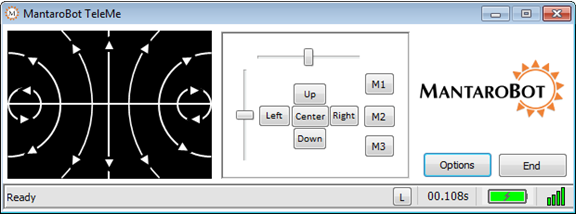
From Attack of the Telepresence Robots! — from BYTE by Rick Lehrbaum
.

 |
 |
 |
 |
| MantaroBot “TeleMe” | VGo Communications “VGo” | Anybots “QB” | Suitable Technologies “Beam” |
.

Also see:
.
From DSC:
Now picture this from the educational standpoint — and what MOOCs could morph into. The foundation for some serious learning power (from the living room) seems to be developing!
Streams of content/learning channels/cloud-based applications that each of us can create and make available.
Voice recognition, learning analytics, machine-to-machine communications, transmedia and more! Wow!
.
Netflix CEO: ‘TV in the future will be like a giant iPad’ — from business.financialpost.com by Armina Ligaya
Excerpt (emphasis DSC):
Q: What do you think is going to happen over the next five or 10 years in internet video?
A: Well, you know, the fundamental thing is the internet has been getting faster. And now it’s video capable, which is really a last-five-years phenomenon. And, internet video will be very transformative across all societies for telemedicine, for online learning, for education. For communication of various sorts. And it brings, whether it’s person to person, or a recorded video like a movie or a TV show, to a person it will be very transformative.
And, TV in the future will be like a giant iPad. It will have a bunch of apps on it, each app will have a unique experience.
…
So we’re getting beyond just a stream of video, which is all broadcast technology can do, to really try to be innovative about the interaction.
.
BII REPORT: Here’s why the “second screen” industry is set to explode — BusinessInsider.com
Excerpt:
Here’s why the second screen industry will ultimately succeed:
From DSC:
As this article alludes to, I wouldn’t rule the living room out in terms of where interactive, multimedia-based, educationally-related, second screen-based applications will turn up (apps backed up by data mining, AI, and opportunities for social learning). This area is poised for some serious growth.
PayWizard launches first dedicated payment and subscriber management solution for TV and media industry — from PayWizard
Excerpt:
London, 21 February 2013 – PayWizard, specialists in payment and subscription management, has launched the TV and media industry’s first dedicated, end to end payment and subscription solution. The integrated solution brings together a strong heritage in the Pay-TV market with a deep understanding of the challenges TV operators and media companies face in monetising the multiplatform world.
Using its award-winning modular Payment and Subscription platform, PayWizard combines payment processing, intelligent subscriber management technology and real-time customer service operations to tailor-make solutions that enhance the consumer experience across all screens.
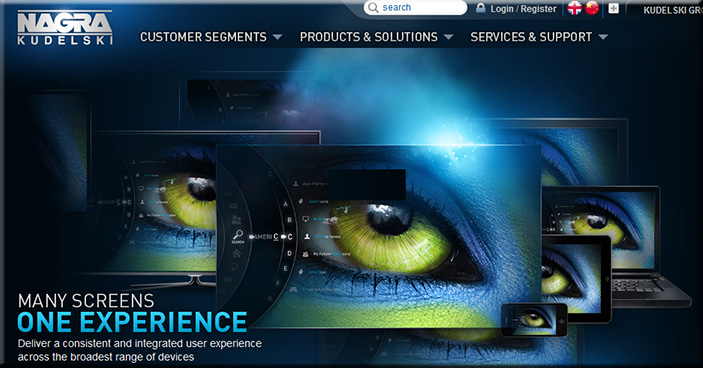
With 16.8 billion video-enabled devices set to be in the global marketplace by 2015, content owners are facing the challenge of enhancing existing services while creating compelling experiences that embrace new routes to market. PayWizard’s comprehensive set of products and services has enabled clients, such as the UK’s biggest commercial broadcaster, ITV, to address these commercial challenges by enabling new monetisation strategies to drive revenue and profitability.
Also see:
.

.
.
.
Also see:
From DSC:
See the categories listed above for the items/topics/disciplines/trends that are relevant here.
Addendum:
Check this out!
Massive Open Online Course offered by UMass Boston to feature the first adaptive MOOC technology
Enables students to be taught according to individual learning strategies
Excerpt from email:
(Boston, MA) – February 27, 2013 – If you’ve ever been in a course and struggled because you just aren’t “getting it,” the reason might be less your ability than the way in which the material is being presented.
New technology is now allowing online course environments to analyze how individual students learn, customizing instruction to individualized learning strategies. The College of Advancing and Professional Studies (CAPS) at the University of Massachusetts Boston has teamed up with USDLA 21st Century Sponsor, Synaptic Global Learning (SGL), to use the new learning management system, Adaptive Mobile Online Learning (AMOL), to deliver the first adaptive Massive Online Open Course (a-MOOC) ever offered. The course launches March 25.
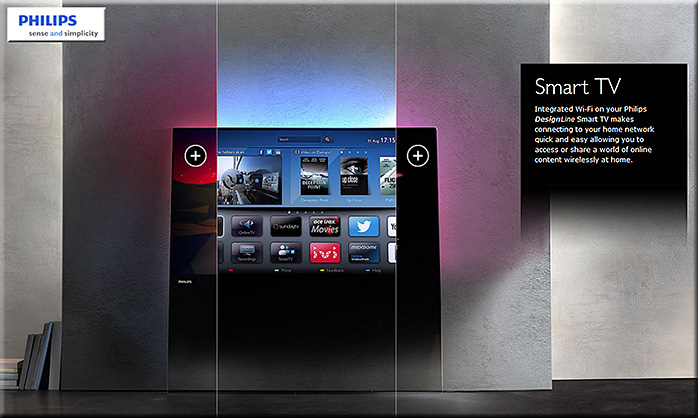
Cisco and Wharton School unveil the learning experience of the future — from newsroom.cisco.com
Also see:
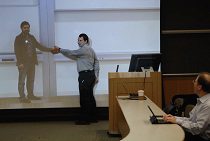
Excerpt:
PHILADELPHIA and SAN FRANCISCO – The Wharton School of the University of Pennsylvania and Cisco [on 2/25/13] unveiled the learning experience of the future — one that blends life-size visual communication via telepresence with collaboration technologies that significantly enhance the way faculty, students and alumni interact and learn, no matter how distant they may be from physical classrooms.
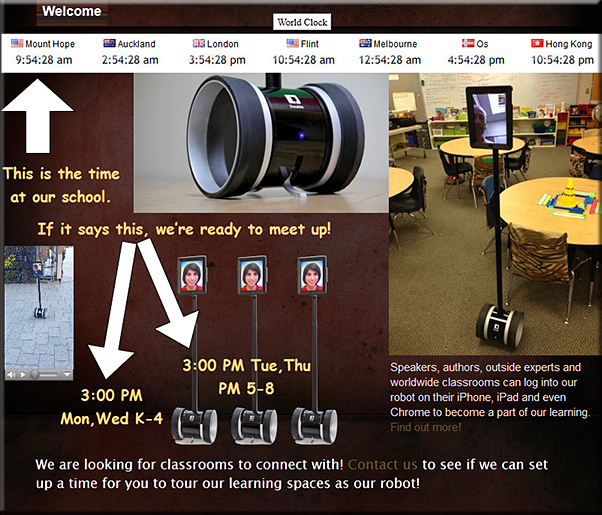
Using devices like these, students of all ages might be able to take some serious field trips:
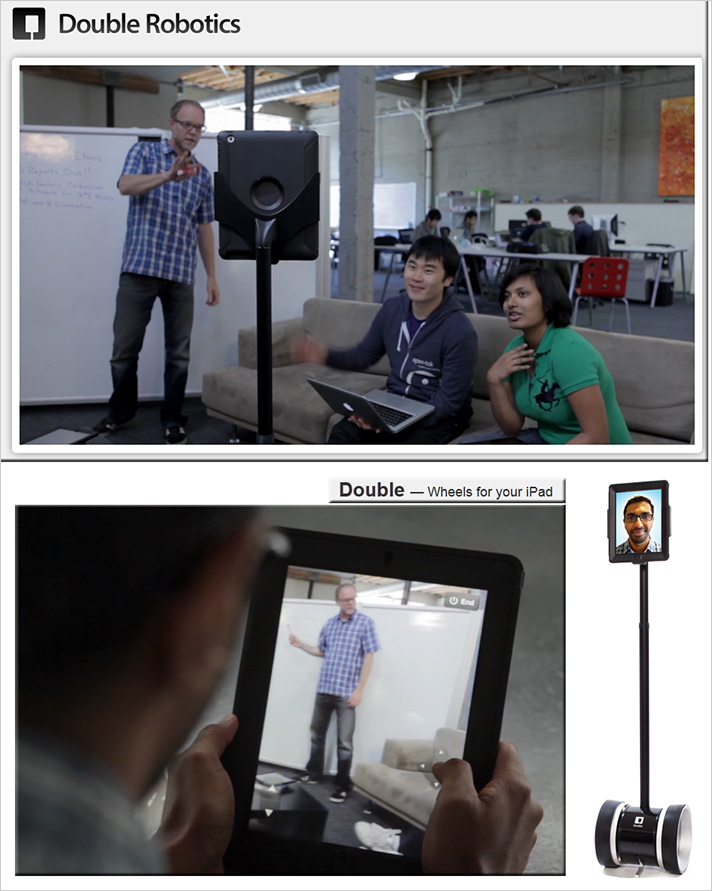
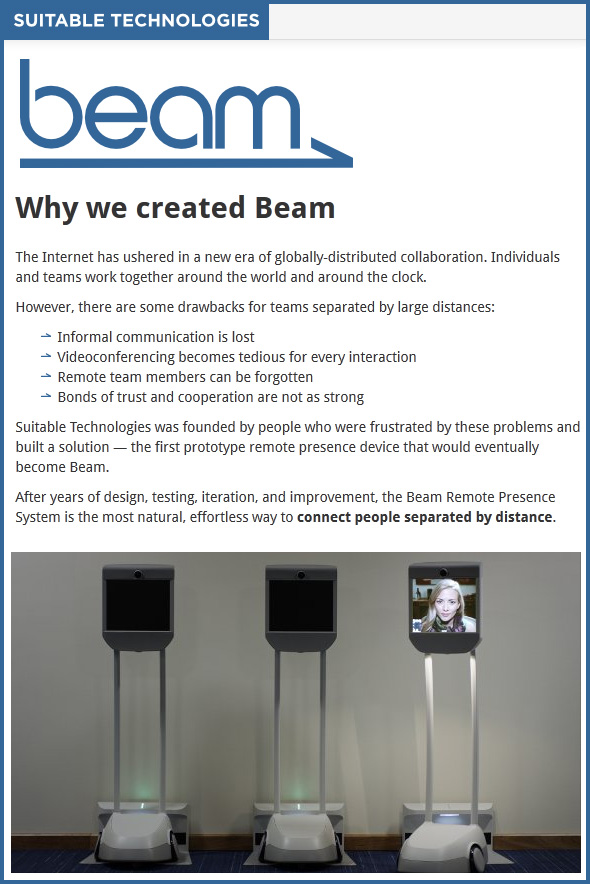
For example…implementing and leveraging such a network of remote-controlled devices*, students could:
For accountability — as well as for setting aside intentional time to process the information — students would update their own blogs about what they experienced, heard, and saw. They would need to include at least one image, along with the text they write about their experience. Or perhaps a brief/edited piece of digital video or audio of some of the statements that they heard that really resonated with them, or that they had further questions on. The default setting on such postings would be to be kept private, but if the teacher and the student felt that a posting could/should be made public, a quick setting could be checked to publish it out there for others to see/experience.
Real world. Engaging. Passing over more choice and control to the students so that they can pursue what they are passionate about.
* These mobile devices could also be hooked up to translation engines as well as to suites of web-based collaboration tools.

