


Also see:
Also see:
Universal Design for Learning: It’s Not Just for Disability Experts Anymore (The Confessions of a First-Time Teacher) — from National Collaborative on Workforce & Disability for Youth (NCWD/Youth) by Amy Katzel
Excerpt:
All students, with or without disabilities, have different strengths and weaknesses. Early on, it was clear to me that I had a wide range of abilities in the room. Some students started out unable to consistently construct full sentences, while others were already writing complex prose. Some students raised their hand frequently to answer questions, while others preferred to stay quiet. When we did reading assignments during class, everyone read at different speeds. Some youth demonstrated they understood the material on quizzes, but then struggled with applying those concepts to their essays.
When I get up in front of the class, to which student am I teaching?
Also see:
From DSC:
I originally saw this at:
Excerpt:
Of course, the future belongs to the young. You get a decent look at it ahead of time, though, by watching how they build new ways seize it.
Earlier today a 17 year old named Priyanka Jain launched a student run nonprofit called iCAREweCARE, which is dedicated to helping high school and college students identify causes they care about, find local organizations that address those problems, and then write about their experiences, or connect with their friends over them. There is a Web site, and Facebook connections for rapid and deep information sharing.
The cause-centered orientation is praiseworthy. The implications of this kind of social platform, however, could be what proves really world-changing
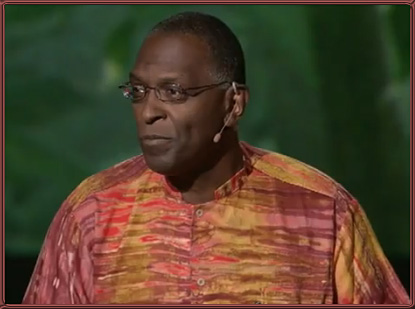
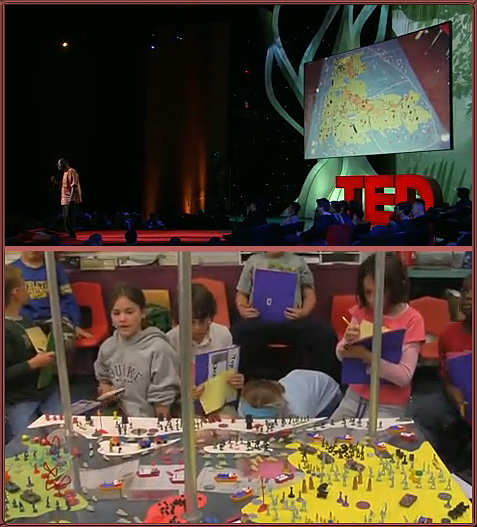
John Hunter on the World Peace Game — TED March 2011 — my thanks to Mr. Joseph and Mrs. Kate Byerwalter for this great presentation
About this talk
John Hunter puts all the problems of the world on a 4’x5′ plywood board — and lets his 4th-graders solve them. At TED2011, he explains how his World Peace Game engages schoolkids, and why the complex lessons it teaches — spontaneous, and always surprising — go further than classroom lectures can.
About John Hunter
Teacher and musician John Hunter is the inventor of the World Peace Game (and the star of the new doc “World Peace and Other 4th-Grade Achievements”).
From DSC:
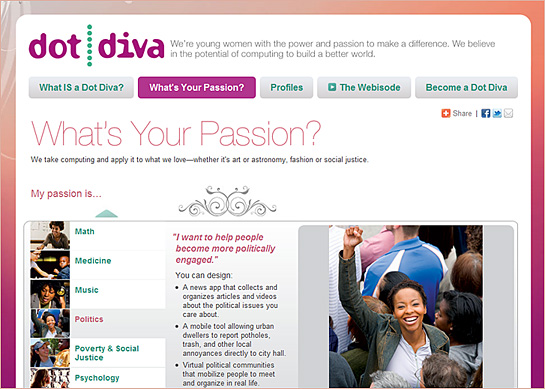
Here is an idea for a project-based learning assignment for Business, Economics, & Political Science Students/Faculty:
Your mission, if you decide to accept it, is to investigate and answer the following questions:
Find out. That’s your assignment. Then…
This tape will self-destruct in 30 seconds…
Why so few computer science majors? — from voices.washingtonpost.com by Jenna Johnson
The lives of college students revolve around technology — yet not enough are studying computer science to keep up with industry demand.
Computer science programs across the country are scrambling to change this, often by trying to make coursework more relevant to the lives of students. One example, which I wrote about in today’s paper, is a professor at Virginia Tech who helped his students create a mobile application that tracks city buses.
But why the lack of interest in CS in the first place?
Here are just a few reasons, according to several professors and others I interviewed for the piece. (I know there are additional reasons, so please share them with me in the comments section.)
Many don’t realize the world-changing potential of CS.
.
Also see:

.
Computer science courses use mobile apps to make coursework relevant — from The Washington Post
The Virginia Tech student’s concern about buses, Tilevich said, offered a chance to show students that coding can be relevant. By the end of the semester, the advanced software engineering class had partnered with the city transit system to obtain data from Global Positioning System devices on dozens of city buses. An algorithm soon was predicting arrival times and beaming the information to a prototype mobile application.
“Sometimes as faculty members, we have to step back. We have to let them run wild,” said Tilevich, a former professional clarinet player who blogs about his teaching experiments.
Originally saw this at GetIdeas.org

.
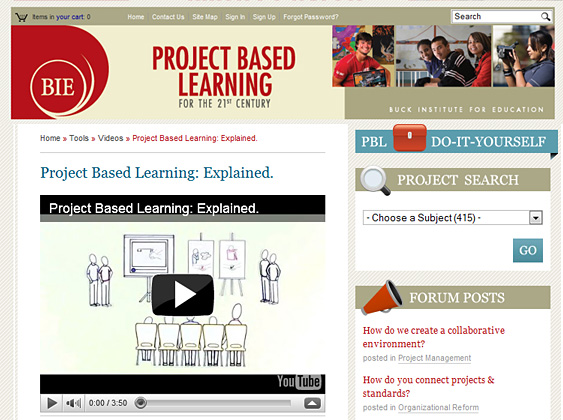
Also see this video on project-based learning:
.
— Originally saw this from Tim Hawkins, in Melbourne, Australia
From DSC:
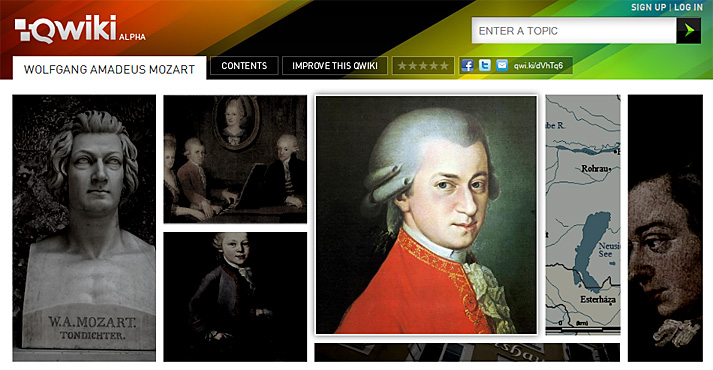
Not only is this a slick way to learn about a musician and about history…but it made me think…how about having students create something like this? Project-based learning with a great splash of creativity!
— apologies…I can’t recall where I first saw this.
and
What if kids designed their learning? Here are some resources to get started. — from the Innovative Educator
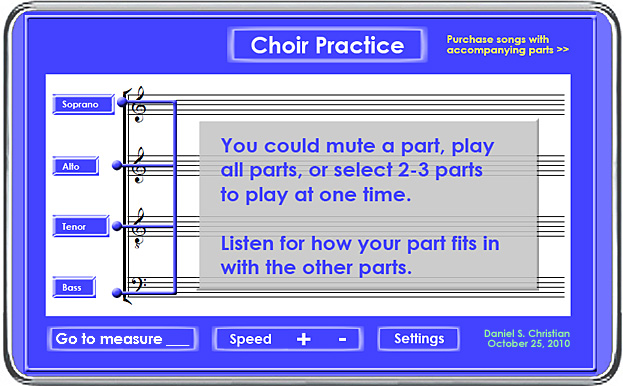
.
Concept, graphics, idea from Daniel S. Christian:
But free for your taking and implementing!
.
What:
Features
Why:
Have fun whomever takes this idea and runs with it! The choirs of the world will appreciate you — and so will their audiences! 🙂
Along these lines…another win-win here includes:
Daniel Christian
U Michigan iPhone app grows from student project — from CampusTechnology.com by Dian Schaffhauser
An iPhone app conceived by two students at the University of Michigan in Ann Arbor, built as a computer science class project, and purchased by the school’s IT organization has made its public debut in the Apple iTunes store. Formerly named iWolverine, now called “University of Michigan,” the app allows users to track buses in real time through the popular Magic Bus Web application, listen to the school’s fight song, check dining hall menus, and search for buildings, among other features.
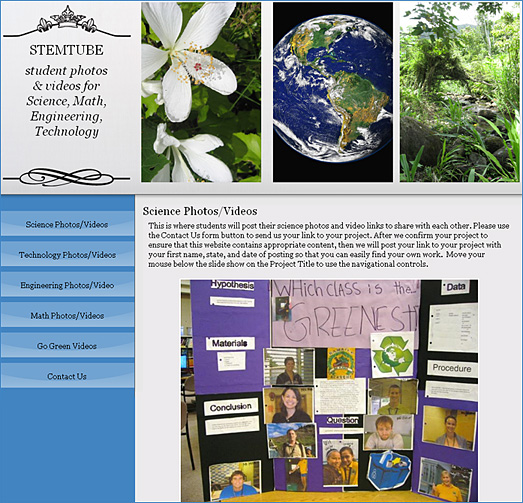
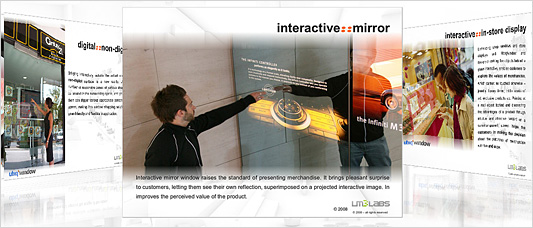
What sorts of cross-disciplinary assignments come to mind when you view these items?
For these and other reasons, I’m trying to get a multi-touch wall built into our future smart classrooms.
Talk about keeping students engaged! Talk about working together in teams — very real-world!