Per this week’s Lecture Breakers Weekly! from Dr. Barbi Honeycutt:
Break up your online lectures with the Watch Party! Here’s how you can do it:
Pre-record your mini-lecture or find a video you want to use for your lesson.
Instead of asking students to watch the video on their own, play it during your synchronous/live class time.
Explain to your students that they are watching the video all at the same time and that you will be facilitating the chat and answering their questions as they watch the video together. It’s a watch party!
Option: Take the conversation out of Zoom or your LMS. Create a hashtag for your course on Twitter and invite other experts, colleagues, or friends to join the conversation.
Instead of presenting during the synchronous class time, you can now focus completely on managing the chat, prompting discussion, and responding to students’ questions and ideas in real-time. And be sure to record and save the chat for students who couldn’t attend the live session or want to review it later.
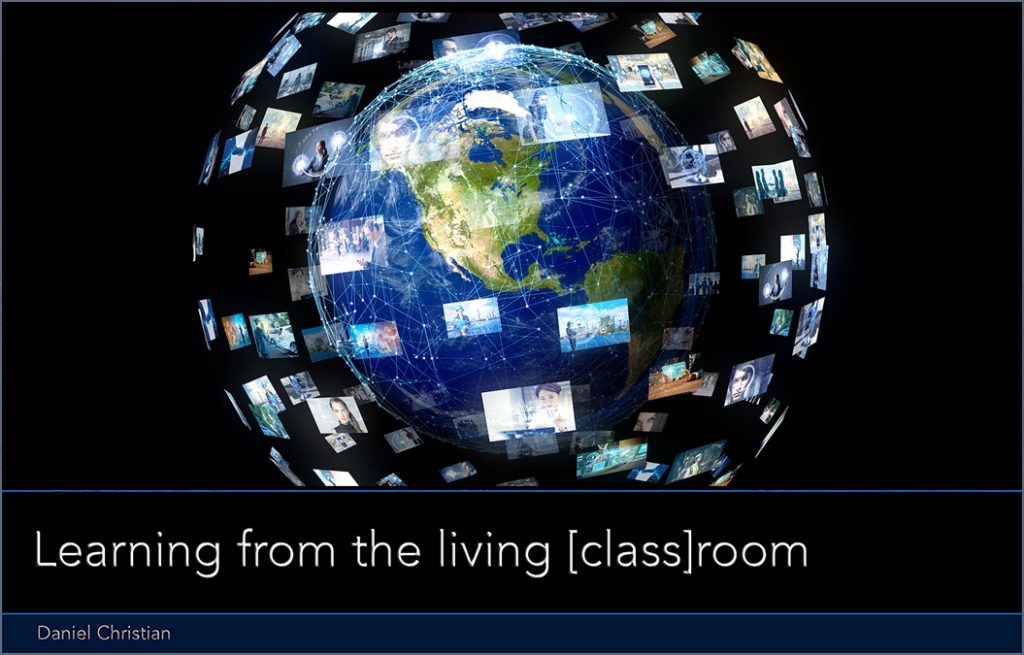
From DSC: This is one of the kind of things that I envisioned with Learning from the living class[room] — a next-generation, global learning platform.
Learners could be watching a presentation/presenter, but communicating in real-time with other learners. Perhaps it will be a tvOS-based app or something similar. But TV as we know it is changing, right? It continues to become more interactive and on-demand all the time. Add videoconferencing apps like Zoom, Cisco Webex Meetings, Blackboard Collaborate, Microsoft Teams, Adobe Connect and others, and you have real-time, continuous, lifelong, relevant/timely, affordable, accessible, up-to-date learning.
From DSC: The perfect storm continues to build against traditional institutions of higher education. The backlash continues to build strength. And there WILL BE change — there’s no choice now. Alternatives to these traditional institutions of higher education continue to appear on the scene.
Over the last several decades, traditional institutions of higher education had the chance to step in and do something. They didn’t take nearly enough action. As in other industries, these days of the Coronavirus just hasten the changes that were already afoot.
Also see:
Alternative Credentials on the Rise — from insidehighered.com by Paul Fain, with thanks to Ryan Craig for this resource Interest is growing in short-term, online credentials amid the pandemic. Will they become viable alternative pathways to well-paying jobs?
Current and former Google employees are forming an online program aimed at preparing students for the workforce if they’re taking time off school due to the coronavirus pandemic.
It comes as many college students defer school as universities shift learning models to mostly online amid the Covid-19 pandemic.
Google execs past and present have volunteered to mentor college students on topics ranging from career trajectory to how to stand out in virtual Zoom interviews.
Along these lines, see:
Google has a plan to disrupt the college degree— from inc.com by Justin Bariso Google’s new certificate program takes only six months to complete, and will be a fraction of the cost of college. Excerpt:
Google recently made a huge announcement that could change the future of work and higher education: It’s launching a selection of professional courses that teach candidates how to perform in-demand jobs. These courses, which the company is calling Google Career Certificates, teach foundational skills that can help job-seekers immediately find employment. However, instead of taking years to finish like a traditional university degree, these courses are designed to be completed in about six months.
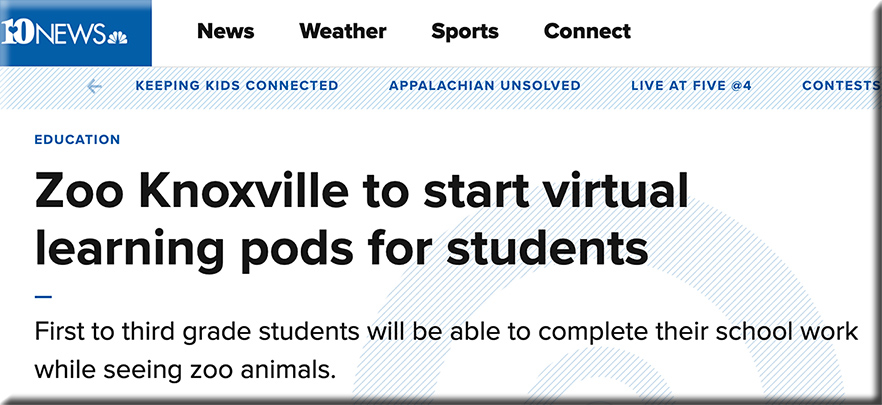
From DSC: Also, to see some more changes to the learning ecosystems out there, set up a Google Alert (or something similar in Feedly or via another tool) for “Learning Pods,” “Pandemic Pods,” and/or the “growth of homeschooling.” Here’s but one recent example:
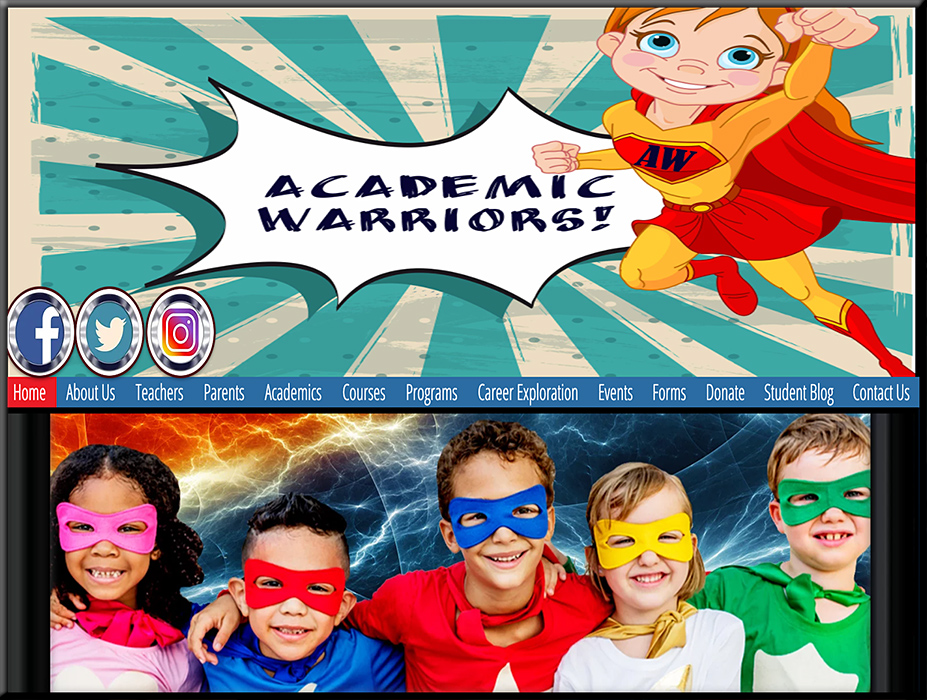
Life can be very hard for autistic, gifted and special needs learners. Autistic and gifted learners often times struggle in school because they learn very differently than their peers. These special learners need a personalized approach to their education that allows them to learn in their own way at their own pace.
Many times parents and students feel as if they are the only ones like them in the world. This can often times lead to isolation and frustration. It is important for all autistic, gifted and special needs to unite in order to support one another. We are named Academic Warriors because all our students are superheroes in a world that doesn’t always understand and/or appreciate them. We help our students to become strong, independent and positive learners despite what the world may think of them.
It is the mission of Academic Warriors to help create positive learning experiences and communities throughout the United States for autistic, gifted and special needs learners. We offer online courses, programs, private school and in person events that foster an unique learning environment that promotes unity among all our students and families. We strive to create online and in person learning communities in every state that will provide educational opportunities for all families of autistic, gifted and special needs students. Together we can create a better world for the autistic, gifted and special needs learner.
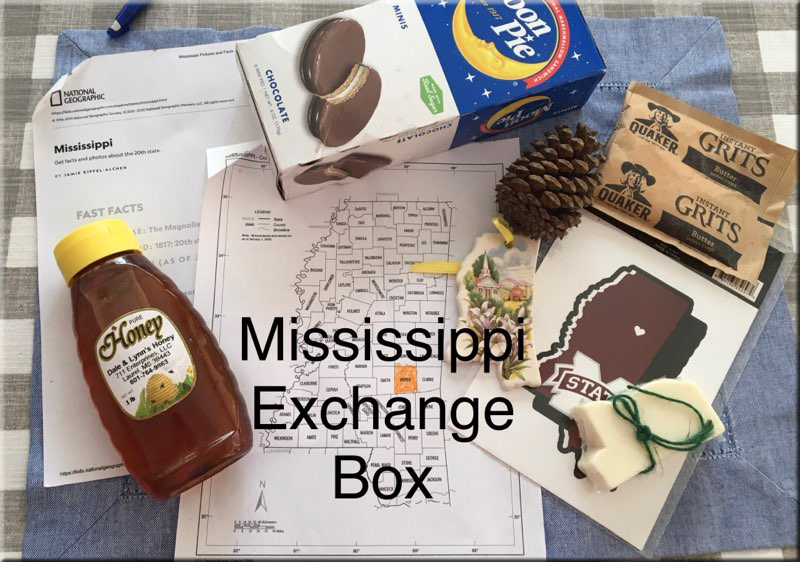
From DSC: As part of a homeschooling-based situation, my wife received the following item for one of our daughters (who needs additional/personalized assistance to learn). Simultaneously, she and our daughter sent them a Michigan Exchange Box. Very cool.
I believe my wife found this out at the following group in Facebook:
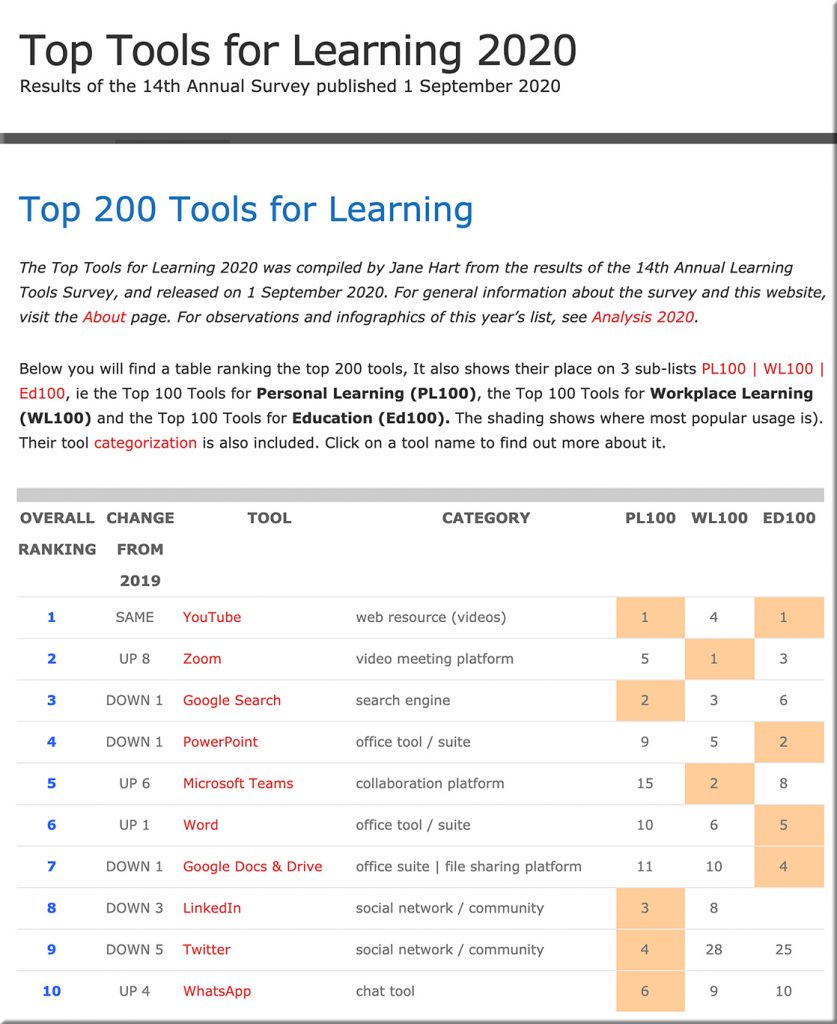
Some channels out on Youtube that have to do with learning: (and by the way, according to Jane Hart’s recent Top 200 Tools for Learning, YouTube is in the #1 spot for the 5th year in a row!)
“Horse Sense Tutoring Services is a unique resource that combines the power of Equine Assisted Learning with evidence-based reading and math strategies that engage the mind, body, and emotions in learning.We use the principles of discovery, experience, movement, reflection, and connection in partnership with our horse friends.
…
Based at The Barn for Equine Learning…my program offers targeted reading, math, and basic horsemanship tutoring for students in grades K – 8. Horses become teaching and learning partners as students experience academics and social-emotional learning in a whole new way.
If you are looking for a unique tutoring and confidence-building experience for your child, PM for more information.Sessions are held outdoors and/or in an open barn setting.
(Small group field trips with an introduction to basic horsemanship skills are also available).
From DSC:
So these are just a few examples of how the learning ecosystems are changing out there! Surely, there will be more changes coming down the pike.
8 innovative virtual learning design tips to engage your remote teams — from elearningindustry.com by Shannon Hart Virtual learning is an essential component in the Learning and Development toolkit, and it is widely used for training and educational purposes. It is not, however, always high quality or effective. Here are some design tips from the instructional and visual perspectives to give your virtual learning a real boost.
Excerpt:
With more employees working remotely than ever before, it is crucial that we create learning assets that really engage. Let’s talk about two aspects of design that are equally important if you want to provide virtual learning that really gets results—Instructional Design and visual design.
From DSC: Notice the variety of necessary skillsets involved in Shannon’s article! This is one of the reasons I’m for the use of team-basedcontent creation and delivery.
17 This is what the Lord says— your Redeemer, the Holy One of Israel: “I am the Lord your God, who teaches you what is best for you, who directs you in the way you should go.
A demonstration of Spaces’ latest tech shows a cartoony teacher offering whiteboard presentations with accompanying lip and body synchronization — a gentle evolution of existing VR avatar technology. You could easily imagine the 3D model replaced with one of Apple’s current Memoji avatars, enabling an iPad- or iPhone-toting teacher to offer a presentation to a virtual class over Zoom.
Heading into a fall in which the pandemic shows no signs of abating, we asked administrators, professors, grad students, and university staff to peer around the corner and speculate about how the coronavirus will change the academic work force. What has the pandemic revealed about the campus workplace — and how will that change it going forward? What jobs will be most in demand? Which roles are most imperiled? What sort of shared governance will survive the pandemic? When this is all over, what should the composition of university work forces look like?
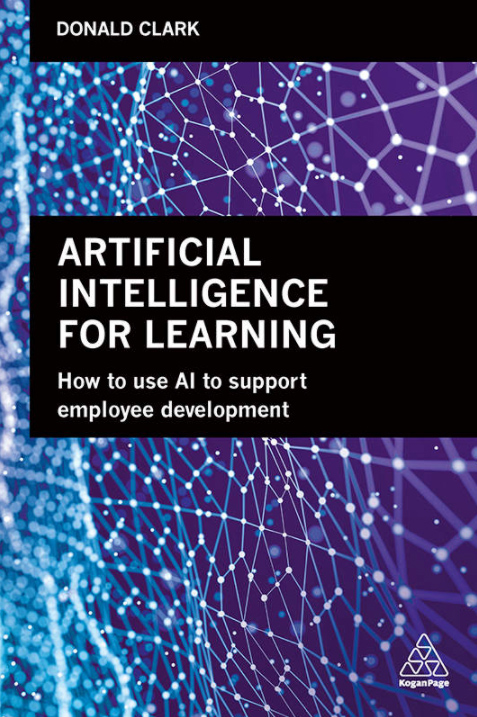
AI changes everything. It changes how we work, shop, travel, entertain ourselves, socialize, deal with finance and healthcare. When online, AI mediates almost everything – Google, Google Scholar, YouTube, Facebook, Twitter, Instagram, TikTok, Amazon, Netflix. It would be bizarre to imagine that AI will have no role to play in learning – it already has.
Both informally and formally, AI is now embedded in many of the tools real learners use for online learning – we search for knowledge using AI (Google, Google Scholar), we search for practical knowledge using AI (YouTube), Duolingo for languages, and CPD is becoming common on social media, almost all mediated by AI. It is everywhere, just largely invisible. This book is partly about the role of AI in informal learning but it is largely about its existing and potential role in formal learning – in schools, Universities and the workplace. AI changes the world, so it changes why we learn, what we learn and how we learn.
Also see:
Abandon lectures: increase attendance, attitudes and attainment— from donaldclarkplanb.blogspot.com by Donald Clark Excerpt:
The groups were taught a module in a physics course, in three one hour sessions in one week. In short; attendance increased, measured attitudes were better (students enjoyed the experience (90%) and thought that the whole course would be better if taught this way (77%)). More importantly students in the experimental group outperformed the control group, doing more than twice as well in assessment than the control group.
The Top Tools for Learning 2020 was compiled by Jane Hart from the results of the 14th Annual Learning Tools Survey, and released on 1 September 2020. For general information about the survey and this website, visit the About page. For observations and infographics of this year’s list, see Analysis 2020.
As I reflected, it occurred to me that what the Torah is doing is what, in education, we might call spiraling. Spiraling is the notion that a student learns more about a topic each time she revisits it and thus expands her knowledge or improves her skill level. When you spiral, you intentionally spread the learning out over time, rather than only concentrate it in certain periods.
Broadly speaking, what Judaism recognizes is a fundamental truth—that teaching is not the same thing as learning. We don’t learn when someone is ready to teach it to us, but when we as individuals are ready to learn. You can’t make someone learn who isn’t ready for it.
Thanks for dropping by my Learning Ecosystems blog!
My name is Daniel Christian and this blog seeks to cover the teaching and learning environments within the K-12 (including homeschooling, learning pods/micro-schools), collegiate, and corporate training spaces -- whether those environments be face-to-face, blended, hyflex, or 100% online.
Just as the organizations that we work for have their own learning ecosystems, each of us has our own learning ecosystem. We need to be very intentional about enhancing those learning ecosystems -- as we all need to be lifelong learners in order to remain marketable and employed. It's no longer about running sprints (i.e., getting a 4-year degree or going to a vocational school and then calling it quits), but rather, we are all running marathons now (i.e., we are into lifelong learning these days).