For New Orleans–based firm, architecture is a tool for design justice — from autodesk.com by Redshift Video

Excerpt:

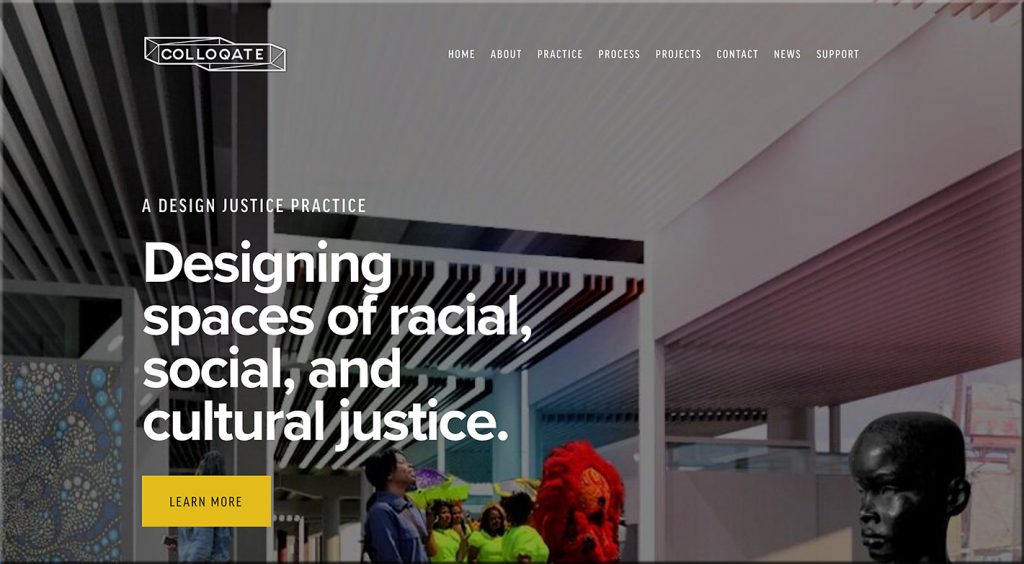
When Bryan C. Lee Jr. was a boy, his family moved from Sicily to Trenton, NJ, and he was struck by not only the vastly different physical environment but also the ways different physical spaces affect people. It’s a concept that he explores today at Colloqate Design, an architecture and design-justice firm that focuses on civic, communal, and cultural spaces through the lens of racial justice.


Teaching in a Hybrid Classroom – What’s Working, What’s Not — from derekbruff.org by Derek Bruff

Excerpt:

Now that we’re a few weeks into the semester, I wanted to know what was working and what was a continuing challenge for instructors, so I convened a conversation on teaching earlier this week attended by 18 of my faculty colleagues representing a range of disciplines. They were excited to be back in the classroom this fall. “There’s a different energy when we’re face-to-face,” one of them said. We had a lively discussion via Zoom about hybrid teaching, including what made it exciting and what made it frustrating, and I wanted to share a few highlights here on the blog.

I waited a minute or two while the participants thought and typed, and when it was clear that most of the participants were no longer typing, I said, “Ready, set, go!” Everyone hit enter, and a slew of responses appeared in the chat at the same time. At this point, we all spent a couple of minutes reading through the responses. I selected a couple that were particularly interesting and called on those participants to elaborate via video.

Also see:

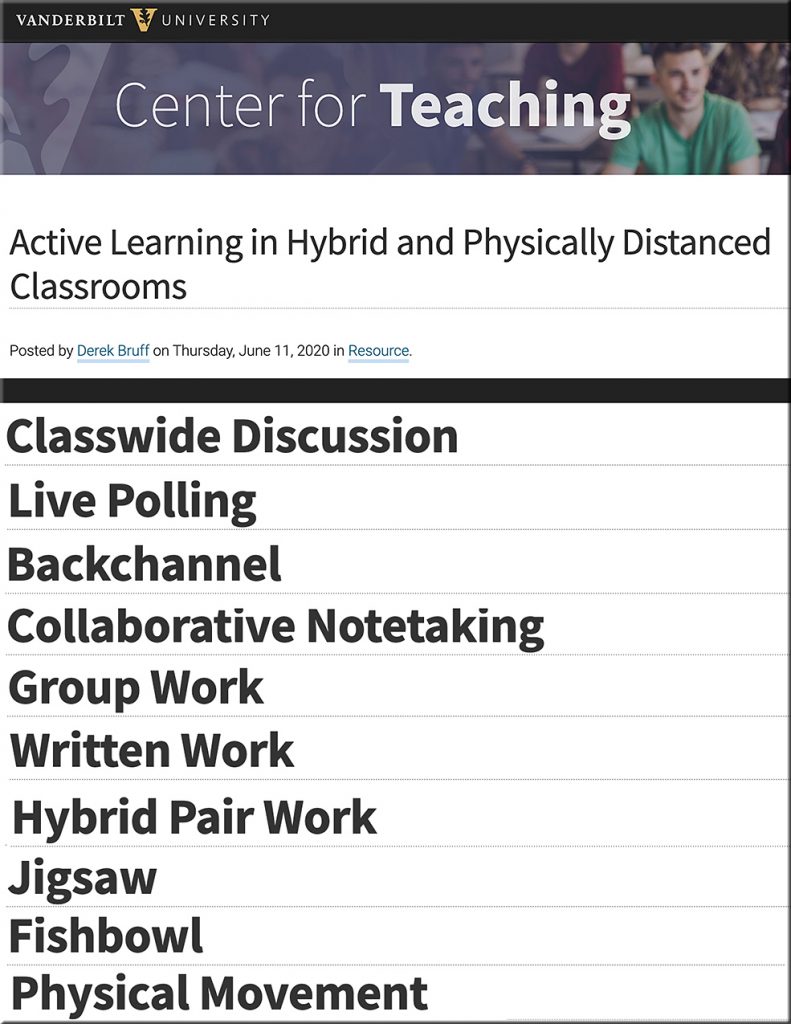
Active Learning in Hybrid and Physically Distanced Classrooms — from cft.vanderbilt.edu by Derek Bruff


If I’m standing at the front of the classroom with half or a third of my students in the room with me, but sitting six feet apart from each other and wearing masks, while the rest of my students are joining class by videoconference, what strategies might I employ to engage all of my students in meaningful learning?

I’m going to try to outline some options here in this blog post, drawing on ideas and resources from across the higher education community, but I would enthusiastically welcome additional approaches in the comments below or via Hypothesis annotations.

Derek Bruff


Walmart just started delivering stuff with drones — from futurism.com by Victor Tangermann

Excerpt:

Walmart just kicked off its own drone delivery pilot, a collaboration with drone delivery company Flytrex. The pilot launched today in Fayetteville, North Carolina, and is limited to select grocery and household essential items from the retailer’s local stores.
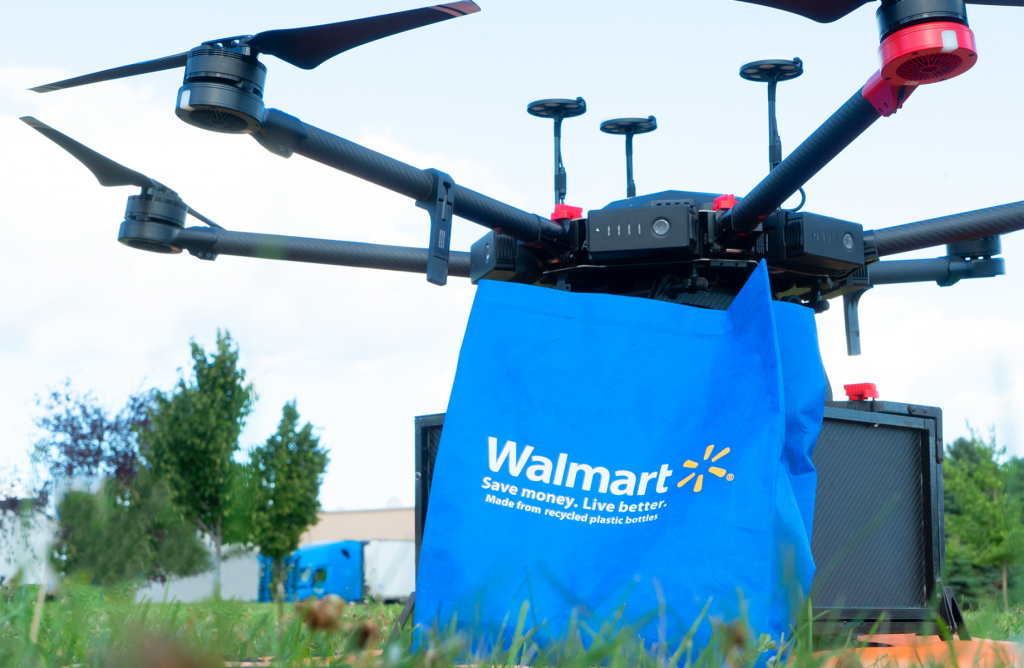
 

Let's keep the drone armies out of the skies please.

From DSC:
It starts off with an army of drones from Walmart joined by another army of drones from Amazon.
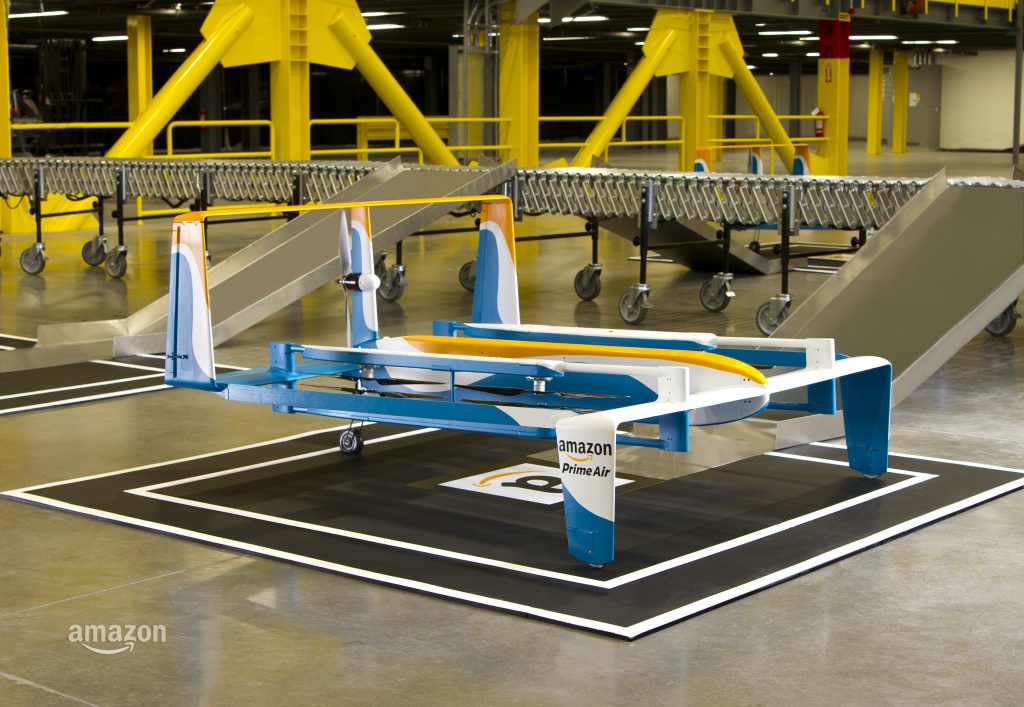
Drones from Amazon Prime. Let's keep them out of the skies please.


Then company XYZ chimes in. Then company ABC chimes in. And so on, and so on, and so on.

Then the armies of drones change to more powerful, louder, more “capable” delivery vehicles that can handle bigger, heavier deliveries.

And suddenly, the skies are full of noise-making, sun-blocking pieces of human-made machinery that, for the most part, are convenient but not necessary. 

We need to think — and act — very carefully these days.

  • What kind of future do we want to hand down to our children and to our grandchildren?
  • What will the skies look and sound like in 2030 if such armies of drones and other types of airborne delivery vehicles are released?
  • Are we willing to say that our kids won’t mind paying the price?

Is this the future we want to create? Not me. I, for one, appreciate a quiet walk. I appreciate being able to look up at the skies, especially when they are clear. 

We have a responsibility to keep things this way.

To the relevant engineers and C-Suites out there:

  • Just because we can, doesn’t mean we should.
  • Please take more responsibility for what’s being developed/brought to market.

Let’s shut this down — now — before the momentum gets started. Let’s follow Portland’s example by shutting down facial recognition/AI:

  • Portland adopts landmark facial recognition ordinances — from thehill.com by Chris Mills Rodrigo
    Excerpt:
    “What makes Portland’s legislation stand out from other cities is that we’re prohibiting facial recognition technology use by private entities in public accommodations,” Mayor Ted Wheeler (D) said during Wednesday’s deliberations. “This is the first of its kind of legislation in the nation,” he added.
  • Why Amazon tried to thwart Portland’s historic facial recognition ban — from salon.com by Matt Rozsa
    Amazon reportedly lobbied in secret to weaken Portland’s ban on private use of facial recognition technology


Also see:


Today’s awkward Zoom classes could bring a new era of higher education — from edsurge.com by Debra Spar

Excerpt:

Indeed, the forced march to Zoom has also forced colleges and universities to wrestle at last with the incipient promise of educational technologies; with the power that was evident, if not yet realized, in the early MOOCs. Much of that power has to do with scale–the ability to take a single course, even a single lecture, and share it across a vast universe of learners. But some also comes from the strange intimacy of the small screen, and from the possibilities of collapsing both time and space.

Office hours, for instance, migrate easily. Bringing in guest speakers works remarkably well, allowing faculty to introduce a wide range of voices into their classroom conversations. On the screen, everyone can see and hear and participate. 


Learning from the Living [Class] Room


Even to your old age and gray hairs
    I am he, I am he who will sustain you.
I have made you and I will carry you;
    I will sustain you and I will rescue you.


From DSC:
Yet another example of the changes occurring in the learning ecosystems out there.

COVID-19 Fuels Big Enrollment Increases in Virtual Schools — from edweek.org by Mark Lieberman

Excerpt:

Florida Virtual School’s enrollment is up 54 percent year over year for its individual online course offerings and 64 percent for full-time programs. Public schools’ online programs managed by the for-profit provider K12 Inc. have grown from 122,000 enrollments in fall 2019 to 170,000 a year later. Applications to Connections Academy, a virtual school provider owned by Pearson, are up 61 percent.

The Pennsylvania Cyber Charter School filled up months before it usually starts receiving the bulk of new applicants. An Oklahoma virtual charter school earlier this summer was enrolling 1,000 students a day. Enrollment in virtual schools is also up in ConnecticutOhio, and Wisconsin.


From DSC:
For those folks looking for work, the article below relays some solid advice/tips to get you past the Applicant Tracking Systems out there. The last time I was searching for a position, I had no idea how prevalent these systems are out there. To quote from the article:

Because of the sheer volume, 99 percent of Fortune 500 companies use an Applicant Tracking System (ATS) to manage each step of the hiring process. 

If you haven’t looked for a job in a while, this will blow you away. To get your resume in front of an actual human being is a major accomplishment.

5 secrets to get you past the résumé-reading robots — from fastcompany.com by
Before your résumé gets to a recruiter, it’s read by an AI-driven Applicant Tracking System. A human resources exec advises how you can beat the robot.


From DSC:
…and by the way, this is very much relevant for faculty members and staff members out there. Consider this quote from Debora Spar, senior associate dean of Harvard Business School Online:

Many colleges and universities will suffer extreme financial stress; some – up to 345 colleges, according to one recent estimate – could be forced to close. Faculty are likely to face layoffs unprecedented in the history of U.S. higher education.


The Fastest, Most Scalable Path to Work-Readiness for College Students — from evolllution.com by Brandon Busteed

Excerpts:

A credegree is a portmanteau of the words credential and degree. Its purpose is simple and clear: to enable students to graduate with both a bachelor’s degree and a highly valued industry-recognized credential.

To be both broadly educated and specifically skilled is a graduate’s ideal outcome.


Rocket Lawyer to Join Utah’s Legal Services Provider ‘Sandbox’ — from news.bloomberglaw.com by Sam Skolnik

Excerpt:

Rocket Lawyer is the first big-name legal services provider to announce that it’s taking part in a Utah pilot program aimed at broadening the state’s legal industry landscape and making services more affordable and accessible.

Several other consumer-facing legal providers also will be joining the regulatory “sandbox” program, approved last month by the state supreme court. It will be run by the court’s new Office of Legal Services Innovation.


From DSC:
Are Economics classes across the United States talking about our current situation? It seems to me that this kind of discussion would be so important, relevant, and thought-provoking. Economics is a complex subject. I know I would have appreciated learning more about the complexities, the pieces, the ingredients, the interrelationships of things in my college years. Seems like there are some solid topics for discussion board postings in here…

ECONOMY
Worries grow over a K-shaped economic recovery that favors the wealthy — from cnbc.com

KEY POINTS
  • As the economy struggles to shake off the pandemic effects, worries are growing that the recovery could look like a K.
  • That would be one where growth continues but is uneven, split between sectors and income groups.
  • One obvious area of concern is the dichotomy of the stock market vs the real economy, especially considering that 52% of the market is owned by the top 1% of earners.
  • “Let’s not get lost on different letters of the alphabet,” Treasury Secretary Steven Mnuchin said. “There are certainly parts of the economy that need more work.”
 

What parents of special needs children should know about the school year — from mlive.com by Martin Slagter

Excerpts:

Embarking on a new school year can be daunting if you’re the parent of a child with special needs, even under normal circumstances.

But navigating a child’s Individualized Education Program or 504 Plan while he or she begins the year with remote learning, as many are doing this year due to the coronavirus pandemic, can add multiple layers of stress, education experts say.

This makes a parents’ understanding of their child’s learning experience more important now than ever, the experts say.

“Many students did not receive services and supports that were outlined in their IEPs (including) services related to specially designed instruction, speech and language, social work, occupational therapy and physical therapy. Now we enter the next school year with a high level of uncertainty.”


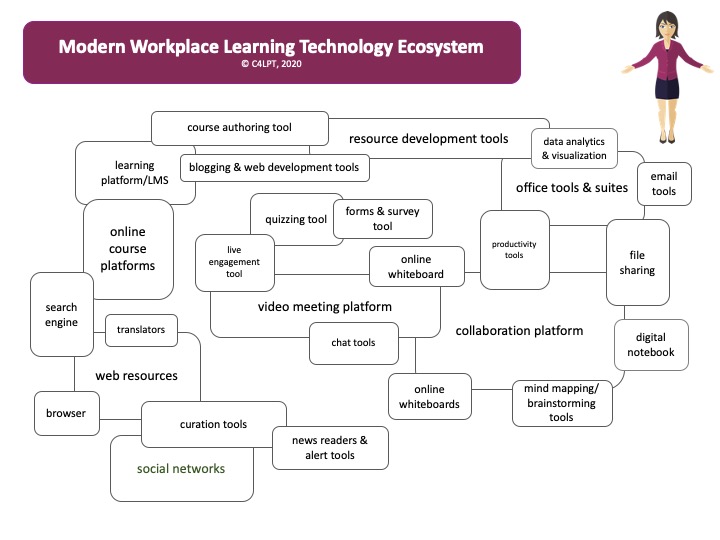
Thanks to Jane Hart for the below diagram of a learning technology ecosystem! This diagram is accessible out at Jane’s recent posting entitled, “Back to Basics: 10 lessons for virtual L&D for 2021.


From DSC:
Notice how these tools, vendors, business relationships, etc. can — and do — morph over time. It’s not a static system…but an ever-changing system.

 
© 2025 | Daniel Christian