‘He will wipe every tear from their eyes.
There will be no more death’
[a] or mourning or crying or pain,
for the old order of things has passed away.”

He who was seated on the throne said,
“I am making everything new!”
 Then he said,
“Write this down, for these words are trustworthy and true.” 

From DSC:
Our dad, in his younger days, used to sing a song with Revelation Verse 21:4 in it. It was a beautiful piece that he had recorded years ago. That recording recently resurfaced, and our family is glad that we located it again. (Our dad sang quite a bit throughout his lifetime, and still likes to recall/sing some tunes. He and our mom met in college, both studying within the School of Music.)
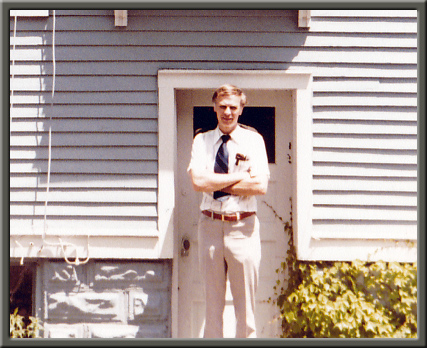
Music was a big part of our family -- my dad used to sing quite a bit. He had a beautiful voice!


Anyway, that song will likely be played at one or more of the funerals within our family in the near future. Any day now we could get “that call.” Or, if we’re lucky enough, we’ll be able to be present with him when he passes away (though Covid19 is making that very difficult these days). 

Add to these experiences the recent loss of a dear, lifelong friend to cancer — and I’ve once again been reminded of the brevity of our lives. These reflections bring a couple more verses to my mind…


From DSC:

If you doubt that last sentiment/lesson, watch a different version of this song, from a present-day recording.
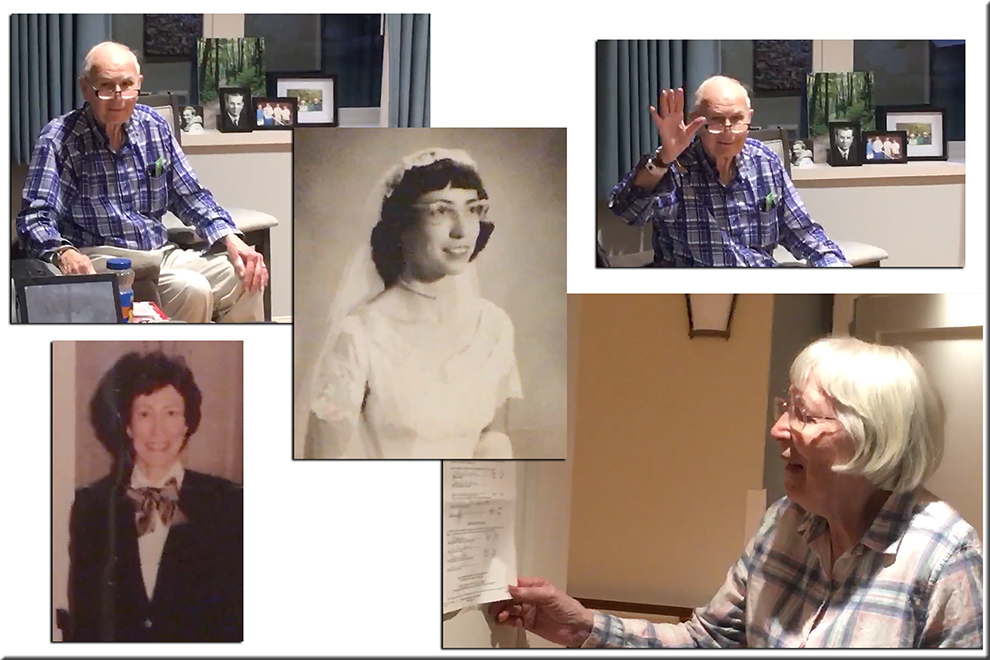
Our lives move quickly. Carpe Diem!


Time flies. So as our mom would say, “Carpe Diem!”
(i.e., “Seize the day!”)
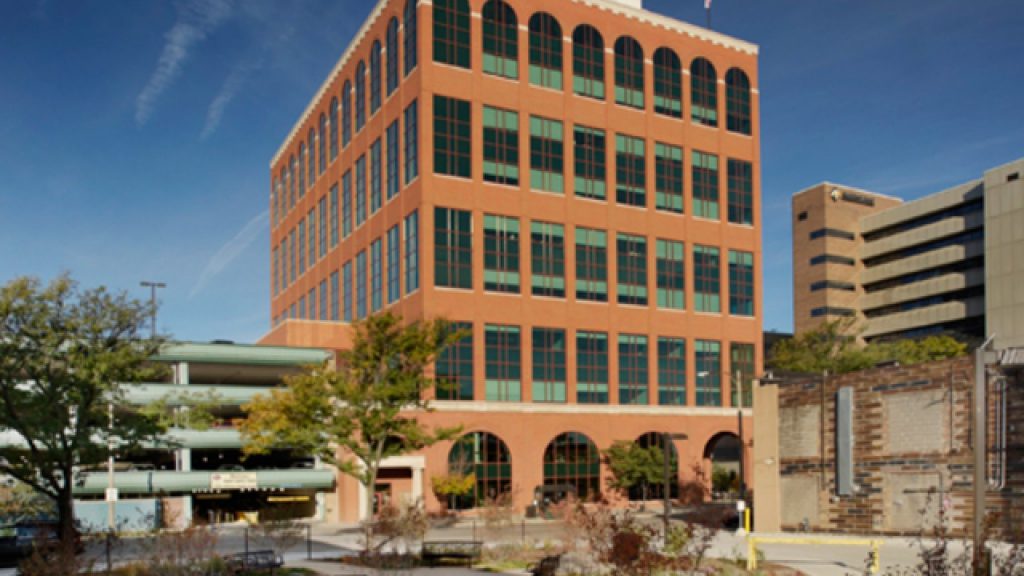
 

Digital transformation: 5 ways the pandemic forced change — from enterprisersproject.com by Gordon Haff
The pandemic has reshaped consumer behavior and team expectations. At a recent MIT Sloan CIO Symposium event, CIOs detailed what it means for organizations, IT, and the CIO role

Excerpt:

The new CIO role: Chief Influencing Officer
Zemmel says that the evolution of the role of the CIO has been accelerated as well. He sees CIOs increasingly reporting to the CEO because they increasingly have a dual mandate. In addition to their historical operational role running the IT department, they now are also customer-facing and driving revenue. That mandate is not new for forward-looking IT organizations, but the pandemic has made other organizations hyper-aware of IT’s role in driving change quickly. CIOs are becoming a sort of “chief influencing officer who is breaking down silos and driving adoption of digital products,” Zemmel adds.

Experian’s Libenson puts it this way: “The pandemic has forced us to be closer to the business than before. We had a seat at the table before. But I think we will be a better organization after this.”


WMU-Cooley Named Top 10 Law School For Ethnic Enrollment in 2019 — from fox47news.com

Excerpt:

LANSING, Mich. — Western Michigan University Cooley Law School, with campuses in Michigan and Florida, was named a top 10 law school for racial and ethnic minority enrollment in 2019 by Enjuris, a collection of independent legal resources for legal professionals.

With Black students comprising 22.4 percent of WMU-Cooley’s total student enrollment in 2019, the law school is ranked in Enjuris’ recently released, Law School Enrollment by Race & Ethnicity (2019) [enjuris.com] report.

WMU-Cooley Named Top 10 Law School For Ethnic Enrollment in 2019


Will Pandemic Disruption Drive More Legal Operations Transformation? — from prnewswire.com
Deloitte Releases 2020 Legal Operations Survey

Excerpt:

NEW YORKSept. 21, 2020 /PRNewswire/ — While 86% of in-house counsel surveyed said they see opportunity to modernize legal services provided to their stakeholders, Deloitte’s “2020 Legal Operations Survey” found that challenges remain. Respondents described their corporate legal departments’ maturity level for technology as just “foundational.”

Ashley SmithDeloitte Risk & Financial Advisory managing director, Deloitte Transactions and Business Analytics LLP said, “Organizations everywhere have undergone massive change as a result of the COVID-19 pandemic and related economic uncertainties. As business strategies shift and the corporate legal department is called on to do more to help organizations navigate through disruption, focusing on legal operations transformation could help in-house counsel and their teams to evolve beyond heavy manual, tactical work – into leveraging technology to offer more strategic insights and value.”

Also see:

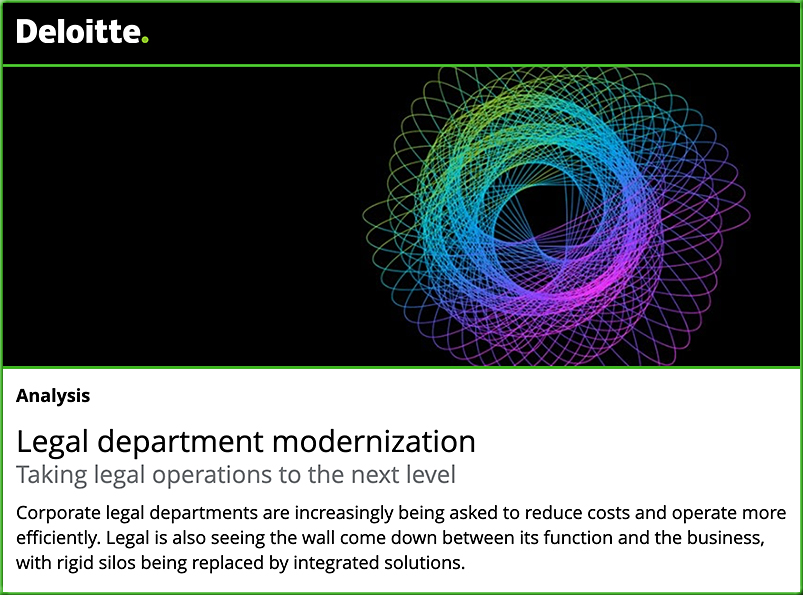
Deloitte's 2020 Legal Operations Survey


Justice Ruth Bader Ginsburg, Champion Of Gender Equality, Dies At 87  — from npr.org
by Nina Totenberg

Excerpt:

“Our nation has lost a justice of historic stature,” Chief Justice John Roberts said. “We at the Supreme Court have lost a cherished colleague. Today we mourn but with confidence that future generations will remember Ruth Bader Ginsburg as we knew her, a tireless and resolute champion of justice.”

Architect of the legal fight for women’s rights in the 1970s, Ginsburg subsequently served 27 years on the nation’s highest court, becoming its most prominent member.


RBG's Biggest Opinions, From Civil Rights To Civil Procedure

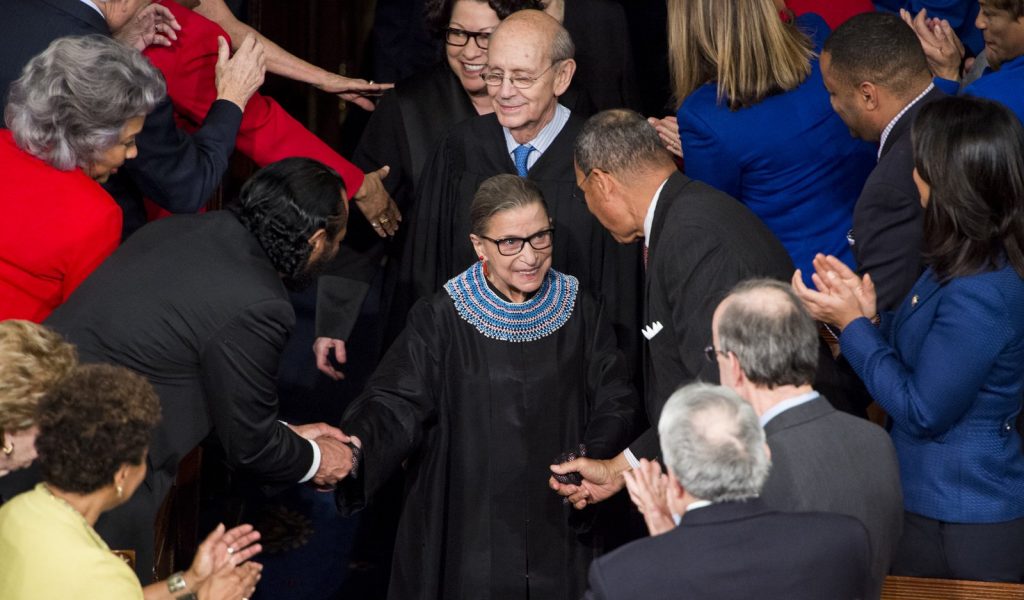
UNITED STATES – JANUARY 20: Supreme Court Justice Ruth Bader Ginsburg arrives for President Barack Obama’s State of the Union address in the Capitol on Tuesday, Jan. 20, 2015. (Photo By Bill Clark/CQ Roll Call)


RBG’s Biggest Opinions, From Civil Rights To Civil Procedure — from law360.com by Cara Bayles

Excerpt:

But from the early years of her tenure on the high court, the justice, who died Friday at age 87, wrote majority decisions that showed her breadth as a lawyer and a thoughtful scholar, who gently guided the reader to her conclusion using evidence and careful, persuasive argument.

“She strongly believed that if you disagree with people, you have to convince them with the strength of your position,” said Orrick Herrington & Sutcliffe LLP appellate attorney Tiffany Wright, who clerked for Justice Sonia Sotomayor. “Her majority opinions are less fiery, but very much RBG.”

But she was also “a lawyer’s lawyer — precise, analytical, and evenhanded,” according to Joseph Palmore, her former clerk and a former assistant to the solicitor general who now co-chairs Morrison & Foerster LLP’s appellate practice. She loved even the more granular rules of litigation.


Women Lawyers Share Lessons They Learned From Ruth Bader Ginsburg
— from abovethelaw.com by Staci Zaretsky
The Notorious RBG changed women’s lives and law practices across America.

Remembering Ruth Bader Ginsburg’s Early Career — from abovethelaw.com by Kathryn Rubino
Impressive, even from the start.


Inclusion in Law Firms Should Be About Everyone—Not Just Lawyers — from law.com by Jennifer Johnson
Too many firms leave nearly half of their employees out of diversity and inclusion efforts, only partially delivering on the the full commitment that clients expect.

Excerpt:

Unfortunately, most of these firms are focusing only on their lawyer population, leaving a major component of the diversity and inclusion (D&I) equation without consideration: the contributions of law firms’ business services professionals. These are professionals who are working within the business of a law firm that are not fee earners.

This is no small issue. Among larger firms, it is quite common for so-called “nonlawyers” to comprise as much as 50% of total head count. These business services professionals—members of legal operations, human resources, finance, information technology, marketing and administration functions—are critical to a law firm’s success, but far too often are not treated as valuable members of the larger team.


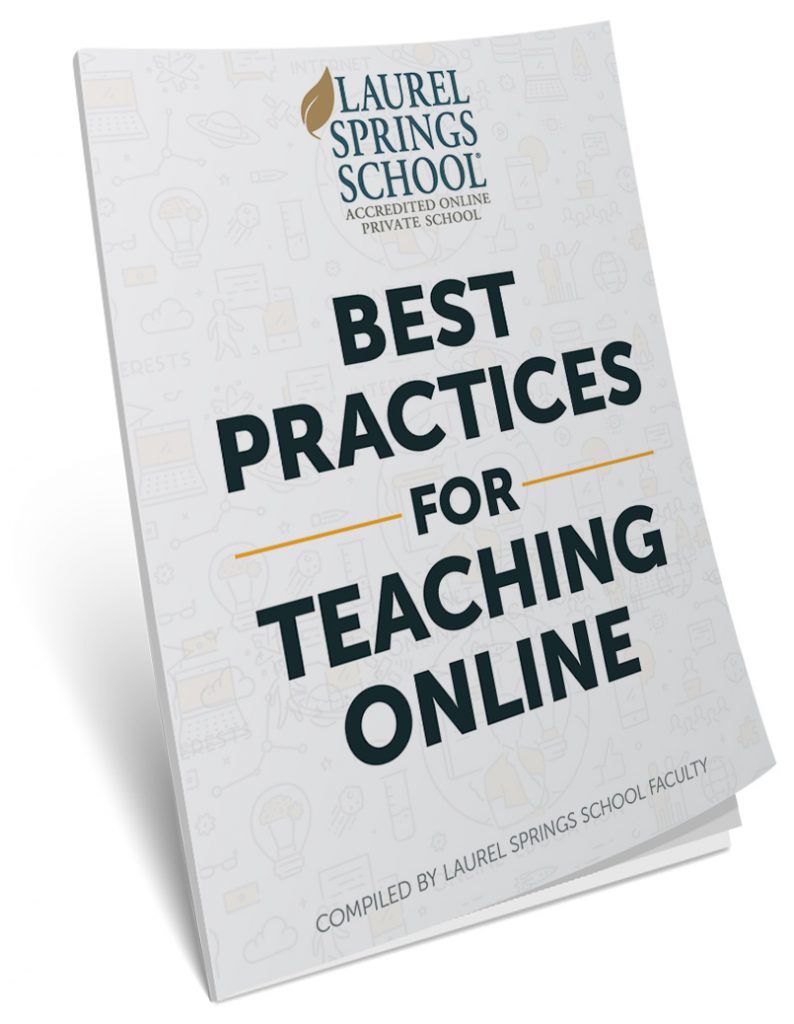
Best Practices for Teaching Online -- K12 -- Laurel Springs School

[K12] Best Practices for Teaching Online — from Laurel Springs School; with thanks to The Journal for their article on this entitled, “While Schools Go Online, Here’s How Teachers Can Turn Uncertainty Into Opportunity” by Megan O’Reilly Palevich

Excerpt:

As I was reflecting on the magnitude of what is happening in K-12 education, I wanted to figure out a way to help the teaching community. It dawned on me that Laurel Springs has just over 150 teachers and almost 30 years of distance learning experience as a school. So, I asked our expert teaching faculty—what are your best practices for teaching online? I was overwhelmed by the responses and goodwill from my team. I am excited to share with you a guide to help with working remotely, communicating with students and families, and the best tips and resources for lower, middle, and upper school.

I hope that you find this information useful and share it with your colleagues. Feel free to pass it on and share—we are all in this together. As a parent, teacher, and leader, I appreciate you and all of the wonderfully creative things you are doing to do what you do best: TEACHING.

Please feel free to contact me for any additional support!

Warmest regards,

Best Practices for Teaching Online -- from Laurel Springs School by Megan O'Reilly Palevich

PDF file here.


First time director, Lillian LaSalle’s award-winning, powerful documentary, MY NAME IS PEDRO, explores what public education meant to South Bronx Latino maverick educator, Pedro Santana, and what he, in turn, meant to public education. The film is also especially timely in this moment of national reckoning since the murder of George Floyd, subsequent protests and high attention being paid to public school parity.

Infectious in his optimism, Santana becomes one of the most influential public-school teachers and then administrators in the New York public school system after turning his troubled Bronx middle school, MS 391, around. He is unapologetic in his commitment to create change for kids, no matter the odds. When a glowing front-page New York Times article catapults him into the spotlight, he is recruited and then accepts a promotion to use his famed ‘out of the box’ and transformative practices to save a corrupt and divided suburban school district. But the political challenges there may simply be too great, even for the infallible Santana.

In order to continue his life’s mission that ‘every kid can learn’, (he himself was labeled ‘special ed’ as a child), he realizes that he must venture beyond not only the restrictive ‘four walls’ of the public education system, but also his own neighborhood, city and even his own country. 

MY NAME IS PEDRO is a profound story of how one person actualizes learning and positive change in children, adults, environments and communities through an ‘impact’ ripple effect strategy that he has effortlessly perfected. The film is also an essential and timely reminder of the importance of great educators that exist within the infrastructure of our country’s public education system. 

OFFICIAL SELECTION AND AWARDS:

Winner: Best Documentary, Golden Door International Film Festival
Winner: Spotlight on Documentary Award, St. Louis International Film Festival
Winner: Audience Award, Chicago Latino International Film Festival
Winner: Audience Award, Brooklyn Film Festival
Winner: Award of Merit, Impact Docs
Winner: Honorable Mention, Woodstock Film Festival
Official Selection: Women’s Filmmaker Showcase, BAFF
Official Selection: San Diego Latino International Film Festival

MY NAME IS PEDRO- Connect on Social Media:

Award-winning documentary MY NAME IS PEDRO opened [yesterday] in virtual theaters in NYC on September 17 (Maysles Cinema) and will open in the following cities soon: LOS ANGELES on October 2 (Laemmle) with major cities to follow (on October 9) including: Philadelphia (Film Society), Minneapolis (Parkway Theater), Buffalo (North Park), Baltimore (Senator, The Charles), Vancouver (Kiggins Theater), Tucson (Loft), Cleveland (Cleveland Cinemas), Phoenix (Film Bar), Bellingham (Pickford Center). Winston Salem (Aperture Cinema), Tampa (Tampa Theater) and more.


Per Emma Griffiths (EG-PR), if you go to the link below, you can watch this film virtually and buy a ticket by clicking on the Tickets button next to Maysles Cinema — New York, NY:


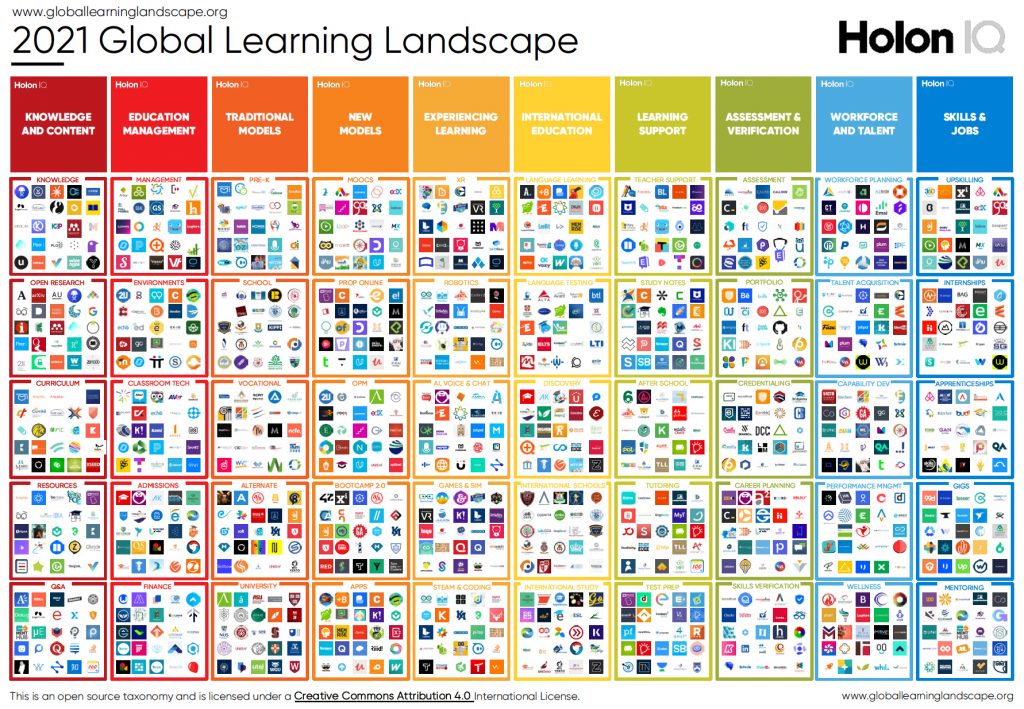
DC: You want to talk about learning ecosystems?!!? Check out the scopes included in this landscape from HolonIQ!

You want to talk about learning ecosystems?!!? Check this landscape out from HolonIQ!

Also see:

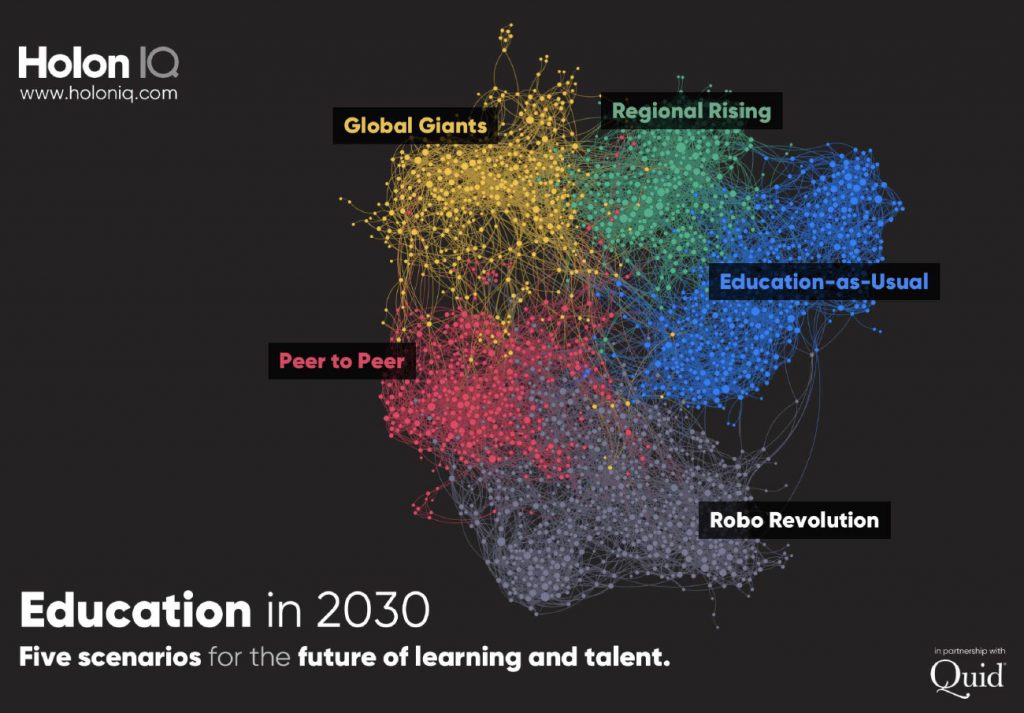
Education in 2030 -- a $10T market -- from HolonIQ.com

From DSC:
If this isn’t mind-blowing, I don’t know what is! Some serious morphing lies ahead of us!


The Edge: Let’s Give a Kiss Goodbye to These 10 Pandemic-Endangered Practices — from chronicle.com by Goldie Blumenstyk

Excerpt:

Goodbye to traditional class lectures, in-person faculty office hours, and the college visit. Likewise, how about a fond farewell to inflexible academic calendars, the face-to-face faculty meetings filled with pontification, and the place-based conferences — with all their exclusionary trappings.

Dozens of you responded to my question over the past two weeks about what higher-ed practices paused by the pandemic should never come back. Thank you! The suggestions I cited above, along with four others, are the ones that stood out to me because they point to a more efficient or engaging way to operate. Also, in many cases, the replacements and adjustments reflect a more equitable approach. Hmm. Did we really need a pandemic to see that?


steno dot com -- depositions from a distance -- new legal tech


Finally, brothers and sisters, whatever is true, whatever is noble, whatever is right, whatever is pure, whatever is lovely, whatever is admirable—if anything is excellent or praiseworthy—think about such things.


How to Securely Wipe Your Computer, Phone, or Tablet (September 10, 2020) — from legaltechmonitor.com by Jim Calloway

Excerpt:

Lawyers deal with confidential client information and we have a duty to secure that information. But it doesn’t matter who you are or how you use your technology. No one would want to donate, sell or give away a computer or phone without making certain your personal information is wiped. There is just too much information, like remembered passwords and saved text messages.

Today the respected tech website Wirecutter published an excellent guide How to Securely Wipe Your Computer, Phone, or Tablet.
You may want to bookmark this guide so you will have it handy when you need it.


From DSC:
I hesitate to post this one…but this information and the phenomenon behind it likely has impacted what’s happening in the higher education space. (Or perhaps, it’s a bit of the other way around as well.) Increasingly, higher ed is becoming out of reach for many families. Again, is this a topic for Econ classes out there? Or Poli Sci courses?


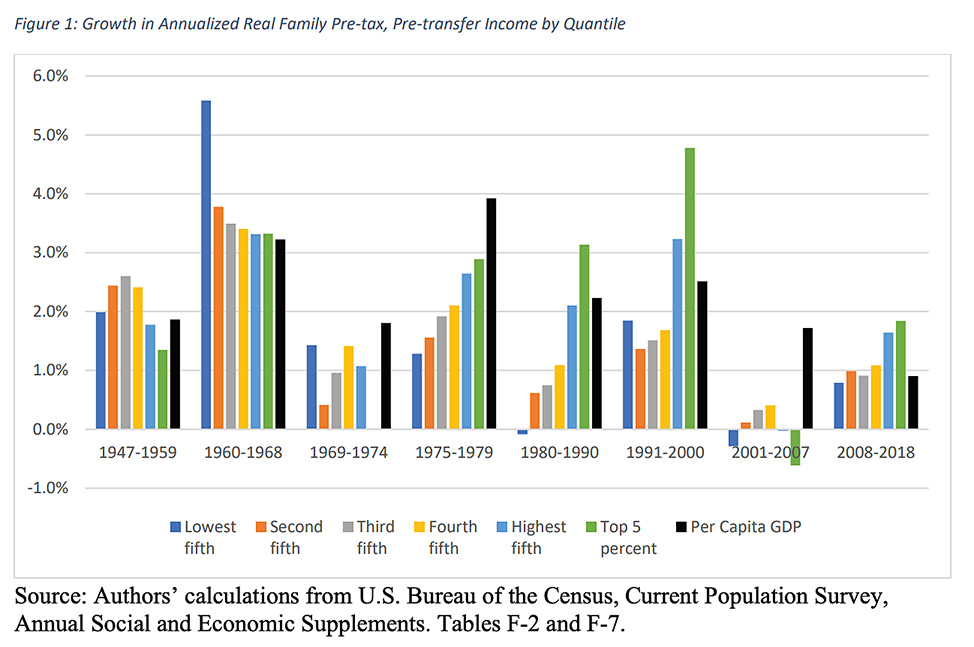
Trends in income from 1975 to 2018 — from rand.org by Carter Price and Kathryn Edwards

Excerpt:

We document the cumulative effect of four decades of income growth below the growth of per capita gross national income and estimate that aggregate income for the population below the 90th percentile over this time period would have been $2.5 trillion (67 percent) higher in 2018 had income growth since 1975 remained as equitable as it was in the first two post-War decades. From 1975 to 2018, the difference between the aggregate taxable income for those below the 90th percentile and the equitable growth counterfactual totals $47 trillion.

Trends in income

Also see:

  • ‘We were shocked’: RAND study uncovers massive income shift to the top 1% — from fastcompany.com by Rick Wartzman
    The median worker should be making as much as $102,000 annually—if some $2.5 trillion wasn’t being “reverse distributed” every year away from the working class.
    .
  • The top 1% of Americans have taken $50 trillion from the bottom 90%—And that’s made the U.S. less secure — from Time.com by by Nick Hanauer and David Rolf
    [From DSC: By the way, that title likely has some link bait appeal to it.]
    Excerpt: 
    As the RAND report [whose research was funded by the Fair Work Center which co-author David Rolf is a board member of] demonstrates, a rising tide most definitely did not lift all boats. It didn’t even lift most of them, as nearly all of the benefits of growth these past 45 years were captured by those at the very top. And as the American economy grows radically unequal it is holding back economic growth itself.

Why is our death toll so high and our unemployment rate so staggeringly off the charts? Why was our nation so unprepared, and our economy so fragile? Why have we lacked the stamina and the will to contain the virus like most other advanced nations? The reason is staring us in the face: a stampede of rising inequality that has been trampling the lives and livelihoods of the vast majority of Americans, year after year after year.


Students need digital skills more than ever. We know because they’re telling us. — from jisc.ac.uk by Ruth Drysdale
As learners return to colleges and campuses, there’s no turning back from the online shift they’ve experienced this year. Embedding digital in both face-to-face and remote learning is more crucial than ever.

There’s been impressive change in the past six months, but we’ve also seen emergency measures, introduced at speed, as a ‘good enough’ sticking plaster solution. Students are telling us they need digital embedded into their courses. Now is the time to listen and respond, transforming approaches and delivering robust systems that can withstand the uncertainties ahead.

 
© 2025 | Daniel Christian