From DSC: What if each learner/ person/ student could have a lifelong, cloud-based “tribute” site? [Christian]


From DSC: What if each learner/person/student could have a lifelong, cloud-based “tribute” site?

What if you could hire a career coach to sift through the tributes to find common themes?


From DSC:
I recently asked friends and family to help me celebrate a significant birthday for my wife by creating a tribute for her — using a service called Tribute.co. It was a fun, meaningful, relational experience — it opened the doors to some great communications.

Check out tribute.co -- what if each learner could have a lifelong, cloud-based tribute?

Here’s a video that describes what a Tribute is (from the company of that same name).

So I put out potential suggestions for what I hoped that we could relay to my wife, and people contributed their videos. Then a person at Tribute edited the videos to come up with a highlight reel. They also presented to my wife all of the videos, not just the highlight reel.

That got me to wonder, “What if each learner had a cloud-based, lifelong tribute site that parents, guardians, grandparents, teachers, coaches, musical directors, pastors, friends, and others could leave encouraging and instructive messages on? Or when they note something that might be of use later on in terms of career selection, they could “jot it down.” For example:

  • [First-grade teacher] “I noticed Anne that when we did the art projects, you were enthralled with any sort of creative endeavor or project. We almost lost you in another world!”
  • [Family member] “Tony, I’ve noticed ____. Here’s something to consider for your future pathways. Would you be interested in exploring _____ — such as if we signed you up for some lessons in that area?”
  • [Eight grade teacher] “Eloise, I saw that your engagement level skyrocket when we studied ____, especially when you did the project on ___.”
  • [Basketball coach] “Chan, I appreciated your hard work in practice today. Keep up the good work and you will be a super player! You are fast, strong, and seem to have a competitive spirit about you. Consider making a workout chart and charting out the workouts that you do each day. Monitor your progress over time. As of today, here are some apps to do just that: ___.
  • [Pastor] “So glad Amanda that you were able to join us on our youth group visit to ___. I appreciated your end-of-the-day reflections on the experiences of the day. I also appreciated your hard work helping others.”
  • [Friend] “It was great horsing around on Garageband with you today Zach. I look forward to diving into iMovie next with you. Let’s create a movie for each other. You seem to have a very creative side to you.”
  • [High school CS Teacher] “Keep up the good work programming Jeremy! I hope that you will consider going into some type of job that uses critical thinking, mathematics, problem-solving — perhaps it will be programming, perhaps it will be engineering, or something else.”
  • [College professor/advisor] “You mentioned that you hate college to me the last two times we met. You don’t seem happy studying ___. Have you considered ____?”
  • [Tennis coach] Remember to bend those knees…get low. Keep your eyes on the seams of the ball.”

The idea behind such a service would be to offer encouragement, feedback, (if carefully put) constructive criticism, a message that “I’m on your team”…and/or…”Here’s what I see in you.”


Additional functionality/options


  • Contributors:
    • Like Twitter imposes a limit on characters, there could be options to impose a time limit on the length of a video, ability to add more than one video, and/or set a limit on how many videos someone can upload
    • If submitting a written piece, the option would be there to limit the number of characters and/or the word count.
  • From learners themselves (to their own tribute)
    • No time limit, no word count or character limit
    • Would act like a multimedia-based diary/journal of learning
    • Option to select whether might be worth re-listening to for career selection purposes.
 

How to Maintain Peace in Your School Pod — from nytimes.com by Katherine Cusumano
‘It’s important to approach this with the idea that there’s no ideal situation. If there were, we’d all be doing it.’

Excerpt:

Most disagreements, according to Waine Tam, a founder of Selected for Families, an online service that matches families and slearning pods with qualified teachers, “tend to come up front.” Having frank discussions early on might make finding suitable podmates and forming a pod more difficult — but they can also contribute to the long-term success of the group, if you approach them with sensitivity and flexibility.


DIY Checklist to Set Up Your In-Home Learning Pod — from families.getselected.com


Olympia parents form ‘co-op style’ learning pods to support kids without a price tag — from theolympian.com vby Katie Hayes


Unschooling: The New School — from risingkashmir.com
The term unschooling was coined in the 1970s and used by educator John Holt, who is regarded as the father of unschooling

  • Unschooled kids pursue Self-Directed Learning as they are free to choose what they want to learn and who they want to learn from
  • Unschooling is becoming a trend in urban India with Bengaluru and Pune leading the chart
    Learning is entirely interest driven not dictated or directed by an external curriculum, by teachers or by parents
  • Socialization, development and isolation are some of the demerits of unschooling
  • Unschooling community is not claiming that their education model is better than regular schools but say that the latter is fundamentally flawed
  • An individual’s calibre is what makes him/her a creator of circumstances or a creature of circumstances
 

College Admissions in a Covid Year: SATs Are Out, Personal Stories Are In — from wsj.com by Douglas Belkin
The pandemic has dramatically changed what admissions officers are looking for


How Do You Make Zoom Breakout Rooms Less Boring? — from edsurgey.com by Bonni Stachowiak (Columnist)

Excerpt:

My first recommendation was to keep the breakout room time-frames short. If we allocate too much time, some groups will be done with the exercise with lots of time left, which can lead to social awkwardness. My preference is to have a few, shorter breakouts instead of one long one.

The second recommendation I had was around making the students’ work more visible when they are in the breakout rooms—through the use of an editable, shared document of some kind.


How to Engage Students (and Identify Them) — from thejournal.com by Dian Schaffhauser

Excerpt (emphasis DSC):

“The lessons that created the most engaging experiences for students often were a combination of opportunities that encouraged discussion, gave students learning choices and allowed students to create. These elements are immensely transferable both in the online and in-person classroom and can facilitate a positive learning environment, whether in a synchronous or asynchronous setting.”

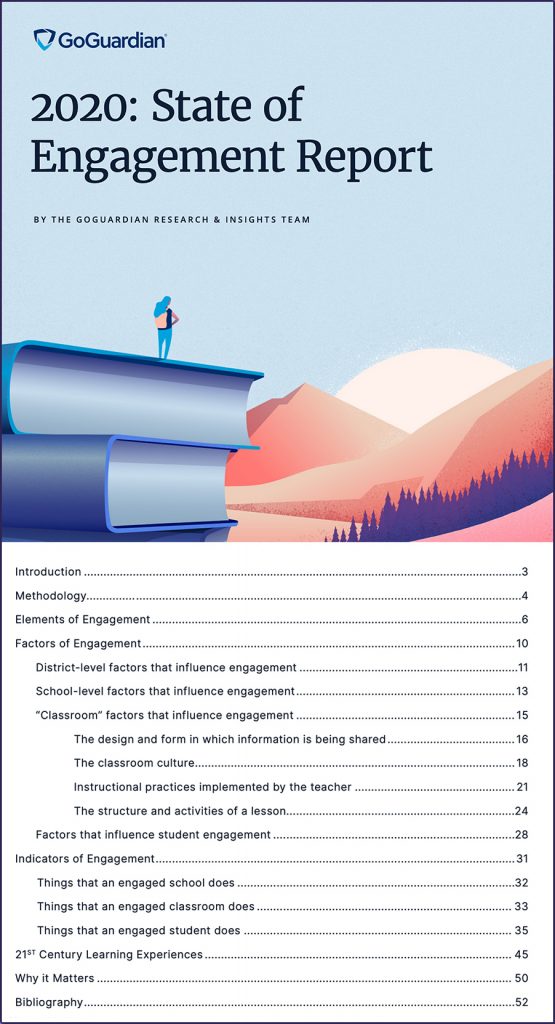
The report is available with an email address through the GoGuardian website.

Go Guardian's 2020: State of Engagement Report


We’re All New This Year: How Advice for Rookie Teachers Can Help Everyone During Virtual Learning — from kqed.org by Kara Newhouse

Excerpt:

How can I teach music if the kids aren’t allowed to sing indoors? How will lag time affect group singing online? How will I make students feel seen and heard via Zoom? Those were some of the questions that elementary music teacher Angela Carpenter spent her summer trying to figure out. Though she would be entering her 15th year of teaching, it was like being new to the job. “No one has done this before. Even the teaching that we’re doing now is so vastly different than what we did in the spring,” she said, “because that was panic teaching.”

She’s not alone with that thought.


Learning in the Cloud: Canada’s First University to Move Operations into One Secure Cloud Infrastructure Sets the Stage for the Future of Learning — from globenewswire.com by Athabasca University
Athabasca University (AU) lays the groundwork to build a more accessible and personalized future for post-secondary learners

Excerpt:

Edmonton, Alberta, Sept. 23, 2020 (GLOBE NEWSWIRE) — At a time when you can personalize everything from your online shopping experience to your dating prospects, it seems only reasonable to ask: why can’t students “swipe right” on their course load? Why can’t a degree be structured around what someone wants to learn or how they learn, instead of what’s traditionally part of the program? In other words, why isn’t it possible to choose your own adventure in a university environment?

Athabasca University (AU), Canada’s Online University, recently completed a six-month rapid cloud migration project with Amazon Web Services (AWS) to construct a secure, flexible, and global infrastructure required to make personalized learning an infinitely scalable reality. With the completion of its cloud migration project, AU became the first post-secondary institution in Canada to move its entire digital operations infrastructure into its own secure AU cloud environment powered by AWS.


Personalized Learning Is Special Education and the Time Is Now — from gettingsmart.com by Karla Phillips-Krivickas and Rebecca Midles

Excerpt (emphasis DSC):

Educators have long recognized that the education strategies that work for students with additional needs would benefit all kids. These personalized learning strategies are, in fact, best practices for all students. Yet we continue to design our schools for the ‘average’ student. And then we wonder why there is so much frustration when we try to fit the proverbial square pegs into round holes.

You may assume the line between general and special education is clear, but it is quite blurry. Special education was never intended to be a separate system. It was designed to facilitate access to general education. Unfortunately, disability labels can now act as fuzzy barriers separating those who qualify for individualized instruction and those who do not. And this is the problem: the one size fits all approach to education doesn’t account for students’ differences or preferences unless they have a disability.

From DSC:
Exactly the experience our family has had as well. The K-12 education train stops for no one and moves quickly.  To *^*^ with mastery. To *^*^ with the love of learning — or even the slightest liking of it.

K-12 education in America is a like a quickly moving train that stops for no one.

Let us not come out of this crisis with the same systems and ways of doing things. Time for greater innovation, experimentation, and invention to take place!


Staff get little to no say in campus governance. That must change. — from chronicle.com by Lee Skallerup Bessette
As professors and administrators debate how to reimagine academe after Covid-19, that reform must include a greater voice for staff members.

Excerpts:

Why, then, in all of this recent (and needed) hand-wringing and speculating about the future of the university, post-pandemic, have we not heard many (if any) staff voices? Or for that matter, any calls for our voices to be included in any planning and restructuring?

Faculty members are the experts in their disciplines, but they do not have a monopoly of knowledge around pedagogy, programming, student success, inclusivity, equity, accessibility, among other things. We shouldn’t expect already overtaxed faculty members to be experts in everything and anything. In fact, the intense pressure that many of them are feeling lately is largely because of structures and traditions that discourage professors from collaborating with staff members who are experts in those areas.

With college campuses selling themselves as an entire “experience,” not just a set of courses, it’s high time for those of us responsible for that campus experience to be included in the larger conversation.


Subscribe to Jeremy Caplan's newsletter re: tools here

Be My Eyes is a FREE mobile app designed to bring sight to blind and low vision people. With the press of a button, the app establishes a live video connection between blind and low vision users and sighted volunteers. Every day, volunteers are lending their eyes to help with anything from simple tasks, like checking expiry dates, to more complicated situations, like navigation or finding a lost item. With more than a million users across 150 countries, Be My Eyes has grown to become the largest online community for the blind and low vision people, and it is now possible to request assistance in more than 180 languages. The app harnesses the power of generosity, technology and human connection to help blind and low vision individuals lead more independent lives.


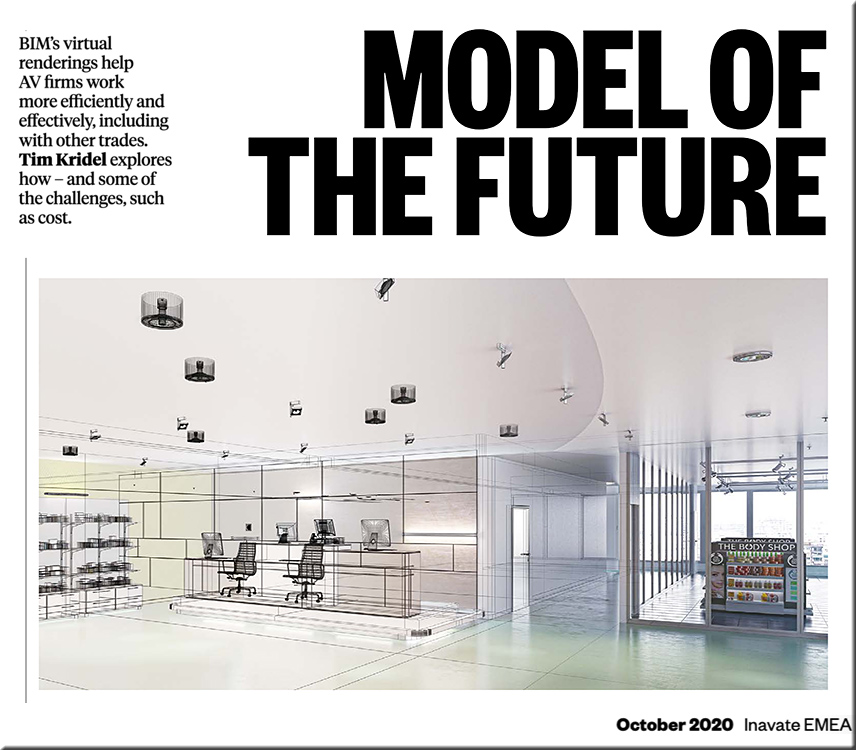
Care over IP — from Inavate EMEA October 2020
Care over IP The Covid-19 outbreak has put working from home centre stage, but what happens when you work in a hospital? Paul Milligan speaks to those proving remote/virtual alternatives for patient care.

Care over IP [Inavate EMEA; Covid's impact on remote healthcare continues]


From DSC:
I continue to wonder how telelegal will be impacted by what’s happening with telehealth/telemedicine/virtual health…my guess is that telelegal will also grow quite a bit in the future. 


Addendum on 9/25/20, below is an excerpt from a press release sent to me by Ashley Steiger at AristaMD:

University of Colorado School of Medicine and AristaMD Partner to Expand eConsults to Community Providers

SAN DIEGO – Sept. 22, 2020 – AristaMD, an innovative telehealth platform that delivers primary care providers (PCPs) timely and documented specialist insight through eConsults, has partnered with the University of Colorado School of Medicine (CU) to expand eConsults to a network of community providers. The partnership begins with Salud Family Health Center, which has 13 clinic locations and serves communities in northeast and southeast Colorado.

“AristaMD is pleased to be working with our first partner that is a part of the Association of American Medical Colleges’ Project CORE: Coordinating Optimal Referral Experiences. We can support health systems, including those already using eConsults within their own electronic health records (EHR), to more broadly expand to clinics on any system,” said Brooke LeVasseur, CEO of AristaMD. “The AristaMD platform works with all EHRs, seamlessly integrates into physician workflows, and will allow us to scale to community providers throughout the state of Colorado as the partnership grows.”


Also see:

Model of the future


Purdue Shares Look Inside HyFlex Classroom — from campustechnology.com by Rhea Kelly

Excerpt:

He started blending both face-to-face and online instruction in his classrooms weeks before Purdue officially shifted to remote learning last spring.

Mentzer wanted his students to be able to participate in class remotely in real time or physically attend on any given day, according to a university news story.

“If students are unable to come to class for a period of time because they are in isolation or quarantined, they can complete the requirements online and continue progressing in the course,” she noted.


With thanks to Gabe Teninbaum for posting this in his Lawtomatic Newsletter| Issue #104, September 23, 2020

As Gabe points out, also see:


Zoom, but for X: How startups are building for our new video normal  — from protocol.com by Biz Carson
Meet the startups building the next take on video.

Excerpt (emphasis DSC):

Trying to liven up the monotony of Zoom meetings, Phil Libin hung up a green towel behind his desk and started projecting images onto it, like Dr. Anthony Fauci hovering over his shoulder, just to make his team laugh. At first, it was a bit of a performance and a way to break up the monotony as Zoom fatigue set in a few months into the pandemic at the end of May. But then Libin, the former CEO of Evernote and founder of startup studio All Turtles, realized the “Weekend Update” style could be more than just a gimmick.

A bit of coding and a fantastic demo later, Libin closed a seed round of $4.5 million to launch his new company, Mmhmm. His big belief is that we’re moving to a hybrid world where things don’t fit neatly into boxes like in-person or online or live or recorded. Instead, it’s all going to be a mix.

Also see:

 
© 2025 | Daniel Christian