



On 02/14/2021,
in faith, global / globalization, hearts -- matters of the heart, relationships, religion,
by Daniel Christian
On 02/14/2021,
in adjunct faculty, Africa, Asia, Australia, Canada, colleges, communications, community colleges, creativity, Daniel S. Christian, digital audio, digital learning, drama/theater, education technology, engagement / engaging students, entrepreneurship, Europe, experimentation, future, geography / geology, global / globalization, higher education, human-computer interaction (HCI), ideas, India, innovation, K-12 related, languages and translation, learning ecosystem, Learning Experience Design, Learning from the Living [Class] Room, media/film, Michigan, more voice more choice more control, multimedia, music, online media, open courseware and systems, passions, platforms, play, society, streams of content, technologies for your home, telecommunications, TVs, UK, United States, universities, vendors, vision/possibilities, web-based collaboration,
by Daniel Christian
Radio.Garden — with thanks to David Pogue for this resource
This is the COOLEST. A Google Earth-type representation of the planet. Every green dot is a radio station. Click any dot to listen in. It’s like cultural teleportation. You could spend hours with this thing… https://t.co/rdEHUUfgvk pic.twitter.com/VJgyzVClJD
— David Pogue (@Pogue) February 14, 2021
From DSC:
This is amazing! Some screenshots:
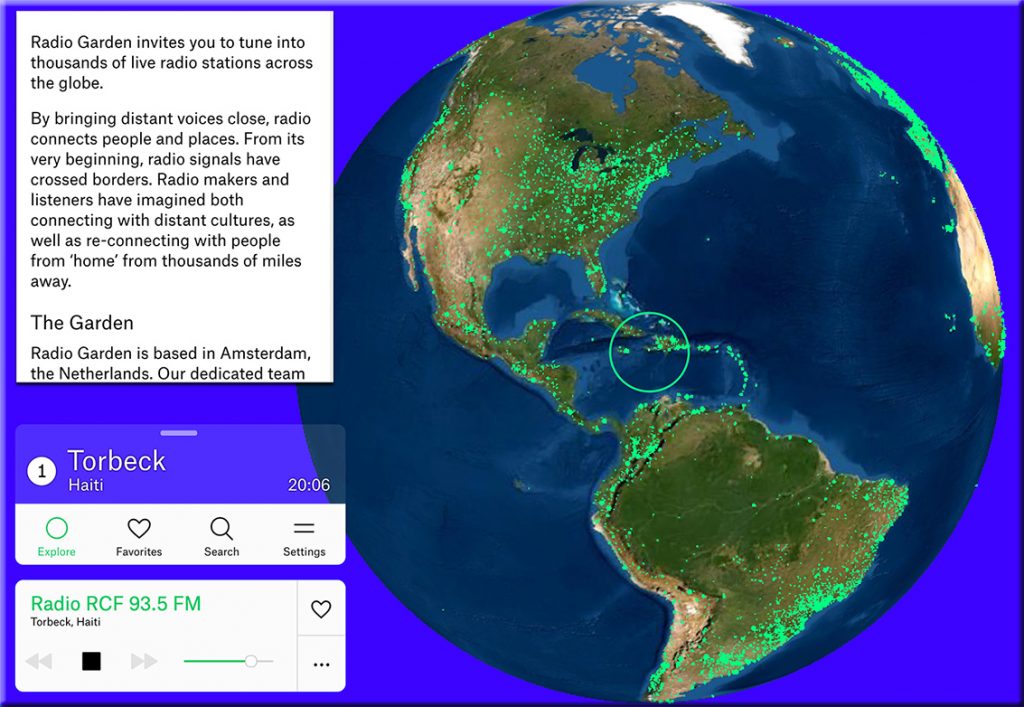
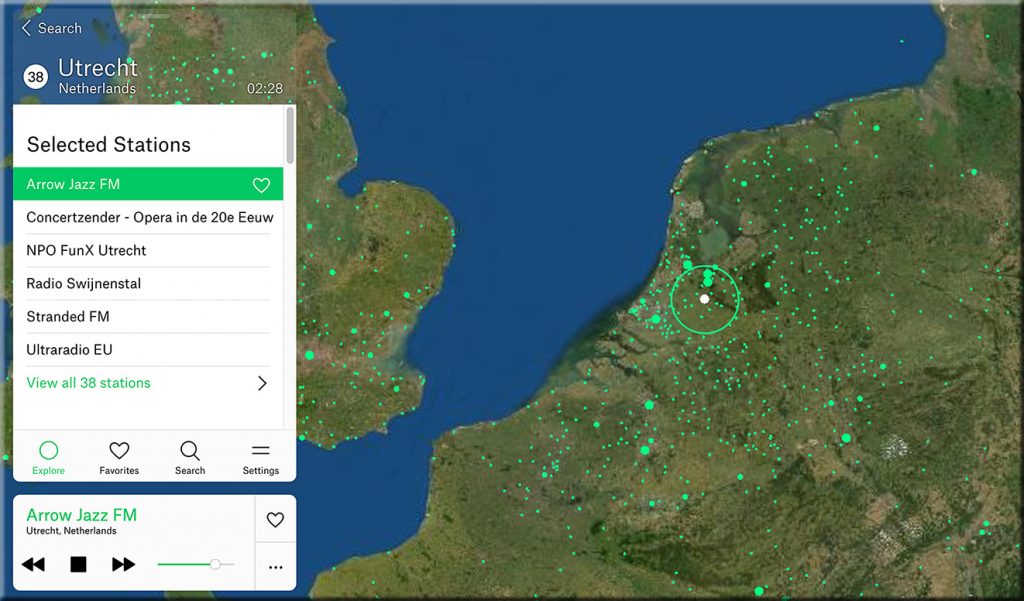
Several questions/reflections come to my mind:
- What could those teachers and professors who are trying to teach someone a language do with this?!
- If this can be done with radio stations, what can be done with learning-related streams of content?!
- Talk about “More Choice. More Control.” Man o’ man!

Addendum on 2/28/21:
Could this type of interface be used to navigate the world of work? Where instead of nations, you would have arenas of work?
A Stunning Shot of Sharks Cruising Under a French Polynesian Sunset Wins the 2021 Underwater Photographer of the Year — from thisiscolossal.com by Grace Ebert

.

On 02/11/2021,
in Daniel S. Christian, future, game-changing environment, generational differences, health, ideas, innovation, internet, parents/guardians, society, telecommunications, telelegal, telemedicine / telehealth / virtual health, trends, United States, workplace,
by Daniel Christian
More states require telehealth coverage going into 2021 — from by
Several states passed recent laws that would require commercial insurance plans to cover more telehealth services on a permanent basis. More states now require health plans to pay the same amount for telehealth as in-person visits.
From DSC:
Telelegal on deck…? What about in your area of work…what’s coming down the pike in this regard?
On 02/11/2021,
in collaboration, communications, digital learning, education, education technology, homeschooling/homeschoolers, ideas, instructional design, internet, K-12 related, learning, learning ecosystem, Learning Experience Design, Learning from the Living [Class] Room, learning hubs & pods & microschooling, media/film, online media, parents/guardians, platforms, social learning / networks, society, STEAM-related, streams of content, student-related, teaching & learning, technologies for your home, technology (general), television, tools, TVs, United States, vendors, virtual K-12 schools, virtual tutoring, vision/possibilities,
by Daniel Christian
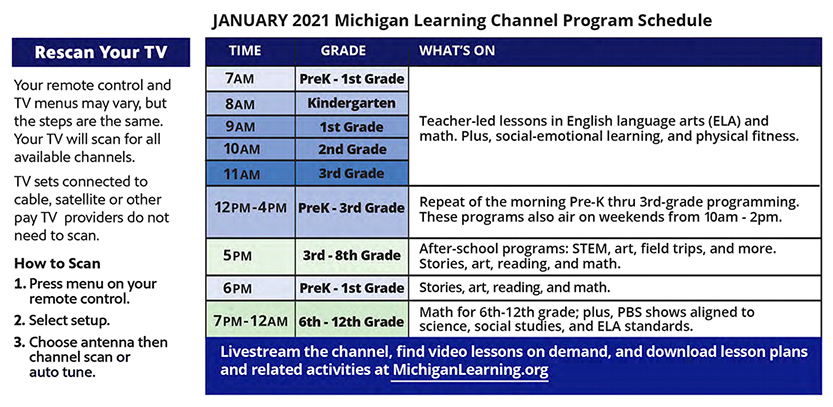
This programming is being broadcast on special on-air channels established by each of the participating public television stations in Michigan. It is also available as a livestream and stored for on-demand viewing on a variety of digital platforms, ensuring accessibility to all students, teachers and families in the state.
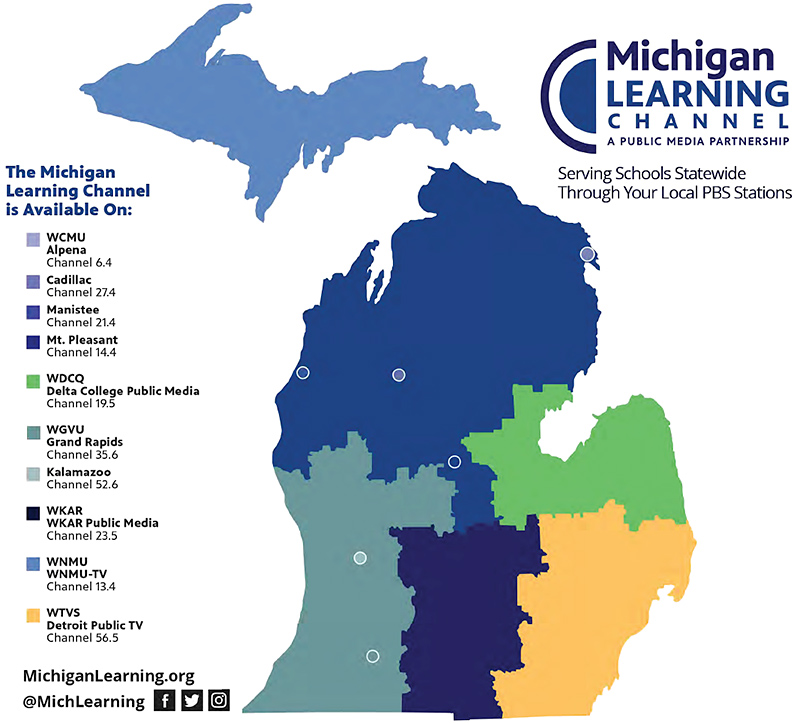
An example schedule from About MLC:
From DSC:
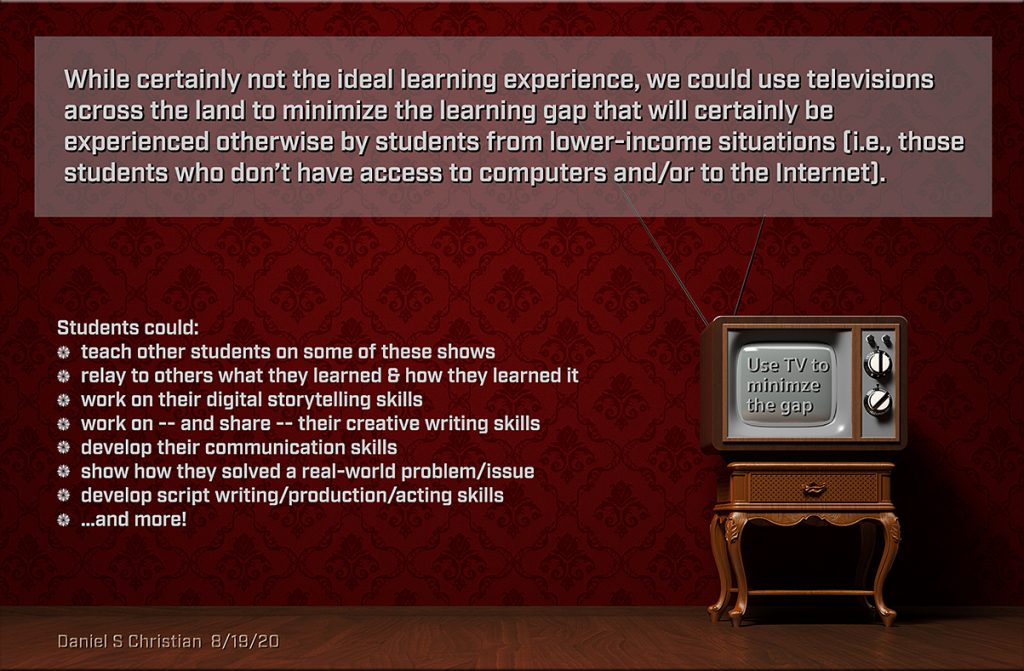
It’s great to see this inclusive, FREE, convenient piece of the K-12 learning ecosystem! I’m all about this. Perhaps such a developing platform could integrate further interactivity and social/network-based learning into it:
Also see:

On 02/11/2021,
in adult learning, colleges, cost of getting a degree, future, future of higher education, game-changing environment, higher education, leadership, learning ecosystem, Learning from the Living [Class] Room, MOOCs -- Massive Open Online Courses, more voice more choice more control, new business models, online learning, strategy, traditional / tradition, trends, United States, universities, vendors, vision/possibilities,
by Daniel Christian
Public Colleges Are Going After Adult Students Online. Are They Already Too Late? — from chronicle.com by Lee Gardner
Excerpts:
But competing with the established national players in online education presents a tall order. The so-called mega–universities have a huge head start and deep pockets, two advantages public universities are unlikely to overcome easily, if at all.
…
Mega-universities have spent more than a decade building and honing well-funded and sophisticated operations that function on a scale few start-ups can hope to match. They spend hundreds of millions of dollars each year marketing themselves nationwide to students.
Mega-universities have also developed recruitment and admissions operations designed to make things as easy as possible for working adults to enroll.
On 02/10/2021,
in career development, change, corporate / business world, Daniel S. Christian, ideas, law schools, legal technologies, legislatures / government / legal, using teams,
by Daniel Christian
DC: Peering into the future, the significant ***use of teams of specialists*** within the #legal realm will likely be the case.#lawschools #law https://t.co/pY5GkLvH00 Article via @GTeninbaum pic.twitter.com/3uFXs6sczs
— Daniel Christian (he/him/his) (@dchristian5) February 10, 2021
On 02/10/2021,
in 21st century, 24x7x365 access, adult learning, Alternatives, digital learning, distance education, education, education technology, emerging technologies, future, future of higher education, game-changing environment, generational differences, higher education, homeschooling/homeschoolers, ideas, innovation, K-12 related, law schools, learning, learning ecosystem, Learning Experience Design, Learning from the Living [Class] Room, learning hubs & pods & microschooling, learning preferences, lifelong learning, online learning, personalized/customized learning, platforms, remote teaching and learning, trends, United States, universities, vendors, web-based collaboration,
by Daniel Christian
Remote Learning Isn’t Just for Kids — from nytimes.com by Kerry Hannon
New online tools and an array of remote classes and programs are ramping up education and training for adults.
Excerpt:
Adult education, however, is “the Wild West” of education technology, according to Mr. Yoquinto. There are many outlets experimenting with ways to get a handle on the online adult education marketplace, including community colleges and universities, for-profit learning platforms, workshop providers and nonprofit organizations.
Above resource per Laurie Burruss out on LinkedIn:
The internet has empowered adult learners by providing new online tools to ramp up education and training. “The need for workers to keep pace with fast-moving economic, cultural and technological changes, combined with longer careers, will add up to great swaths of adults who need to learn more than generations past — and faster than ever,” said Luke Yoquinto, a research associate at the M.I.T. AgeLab and co-author of “Grasp: The Science Transforming How We Learn
On 02/10/2021,
in law schools, legal technologies, legislatures / government / legal, vendors, videoconferencing,
by Daniel Christian
Addendum on 2/14/21:
- ‘I am not a cat’: How to find and use that infamous filter for your next Zoom session — from cnet.com by Alison DeNisco Rayome
Feeling inspired by the lawyer who accidentally appeared as a cat in a legal proceeding over Zoom? We’ll show you how to hunt down and apply the filter, too.
On 02/09/2021,
in business, career development, cloud-based computing / apps / other cloud-related, computer science, corporate / business world, Daniel S. Christian, education, legislatures / government / legal, media/film, programming, reinvent, surviving, United States, workplace,
by Daniel Christian
DC: There are how many millions of Americans #unemployed and yet “January hiring slips 2.8%”…?
But there were some bright spots in #legal, #software and #finance https://t.co/5C48F53IUZ pic.twitter.com/UU4ixPlqEY
— Daniel Christian (he/him/his) (@dchristian5) February 9, 2021
January hiring slips 2.8%; bright spots in U.S. are legal, software and finance — from linkedin.com by George Anders
Excerpt:
If you’re looking for further evidence that U.S. industry is running on two different tracks these days — in which “laptop economy” professions such as legal and finance are doing fairly well, while face-to-face jobs are facing tough times — that message is starkly clear in the latest edition of LinkedIn’s Hiring Report.
For January, the U.S. Hiring Report showed a 2.8% decline from December’s reading, and an overall 7.6% drop from a year earlier. What looks like relatively mild slippage in aggregate turns out to be two trends pointing in sharply different directions once the focus switches to industry-by-industry outcomes.
Three industries remain ahead of their hiring tempo a full year ago, in spite of the overall decline. They are legal (+3.8%), finance (3.4%) and software and information technology (+3.0%).
On 02/09/2021,
in art, creativity, digital photography, geography / geology, photography,
by Daniel Christian


On 02/09/2021,
in 3D, Augmented Reality (AR), collaboration, human-computer interaction (HCI), immersion, innovation, platforms, presentations, vendors, web-based collaboration,
by Daniel Christian
Arvizio Brings AR Collaboration to Zoom Meetings with Immerse 3D App for Smartphones, HoloLens & Magic Leap — from next.reality.news by Tommy Palladino
Excerpt:
On Monday, the Canada-based company revealed Immerse 3D, an app for iOS, Android, HoloLens, and Magic Leap (listed as Arvizio Immerse 5.0) that works in conjunction with Arvizio Director PC collaboration software and Arvizio Cloud service to enable video conference participants to interact with the same 3D model simultaneously in AR.
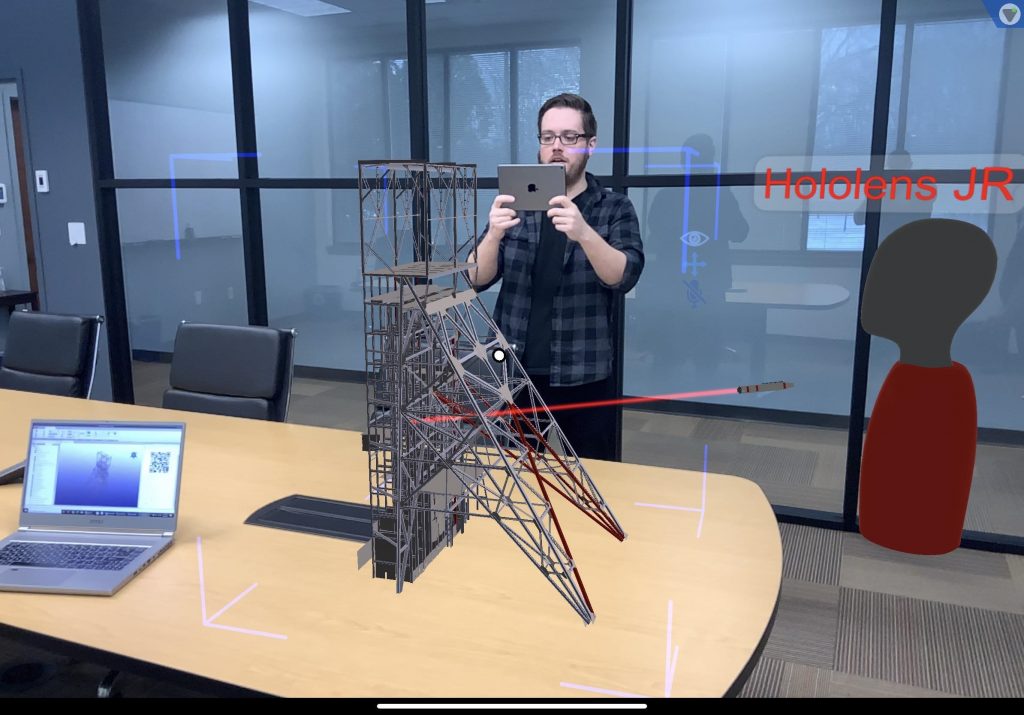
Image via Arvizio
On 02/07/2021,
in adjunct faculty, business, business side of he, colleges, community colleges, content development, aggregation, repositories, dangers of the status quo, digital learning, e-publishing related items (EPUB and more), education reform, ethics, faculty/staff, future of higher education, higher education, ideas, instructional design, IT in HE, liberal arts, morals/values, pedagogy, student teaching/teacher education, student-related, teaching & learning, trends, United States, universities, vendors, youth,
by Daniel Christian
The Chegg situation is worse than you think — from eliterate.us by Michael Feldstein
Excerpts:
Forbes just ran with an article entitled “This $12 Billion Company Is Getting Rich Off Students Cheating Their Way Through Covid“.
Ouch.

[Per Michael] To sum up:
- Publishers, after selling expensive textbooks to students, sold the answers to the homework questions in those expensive books to Chegg.
- Chegg sells the answers to the questions to the students, who often use them to cheat.
- To combat this problem, universities pay for proctoring software, which is apparently more effective at preventing students from going to the bathroom than it is at preventing cheating.
- To add insult to all of this injury, “to chegg” is now apparently a verb in the English language. We will all have to live with that linguistic violence.
Addendum on 2/9/21:
- Students cheat with online learning service, professors hope to identify users — from dailyemerald.com by Claire Warner