Interplay Raises $18M to Build a Lynda.com for Essential Skilled Trades — from edsurge.com by Tony Wan

Excerpt:

Plumbing is just one of many good-paying skilled trades that remain in high demand but which have largely been glossed over by the education technology industry, says Doug Donovan, co-founder and CEO of Interplay Learning. “There’s been a lot of great edtech serving the knowledge worker, such as tools like Pluralsight. But there’s a vacuum in the digital marketplace for skills for hands-on workers.”

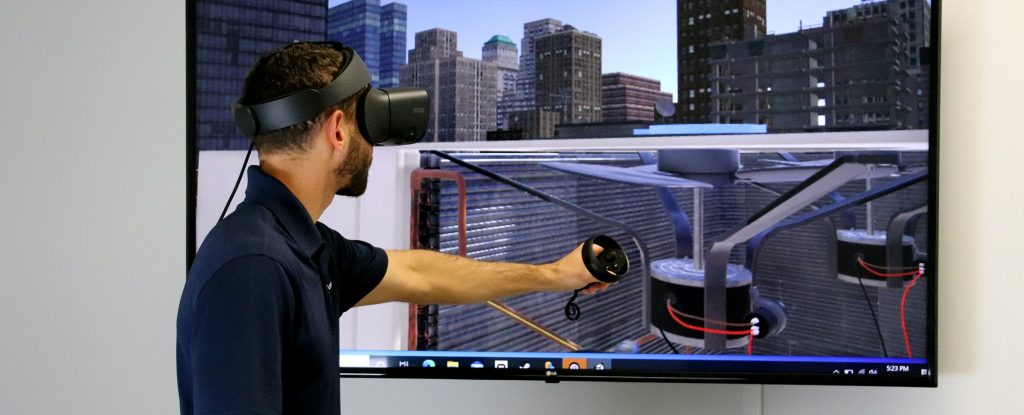
Interplay Learning VR training for HVAC repair


Time for Reinvention, Not Just Replication or Revision — from insidehighered.com by Ray Schroeder
With enrollments falling, college budgets under strain and employers dissatisfied with the relevance of graduates’ learning, now is a time for more than replication or revision — it is time for reinvention.

Excerpt:

We are at the confluence of massive economic, technologic and social changes that demand higher education do more than small fixes. We will not thrive if we merely tweak the system to replicate practices of the lecture hall in an online delivery system. This is not an empty warning — universities across the country are closing programs, laying off staff and faculty, and teetering on the brink of bankruptcy. I have personally been tracking these economic disadvantages for some time now.

Here are the key factors we must consider…(see rest of article)

Our centuries-old model of admitting 18-year-old high school graduates for a four-, five- or six-year baccalaureate, then sending them out for lifelong careers in business and industry is no longer relevant.


Excerpt from The Dialogic Learning Weekly #204 — by Tom Barrett • Issue #204

What, So What, Now What?
Three simple questions that pack a punch when explored together. Use this method when reflecting on a shared experience.

The precise split between what is observed and why it might be meaningful is powerful. It helps participants not get lost in the swamp of interpretation, too soon at least!

The outline of the steps below is from Liberating Structures.

  • If needed, describe the sequence of steps and show the Ladder of Inference (see below). If the group is 10–12 people or smaller, conduct the debrief with the whole group. Otherwise, break the group into small groups.
  • First stage: WHAT? Individuals work 1 min. alone on “What happened? What did you notice, what facts or observations stood out?” then 2–7 min. in small group. 3–8 min. total.
  • Salient facts from small groups are shared with the whole group and collected. 2–3 min.
  • Second stage: SO WHAT? People work 1 min alone on “Why is that important? What patterns or conclusions are emerging? What hypotheses can I/we make?” then 2–7 min. in small group. 3–8 min. total.
  • Salient patterns, hypotheses, and conclusions from small groups are shared with the whole group and collected. 2–5 min.
  • Third stage: NOW WHAT? Participants work 1 min. alone on “Now what? What actions make sense?” then 2–7 min. in small group. 3–8 min. total.
  • Actions are shared with the whole group, discussed, and collected. Additional insights are invited. 2–10 min.


4 Projects Using Blockchain to Help Learners Document and Share Educational Records — from campustechnology.com by Dian Schaffhauser

Excerpt:

Four blockchain projects have received funding with the ultimate goal of helping learners take control of their educational records. Each of the projects will receive $150,000 from a competition overseen by the American Council on Education (ACE). The Blockchain Innovation Challenge supports collaborations involving K-12, higher education, technology providers and public agencies, to facilitate more secure, streamlined sharing of learning records and create stronger links between education and work.

Also see:

BLOCKCHAIN INNOVATION CHALLENGE

Excerpt from About the Challenge (emphasis DSC):

The challenge sought technology-enabled solutions that reorient the education and employment ecosystem around the individuals that they aim to serve. It invited teams to articulate a vision and design pilots that address the following themes:

  • Empower all learners: How can learners exercise agency over their digital identities, including all records of learning, so they can share them in a secure, validated, and machine-readable way?
  • Unlock lifelong learning: How can learning be better documented, validated, and shared no matter where it occurs? How can control or ownership of learning records improve the way underserved learners connect and unlock disparate learning opportunities?
  • Improve economic mobility: How can blockchain help learners to find in-demand education in employment-relevant skills to advance economic mobility and to fulfill the promise of higher education?


Teaching: Why the Term ‘Hybrid Class’ Continues to Confuse — from chronicle.com by Beth McMurtrie

Excerpt:

Hybrid Confusion
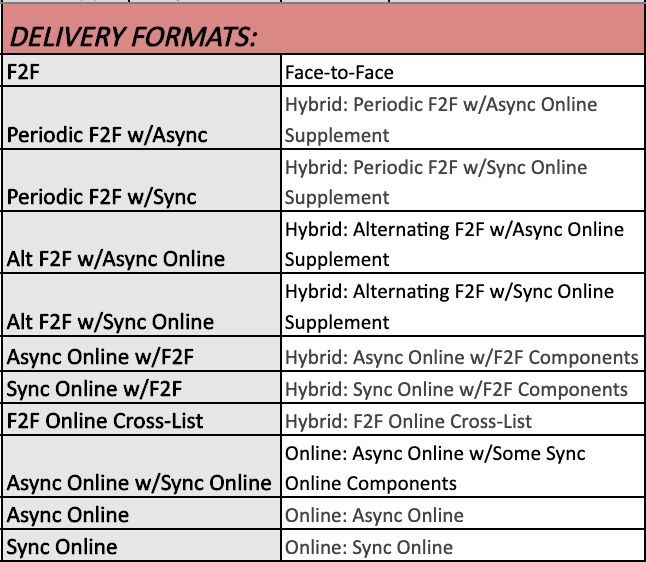
Why is it so hard to define a hybrid class? Or, rather, why is it so hard for colleges to describe it in a course catalog? That was the question that popped into my mind after seeing this chart, tweeted out recently by Kevin McClure, an associate professor of higher education at the University of North Carolina at Wilmington.

A slew of different delivery formats...whew!

But is it really helping anyone to define every possible permutation of “hybrid”? More to the point, what should colleges take into account when trying to balance specificity with clarity in course descriptions?


Legaltech Careers Guide: roles, organisations and routes into legaltech jobs — from lawtomated.com

Excerpt:

This guide includes our most frequent FAQs and advice based on our experiences and those of others working in legaltech, legal ops, and innovation who made the jump from a traditional lawyer role into this space, or who entered the space from outside of legal.


Managing In-Person and Distance Learning at the Same Time — from commonsense.org by Paul Barnwell

Excerpt:

As schools begin to reopen amid the changing pandemic, many classrooms will experience some form of hybrid instruction during the transition back to fully in-person learning. Along the way, schools and districts are embracing a variety of hybrid teaching and learning models. One particular model that can work for both students and teachers is known as hyflex instruction, but to be successful you’ll need to make room for some extra planning and consideration.


It takes a village: The pandemic learning pod movement, one year in — from crpe.org by Alice Opalka, Ashley Jochim, and Joe Lollo

Excerpt:

Since the spring of 2020, learning pods have evolved from a new idea to a significant feature of the pandemic learning landscape. As the pod movement grows in real-time through the current school year and morphs into new models and approaches, the work of learning is moving beyond the four walls of the school building and into communities across the country.

Our database of learning pods—also referred to as learning hubs—now hosts nearly 330 entries of pods organized by institutions with publicly available information from across the country. While this landscape is not a representative sample and is limited by information available on program websites, it offers a snapshot of how learning pods are reshaping education one year into the pandemic.

Our latest analysis shows that community-based organizations and adults beyond the teacher are playing an increased role supporting students and their families through the pandemic.


U of Minnesota System makes tuition free for low-income students — from highereddive.com by Jeremy Bauer-Wolf

Dive Brief:

  • The University of Minnesota System greenlit a program eliminating tuition costs for students whose families earn $50,000 or less in a year.
  • The system’s regent board approved the move unanimously on Friday, according to local media reports. It’s a part of its five-year strategic plan, which also set the goal of reducing the average debt of undergraduates with loans to $25,000 at graduation.
  • President Joe Biden touted free college proposals on the campaign trail. Such arrangements have also seen renewed interest in the wake of the economic tumult of the pandemic.
 

Frank Gehry reveals latest design for supertall skyscraper in Toronto — from dezeen.com by India Block

Excerpt:

Frank Gehry has released visuals of a pair of twisting shiny skyscrapers, one of which will be over 300 metres, for King Street West in Toronto.

Currently named the Gehry Project, the plan is to build a 289-metre-high supertall and a 262-metre-high skyscraper at the intersection King Street West and Ed Mirvish Way.

Frank Gehry reveals latest design for supertall skyscraper in Toronto -- from dezeen.com by India Block

Also see:

Richard Rogers balances his final building over Provence vineyard — from dezeen.com


40 Spectacular Sights of Nature You Should Know, Vol. 1 — from hongkiat.com by Nancy Young

Salar de Uyuni, Bolivia Image Source: Libertas Magazine

From DSC:
I realize that I’m biased here…but I say, “Glory to God!” when I see these pictures. He’s an awesome designer and creator. Only He can “paint a canvas” like this.


The Great Contraction Cuts alone will not be enough to turn colleges’ fortunes around. — from chronicle.com by Lee Gardner

Excerpts:

With higher education facing average revenue losses of 14 percent or more due to Covid-19, the pandemic presents an existential challenge for the hundreds, maybe thousands, of colleges that entered last March with already precarious finances. Every week or so seems to bring new headlines about institutions making jaw-dropping cuts.

But slashing budgets alone, experts agree, isn’t enough to survive. Struggling colleges must cut strategically and adapt to a new way of operating, in order to find a way to eventually grow and thrive.

From DSC:
As I mentioned to a friend who wondered about those two words –“grow” and “thrive” in the last sentence above…

For too long many colleges and some universities have not been experimenting with other business models. They didn’t pay attention to the surrounding landscapes and economic realities of the masses. I think some of the institutions out there will grow and thrive — but it will be far fewer institutions who see such growth. SNHU, Arizona State, Western Governors University, and the like have done well. But then again, they thought big as well and did so years ago. They have a major leg up on other institutions.

She has served as a college president for nearly 20 years, and in that time, she has watched students’ view of higher education shift to be predominantly about “the outcome of being prepared for a job,” she says.

Funny how that corresponds directly to the increase in tuition, fees, books, room and board, etc. that took place during that same time. 


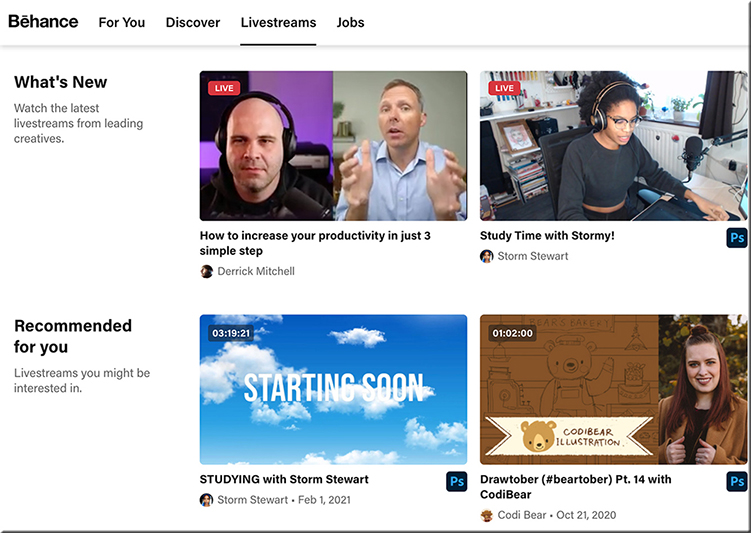
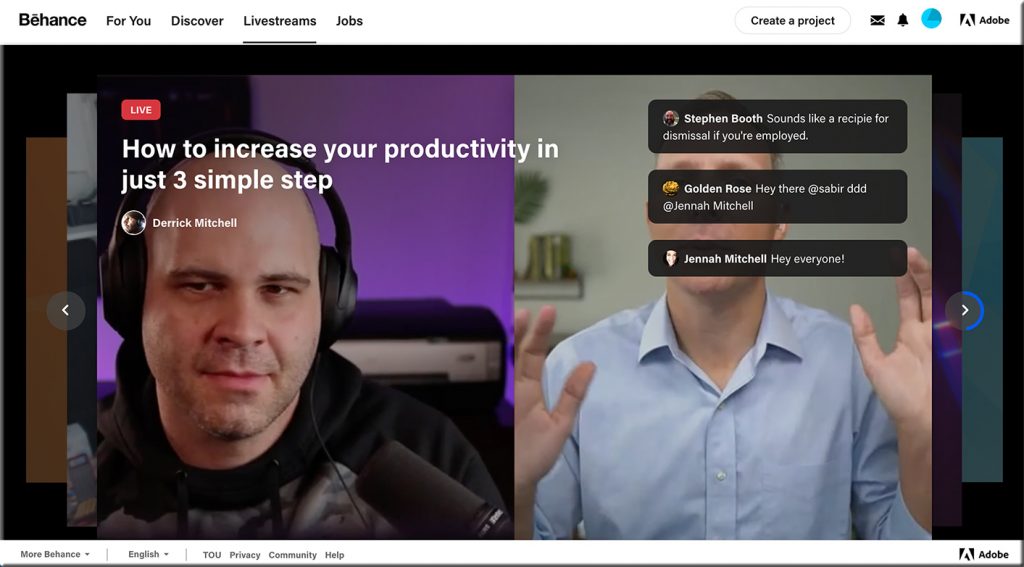
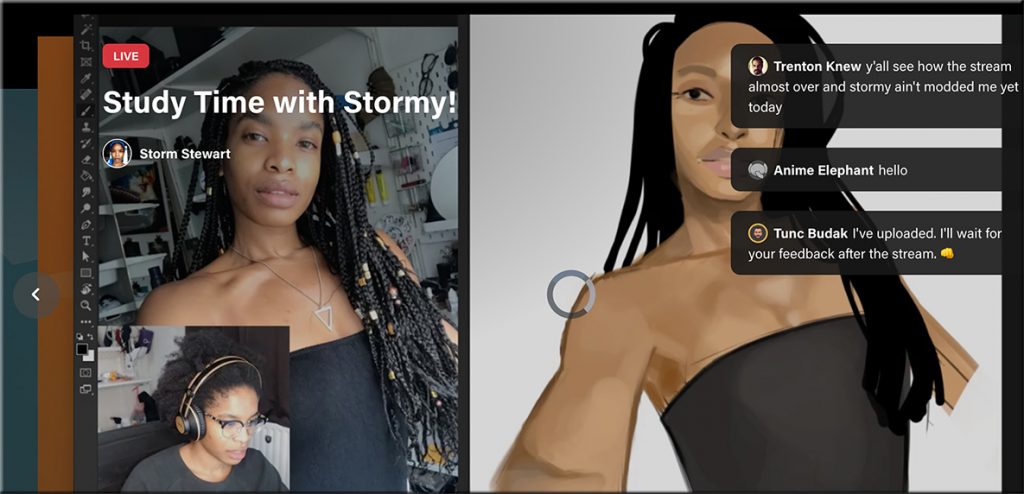
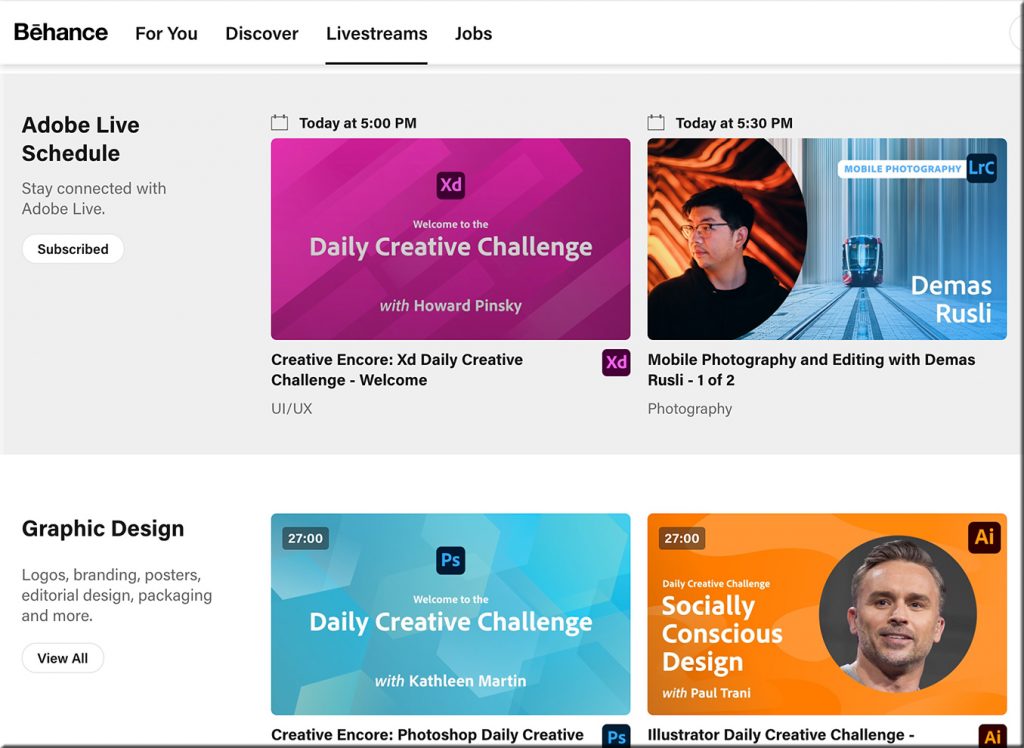
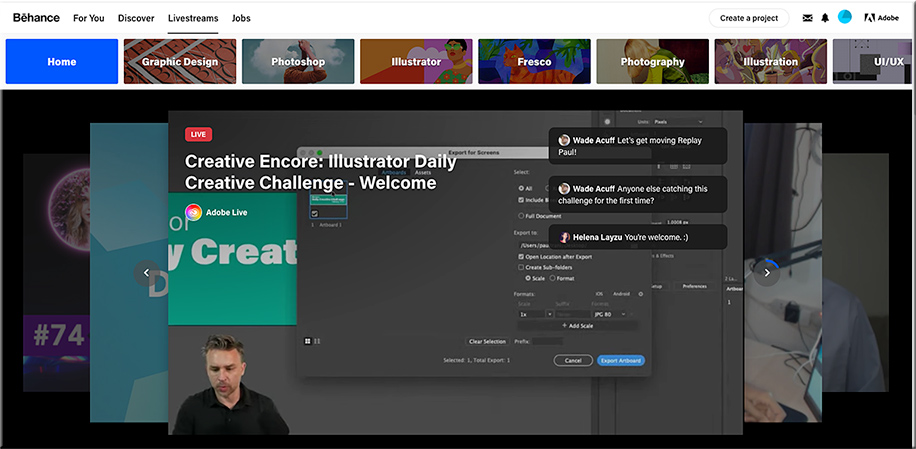
Learning from the Living [Class] Room: Adobe — via Behance — is already doing several pieces of this vision.

From DSC:
Talk about streams of content! Whew!

Streams of content

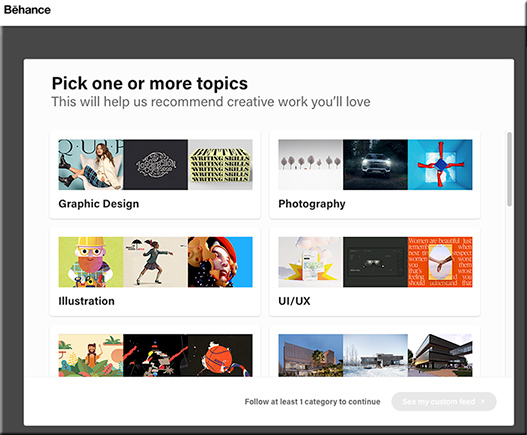
I received an email from Adobe that was entitled, “This week on Adobe Live: Graphic Design.”  (I subscribe to their Adobe Creative Cloud.) Inside the email, I saw and clicked on the following:

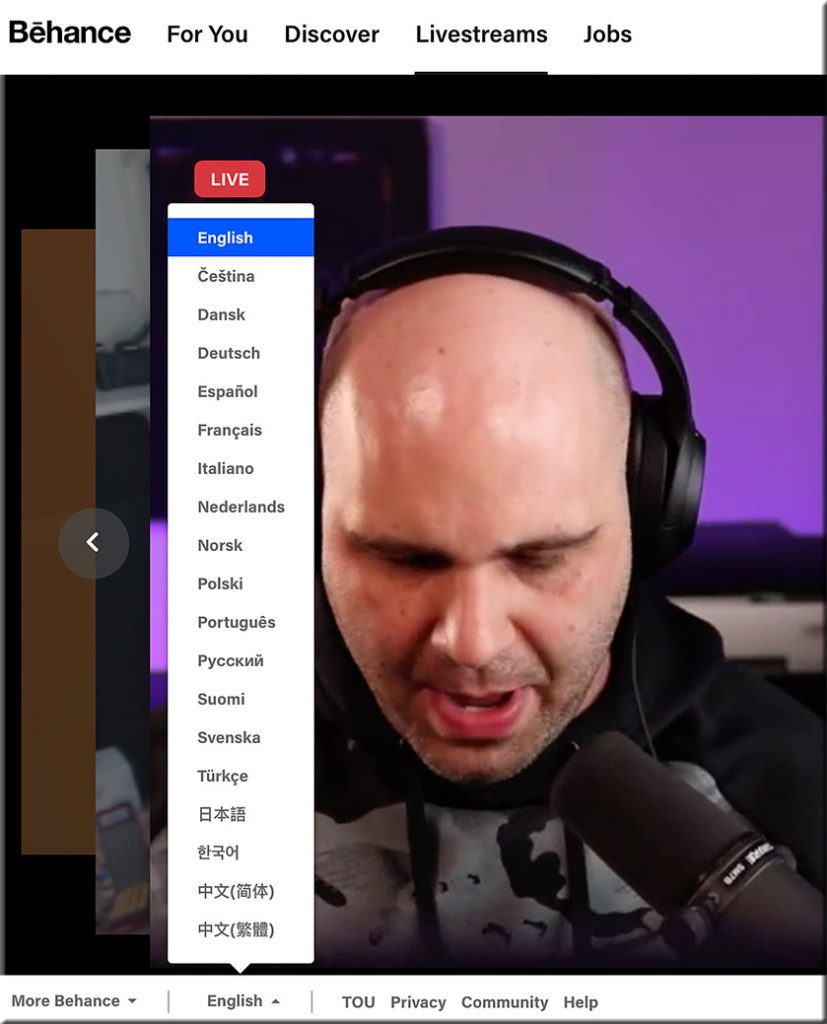
Below are some of the screenshots I took of this incredible service! Wow!


Adobe -- via Behance -- offers some serious streams of content


Adobe -- via Behance -- offers some serious streams of content


Adobe -- via Behance -- offers some serious streams of content


Adobe -- via Behance -- offers some serious streams of content


Adobe -- via Behance -- offers some serious streams of content

Adobe -- via Behance -- offers some serious streams of content

Adobe -- via Behance -- offers some serious streams of content


From DSC:
So Abobe — via Behance — is already doing several pieces of the “Learning from the Living [Class] Room” vision. I knew of Behance…but I didn’t realize the magnitude of what they’ve been working on and what they’re currently delivering. Very sharp indeed!

Churches are doing this as well — one device has the presenter/preacher on it (such as a larger “TV”), while a second device is used to communicate with each other in real-time.


© 2025 | Daniel Christian