Deloitte State of AI Report 2022 calls out underachievers — from venturebeat.com by Sharon Goldman

Excerpt:

Deloitte released the fifth edition of its State of AI in the Enterprise research report today, which surveyed more than 2,600 global executives on how businesses and industries are deploying and scaling artificial intelligence (AI) projects.

Most notably, the Deloitte report found that while AI continues to move tantalizingly closer to the core of the enterprise – 94% of business leaders agree that AI is critical to success over the next five years – for some, outcomes seem to be lagging.

What is a surprise, she added, is how quickly the AI landscape is changing – to the point that what began as an every-other-year Deloitte report is now created annually. 

From DSC:
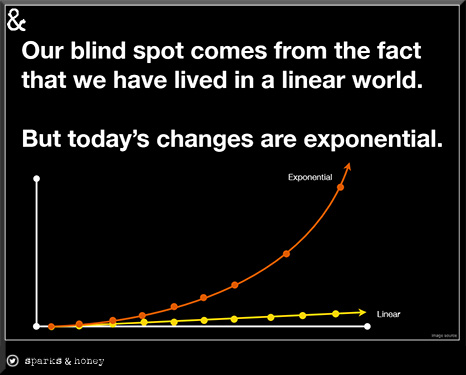
I’m reminded of some graphics here…


Also relevant/see:

‘State of AI in the Enterprise’ Fifth Edition Uncovers Four Key Actions to Maximize AI Value — from deloitte.com
Research reveals the key actions leaders can take to accelerate AI outcomes

Key takeaways

For Deloitte’s “State of AI in the Enterprise,” Fifth Edition, we surveyed 2,620 global business leaders representing six industry areas and dozens of sectors. Key findings include:

  • Ninety-four percent of business leaders surveyed agree that AI is critical to success over the next five years.
  • Seventy-nine percent of leaders say they have fully deployed three or more AI applications, compared to 62% last year.
  • There was a 29% increase in the number of respondents self-identifying as “underachievers,” suggesting that many organizations are struggling to achieve meaningful AI outcomes.
  • Top challenges associated with scaling according to respondents are managing AI-related risk (50%), lack of executive commitment (50%), lack of maintenance and post launch support (50%).
 

Threats uncovered: QR code exploits offer personal and business risks — from technative.io by Len Noe

Excerpts:

Cyber attackers have quickly caught onto QR codes as a social vulnerability and attacks using them as the vector are on the rise.

It’s clear we intuitively trust QR codes, even though this trust is poorly founded. To get a clearer picture of exactly how QR codes could present a threat, I did some digging. Through research, I discovered a variety of ways QR codes can be used maliciously, to steal not only personal information but provide a solid base of information from which to attack an organisation.


Returning Joy to Teaching & Learning — from gettingsmart.com by Trace Pickering

Key Points

  • Too many school-based reform efforts continue to have educators implicitly standing with the standards against the students.
  • Pivot your perspective for a moment to the opposite.
  • What does a school where its educators stand with the students against the standards look like?

From DSC:
My hunch is that we need to cut — or significantly weaken the ties — between the state legislative bodies out there and our public school systems. We shouldn’t let people who know little to nothing about teaching and learning make decisions about how and what to teach students. Let those on the front lines — ie., the teachers and local school system leaders/staff — collaborate with the community on those items.


With Google’s latest push, a blending of industry and higher ed — from workshift.opencampusmedia.org by Elyse Ashburn
Google’s new industry specializations were co-built by its experts and faculty at four top universities—part of a larger push to combine forces with higher education to drive economic mobility.

Excerpt:

Google is making a bigger push into higher education, partnering with name-brand universities to offer more advanced credentials that build on its signature Career Certificates program. The four new industry specializations—for fields like construction management and financial analysis—were co-designed by Google’s technical experts and university faculty with subject matter expertise.

The specializations are open to anybody on Coursera’s platform, and typically cost several hundred dollars to complete.

It’s a blending of industry and academic expertise—with an eye toward helping more Americans get high-demand jobs—that Gevelber calls a tipping point for higher education.


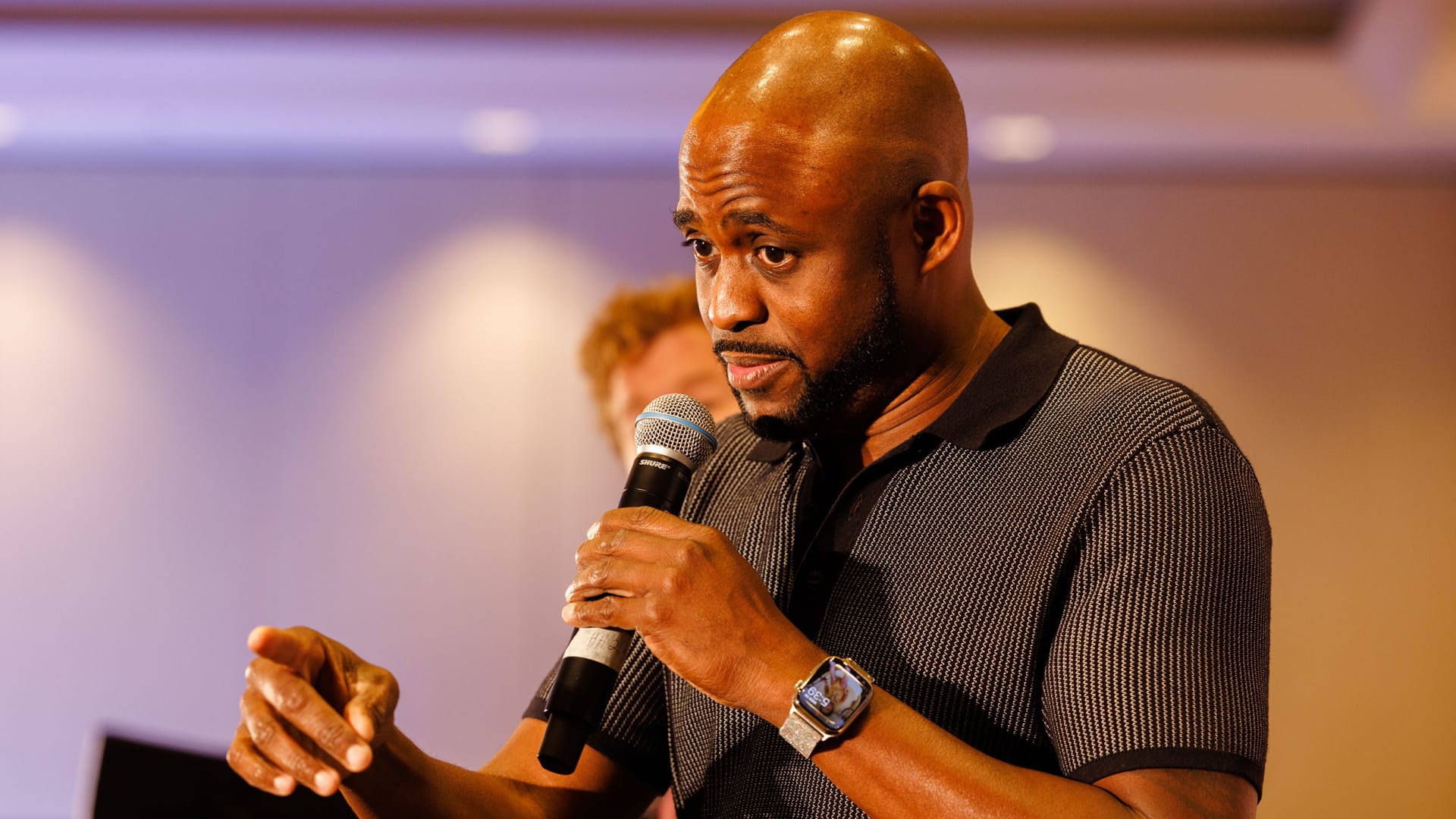
How Wayne Brady ‘Yes, Ands’ His Way to Success — from inc.com by Ben Sherry
At the Inc. 5000 Conference & Gala in Phoenix, the legendary performer shares how the art of improvisational comedy can help business owners innovate.

Essentially, “Yes, and” is a process of accepting what your “scene partner” in an improv comedy sketch has said and then expanding on that line of thinking to come up with a new, original idea on the spot. Instead of shutting down suggestions from peers or potential business partners, Brady says, you should look for ways to build on others’ ideas. The resulting camaraderie can help you and your partner create a potentially breakthrough idea together in real time.

The “Yes, and” attitude, says Brady, “means saying, ‘I like what you’re doing. Now let me put my own sauce on it, and we’ll see what happens.'” In order to effectively improvise, you need to actively listen to people, the same way improvisational comedians listen closely to their “scene partner,” and identify an idea that you can make even better. Next, you should encourage your “partner” to continue this process, so both parties are actively responsible for creating the new idea.


How Might Engineering Education Transition From In-Person To Hybrid and Online Modalities? — from insidehighered.com by Joshua Kim
Three questions for Rick Hill, professor of mechanical engineering at the University of Detroit Mercy.

Excerpts:

Tools I use in my classroom, including MATLAB and Simulink, are key to recreating the in-person lab experience and giving engineering students access to the same equipment as engineers in the field. Students can gain experience analyzing data, developing algorithms and creating models. They’re developing skills in the design of systems with multidomain models, simulation and deployment without the need for code.

Virtual labs allow an instructor to easily introduce “experiments” into nonlab classes, either in the middle of a lecture or in homework. I do this with live scripts and simulation models. It saves me and the students the time of having to set up and debug the lab hardware and saves the cost and space of the physical laboratory while providing a very quick and controlled environment for doing experiments.


It’s time to modernize workplace development programs — from chieflearningofficer.com by Jason Mundy

Excerpts:

So, what exactly do employers need to do to improve L&D? Incorporate individualized microlearning into workforce development.

Microlearning-based L&D is used to solve key business objectives and is useful for many types of employee education, such as compliance training, on-the-job skills and administrative responsibilities. Microlearning programs can be tailored to individuals and administered in a way that is not disruptive to employees. Through modern microlearning solutions, it’s also possible to implement scenario-based learning and gamification, both of which increase employee engagement.

From DSC:
After reading this article, some questions come to my mind:

  • Who decides what’s next on the training regime for an employee?
  • Is it a team of people doing that for each position? The employee, the supervisor, two levels up supervisor(s), L&D, other? 
  • And/or is it tapping into streams of content created by former people who have done that exact job?

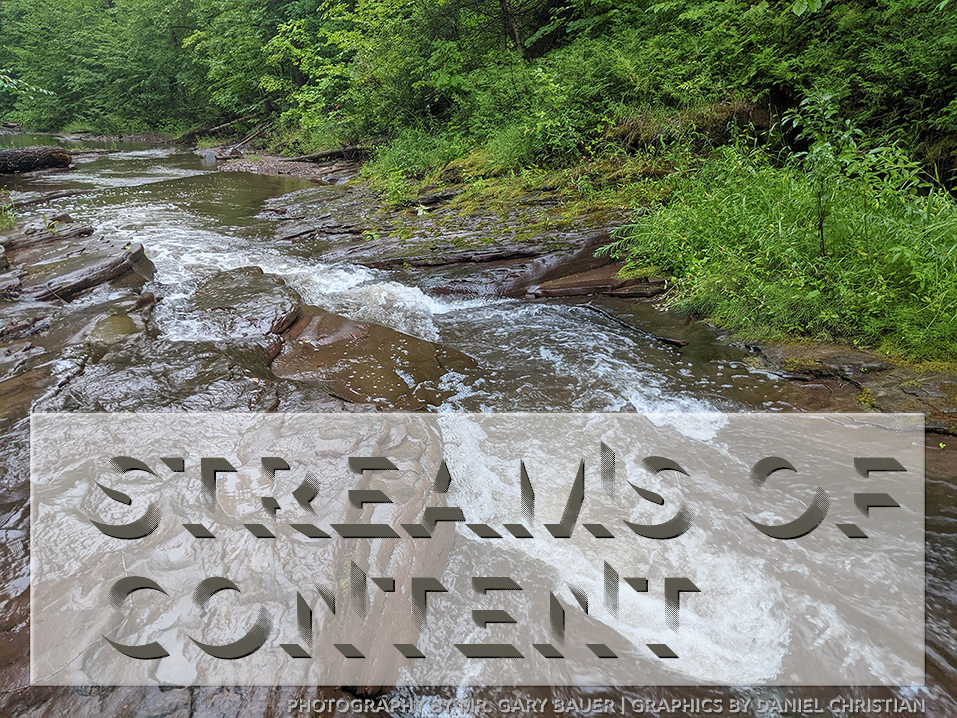
streams of content are ever flowing by -- we need to tap into them and contribute to them

  • For each position, is it possible to capture a knowledgebase containing which topics, learning modules/courses, blogs, websites, people to follow on social media, or other resources?
  • Is there a community of practice for each position?
  • How and who keeps these knowledgebases pruned and up-to-date? 

Hmmm…thanks for letting me think out loud with you.


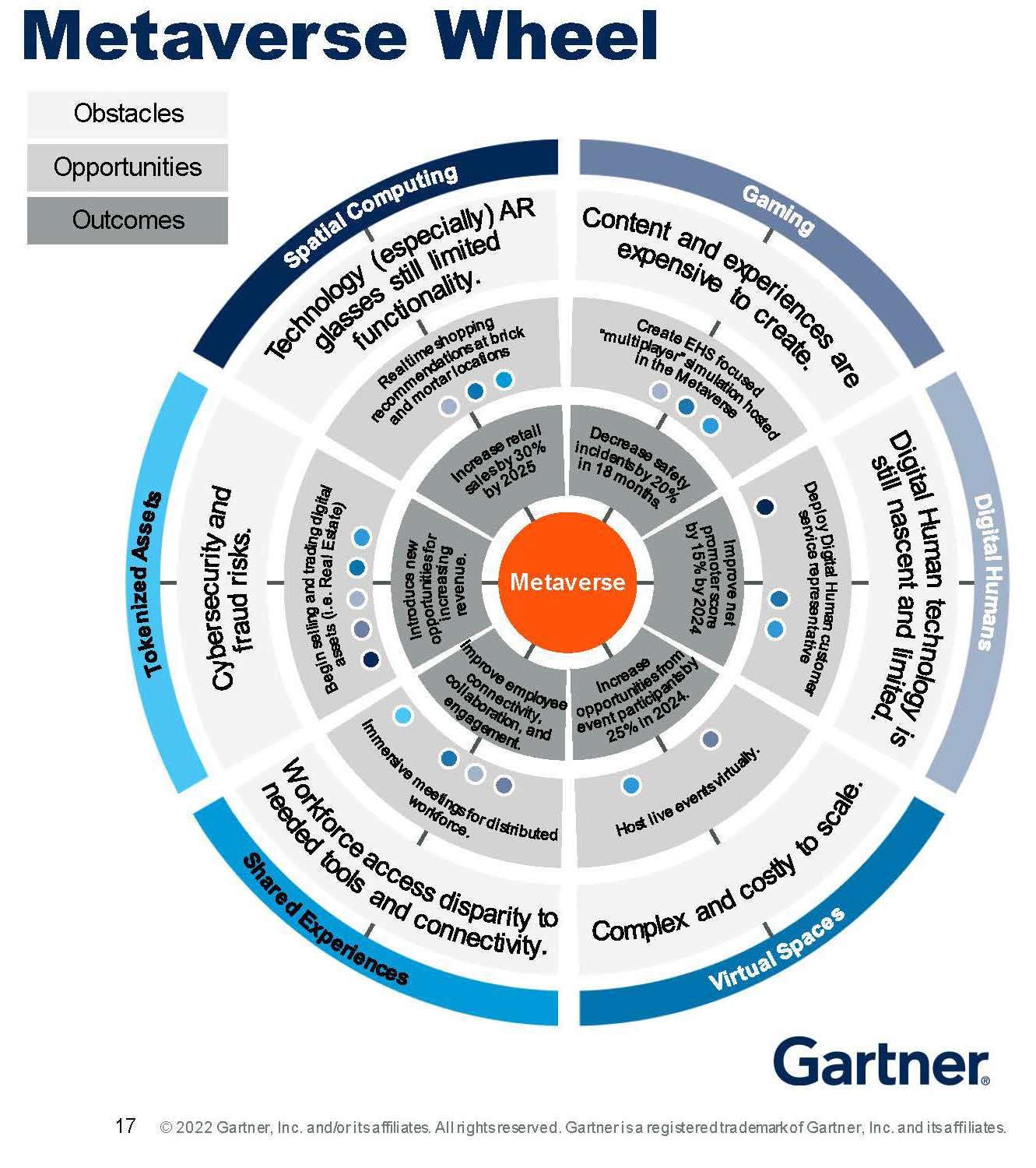
6 trends are driving the use of #metaverse tech today. These trends and technologies will continue to drive its use over the next 3 to 5 years:

1. Gaming
2. Digital Humans
3. Virtual Spaces
4. Shared Experiences
5. Tokenized Assets
6. Spatial Computing
#GartnerSYM

.

“Despite all of the hype, the adoption of #metaverse tech is nascent and fragmented.” 

.

Also relevant/see:

According to Apple CEO Tim Cook, the Next Internet Revolution Is Not the Metaverse. It’s This — from inc.com by Nick Hobson
The metaverse is just too wacky and weird to be the next big thing. Tim Cook is betting on AR.

Excerpts:

While he might know a thing or two about radical tech, to him it’s unconvincing that the average person sufficiently understands the concept of the metaverse enough to meaningfully incorporate it into their daily life.

The metaverse is just too wacky and weird.

And, according to science, he might be on to something.


How do colleges decide when to schedule courses? — from highereddive.com by Rick Seltzer

Dive Brief (excerpt):

  • Two-thirds of colleges are thinking about the courses students will need to complete their degrees on time when they build their schedules, according to a survey released Tuesday by Ad Astra, a scheduling software and analytics provider.
  • Meanwhile, 51% said they considered when they could offer courses to help students avoid conflicts in their schedules, and 30% looked at balancing in-person, online and hybrid courses.
  • Almost two-thirds of respondents, 65%, said they use retention rates and enrollment ratios to gauge the effectiveness of a course schedule.

From DSC:
This is a tough one, as faculty members and staff members have obligations outside of work as well. They may have families. They may need to transfer kids to/from school or drop them off at music lessons, sporting events, etc. So many people working within higher education like to keep to “normal business hours” as much as possible. Obviously, that’s not always true and I’m likely painting with too broad a paintbrush.

That said, online-based learning opens up a lot of possibilities for faculty members as well as for students. Schedules can often be opened up quite a bit. This level of flexibility is becoming increasingly important, given the prices of obtaining degrees out there. Students often need to work as well — and their places of employment don’t always provide the required flexibility.


Higher Ed’s Enrollment Fell Again This Fall, if a Bit More Slowly — from chronicle.com by  Audrey Williams June

Excerpt:

New data from the National Student Clearinghouse Research Center provides a somber message about college attendance in the fall of 2022: Undergraduate enrollment, under severe pressure since the start of the pandemic, is still on the decline.

While the 1.1-percent dip in undergraduate enrollment this fall was less severe than the drops during the same period in 2020 and 2021, the loss of undergraduate students still hit every sector, according to the data, released on Thursday.

Also relevant/see:


Higher Education in Motion: The Digital and Cultural Transformations Ahead — from er.educause.edu by John O’Brien

Excerpts (emphasis DSC):

In 2015 when Janet Napolitano, then president of the University of California, responded to what she saw as a steadily growing “chorus of doom” predicting the demise of higher education, she did so with a turn of phrase that captured my imagination and still does. She said that higher education is not in crisis. “Instead, it is in motion, and it always has been.”

A brief insert by DSC:
Yes. In other words, it’s a learning ecosystem — with constant morphing & changing going on.

“We insisted then, and we continue to insist now, that digital transformation amounts to deep and coordinated change that substantially reshapes the operations, strategic directions, and value propositions of colleges and universities and that this change is enabled by culture, workforce, and technology shifts.

The tidal movement to digital transformation is linked to a demonstrably broader recognition of the strategic role and value of technology professionals and leaders on campus, another area of long-standing EDUCAUSE advocacy. For longer than we have talked about digital transformation, we have insisted that technology must be understood as a strategic asset, not a utility, and that senior IT leaders must be part of the campus strategic decision-making. But the idea of a strategic role for technology had disappointing traction among senior campus leaders before 2020.

From DSC:
The Presidents, Provosts, CIO’s, board members, influential faculty members, and other members of institutions’ key leadership positions who didn’t move powerfully forward with online-based learning over the last two+ decades missed the biggest thing to hit societies’ ability to learn in 500+ years — the Internet. Not since the invention of the printing press has learning had such an incredible gust of wind put in its sails. The affordances have been staggering, with millions of people now being educated in much less expensive ways (MOOCs, YouTube, LinkedIn Learning, other). Those who didn’t move forward with online-based learning in the past are currently scrambling to even survive. We’ll see how many close their doors as the number of effective alternatives increases.

Instead of functioning as a one-time fix during the pandemic, technology has become ubiquitous and relied upon to an ever-increasing degree across campus and across the student experience.

Moving forward, best of luck to those organizations who don’t have their CIOs at the decision-making table and reporting directly to the Presidents — and hopefully those CIO’s are innovative and visionary to begin with. Best of luck to those institutions who refuse to look up and around to see that the world has significantly changed from the time they got their degrees.

The current mix of new realities creates an opportunity for an evolution and, ideally, a synchronized reimagination of higher education overall. This will be driven by technology innovation and technology professionals—and will be made even more enduring by a campus culture of care for students, faculty, and staff.

Time will tell if the current cultures within many traditional institutions of higher education will allow them to adapt/change…or not.


Along the lines of transformations in our learning ecosystems, also see:


OPINION: Let’s use the pandemic as a dress-rehearsal for much-needed digital transformation — from hechingerreport.org by Jean-Claude Brizard
Schools must get ready for the next disruption and make high-quality learning available to all

Excerpts:

We should use this moment to catalyze a digital transformation of education that will prepare schools for our uncertain future.

What should come next is an examination of how schools can more deeply and deliberately harness technology to make high-quality learning accessible to every learner, even in the wake of a crisis. That means a digital transformation, with three key levers for change: in the classroom, in schools and at the systems level.

Platforms like these help improve student outcomes by enhancing teachers’ ability to meet individual students’ needs. They also allow learners to master new skills at their own pace, in their own way.

As Digital Transformation in Schools Continues, the Need for Enterprising IT Leaders Grows — from edtechmagazine.com by Ryan Petersen

K-12 IT leaders move beyond silos to make a meaningful impact inside and outside their schools.According to Korn Ferry’s research on enterprise leadership, “Enterprise leaders envision and grow; scale and create. They go beyond by going across the enterprise, optimizing the whole organization and its entire ecosystem by leading outside what they can control. These are leaders who see their role as being a participant in diverse and dynamic communities.”


The Technology That Is Revolutionising How Business Gets Done — from artificiallawyer.com

Excerpt:

We are on the cusp of a revolution. Contract negotiation, with all the associated document redlines and email threads, is about to get a whole lot quicker. Today, artificial intelligence has the potential to save lawyers hours of intense editing – but only if they embrace the sector-wide behaviour change this could ignite.

Technology has reached the point that much of the initial legwork of perusing a contract can be done by a piece of software. Precision AI can scan a document and create a list of issues based on how a lawyer typically contracts. It is then up to the lawyer to accept or disregard those issues, but the point is that the initial editing time is greatly reduced.


Why Businesses Struggle with Web Accessibility (And How to Fix It) — from boia.org

Excerpt:

An accessible website means more traffic, better search engine optimization (SEO), reduced exposure to lawsuits, and better brand perception — but despite the benefits, most businesses fail to adopt the principles of accessible design.

In their 2022 report on the state of digital accessibility, WebAIM (Web Accessibility In Mind) found that 96.8% of the internet’s top 1 million homepages had detectable accessibility errors. That number was actually a slight improvement from previous years: WebAIM’s 2021 analysis found that 97.4% of websites had potential barriers for users with disabilities.

For businesses, those numbers should be a wakeup call. But despite growing awareness of digital accessibility, many organizations struggle to make concrete changes.

Below, we’ll explain the key factors that prevent businesses from taking the right approach — and provide some tips for overcoming those challenges.


Updated Creative Cloud helps you create with precision and speed and collaborate seamlessly — from blog.adobe.com by Scott Belsky

Excerpt:

Over the past few years, creative expression has become a widespread desire. From new social media platforms to our efforts to stand out in school, or at work through our ideas, creativity has become a vital skill for everyone. Our teams at Adobe are on a mission to outfit everyone to create.

The latest version of Adobe Creative Cloud, released [on 10/18/22] at Adobe MAX, includes innovations that support creativity for all.

Also relevant/see:

 
© 2025 | Daniel Christian