World’s fastest internet network upgraded to 46 Terabit/s — from inavateonthenet.net

The worlds fastest internet network upgraded to 46 Terabit/s - this picture shows telecomm cables

Excerpt (emphasis DSC):

The Energy Sciences Network (Esnet), the fastest internet network in the US, has been upgraded to ESnet6, and now offers a bandwidth of 46 Terabits per second (Tbps).

To put this in to context, the average speed enjoyed by consumers at home is 100 or 200 Megabits per second (Mbps), ESnet6 is equivalent to 46 million Mbps.


Psalm 27:14 — from biblegateway.com

Wait for the Lord;
be strong and take heart
and wait for the Lord.

From DSC:
I remember the time that a good friend of mine pointed this verse out to me — it was a few years after I had graduated from college. It was an important message for me at the time — and still is important to me today. But it was a verse that I would later realize is easier said than done at times.


10 Websites to Have Fun With Your Photos — from Hongkiat.com

Excerpt:

Getting a little bored with how your photos are presented online? How about injecting some fun and humor into it? You don’t really need to be Photoshop literate to edit and add effects to your photos. There’re some really great sites out there that allow you to add effects to your photo by using their existing effect templates.

The best part is – they are free, output is shown immediately on the fly,, and no installation of apps is required. Here’s a collection of ten websites to have fun with your photos, we’ve come to know. You know they don’t really have to be your photos 🙂


Graphic Design Trends 2023 Are Shaping the New Reality — from graphicmama.com by Iveta Pavlova

Excerpt:

Dive into the hottest current graphic design trends in 2023! Read a thorough review of what awaits on the stage of graphic design – well-known or completely revolutionary approaches that are about to shape our new reality.

Remember the times when the world was all about flat, subtle design? “The plainer, the better” was the norm. Well, things have changed. The reign in the graphic design world was slowly but very firmly taken over by big voluminous shapes in screaming colors that offer an alternative reality to the viewer – more vivid than ever!

The newest graphic design trends in 2023 offer us a ride to the future and invite us to observe a world of new depths, colors, and shapes that push the limits.

To-Tem / Pop from My Name is Wendy on Vimeo.


From DSC:
This is another area where the slow pace of the American legal system is having a negative effect. The American Bar Association and the majority of the law school graduates (i.e., those who passed the Bar and have been practicing law in one form or another) for the last 30 years have a lot to do with this situation. They have stimied innovation and have protected their turf — at the increasing expense of the American people. 

Online learning has been going on since the late 1990’s, yet the ABA STILL doesn’t let law schools have 100% online-based learning without their special consent. 


Artists say AI image generators are copying their style to make thousands of new images — and it’s completely out of their control — from businessinsider.com by Beatrice Nolan

Excerpt:

  • OpenAI, a company founded by Elon Musk, just made its DALL-E image generator open to the public.
  • Artists say they work for years on their portfolios and people can now make copycat images in seconds.
  • But some AI companies argue that the new artworks are unique and can be copyrighted.

People are creating thousands of artworks that look like his using programs called AI-image generators, which use artificial intelligence to create original artwork in minutes or even seconds after a user types in a few words as directions.

Rutkowski’s name has been used to generate around 93,000 AI images on one image generator, Stable Diffusion — making him a far more popular search term than Picasso, Leonardo Da Vinci, and Vincent van Gogh in the program.


2022 EDUCAUSE Horizon Action Plan: Hybrid Learning — from library.educause.edu

Excerpts:

Building on the trends, technologies, and practices described in the 2022 Horizon Report: Teaching and Learning Edition, the panel crafted its vision of the future along with practical action items the teaching and learning community can employ to make this future a reality. Any stakeholder in higher education who teaches in or supports hybrid learning modalities will find this report helpful in preparing for the future of hybrid learning. The future we want is within reach, but only if we work together.

Asked to describe the goals and elements of hybrid learning that they would like to see 10 years from now, panelists collaboratively constructed their preferred future for institutions, students, instructors, and staff.

Institutions

  • Higher education is available on demand.
  • Learning is not measured by seat time.
  • Collaboration across institutions facilitates advancement.
  • College and university campuses are not the sole locations for learning spaces.

Students, Instructors, and Staff

  • Everything is hybrid.
  • Student equity is centered in all modalities.
  • Professional development is ongoing, integrated, and valued.
 

Student Preference for Online Learning Up 220% Since Pre-Pandemic — from campustechnology.com by Rhea Kelly

Excerpt:

According to a recent Educause survey, the number of students expressing preferences for courses that are mostly or completely online has increased 220% since the onset of the pandemic, from 9% in 2020 (before March 11) to 29% in 2022. And while many students still prefer learning mostly or completely face-to-face, that share has dropped precipitously from 65% in 2020 to 41% this year.

“These data point to student demand for online instructional elements, even for fully face-to-face courses,” Educause stated.

Also relevant/see:

  • A Surge in Young Undergrads, Fully Online — from insidehighered.com by Susan D’Agostino
    Tens of thousands of 18- to 24-year-olds are now enrolling at Western Governors, Southern New Hampshire and other national online institutions. Does this represent a change in student behavior?
 

How to Cope With Presentation Anxiety — from chronicle.com by James M. Lang
Here’s how a professor and experienced public speaker has learned to deal with the academic version of stage fright.

Excerpts:

Build a pause into the initial minutes of a presentation, so that you can stop and catch your breath. I don’t mean the kind of brief pause you might make between two sentences. I mean a substantive pause in which you are able to stop speaking — for at least 30 seconds — because you have given your audience something to view, think about, or discuss.

The remedy: Don’t envision yourself speaking for 45 minutes. Instead, soothe your brain and nervous system by persuading them that you only have to get through the next five minutes.

Your audience wants to learn from you. But real learning requires active thought from the learner. So use those early moments of your talk to start them thinking and take some of the pressure off you.


If We’re Serious About Student Well-Being, We Must Change the Systems Students Learn In — from highereddive.com by Tim Klein and Belle Liang
Here are five steps high schools can take to support students’ mental health.

Excerpt:

The truth is, the best school systems in the world succeed without homework, standardized test scores or an obsession with rigorous courses. And many U.S. schools have found creative and empowering ways to showcase student merit beyond rankings and test scores.

If we aren’t willing to change policies and practices that have been shown to harm students’ well-being, we have to ask ourselves: Do we really value mental health?

Thankfully, it doesn’t have to be an either/or scenario: We can design school systems that help students thrive academically and psychologically.


How college leaders can create a culture shift to stop burnout — from highereddive.com by Laura Spitalniak
Competitive pay and work schedules are important to attracting and retaining employees, according to a new ACE report. But so is valuing employees’ time.

Excerpt:

Amid the Great Resignation, higher education is facing particularly high rates of employee burnout and possible attrition. But there are tangible ways college leaders can change workplace culture and increase worker retention, according to a new report from the American Council on Education.

Another highly requested benefit is a hybrid work schedule with the ability to work remotely. Nearly 70% of surveyed college employees want to work remotely at least part time, but almost two-thirds are working mostly or completely on campus, according to the College and University Professional Association for Human Resources.


Students Are Calling BS on High School and Opportunity Knocks — from gettingsmart.com by Trace Pickering

Excerpts:

Let’s be clear. These students are not wrong. The pandemic showed students that much of what they were required to do and endure during pre-pandemic high school was a lot of busywork and tasks that held little relevance or interest to them, and apparently didn’t really matter since they were able to be successful without all that extra work. When schools lost their ability to command and control a student’s time, it forced a different economy for schools and educators. It required the curriculum to be pared down to only the essential standards and information. It now had a very real and powerful competitor for the student’s time – a job, a hobby, sports, music, sleep…

Students are no longer a captive audience. They have more options and choices. To avoid obsolescence, perhaps schools should focus on making school a place where kids see value and want to come to each day.

This is a wonderful opportunity to put in place the things that really drive 21st-century skills and give students the keys to their own learning and growth. To truly personalize learning for students, and unlock teacher professionalism and creativity in the process. That extra time could allow students to pursue areas of passion and interest, to dive deep into a subject that interests them, pursue job shadows and internships, and earn and learn on a job.


The Most STOP-Enabled Innovators of 2022 — from yassprize.org
MEET THE 32

Excerpt:

This year’s 32 semifinalists come from 23 different states and really prove that innovation is alive and well in education.  Micro schools, pods and hybrid learning environments almost unheard of two years ago are now being utilized by parents and educators across the nation.  Traditional public schools that operate more like a charter and charters that continue to flourish outside of traditional systems, private schools serving specialized populations that are often overlooked and leaders in the ed tech space who provide remarkable tools that can be integrated into any of the other full service models we are celebrating today.  Truly a remarkable group of visionaries that are transformational exemplars for all in this tumultuous 2022!

Also relevant/see:


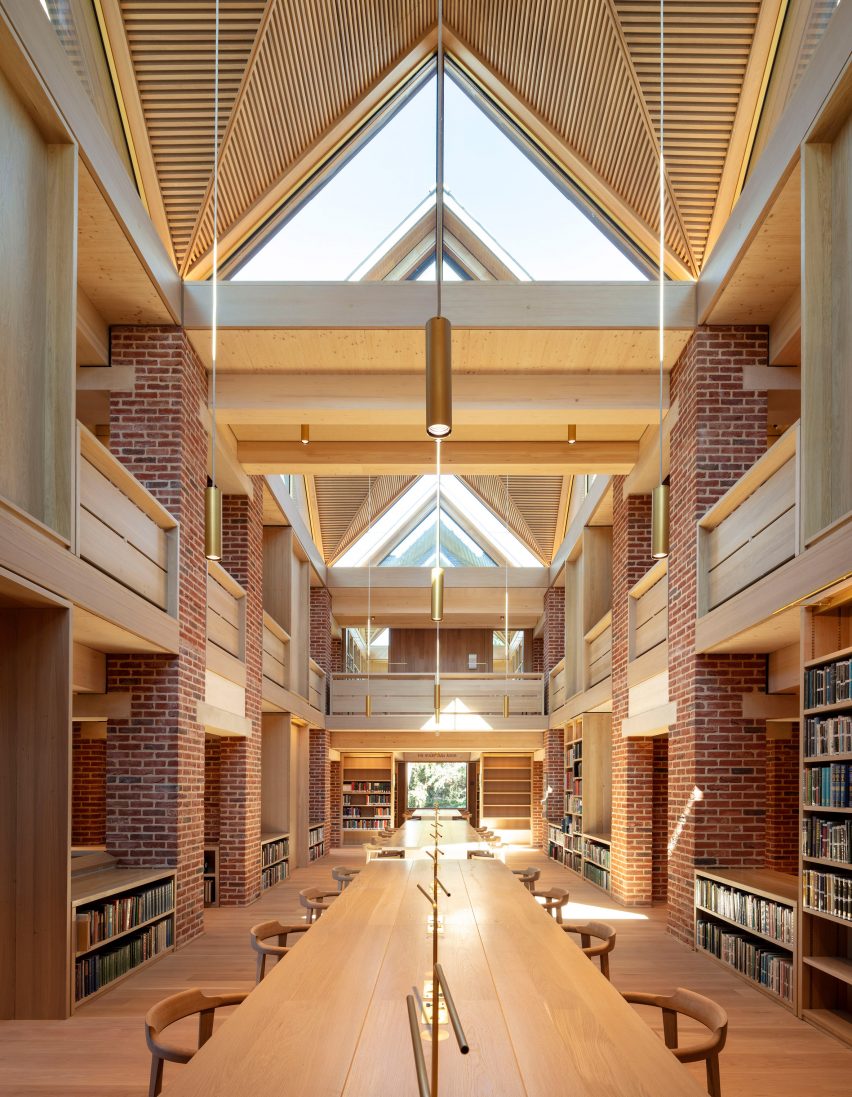
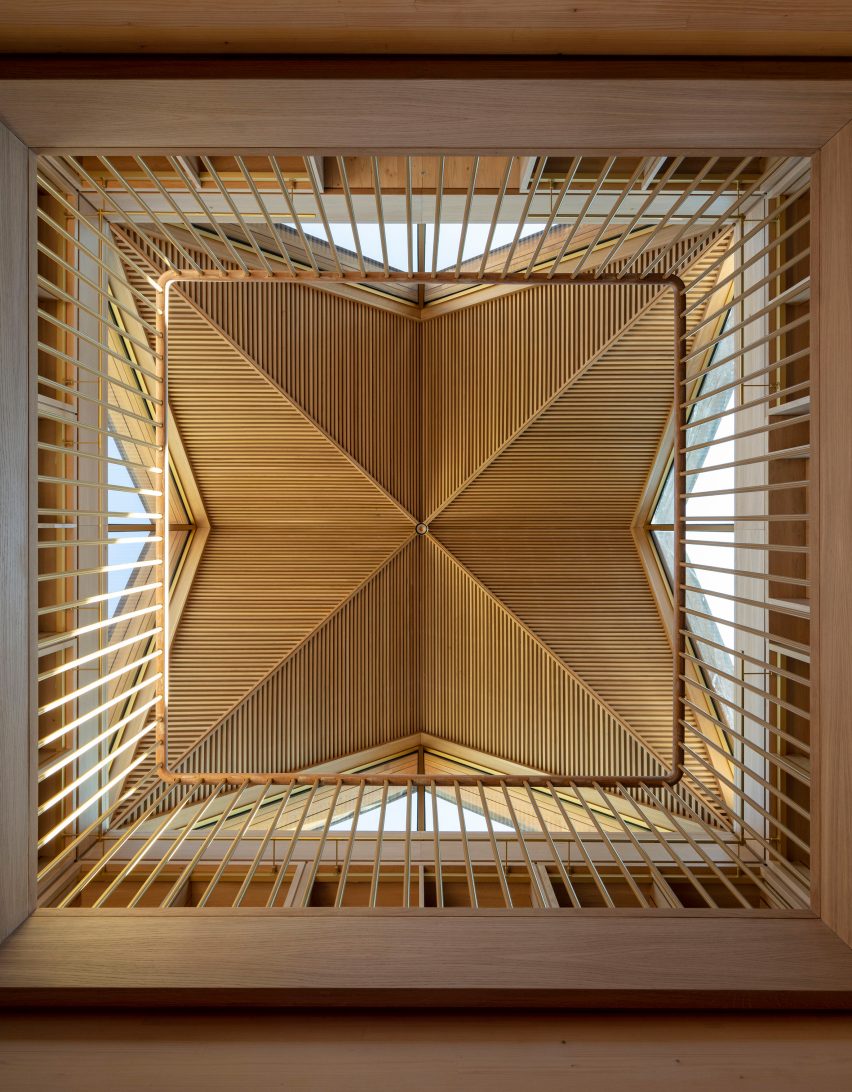
The New Library at Magdalene College by Niall McLaughlin Architects wins 2022 Stirling Prize — from dezeen.com by Lizzie Crook


Lessons From Higher Education To Guide Office Design — from allwork.space
The design successes and struggles of colleges and universities provide useful insight for organizations planning space for hybrid and coworking offices.


The 5 Biggest Artificial Intelligence (AI) Trends In 2023 — from forbes.com by Bernard Marr

Excerpt:

Today, the technology most commonly used to achieve AI is machine learning – advanced software algorithms designed to carry out one specific task, such as answering questions, translating languages or navigating a journey – and become increasingly good at it as they are exposed to more and more data.

Worldwide, spending by governments and business on AI technology will top $500 billion in 2023, according to IDC research. But how will it be used, and what impact will it have? Here, I outline what I believe will be the most important trends around the use of AI in business and society over the next 12 months.


Also relevant/see:


© 2025 | Daniel Christian