Flipped Classrooms and Academic Achievement — from learningscientists.org by Megan Sumeracki

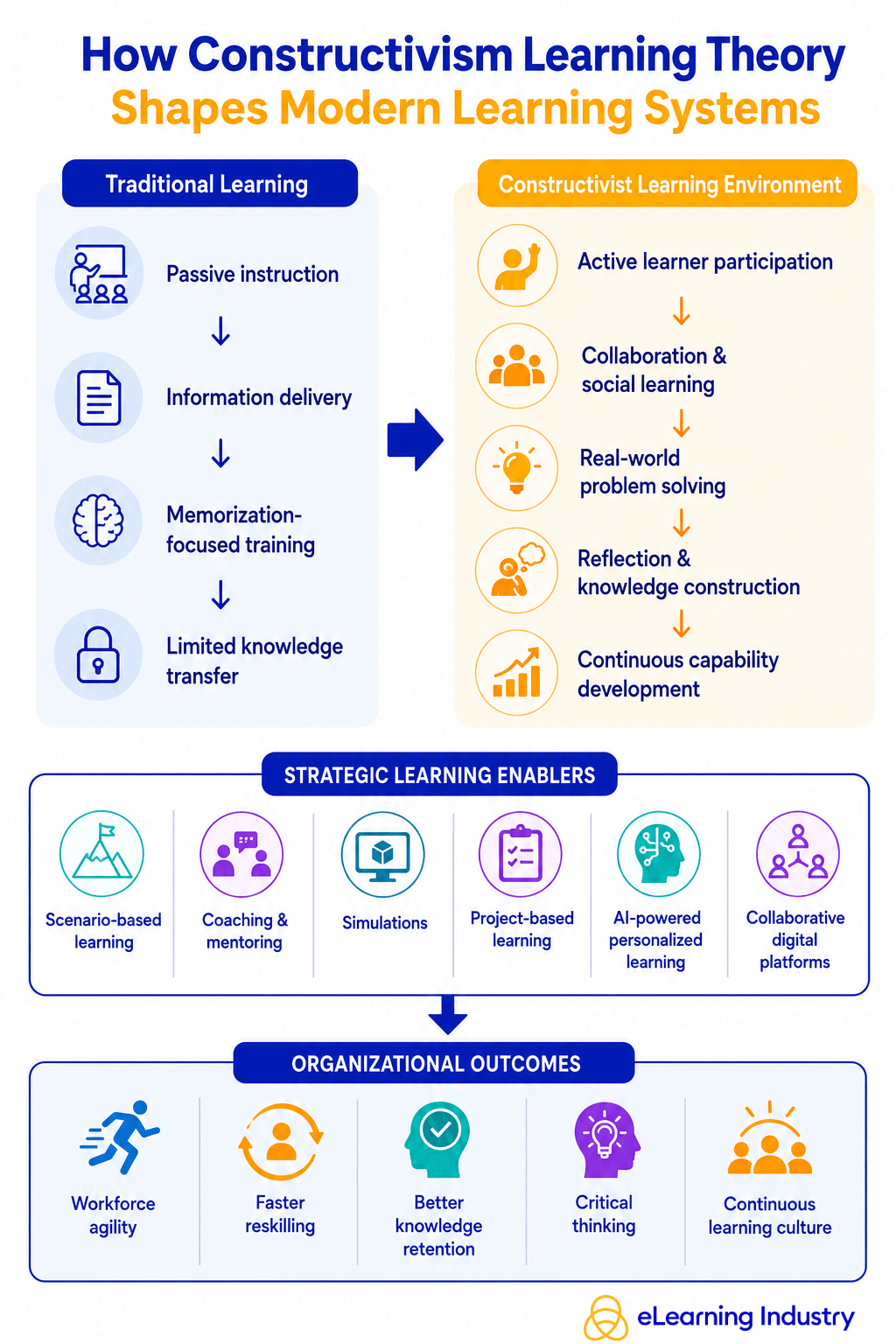
There are actually many, many ways to design a flipped classroom, and it has been fascinating to learn about the ways my colleague typically structures her hybrid, flipped-classroom courses. As a result, we’ve been able to engage in really interesting conversations about the best approach for this particular course, and why. As a result of some of these discussions, I came across a few recent meta-analyses related to the effects of flipped classrooms, the results of which I thought were worth sharing here (1, 2, 3).


Empowerment Spotlight: Building advocacy skills for families and students with disabilities — from rightquestion.org

Shove says the Right Question Institute has helped her help families advocate for themselves. She uses the Question Formulation Technique to teach adults and children to ask better questions and know when to use open-ended questions, which encourage longer, more detailed responses, and when to use close-ended ones, which tend to elicit short responses such as “yes” or “no.”

“It’s using that Question Formulation Technique to guide the discussion and obtain the information we all will use to make decisions and a plan for the child,” adds Shove, a former elementary school teacher who started doing advocacy work after discovering how tough it was to obtain special education services for her own children in the early 2000s.

We recently interviewed Shove to learn more about how she uses the Question Formulation Technique — and how families’ interactions with school officials can change after they master it.


Also see:


3 Retrieval Games to Try in Your High School Classroom — from edutopia by Andrew Atherton
These activities make reviewing content fun, so they can really motivate students to cement their learning.

These games can start or end the lesson, and they sometimes function as a transition within the lesson between topics. I don’t need to use them any longer, but I choose to use the following three games simply because they work really well. They can be used in any class and require very little (if any) preparation. These examples are drawn from the English classroom, but they could be adapted to suit most subjects.


Focusing Attention With a Student-Led Recall Activity — from edutopia.org
By providing every student with an opportunity to actively remember yesterday’s lesson, teachers can set the stage for today’s success.

By asking students to recall information on their own and then compare ideas with classmates, Bechard creates opportunities for each of them to engage with the content.

The process has the added benefit of strengthening retention: “When we remember something we had initially forgotten,” Lee says, “it is coming back into our working memory. It is having another opportunity to go into long-term memory. And so every time that happens, we are actually creating a stronger memory trace for that information.”

By building in a brief, intentional routine at the start of class, Bechard helps students reactivate prior learning, reconnect with the text, and begin each lesson with their attention focused, ready to learn.


How Free Play Supports Attention in Elementary School — from edutopia.org by Cynthia Michelini
Taking a short break outside allows students to reconnect with the world and refocus when it’s time to go back to the classroom.

The breaks were only five to 10 minutes long, and my intention was to ensure that the time outside was never structured, apart from a few guiding principles. Rule one: No teacher instruction. I didn’t want to give my students any direction other than how to be safe outside. Rule two: I encouraged them not to organize anything. Rule three: Just simply take a break. The results of this seemingly simple target surprised me.

First of all, my students’ attention span increased significantly. While this wasn’t a formal research project, trust me when I say that after 23 years of experience, I was shocked to realize how taking kids outside for a short period of time frequently can help support their focus in the classroom.


The IKEA Effect: You Built It, You’re Invested in It — from edutopia.org by Cathleen Beachboard, Nick Brousse
People become more invested when they help shape the systems around them, and teachers and school leaders can use that to create a strong school culture.

The difference is rarely the quality of the system itself. It’s whether the people affected by it helped build it. Psychologists call this the IKEA effect: our tendency to place greater value on things we help create. In one fascinating series of studies, researchers found that even young children valued objects they built more highly than identical objects made by someone else.

This sense of value is not explained simply by ownership. Children still value their creations more, even when they cannot keep them. It’s not explained by effort alone, either—more work doesn’t automatically create more attachment.

Instead, the researchers proposed something deeper: People become emotionally connected to what they help create because it begins to feel tied to their sense of identity. That finding may explain far more about school culture than we realize.


Two years ago, AI broke assessment. Now, it’s helping us to reinvent it. — from linkedin.com by Dr. Philippa Hardman


Also from Dr. Hardman, see:


A new study shows AI helped deliver 1.5 years of maths progress in 8 weeks — here’s how. — from linkedin.com by Dr. Philippa Hardman

…a new study shows AI helped deliver 1.5 years of maths progress in 8 weeks — here’s how.

Google DeepMind just shared the results of a randomised trial involving 1,763 students. Half used Gemini’s “Guided Learning” to learn maths; half didn’t.

The result: the group working with AI gained the equivalent of 1.2 to 1.7 years of extra progress compared to those who didn’t.

It’s tempting to read this as “Gemini’s Guided Learning mode works!” But the key point here is that Gemini didn’t work alone….

Look closer, and what made the difference wasn’t just the tech — it was a great teacher making expert use of it.


The Tyranny of College Admissions: Why It’s So Challenging to Have Real Change in K-12 Education — from gettingsmart.com by Jon Alfuth

Key Points

  • College admissions policy shapes K-12 practice. If colleges continue to privilege course sequences, seat time, and grades, high schools will remain constrained in how far they can move toward competency-based learning.
  • States and institutions already offer models for change. Wisconsin, Colorado, Indiana, and pilots like CUNY and Michigan Ross show that admissions can incorporate portfolios, demonstrations of learning, and durable skills.

If we could instead orient K-12 education around skill development and application rather than Carnegie Units and grades, we could create a new paradigm for where, when and how students demonstrate college and career readiness. Competency-based education moves schools and systems towards this desirable future that balances knowledge with skills. 

Despite tremendous evidence of its potential, efforts to accelerate this shift have been stymied by the tyranny of college admissions requirements and processes. Parents, teachers, administrators and policymakers end up in a quandary. Anyone attempting to shift away from this traditional course sequence is criticized as trying to lock kids out of higher education and we snap back to the way things have always been done. 


American Microschools 2026 Sector Analysis — from microschoolingcenter.org

The National Microschooling Center just published its latest report, the American Microschools 2026 Sector Analysis, it’s most ambitious yet.

This report comprises the most thorough research published to date on microschools in America, examining 1,000 microschools located in all 50 states, the District of Columbia and Puerto Rico. Most are currently operating, with prelaunch microschools as well as those which have closed their doors also included.

This 2026 edition of the annual American Microschools Sector Analysis series by the National Microschooling Center includes questions on a number of new topics, including ways microschools are impacted by different regulatory and policy stipulations, specifics of educational, business and operational aspects within the microschooling sector. Other questions revisit topics examined in previous studies, to illuminate trends over time and effects of growth and evolution on the ways microschools operate.


Rethinking Learning Design in Elementary Schools — from edcircuit.com
Why K–5 leaders must redesign—not just adopt—technology to restore attention, deepen thinking, and align AI with how children actually learn

Rethinking learning design in elementary schools is critical as screen time and AI reshape attention, thinking, and student engagement.

Designing for Thinking, Not Just Doing
At its core, learning design must shift from task completion to thinking development.

This requires creating environments where students:

  • Spend time processing ideas
  • Work through confusion without immediate answers
  • Build persistence through challenge

It also requires clarity around the role of technology.

Technology should:

  • Extend thinking
  • Provide meaningful feedback
  • Support exploration

It should not:

  • Replace effort
  • Short-circuit reasoning
  • Eliminate productive struggle

The goal is not to reduce technology use.

It is to ensure that students remain the ones doing the thinking.


Should We Integrate AI into Our Teaching?: Evidence-Based Guidelines for Deciding When AI Belongs — from Faculty Focus by Norman Eng, EdD

Four Questions for Deciding Whether to Use AI

Question 1: Will this AI tool help students use, recall, and demonstrate understanding of core disciplinary content?
Question 2: Will this AI tool require students to apply their learning to a new context?
Question 3: Will this AI tool support—not replace—independent, evidence-based reasoning?
Question 4: Will this AI integration preserve meaningful human interaction?


Christian: Could this be a part of our future learning ecosystems?


From DSC:
Could this be a part of our future learning ecosystems? Education as a personalized content feed.


Coursera wants users to learn through shorter, faster content  — from digitaltrends.com by Moinak Pal
Coursera wants online learning to feel more like TikTok
.

Online learning platform Coursera is taking a page straight out of TikTok’s playbook. The company has launched a new AI-powered feed designed to serve short-form educational content in a scrollable, personalized format, signaling a major shift in how digital learning platforms may try to keep users engaged.

The feature introduces bite-sized video lessons, clips, and explainers curated through artificial intelligence based on a user’s interests, learning habits, career goals, and previous course activity. Instead of committing to hour-long lectures or full certification programs upfront, users can now discover short educational snippets designed to make learning feel more casual, accessible, and addictive.

Users scroll through a feed of short educational videos and AI-curated learning moments covering topics ranging from coding and business to AI, productivity, data science, and personal development.


Summer 2026 with the Michigan Learning Channel:
2026 Summer Activity Books Now Available!

Get ready for a summer full of learning, fun, and skill-building! The Michigan Learning Channel’s 2026 Summer Activity Books are now on sale—created to help kids stay engaged, curious, and confident all summer long.

.


What Michigan schools reveal about reversing chronic absenteeism — from hechingerreport.org by Jill Barshay
Time-intensive home visits show promise

Absenteeism is a huge and seemingly intractable problem for the nation’s public schools. And Michigan has one of the worst attendance rates in the country.

Yet a new study released in May offers hope. Researchers found that some Michigan schools appear to be substantially better than others at getting students to show up, and identified one intervention — frequent home visits to families whose children are absent from class — that was used more often by schools making a difference.

The findings are a reminder that “best practices” recommendations often overstate what researchers actually know. Schools can make a meaningful difference in attendance, but identifying genuinely successful schools is hard, isolating why they succeed is even harder, and simple solutions rarely hold up under scrutiny.


What AI-Enabled Education Actually Looks Like When It’s Working for Workforce Students — from gettingsmart.com by Stephen Griffin

Key Points

  • Institutions can use AI to make skills, pathways, and job outcomes visible to students and employers in ways traditional transcripts cannot.
  • Academic affairs, workforce development, career services, and employers need a shared definition of readiness and competency before tools can deliver meaningful value.

The second is portable competency records. Learning and employment records — AI-enabled documentation of what a student knows and can do, expressed in language employers recognize — are the infrastructure that makes credentials legible across the education-to-employment continuum. When a student can show an employer not just “completed Supply Chain Management 101” but “demonstrated proficiency in inventory optimization, route planning, and logistics software at the industry-recognized level,” the credential stops being abstract. It becomes evidence. Building these records requires investment in tools, yes — but more importantly, it requires faculty, workforce development staff, and employer partners to agree on what competency actually looks like before the technology is ever purchased.


When Students Don’t Show Up, Everyone Pays — from thelearningcounsel.com by Dr. Atiya Y. Perkins

The imagined student is disengaged, indifferent, choosing video games over algebra. The actual student is frequently exhausted. She may be the oldest child in a household where a parent is ill, which means she is responsible for getting younger siblings fed and out the door before she can even think about her own way to school. He may be managing an untreated health condition because his family cannot afford consistent medical care. They may have moved three times since September and still haven’t fully sorted out transportation to a building they barely feel they belong to.

Toldson’s research documents more than 70 distinct barriers that contribute to chronic absenteeism, and very few of them have anything to do with motivation. Housing instability, food insecurity, unaddressed mental health needs, and unreliable transportation all appear on that list. So does something we rarely discuss openly: the growing number of students who have caregiving responsibilities that would overwhelm even the most capable and supported adults.

Understanding this should fundamentally change how we respond. A court referral does not help a student whose bus route was eliminated. A warning letter does not make a family that moved last month feel more at home. Instead, these warnings and referrals actively damage the relationship between schools and the families we most need to reach, at precisely the moment when trust is the only currency that matters.


Inside the latest global research on school cellphone bans — from hechingerreport.org by Jill Barshay
First wave of studies raises questions about other digital distractions and cellphones at home

But the first wave of rigorous research on those policies — including two major U.S. studies — does not point neatly in one direction. Some studies have found modest academic gains from cellphone restrictions. Others have found little to no effect on test scores, even when student phone use dropped sharply. Some studies suggest benefits for low-achieving students, others for girls, and still others for boys. In some places, attendance or student well-being improved. In others, they didn’t.

The scientific process can be messy. Cultural differences may explain why the bans are more effective in some places than others. But almost any education reform will get different results in different places, even within a single country. And the current confusion may also stem from how difficult it is to study cellphone bans in the real world.

Ideally, researchers would randomly assign some students to surrender their phones while others kept them, and then measure the effect on academic performance — the equivalent of a clinical trial for an education policy. But those experiments are difficult to enforce in schools, and so far only one study, conducted among college students in India, has attempted a randomized controlled trial. It produced a notably strong improvement in course grades for lower achieving students.

Instead, most studies rely on rougher real world comparisons that capture only partial effects of cellphone restrictions.


Deans for Impact Releases New Edition of The Science of Learning  — from deansforimpact.org
Second edition of seminal report reflects new research amidst growing momentum for evidence-based instruction in teacher preparation and PK-12.

AUSTIN, Texas (May 19, 2026) – Deans for Impact (DFI) today released the second edition of The Science of Learning, a report translating cognitive-science research into practical implications for teaching. The updated edition includes new research on memory, attention, motivation, and learning misconceptions, offering educators a research-based foundation for understanding how to support durable student learning.

First released in 2015, The Science of Learning is DFI’s most widely-used and cited resource, with more than one million downloads. Since its publication, DFI has supported nearly 300 teacher-preparation programs to make instructional quality a priority in the way teachers are prepared, directly impacting more than 110,000 teachers over the last decade.

The second edition arrives at a moment when more than 40 states have made meaningful investments in strengthening evidence-based instruction, particularly in early literacy, mathematics, and the use of high-quality instructional materials. The science of learning supports future teachers to build a comprehensive foundation for instructional decision-making that cuts across content areas and grade levels.

The report has been endorsed by more than 100 field experts and leading organizations across the United States and internationally.

Download the report at deansforimpact.org/thescienceoflearning.


An example excerpt:

 
© 2025 | Daniel Christian