Addendum on 2/14/21:


When the Animated Bunny in the TV Show Listens for Kids’ Answers — and Answers Back — from edsurge.com by Rebecca Koenig

Excerpt:

Yet when this rabbit asks the audience, say, how to make a substance in a bottle less goopy, she’s actually listening for their answers. Or rather, an artificially intelligent tool is listening. And based on what it hears from a viewer, it tailors how the rabbit replies.

“Elinor can understand the child’s response and then make a contingent response to that,” says Mark Warschauer, professor of education at the University of California at Irvine and director of its Digital Learning Lab.

AI is coming to early childhood education. Researchers like Warschauer are studying whether and how conversational agent technology—the kind that powers smart speakers such as Alexa and Siri—can enhance the learning benefits young kids receive from hearing stories read aloud and from watching videos.

From DSC:
Looking at the above excerpt…what does this mean for elearning developers, learning engineers, learning experience designers, instructional designers, trainers, and more? It seems that, for such folks, learning how to use several new tools is showing up on the horizon.


January hiring slips 2.8%; bright spots in U.S. are legal, software and finance — from linkedin.com by George Anders

Excerpt:

If you’re looking for further evidence that U.S. industry is running on two different tracks these days — in which “laptop economy” professions such as legal and finance are doing fairly well, while face-to-face jobs are facing tough times — that message is starkly clear in the latest edition of LinkedIn’s Hiring Report.

For January, the U.S. Hiring Report showed a 2.8% decline from December’s reading, and an overall 7.6% drop from a year earlier. What looks like relatively mild slippage in aggregate turns out to be two trends pointing in sharply different directions once the focus switches to industry-by-industry outcomes.

Three industries remain ahead of their hiring tempo a full year ago, in spite of the overall decline. They are legal (+3.8%), finance (3.4%) and software and information technology (+3.0%).


A beautiful picture

A beautiful picture


Arvizio Brings AR Collaboration to Zoom Meetings with Immerse 3D App for Smartphones, HoloLens & Magic Leap — from next.reality.news by Tommy Palladino

Excerpt:

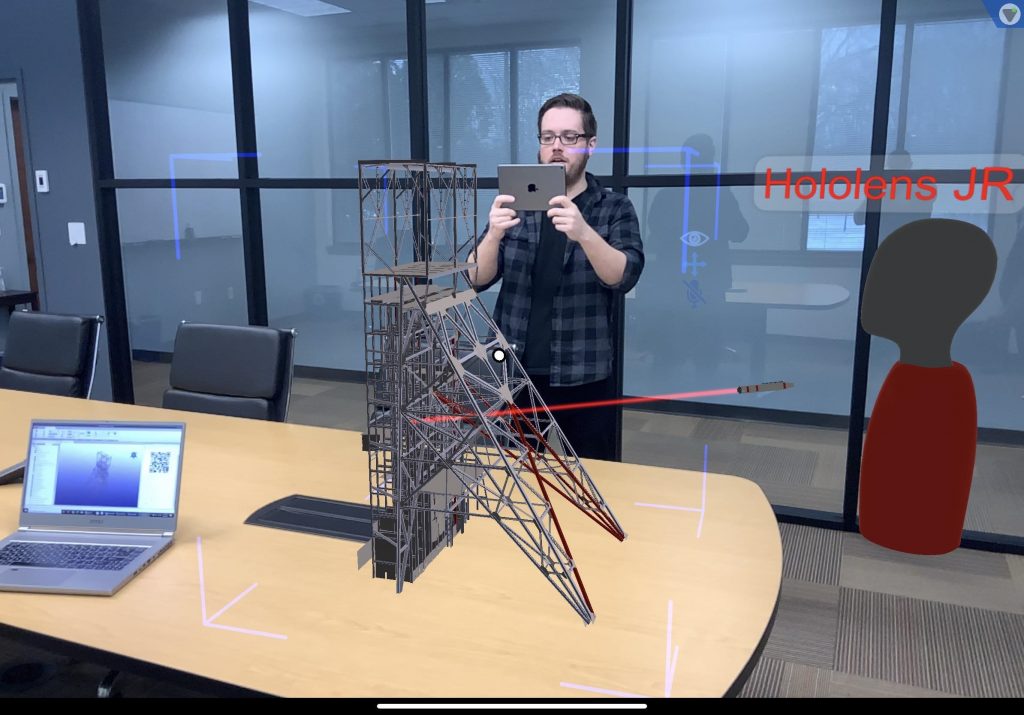
On Monday, the Canada-based company revealed Immerse 3D, an app for iOS, Android, HoloLens, and Magic Leap (listed as Arvizio Immerse 5.0) that works in conjunction with Arvizio Director PC collaboration software and Arvizio Cloud service to enable video conference participants to interact with the same 3D model simultaneously in AR.

Arvizio Brings AR Collaboration to Zoom Meetings with Immerse 3D App for Smartphones, HoloLens & Magic Leap

Image via Arvizio


How Much Has Covid Cost Colleges? $183 Billion — from chronicle.com by Paul N. Friga

Excerpt:

How bad is it? To answer that, my colleagues and I sought to go beyond surveys. We conducted an extensive review of publicly announced revenue and budget news from the top 400 universities in U.S. News & World Report, as well as its top 100 liberal-arts colleges, drawing from news released from March through December. We were able to obtain data from 107 of those institutions (21 percent). The results are dire. Our research suggests that we are experiencing the biggest financial losses our sector has ever faced. The institutions we tracked averaged an estimated 14-percent aggregate decline in revenues across fiscal years 2020 and 2021, and further losses loom as drops in enrollment, tuition freezes, and Covid-related expenses continue.

What do these cuts and losses add up to? We estimate the impact as follows: $85 billion in lost revenues, $24 billion for Covid-related expenses, and $74 billion in anticipated future decreases in state funding. That adds up to a whopping $183 billion.

Also see:


The Chegg situation is worse than you think — from eliterate.us by Michael Feldstein

Excerpts:

Forbes just ran with an article entitled “This $12 Billion Company Is Getting Rich Off Students Cheating Their Way Through Covid“.

Ouch.

Chegg -- This $12 Billion Company Is Getting Rich Off Students Cheating Their Way Through Covid

[Per Michael] To sum up:

  • Publishers, after selling expensive textbooks to students, sold the answers to the homework questions in those expensive books to Chegg.
  • Chegg sells the answers to the questions to the students, who often use them to cheat.
  • To combat this problem, universities pay for proctoring software, which is apparently more effective at preventing students from going to the bathroom than it is at preventing cheating.
  • To add insult to all of this injury, “to chegg” is now apparently a verb in the English language. We will all have to live with that linguistic violence.

Addendum on 2/9/21:


Nearly three-quarters of pandemic affected parents feel students should learn subjects they’re passionate about, not those of little interest — from newswire.ca by Unschooling School

Excerpt:

TORONTO, Feb. 1, 2021 /CNW/ – A nation-wide survey of Canadian parents released today finds that nearly three in four of them (73%) believe the education system today would be better for students if it were structured to give them more choice and time to just learn those subjects and topics, they are either excited or passionate about.

Also, more than two-thirds (67%) want a school reset, so students learn more of the subject areas they’re passionate about and not those of little interest to them.

From DSC:
I feel the same way about many K12 systems here in the United States. Our youngest daughter — who has been studying at home this past year — has so much more energy and passion when we give her more agency to do the things that *she* wants to do and to learn about the things that *she* wants to learn about.

Learning channels of the future will provide us with more choice, more control.

And readers of this blog know that I’m all about the love of learning (or even liking it better), seeing as we all need to be lifelong learners these days.

The more we enjoy learning = The better, more fulfilling, enjoyable that our lives will be! (Not to mention how much more productive we’ll be as well.)


Clever Typography Designs That Make You Think — from hongkiat.com by Alvaris Falcon

Copernicus

scream

elevator


What will the hospital of the future look like in a post COVID-19 world? — from protocol.com by Jeroen Tas and Sean Carney

Excerpt (emphasis DSC):

One thing we have realized is that COVID-19 has accelerated three transformational trends that already existed before the pandemic, but are now dramatically reshaping healthcare: the concept of a networked healthcare system, the increasing adoption of telehealth, and the idea of virtual care and guidance. At the same time, we have seen consumers becoming much more engaged in their personal health and that of their families.


From DSC:
Next up…telelegal; and, possibly, more virtual courtrooms.


Also see:


Five free keynotes on online learning for streaming into virtual conferences — from tonybates.ca by Tony Bates

These are the five keynotes:

  1. Developing quality blended learning courses
  2. Digital learning and the new economy
  3. New technologies and their potential and limitations for teaching and learning
  4. Ten lessons for online learning from the Covid-19 experience (based on research findings)
  5. Online learning in the (k-12) school sector

From DSC:
Thanks Tony for sharing these keynotes and your expertise — which is drawn from so much research and experience. Thanks for giving it away — may your gift bless many. (And I thought you were going to retire…?!? Selfishly, I’m/we’re glad you didn’t!)   🙂


Equipping Youth to Change the World — from gettingsmart.com by Tom Vander Ark

Excerpt:

Through self-directed learning and impact projects, participants build stronger mindsets, develop real-world skills, learn to code, and expand their social capital. TKS’ teachers hail from leading companies in every sector.

The TKS team works with big companies to see what problems they are facing. This creates a bank of problems students can choose to work on. “[TKS] is as much about problem finding as it is about problem-solving,” says Navid.


From DSC:
THIS is incredible technology! Check out the Chroma-keying technology and the handwriting extraction feature of the Sony Analytics appliance.

#AR hits the active learning classroom! THIS in incredible technology/functionality! See through your instructor as they write on the board!

From Sony’s website (emphasis DSC):

No matter where the speaker is standing, the Handwriting Extraction feature ensures that any words and diagrams written on a board or screen remain in full view to the audience — via AR (augmented reality).

Even if the speaker is standing directly in front of the board, their ideas, thinking process, and even their animated presentation, are all accessible to the audience. It’s also easy for remote viewers and those playing back the presentation at a later date to become immersed in the content too, as the presenter is overlaid and the content is never compromised.

Also, the chroma keying tech can be useful/engaging as well.

Chroma keying hits the Active Learning Classroom as well


Grab your audience’s attention and increase their engagement with intelligent video analytics technology.

I saw this at IUPUI’s recent webinar/tour of their new facilities. Here’s further information on that webinar from last Friday, 1/29/21:

Designing Large Active Learning Classrooms webinar/tour on 1/29/21 from the Mosaic Program at Indiana University; also features rooms/staff at IUPUI.


Learning Ecosystem: Past, Present, and Future — from elearningindustry.com by Satyabrata Das
When we talk of an ecosystem, the first thought that comes to our minds is a biological ecosystem comprising of various species that live in harmony within a particular environmental setup or region.

Learning is no longer a standalone learner-teacher-content interaction, but much more.

Learning is no longer a standalone learner-teacher-content interaction, but much more. It has now become an enriched complex mechanism that has the potential to truly maximize the learning outcome—provided it is being nurtured and guided properly. A word of caution must be said here, an ill-nurtured learning ecosystem might equally be detrimental for the organization in shaping the capabilities of its future workforce.

The eLearning industry is surely going to play a big role in shaping the learning ecosystem and making it more fruitful, both for individuals and corporations.


More colleges are partnering with boot camps to tap demand for short-term programs — from by Natalie Schwartz
Institutions are lending their credibility to outside education providers as they seek help keeping pace with fast-changing technical fields.

Excerpt:

Coding boot camps have long been viewed as the antithesis of traditional higher education. They focus more heavily on technical training. Their programs usually last weeks instead of years. And they are mostly free from the heavy regulation that pervades the rest of the sector.

But recently, more of them have been joining forces with colleges and universities. This month, for instance, Flatiron School announced it is working with the University of Cambridge, in the U.K., to launch a 10-week data science program through the college’s continuing education department.

It’s one of several coding schools looking to collaborate more with colleges. Course Report, a coding boot camp review site, added 138 schools last year to its directory, said Liz Eggleston, its co-founder and editor. Around one-third were offered through universities. 

 
© 2025 | Daniel Christian