Student Experiences Learning with Technology in the Pandemic — from educause.edu

Excerpts:

However, as most institutions pivoted to remote learning as a result of the COVID-19 global pandemic in 2020, we also pivoted to conduct a special fall 2020 study to gain insights on the student experience during what has been an exceptional time of disruption. In this report, we share results from the study related to student experiences with technology in the for-credit courses they were taking in fall 2020 in which they felt they were learning the most. Specifically, we asked students to think about their best course—the one in which they learned the most—and tell us about the learning environments and modalities of those courses, as well as instructors’ uses of technology in, the organizational and design features of, and the most and least effective uses of technology they experienced in those courses.1

Steps You Can Take
Institutional leaders should consider the following steps as they continue to respond to the most immediate needs of students and plan for a post-pandemic future.

  • Invest in the design, development, and implementation of hybrid course models and the people who support them.
  • Connect faculty with instructional designers and instructional technologists.
  • Put students at the center of your teaching.

The best student experiences were the ones that were focused on student learning experiences and did so from a position of empathy, care, and flexibility. If we learn one thing from higher education’s pandemic year it’s that higher education needs to invest in promoting caring, student-centered, and adaptive pedagogies.
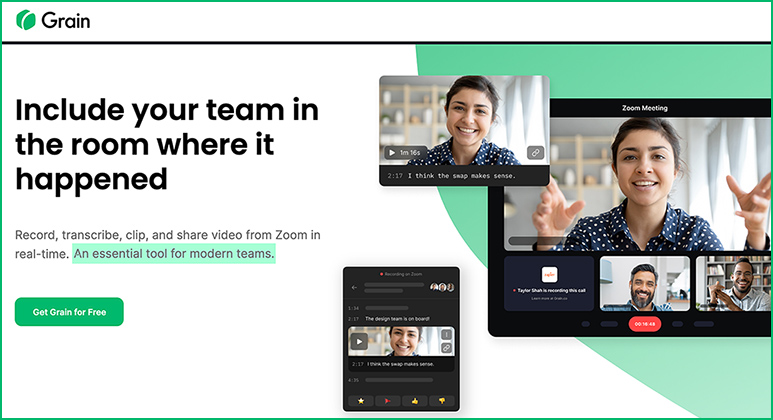
 

Record, transcribe, clip, and share video from Zoom in real-time. — This Grain tool/resource is from Jeremy Caplan’s Wonder Tools newsletter. Thanks Jeremy for passing this info along!

From DSC:
These kinds of tools should make for interesting discussions in online-, hybrid-, and hyflex-based courses…as well as in microlearning-based streams of content perhaps.

This image shows the home page of a tool called Grain -- Record, transcribe, clip, and share video from Zoom in real-time.


Curiosity Stream Is the Streaming Service Tailored for People Who Love To Learn — from
And for less than $20 a year, Curiosity Stream offers something for everyone.

Curiosity Stream, a streaming service that’s committed to educational, informative content that enlightens as it entertains.

curiosity stream

Excerpt:

Once upon a time, channels like Discovery and The Learning Channel sought to enlighten their viewers about the world around them with documentaries and other educational programing. But today, there are fewer and fewer channels committed to this goal, and watered-down “reality television” reigns supreme. It seems the golden age of basic cable television is gone all but gone. Luckily, there’s Curiosity Stream, a streaming service that’s committed to educational, informative content that enlightens as it entertains.


With New Online Marketplace, Community Colleges Hope to Better Compete With For-Profits — from edsurge.com by Yashvi Peeti

Excerpt:

Community colleges are staking a claim in the territory of online course marketplaces.

They’re about a decade behind their university counterparts, who helped to found edX in 2012, the same year that startup Coursera launched its competing service, now worth millions.

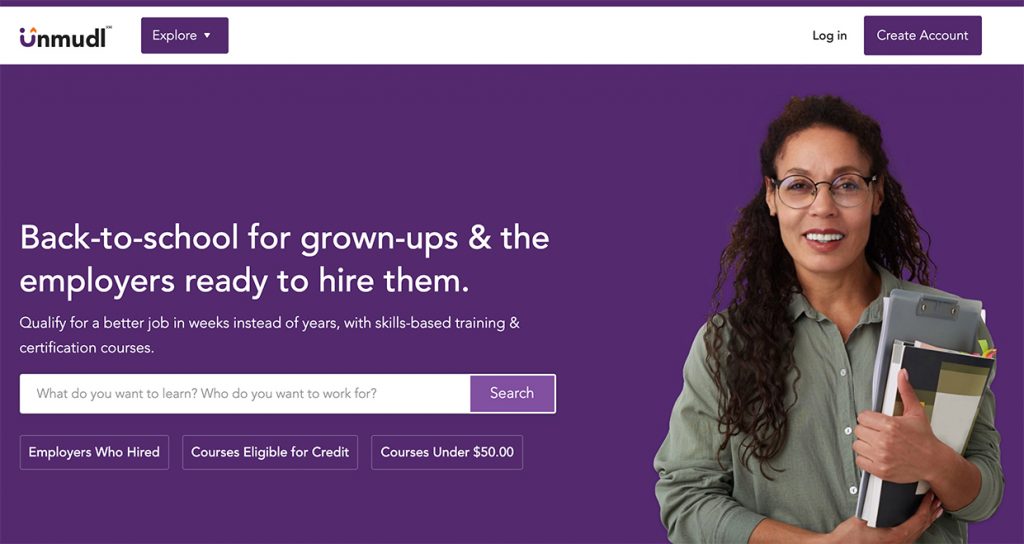
But leaders of a new platform called Unmudl say the time is right for community colleges to collaborate and make their workforce-training programs available more widely by marketing them through a shared website.

It’s a vision quite different from the traditional mission of community colleges to serve their communities—the literal, physical ones that surround their campuses.

Also see:

unmudl.com


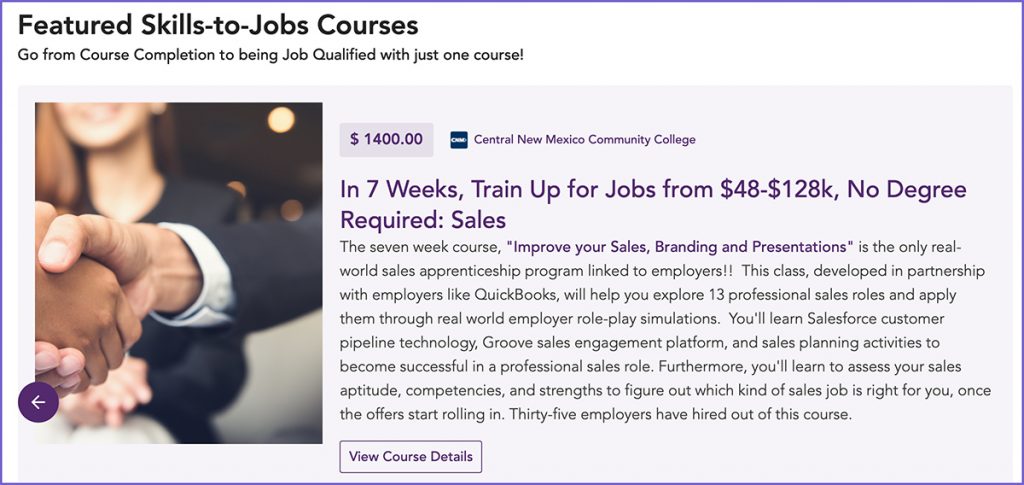
Skills to jobs courses from Unmudl


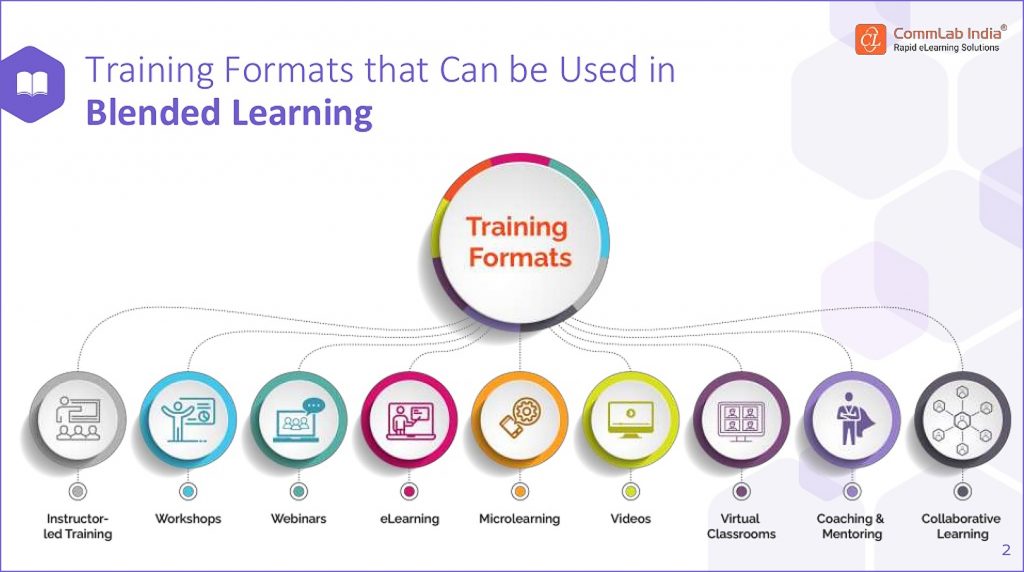
The image below was excerpted from:


A great example of a learning ecosystem from CommLab India!


As school districts move from “reopening” to “recovery,” what will they be recovering from? — from crpe.org by Paul Hill & Michael DeArmond

Excerpts:

Coming out of the pandemic, these leaders thought it was time to try something fundamentally different. “We have to rethink school, period,” one told us. 

They thought schools needed to “recover” from traditional conceptualizations of schooling that had never provided all students with high-quality learning opportunities. As these leaders talked about rethinking public education, they put lots of ideas on the table, some of which they piloted during the pandemic:

  • Hybrid or blended instructional models that combine in-person and online learning
  • Fully remote options
  • Learning pods where students work independently or receive one-on-one support
  • Mixed-age classes based on proficiency level
  • Grade band progression as opposed to grade levels
  • Self-paced individualized instruction
  • Co-teaching
  • Weekend and intersession camps and instructional programming
  • Evening learning opportunities (e.g., time in CTE shops, art studios, etc.)
  • Enhanced summer programming
  • “Do-over years” (where students aren’t identified as having been “retained”)

Also see:

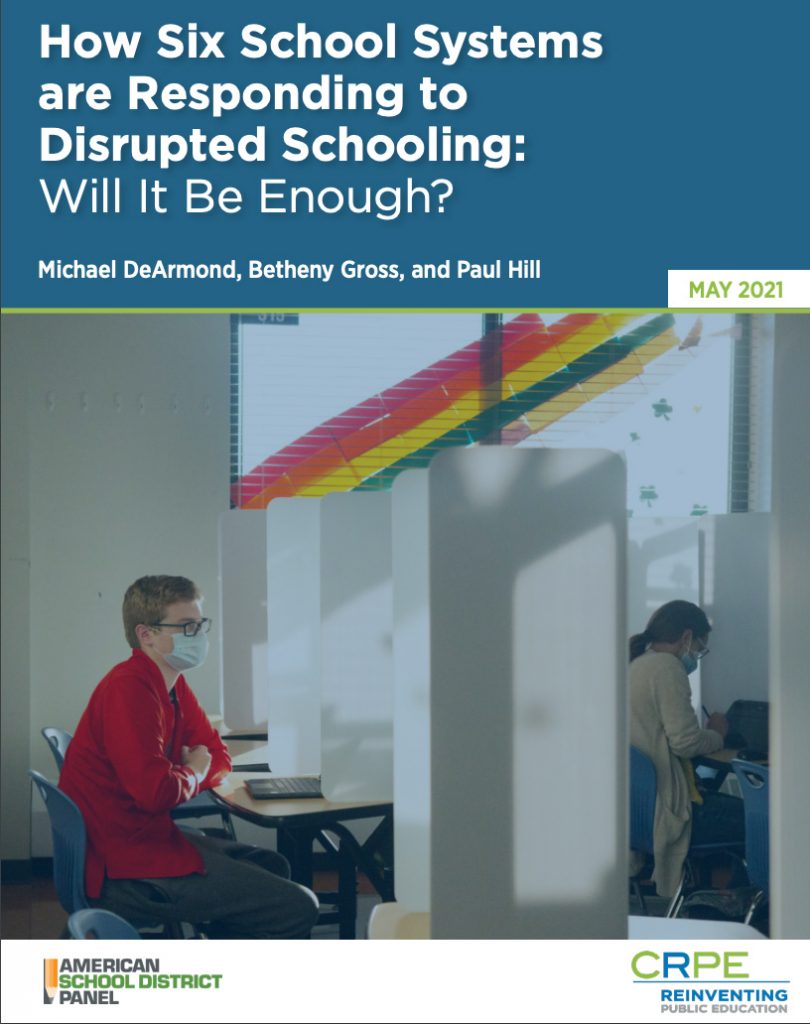
How Six School Systems are Responding to Disrupted Schooling: Will It Be Enough?

From DSC:
When I see the word acceleration mentioned here…it (at least initially) raises a red flag for me. Speeding up the trains will leave many further behind. And if that’s not what’s happening here, I’d say that another word or phrase be identified and used here…as many others will have the same initial reaction to this word. A PR problem.

K-12 education in America is a like a quickly moving train that stops for no one.


Per Elnaz Sarraf (She/Her), Chief Evangelist at ROYBI Robot:

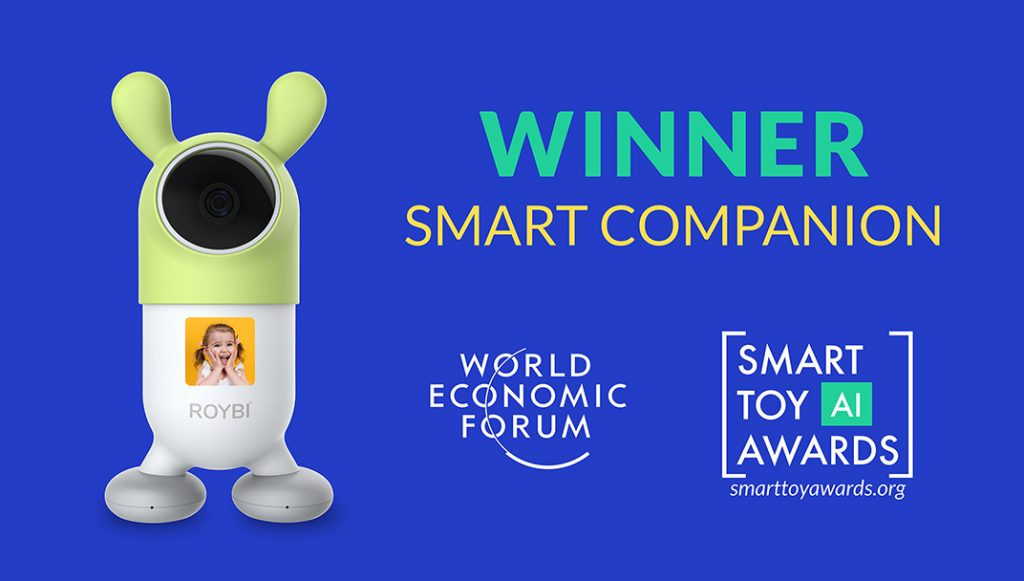
ROYBI INC, the creator of the award-winning ROYBI Robot, announced today that it was named the winner of the World Economic Forum Smart Toy Awards 2021 in the category of Smart Companion. This is a remarkable achievement!

ROYBI won one of the Smart Toy Awards as presented by the World Economic Forum

The category winner had to meet four important criteria:

  1. Data Privacy & Cybersecurity
  2. Accessibility
  3. Innovative Use of AI Transparency
  4. Healthy Play in Childhood Development.

According to the World Economic Forum representative, Seth Bergeson, our ROYBI Robot met and exceeded these important criteria. ROYBI’s award acceptance ceremony can be watched here.


Also see:

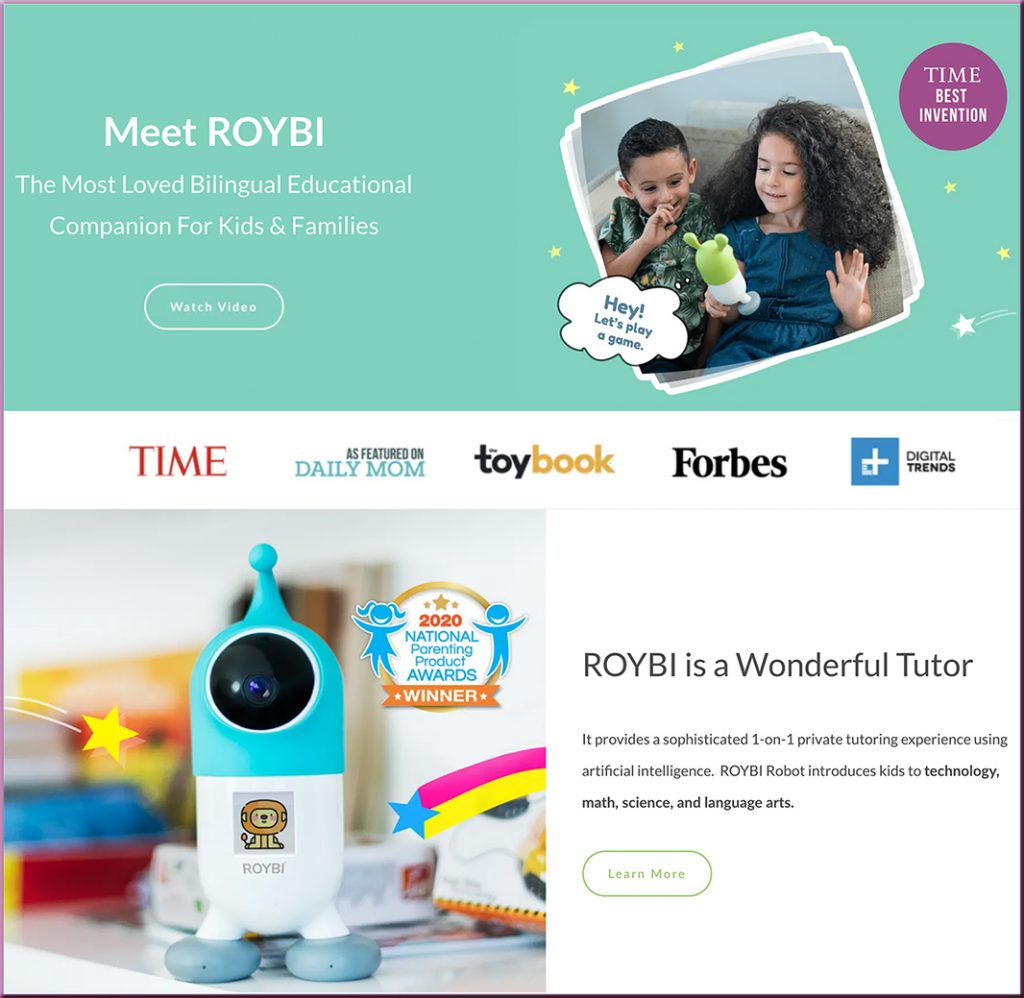
ROYBI provides a sophisticated 1-on-1 private tutoring experience using artificial intelligence. ROYBI Robot introduces kids to technology, math, science, and language arts.


2021 Grad’s Guide to Getting Hired: Top jobs, cities and industries to get your start — from linkedin.com

Excerpt:

“Congratulations, graduate!”

Whether the message is delivered over Zoom or at a backyard barbecue, it’s a season of celebration. But many new grads are also asking, “Where do I go next?”

LinkedIn’s Grad’s Guide to Getting Hired aims to uncover job opportunities for anyone kicking off their careers. Our data scientists and editors have parsed the data to find the jobs, industries and cities with strong options for new grads and others starting out — as well as more insights that can help career beginners find their way.


Striking Photojournalism Shots from the Andrei Stenin Contest — from fubiz.net

An artistic picture from Danilo Garica Di Meo -- from Italy

Excerpt:

The Andrei Stenin International Photo Contest is an annual contest for young photojournalists aged between 18 and 33 years old. It is Russia’s only platform for discovering new photojournalists and for allowing them to make a name for themselves on the world photojournalism stage.


Snap Spectacles Finally Evolve into Full AR Smartglasses with Standalone Immersive Superpowers — from next.reality.news by Tommy Palladino

Also see:

Snap Now Lets You Build Lego in AR Remotely with Others, Reveals AR Tie-Up with Disney, Plus AR Business Tools — from next.reality.news by Adario Strange

Excerpt:

On Thursday, during the company’s Snap Partner Summit 2021, a wide range of tie-ups and new features were unveiled, with some of the biggest brands on the planet joining the AR fray.

Perhaps the most notable partnership is Snap’s new effort with the Lego company. Although Lego is known for allowing kids of all ages to use plastic building blocks to create art, toys, and even robots, now Lego fans will be able to build Lego constructs together, remotely, via a new feature from Lens Studio called Connected Lens. The new feature is available immediately via Snapchat.


You’ll Soon be Able to Use Your Apple Watch Without Touching the Screen — from wsj.com by Katie Deighton
Companies like Apple and Spotify are making it easier for people with disabilities to use their products. Accessibility advocates hope more follow suit

AssistiveTouch, a new feature coming to the Apple Watch, will let users operate the device without having to touch the screen or controls.

AssistiveTouch, a new feature coming to the Apple Watch, will let users operate the device without having to touch the screen or controls. It was designed with people who have upper-body limb differences in mind.

PHOTO: APPLE INC.

Excerpt:

Later this year, Apple Inc. will introduce features that allow users to control an iPad with their eyes, and its smartwatch with gestures like a pinch or a fist clench.

The company announced the moves this week as part of Global Accessibility Awareness Day on May 20, an event established in 2011. Other big tech players revealed initiatives and commitments of their own, from automatic podcast transcriptions by Spotify Technology S.A to the updated design of a specific virtual block in Microsoft Corp.’s “Minecraft” to make it more visible to colorblind players.


If You Thought Working From Home Was Messy, Here Comes Hybrid Work — from wsj.com by Chip Cutter
Mandatory Mondays and Fridays. Unused desks and crowded conference rooms. Employers and workers navigate a return to offices.

Excerpts:

Some companies that are hiring say they can’t find knowledge workers willing to come into an office five days a week, according to chief executives, human-resource chiefs and recruiters.


It’s become really sort of a requirement if you’re looking for top talent,” Mr. Herrington says. “Those folks are pretty much saying, ‘Hey, if I can’t have a bit of a hybrid work environment, then I’m probably not going to be interested.’”

From DSC:
I’ve often noticed that the problems that we work on in higher ed are occurring in K12 and also in the corporate world. How to move forward from this Covid19 situation is another similar problem being worked on. Perhaps with some different/additional questions for HE and K12:

  • Where do the students prefer to be? In face-to-face (F2F)-based situations? 100% online? Hyflex? Hybrid? Other?

But really, I wonder if things don’t boil down to what the market will dictate…?


Law Firm Deregulation Programs Pick Up Speed in Utah, Arizona  — from news.bloomberglaw.com by Sam Skolnik

Excerpt:

Efforts to allow non-lawyers to own law firms in Arizona and Utah are picking up steam, as participating companies say it’s inevitable that more states will be following similar paths.

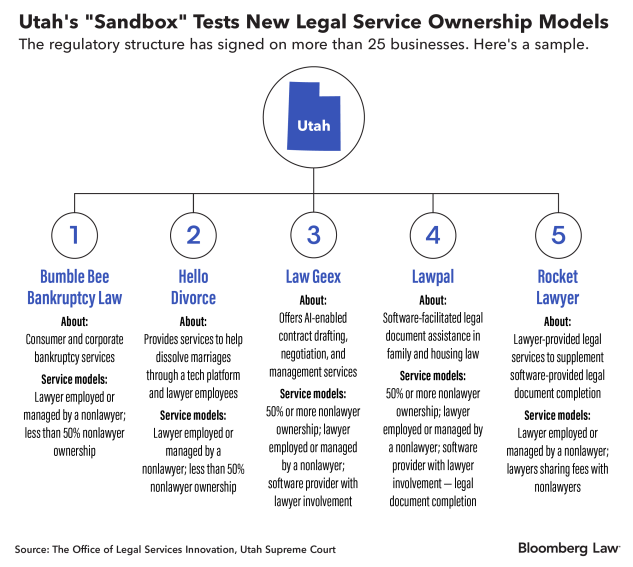
Utah’s regulatory “sandbox” and Arizona’s “alternative business structures” program are being closely watched by the country’s largest law firms like Snell & Wilmer, which is actively weighing the possible benefits.

“Snell & Wilmer has considered and is considering opportunities that these changes may present to a traditional law firm,” said Mark Morris, a Salt Lake City-based partner with the firm, which also has offices in Phoenix and Tucson, Arizona. The firm, he said, “is closely watching the successes and failures of others who are actively participating in these programs to help guide any future decisions.”

Utah's sandbox tests new legal service ownership models


Michigan appeals to former teachers as districts face ‘dire’ shortage — from mlive.com by Kayla Miller

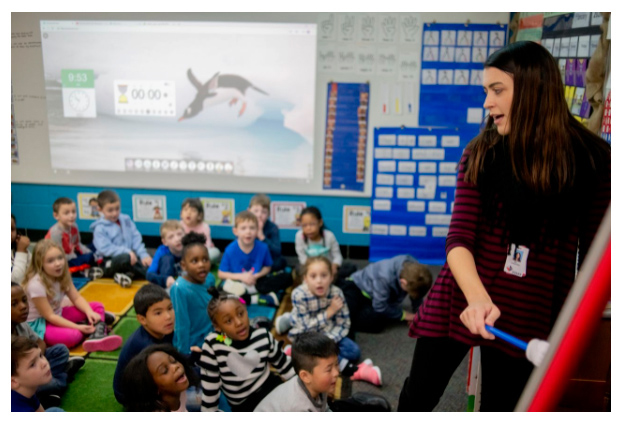
Kindergarten teacher Melissa Sanborn instructs students Kindergarten teacher Melissa Sanborn instructs students…Thursday, Jan. 23, 2020 at Cook Elementary School in Grand Blanc. (Jake May | MLive.com) Jake May | MLive.com

Excerpt:

Looking ahead to August, Beecher Community School District is expecting to be short about a quarter of their needed teaching staff for the 2021-22 school year.

The Flint-area district is one of many schools across Michigan fighting to keep educators in classrooms amid a statewide teacher shortage. The Michigan Department of Education (MDE) is now appealing to former teachers to get recertified and back to work.

David Crim, spokesperson for the Michigan Education Association, said multiple factors are keeping people from pursuing teaching and forcing young teachers to leave the profession.

“There’s no respect for teachers, no respect for the profession and poor compensation,” Crim said. “We have the perfect storm.”

From DSC:
It feels like there are major changes occurring throughout the K-12 learning ecosystems out there. It will be interesting to see what shakes out from this period of disruption.

By the way, those with little respect for teachers clearly have never taught themselves. Teaching is a very difficult profession. You try providing personalized learning to 25-30+ students at a time. Once you begin to scratch the surface, you’re retiring. We need to continue to try to share our knowledge, learnings, effective pedagogies/research, growth, tools, contacts, and more to help the next generation of teachers, students, administrators, and leaders.

Personally, I would like to see teachers have far more agency themselves. Don’t straight jacket them so much with standardized testing every ___ weeks/months. And allow more choice and control for the students (where possible). And allow the damn trains to slow down and/or vary their pace — allow them to stop if necessary for a student or a group of students. 

K-12 education in America is a like a quickly moving train that stops for no one.

I don’t see real personalized learning occurring until more technologies get involved/integrated into the classrooms out there — things like learner preferences, cloud-based learner profiles, AI and more.


A16z is betting $20 million on Maven, an ed tech and creator economy mashup — from protocol.com by Penelope Blackwell
Since launching in January 2021, instructors have sold over $1 million worth of courses on Maven.

Excerpt:

A little over a decade ago, Gagan Biyani founded Udemy, one of the main platforms that popularized massive open online courses. Now, he’s back with a new idea that jams together ed tech and the creator economy, and he thinks it can help more students stick out their online learning.

His new company, Maven, is focused on cohort-based learning. An expert tutor with a large online following leads an online course for a group of learners. The students join and move through content at the same pace, but much of the learning happens peer-to-peer as the students share their experiences over the web.

“There are thousands of experts, creators, and practitioners around the world who have valuable knowledge to share but aren’t traditional professors, and we think this is the best way for creators to monetize over the next decade,” said Biyani. “We’re creating the university of the future, built around these 21st-century professors.”

From DSC:
If adjunct faculty members want to go a different way in order to try their hand at making a lot more money, institutions of traditional higher education better look out! Especially if this new/alternative approach picks up steam! Such institutions have been paying extremely low rates for adjunct faculty members. And because these folks aren’t tenured faculty members, they rarely get much of a say in the strategies and directions that their institutions set and pursue.

With lifelong learning now a requirement, this type of alternative will be on an increasing number of peoples’ radars out there.

A picture of a radar

 
© 2025 | Daniel Christian