


Accenture Extended Reality (XR)
Immersive learning for the future workforce
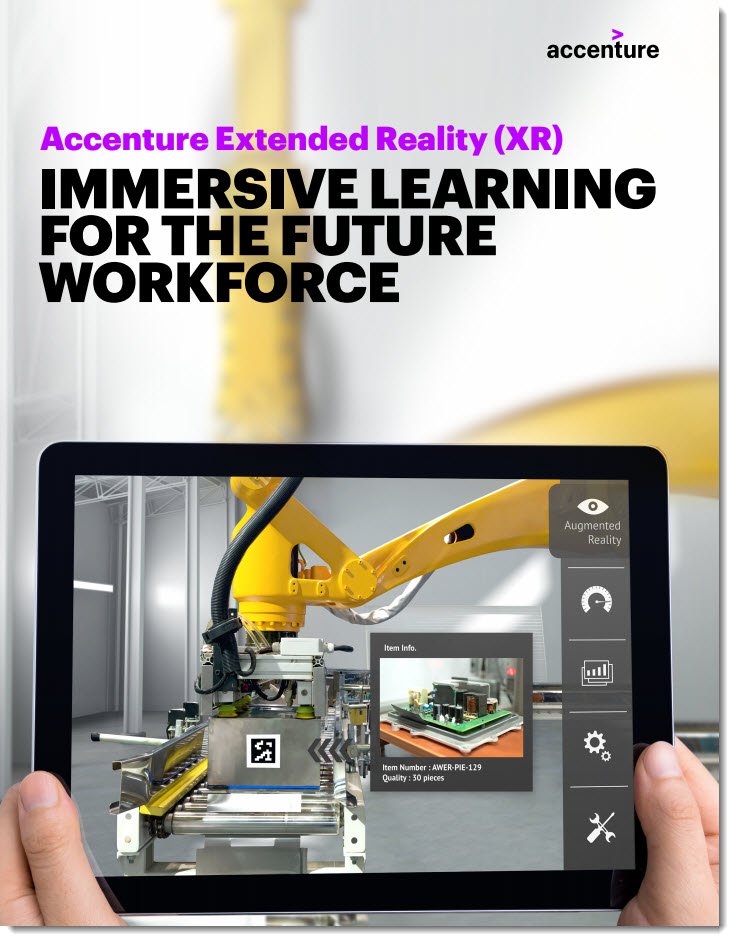
Accenture Extended Reality (XR)
Immersive learning for the future workforce
From DSC:
One of our daughters — who just graduated from college with a degree in Early Education — told me about a fun tool for classroom management. It’s called ClassroomScreen.com. I just thought I’d pass it along in case you want to try it out!
“Support your class activities, stimulate engagement and help your students get to work by using the intuitive tools of Classroomscreen.”
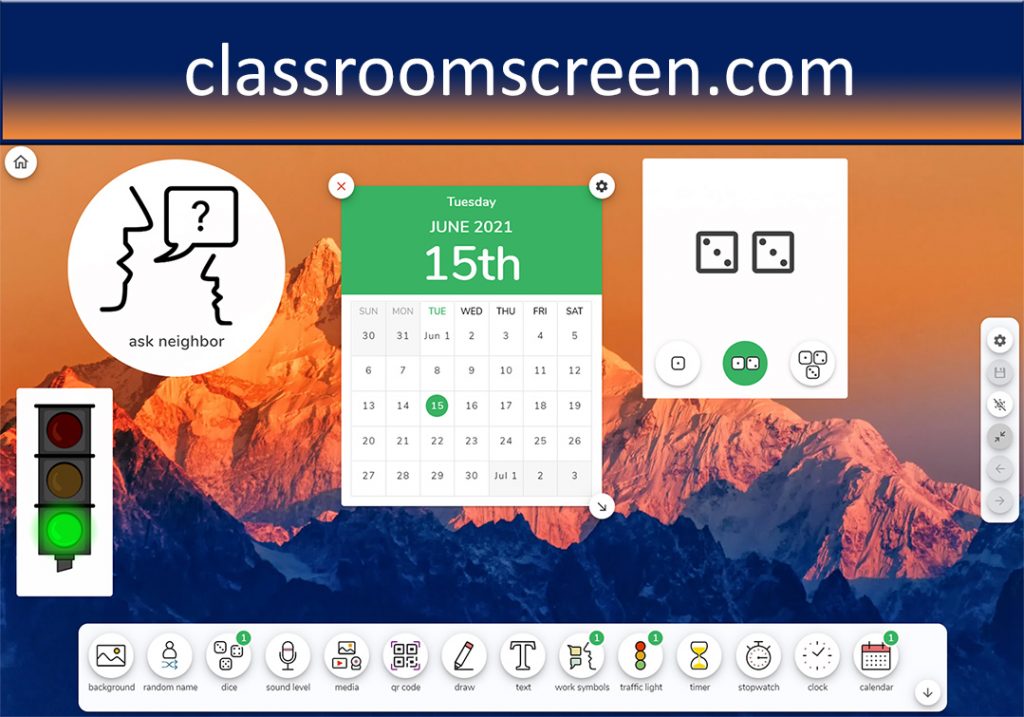
She also mentioned:
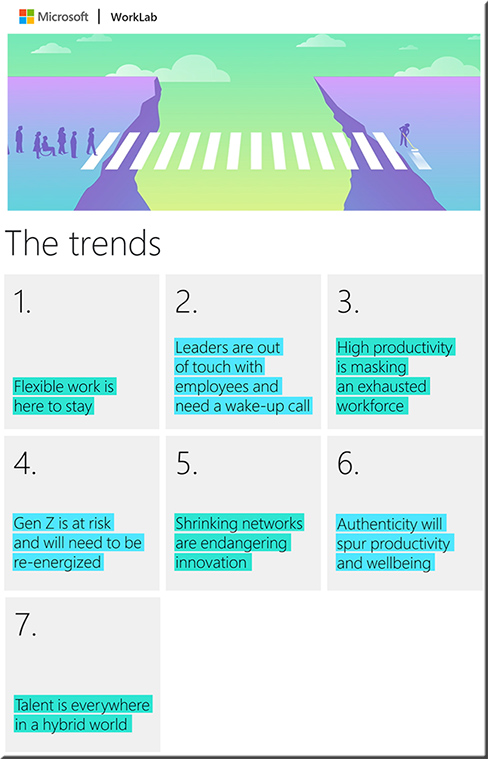
The Next Great Disruption Is Hybrid Work—Are We Ready? — from Microsoft
“Over the past year, no area has undergone more rapid transformation than the way we work. Employee expectations are changing, and we will need to define productivity much more broadly — inclusive of collaboration, learning, and wellbeing to drive career advancement for every worker, including frontline and knowledge workers, as well as for new graduates and those who are in the workforce today. All this needs to be done with flexibility in when, where, and how people work.”
Satya Nadella, CEO at Microsoft
Also see:
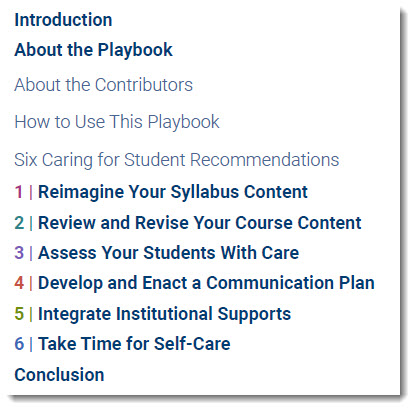
Caring for Students Playbook: Six Recommendations — from by Every Learner Everywhere in partnership with Online Learning Consortium (OLC) & Achieving the Dream
Table of C0ntents:
Also see:
Breaking Boundaries With HyFlex Course Design — from onlinelearningconsortium.org by Dr. Brian Beatty, Associate Professor of Instructional Technologies in the Department of Equity, Leadership Studies and Instructional Technologies at San Francisco State University
Teaching a HyFlex class is not twice or three times the work of teaching a single-mode class. If you build a comprehensive course (the asynchronous online version) you can use that to teach in all modes. Build once, teach with the same materials in all modes.
Also see Brian’s new website — with accompany blog — at HyFlex Learning Community.
Some example postings:
Why Professors Should Ask Students For Feedback Long Before the Semester Is Over — from edsurge.com by Rebecca Koenig
This article is part of the guide Better, Faster, Stronger: How Learning Engineering Aims to Transform Education.
Excerpt:
About a month into each semester, Gayle Golden sets aside a little time to ask her students about their learning.
The journalism instructor at the University of Minnesota keeps the process simple, with brief questions similar to these:
Golden collects the results, which students give anonymously, then studies the feedback and makes a list of all the information she’s received. During the next class period, she discusses the findings with her students. She tells them which suggestions she plans to put into practice, which recommendations she can’t act on, and why.
From DSC:
Speaking of feedback…
I think it would be good to have our students journal about their learning — integrating their notes, readings, experiments, lectures, etc. Students could check in on these 3 questions for example.
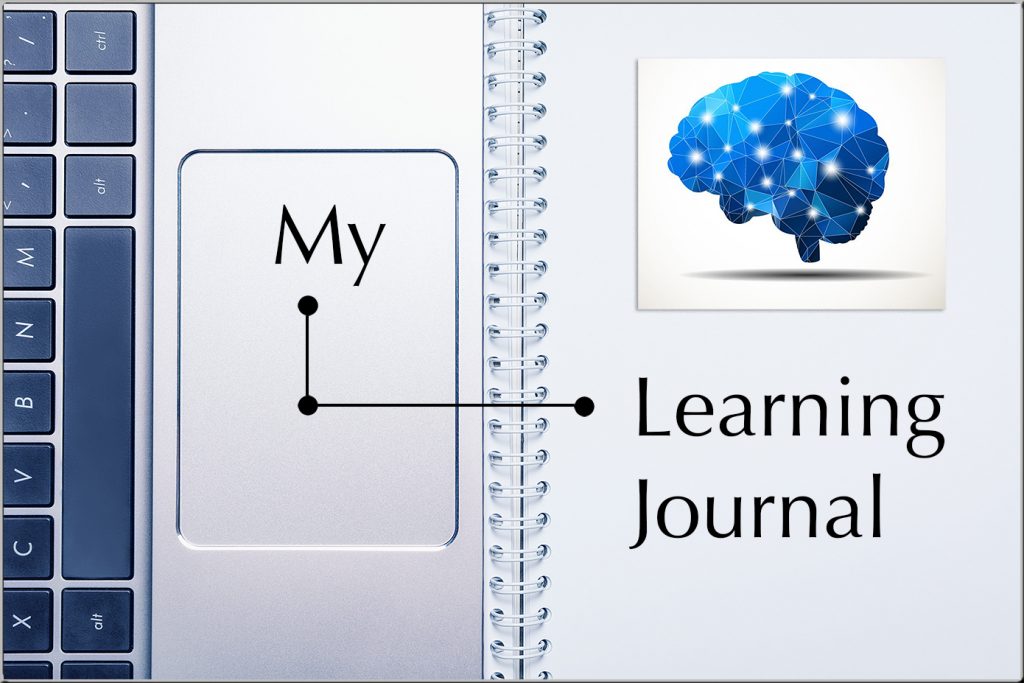
And in the (potentially) digital process, they could also submit a form to their faculty member to answer the question:
Such a question could be electronically delivered to the professor on any given day. This type of feedback loop would provide real-time, formative feedback to the professor as well as help the students develop their metacognitive skills.
I would think that such a process could also be used within the K-12 realm, including homeschoolers.
Also from edsurge.com, see:
Apple’s latest accessibility features are for those with limb and vocal differences — from techcrunch.com by Devin Coldewey
Excerpt:
Apple announced a batch of accessibility features at WWDC 2021 that cover a wide variety of needs, among them a few for people who can’t touch or speak to their devices in the ordinary way. With Assistive Touch, Sound Control and other improvements, these folks have new options for interacting with an iPhone or Apple Watch.
Museum of Other Realities XR3 Exhibition: A Clear Vision For VR Film Festivals — from uploadvr.com by Harry Baker
Excerpt:
This week, the Museum of Other Realities launched its XR3 exhibition — a joint project between Cannes XR, the NewImages Festival and the Tribeca Film Festival. Not only does the exhibition feature some fantastic immersive VR content, but it presents it in a way that feels fresh, appropriate and the right direction for VR film festivals.
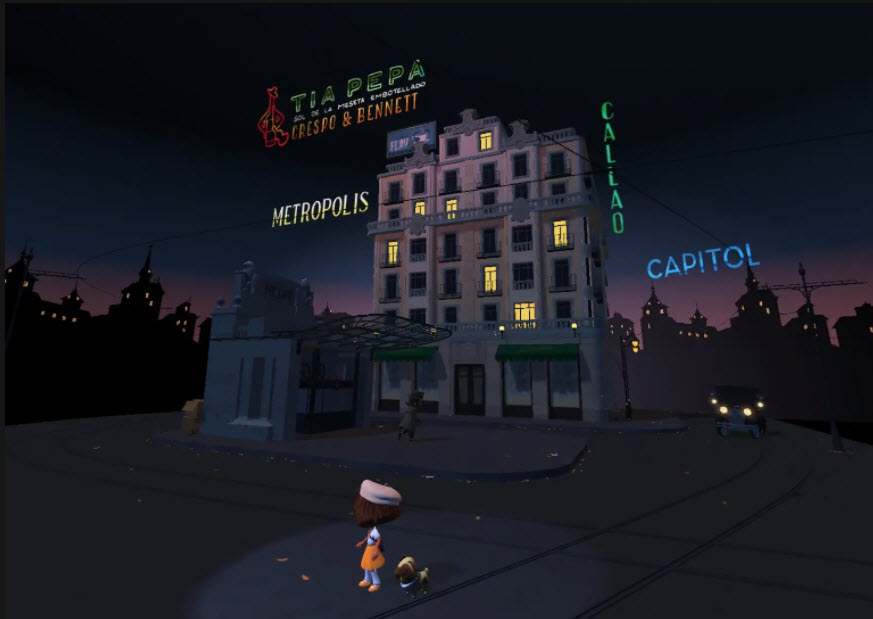
However, it feels like the Museum of Other Realities (MOR) has properly cracked the code with its XR3 exhibition this year. It’s a joint exhibition staged by the virtual museum and three organizations — Cannes XR, NewImages and Tribeca — and it results in something that feels like a true vision and creative blueprint for the future of immersive festivals.
This Michigan school just landed a record gift for a public university: $550 million — from washingtonpost.com by Nick Anderson
Excerpt:
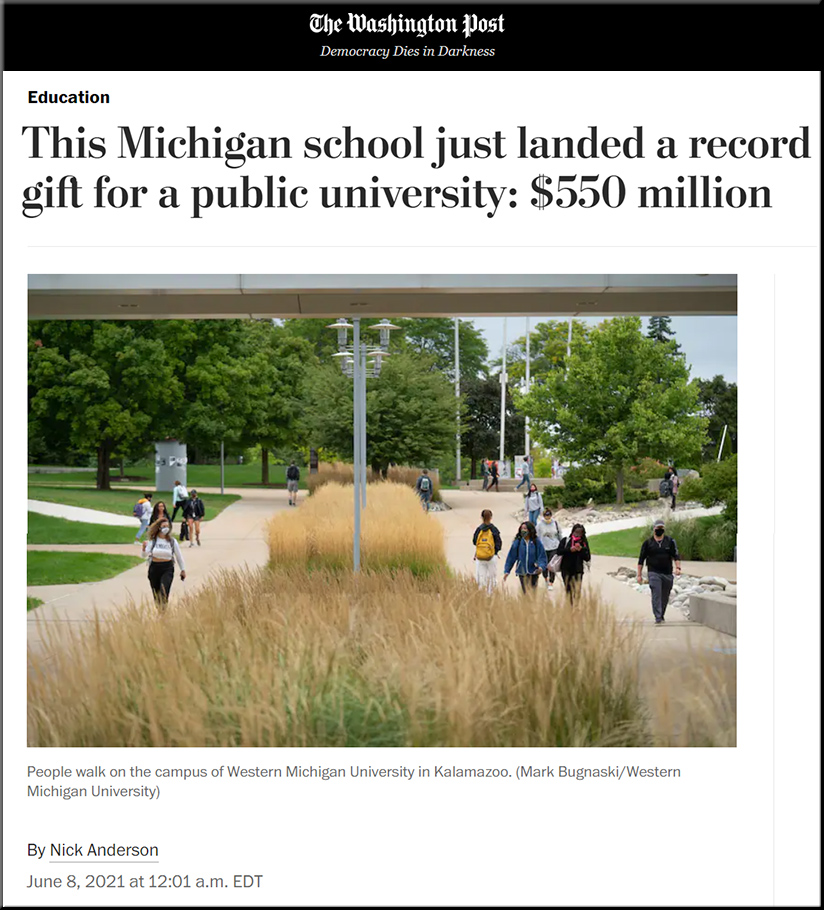
Western Michigan University, usually overshadowed by certain other state schools in Ann Arbor and East Lansing, announced Tuesday that it has landed the largest private gift ever to a public university: $550 million.
The blockbuster donation to the university in Kalamazoo, from anonymous Western Michigan alumni, eclipses the previous record of $500 million on a list kept by the Chronicle of Higher Education.
Tips To Use Virtual Training For User Education & Immersive Site Tours — from elearningindustry.com by Stephanie Ivec
While virtual reality safety and equipment training have been around the longest, more and more organizations are seeing the benefits of virtual reality for new uses, like the site tours and user education.
Excerpt:
Software tools or systems, surgical devices, and even board games commonly require end user training or customer education in order for the customer to get the most out of the item they’ve purchased. Over the years, user education and training has evolved from lengthy user manuals to online videos to fully immersive experiences. Virtual and augmented reality videos are an engaging way to make customers feel more comfortable with a new product, procedure, or system.
Addendum on 6/11/21:
VR costs continue to decrease as processing power increases. Tethered and wireless HMDs (head-mounted displays) are becoming more compact and easier to use. From the HTC Vive Pro 2 to Oculus Quest 2, there are solutions for various budgets. VR is no longer cost-prohibitive.
The AR ecosystem is evolving, too. Apple’s ARKit and free AR mobile apps like Adobe Aero are inviting more people into the content creation space.
It’s a different calculus for adoption in commercial sectors, however. Return on investment and utilization throughout the product lifecycle are primary concerns.
Gov. Kemp Announces Technical Skills Training Commitment to Prepare 5,500 Georgians for Cloud Computing Careers — from gov.georgia.gov
Excerpt:
Atlanta, GA — [On June 9th], Governor Brian P. Kemp announced a collaborative initiative between the Technical College System of Georgia (TCSG), the Georgia Department of Education (GADOE), the Technology Association of Georgia (TAG), and Amazon Web Services (AWS) to provide cloud computing training and education to 5,500 learners statewide by 2024. Through this initiative, high schools and technical colleges in Georgia will offer cloud computing courses and credentials that align with skills needed to pursue in-demand technical careers.
“The tech industry in Georgia is rapidly growing with exciting job opportunities for Georgians,” said Governor Kemp. “This collaboration with AWS will ensure our citizens have access to innovative training and education to help prepare them for tech jobs in Georgia.”

A “popcorn prayer” from DSC:
Thank you LORD for your mercy, forgiveness, grace, and love. Thank you for providing for us and for sustaining us. Thank you that you are extremely creative and detail-oriented. Thanks for your patience with us — especially with me.
I’m also grateful for the running clean water that we have access to…and for air conditioning, for food in the cupboard, for our refrigerator/freezer, the washing machine and other amenities such as reliable electricity and internet access. Thanks for the freedoms that we enjoy here in the United States.
Have mercy upon us LORD. I/we need you…big time. Don’t give up on the work of your hands.
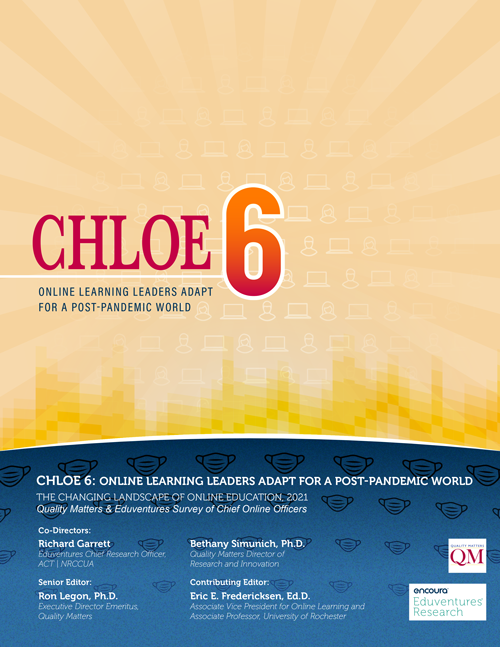
2021 CHLOE 6 Report
CHLOE 6: Online Learning Leaders Adapt for a Post-Pandemic World — from qualitymatters.org
Excerpt:
The 2021 report, authored by Quality Matters and Eduventures® Research, tracks how institutions are reassessing their priorities related to online learning and shifting focus to ed tech enhancements, faculty professional development and online quality. The report was compiled from responses from 422 chief online officers (COO) representing 2- and 4-year colleges and universities.
More than half of the survey respondents (57%) across all sectors of higher education, including predominantly in-person institutions, indicated that, going forward, the pandemic experience is leading to a positive reassessment of institutional priorities related to online learning. Key survey findings from the 69-page report include: