Teaching Tip Infographics — from scholarlyteacher.com
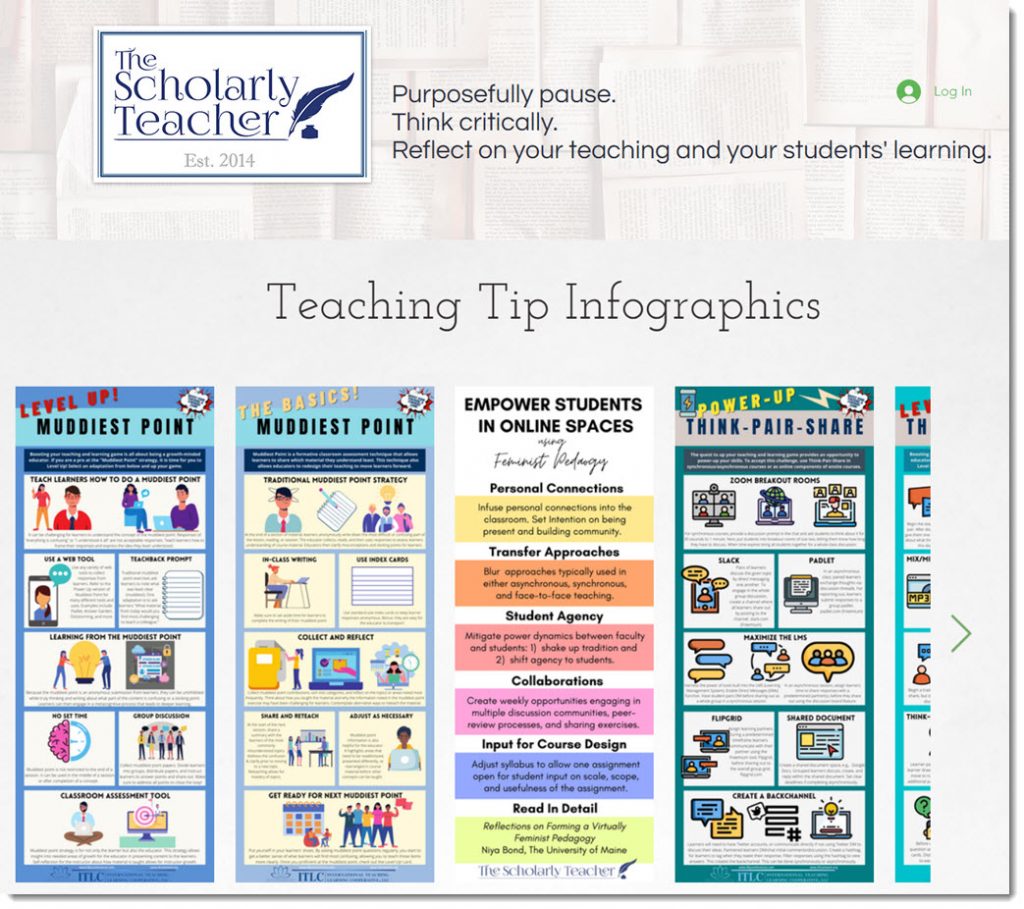
Teaching Tip Infographics — from scholarlyteacher.com
Autumn Pumpkin Spice Latte –from Tatiana Goskova out at 500px.com

The Old Barn in Frost and Fire — by Jørn Allan Pedersen out at 500px.com

Some Pods Will Outlast the Pandemic — from educationnext.org by Michael Horn
Students, parents say they appreciate the support
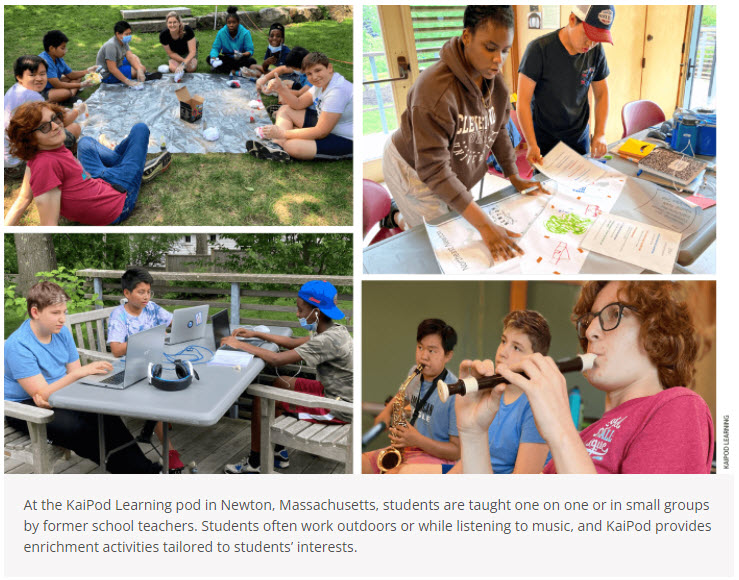
And yet many pods that have an institutional structure behind them, rather than being fully parent-run, have survived. They are finding their niches and growing. Despite fears that pods would benefit only people in prosperous suburbs such as Newton, some of the most robust pod experiments have taken place in school districts disproportionately serving low-income and minority students.
3 Tips for Making Passion-Based Learning Work Successfully — from thejournal.com by Dennis Pierce
Excerpt:
Passion-based learning, a form of self-directed learning in which students pursue projects of interest to them, is becoming more popular in schools — and for good reason: Educators who have set aside time for passion-based learning have discovered that students become highly engaged and motivated when learning about topics that intrigue them, while taking their learning much deeper than they would in a traditional lesson.

Also see Matthew Ball’s Metaverse Primer (excerpt below from this page) — with thanks to Annie Zhang for this resource:
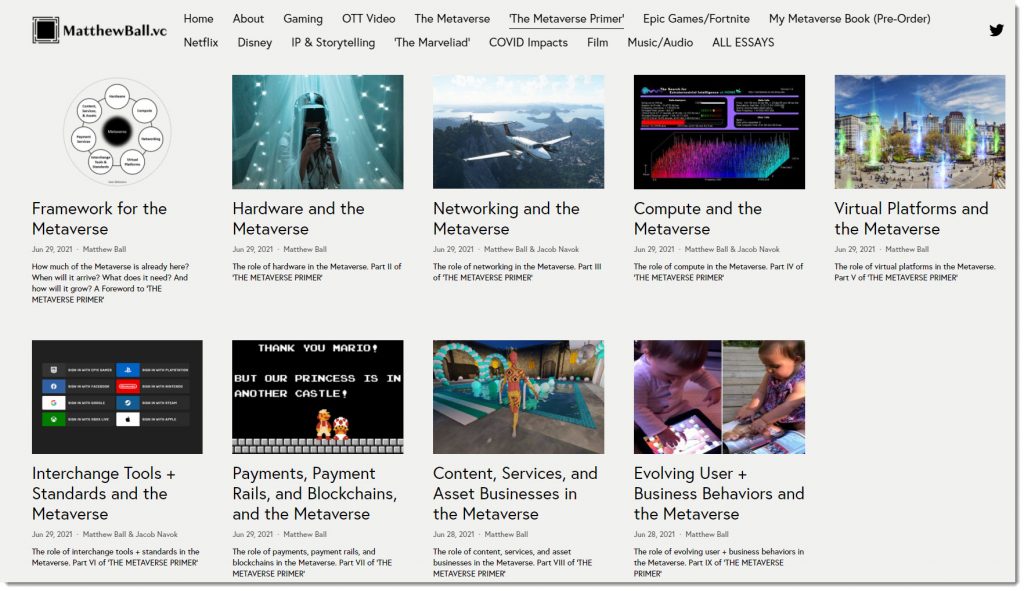
“The Metaverse is a massively scaled and interoperable network of real-time rendered 3D virtual worlds which can be experienced synchronously and persistently by an effectively unlimited number of users with an individual sense of presence, and with continuity of data, such as identity, history, entitlements, objects, communications, and payments.”
Jacob Navok: Computing and Network Needs of the Metaverse — from hellometaverse.fm by Annie Zhang
Excerpt:
to progress towards this vision of the metaverse, jacob is focused on tackling the hard problem of improving concurrency. how do you get millions of people to concurrently be participating and interacting in one live experience with no lag?
he breaks this down the problem into two components:
limitations of the traditional network to handle multiplayer experiences: coordinating, say, positional data of where you and all the other players in a game, gets very complicated, especially when latency needs to be low. meaning, if you want to see everything that everyone is doing at all times, coordinating the traffic of that data is very difficult
with more connection, internet speed slows: the internet was not built for true real time communication, but rather optimized for cost and routing efficiency. when you load a fb page, it’s okay if it takes 10 milliseconds, but when you are in a shooting game, a delay of 10 milliseconds is a matter of life or death
Everything You Need To Know About The Metaverse — from protocol.com by Janko Roettgers
Excerpt:
Silicon Valley has a new favorite buzzword: Ever since Mark Zuckerberg announced earlier this year that Facebook’s future would be in the metaverse, everyone has been rushing to figure out what a metaverse even is. And when Facebook rebranded as Meta in October, metaverse fever swept the tech industry. From Microsoft to Nvidia, every company is suddenly in the metaverse business, and seemingly overnight, countless people became metaverse experts.
But what actually is the metaverse? Why does it matter, and who needs to worry about it? If the metaverse is truly “the next chapter for the internet,” as Zuckerberg put it, it’s important to understand and define it so as not to be caught flat-footed when (or if) the metaverse wave catches on.
How to Support Students and Families through Technology and Innovation — from thejournal.com by Jeremy Davis
Excerpt:
Here are just a few district-wide innovations that resulted from the pandemic:
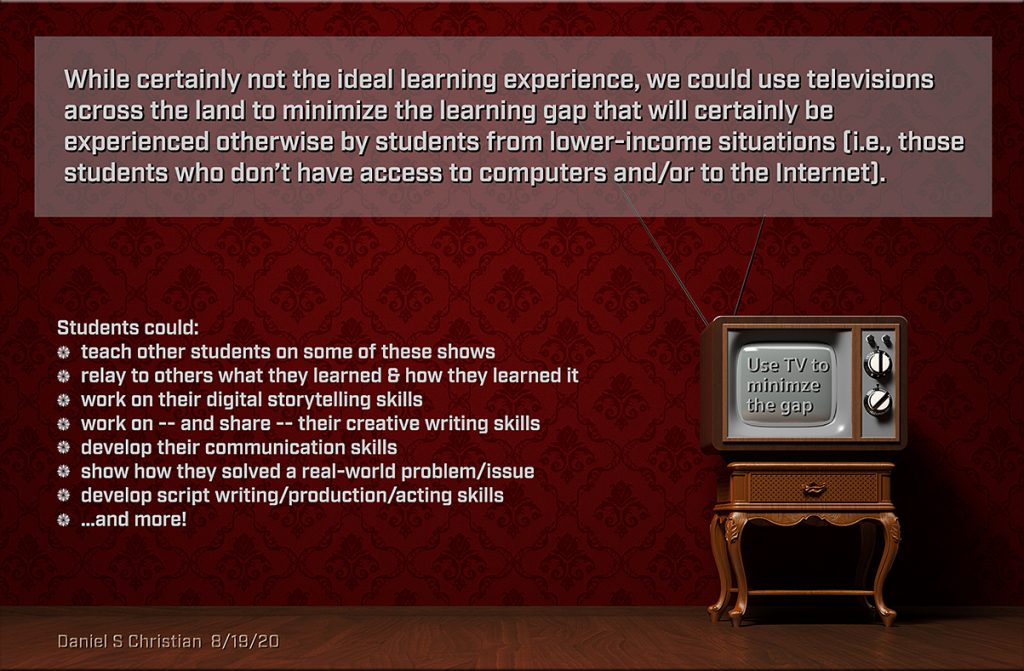
DC: Which reminds me of this idea/graphic:
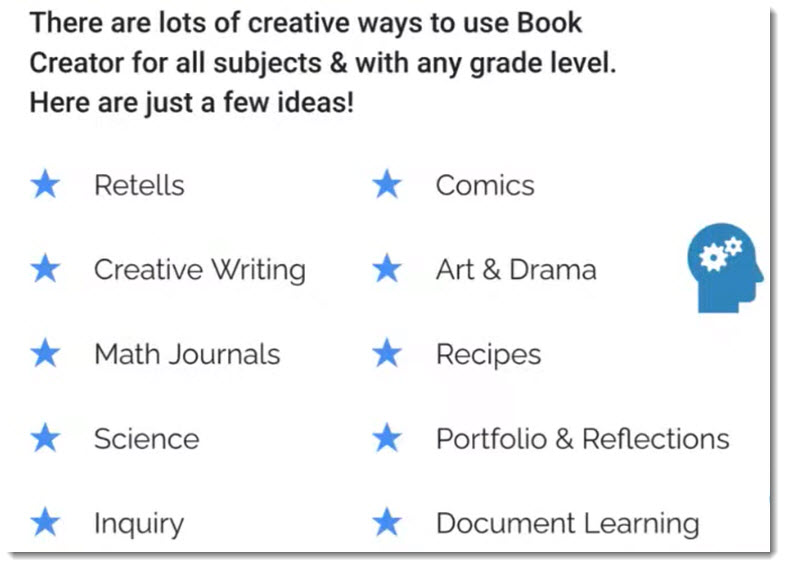
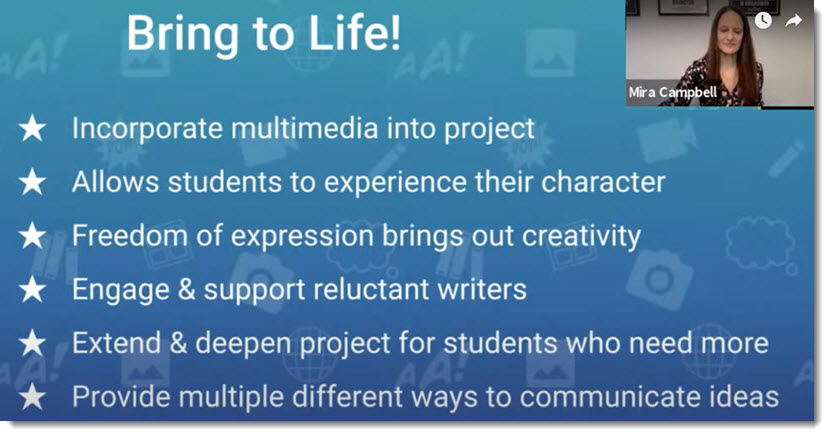
Inspire, Create & Celebrate: 6 Steps to turn your Library Learning Commons (LLC) into a place where students want to be! — by Mira Campbell
Also see/get:

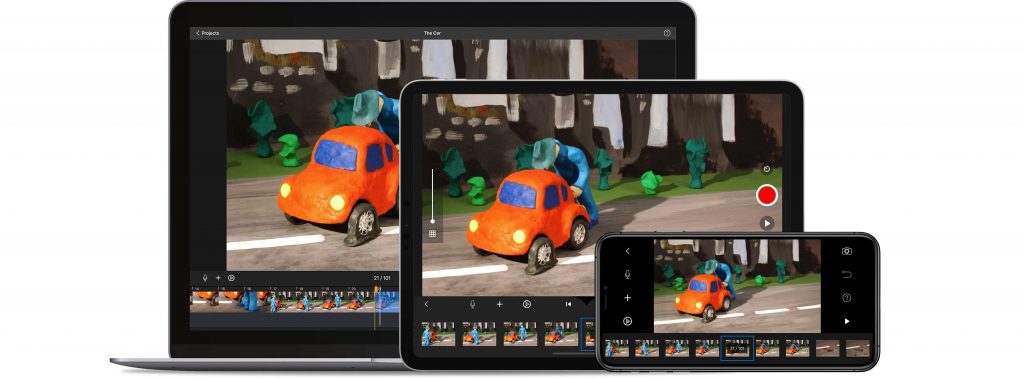
What is Stop Motion Studio and How Does It Work? Best Tips and Tricks — from techlearning.com by Luke Edwards
Stop Motion Studio is a movie maker that’s easy to use and ideal for students and teachers
Excerpt:
Stop Motion Studio is an app that makes turning images into video a fun and educational process for students.
Designed to be easy to use, and with the basics coming free, this is a useful tool to allow students to express ideas in video format. Since it is app-based it can be accessed on personal devices, both in class and elsewhere.
Also see the Stop Motion Studio website:
NVIDIA OMNIVERSE: Creating and Connecting Virtual Worlds
A NEW ERA OF 3D DESIGN COLLABORATION AND SIMULATION
NVIDIA Omniverse™ is an easily extensible, open platform built for virtual collaboration and real-time physically accurate simulation. Creators, designers, researchers, and engineers can connect major design tools, assets, and projects to collaborate and iterate in a shared virtual space. Developers and software providers can also easily build and sell Extensions, Apps, Connectors, and Microservices on Omniverse’s modular platform to expand its functionality.
Also see:
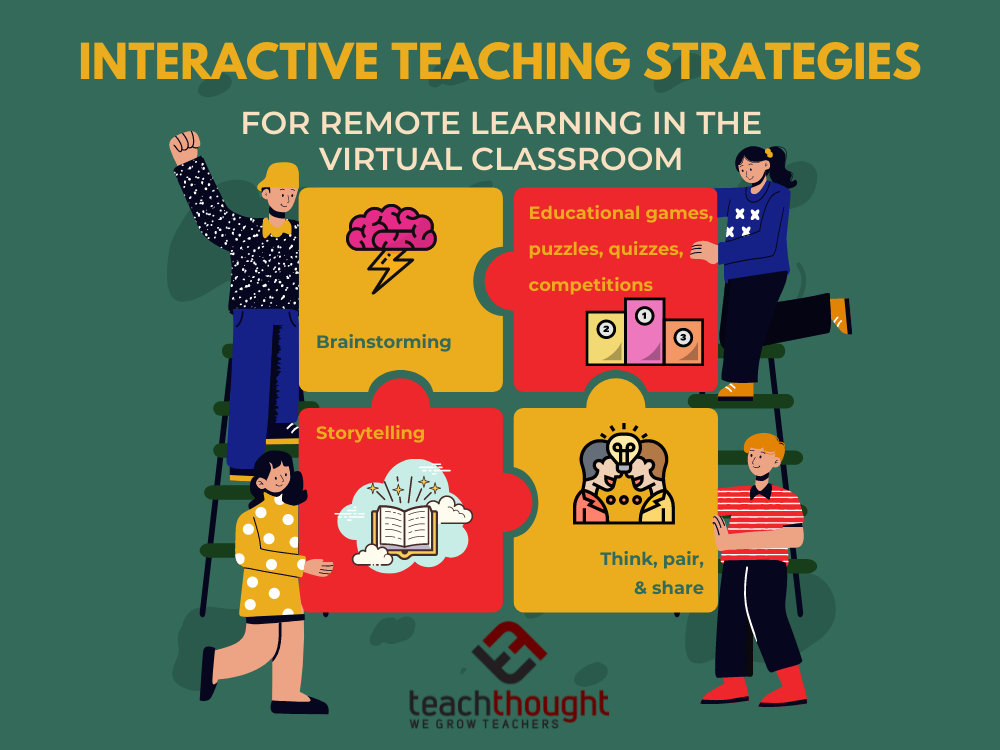
What Are The Best Online Teaching Strategies For eLearning Classrooms? — from teachthought.com
Radar trends to watch: November 2021 — from oreilly.com by Mike Loukides
Developments in AI, Security, Quantum Computing, and More