The gigantic list of augmented reality use cases — from uploadvr.com by Sarah Downey

Excerpt:

This gigantic list of future AR use cases should get you reeling with the possibilities. Although most of these are future applications, they’ll arrive within the next 10 to 15 years. Let’s make this a living document: if I missed a major use of AR, comment below and I’ll add it.

Three quick notes before we start. First, let’s clarify the difference between AR and VR.

VR blocks out the real world and immerses the user in a digital experience.

If you’re putting on a headset in your living room and suddenly transported to a zombie attack scenario, that’s VR.

AR adds digital elements on top of the real world.

If you’re walking down the street in real life and a Dragonite pops up on the sidewalk, that’s AR.
…
AR is more focused on bridging digital and physical spaces. It accompanies you as you move through the world and augments your activities with information, whereas you typically step out of that world to immerse yourself in VR. When we talk about AR headsets, they’re big helmet-like visors now, but they’re heading toward normal-looking glasses and ultimately contact lenses.

Third, AR and VR are converging into the same thing. Our ability to tell what’s “real” and not digital will decrease as graphics get increasingly better. An AR sign outside a building could be as real and as significant as a physical one if everyone is using AR tech, everyone sees it when they walk by, and it is persistent in that location. Ultimately, we’ll have hardware that lets us switch between AR and VR modes, with less and more opacity for the context. We’re discussing AR and VR distinctly for now because they’re developing separately and on different timelines.


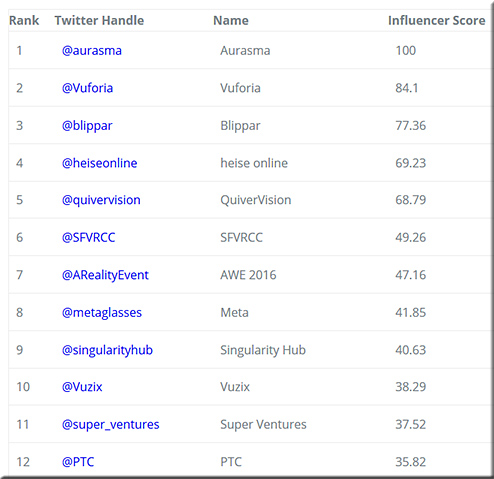
Augmented Reality: Top 100 Influencers and Brands — from onalytica.com
topbrandsar-2016


Augmented reality is going from ‘Pokémon Go’ to the factory floor — from businessinsider.com by Matt Weinberger

Excerpt:

That data, readily available from other sources, is just the tip of the iceberg, though, Campbell says. It also overlays a graphic showing how the pieces fit together, how to disassemble it, and what other pieces of the machine that part might connect to. It combines the physical world of the machine part with the digital world of the IoT-gleaned info.

Just being able to look at a machine, and say, yes, this is the one that needs work, and this is the work that needs doing, can vastly improve the speed with which work gets done, and thus operational efficiency of the whole enterprise.

“There’s so much value in visualizing information,” Campbell says.


Virtual Reality Changes Global Engineering Schools — from by Ilana Kowarski
Engineering professors say virtual reality contributes to the student experience.

Excerpt:

At engineering schools throughout the world, professors are turning to virtual reality technology in the classroom.

The technology provides 3-D visuals that help engineering students improve their designs, alerting them to flaws before the building process starts.

Engineering schools are researching technologies that could transform the way people communicate and interact by – for instance – allowing people to visit one another in a virtual space if they can’t meet in person. Engineering schools are also exploring medical applications of virtual reality that could save lives, such as 3-D X-rays that allow doctors to peer inside the bodies of patients.

Some engineering schools are taking virtual reality lessons a step further and challenging students to develop new virtual reality programs.


Broward Students Learning Through Augmented Reality — from nbcmiami.com by Ari Odzer

Excerpt:

We hear about technology’s impact on education all the time. Usually, that means computers, new apps, or 3D printers. Now there’s a new tool that has the promise of revolution, the potential for creating a new paradigm in how students learn. It’s called augmented reality.


Augmented Reality And Kinect Create Unique Art Experience At Cleveland Museum — from forbes.com by Jennifer Hicks


Addendum on 11/1/16:


Microsoft just democratized virtual reality with $299 headsets — from pcworld.com by Gordon Mah Ung

Excerpt:

VR just got a lot cheaper.

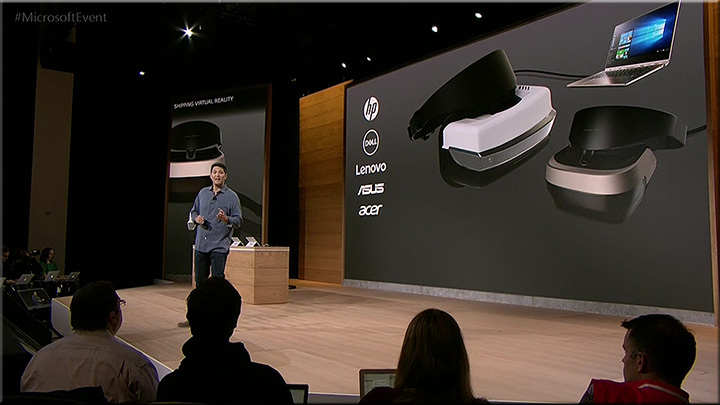
Microsoft on Wednesday morning said PC OEMs will soon be shipping VR headsets that enable virtual reality and mixed reality starting at $299.

Details of the hardware and how it works were sparse, but Microsoft said HP, Dell, Lenovo, Asus, and Acer will be shipping the headsets timed with its upcoming Windows 10 Creators Update, due in spring 2017.

Despite the relatively low price, the upcoming headsets may have a big advantage over HTC and Valve’s Vive and Facebook’s Oculus Rift: no need for separate calibration hardware to function. Both Vive and Oculus require multiple emitters on stands to be placed around a room for the positioning to function.


microsoft-299-vr-headsets-10-26-16


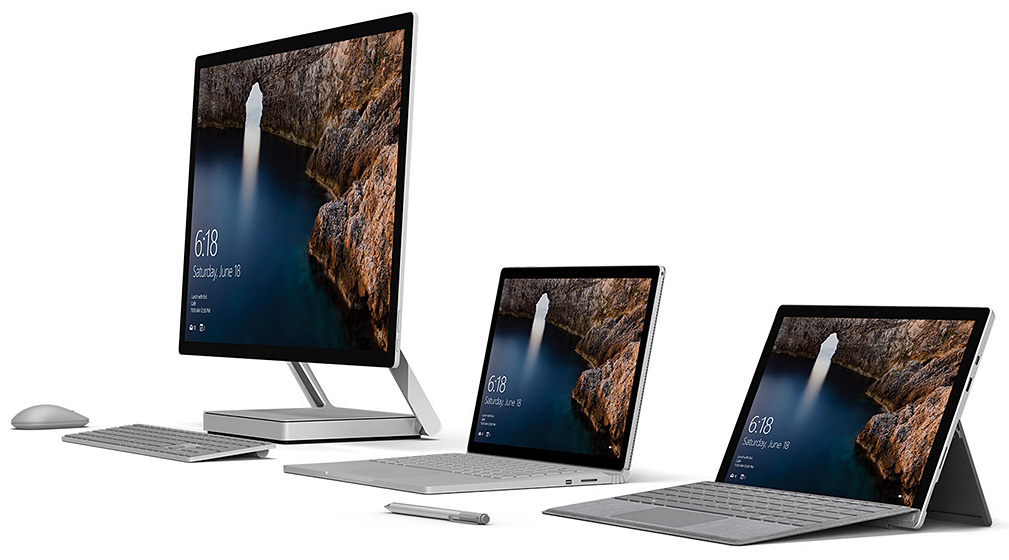
Introducing the new Surface family — from microsoft.com
To do great things, you need powerful tools that deliver an ideal balance of craftsmanship, performance, and versatility. Every Surface device is engineered with these things in mind, and you at the center. And that’s how the Surface family does more. Just like you.


microsoftintrossurfacedesktop2-10-26-16


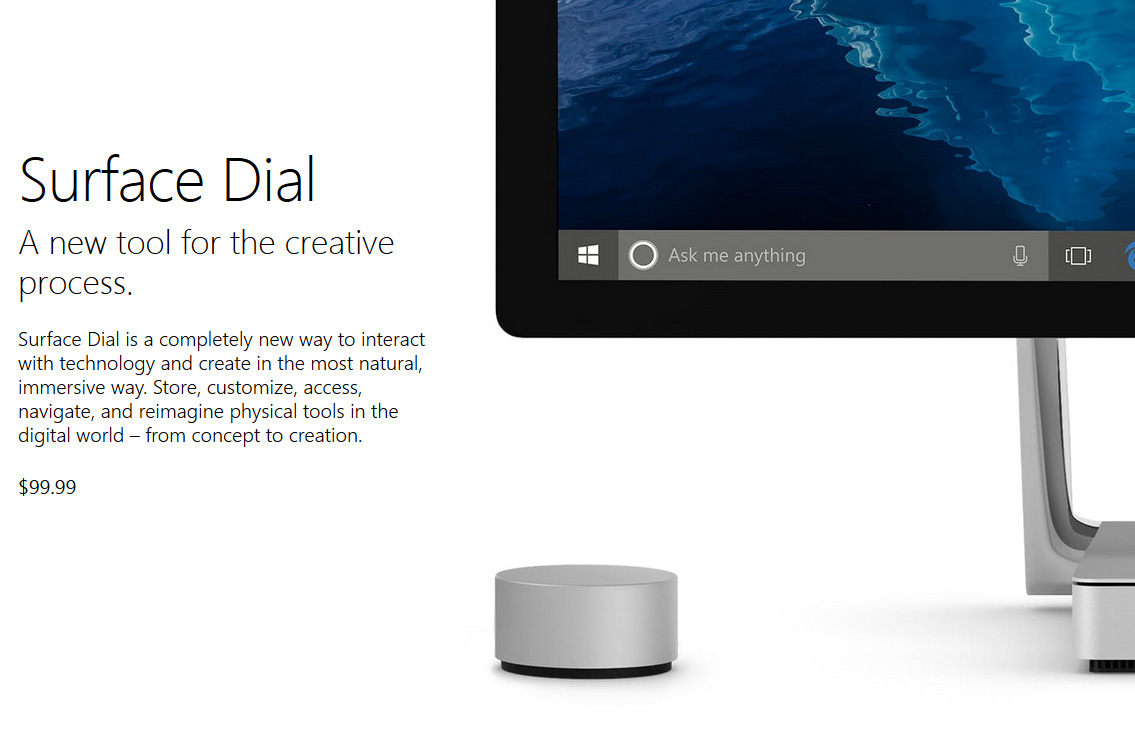
Also see the new Surface Dial:


mssurfacedial-10-26-16


Microsoft ‘Surface Studio’ and ‘Dial’ Up Close  — from blogs.barrons.com by Tiernan Ray

Excerpt (emphasis DSC):

Microsoft (MSFT) this morning held an event in downtown Manhattan that included both an update to Windows, the “Creators” edition, and also new versions of the company’s Surface tablet computer, including a revamp of the “Surface Book” laptop and tablet combo device, and a new desktop machine called the “Surface Studio” that has the thinnest display ever made, the company claims.

Perhaps the most intriguing thing at the event was something called “Dial,” a rotating puck device that can function like a wireless mouse with the Studio, but can also be placed right on top of the display itself to bring up a context-specific menu of functions, or to perform actions like cut and paste.


Microsoft announces its first desktop PC, the $3,000 Surface Studio — from businessinsider.com by Steve Kovach

Excerpt (emphasis DSC):

Microsoft on Wednesday announced its first desktop PC, the Surface Studio.

It’s an all-in-one computer, designed to compete with Apple’s iMac. The PC is geared toward professionals, and it has high-end specs designed for tasks like video or photo editing.
…
But the real surprises are the adjustable display and a new accessory called the Surface Dial. The display can lie nearly flat on the table, giving graphics artists the ability to draw and work. The Surface Dial can be placed on the screen to bring up color palettes and other options. The Surface Dial will work with other Surface products — the Surface Pro and Surface Book — but you won’t be able to use it on the screens.


Microsoft wants to bring machine learning into the mainstream — from networkworld.com by Steven Max Patterson
Microsoft released the beta of the Cognitive Toolkit with machine learning models, infrastructure and development tools, enabling customers to start building

Excerpt (emphasis DSC):

Microsoft just released the open-source licensed beta release of the Microsoft Cognitive Toolkit on Github. This announcement represents a shift in Microsoft’s customer focus from research to implementation. It is an update to the Computational Network Toolkit (CNTK). The toolkit is a supervised machine learning system in the same category of other open-source projects such as Tensorflow, Caffe and Torch.

Microsoft is one of the leading investors in and contributors to the open machine learning software and research community. A glance at the Neural Information Processing Systems (NIPS) conference reveals that there are just four major technology companies committed to moving the field of neural networks forward: Microsoft, Google, Facebook and IBM.

This announcement signals Microsoft interest to bring machine learning into the mainstream. The open source license reveals Microsoft’s continued collaboration with the machine learning community.


Microsoft just democratized virtual reality with $299 headsets — from pcworld.com by Gordon Mah Ung

Excerpt:

VR just got a lot cheaper.

Microsoft on Wednesday morning said PC OEMs will soon be shipping VR headsets that enable virtual reality and mixed reality starting at $299.

Details of the hardware and how it works were sparse, but Microsoft said HP, Dell, Lenovo, Asus, and Acer will be shipping the headsets timed with its upcoming Windows 10 Creators Update, due in spring 2017.

Despite the relatively low price, the upcoming headsets may have a big advantage over HTC and Valve’s Vive and Facebook’s Oculus Rift: no need for separate calibration hardware to function. Both Vive and Oculus require multiple emitters on stands to be placed around a room for the positioning to function.


microsoft-299-vr-headsets-10-26-16


The 10 Coolest Features Coming to Windows 10 — from wired.com by Michael Calore

Excerpt:

Microsoft is gearing up for a Windows refresh. The Windows 10 Creators Update will arrive on all Windows 10 devices for free in the spring of 2017. Today, Microsoft showed off all the new features coming to the multi-mode OS. Here’s the best of what will be coming to your Windows PC or Surface device.


The Surface Studio Story: How Microsoft Reimagined The Desktop PC For Creativity — from fastcompany.com by Mark Sullivan
A 28-inch screen, a very special hinge, and a new type of input device add up to an experience conceived with artists and designers in mind.


nmc-digitalliteracyreport-oct2016


The New Media Consortium (NMC) has released Digital Literacy: An NMC Horizon Project Strategic Brief in conjunction with the 2016 EDUCAUSE Annual Conference.
…
In analyzing the progress and gaps in this area, the NMC’s report has identified a need for higher education leaders and technology companies to prioritize students as makers, learning through the act of content creation rather than mere consumption. Additionally, the publication recommends that colleges and universities establish productive collaborations with industry, government, and libraries to provide students with access to the latest technologies and tools.
…
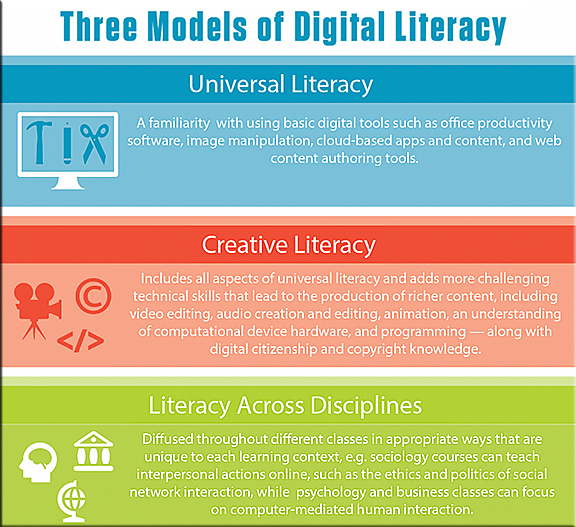
Based on the variety and complexity of these results, NMC cannot identify just one model of digital literacy. Instead three different digital literacies are now evident, each with distinct standards, potential curriculum, and implications for creative educators.


digitallits-nmc-oct2016


The aim of this publication is to establish a shared vision of digital literacy for higher education leaders by illuminating key definitions and models along with best practices and recommendations for implementing successful digital literacy initiatives.


To be digitally literate, you need to be:
fluent at critical thinking,
collaborating,
being creative, and
problem-solving in
digital environments.


Computer science and digital media classes can instruct on everything from office productivity applications to programming and video editing, for example.  Sociology courses can teach interpersonal actions online, such as the ethics and politics of social network interaction, while psychology and business classes can focus on computer-mediated human interaction. Government and political science classes are clearly well equipped to explore the intersection of digital technology and citizenship mentioned above. Communication, writing, and  literature classes have the capacity to instruct students on producing digital content in the form of stories, arguments, personal expression, posters, and more. 


From DSC:
If faculty members aren’t asking students to create multimedia in their assignments and/or take part in online/digitally-based means of communications and learning, the vast majority of the students won’t (and don’t) care about digital literacy…it’s simply not relevant to them: “Whatever gets me the grade, that’s what I’ll do. But no more.”

This type of situation/perspective is quite costly.  Because once students graduate from college, had they built up some solid digital literacy — especially the “creative literacy” mentioned above — they would be in much better shape to get solid jobs, and prosper at those jobs. They would be much better able to craft powerful communications — and reach a global audience in doing so. They would have honed their creativity, something increasingly important as the onward march of AI, robotics, algorithms, automation, and such continues to eat away at many types of jobs (that don’t really need creative people working in them).

This is an important topic, especially as digitally-based means of communication continue to grow in their usage and impact.


Part of digital literacy is not just understanding how a tool works but also why it is useful in the real world and when to use it.


Amazon is winning the race to the future — from bizjournals.com by

Excerpt:

This is the week when artificially intelligent assistants start getting serious.

On Tuesday, Google is expected to announce the final details for Home, its connected speaker with the new Google Assistant built inside.

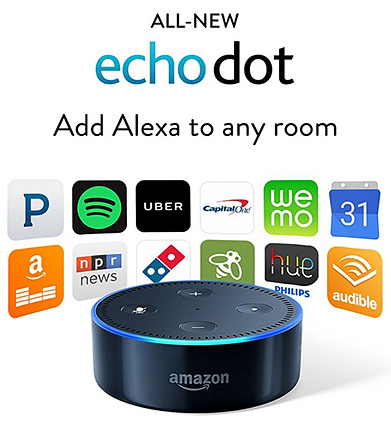
But first Amazon, which surprised everyone last year by practically inventing the AI-in-a-can platform, will release a new version of the Echo Dot, a cheaper and smaller model of the full-sized Echo that promises to put the company’s Alexa assistant in every room in your house.

The Echo Dot has all the capabilities of the original Echo, but at a much cheaper price, and with a compact form factor that’s designed to be tucked away. Because of its size (it looks like a hockey puck from the future), its sound quality isn’t as good as the Echo, but it can hook up to an external speaker through a standard audio cable or Bluetooth.


amazon-newdot-oct2016


100 bot people to watch #BotWatch #1 — from chatbotsmagazine.com

Excerpt:

100 people to watch in the bot space, in no order.

I’ll publish a new list once a month. This one is #1 October 2016.
…
This is my personal top 100 for people to watch in the bot space.


Should We Give Chatbots Their Own Personalities? — from re-work.com by Sophie Curtis

Excerpt:

Today, we have machines that assemble cars, make candy bars, defuse bombs, and a myriad of other things. They can dispense our drinks, facilitate our bank deposits, and find the movies we want to watch with a touch of the screen.

Automation allows all kinds of amazing things, but it is all done with virtually no personality. Building a chatbot with the ability to be conversational with emotion is crucial to getting people to gain trust in the technology. And now there are plenty of tools and resources available to rapidly create and launch chatbots with the personality customers want and businesses needs.

Jordi Torras is CEO and Founder of Inbenta, a company that specializes in NLP, semantic search and chatbots to improve customer experience. We spoke to him ahead of his presentation at the Virtual Assistant Summit in San Francisco, to learn about the recent explosion of chatbots and virtual assistants, and what we can expect to see in the future.


How I built and launched my first chatbot in hours — from chatbotsmagazine.com by Max Pelzner
From idea to MVB (Minimum Viable Bot), and launched in 24 hours!


Developing a Chatbot? Do Not Make These Mistakes! — from chatbotsmagazine.com Hira Saeed


This is what an A.I.-powered future looks like — from venturebeat.com by Grayson Brulte

Excerpt:

Today, we are just beginning to scratch the surface of what is possible with artificial intelligence (A.I.) and how individuals will interact with its various forms. Every single aspect of our society — from cars to houses to products to services — will be reimagined and redesigned to incorporate A.I.

A child born in the year 2030 will not comprehend why his or her parents once had to manually turn on the lights in the living room. In the future, the smart home will seamlessly know the needs, wants, and habits of the individuals who live in the home prior to them taking an action.

Before we arrive at this future, it is helpful to take a step back and reimagine how we design cars, houses, products, and services. We are just beginning to see glimpses of this future with the Amazon Echo and Google Home smart voice assistants.


Artificial intelligence created to fold laundry for you — from geek.com by Matthew Humphries

Excerpt:

So, Seven Dreamers Laboratories, in collaboration with Panasonic and Daiwa House Industry, have created just such a machine. However, folding laundry correctly turns out to be quite a complicated task, and so an artificial intelligence was required to make it a reliable process.

Laundry folding is actually a five stage process, including:

Grabbing
Spreading
Recognizing
Folding
Sorting/Storing

The grabbing and spreading seems pretty easy, but then the machine needs to understand what type of clothing it needs to fold. That recognizing stage requires both image recognition and AI. The image recognition classifies the type of clothing, then the AI figures out which processes to use in order to start folding.


2 days of global chatbot experts at Talkabot in 12 minutes — from chatbotsmagazine.com by Alec Lazarescu

Excerpt:

During a delightful “cold spell” in Austin at the end of September, a few hundred chatbot enthusiasts joined together for the first talkabot.ai conference.

As a participant both writing about and building chatbots, I’m excited to share a mix of valuable actionable insights and strategic vision directions picked up from speakers and attendees as well as behind the scenes discussions with the organizers from Howdy.

In a very congenial and collaborative atmosphere, a number of valuable recurring themes stood out from a variety of expert speakers ranging from chatbot builders to tool makers to luminaries from adjacent industries.


Addendum:


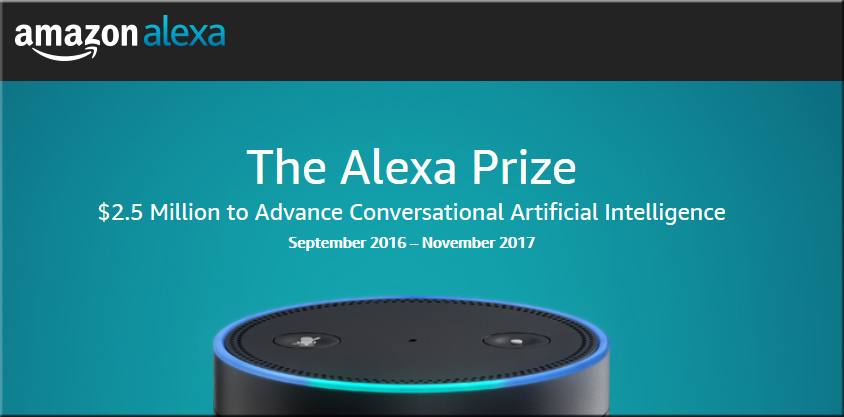
alexaprize-2016

The Alexa Prize (emphasis DSC)

The way humans interact with machines is at an inflection point and conversational artificial intelligence (AI) is at the center of the transformation. Alexa, the voice service that powers Amazon Echo, enables customers to interact with the world around them in a more intuitive way using only their voice.

The Alexa Prize is an annual competition for university students dedicated to accelerating the field of conversational AI. The inaugural competition is focused on creating a socialbot, a new Alexa skill that converses coherently and engagingly with humans on popular topics and news events. Participating teams will advance several areas of conversational AI including knowledge acquisition, natural language understanding, natural language generation, context modeling, commonsense reasoning and dialog planning. Through the innovative work of students, Alexa customers will have novel, engaging conversations. And, the immediate feedback from Alexa customers will help students improve their algorithms much faster than previously possible.
…
Amazon will award the winning team $500,000. Additionally, a prize of $1 million will be awarded to the winning team’s university if their socialbot achieves the grand challenge of conversing coherently and engagingly with humans on popular topics for 20 minutes.


Google welcomes the future of mobile VR with its $79 Daydream View VR headset — from techcrunch.com by Lucas Matney

Excerpt:

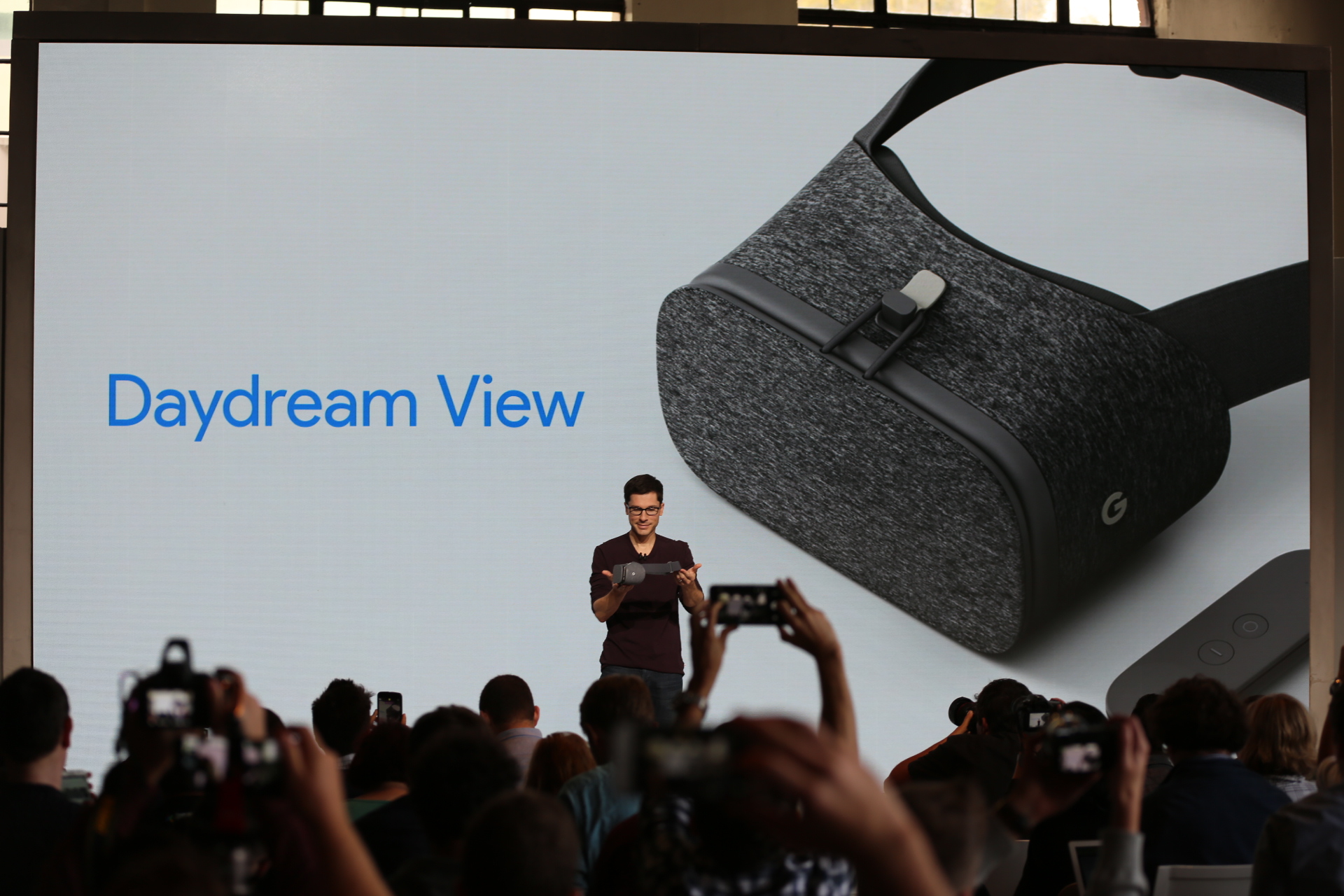
Today at its October hardware/software/everything event, the company showed off its latest VR initiatives including a Daydream headset. The $79 Daydream View VR headset looks quite a bit different than other headsets on the market with its fabric exterior.

Clay Bavor, head of VR, said the design is meant to be more comfortable and friendly. It’s unclear whether the cloth aesthetic is a recommendation for the headset reference design as Xiaomi’s Daydream headset is similarly soft and decidedly design-centric.

The headset and the Google Daydream platform will launch in November.


Here’s the Google Pixel — from techcrunch.com by Brian Heater

Excerpt:

While the event is positioned as hardware first, this is Google we’re talking about here, and as such, the real focus is software. The company led the event with talk about its forthcoming Google Assistant AI, and as such, the Pixel will be the first handset to ship with the friendly voice helper. As the company puts it, “we’re building hardware with the Google Assistant it its core. ”


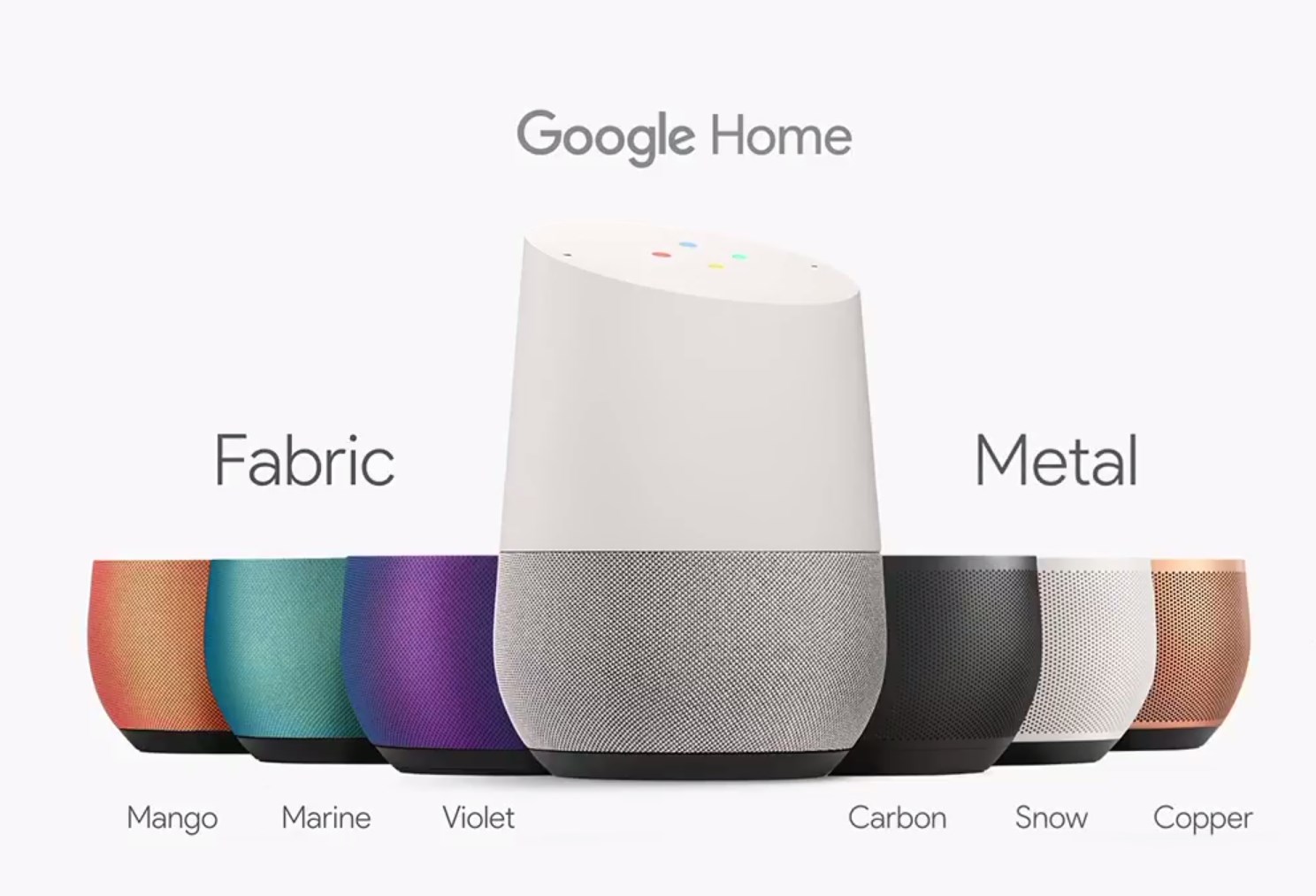
Google Home will go on sale today for $129, shipping November 4 — from techcrunch.com by Frederic Lardinois

Excerpt:

Google Home, the company’s answer to Amazon’s Echo, made its official debut at the Google I/O developer conference earlier this year. Since then, we’ve heard very little about Google’s voice-activated personal assistant. Today, at Google’s annual hardware event, the company finally provided us with more details.

Google Home will cost $129 (with a free six-month trial of YouTube red) and go on sale on Google’s online store today. It will ship on November 4.

Google’s Mario Queiroz today argued that our homes are different from other environments. So like the Echo, Google Home combines a wireless speaker with a set of microphones that listen for your voice commands. There is a mute button on the Home and four LEDs on top of the device so you know when it’s listening to you; otherwise, you won’t find any other physical buttons on it.


Google Working with Netflix, HBO & Hulu for Daydream Content— from vrfocus.com by Kevin Joyce
#madebygoogle reveals services ready and on the way to support Google Daydream

Excerpt:

Google’s #madebygoogle press conference today revealed some significant details about the company’s forthcoming plans for virtual reality (VR). Daydream is set to launch later this year, and along with the reveal of the first ‘Daydream Ready’ smartphone handset, Pixel, and Google’s own version of the head-mounted display (HMD), Daydream View, the company revealed some of the partners that will be bringing content to the device.


Google officially unveils $649 Pixel phone with unlimited storage; $129 Google Home — from cnbc.com by Anita Balakrishnan


Google Unveils ‘Home,’ Embraces Aggressive Shift To Hardware — from forbes.com by Matt Drange

Excerpt:

You can add to the seemingly never-ending list of things that Google is deeply involved in: hardware production.

On Tuesday, Google made clear that hardware is more than just a side business, aggressively expanding its offerings across a number of different categories. Headlined by the much-anticipated Google Home and a lineup of smartphones, dubbed Pixel, the announcements mark a major shift in Google’s approach to supplementing its massively profitable advertising sales business and extensive history in software development.
…
Aimed squarely at Amazon’s Echo, Home is powered by more than 70 billion facts collected by Google’s knowledge graph, the company says. By saying, “OK, Google” Home quickly pulls information from other websites, such as Wikipedia, and gives contextualized answers akin to searching Google manually and clicking on a couple links. Of course, Home is integrated with Google’s other devices, so adding items to your shopping list, for example, are easily pulled up via Pixel. Home can also be programmed to read back information in your calendar, traffic updates and the weather. “If the president can get a daily briefing, why shouldn’t you?” Google’s Rishi Chandra asked when he introduced Home on Tuesday.


A comment from DC:
More and more, people are speaking to a device and expect that device to do something for them. How much longer, especially with the advent of chatbots, before people expect this of learning-related applications?

Natural language processing, cognitive computing, and artificial intelligence continue their march forward.


Addendums:


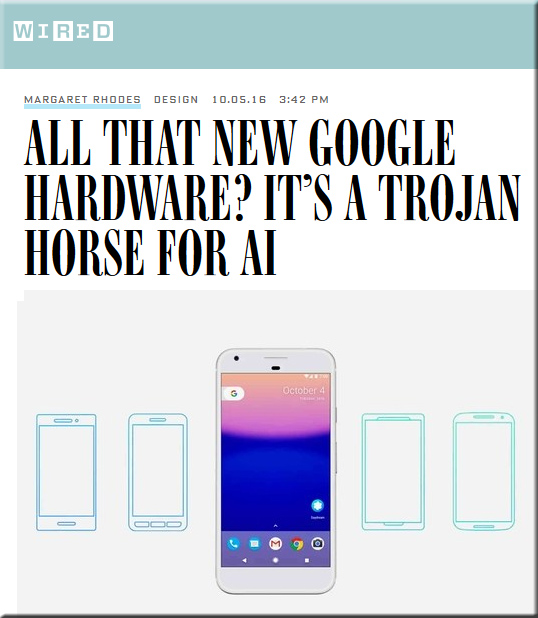
trojanhorse4ai-googleoct2016


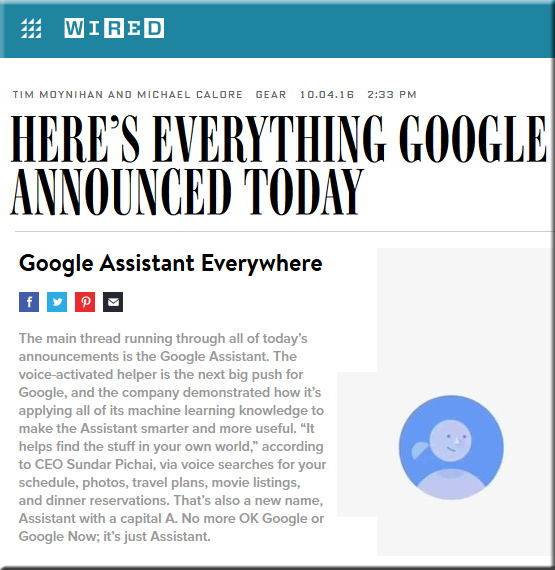
googleassistanteverywhere-oct2016


9 Best Augmented Reality Smart Glasses 2016 — from appcessories.co.uk

Excerpt:

2016 has been promoted as the year of virtual reality. In the space of a few months, we have seen brands like Facebook, Samsung and Sony have all come out with VR products of their own. But another closely related industry has been making a growing presence in the tech industry. Augmented reality, or simply AR, is gaining ground among tech companies and even consumers. Google was the first contender for coolest AR product with its Google Glass. Too bad that did not work out; it felt like a product too ahead of its time. Companies like Microsoft, Magic Leap and even Apple are hoping to pick up from where Google left off. They are creating their own smart glasses that will, hopefully, do better than Google Glass. In our article, we look at some of the coolest Augmented Reality smart glasses around.

Some of them are already out while others are in development.


The holy grail of Virtual Reality: A complete suspension of disbelief — from labster.com by Marian Reed

Excerpt:

It’s no secret that we here at Labster are pretty excited about VR.  However, if we are to successfully introduce VR into education and training we need to know how to create VR simulations that unlock these new great ways of learning.


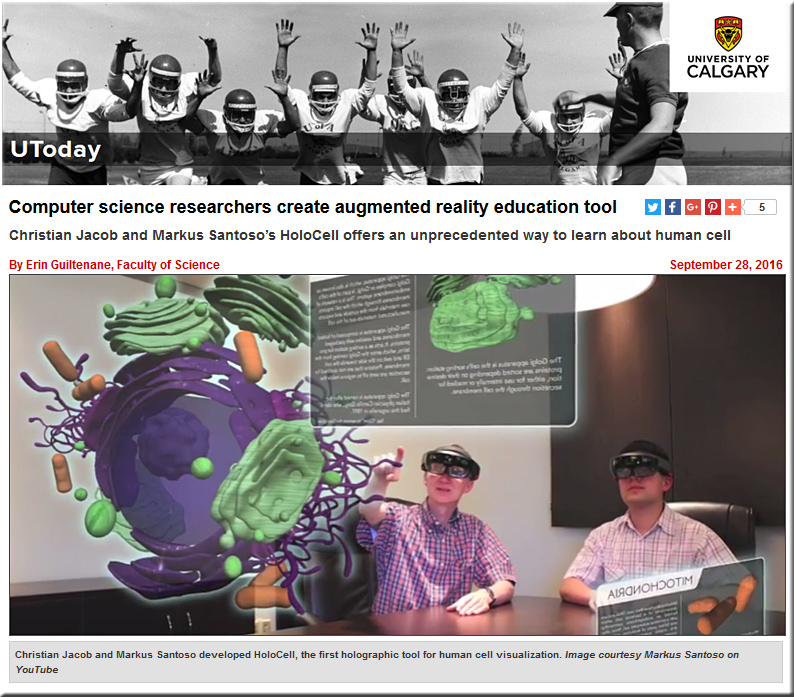
Computer science researchers create augmented reality education tool — from ucalgary.ca by Erin Guiltenane

Excerpt (emphasis DSC):

Christian Jacob and Markus Santoso are trying to re-create the experience of the aforementioned agents in Fantastic Voyage. Working with 3D modelling company Zygote, they and recent MSc graduate Douglas Yuen have created HoloCell, an educational software. Using Microsoft’s revolutionary HoloLens AR glasses, HoloCell provides a mixed reality experience allowing users to explore a 3D simulation of the inner workings, organelles, and molecules of a healthy human cell.


holocell-sept2016


Upload, Google, HTC and Udacity join forces for new VR education program — from  uploadvr.com

Excerpt:

Upload is teaming up with Udacity, Google and HTC to build an industry-recognized VR certification program.
…
According to Udacity representatives, the organization will now be adding a VR track to its “nanodegree”program. Udacity’s nanodegrees are certification routes that can be completed completely online at a student’s own pace. These courses typically take between 6-12 months and cost $199 per month. Students will also receive half of their tuition back if they complete a course within six months. The new VR course will follow this pattern as well.

The VR nanodegree program was curated by Udacity after the organization interviewed dozens of VR savvy companies about the type of skills they look for in a potential new hire. This information was then built into a curriculum through a joint effort between Google, HTC and Upload.


Virtual reality helps Germany catch last Nazi war criminals — from theguardian.com by Agence France-Presse
Lack of knowledge no longer an excuse as precise 3D model of Auschwitz, showing gas chambers and crematoria, helps address atrocities

Excerpt:

German prosecutors and police have developed 3D technology to help them catch the last living Nazi war criminals with a highly precise model of Auschwitz.

Also related to this:

Auschwitz war criminals targeted with help of virtual reality — from jpost.com by

Excerpt:

German prosecutors and police have begun using virtual reality headsets in their quest to bring the last remaining Auschwitz war criminals to justice, AFP reported Sunday.

Using the blueprints of the death camp in Nazi-occupied Poland, Bavarian state crime office digital imaging expert Ralf Breker has created a virtual reality model of Auschwitz which allows judges and prosecutors to mimic moving around the camp as it stood during the Holocaust.


How the UN thinks virtual reality could not only build empathy, but catalyze change, too — from yahoo.com by Lulu Chang

Excerpt:

Technology is hoping to turn empathy into action. Or at least, the United Nations is hoping to do so. The intergovernmental organization is more than seven decades old at this point, but it’s constantly finding new ways to better the world’s citizenry. And the latest tool in its arsenal? Virtual reality.

Last year, the UN debuted its United Nations Virtual Reality, which uses the technology to advocate for communities the world over. And more recently, the organization launched an app made specifically for virtual reality films.  First debuted at the Toronto International Film Festival, this app encourages folks to not only watch the UN’s VR films, but to then take action by way of donations or volunteer work.


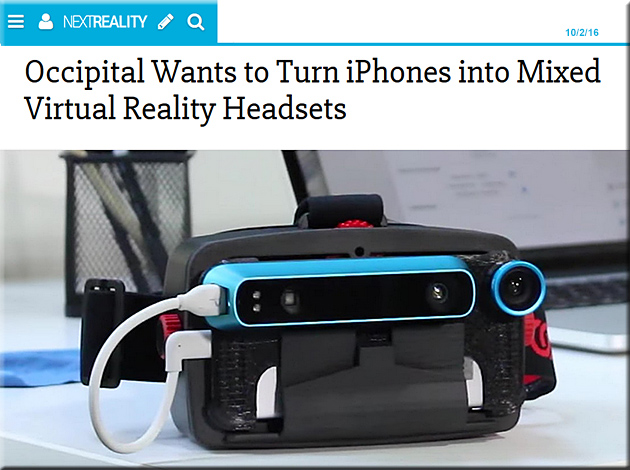
Occipital Wants to Turn iPhones into Mixed Virtual Reality Headsets — from next.reality.news by Adam Dachis

Excerpt:

If you’re an Apple user and want an untethered virtual reality system, you’re currently stuck with Google Cardboard, which doesn’t hold a candle to the room scale VR provided by the HTC Vive (a headset not compatible with Macs, by the way). But spatial computing company Occipital just figured out how to use their Structure Core 3D Sensor to provide room scale VR to any smartphone headset—whether it’s for an iPhone or Android.


occipital-10-2-16


‘The Body VR’ Brings Educational Tour Of The Human Body To HTC Vive Today — from uploadvr.com by Jamie Feltham on October 3rd, 2016

 Excerpt:

The Body VR is a great example of how the Oculus Rift and Gear VR can be used to educate as well as entertain. Starting today, it’s also a great example of how the HTC Vive can do the same.

The developers previously released this VR biology lesson for free back at the launch of the Gear VR and, in turn, the Oculus Rift. Now an upgraded version is available on Valve and HTC’s Steam VR headset. You’ll still get the original experience in which you explore the human body, travelling through the bloodstream to learn about blood cells and looking at how organelles work. The piece is narrated as you go.


Virtual Reality Dazzles Harvard University — from universityherald.com

Excerpt:

For a moment, students were taken into another world without leaving the great halls of Harvard. Some students had a great time exploring the ocean floor and saw unique underwater animals, others tried their hand in hockey, while others screamed as they got into a racecar and sped on a virtual speedway. All of them, getting a taste of what virtual and augmented reality looks like.

All of these, of course, were not just about fun but on how especially augmented and virtual reality can transform every kind of industry. This will be discussed and demonstrated at the i-lab in the coming weeks with Rony Abovitz, CEO of Magic Leap Inc., as the keynote speaker.

Abovitz was responsible for developing the “Mixed Reality Lightfield,” a technology that combines augmented and virtual reality. According to Abovitz, it will help those who are struggling to “transfer two-dimensional information or text into “spatial learning.”

“I think it will make life easier for a lot of people and open doors for a lot of people because we are making technology fit how our brains evolved into the physics of the universe rather than forcing our brains to adapt to a more limited technology,” he added.


Addendum on 10/6/16:


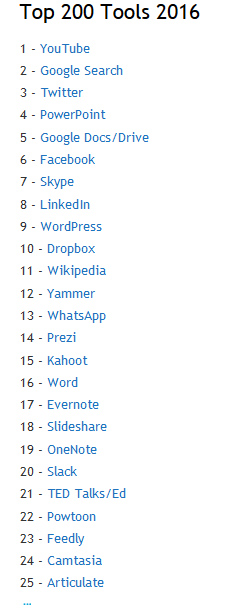
Top 200 Tools for Learning 2016: Overview — from c4lpt.co.uk by Jane Hart

Also see Jane’s:

  1. TOP 100 TOOLS FOR PERSONAL & PROFESSIONAL LEARNING (for formal/informal learning and personal productivity)
  2. TOP 100 TOOLS FOR WORKPLACE LEARNING (for training, e-learning, performance support and social collaboration
  3. TOP 100 TOOLS FOR EDUCATION (for use in primary and secondary (K12) schools, colleges, universities and adult education.)


top200tools-2016-jane-hart


Also see Jane’s “Best of Breed 2016” where she breaks things down into:

  1. Instructional tools
  2. Content development tools
  3. Social tools
  4. Personal tools


AI chatbot apps to infiltrate businesses sooner than you think — from searchbusinessanalytics.techtarget.com by Bridget Botelho
Artificial intelligence chatbots aren’t the norm yet, but within the next five years, there’s a good chance the sales person emailing you won’t be a person at all.

Excerpt:

In fact, artificial intelligence has come so far so fast in recent years, Gartner predicts it will be pervasive in all new products by 2020, with technologies including natural language capabilities, deep neural networks and conversational capabilities.

Other analysts share that expectation. Technologies that encompass the umbrella term artificial intelligence — including image recognition, machine learning, AI chatbots and speech recognition — will soon be ubiquitous in business applications as developers gain access to it through platforms such as the IBM Watson Conversation API and the Google Cloud Natural Language API.


3 corporate departments that chatbots will disrupt — from venturebeat.com by Natalie Lambert

Excerpt:

  1. Customer Service
  2. Human Resources
  3. Marketing


Facebook Messenger’s 11,000 chatbots are much more interactive — from androidcentral.com by Harish Jonnalagadda

Excerpt:

Facebook introduced chatbots on Messenger three months ago, and the search giant has shared today that over 11,000 bots are active on the messaging service. The Messenger Platform has picked up an update that adds a slew of new features to bots, such as a persistent menu that lists a bot’s commands, quick replies, ability to respond with GIFs, audio, video, and other files, and a rating system to provide feedback to bot developers.


Chatbots are coming to take over the world — from telecom.economictimes.indiatimes.com

Excerpts:

In another example, many businesses use interactive voice response (IVR) telephony systems, which have limited functionalities and often provide a poor user experience. Chatbots can replace these applications in future where the user will interact naturally to get relevant information without following certain steps or waiting for a logical sequence to occur.
…
Chatbots are a good starting point, but the future lies in more advanced versions of audio and video bots. Apple’s Siri, Amazon’s Alexa, Microsoft’s Cortana, Google with its voice assistance, are working in the same direction to achieve it. Bot ecosystems will become even more relevant in the phase of IoT mass adoption and improvement of input/output (I/O) technology.


With big players investing heavily in AI, Chatbots are likely to be an increasing feature of social media and other communications platforms.


Everything You Wanted to Know About Chatbots But Were Afraid to Ask — from businessinsider.com by Andrew Meola

Excerpt:

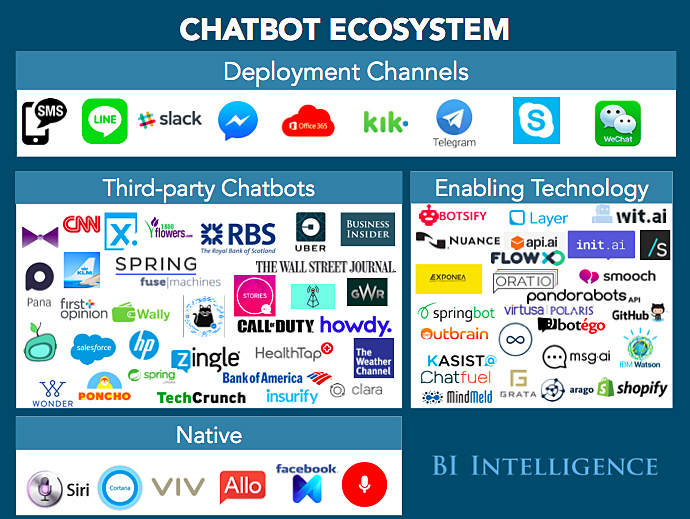
Chatbots are software programs that use messaging platforms as the interface to perform a wide variety of tasks—everything from scheduling a meeting to reporting the weather, to helping a customer buy a sweater.

Because texting is the heart of the mobile experience for smartphone users, chatbots are a natural way to turn something users are very familiar with into a rewarding service or marketing opportunity.

And when you consider that the top 4 messaging apps reach over 3 billion global users (MORE than the top 4 social networks), you can see that the opportunity is huge.


chatbotecosystem-businsider-sept2016


Microsoft taught a computer to make ‘chit chat’ — and now 40 million people love it — from businessinsider.com by Matt Weinberger

Excerpt:

The Xiaoice chat bot — pronounced “Shao-ice” and translated as “little Bing”  — born as an experiment by Microsoft Research in 2014, reaches 40 million followers in China, who often literally talk with her for hours.

At her most active, Xiaoice is holding down as many 23 conversations a session, says Microsoft Research NExT leader Dr. Peter Lee. It’s even evolved to become a nice little sideline business for Microsoft, thanks to a partnership with Chinese e-retailer JD.com that lets users buy products by talking to Xiaoice.

The reason Xiaoice is so successful is she was born of a different kind of philosophical experiment: Instead of building a chat bot that was useful, Microsoft simply tried to make it fun to talk to.


Jane’s Top 10 Tools for Learning 2016 — from c4lpt.co.uk by Jane Hart

Excerpt:

On Friday 23rd September, voting closes in the 10th Annual Survey of Learning Tool  – so it’s not too late to vote!

You can find out how to do so HERE – essentially it involves sharing your own Top 10 Tools for Learning – privately or publicly.

Anyway, as we reach the final few days of voting in 2016, I thought it was time to share my personal top 10 tools – so here they are:


Also see:


From DSC:
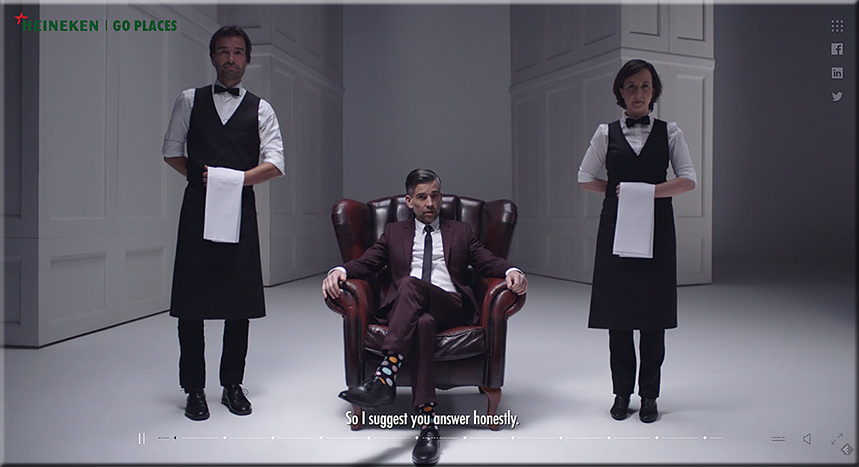
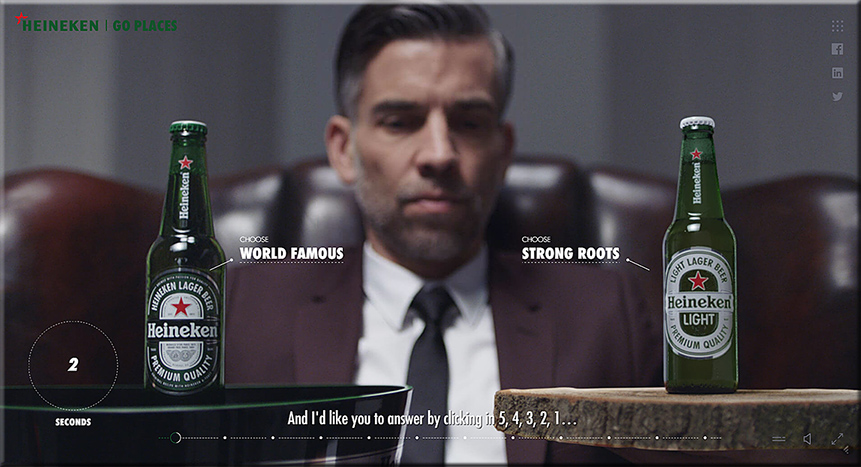
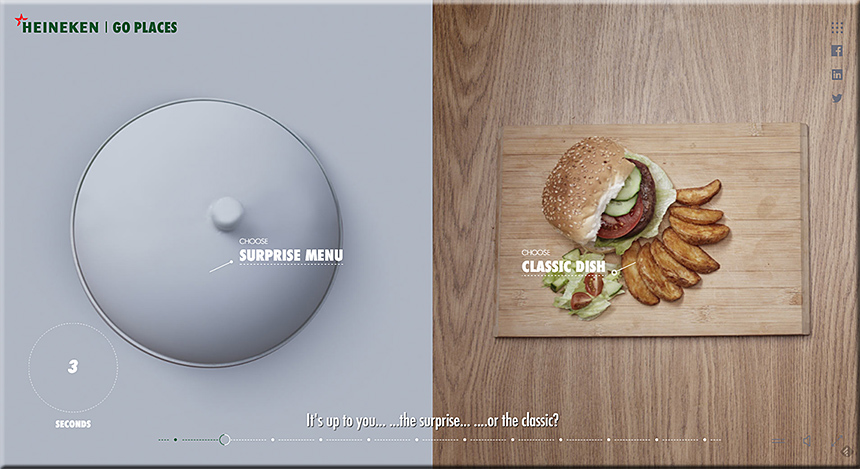
Interactive video — a potentially very powerful medium to use, especially for blended and online-based courses or training-related materials! This interactive piece from Heineken is very well done, even remembering how you answered and coming up with their evaluation of you from their 12-question “interview.”

But notice again, a TEAM of specialists are needed to create such a piece. Neither a faculty member, a trainer, nor an instructional designer can do something like this all on their own. Some of the positions I could imagine here are:

  • Script writer(s)
  • Editor(s)
  • Actors and actresses
  • Those skilled in stage lighting and sound / audio recording
  • Digital video editors
  • Programmers
  • Graphic designers
  • Web designers
  • Producers
  • Product marketers
  • …and perhaps others

This is the kind of work that I wish we saw more of in the world of online and blended courses!  Also, I appreciated their use of humor. Overall, a very engaging, fun, and informative piece!


heineken-interactive-video-cover-sep2016


heineken-interactive-video-first-sep2016


heineken-interactive-video0-sep2016


heineken-interactive-video1-sep2016


heineken-interactive-video2-sep2016


heineken-interactive-video3-sep2016


Below are some interesting thoughts and predictions from CEDIA, the leading global authority in the home technology industry.


CEDIA’s Tech Council Sees the Future, Part 1: In No Particular Order

Prediction 1: Mixed reality rooms will begin to replace home theater.
As Eric Johnson summed up last year in Recode, “to borrow an example from Microsoft’s presentation at the gaming trade show E3, you might be looking at an ordinary table, but see an interactive virtual world from the video game Minecraft sitting on top of it. As you walk around, the virtual landscape holds its position, and when you lean in close, it gets closer in the way a real object would.” Can a “holographic” cinema experience really be that far off? With 3D sound? And Smell-O-Vision?


CEDIA’s Tech Council Sees the Future, Part 2: Wes Anderson’s Favorite Screen

Prediction 13. Full-wall video with multiscreens will appear in the home. Here’s something interesting: The first three predictions in this set of 10 all have an origin in commercial applications. This one — think of it more as digital signage than sports bar — will allow the user to have access to a wall that includes a weather app, a Twitter feed, a Facebook page, the latest episode of Chopped, a Cubs game, and literally anything else a member — or members — of the family are interested in. The unintended consequences: some 13-year-old will one day actually utter the phrase, “MOM! Can you minimize your Snapchat already!?!”


CEDIA’s Tech Council Sees the Future, Part 3: Glass, Moore’s Law, and “Autopilot”

Prediction 22: Intelligent glass will be used as a control interface, entertainment platform, comfort control, and communication screen. Gordon van Zuiden says, “We live in a world of touch, glass-based icons. Obviously the phone is the preeminent example — what if all the glass that’s around you in the house could have some level of projection so that shower doors, windows, and mirrors could be practical interfaces?” Extend that smart concept to surfaces that don’t just respond to touch, but to gesture and voice — and now extend that to surfaces outside the home. 


Prediction 28: User-programmable platforms based on interoperable systems will be the new control and integration paradigm. YOU: “Alexa, please find Casablanca on Apple TV and send it to my Android phone. And order up a pizza.”


CEDIA’s Tech Council Sees the Future, Part 4: “Anything That Can Be Hacked, Will Be Hacked”

Prediction 34. Consumer sensors will increase in sensitivity and function. The Internet of Things will become a lot like Santa: “IoT sees you when you’re sleeping/IoT knows when you’re awake/IoT knows if you’ve been bad or good…”


CEDIA’s Tech Council Predicts the Future, Part 5: Getting Older

Prediction 47. Policy and technology will drive the security concerns over internet and voice connected devices. “When you add the complexity of ‘always on, always listening’ connected devices … keeping the consumer’s best interests in mind might not always be top of mind for corporations [producing these devices],” notes Maniscalco. “[A corporation’s] interest is usually in profits.” Maniscalco believes that a consumer push for legislation on the dissemination of the information a company can collect will be the “spark that ignites true security and privacy for the consumer.”


CEDIA’s Tech Council Predicts the Future, Part 6: Lights! Uber! Security!

Prediction 53. The flexible use of the light socket: Lighting becomes more than lighting. Think about the amount of coverage — powered coverage — that the footprint of a home’s network of light sockets provides. Mike Maniscalco of Ihiji has: “You can use that coverage and power to do really interesting things, like integrate sensors into the lighting. Track humidity, people’s movements, change patterns based on what’s happening in that room.”


CEDIA’s Tech Council Predicts the Future, Part 7: Networks, Voice Control, and The Three Laws of Robotics

Prediction 64. Voice and face recognition and authentication services become more ubiquitous. Yes, your front door will recognize your face — other people’s, too. “Joe Smith comes to your door, you get a text message without having to capture video, so that’s a convenience,” notes Jacobson.


iphoneplus-2cams

From Apple:

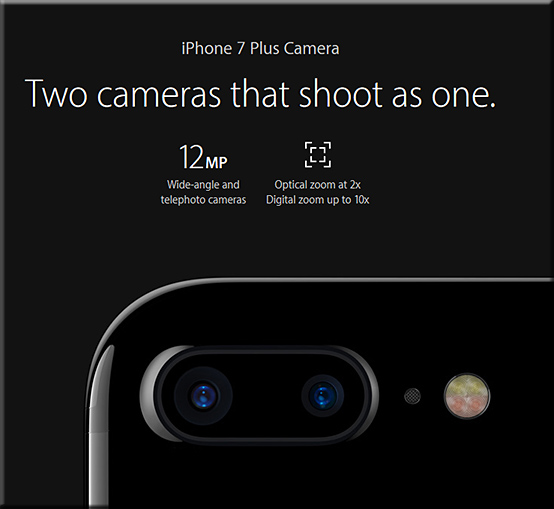
iPhone 7 Plus doesn’t have just one entirely new camera system — it has two. The same 12MP wide-angle camera that’s on iPhone 7 works with a 12MP telephoto camera that can get even closer. That means you can get higher-quality zoom from farther away. And with an all-new depth-of-field effect (coming soon), portrait shots will look better than ever. Say hello to the world’s best photo op.
…
Depth-of-field effect.
Depth of field allows you to keep faces sharp while creating a blurred effect in the background. When you take a shot with iPhone 7 Plus, the dual-camera system uses both cameras and advanced machine learning to make your subject sharp while creating the same out-of-focus blur in the background — known as the bokeh effect — previously reserved for DSLR cameras. So no matter what’s behind your subject, it’s easy to create a great portrait.


Dual camera smartphones – the missing link that will bring augmented reality into the mainstream — from theconversation.com

Excerpt:

Smartphones boasting “dual cameras” are becoming more common, and news that they will feature on the just-announced iPhone 7 Plus indicates the arrival into the mainstream. But while dual cameras may stem from efforts to improve picture quality, it has the potential to lead us down much more interesting paths: the real story may be that Apple is using dual cameras to position itself for the augmented reality world ushered in by the Pokemon Go phenomenon.
…
The iPhone uses machine learning algorithms to scan objects within a scene, building up a real-time 3D depth map of the terrain and objects. Currently, the iPhone uses this to separate the background from the foreground in order to selectively focus on foreground objects. This effect of blurring out background details, known as bokeh, is a feature of DLSRs and not readily available on smaller cameras such as those in smartphones. The depth map allows the iPhone to simulate a variable aperture which provides the ability to display areas of the image out of focus. While an enviable addition for smartphone camera users, this is a gimmick compared to what the depth map can really do.


What Apple has is the first step toward a device like Microsoft’s HoloLens, an augmented reality head-mounted display currently in development.

Software that provides similar analysis of people’s poses and location within a scene for dual camera smartphones would provide a virtual window onto the real world. Using hand gesture recognition, users could naturally interact with a mixed reality world, with the phone’s accelerometer and GPS data detecting and driving changes to how that world is presented and updated.


Apple has not arrived here by accident. In addition to acquiring Linx, Apple also purchased augmented reality pioneer Metaio in 2015, suggesting a game plan to develop a mixed reality platform.


Dual camera smartphones: here’s why you should want one — from t3.com by Joseph Carey
The iPhone 7 Plus is meant to feature dual cameras, but why are two cameras better than one?

Excerpt:

One sensor for the main image and one for the detail – dual cameras never usually have two of the same sensor.


© 2025 | Daniel Christian