Spotting the 2017 trends that fuel edtech innovation and investments — from edsurge.com by Chian Gong and Jennifer Carolan

Excerpts:

We’re pleased to share this year’s Edtech Outlook, a data-rich dive into the state of education technology with case studies into emerging-frontier innovations.
…
Education technology spans a broad category of classroom tools, spanning corporate learning, language learning, digital learning content and more. We focus here on Reach Capital’s sweet spot: school-based education technology.
…

1:1 (one device per student) is at 60% and growing rapidly.
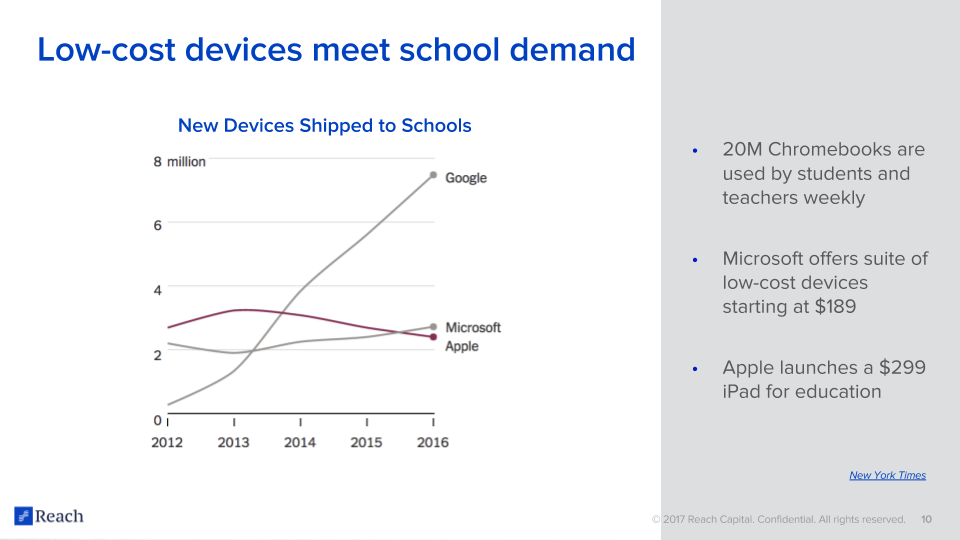
Driven by online testing mandates, along with federal and state policies, we are moving quickly toward one device per child in our K-12 schools. Last year alone 20 million Chromebooks were used by teachers and students weekly. (There are 50 million students in US public schools).


From DSC:
Looking at the graphic from the New York Times below, and with an eye on the exponential pace of change that we are now on, note how quickly Google captured major market share in the edtech market.


From DSC:
One of the biggest gifts that we can give our students today is learning how to learn. Along those lines, I was thinking about note-taking the other day.

Many students may not know how to take good notes, and to make the notes/thoughts their own. So I was thinking, wouldn’t it be great if, for each professor’s class, there was a place where students could go to see what exemplary notes look like for several — even many — of the sessions of a particular class?! If there were an accompanying audio-based or a video-based commentary that could relay the note-taker’s thinking/information processing, all the better.

These notes could be provided by the professor herself/himself or by a 4.0-type of student who has demonstrated solid study habits and shows a strong capacity for processing information.  The notes would want to:

  • Demonstrate what good note taking looks like
  • Provide examples of one’s own wording/understanding of the material
  • Identify/show any gaps in understanding by listing their own remaining questions. This type of gap analysis could help the learners see what a metacognitive check-in might look like.

By doing something like this, students could see what the main points were, what effective note taking looks like, and to see that the note-taker has taken the time to put some of their own reflections/summaries alongside the larger set of notes.

It would also be interesting to provide a platform whereby students could contribute/share their own notes to help others better understand not only the materials covered, but what different methods of note-taking might look like. Perhaps a certain style of note-taking would jump out at any given learner. Also, doing so would foster a more collaborative approach, as is often needed in the real-world.

An accompanying forum could be made available for students’ discussions of a particular class/topic. This forum could highlight for the professor what the areas of struggle are as well as how the material is being processed by the students.


On a separate thought…we also need to help students form habits of learning, such as regularly checking into streams of content (i.e., micro-learning).  If we can model this in the ways that we relay content and encourage dialog around a topic, then they will be that much better equipped to:

  • Deal with the new pace of exponential change
  • Reinvent themselves, if need be
  • Practice lifelong learning
  • Learn how to pulse-check their surroundings


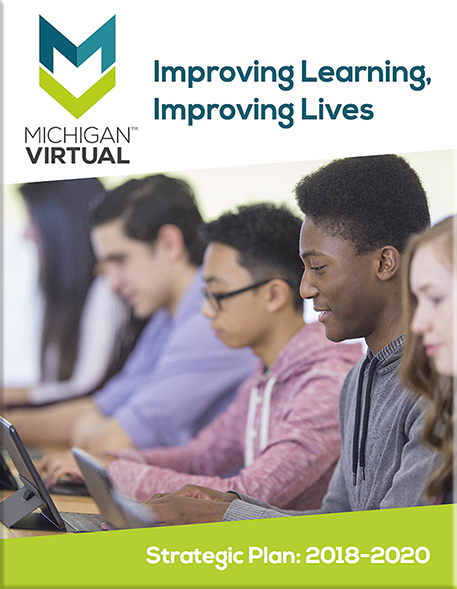
Online learning in Michigan, as delivered by Michigan Virtual and others, has exploded in recent years.

  • The number of K-12 students taking at least 1 virtually delivered course jumped from just over 36,000 in 2010-11 to ~91,000 in 2015-16 | page 9
  • Total # of virtual courses taken by Michigan K-12 students soared from ~90,000 in 2010-11 to 453,000+ in ’15-16 | page 9
  • In 2011, approximately 650 schools had at least one student take a virtual course. By 2015-16, more than 1,000 Michigan schools had at least one student enroll in an online course. | page 9
  • This growth highlights the success that Michigan Virtual and others have had in promoting online learning across Michigan, yet underscores the work that still needs to be done. Thirty-seven percent of Michigan districts did not have a single student take a virtual class in 2015-16, and only 6% of all K-12 students in the state took a virtual course. The statewide completion rate for all virtual enrollments has dropped from 66% in 2010-11 to 58% in 2015-16. So while online course participation has increased, it is still a small share of the overall market. Further, educational outcomes have declined, leaving opportunity for improvements in quality and online learning program implementation. This, combined with statewide efforts to make Michigan a leading education state, provides new opportunities for Michigan Virtual to advance K-12 digital learning and teaching through research, practice, and partnerships.


This strategic plan began with an extensive research and stakeholder outreach effort. This was designed to enhance our understanding of demographic and economic conditions, education policies and priorities, competitors and technology trends, stakeholder wants and needs, and views and perceptions of Michigan Virtual.

We interviewed or surveyed more than 425 individual stakeholders, including Michigan Virtual teachers, staff, students, and board members; the leadership and membership of leading educational organizations such as the Education Alliance of Michigan, the Virtual School Leadership Alliance, MASA, MAISA, MEMPSA, MASSP; and other leaders in education across Michigan. We also consulted research and data on technology trends, K-12 enrollment projections, state and national economic forecasts, education policies and priorities, and the competitive landscape.

KEY FINDINGS INCLUDE (emphasis DSC):

  • It is expected that the Michigan economy will see modest growth in coming years. This will help state  revenues remain relatively stable, but it is not expected that there will be significant growth in tax revenues available for increased spending on programs including K-12 education.
  • The Michigan Department of Education’s Top 10 in 10 strategic plan was developed with input from a broad group of stakeholders and is expected to remain a guiding document, along with the state’s ESSA plan and the 21st Century Education Commission’s report “The Best Education System for Michigan’s Success,” in coming years. Education priorities at the federal level are not as clear, though we expect an expanded focus on choice and options for parents and their students.
  • Technology infrastructure is built out to extend high-speed Internet access to the majority of schools and citizens in Michigan, though in-home access is still not fully available in some lower income or rural areas.
  • Users of online programs and websites have come to expect instant access and user-friendly designs and interfaces that they can access on any device.
  • There is growing acceptance and use of online courses across Michigan, though there remains a need to identify and demonstrate best practices, communicate benefits, and ensure quality standards are adopted to improve student outcomes.
  • There is growing competition among online course providers, with many focusing on low-cost solutions that are appealing to budget-constrained schools, but that may not adhere to best practices and quality standards that are demonstrated to improve student outcomes.
  • The false perception persists among some that Michigan Virtual is a for-profit organization that competes with traditional schools.
  • Poverty and related issues, including mental health and behavior, were cited by educators from across the state as being the most significant student-related issues facing their schools. (*insert DSC)
  • The need for, and adoption of, online and blended professional development will increase as educators increasingly see the value of integrating digital resources into their traditional classrooms.
  • While educators see the value of integrating digital resources into their traditional classrooms, many do not know how or where to start. Most schools and districts also lack the expertise to develop and implement blended learning programs on their own.

…

Today’s digital-learning landscape could not have been predicted when Michigan Virtual was founded in 1998, or even when our last strategic plan was developed in 2014. Some areas of digital learning have been frustratingly slow to advance, while others have perhaps grown too quickly at the expense of effectiveness and student outcomes.

This plan was intentionally designed with an unpredictable landscape in mind. The plan printed here is static, but the actions to implement the plan are dynamic. Tactics for each strategy and goal will be evaluated at least annually to stay aligned with ever-evolving challenges and opportunities. However, the goals, when taken together, provide a formula for success regardless of how the landscape evolves. We will provide an awesome experience for internal and external stakeholders alike, build partnerships to scale and grow our success, and operate efficiently and as good stewards of our resources to ensure our financial viability. Doing this, in alignment with our mission to advance K-12 digital learning and teaching through research, practice, and partnerships will bring us to a point where our vision (every person can use digital learning to reach his or her full potential) is a reality.


* In teaching, “You can’t do the Bloom stuff until you take care of the Maslow stuff.” [Beck]


WE ARE NOT READY FOR THIS! Per Forrester Research: In US, a net loss of 7% of jobs to automation — *in 2018*!

Forrester predicts that AI-enabled automation will eliminate 9% of US jobs in 2018 — from forbes.com by Gil Press

Excerpt (emphasis DSC):

A new Forrester Research report, Predictions 2018: Automation Alters The Global Workforce, outlines 10 predictions about the impact of AI and automation on jobs, work processes and tasks, business success and failure, and software development, cybersecurity, and regulatory compliance.

We will see a surge in white-collar automation, half a million new digital workers (bots) in the US, and a shift from manual to automated IT and data management. “Companies that master automation will dominate their industries,” Forrester says. Here’s my summary of what Forrester predicts will be the impact of automation in 2018:

Automation will eliminate 9% of US jobs but will create 2% more.
In 2018, 9% of US jobs will be lost to automation, partly offset by a 2% growth in jobs supporting the “automation economy.” Specifically impacted will be back-office and administrative, sales, and call center employees. A wide range of technologies, from robotic process automation and AI to customer self-service and physical robots will impact hiring and staffing strategies as well as create a need for new skills.


Your next entry-level compliance staffer will be a robot.


From DSC:

Are we ready for a net loss of 7% of jobs in our workforce due to automation — *next year*? Last I checked, it was November 2017, and 2018 will be here before we know it.


***Are we ready for this?! ***


AS OF TODAY, can we reinvent ourselves fast enough given our current educational systems, offerings, infrastructures, and methods of learning?


My answer: No, we can’t. But we need to be able to — and very soon!


There are all kinds of major issues and ramifications when people lose their jobs — especially this many people and jobs! The ripple effects will be enormous and very negative unless we introduce new ways for how people can learn new things — and quickly!

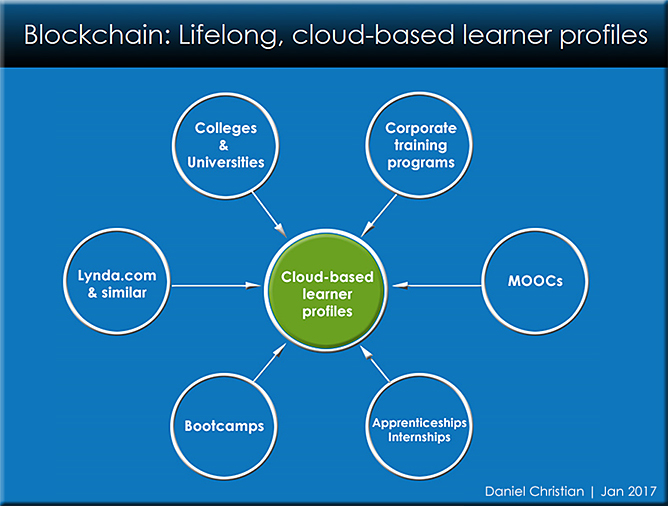
That’s why I’m big on trying to establish a next generation learning platform, such as the one that I’ve been tracking and proposing out at Learning from the Living [Class] Room. It’s meant to provide societies around the globe with a powerful, next generation learning platform — one that can help people reinvent themselves quickly, cost-effectively, conveniently, & consistently! It involves providing, relevant, up-to-date streams of content that people can subscribe to — and drop at any time. It involves working in conjunction with subject matter experts who work with teams of specialists, backed up by suites of powerful technologies. It involves learning with others, at any time, from any place, at any pace. It involves more choice, more control. It involves blockchain-based technologies to feed cloud-based learner profiles and more.

But likely, bringing such a vision to fruition will require a significant amount of collaboration. In my mind, some of the organizations that should be at the table here include:

  • Some of the largest players in the tech world, such as Amazon, Google, Apple, IBM, Microsoft, and/or Facebook
  • Some of the vendors that already operate within the higher ed space — such as Salesforce.com, Ellucian, and/or Blackboard
  • Some of the most innovative institutions of higher education — including their faculty members, instructional technologists, instructional designers, members of administration, librarians, A/V specialists, and more
  • The U.S. Federal Government — for additional funding and the development of policies to make this vision a reality


The Living [Class] Room -- by Daniel Christian -- July 2012 -- a second device used in conjunction with a Smart/Connected TV


Plan now to attend the 2018 Next Generation Learning Spaces Conference — tour USC’s campus!

From DSC:
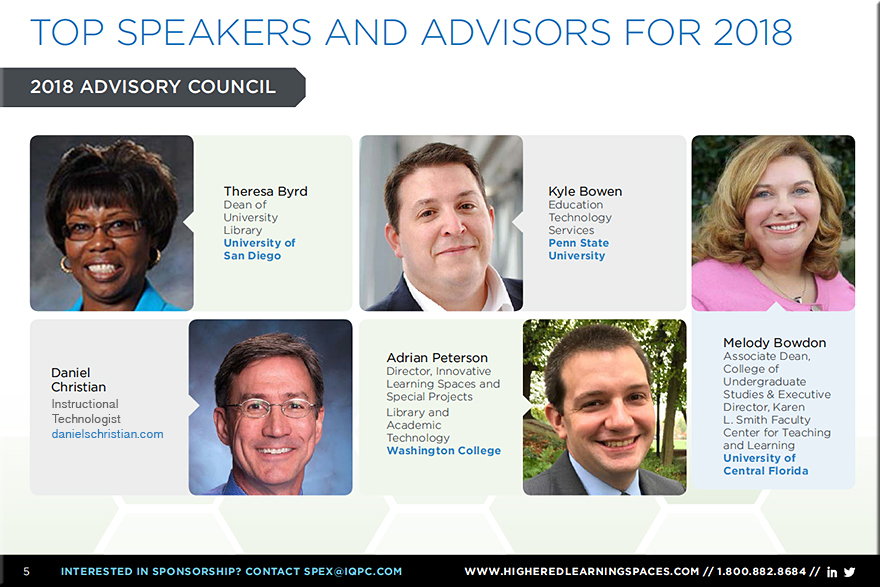
I am honored to be currently serving on the 2018 Advisory Council for the Next Generation Learning Spaces Conference with a great group of people. Missing — at least from my perspective — from the image below is Kristen Tadrous, Senior Program Director with the Corporate Learning Network. Kristen has done a great job these last few years planning and running this conference.


The Advisory Board for the 2018 Next Generation Learning Spaces Conference

NOTE:
The above graphic reflects a recent change for me. I am still an Adjunct Faculty Member
at Calvin College, but I am no longer a Senior Instructional Designer there.
My brand is centered around being an Instructional Technologist.


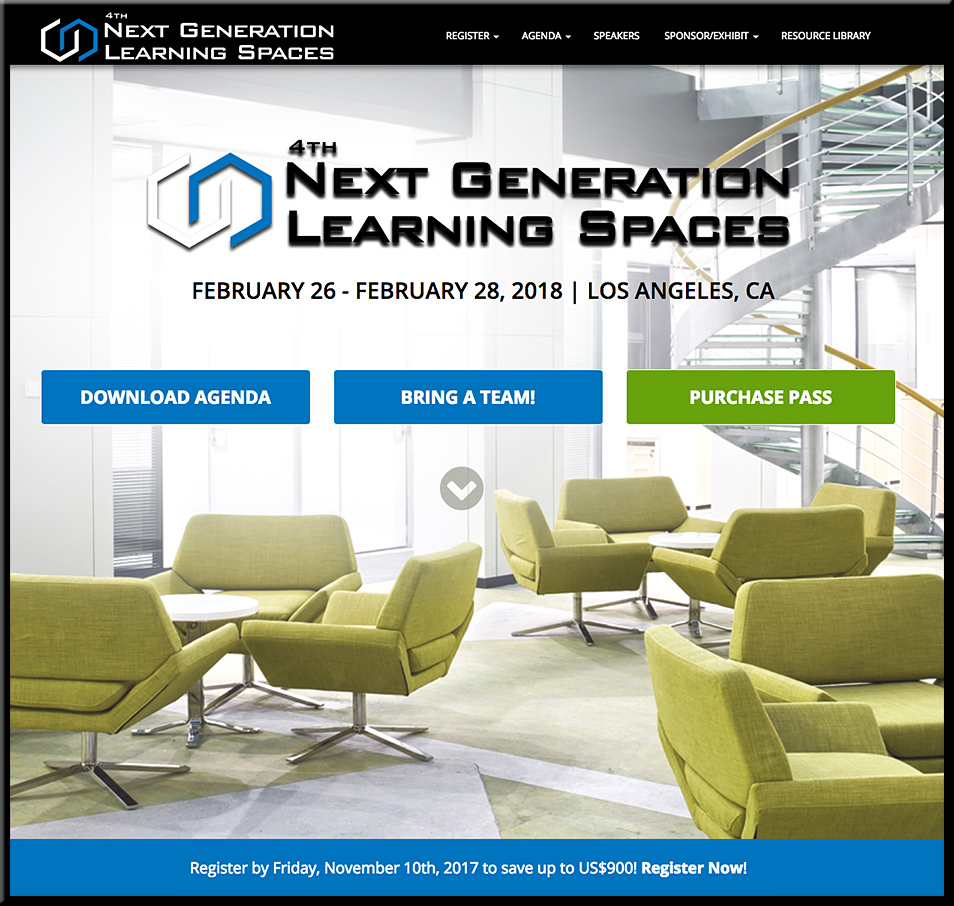
This national conference will be held in Los Angeles, CA on February 26-28, 2018. It is designed to help institutions of higher education develop highly-innovative cultures — something that’s needed in many institutions of traditional higher education right now.

I have attended the first 3 conferences and I moderated a panel at the most recent conference out in San Diego back in February/March of this year. I just want to say that this is a great conference and I encourage you to bring a group of people to it from your organization! I say a group of people because a group of 5 of us (from a variety of departments) went one year and the result of attending the NGLS Conference was a brand new Sandbox Classroom — an active-learning based, highly-collaborative learning space where faculty members can experiment with new pedagogies as well as with new technologies. The conference helped us discuss things as a diverse group, think out load, come up with some innovative ideas, and then build the momentum to move forward with some of those key ideas.

If you haven’t already attended this conference, I highly recommend that you check it out. You can obtain the agenda/brochure for the conference by providing some basic contact information here.


The 2018 Next Generational Learning Spaces Conference- to be held in Los Angeles on Feb 26-28, 2018


Tour the campus at UCLA

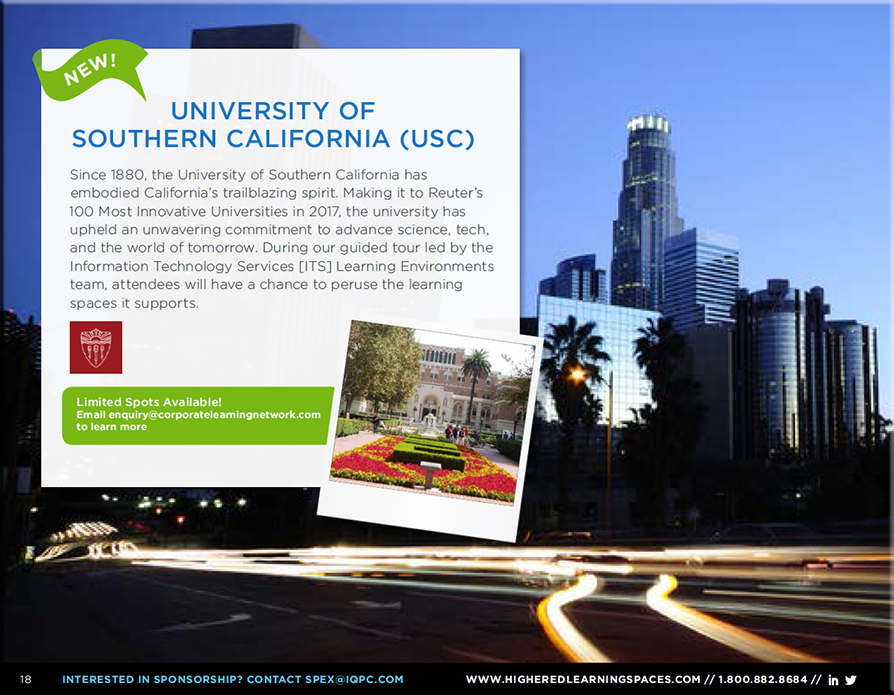
Per Kristen Tadrous, here’s why you want to check out USC:

  • A true leader in innovation: USC made it to the Top 20 of Reuter’s 100 Most Innovative Universities in 2017!
  • Detailed guided tour of leading spaces led by the Information Technology Services Learning Environments team
  • Benchmark your own learning environments by getting a ‘behind the scenes’ look at their state-of-the-art spaces
  • There are only 30 spots available for the site tour


Building Spaces to Inspire a Culture of Innovation — a core theme at the 4th Next Generation Learning Spaces summit, taking place this February 26-28 in Los Angeles. An invaluable opportunity to meet and hear from like-minded peers in higher education, and continue your path toward lifelong learning. #ngls2018 http://bit.ly/2yNkMLL


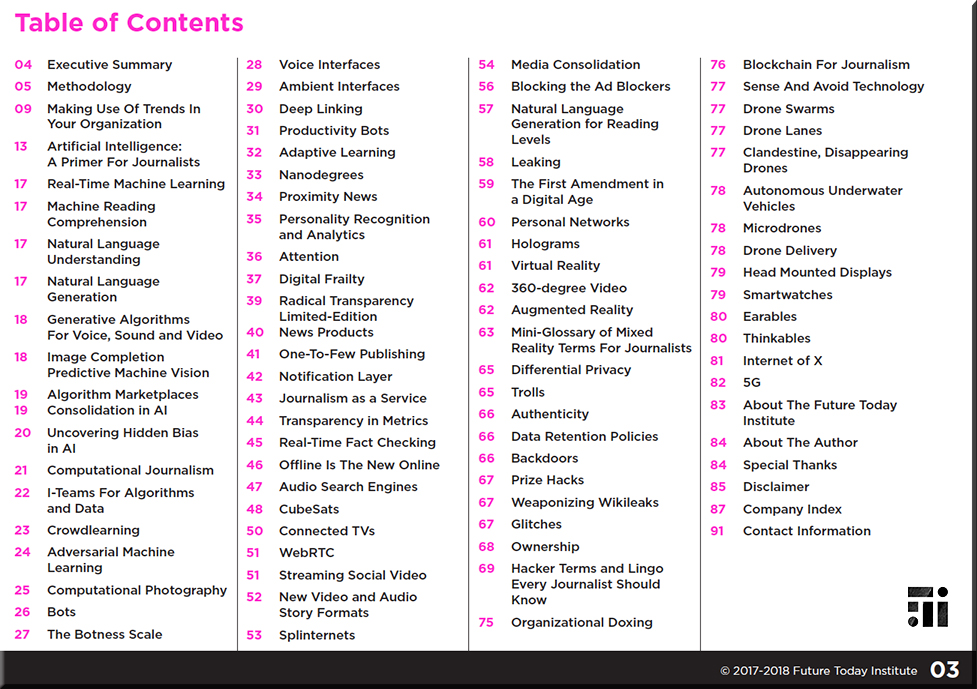
2018 Tech Trends for Journalism & Media Report + the 2017 Tech Trends Annual Report that I missed from the Future Today Institute


2018 Tech Trends For Journalism Report — from the Future Today Institute

Key Takeaways

  • 2018 marks the beginning of the end of smartphones in the world’s largest economies. What’s coming next are conversational interfaces with zero-UIs. This will radically change the media landscape, and now is the best time to start thinking through future scenarios.
  • In 2018, a critical mass of emerging technologies will converge finding advanced uses beyond initial testing and applied research. That’s a signal worth paying attention to. News organizations should devote attention to emerging trends in voice interfaces, the decentralization of content, mixed reality, new types of search, and hardware (such as CubeSats and smart cameras).
  • Journalists need to understand what artificial intelligence is, what it is not, and what it means for the future of news. AI research has advanced enough that it is now a core component of our work at FTI. You will see the AI ecosystem represented in many of the trends in this report, and it is vitally important that all decision-makers within news organizations familiarize themselves with the current and emerging AI landscapes. We have included an AI Primer For Journalists in our Trend Report this year to aid in that effort.
  • Decentralization emerged as a key theme for 2018. Among the companies and organizations FTI covers, we discovered a new emphasis on restricted peer-to-peer networks to detect harassment, share resources and connect with sources. There is also a push by some democratic governments around the world to divide internet access and to restrict certain content, effectively creating dozens of “splinternets.”
  • Consolidation is also a key theme for 2018. News brands, broadcast spectrum, and artificial intelligence startups will continue to be merged with and acquired by relatively few corporations. Pending legislation and policy in the U.S., E.U. and in parts of Asia could further concentrate the power among a small cadre of information and technology organizations in the year ahead.
  • To understand the future of news, you must pay attention to the future of many industries and research areas in the coming year. When journalists think about the future, they should broaden the usual scope to consider developments from myriad other fields also participating in the knowledge economy. Technology begets technology. We are witnessing an explosion in slow motion.

Those in the news ecosystem should factor the trends in this report into their strategic thinking for the coming year, and adjust their planning, operations and business models accordingly.


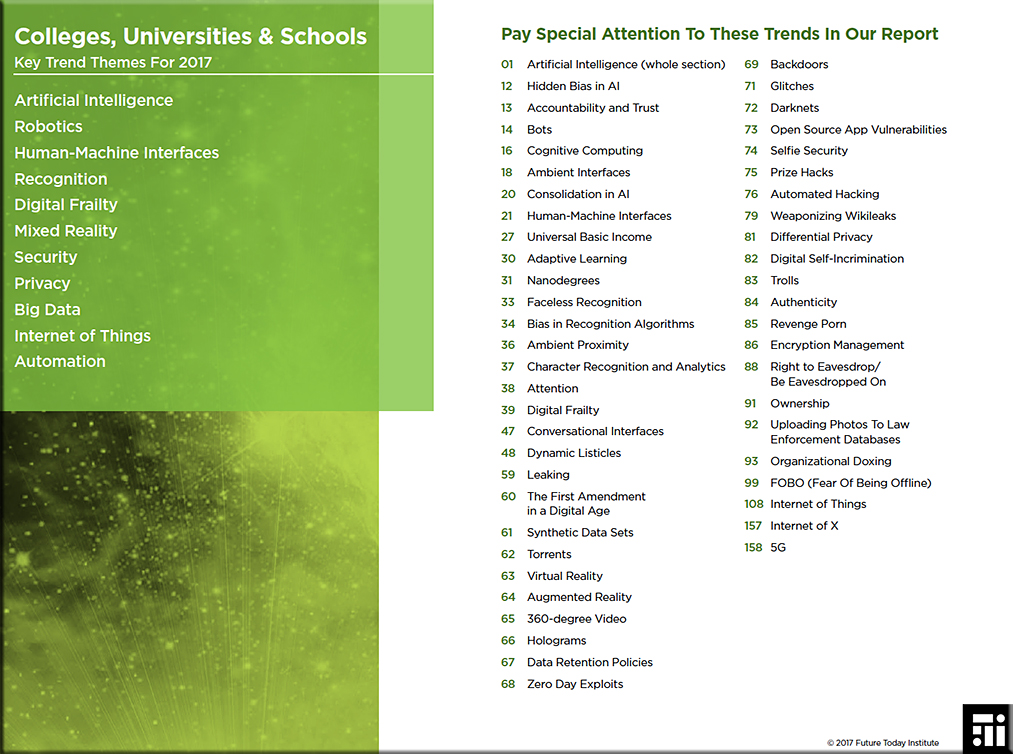
2017 Tech Trends Annual Report — from the Future Today Institute; this is the first I’ve seen this solid report

Excerpts:

This year’s report has 159 trends.
This is mostly due to the fact that 2016 was the year that many areas of science and technology finally started to converge. As a result we’re seeing a sort of slow-motion explosion––we will undoubtedly look back on the last part of this decade as a pivotal moment in our history on this planet.
…
Our 2017 Trend Report reveals strategic opportunities and challenges for your organization in the coming year. The Future Today Institute’s annual Trend Report prepares leaders and organizations for the year ahead, so that you are better positioned to see emerging technology and adjust your strategy accordingly. Use our report to identify near-future business disruption and competitive threats while simultaneously finding new collaborators and partners. Most importantly, use our report as a jumping off point for deeper strategic planning.


Also see:

Emerging eLearning Tools and Platforms Improve Results — from learningsolutionsmag.com

  • Augmented and virtual reality offer ways to immerse learners in experiences that can aid training in processes and procedures, provide realistic simulations to deepen empathy and build communication skills, or provide in-the-workflow support for skilled technicians performing complex procedures.
  • Badges and other digital credentials provide new ways to assess and validate employees’ skills and mark their eLearning achievements, even if their learning takes place informally or outside of the corporate framework.
  • Chatbots are proving an excellent tool for spaced learning, review of course materials, guiding new hires through onboarding, and supporting new managers with coaching and tips.
  • Content curation enables L&D professionals to provide information and educational materials from trusted sources that can deepen learners’ knowledge and help them build skills.
  • eBooks, a relative newcomer to the eLearning arena, offer rich features for portable on-demand content that learners can explore, review, and revisit as needed.
  • Interactive videos provide branching scenarios, quiz learners on newly introduced concepts and terms, offer prompts for small-group discussions, and do much more to engage learners.
  • Podcasts can turn drive time into productive time, allowing learners to enjoy a story built around eLearning content.
  • Smartphone apps, available wherever learners take their phones or tablets, can be designed to offer product support, info for sales personnel, up-to-date information for repair technicians, and games and drills for teaching and reviewing content; the possibilities are limited only by designers’ imagination.
  • Social platforms like Slack, Yammer, or Instagram facilitate collaboration, sharing of ideas, networking, and social learning. Adopting social learning platforms encourages learners to develop their skills and contribute to their communities of practice, whether inside their companies or more broadly.
  • xAPI turns any experience into a learning experience. Adding xAPI capability to any suitable tool or platform means you can record learner activity and progress in a learning record store (LRS) and track it.


DevLearn Attendees Learn How to ‘Think Like a Futurist’ — from learningsolutionsmag.com

Excerpt:

How does all of this relate to eLearning? Again, Webb anticipated the question. Her response gave hope to some—and terrified others. She presented three possible future scenarios:

  • Everyone in the learning arena learns to recognize weak signals; they work with technologists to refine artificial intelligence to instill values. Future machines learn not only to identify correct and incorrect answers; they also learn right and wrong. Webb said that she gives this optimistic scenario a 25 percent chance of occurring.
  • Everyone present is inspired by her talk but they, and the rest of the learning world, do nothing. Artificial intelligence continues to develop as it has in the past, learning to identify correct answers but lacking values. Webb’s prediction is that this pragmatic optimistic scenario has a 50 percent chance of occurring.
  • Learning and artificial intelligence continue to develop on separate tracks. Future artificial intelligence and machine learning projects incorporate real biases that affect what and how people learn and how knowledge is transferred. Webb said that she gives this catastrophic scenario a 25 percent chance of occurring.

In an attempt to end on a strong positive note, Webb said that “the future hasn’t happened yet—we think” and encouraged attendees to take action. “To build the future of learning that you want, listen to weak signals now.”


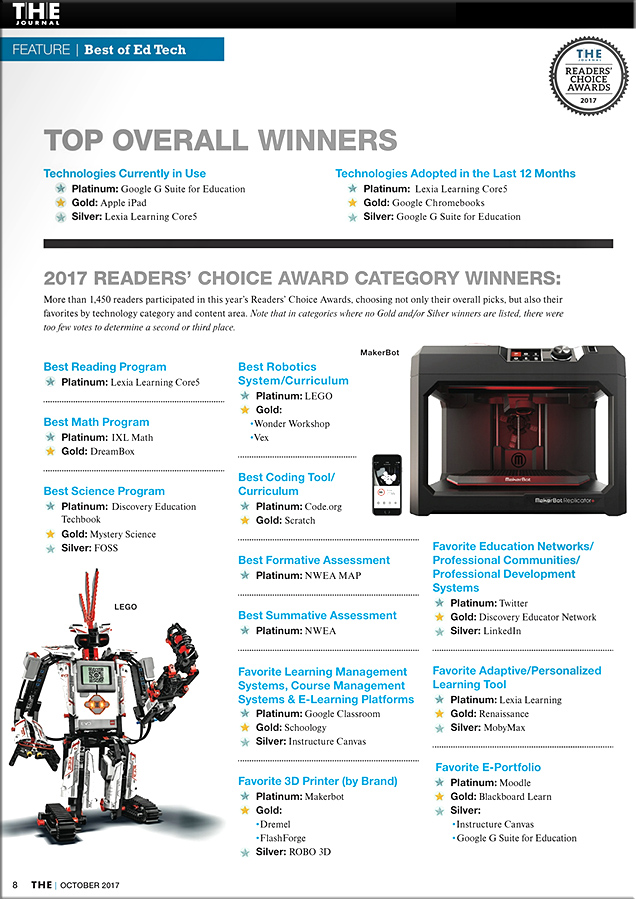
“The 2017 Readers’ Choice Awards” in K-12 — from thejournal.com by David Nagel


“Google was the absolute winner overall.”


Excerpt:

In an open-ended question asking for educators’ favorite technologies currently in use at their schools, respondents overwhelmingly chose Google’s G Suite for Education as their top overall pick.
…
The top overall categories were:

  • Mobile devices
  • Interactive whiteboards/displays/projectors
  • eLearning/learning management systems and reading software — Lexia Learning’s Core5 scored big in the reading software area, while Google Classroom, Schoology, Moodle, Canvas, and Blackboard Learn were often mentioned in the LMS area


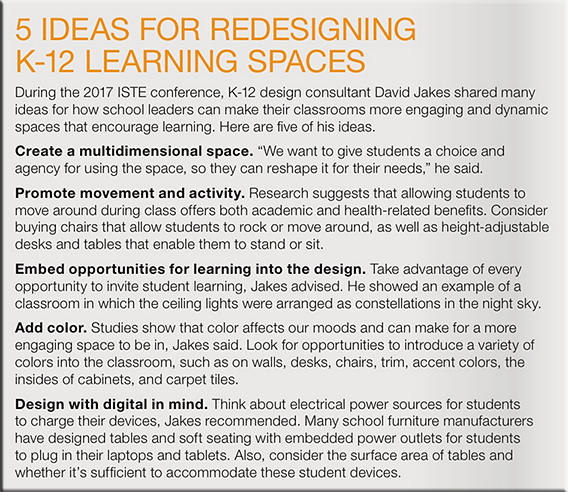
Also, there was an article in there on learning spaces. Some ideas mentioned include:


Nearly all prospective students want a tech-savvy institution — from campustechnology.com by Joshua Bolkan

Excerpt:

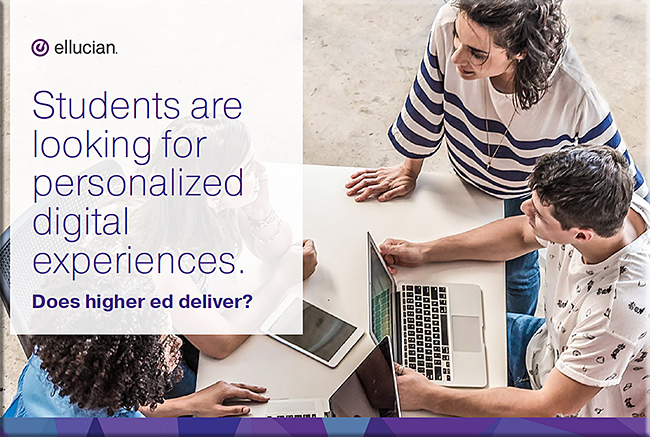
Nearly nine in 10 college students — 87 percent — said it was important to them that the institutions they applied for were technologically savvy, according to a new survey from ed tech provider Ellucian.

The report, “Students Are Looking for Personalized Digital Experiences: Do Colleges Deliver?” is based on responses of 1,000 students, including 265 from two-year institutions and 735 from four-year schools, who were invited to take the survey online via email.

More than half of students surveyed, 58 percent, said that of all the companies and institutions they engage with, their college is the one least likely to have personalized their experience.


Also see:


From DSC:
With our students using Uber, Lyft, AirBnB, and other such personalized services from Amazon.com and others, expectations are now being impacted. That is, what they expect in terms of their learning experiences are being influenced from other areas of their every day lives. This impacts credibility, which impacts enrollments.

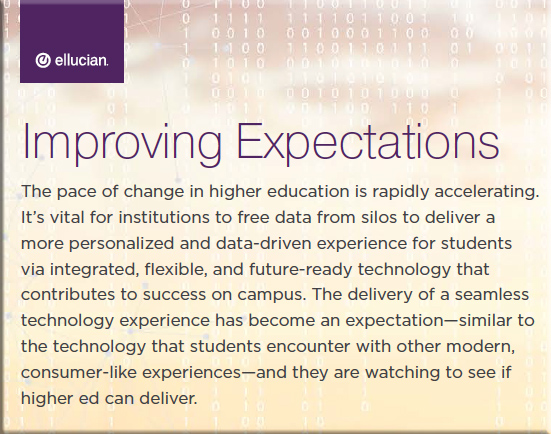
As Ellucian asserts:


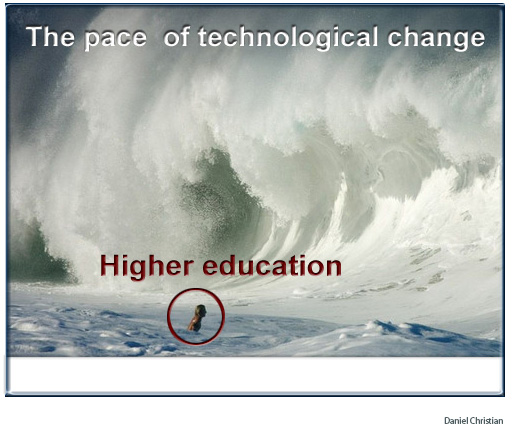
For those who would minimize or outright discard the impacts that technologies have on higher education, or the impacts of — and relevance of — technologies within higher education, how are you going to deal with this tidal wave?


From Daniel S. Christian


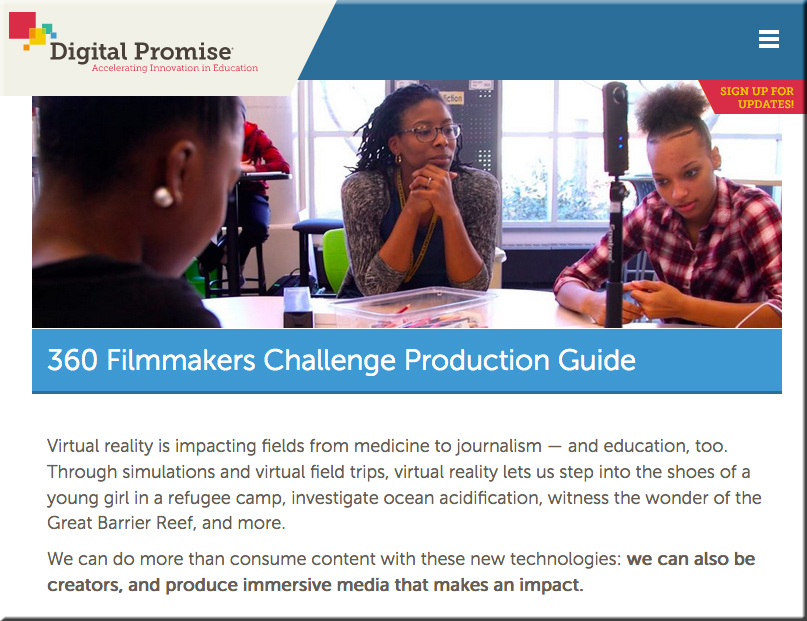
Online Guide Helps Students Learn How to Create Immersive Media — from thejournal.com by Dian Schaffhauser

Excerpt:

Now the two organizations have produced a free online guide that covers tools and resources to help students undertake 360-degree production. Among the topics: how to identify the “big ideas” worth exploring and personalize them; how to do 360-degree recording and handle pre-production, production and post-production; and how to share the film “with the world” and assess its impact. There’s also an educator resource on integrating video production into the curriculum.


free online guide for creating 360-degree recordings


Also see:


From DSC:
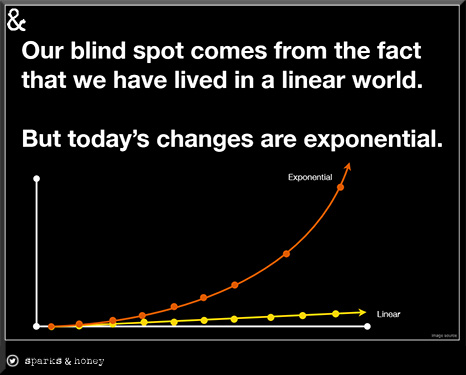
In Part I, I looked at the new, exponential pace of change that colleges, community colleges and universities now need to deal with – observing the enormous changes that are starting to occur throughout numerous societies around the globe. If we were to plot out the rate of change, we would see that we are no longer on a slow, steady, incremental type of linear pathway; but, instead, we would observe that we are now on an exponential trajectory (as the below graphic from sparks & honey very nicely illustrates).


How should colleges and universities deal with this new, exponential pace of change?

1) I suggest that you ensure that someone in your institution is lifting their gaze and peering out into the horizons, to see what’s coming down the pike. That person – or more ideally, persons – should also be looking around them, noticing what’s going on within the current landscapes of higher education. Regardless of how your institution tackles this task, given that we are currently moving at an incredibly fast pace, this trend analysis is very important. The results from this analysis should immediately be integrated into your strategic plan. Don’t wait 3-5 years to integrate these new findings into your plan. The new, exponential pace of change is going to reward those organizations who are nimble and responsive.

2) I recommend that you look at what programs you are offering and consider if you should be developing additional programs such as those that deal with:

  • Artificial Intelligence (Natural Language Processing, deep learning, machine learning, bots)
  • New forms of Human Computer Interaction such as Augmented Reality, Virtual Reality, and Mixed Reality
  • User Experience Design, User Interface Design, and/or Interaction Design
  • Big data, data science, working with data
  • The Internet of Things, machine-to-machine communications, sensors, beacons, etc.
  • Blockchain-based technologies/systems
  • The digital transformation of business
  • Freelancing / owning your own business / entrepreneurship (see this article for the massive changes happening now!)
  • …and more

3) If you are not already doing so, I recommend that you immediately move to offer a robust lineup of online-based programs. Why do I say this? Because:

  • Without them, your institution may pay a heavy price due to its diminishing credibility. Your enrollments could decline if learners (and their families) don’t think they will get solid jobs coming out of your institution. If the public perceives you as a dinosaur/out of touch with what the workplace requires, your enrollment/admissions groups may find meeting their quotas will get a lot harder as the years go on. You need to be sending some cars down the online/digital/virtual learning tracks. (Don’t get me wrong. We still need the liberal arts. However, even those institutions who offer liberal arts lineups will still need to have a healthy offering of online-based programs.)
  • Online-based learning methods can expand the reach of your faculty members while offering chances for individuals throughout the globe to learn from you, and you from them
  • Online-based learning programs can increase your enrollments, create new revenue streams, and develop/reach new markets
  • Online-based learning programs have been proven to offer the same learning gains – and sometimes better learning results than – what’s being achieved in face-to-face based classrooms
  • The majority of pedagogically-related innovations are occurring within the online/digital/virtual realm, and you will want to have built the prior experience, expertise, and foundations in order to leverage and benefit from them
  • Faculty take their learning/experiences from offering online-based courses back into their face-to-face courses
  • Due to the increasing price of obtaining a degree, students often need to work to help get them (at least part of the way) through school; thus, flexibility is becoming increasingly important and necessary for students
  • An increasing number of individuals within the K-12 world as well as the corporate world are learning via online-based means. This is true within higher education as well, as, according to a recent report from Digital Learning Compass states that “the number of higher education students taking at least one distance education course in 2015 now tops six million, about 30% of all enrollments.”
  • Families are looking very closely at their return on investments being made within the world of higher education. They want to see that their learners are being prepared for the ever-changing future that they will encounter. If people in the workforce often learn online, then current students should be getting practice in that area of their learning ecosystems as well.
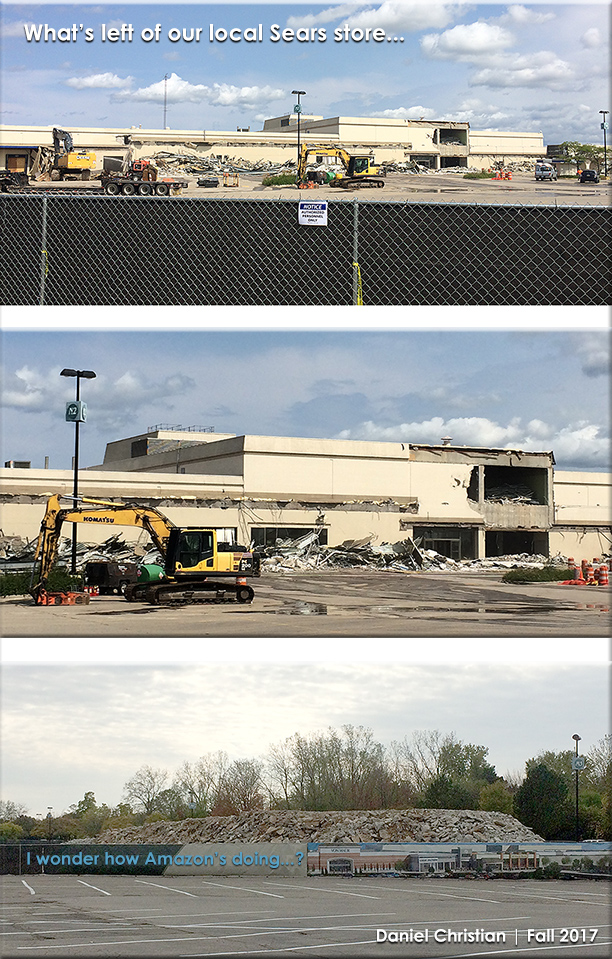
  • As the (mostly) online-based Amazon.com is thriving and retail institutions such as Sears continue to close, people are in the process of forming more generalized expectations that could easily cross over into the realm of higher education. By the way, here’s how our local Sears building is looking these days…or what’s left of it.


4) I recommend that you move towards offering more opportunities for lifelong learning, as learners need to constantly add to their skillsets and knowledge base in order to remain marketable in today’s workforce. This is where adults greatly appreciate – and need – the greater flexibility offered by online-based means of learning. I’m not just talking about graduate programs or continuing studies types of programs here. Rather, I’m hoping that we can move towards providing streams of up-to-date content that learners can subscribe to at any time (and can drop their subscription to at any time). As a relevant side note here, keep your eyes on blockchain-based technologies here.

5) Consider the role of consortia and pooling resources. How might that fit into your strategic plan?

6) Consider why bootcamps continue to come onto the landscape.  What are traditional institutions of higher education missing here?

7) And lastly, if one doesn’t already exist, form a small, nimble, innovative group within your organization — what I call a TrimTab Group — to help identify what will and won’t work for your institution.


Reading for delegates to the World Conference on Online Learning (taking place from 10/16/17 through 10/19/17 in Toronto, Canada)

Readings include:


Also see:

  • Emerging Tech Boosts Online Education Growth Over Next 4 Years — from edtechmagazine.com by Meghan Bogardus Cortez
    A study finds that mobile devices, virtual reality and blending learning programs will spark innovation.
    Excerpt:
    With millions of students enrolling in at least one online course, it should be no surprise that a recent Technavio study found that the online education market is forecasted to grow at a compound annual growth rate of 20 percent until 2021. As enrollment and investment in online education increases, the report claims that the industry owes a lot of this growth to mobile devices and increased desire for blended learning opportunities.


Faculty Predict Virtual/Augmented/Mixed Reality Will Be Key to Ed Tech in 10 Years — from campustechnology.com by Rhea Kelly
Faculty in our 2017 Teaching with Technology Survey believe tech will play a positive role in the future of higher education — but some technologies will be more important than others.

Excerpt:

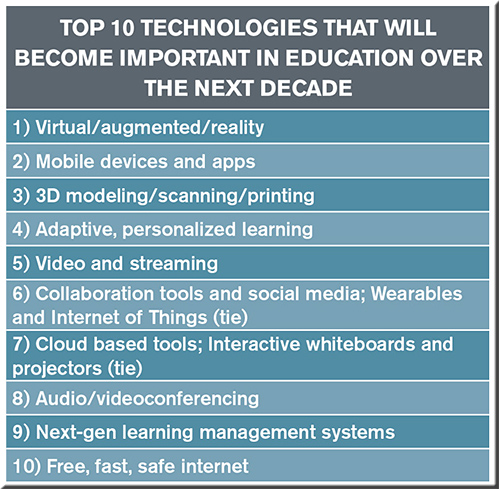
What technologies do faculty think will be important in education over the next decade? The most popular answer to that question by far was virtual/augmented/mixed reality, garnering 81 percent of responses (it topped the list last year as well). Mobile devices and apps, 3D modeling/scanning/printing, adaptive/personalized learning and video/streaming all rounded out the top five.


From DSC:
Great to see several of these items made the list. I would also add:

  • The use of Natural Language Processing (NLP) to allow more voice-enabled and voice-driven applications
  • Learning agents/bots (for example, a learning-related bot could go find out the top 50-100 jobs that employers are hiring for and present a list of potential digital playlists from a variety of providers that would help potential employees be able to do the work in those positions)
  • Blockchain and the use of web-based learner profiles
  • Artificial Intelligence / cognitive computing (which could be argued is already mentioned in the item re: adaptive, personalized learning)
  • Moving towards providing up-to-date streams of content (for purposes of lifelong learning and microlearning)

 Finally, it was great to see #9 on the list as I, too, believe that a next gen learning platform is needed:


The Living [Class] Room -- by Daniel Christian -- July 2012 -- a second device used in conjunction with a Smart/Connected TV


Excerpt:

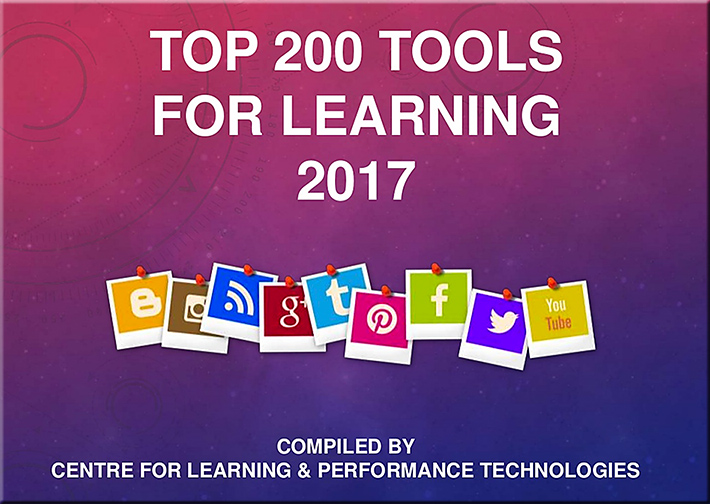
The Top 200 Tools for Learning 2017 (11th Annual Survey) has been compiled by Jane Hart of the Centre for Learning & Performance Technologies from the votes of 2,174 learning professionals worldwide, together with 3 sub-lists

  • Top 100 Tools for Personal & Professional Learning (PPL)
  • Top 100 Tools for Workplace Learning (WPL)
  • Top 100 Tools for Education (EDU)


Excerpt from the Analysis page (emphasis DSC):

Here is a brief analysis of what’s on the list and what it tells us about the current state of personal learning, workplace learning and education.

Some facts

Some observations on what the Top Tools list tells us personal and professional learning
As in previous years, individuals continue to using a wide variety of:

  • networks, services and platforms for professional networking, communication and collaboration
  • web resources and courses for self-improvement and self-development
  • tools for personal productivity

All of which shows that many individuals have become highly independent, continuous modern professional learners – making their own decisions about what they need to learn and how to do it.


From DSC:
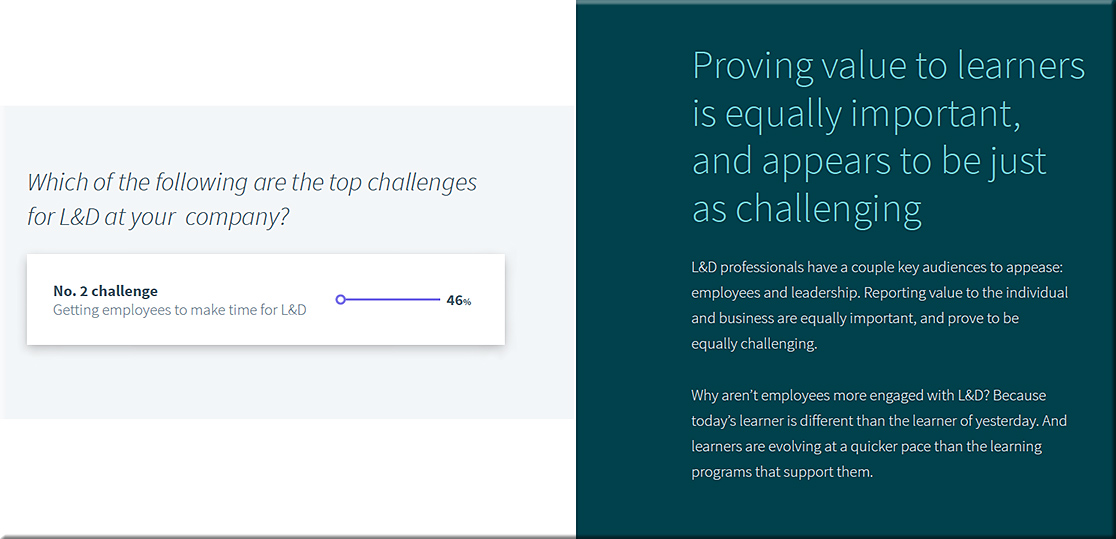
Getting employees to make time for L&D needs to be based upon “what’s in it for them” — i.e., the main role of the L&D Team/Department should be to create the platforms and means by which employees can learn whatever they need to learn in order to do their jobs well (as well as to learn the skills necessary to move into those new areas that they’ve been wanting to move into). They’re going to find ways to do this anyway, why not give them the tools/knowledge of the tools and the platforms in order to better facilitate that learning to happen at a quicker pace?

An L&D Team could provide content curation services themselves and/or they could connect the employees with knowledgeable people. For example, give employees the key people to connect with who are doing their jobs really well.

For example, the L&D Team could maintain and provide a list of the top 10*:

  • Internal Sales employees to connect with and learn from, as well as the top 10 external Sales people to connect with and learn from (these people may or may not be in the same industry).
  • Internal Customer Service employees to connect with and learn from, as well as the top 10 external Customer Service people to connect with and learn from (these people may or may not be in the same industry).
  • Internal Marketing employees to connect with and learn from, as well as the top 10 external Marketing people to connect with and learn from (these people may or may not be in the same industry).
  • Etc.


* Or top 5, or top 50, or top whatever # that the L&D Team
thinks
would be most beneficial to the organization


I think each employee in the workforce needs to know about the power of RSS feeds and feed aggregators such as Feedly. In fact, I advocate that same approach for most every student in middle school, high school, and college as well. We need to be able to connect with others and tap into streams of content being produced — as well as contribute to those streams of content as well. Blogs, Twitter, LinkedIn, CMSs/LMSs, etc. can provide beneficial streams of content.


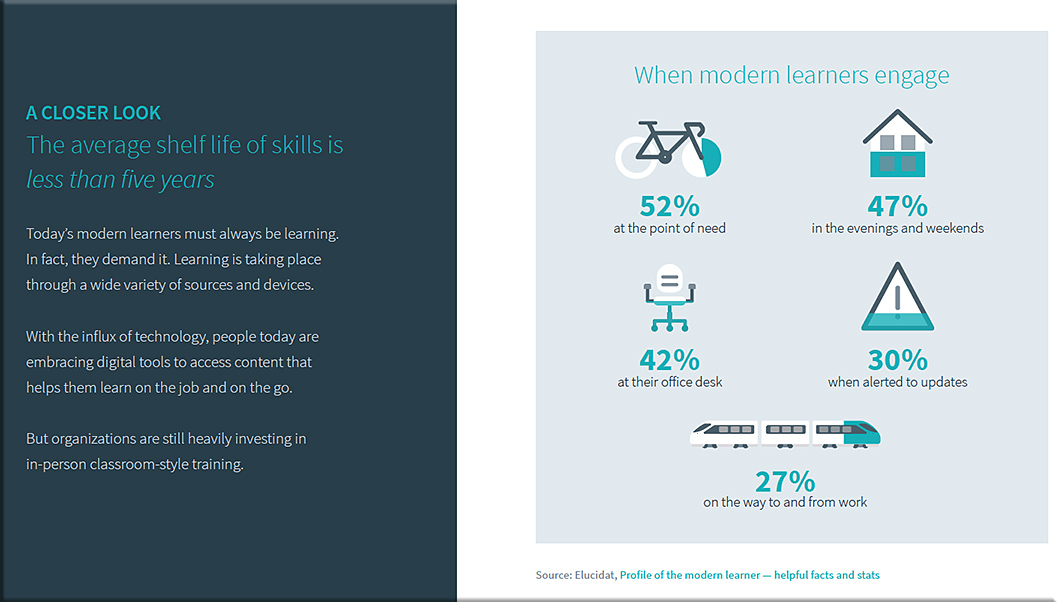
“And learners are evolving at a quicker pace than the learning programs that support them.”


Also, based upon the above image, I find it interesting that the corporate L&D teams are struggling with what higher education has been struggling with as well — i.e., predicting which skills will be needed and responding as quickly as possible in order to develop the necessary learning modules/RSS feeds/content/etc. to remain up-to-date. Actually, I suspect that it’s not that the learners are evolving at a quicker pace than the learning programs that support them, rather its the required skills and needs of the positions that are evolving at a quicker pace than the learning programs that support them.

Our institutions and our L&D Departments are simply not used to this pace of change. No one is.

We need better mechanisms of dealing with this new pace of change.

One last random thought here…perhaps a portion of the L&D department will morph into creating bots for internal employees, helping answer questions at the point of need.


The Living [Class] Room -- by Daniel Christian -- July 2012 -- a second device used in conjunction with a Smart/Connected TV


Google’s jobs AI service hits private beta, now works in 100 languages — from venturebeat.com by Blair Hanley Frank

Excerpt:

Google today announced the beta release of its Cloud Job Discovery service, which uses artificial intelligence to help customers connect job vacancies with the people who can fill them.

Formerly known as the Cloud Jobs API, the system is designed to take information about open positions and help job seekers take better advantage of it. For example, Cloud Job Discovery can take a plain language query and help translate that to the specific jargon employers use to describe their positions, something that can be hard for potential employees to navigate.

As part of this beta release, Google announced that Cloud Job Discovery is now designed to work with applicant-tracking systems and staffing agencies, in addition to job boards and career site providers like CareerBuilder.

It also now works in 100 languages. While the service is still primarily aimed at customers in the U.S., some of Google’s existing clients need support for multiple languages. In the future, the company plans to expand the Cloud Job Discovery service internationally, so investing in language support now makes sense going forward.


From DSC:
Now tie this type of job discovery feature into a next generation learning platform, helping people identify which skills they need to get jobs in their local area(s). Provide a list of courses/modules/RSS feeds to get them started. Allow folks to subscribe to constant streams of content and unsubscribe to them at any time as well.


We MUST move to lifelong, constant learning via means that are highly accessible, available 24×7, and extremely cost effective. Blockchain-based technologies will feed web-based learner profiles, which each of us will determine who can write to our learning profile and who can review it as well.


The Living [Class] Room -- by Daniel Christian -- July 2012 -- a second device used in conjunction with a Smart/Connected TV


Addendum on 9/29/17:


  • Facebook partners with ZipRecruiter and more aggregators as it ramps up in jobs — from techcrunch.com by Ingrid Lunden
    Excerpt:
    Facebook has made no secret of its wish to do more in the online recruitment market — encroaching on territory today dominated by LinkedIn, the leader in tapping social networking graphs to boost job-hunting. Today, Facebook is taking the next step in that process.
    Facebook will now integrate with ZipRecruiter — an aggregator that allows those looking to fill jobs to post ads to many traditional job boards, as well as sites like LinkedIn, Google and Twitter — to boost the number of job ads available on its platform targeting its 2 billion monthly active users.
    The move follows Facebook launching its first job ads earlier this year, and later appearing to be interested in augmenting that with more career-focused features, such as a platform to connect people looking for mentors with those looking to offer mentorship.


© 2025 | Daniel Christian