From DSC:
DC: Will Amazon get into delivering education/degrees? Is is working on a next generation learning platform that could highly disrupt the world of higher education? Hmmm…time will tell.

But Amazon has a way of getting into entirely new industries. From its roots as an online bookseller, it has branched off into numerous other arenas. It has the infrastructure, talent, and the deep pockets to bring about the next generation learning platform that I’ve been tracking for years. It is only one of a handful of companies that could pull this type of endeavor off.

And now, we see articles like these:


Amazon Snags a Higher Ed Superstar — from insidehighered.com by Doug Lederman
Candace Thille, a pioneer in the science of learning, takes a leave from Stanford to help the ambitious retailer better train its workers, with implications that could extend far beyond the company.

Excerpt:

A major force in the higher education technology and learning space has quietly begun working with a major corporate force in — well, in almost everything else.

Candace Thille, a pioneer in learning science and open educational delivery, has taken a leave of absence from Stanford University for a position at Amazon, the massive (and getting bigger by the day) retailer.

Thille’s title, as confirmed by an Amazon spokeswoman: director of learning science and engineering. In that capacity, the spokeswoman said, Thille will work “with our Global Learning Development Team to scale and innovate workplace learning at Amazon.”

No further details were forthcoming, and Thille herself said she was “taking time away” from Stanford to work on a project she was “not really at liberty to discuss.”


Amazon is quietly becoming its own university — from qz.com by Amy Wang

Excerpt:

Jeff Bezos’ Amazon empire—which recently dabbled in home security, opened artificial intelligence-powered grocery stores, and started planning a second headquarters (and manufactured a vicious national competition out of it)—has not been idle in 2018.

The e-commerce/retail/food/books/cloud-computing/etc company made another move this week that, while nowhere near as flashy as the above efforts, tells of curious things to come. Amazon has hired Candace Thille, a leader in learning science, cognitive science, and open education at Stanford University, to be “director of learning science and engineering.” A spokesperson told Inside Higher Ed that Thille will work “with our Global Learning Development Team to scale and innovate workplace learning at Amazon”; Thille herself said she is “not really at liberty to discuss” her new project.

What could Amazon want with a higher education expert? The company already has footholds in the learning market, running several educational resource platforms. But Thille is famous specifically for her data-driven work, conducted at Stanford and Carnegie Mellon University, on nontraditional ways of learning, teaching, and training—all of which are perfect, perhaps even necessary, for the education of employees.


From DSC:
It could just be that Amazon is simply building its own corporate university and will stay focused on developing its own employees and its own corporate learning platform/offerings — and/or perhaps license their new platform to other corporations.

But from my perspective, Amazon continues to work on pieces of a powerful puzzle, one that could eventually involve providing learning experiences to lifelong learners:

  • Personal assistants
  • Voice recognition / Natural Language Processing (NLP)
  • The development of “skills” at an incredible pace
  • Personalized recommendation engines
  • Cloud computing and more

If Alexa were to get integrated into a AI-based platform for personalized learning — one that features up-to-date recommendation engines that can identify and personalize/point out the relevant critical needs in the workplace for learners — better look out higher ed! Better look out if such a platform could interactively deliver (and assess) the bulk of the content that essentially does the heavy initial lifting of someone learning about a particular topic.

Amazon will be able to deliver a cloud-based platform, with cloud-based learner profiles and blockchain-based technologies, at a greatly reduced cost. Think about it. No physical footprints to build and maintain, no lawns to mow, no heating bills to pay, no coaches making $X million a year, etc.  AI-driven recommendations for digital playlists. Links to the most in demand jobs — accompanied by job descriptions, required skills & qualifications, and courses/modules to take in order to master those jobs.

Such a solution would still need professors, instructional designers, multimedia specialists, copyright experts, etc., but they’ll be able to deliver up-to-date content at greatly reduced costs. That’s my bet. And that’s why I now call this potential development The New Amazon.com of Higher Education.

[Microsoft — with their purchase of Linked In (who had previously
purchased Lynda.com) — is
another such potential contender.]
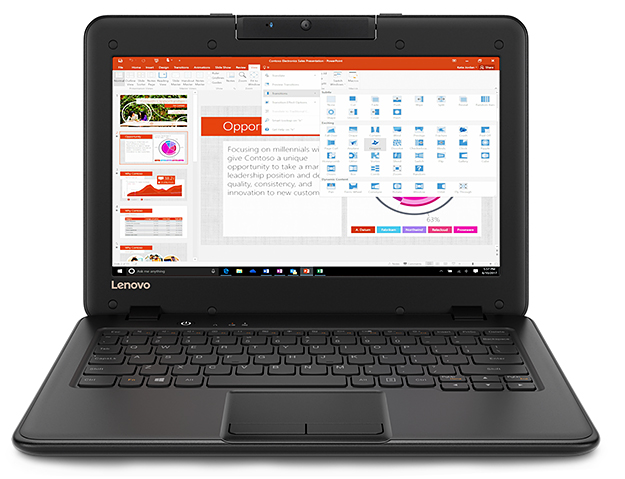


Microsoft Education unveils new Windows 10 devices starting at $189, Office 365 tools for personalized learning, and curricula to ignite a passion for STEM — from blogs.windows.com by Yusuf Mehdi

Excerpt:

This week at Bett, we’ll show new Windows 10 and Windows 10 S devices from Lenovo and JP, starting at just $189, providing more options for schools who don’t want to compromise on Chromebooks. We’ll add new capabilities to our free Office 365 for Education software, enabling any student to write a paper using only their voice and making it easier to access Teams via mobile devices. And we’re making STEM learning fun with a new Chemistry update to Minecraft: Education Edition and new mixed reality and video curricula from partners like BBC Worldwide Learning, LEGO®* Education, PBS, NASA, and Pearson.


Starting in February, we will introduce dictation in Office 365
to help students write more easily by using their voice.


In regards to mixed reality for immersive learning:

  • Pearson – the world’s largest education company – will begin rolling out in March curriculum that will work on both HoloLens and Windows Mixed Reality immersive VR headsets. These six new applications will deliver seamless experiences across devices and further illustrate the value of immersive educational experiences.
  • We are expanding our mixed media reality curriculum offerings through a new partnership with WGBH’s Bringing the Universe to America’s Classrooms project****, for distribution nationally on PBS LearningMedia™. This effort brings cutting-edge Earth and Space Science content into classrooms through digital learning resources that increase student engagement with science phenomena and practices.
  • To keep up with growing demand for HoloLens in the classroom we are committed to providing affordable solutions. Starting on January 22, we are making available a limited-time academic pricing offer for HoloLens. To take advantage of the limited-time academic pricing offer, please visit, hololens.com/edupromo.


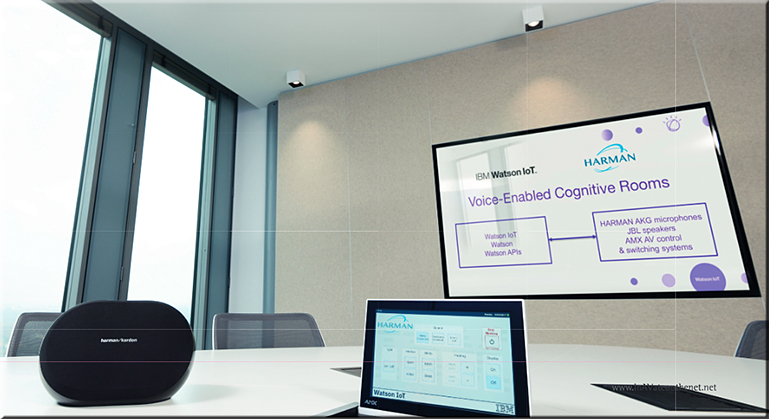
“Rise of the machines” — from January 2018 edition of InAVate magazine
AI is generating lots of buzz in other verticals, but what can AV learn from those? Tim Kridel reports.


From DSC:
Learning spaces are relevant as well in the discussion of AI and AV-related items.


Also in their January 2018 edition, see
an incredibly detailed project at the London Business School.

Excerpt:

A full-width frosted glass panel sits on the desk surface, above it fixed in the ceiling is a Wolfvision VZ-C12 visualiser. This means the teaching staff can write on the (wipeclean) surface and the text appears directly on two 94-in screens behind them, using Christie short-throw laser 4,000 lumens projectors. When the lecturer is finished or has filled up the screen with text, the image can be saved on the intranet or via USB. Simply wipe with a cloth and start again. Not only is the technology inventive, but it allows the teaching staff to remain in face-to-face contact with the students at all times, instead of students having to stare at the back of the lecturer’s head whilst they write.


Also relevant, see:


From DSC:
While I haven’t gone through all of these videos/modules/practice problems, I find the idea of using music to teach math very intriguing. So I wanted to pass this information along in case it helps some students (and teachers) out there!

You might find some (or all) of this a bit corny, but some kids out there might find this style much more interesting and engaging. It might better help get and maintain their attentions. It might help them better remember some of these concepts.

I’m posting these resources/links on my blog here because of such students. If such an approach helps them connect with the material, I say, “Good deal!”  Such an approach might suit their preferences quite well.

In fact, perhaps teachers could have their students design and produce these sorts of videos themselves! Talk about active learning/project based learning! Such a cross-disciplinary, team-based approach would involve students with interests and developing skills involving:

  • Digital video editing
  • Digital audio editing
  • Music
  • Drama/acting
  • Script writing
  • Instructional design


Per Matt Wolf, Managing Director at Tylerbarnettpr.com:

Singing math tutor, Huzefa Kapedia, has launched a new musically-based SAT Math Video Course that is sure to bring a smile to faces.

From crooning about the quadratic formula to rapping about slope intercept form, Huzefa introduces the only math SAT course to teach difficult concepts through the power of song.

Additionally, he provides 700 practice problems (all frequency-based), each with its own video explanation.

And…it actually works. Huzefa is not only helping kids score big on their SATs; he is also making the whole math studying thing pretty darn enjoyable.


Problem Solved: Scalar Learning Proves Any Person Can Be a Math Person
Online and In-Person Tutoring Platform Introduces Modern Mathematics for Today’s Student

Scalar Learning introduces an innovative online and in-person tutoring platform that enables individuals of all ages and backgrounds with the skills and confidence needed to master mathematics. Founded by software engineer and former patent attorney Huzefa Kapadia, Scalar Learning offers a variety of online courses, private tutoring sessions with specialized educators, and entertaining (and effective) math music videos geared at breathing new life into the outdated tutoring model.

“With Scalar Learning, I wanted to reinvent the tutoring concept for the modern world,” said Kapadia. “Everything I have designed and built is a product of my experience tutoring over 2,500 hours and teaching classrooms of both sixth and second grade math students. By blending vibrant and engaging video tutorials, high quality music videos to convey difficult formulas and concepts, and highly personalized and energetic one-on-one environments, we are able to engage our students on multiple levels. Too many people label themselves as ‘not a math person;’ my goal is to prove to them and the world that there is no such thing. Any person can become a math whiz with the right encouragement and training.”

Scalar Learning offers students a multi-tiered approach to mathematics, designed to engage at every level:

  • Online video courses, in subjects ranging from multiplication mastery to SAT prep, impart vital math concepts in an easy-to-digest and entertaining format.
  • One-on-one tutoring sessions with passionate educators can be arranged in-person, via Skype, or as a combination of the two, offering a welcomed flexibility to the traditional tutoring model.
  • A library of fun and highly entertaining free math music videos help reinforce important mathematical concepts through song, making it easier for students to remember complex formulas and explanations.

“Mathematics has always been my passion, which is why after years as an attorney, I made the career shift to education,” says Kapadia. “Having worked as a teacher and tutor at both private and public schools, I soon noticed how many students had a mental block when it came to math. They would admit defeat far too early simply because they were intimidated. Scalar Learning was born as a means to dismantle that premature defeat. Our system is proof that there is no such thing as being ‘bad at math.’ With the proper tools, practice, and guidance, any person can not only ‘get it,’ but they can also enjoy it.”

For more information, please visit http://scalarlearning.com.


TV is (finally) an app: The goods, the bads and the uglies for learning — from thejournal.com by Cathie Norris, Elliot Soloway

Excerpts:

Television. TV. There’s an app for that. Finally! TV — that is, live shows such as the news, specials, documentaries (and reality shows, if you must) — is now just like Candy Crunch and Facebook. TV apps (e.g., DirecTV Now) are available on all devices — smartphones, tablets, laptops, Chromebooks. Accessing streams upon streams of videos is, literally, now just a tap away.

…

Plain and simple: readily accessible video can be a really valuable resource for learners and learning.

…

Not everything that needs to be learned is on video. Instruction will need to balance the use of video with the use of printed materials. That balance, of course, needs to take in cost and accessibility.

…

Now for the 800 pound gorilla in the room: Of course, that TV app could be a huge distraction in the classroom. The TV app has just piled yet another classroom management challenge onto a teacher’s back.

…

That said, it is early days for TV as an app. For example, HD (High Definition) TV demands high bandwidth — and we can experience stuttering/skipping at times. But, when 5G comes around in 2020, just two years from now, POOF, that stuttering/skipping will disappear. “5G will be as much as 1,000 times faster than 4G.”  Yes, POOF!


From DSC:
Learning via apps is here to stay. “TV” as apps is here to stay. But what’s being described here is but one piece of the learning ecosystem that will be built over the next 5-15 years and will likely be revolutionary in its global impact on how people learn and grow. There will be opportunities for social-based learning, project-based learning, and more — with digital video being a component of the ecosystem, but is and will be insufficient to completely move someone through all of the levels of Bloom’s Taxonomy.

I will continue to track this developing learning ecosystem, but voice-driven personal assistants are already here. Algorithm-based recommendations are already here. Real-time language translation is already here.  The convergence of the telephone/computer/television continues to move forward.  AI-based bots will only get better in the future. Tapping into streams of up-to-date content will continue to move forward. Blockchain will likely bring us into the age of cloud-based learner profiles. And on and on it goes.

We’ll still need teachers, professors, and trainers. But this vision WILL occur. It IS where things are heading. It’s only a matter of time.


The Living [Class] Room -- by Daniel Christian -- July 2012 -- a second device used in conjunction with a Smart/Connected TV


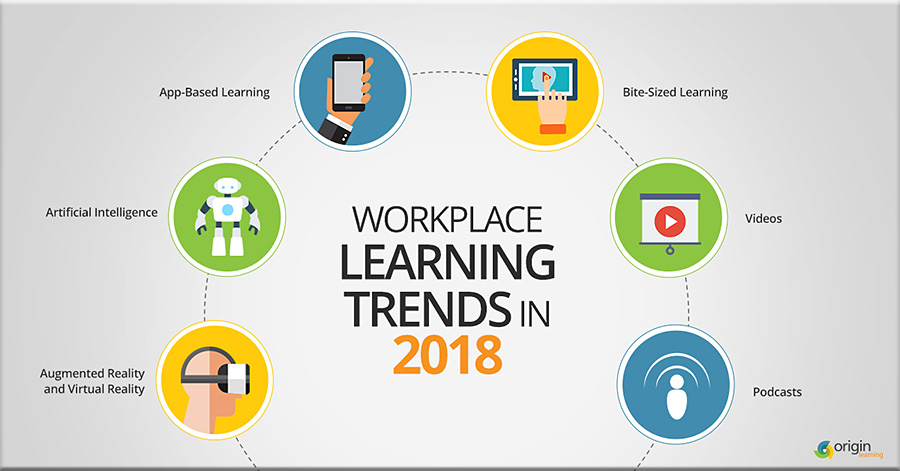
Workplace learning trends 2018 — from elearninglearning.com

Excerpt:

The beginning of a year is a great time to take stock of the year gone by and plan for the year ahead. In this blog post, we will have a quick glimpse of what we believe would be some of the key trends in workplace learning this year.


Also see:

Learning Experience Design Trends For 2018 — from elearninglearning.com. & theelearningcoach.com by
8 Ways Things are Changing for Practitioners

Here are the trends I’ve been seeing, reading and hearing about.

  1. Integrating Learning with Work
  2. From Instructional Designer to Learning Experience Designer
  3. ADDIE Who?
  4. Embracing Design Thinking
  5. Increased Awareness of Universal Design
  6. Working Out Loud Circles
  7. Seeing the Value in Metrics
  8. Openness to All Types of Learning Experiences


Inmates use VR to prepare for life on the outside — from vrscout.com by Kyle Melnick
A new early-release program in Colorado helps prisoners convicted as teenagers adjust to the world they missed 20-plus years ago.

Excerpt:

The three year program encompasses a variety of beneficial training and invaluable mentorship, but the most popular aspect by far, at least for the first six inmates enrolled, has been the interactive VR element developed by NSENA CEO Ethan Moeller.

By introducing inmates to VR technology, Moeller and Colorado correctional facilities hope to expose inmates to the significant changes made in society over the past 20 years, as well as the new technology being developed. Prisoners are first given Samsung Gear VR headsets to enjoy a selection of spectator experiences such as running with wild elephants and sitting in the cockpit of a Blue Angel fighter jet. They’re also exposed to more informative experiences such as dealing with conflict and handling self-checkout at the grocery store.

After being eased into the immersive technology with casual 360-videos, the selected convicts are then given access to more interactive applications via an HTC Vive. Moeller has designed an eclectic catalogue of instructional VR applications that educate users in everything from bagging groceries and using a debit card, to doing laundry and de escalating potentially violent confrontations. The idea is to prepare these soon-to-be released prisoners with the necessary life skills they missed while incarcerated as teenagers.


From Elliott Masie’s Learning TRENDS – January 3, 2018.
#986 – Updates on Learning, Business & Technology Since 1997.

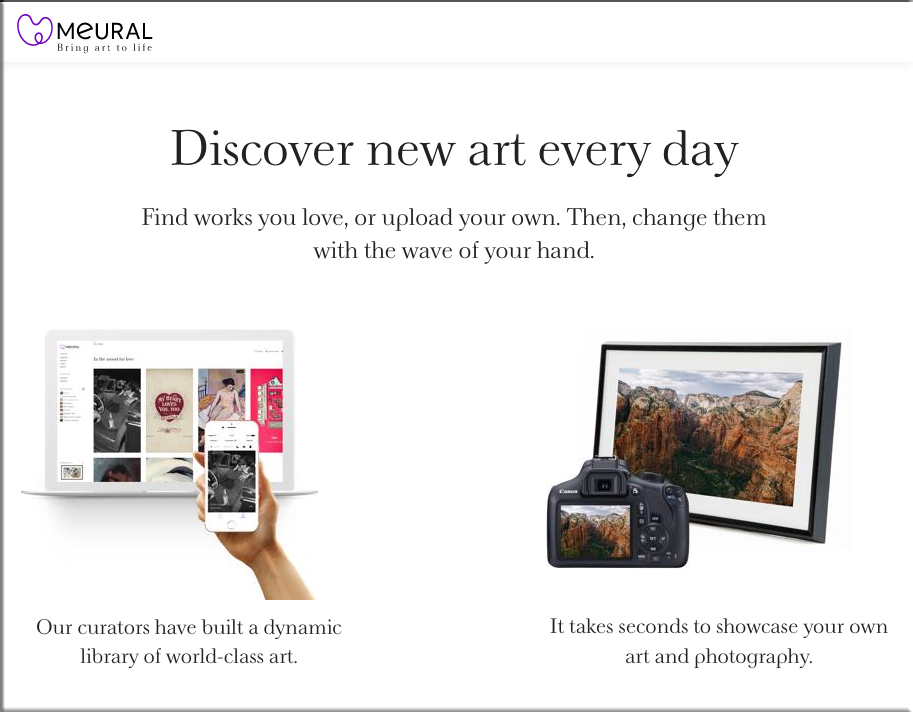
2. Curation in Action – Meural Picture Frame of Endless Art. 
What a cool Curation Holiday Gift that arrived.  The Meural Picture Frame is an amazing digital display, 30 inches by 20 inches, that will display any of over 10,000 classical or modern paintings or photos from the world’s best museums.

A few minutes of setup to the WiFi and my Meural became a highly personalized museum in the living room.  I selected collections of an era, a specific artist, a theme or used someone else’s art “playlist”.

It is curation at its best!  A personalized and individualized selection from an almost limitless collection.  Check it out at http://www.meural.com


Also see:


Discover new art every day with Meural


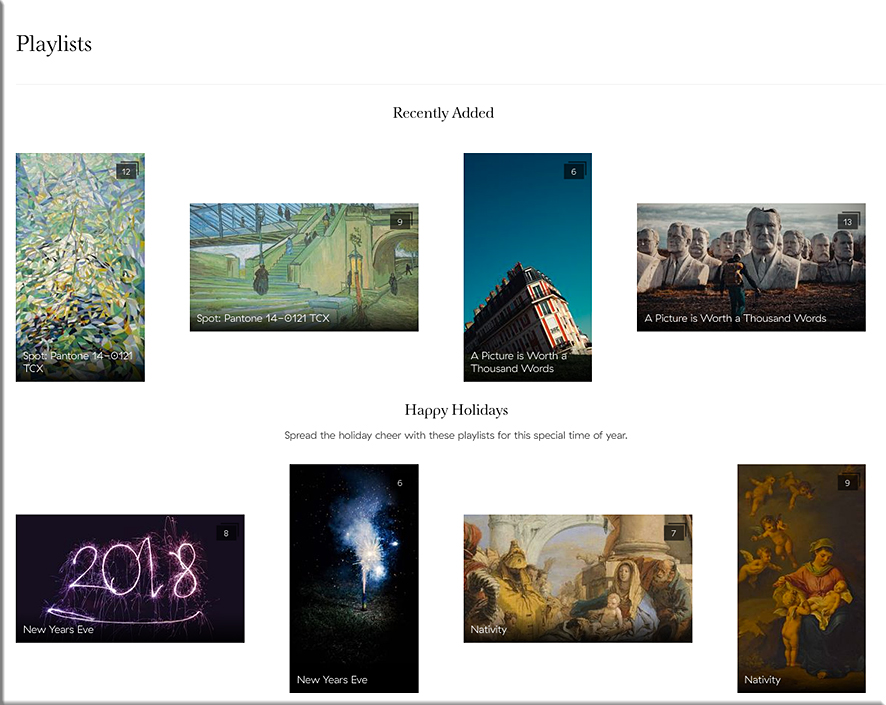
Discover new artwork with Meural -- you can browse playlists of artwork and/or add your own


From DSC:
As I understand it, you can upload your own artwork and photography into this platform. As such, couldn’t we put such devices/frames in schools?!

Wouldn’t it be great to have each classroom’s artwork available as a playlist?! And not just the current pieces, but archived pieces as well!

Wouldn’t it be cool to be able to walk down the hall and swish through a variety of pieces?

Wouldn’t such a dynamic, inspirational platform be a powerful source of creativity in our hallways?  The frames could display the greatest works of art from around the world!

Wouldn’t such a platform give young/budding artists and photographers incentive to do their best work, knowing many others can see their creative works as a part of a playlist?

Wouldn’t it be cool to tap into such a service and treasure chest of artwork and photography via your Smart/Connected TV?

Here’s to creativity!


DC: The next generation learning platform will likely offer us such virtual reality-enabled learning experiences such as this “flight simulator for teachers.”

Virtual reality simulates classroom environment for aspiring teachers — from phys.org by Charles Anzalone, University at Buffalo

Excerpt (emphasis DSC):

Two University at Buffalo education researchers have teamed up to create an interactive classroom environment in which state-of-the-art virtual reality simulates difficult student behavior, a training method its designers compare to a “flight simulator for teachers.”

The new program, already earning endorsements from teachers and administrators in an inner-city Buffalo school, ties into State University of New York Chancellor Nancy L. Zimpher’s call for innovative teaching experiences and “immersive” clinical experiences and teacher preparation.
…
The training simulator Lamb compared to a teacher flight simulator uses an emerging computer technology known as virtual reality. Becoming more popular and accessible commercially, virtual reality immerses the subject in what Lamb calls “three-dimensional environments in such a way where that environment is continuous around them.” An important characteristic of the best virtual reality environments is a convincing and powerful representation of the imaginary setting.


Also related/see:


  • TeachLive.org
    TLE TeachLivE™ is a mixed-reality classroom with simulated students that provides teachers the opportunity to develop their pedagogical practice in a safe environment that doesn’t place real students at risk.  This lab is currently the only one in the country using a mixed reality environment to prepare or retrain pre-service and in-service teachers. The use of TLE TeachLivE™ Lab has also been instrumental in developing transition skills for students with significant disabilities, providing immediate feedback through bug-in-ear technology to pre-service teachers, developing discrete trial skills in pre-service and in-service teachers, and preparing teachers in the use of STEM-related instructional strategies.


This start-up uses virtual reality to get your kids excited about learning chemistry — from Lora Kolodny and Erin Black

  • MEL Science raised $2.2 million in venture funding to bring virtual reality chemistry lessons to schools in the U.S.
  • Eighty-two percent of science teachers surveyed in the U.S. believe virtual reality content can help their students master their subjects.


This start-up uses virtual reality to get your kids excited about learning chemistry from CNBC.


From DSC:
It will be interesting to see all the “places” we will be able to go and interact within — all from the comfort of our living rooms! Next generation simulators should be something else for teaching/learning & training-related purposes!!!

The next gen learning platform will likely offer such virtual reality-enabled learning experiences, along with voice recognition/translation services and a slew of other technologies — such as AI, blockchain*, chatbots, data mining/analytics, web-based learner profiles, an online-based marketplace supported by the work of learning-based free agents, and others — running in the background. All of these elements will work to offer us personalized, up-to-date learning experiences — helping each of us stay relevant in the marketplace as well as simply enabling us to enjoy learning about new things.

But the potentially disruptive piece of all of this is that this next generation learning platform could create an Amazon.com of what we now refer to as “higher education.”  It could just as easily serve as a platform for offering learning experiences for learners in K-12 as well as the corporate learning & development space.


I’m tracking these developments at:
http://danielschristian.com/thelivingclassroom/


The Living [Class] Room -- by Daniel Christian -- July 2012 -- a second device used in conjunction with a Smart/Connected TV


*  Also see:


Blockchain, Bitcoin and the Tokenization of Learning — from edsurge.com by Sydney Johnson

Excerpt:

In 2014, Kings College in New York became the first university in the U.S. to accept Bitcoin for tuition payments, a move that seemed more of a PR stunt than the start of some new movement. Much has changed since then, including the value of Bitcoin itself, which skyrocketed to more than $19,000 earlier this month, catapulting cryptocurrencies into the mainstream.

A handful of other universities (and even preschools) now accept Bitcoin for tuition, but that’s hardly the extent of how blockchains and tokens are weaving their way into education: Educators and edtech entrepreneurs are now testing out everything from issuing degrees on the blockchain to paying people in cryptocurrency for their teaching.


How a Flipped Syllabus, Twitter and YouTube Made This Professor Teacher of the Year — from edsurge.com by Bruce Anderson

Excerpt:

A few years after John Boyer began teaching world geography at Virginia Tech, a survey revealed that 58 percent of college-aged Americans could not locate Japan on a map. Sixty-nine percent could not find the United Kingdom.

Boyer raced ahead undaunted. He loved the scope and implications of his subject. “The great thing about geography is . . . everything happens somewhere,” he explains. “Geography is the somewhere.”

Boyer is now a senior instructor and researcher at Virginia Tech. He took over World Regions, an entry-level geography class, while he was working on a master’s degree nearly 20 years ago. The class then had 50 students. Now the course is offered each semester and a whopping 3,000 students take it in any given school year.

What has made it so popular? Innovative pedagogy, for starters. Boyer uses a “flipped syllabus” in which students’ final grades are based on the points they’ve earned—not lost—throughout the semester. His legendary assignments range from reviewing films to tweeting on behalf of world leaders (more on that below). Mostly, Boyer himself has made the class a rite of passage for undergraduates, who typically find him funny, passionate, and consummately engaging. Boyer even created a comic alter ego called the Plaid Avenger, who has narrated textbooks and podcasts but is now largely retired—though Boyer still sports his famous plaid jackets and drives a plaid Scion.


Given the disparity in knowledge levels as well as the disparity in what they like to do in terms of work, whether that be watching international film or writing papers, I wanted to increase the flexibility of what the students could do to achieve a grade in this class.


Tell us about the Twitter World Leaders.
You can choose to be a true, real world leader. Of course, they’re fake accounts and we make sure everyone knows you’re the fake Donald Trump or the fake Angela Merkel of Germany. Once you take on that role, you will tweet as the world leader for the entire semester, and you have to tweet two to three times a day. And it’s not silly stuff. What is the chancellor of Germany working on right now? What other world leaders is Angela Merkel meeting with? What’s going on in Germany or the EEU?


The Section 508 Refresh and What It Means for Higher Education — from er.educause.edu by Martin LaGrow

Excerpts (emphasis DSC):

Higher education should now be on notice: Anyone with an Internet connection can now file a complaint or civil lawsuit, not just students with disabilities. And though Section 508 was previously unclear as to the expectations for accessibility, the updated requirements add specific web standards to adhere to — specifically, the Web Content Accessibility Guidelines (WCAG) 2.0 level AA developed by the World Wide Web Consortium (W3C).

…

Although WCAG 2.0 has been around since the early 2000s, it was developed by web content providers as a self-regulating tool to create uniformity for web standards around the globe. It was understood to be best practices but was not enforced by any regulating agency. The Section 508 refresh due in January 2018 changes this, as WCAG 2.0 level AA has been adopted as the standard of expected accessibility. Thus, all organizations subject to Section 508, including colleges and universities, that create and publish digital content — web pages, documents, images, videos, audio — must ensure that they know and understand these standards.

…

Reacting to the Section 508 Refresh
In a few months, the revised Section 508 standards become enforceable law. As stated, this should not be considered a threat or burden but rather an opportunity for institutions to check their present level of commitment and adherence to accessibility. In order to prepare for the update in standards, a number of proactive steps can easily be taken:

  • Contract a third-party expert partner to review institutional accessibility policies and practices and craft a long-term plan to ensure compliance.
  • Review all public-facing websites and electronic documents to ensure compliance with WCAG 2.0 Level AA standards.
  • Develop and publish a policy to state the level of commitment and adherence to Section 508 and WCAG 2.0 Level AA.
  • Create an accessibility training plan for all individuals responsible for creating and publishing electronic content.
  • Ensure all ICT contracts, ROIs, and purchases include provisions for accessibility.
  • Inform students of their rights related to accessibility, as well as where to address concerns internally. Then support the students with timely resolutions.

As always, remember that the pursuit of accessibility demonstrates a spirit of inclusiveness that benefits everyone. Embracing the challenge to meet the needs of all students is a noble pursuit, but it’s not just an adoption of policy. It’s a creation of awareness, an awareness that fosters a healthy shift in culture. When this is the approach, the motivation to support all students drives every conversation, and the fear of legal repercussions becomes secondary. This should be the goal of every institution of learning.


Als0 see:


How to Make Accessibility Part of the Landscape — from insidehighered.com by Mark Lieberman
A small institution in Vermont caters to students with disabilities by letting them choose the technology that suits their needs.

Excerpt:

Accessibility remains one of the key issues for digital learning professionals looking to catch up to the needs of the modern student. At last month’s Online Learning Consortium Accelerate conference, seemingly everyone in attendance hoped to come away with new insights into this thorny concern.

Landmark College in Vermont might offer some guidance. The private institution with approximately 450 students exclusively serves students with diagnosed learning disabilities, attention disorders or autism. Like all institutions, it’s still grappling with how best to serve students in the digital age, whether in the classroom or at a distance. Here’s a glimpse at the institution’s philosophy, courtesy of Manju Banerjee, Landmark’s vice president for educational research and innovation since 2011.


Reaching All Learners by Leveraging Universal Design for Learning in Online Courses — from by Roy Bowery and Leonia Houston

Key Takeaways

  • An instructional design team at the University of Memphis focused on helping faculty create inclusive online classrooms, become aware of the diversity of their students’ learning needs, and adapt their instruction to reach all learners.
  • They did this by helping faculty employ the principles and guidelines of the Universal Design for Learning framework, which consists of three principles: Multiple Means of Engagement, Multiple Means of Representation, and Multiple Means of Action and Expression.
  • After two years, the UDL Implementation Plan, with its emphasis on experimentation, exploration, and inclusive instruction, yielded significant benefits for instructional effectiveness at the University of Memphis.

…

In an effort to bridge the success gap, our team focused on helping faculty employ the principles and guidelines of the Universal Design for Learning (UDL) framework. According to the National Center on Universal Design for Learning, the UDL framework consists of three principles: Multiple Means of Engagement, Multiple Means of Representation, and Multiple Means of Action and Expression.1 The principles within the framework focus on the what, how, and why of learning. Each of these key principles helped our faculty address learner variability and include guidelines for encouraging their learners to become more motivated, resourceful, and goal-directed. By incorporating the UDL principles and guidelines into their online program courses, faculty created inclusive learning environments and addressed learner variability. With their newfound skills, most could use the strategies within the framework to design and develop online courses with flexible goals, instructional methods, materials, and assessments.

To assist faculty, we created a UDL Implementation Plan designed to teach them how to gradually incorporate UDL principles into their online classrooms, address learner variability, and create inclusive online instruction. We could customize the framework to meet every course, faculty, or instructional need, and they did not have to follow the principles and guidelines within the framework in a specific order. Instead, faculty could identify instructional methods or assignments affecting success in their course(s) and use specific UDL principles or guidelines to solve their pedagogical issues.


Provosts, Pedagogy, and Digital Learning — from er.educause.edu by Kenneth Green, Charles Cook, Laura Niesen de Abruna and Patricia Rogers
Panel members from an EDUCAUSE 2017 Annual Conference session offer insights about the role of provosts and chief academic officers in digital courseware deployment and the challenges of using technology to advance teaching, learning, and student success.

Excerpt:

At the EDUCAUSE 2017 Annual Conference, Kenneth C. (Casey) Green moderated a panel discussion with two of the CAOs involved in the Association of Chief Academic Officers (ACAO) Digital Fellows Program and with the principal investigator on the Bill & Melinda Gates Foundation grant that created the year-long program. In this session, the three panel members offered their perspectives on campus IT investments, including what the panelists see as working—and what they see as missing—in instructional technology portfolios today.


Green: What about protection and support for faculty—especially young faculty? Often and disproportionately, younger faculty handle the heavy lifting for departments because, being younger, they’re supposed to “do the technology stuff.” Yet, when they do it—and I hear this at all types of institutions—they don’t get credit for the work in terms of review and promotion. The technology work doesn’t count, particularly at four-year colleges and research institutions.2 Young faculty are told: “Wait. Get tenured, get through the hurdle, get over the hump, then do it. Because this will not help your career—even if you’re being pressured to be the lead person on a digital learning initiative for your institution.”


Niesen de Abruna: …Now the CIO has to be a partner with the CAO. Their joint enterprise is to leverage learning in their community and to work together and translate things for one another, acting as partners in terms of trying to benefit from what’s happening in instructional design. It’s very exciting for CIOs and CAOs to have that sort of relationship.


Also see:

  • Insights from Campus Leaders on Current Challenges and Expectations of IT — from er.educause.edu by Kathryn Gates and Joan Cheverie
    IT’s role across a higher education institution is crucial, yet campus leaders typically understand IT challenges and opportunities based largely on their functional roles. Interviews with campus leaders offer insights into these views, as well as how to understand IT more broadly to better serve an institution’s mission.


Robots in the Classroom: How a Program at Michigan State Is Taking Blended Learning to New Places — from news.elearninginside.com by Henry Kronk; with thanks to my friend and colleague, Mr. Dave Goodrich over at MSU, for his tweet on this.

Excerpt:

Like many higher education institutions, Michigan State University offers a wide array of online programs. But unlike most other online universities, some programs involve robots.

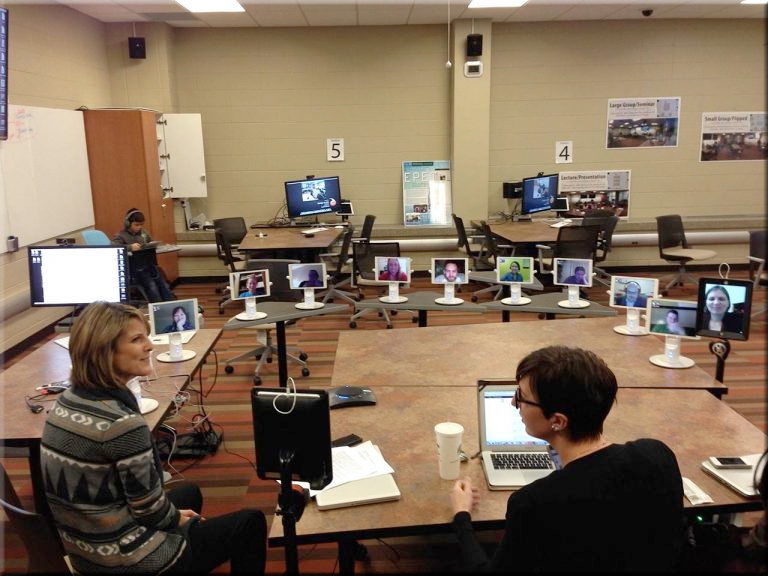
Here’s how it works: online and in-person students gather in the same classroom. Self-balancing robots mounted with computers roll around the room, displaying the face of one remote student. Each remote student streams in and controls one robot, which allows them to literally and figuratively take a seat at the table.

Professor Christine Greenhow, who teaches graduate level courses in MSU’s College of Education, first encountered these robots at an alumni event.

“I thought, ‘Oh I could use this technology in my classroom. I could use this to put visual and movement cues back into the environment,’” Greenhow said.


From DSC:
In my work to bring remote learners into face-to-face classrooms at Calvin College, I also worked with some of the tools shown/mentioned in that article — such as the Telepresence Robot from Double Robotics and the unit from Swivl.  I also introduced Blackboard Collaborate and Skype as other methods of bringing in remote students (hadn’t yet tried Zoom, but that’s another possibility).

As one looks at the image above, one can’t help but wonder what such a picture will look like 5-10 years from now? Will it picture folks wearing VR-based headsets at their respective locations? Or perhaps some setups will feature the following types of tools within smaller “learning hubs” (which could also include one’s local Starbucks, Apple Store, etc.)?


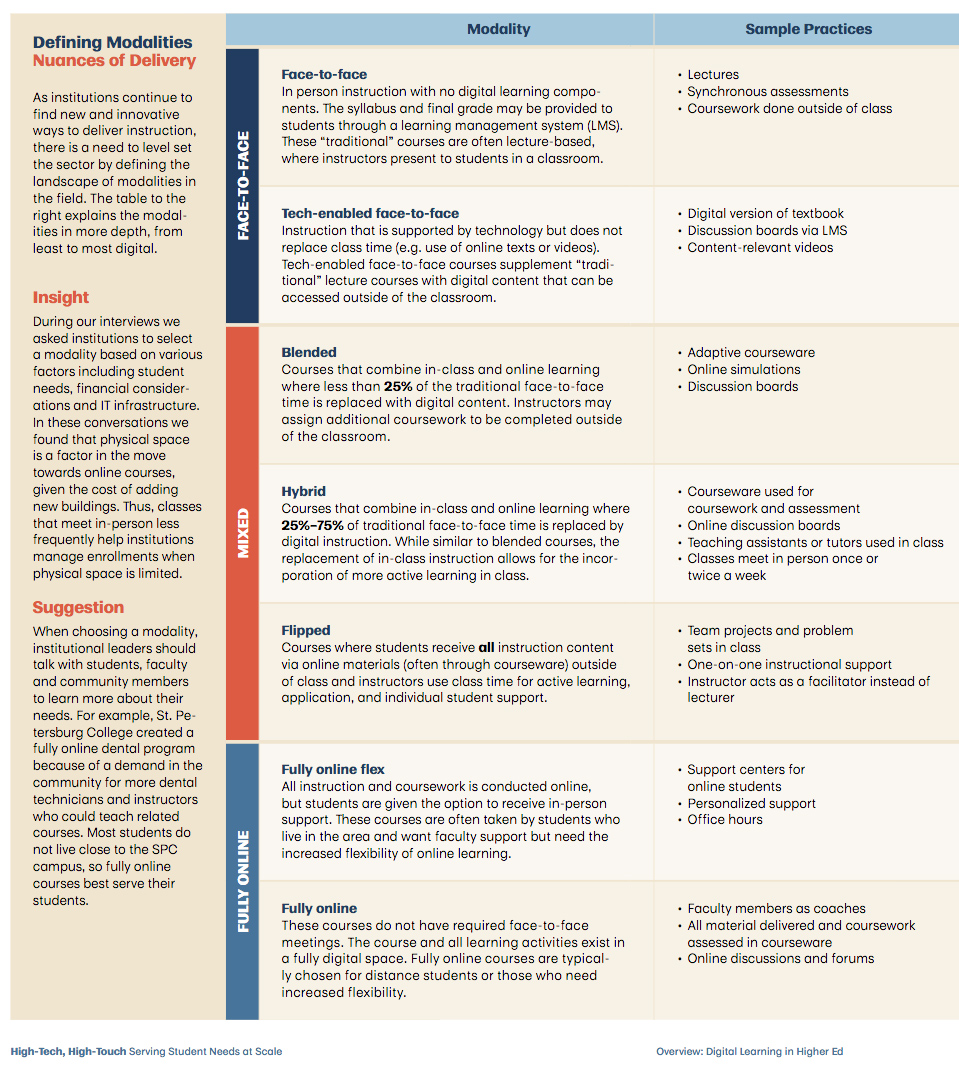
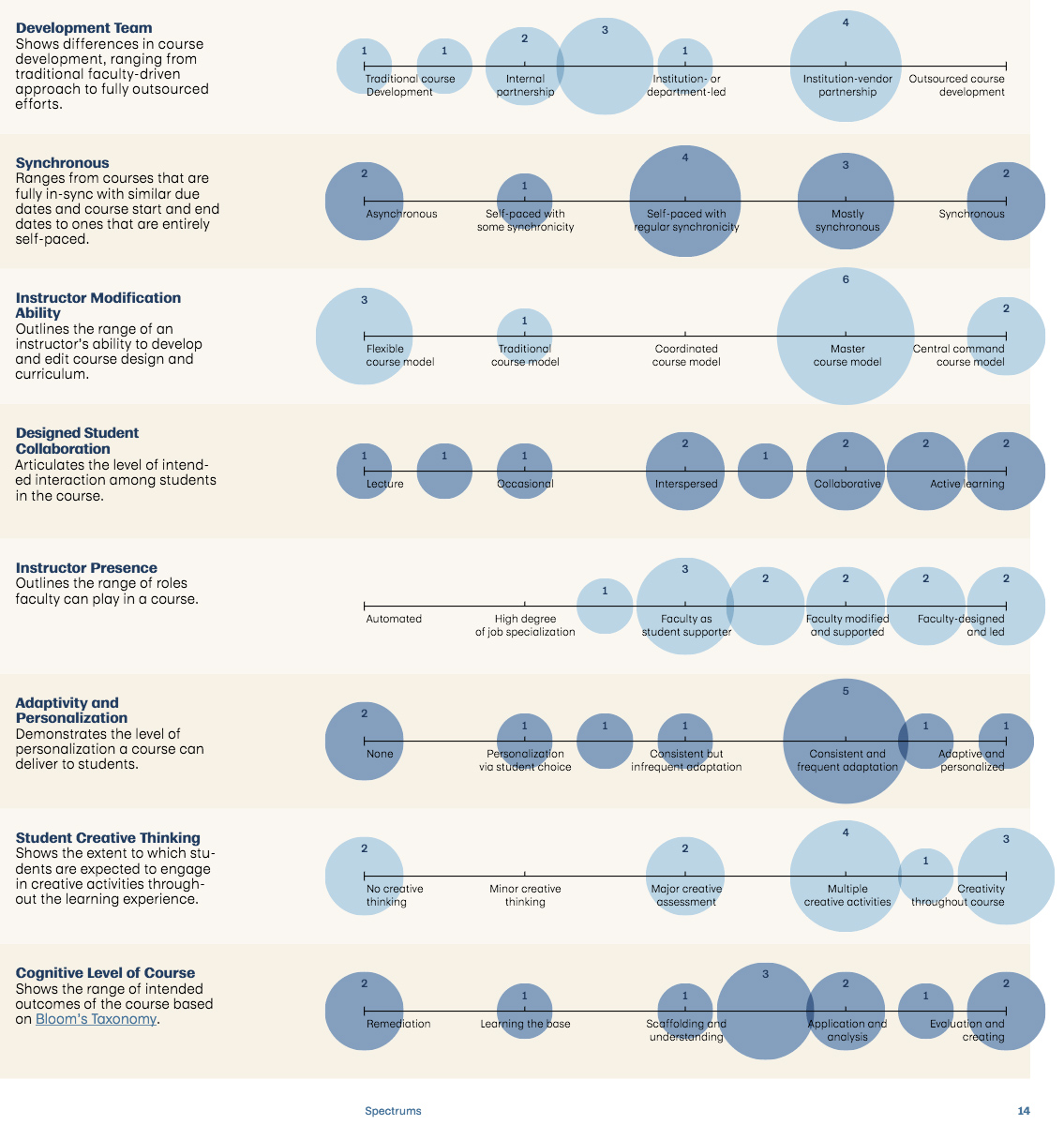
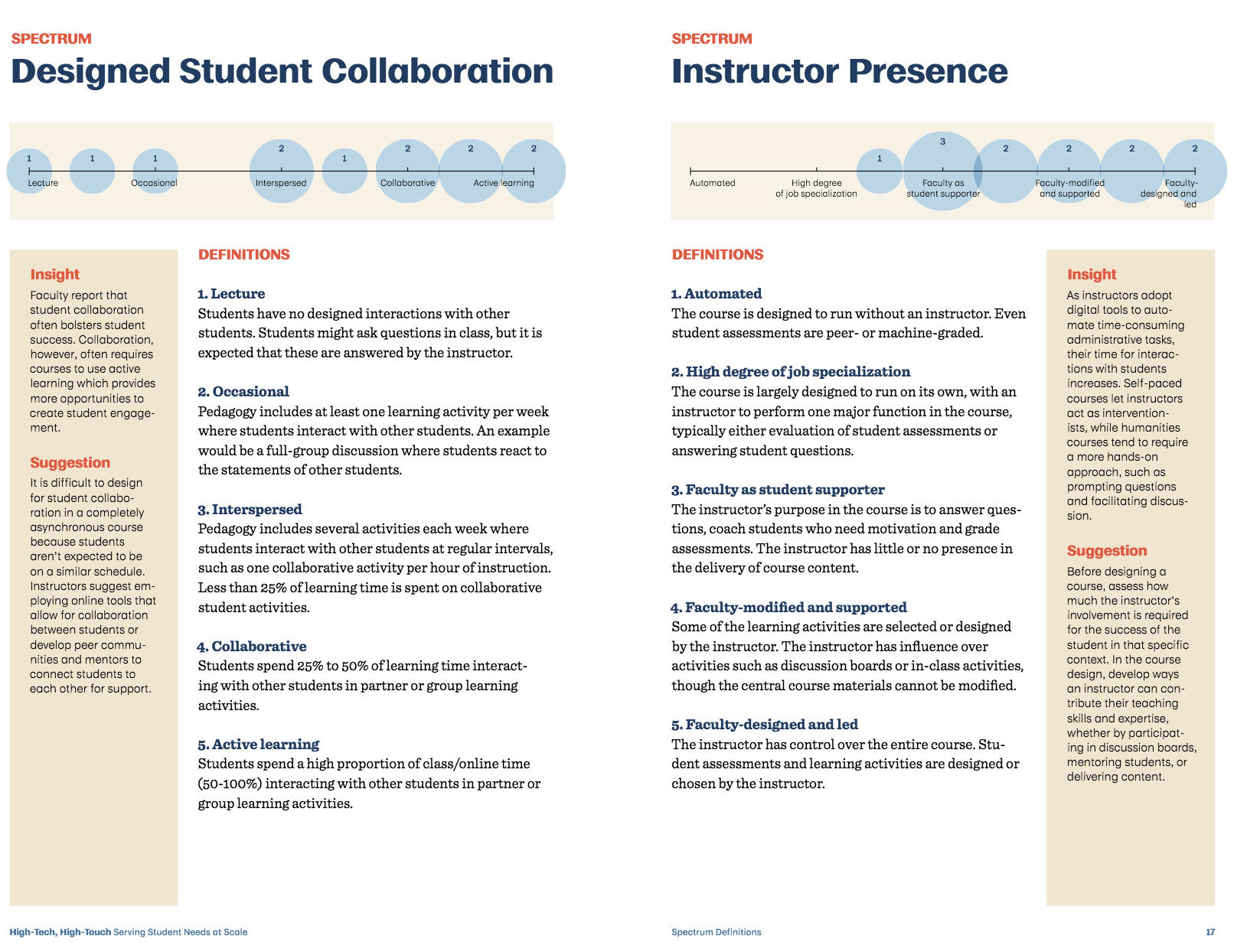
High-Tech, High Touch: Digital Learning Report and Workbook, 2017 Edition — from Intentional Futures, with thanks to Maria Andersen on Linkedin for her posting therein which was entitled, “Spectrums to Measure Digital Learning”
Excerpt (emphasis DSC):

Our work uncovered five high-tech strategies employed by institutions that have successfully implemented digital learning at scale across a range of modalities. The strategies that underscore the high-tech, high-touch connection are customizing through technology, leveraging adaptive courseware, adopting cost-efficient resources, centralizing course development and making data-driven decisions.

Although many of the institutions we studied are employing more than one of these strategies, in this report we have grouped the institutional use cases according to the strategy that has been most critical to achieving digital learning at scale. As institutional leaders make their way through this document, they should watch for strategies that target challenges similar to those they hope to solve. Reading the corresponding case studies will unpack how institutions employed these strategies effectively.

…

Digital learning in higher education is becoming more ubiquitous as institutions realize its ability to support student success and empower faculty. Growing diversity in student demographics has brought related changes in student needs, prompting institutions to look to technology to better serve their students. Digital courseware gives institutions the ability to build personalized, accessible and engaging content. It enables educators to provide relevant content and interventions for individual students, improve instructional techniques based on data and distribute knowledge to a wider audience (MIT Office of Digital Learning, 2017).

PARTICIPATION IN DIGITAL LEARNING IS GROWING
Nationally, the number of students engaged in digital learning is growing rapidly. One driver of this growth is rising demand for distance learning, which often relies on digital learning environments. Distance learning programs saw enrollment increases of approximately 4% between 2015 and 2016, with nearly 30% of higher education students taking at least one digital distance learning course (Allen, 2017). Much of this growth is occurring at the undergraduate level (Allen, 2017). The number of students who take distance learning courses exclusively is growing as well. Between 2012 and 2015, both public and private nonprofit institutions saw an increase in students taking only distance courses, although private, for-profit institutions have seen a decrease (Allen, 2017).


© 2025 | Daniel Christian