Six reasons why disruption is coming to learning departments — from feathercap.net, with thanks to Mr. Tim Seager for this resource

Excerpts:

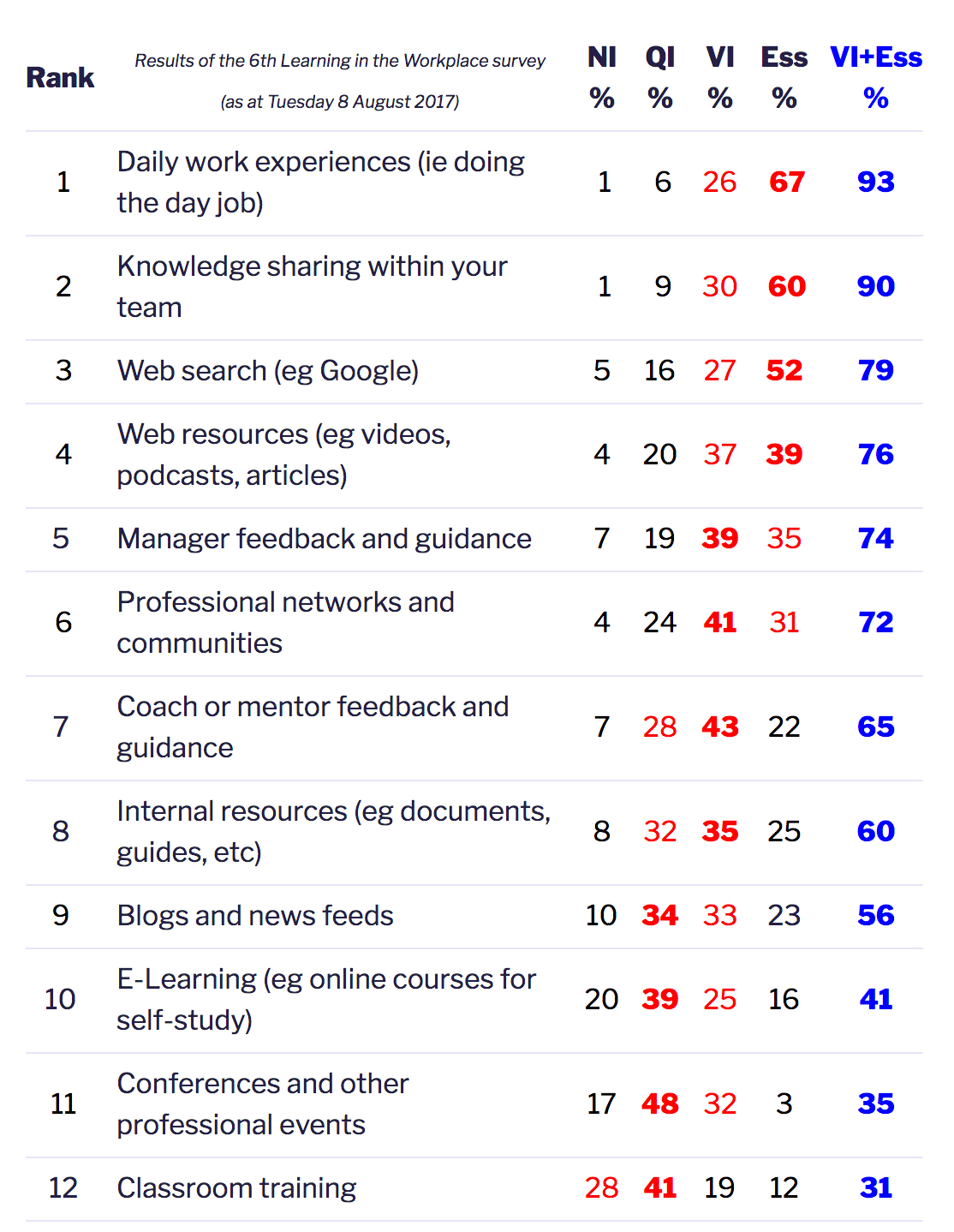
  1. Training materials and interactions will not just be pre-built courses but any structured or unstructured content available to the organization.
  2. Curation of all learning, employee or any useful organizational content will become a whole lot easier.
  3. The learning department won’t have to build it all themselves.
  4. Learning bots and voice enabled learning.
  5. Current workplace learning systems and LMSs will go through a big transition or they will lose relevancy.
  6. Learning departments will go beyond onboarding, compliance training and leadership training and move to training everyone in the company on all job skills.


A successful example of this is Amazon.com. As a shopper on their site we have access to millions of  book and product SKUs. Amazon uses a combination of all three techniques to position the right book or product based on our behavior, peer experiences as well as having a semantic understanding of the product page we’re viewing. There’s no reason we can’t have the same experience on workplace learning systems where all viable learning content/ company content could be organized and disseminated to each learner for the right time and circumstance.


From DSC:
Several items of what Feathercap is saying in their solid posting remind me of a vision of a next generation learning platform:

  • Contributing to — and tapping into — streams of content
  • Lifelong learning and reinventing oneself
  • Artificial intelligence, including Natural Language Processing (NLP) and the use of voice to drive systems/functionality
  • Learning agents/bots
  • 24×7 access
  • Structured and unstructured learning
  • Socially-based means of learning
  • …and more


The Living [Class] Room -- by Daniel Christian -- July 2012 -- a second device used in conjunction with a Smart/Connected TV


From DSC:
The vast majority of the lessons being offered within K-12 and the lectures (if we’re going to continue to offer them) within higher education should be recorded.

Why do I say this?

Well…first of all…let me speak as a parent of 3 kids, one of whom requires a team of specialists to help her learn. When she misses school because she’s out sick, it’s a major effort to get her caught up. As a parent, it would be soooooo great to log into a system and obtain an updated digital playlist of the lessons that she’s missed. She and I could click on the links to the recordings in order to see how the teacher wants our daughter to learn concepts A, B, and C. We could pause, rewind, fast forward, and replay the recording over and over again until our daughter gets it (and I as a parent get it too!).

I realize that I’m not saying anything especially new here, but we need to do a far better job of providing our overworked teachers with more time, funding, and/or other types of resources — such as instructional designers, videographers and/or One-Button Studios, other multimedia specialists, etc. — to develop these recordings. Perhaps each teacher — or team — could be paid to record and contribute their lessons to a pool of content that could be used over and over again. Also, the use of RSS feeds and content aggregators such as Feedly could come in handy here as well. Parents/learners could subscribe to streams of content.

Such a system would be a huge help to the teachers as well. They could refer students to these digital playlists as appropriate — having updated the missing students’ playlists based on what the teacher has covered that day (and who was out sick, at another school-sponsored event, etc.). They wouldn’t have to re-explain something as many times if they had recordings to reference.

—–

Also, within the realm of higher education, having recordings/transcripts of lectures and presentations would be especially helpful to learners who take more time to process what’s being said. And while that might include ESL learners here in the U.S., such recordings could benefit the majority of learners. From my days in college, I can remember trying to write down much of what the professor was saying, but not having a chance to really process much of the information until later, when I looked over my notes. Finally, learners who wanted to review some concepts before a mid-term or final would greatly appreciate these recordings.

Again, I realize this isn’t anything new. But it makes me scratch my head and wonder why we haven’t made more progress in this area, especially at the K-12 level…? It’s 2017. We can do better.


Some relevant tools here include:


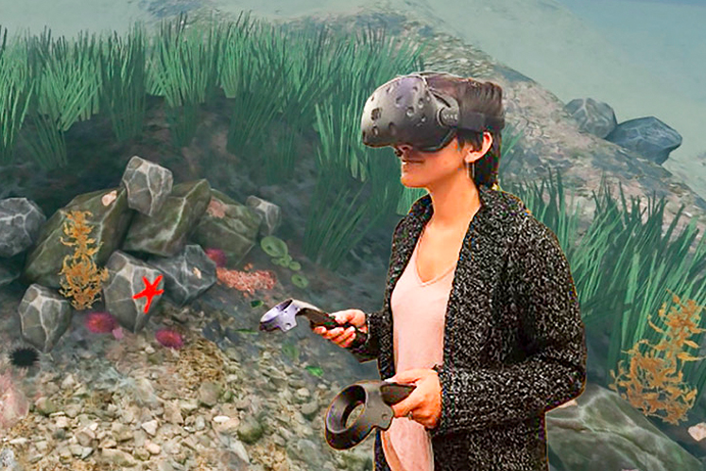
Google AR and VR: Get a closer look with Street View in Google Earth VR

Excerpt:

With Google Earth VR, you can go anywhere in virtual reality. Whether you want to stroll along the canals of Venice, stand at the summit of Mount Kilimanjaro or soar through the sky faster than a speeding bullet, there’s no shortage of things to do or ways to explore. We love this sense of possibility, so we’re bringing Street View to Earth VR to make it easier for you to see and experience the world.

This update lets you explore Street View imagery from 85 countries right within Earth VR. Just fly down closer to street level, check your controller to see if Street View is available and enter an immersive 360° photo. You’ll find photos from the Street View team and those shared by people all around the world.


Smartwatches Deemed Least Valuable Technology in the Classroom — from campustechnology.com by Rhea Kelly
In our second annual Teaching with Technology Survey, faculty revealed what technologies they use in the classroom, the devices they most value, what they wish for and more.

Excerpts:

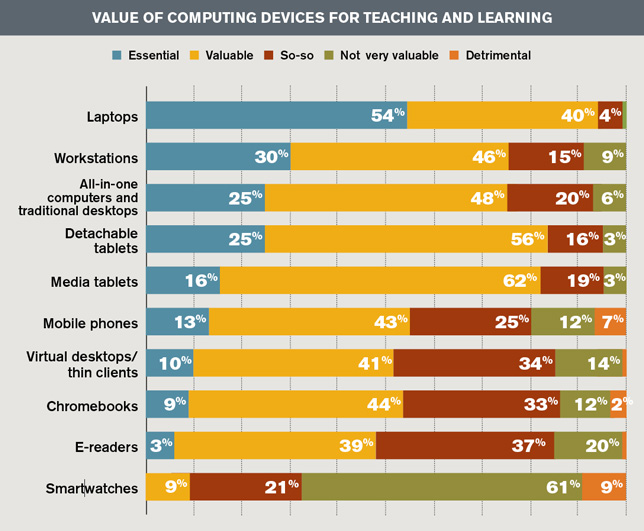
Smartwatches may be one of the hottest gadgets in the consumer market — making up nearly a third of all wearables sales this year — but the climate in the classroom is noticeably cooler for the wrist-worn devices. In our 2017 Teaching with Technology Survey, smartwatches came in dead last in the list of technologies faculty consider essential or valuable for teaching and learning. Just 9 percent of faculty called the devices “valuable” (an increase from 5 percent in 2016), and not a one deemed them “essential.” What’s more, 9 percent of respondents considered smartwatches “detrimental.”

When we asked faculty what computing devices were most valuable for teaching and learning, laptops came out on top, considered “essential” by 54 percent of respondents (up from 49 percent in 2016). Workstations (defined as higher-end computers with faster processors, more RAM, more storage and dedicated graphics cards) came in second, followed by all-in-one computers, traditional desktops and detachable tablets. (The lineup was similar last year.)


The End of Typing: The Next Billion Mobile Users Will Rely on Video and Voice — from wsj.com by Eric Bellman
Tech companies are rethinking products for the developing world, creating new winners and losers

Excerpt:

The internet’s global expansion is entering a new phase, and it looks decidedly unlike the last one.

Instead of typing searches and emails, a wave of newcomers—“the next billion,” the tech industry calls them—is avoiding text, using voice activation and communicating with images.


From DSC:
The above article reminds me that our future learning platforms will be largely driven by our voices. That’s why I put it into my vision of a next generation learning platform.


Under the Hood: Learning Design Behind Georgia Tech’s Degrees at Scale — from evolllution.com by Shabana Figueroa and Yakut Gazi

Excerpt:

Rolling out the MM program in May and the degree program in August meant design coordination and creation of eight new online courses in less than a year. We needed a new approach that employed strategies for efficiency and effectiveness.

The Learning Design Team
GTPE’s learning design team partners with faculty members to develop their online courses from start to end, providing the heavy lifting for course production. A director of learning design oversees both the instructional design and production aspects of the course production across the entire program. This cross-functional team approach eliminates the silos created by independent instructional design and studio production teams, which in turn, minimizes hand-off points, decreases friction among teams, allows for long-term thinking that leads to smarter course design and development decisions, provides fluidity of talent and roles within the team, and fuels productivity.

…

…the paradigm shift to a learner-focused, team-based approach to course production and delivery, and collaboration of campus partners and groups…


From DSC:
Note the use of a team-based approach here. I think that the team-based approach will be the most beneficial to the world at large. Those teams will be able to deliver a high-quality learning experience, with high production values and carefully planned/crafted instructional designs. 


Also see:

Learning How to Learn: Anatomy of a good MOOC — from linkedin.com by Bill Ferster

Excerpts:

Barbara Oakley’s MOOC, Learning How to Learn [2] is the exception to this trend. It is well-produced, informative, and fully embraces the new medium. With over 2 million registered students and completion rates of over 20% [3], (the average MOOC completion rate is 5%), Learning How to Learn is clearly resonating with its audience.

The question is why is it so popular? Intrigued, I enrolled the short MOOC to understand why it was so popular, and what lessons it might have for other MOOC authors to make their offerings more effective their “filmed plays.”

…

Oakley has clearly bucked the overall MOOC trend and has made good use of the inexpensive technologies with well-lit scenes that are clearly edited and make use of the green screen overlay technologies found in her Adobe Premiere video editor. She used a large teleprompter to ensure a fluid delivery of her message and high-quality audio.

…

Learning to Learn is effective because Oakley put a significant amount of effort making it effective. Good content, coupled with high production values, and sound pedagogy take time to produce and clearly pays off in the final product.


Future Forward: The Next Twenty Years of Higher Education — from Blackboard with a variety of contributors

Excerpts:

As you read their reflections you’ll find several themes emerge over and over:

  • Our current system is unsustainable and ill-suited for a globally connected world that is constantly changing.
  • Colleges and universities will have to change their current business model to continue to thrive, boost revenue and drive enrollment.
  • The “sage on the stage” and the “doc in the box” aren’t sustainable; new technologies will allow faculty to shift their focus on the application of learning rather than the acquisition of knowledge.
  • Data and the ability to transform that data into action will be the new lifeblood of the institution.
  • Finally, the heart and soul of any institution are its people. Adopting new technologies is only a small piece of the puzzle; institutions must also work with faculty and staff to change institutional culture.

Some quotes are listed below.


“What’s more, next-generation digital learning environments must bridge the divide between the faculty-directed instructivist model our colleges and universities have always favored and the learner-centric constructivist paradigm their students have come to expect and the economy now demands.”

…

It will be at least 10 years before systems such as this become the standard rather than the exception. Yet to achieve this timeline, we will have to begin fostering a very different campus culture that embraces technology for its experiential value rather than its transactional expediency, while viewing education as a lifelong pursuit rather than a degree-driven activity.

Susan Aldridge


Q: What are the biggest challenges facing higher education right now?

A: I think it is a difficult time for decisionmakers to know how to move boldly forward. It’s almost funny, nobody’s doing five-year strategic plans anymore. We used to do ten-year plans, but now it’s “What’s our guiding set of principles and then let’s sort of generally go towards that.” I think it’s really hard to move an entire institution, to know how to keep it sustainable and serving your core student population. Trying to figure out how to keep moving forward is not as simple as it used to be when you hired faculty and they showed up in the classroom. It’s time for a whole new leadership model. I’m not sure what that is, but we have to start reimagining our organizations and our institutions and even our leadership.

Marie Cini


One of the things that is frustrating to me is the argument that online learning is just another modality. Online learning is much more than that. It’s arguably the most transformative development since the G.I. Bill and, before that, the establishment of land-grant universities. 
…
I don’t think we should underestimate the profound impact online education has had and will continue to have on higher education. It’s not just another modality; it’s an entirely new industry.

Robert Hansen


From DSC:
And I would add (to Robert’s quote above) that not since the printing press was invented close to 500 years ago have we seen such an enormously powerful invention as the Internet. To bypass the Internet and the online-based learning opportunities that it can deliver is to move into a risky, potentially dangerous future. If your institution is doing that, your institution’s days could be numbered. As we move into the future — where numerous societies throughout the globe will be full of artificial intelligence, big data, robotics, algorithms, business’ digital transformations, and more — your institutions’ credibility could easily be at stake in a new, increasingly impactful way. Parents and students will want to know that there’s a solid ROI for them. They will want to know that a particular college or university has the foundational/core competencies and skills to prepare the learner for the future that the learner will encounter.


Q: What are the biggest challenges facing higher education right now?

A: I think the biggest challenge is the stubborn refusal of institutions to acknowledge that the 20th century university paradigm no longer works, or at least it doesn’t work anymore for the majority of our institutions. I’m not speaking on behalf of our members, but I think it’s fair to say that institutions are still almost entirely faculty-centered and not market-driven. Faculty, like so many university leaders today who come from faculty ranks, are so often ill-equipped to compete in the Wild West that we’re seeing today, and it’s not their fault. They’re trained to be biologists and historians and philosophers and musicians and English professors, and in the past there was very little need to be entrepreneurial. What’s required of university leadership now looks very much like what’s required in the fastpaced world of private industry.

…

If you are tuition dependent and you haven’t figured out how to serve the adult market yet, you’re in trouble.

Robert Hansen


It’s not just enough to put something online for autodidacts who already have the time, energy, and prior skills to be able to learn on their own. You really need to figure out how to embed all the supports that a student will need to be successful, and I don’t know if we’ve cracked that yet.

Amy Laitinen


The other company is Amazon. Their recent purchase of Whole Foods really surprised everybody. Now you have a massive digital retailer that has made billions staying in the online world going backwards into brick-and-mortar. I think if you look at what you can do on Amazon now, who’s to say in three years or five years, you won’t say, “You know what, I want to take this class. I want to purchase it through Amazon,” and it’s done through Amazon with their own LMS? Who’s to say they’re not already working on it?

Justin Louder


We are focused on four at Laureate. Probably in an increasing order of excitement to me are game-based learning (or gamification), adaptive learning, augmented and virtual reality, and cognitive tutoring.

Darrell Luzzo


I would wave my hand and have people lose their fear of change and recognize that you can innovate and do new things and still stay true to the core mission and values. My hope is that we harness our collective energy to help our students succeed and become fully engaged citizens.

Felice Nudelman


AR and VR in STEM: The New Frontiers in Science  — from er.educause.edu by Emory Craig and Maya Georgieva

Excerpt:

Virtual and Augmented Reality are poised to profoundly transform the STEM curriculum. In this article, we offer several inspiring examples and key insights on the future of immersive learning and the sciences. Immersive technologies will revolutionize learning through experiential simulations, modelling and spatial representation of data, and a sense of presence in contextual gamification.

Understanding our place in the universe, building the next Martian Rover, designing new transportation systems, fostering sustainable communities, modeling economic stability — finding the solution for these pressing and interconnected challenges brings us to STEM and STEAM in teaching and learning. The movement behind STEAM advocates incorporating the arts and humanities to the science, technology, engineering and math curriculum.


Also see:


From DSC:
I appreciated hearing the perspectives from Bruce Dixon and Will Richardson this morning, as I listed to a webinar that they recently offered. A few key takeaways for me from that webinar — and with a document that they shared — were:

  • The world has fundamentally changed. (Bruce and Will also mentioned the new pace of change; i.e., that it’s much faster.)
  • We need to have more urgency about the need to reimagine school, not to try to improve the existing model.
  • “Because of the advent of the Web and the technologies we use to access it, learning is, in a phrase, leaving the (school) building.”
  • There is a newfound capacity to take full control of one’s own learning; self-determined learning should be at the center of students’ and teachers’ work; co-constructed curriculum
  • And today, at a moment when learners of all ages have never had more agency over their own learning, schools must unlearn centuries old mindsets and practices and relearn them in ways that truly will serve every child living in the modern, connected world.
  • Will and Bruce believe that every educator — and district for that matter — should articulate their own “principles of learning”
  • Beliefs about how kids learn (powerfully and deeply) need to be articulated and consistently communicated and lived out
  • Everything we do as educators, administrators, etc. tells a story. What stories are we telling? (For example, what does the signage around your school building say? Is it about compliance? Is is about a love of learning? Wonder? What does the 20′ jumbo tron say about priorities? Etc.)
  • Bruce and Will covered a “story audit” and how to do one


“Learning is, in a phrase, leaving the (school) building.”

Richardson & Dixon


Also see:


These educators have decades worth of experience. They are pulse-checking their environments. They want to see students thrive both now and into the future. For these reasons, at least for me, their perspectives are highly worth reflecting upon.


Making a MOOC — from harvardmagazine.com by Jonathan Shaw

Excerpts:

Now, as one of a small number of Harvard faculty members each year whose course is selected to become a MOOC (a massive, online, open course), he is about to go global. Just 20 new courses are chosen by a faculty review committee annually, all of them ultimately offered to learners in at least one free version—part of Harvard’s commitment to improve access to education globally through HarvardX (HX), the University’s online course initiative. Hernán’s course is based on Epidemiology (EPI) 289: “Models for Causal Inference,” the core offering he’s taught for 14 years at the Harvard Chan School of Public Health (HSPH). Harvard Magazine accompanied Hernán during the making of his MOOC to find out what it takes to produce one, and how that compares to creating a traditional course.
…
Faculty members typically spend 96 to 142 hours helping produce and run an eight-week MOOC, according to HarvardX estimates. …But when complete, it will free him from much of the time and expense of traveling to teach this fundamental introductory material.
…
It takes a team of skilled professionals—HX employs a staff of about 45, including managers, videographers, graphic designers, digital editors, and even a copyright attorney and an accessibility coordinator (who helps make the materials usable for sight- and hearing-impaired learners)—to make each MOOC, at a cost that ranges widely, depending on the nature of the course and the sites of location shoots. This one cost about $100,000 to make.
…
Among the University’s goals in supporting the production of courses like Hernán’s is maximizing their “reach” as part of “Harvard’s contribution to a rising tide of education globally,” says HX faculty director Robert Lue.
…
A video lecture therefore becomes a short unit in which to make one point, “not five. Because if I try to make five points, I need 50 minutes.” The hooks—the real-world applications—mean that “I start each lesson by telling students why this is important, why they should keep watching….You are in a competition for attention…


“For example, it seems obvious, but there’s only one Miguel Hernán. And he can either teach a class of 70” once a year, “or develop this course that reaches many more around the world and across different disciplines.”


From DSC:
Readers of this Learning Ecosystems blog will recognize the following graphic:


I have long believed that each of us needs to draw from the relevant streams of content that are constantly flowing by us — and also that we should be contributing content to those streams as well. Such content can come from blogs, websites, Twitter, LinkedIn, podcasts, YouTube channels, Google Alerts, periodicals, and via other means.

I’m a big fan of blogging and using RSS feeds along with feed aggregators such as Feedly. I also find that Twitter, LinkedIn, and Google Alerts to be excellent means of tapping into — and contributing to — these streams of content. (See Jane Hart’s compilations to tap into other tools/means of learning as well.)

This perspective is echoed in the following article at the Harvard Business Review:

  • Help Employees Create Knowledge — Not Just Share It — from hbr.org by John Hagel III and John Seely Brown
    Excerpt:
    Without diminishing the value of knowledge sharing, we would suggest that the most valuable form of learning today is actually creating new knowledge. Organizations are increasingly being confronted with new and unexpected situations that go beyond the textbooks and operating manuals and require leaders to improvise on the spot, coming up with new approaches that haven’t been tried before. In the process, they develop new knowledge about what works and what doesn’t work in specific situations. We believe the old, “scalable efficiency” approach to knowledge needs to be replaced with a new, more nimble kind of “scalable learning.” To foster the latter, managers should understand five essential distinctions…


We need to be constantly challenging our assumptions and beliefs about what is required to achieve impact because, as the world changes, what used to work in the past may no longer work. 

— Hagel and Brown


So whether you are working or studying within the world of higher education, or whether you are in the corporate world, or working in a governmental office, or whether you are a student in K-12, you need to be drawing from — and contributing your voice/knowledge to — streams of content.

In fact, in my mind, that’s what Training/L&D Departments should shift their focus to, as employees are already self-motivated to build their own learning ecosystems. And in the world of higher education, that’s why I work to help students in my courses build their own online-based footprints, while encouraging them to draw from — contribute to — these streams of content. As more people are becoming freelancers and consultants, it makes even more sense to do this.


But when we recognize that the environment around us is rapidly changing, skills have a shorter and shorter half-life. While skills are still necessary for success, the focus should shift to cultivating the underlying capabilities that can accelerate learning so that new skills can be more rapidly acquired. These capabilities include curiosity, critical thinking, willingness to take risk, imagination, creativity, and social and emotional intelligence. If we can develop those learning capabilities, we should be able to rapidly evolve our skill sets in ways that keep us ahead of the game.

— Hagel and Brown


10 examples of how brands are using chatbots to delight customers — from medium.com by Larry Kim

Excerpt:

Businesses and brands are using chatbots in lots of exciting ways.

You can order food, schedule flights, and get recommendations for pretty much anything you can think of.

We’re still in the early days, but the latest chatbot statistics all say the same thing: adoption is growing.

Whether you like it or not, chatbots and virtual assistants are the future of marketing and customer support.

So which brands are already making the most of chatbots to delight their customers?

Here are 10 examples.


Campus Technology Announces 2017 Impact Award Honorees — from campustechnology.com

Excerpt:

“When you consider the use of technology in education, one of the most important factors is impact — how it benefits students, improves teaching, streamlines costs, contributes to the community, furthers the institutional mission, etc.,” said Rhea Kelly, executive editor of Campus Technology. “These 10 projects are making a difference in higher education in variety of inspiring ways, and we are so pleased to recognize them with this year’s Impact Awards.”


From DSC:
I was a Member of the Review Board for this year’s Impact Awards program. As such, I want to extend my sincere congratulations to these recipients! I also want to extend congratulations to the many other people/organizations who — though they didn’t win an award this year — are doing some great work out there as well!


© 2025 | Daniel Christian