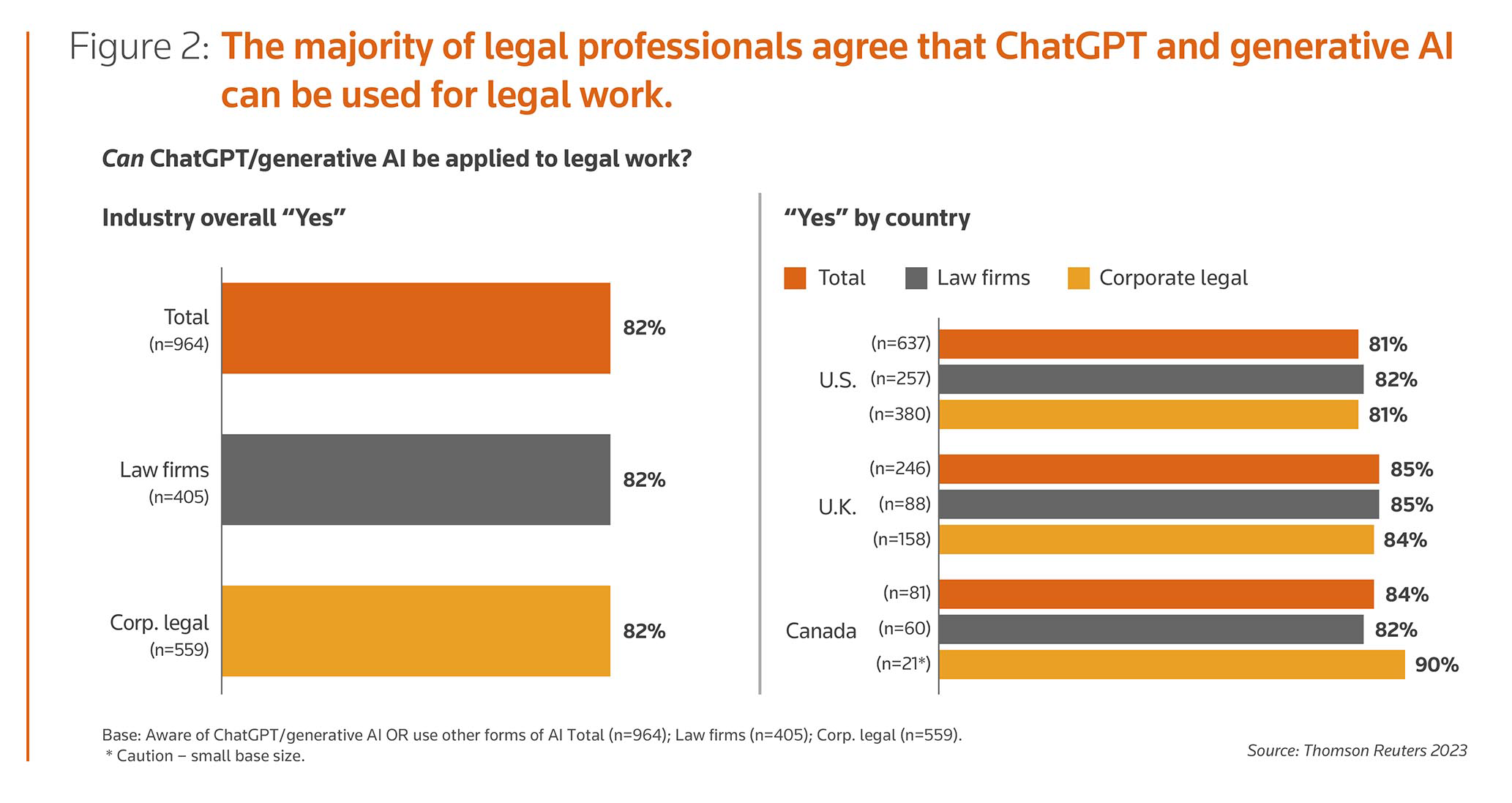
Corporate legal departments see use cases for generative AI & ChatGPT, new report finds — from thomsonreuters.com


New legal tech tools showcased at CLOC 2023 — from legaldive.comRobert Freedman
Innovations include a better way to evaluate law firm proposals, centralize all in-house legal requests in a single intake function and analyze agreements.

Guest post: CLOC 2023 – Key insights into how to drive value during changing economic times — from legaltechnology.com by Valerie Chan

Excerpt:

Typically, Legalweek has always been focused on eDiscovery, while CLOC was focused on matter management and contracts management. This time I noticed more balance in the vendor hall and sessions, with a broader range of services providers than before, including staffing providers, contracts management vendors and other new entrants in addition to eDiscovery vendors.

One theme dominated the show floor conversations: Over and over, the legal operators I talked with said if their technologies and vendors were able to develop better workflows, achieve more cost savings and report on the metrics that mattered to their GC, the GC could function as more of a business advisor to the C-suite.


AI is already being used in the legal system—we need to pay more attention to how we use it — by phys.org Morgiane Noel

Excerpt:

While ChatGPT and the use of algorithms in social media get lots of attention, an important area where AI promises to have an impact is law.

The idea of AI deciding guilt in legal proceedings may seem far-fetched, but it’s one we now need to give serious consideration to.

That’s because it raises questions about the compatibility of AI with conducting fair trials. The EU has enacted legislation designed to govern how AI can and can’t be used in criminal law.


Legal Innovation as a Service, Now Enhanced with AI — from denniskennedy.com by Dennis Kennedy

Excerpt:

Over the last semester, I’ve been teaching two classes at Michigan State University College of Law, one called AI and the Law and the other called New Technologies and the Law, and a class at University of Michigan Law School called Legal Technology Literacy and Leadership. All three classes pushed me to keep up-to-date with the nearly-daily developments in AI, ChatGPT, and LLMs. I also did quite a lot of experiments, primarily with ChatGPT, especially GPT-4, and with Notion AI.


Emerging Tech Trends: The rise of GPT tools in contract analysis — from abajournal.com by Nicole Black

Excerpt:

Below, you’ll learn about many of the solutions currently available. Keep in mind that this overview is not exhaustive. There are other similar tools currently available and the number of products in this category will undoubtedly increase in the months to come.


Politicians need to learn how AI works—fast — link.wired.com

Excerpt:

This week we’ll hear from someone who has deep experience in assessing and regulating potentially harmful uses of automation and artificial intelligence—valuable skills at a moment when many people, including lawmakers, are freaking out about the chaos that the technology could cause.


Some sharp creativity!


Orly Friedman on Red Bridge School and Educating for Agency — from gettingsmart.com

Key Points

  • Grouping is based on autonomy levels rather than grade levels and students move forward based on their own decision. This autonomy level is decoupled from academics.
  • Compliance vs Agency – Agency is what young people really need for the future.

Nobody ever washed a rented car. If you’re going to care of something, you need to feel a sense of ownership of it.

Orly Friedman


Law school students can take up to half of their credits online after ABA policy change — from highereddive.com by Jeremy Bauer-Wolf

Dive Brief:

  • Law school students can now take up to half of their classes online following a recent policy change by the American Bar Association.
  • ABA’s accrediting body voted last week to raise the ceiling on the number of credits students can earn online for their J.D., up from one-third.
  • It also struck down a prohibition on first-year law students taking no more than 10 credit hours remotely.

From DSC:
It’s almost June of 2023 and matters/impacts of Artificial Intelligence (AI) are increasingly popping up throughout our society. But WOW! Look at this recent piece of news from the American Bar Association: Law school students can now take up to 50% of their credits online! (It used to be just 30%.)

At a time when we need many more lawyers, judges, legislators, politicians, and others to be more informed about emerging technologies — as well as being more tech-savvy themselves — I don’t think the ABA should be patting themselves on the back for this policy change. It’s a step in the right direction, but why it’s not 100% is mind-boggling to me.


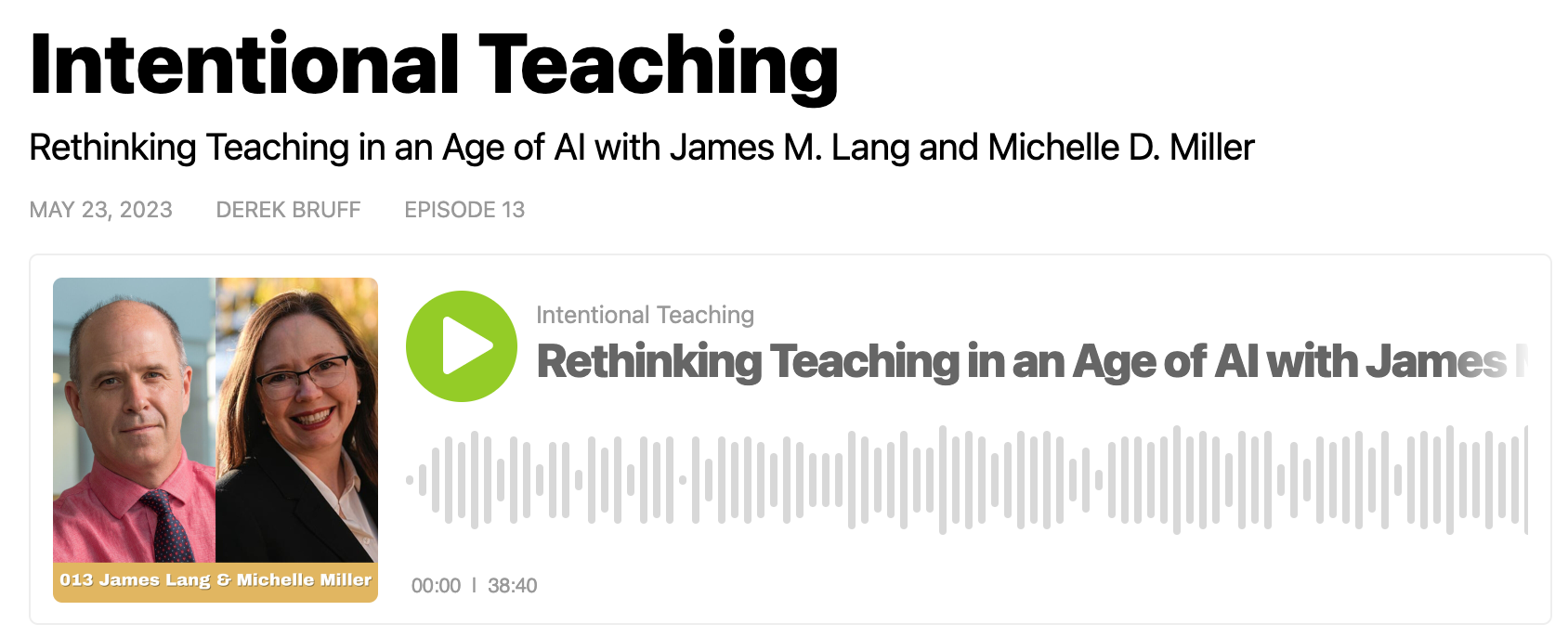
Intentional Teaching — from intentionalteaching.buzzsprout.com by Derek Bruff
Rethinking Teaching in an Age of AI with James M. Lang and Michelle D. Miller

Podcast from Derek Bruff -- Rethinking Teaching in an Age of AI with James M. Lang and Michelle D. Miller

Excerpt:

In her 2022 book Remembering and Forgetting in the Age of Technology, Michelle D. Miller writes about the “moral panics” that often happen in response to new technologies. In his 2013 book Cheating Lessons: Learning from Academic Dishonesty, James M. Lang argues that the best way to reduce cheating is through better course design. What do these authors have to say about teaching in an age of generative AI tools like ChatGPT? Lots!


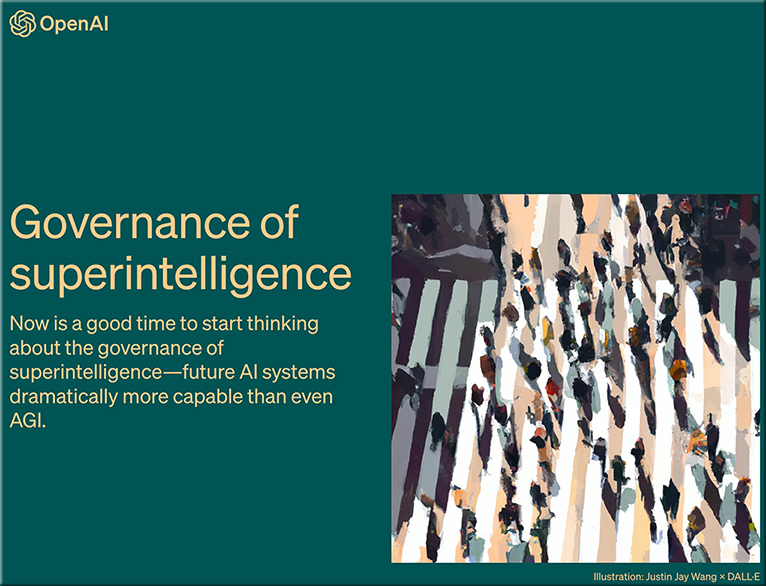
Governance of superintelligence — from openai.com
Now is a good time to start thinking about the governance of superintelligence—future AI systems dramatically more capable than even AGI.

Governance of superintelligence Now is a good time to start thinking about the governance of superintelligence—future AI systems dramatically more capable than even AGI.

OpenAI leaders propose international regulatory body for AI — from techcrunch.com by Devin Coldewey

Excerpt:

AI is developing rapidly enough and the dangers it may pose are clear enough that OpenAI’s leadership believes that the world needs an international regulatory body akin to that governing nuclear power — and fast. But not too fast. In a post to the company’s blog, OpenAI founder Sam Altman, President Greg Brockman and Chief Scientist Ilya Sutskever explain that the pace of innovation in artificial intelligence is so fast that we can’t expect existing authorities to adequately rein in the technology. While there’s a certain quality of patting themselves on the back here, it’s clear to any impartial observer that the tech, most visibly in OpenAI’s explosively popular ChatGPT conversational agent, represents a unique threat as well as an invaluable asset.

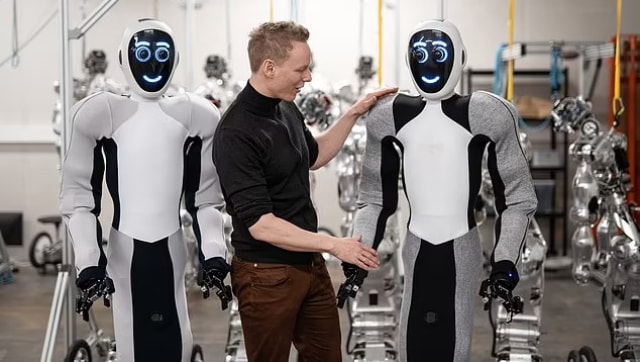
OpenAI-backed robot startup beats Elon Musk’s Tesla, deploys AI-enabled robots in real world — from firstpost.com by Mehul Reuben Das; via The Rundown
A robotics startup backed by OpenAI, the makers of ChatGPT has beaten Elon Musk’s Tesla in the humanoid robots race, and has successfully deployed humanoid robots as security guards. Next, they will be deploying the robots in hospices and assisted living facilities

A robotics startup backed by OpenAI, the makers of ChatGPT has beaten Elon Musk’s Tesla in the humanoid robots race, and has successfully deployed humanoid robots as security guards. Next, they will be deploying the robots in hospices and assisted living facilities.


From DSC:
Hmmm…given the crisis of loneliness in the United States, I’m not sure that this type of thing is a good thing. But I’m sure there are those who would argue the other side of this.


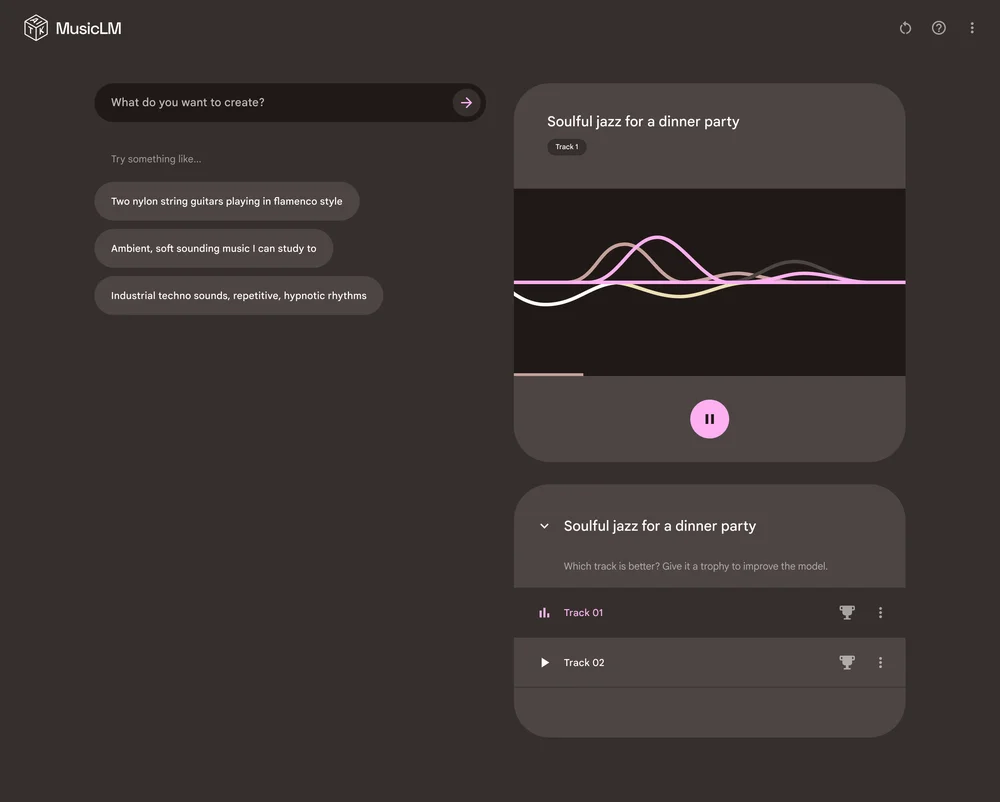
Turn ideas into music with MusicLM — from blog.google
Experiment today by describing a musical idea and hearing it come to life.

MusicLM is an experimental text-to-music model that can generate unique songs based on your ideas or descriptions.


What new grads can expect as they enter the working world — from mckinsey.com by Patrick Guggenberger, Dana Maor, Michael Park, and Patrick Simon

Excerpt:

May 21, 2023 It’s officially the season of caps, gowns, and stoles—and new grads are gearing up for entry into the world of work at a time when organizations are undergoing massive shifts. “The shifts include complex questions about how to organize for speed to shore up resilience, find the right balance between in-person and remote work models, address employees’ declining mental health, and build new institutional capabilities at a time of rapid technological change, among others,” write Patrick Guggenberger, Dana Maor, Michael Park, and Patrick Simon in a new report. These changes have significant implications for structures, processes, and people. How can new grads set themselves up for success in a quickly evolving environment? If you’re a soon-to-be new grad or know one, check out our newly refreshed special collection for insights and interviews on topics including productivity, hybrid work models, worker preferences, tech trends, and much more.


On a somewhat relevant posting (it has to do with career development as well), also see:

From Basic to Brand: How to Build and Use a Purposeful LinkedIn Profile — from er.educause.edu by Ryan MacTaggart and Laurie Burruss
Developing a professional brand helps higher education professionals establish meaningful work-related connections and build credibility in their area of expertise.


Below comments/notes are from DSC (with thanks to Roberto Ferraro for this resource):
according to Dan Pink, intrinsic motivation is very powerful — much more powerful for many types of “messy/unclear” cognitive work (vs. clear, more mechanical types of work). What’s involved here according to Pink? Autonomy, mastery, and purpose. 

Dan Pink makes his case in the video below. My question is:

  • If this is true, how might this be applied to education/training/lifelong learning?

From DSC (cont’d):

As Dan mentions, we each know this to be true. For example, for each of our kids, my wife and I introduced them to a variety of things — music, sports, art, etc. We kept waiting for them to discover which thing(s) that THEY wanted to pursue. Perhaps we’ll find out that this was the wrong thing to do. but according to Pink, it’s aligned with the type of energy and productivity that gets released when we pursue something that we want to pursue. Plus creativity flows in this type of setting. 

Again, my thanks to Roberto Ferraro for resurfacing this item as his “One ‘must read’ for this week” item of his newsletter.


Learners need: More voice. More choice. More control. -- this image was created by Daniel Christian


Adobe supercharges Photoshop with Firefly Generative AI — from blog.adobe.com by Pam Clark

Excerpt:

Starting today, Photoshop subscribers can tap into the magic of Firefly, our family of creative generative AI models, directly in the Photoshop desktop (beta) app – using their own, natural language to prompt Photoshop to create extraordinary images with Generative Fill. These prompts can be used to add content, remove or replace parts of an image and extend the edges of an image. Generative Fill is infused into every selection feature in Photoshop, and we have created a new generative layer type so you can work non-destructively. In addition, Generative Fill is also available as a module within the Firefly beta.


Trend No. 3: The business model faces a full-scale transformation — from www2.deloitte.com by Cole Clark, Megan Cluver, and Jeffrey J. Selingo
The traditional business model of higher education is broken as institutions can no longer rely on rising tuition among traditional students as the primary driver of revenue.

Excerpt:

Yet the opportunities for colleges and universities that shift their business model to a more student-centric one, serving the needs of a wider diversity of learners at different stages of their lives and careers, are immense. Politicians and policymakers are looking for solutions to the demographic cliff facing the workforce and the need to upskill and reskill generations of workers in an economy where the half-life of skills is shrinking. This intersection of needs—higher education needs students; the economy needs skilled workers—means that colleges and universities, if they execute on the right set of strategies, could play a critical role in developing the workforce of the future. For many colleges, this shift will require a significant rethinking of mission and structure as many institutions weren’t designed for workforce development and many faculty don’t believe it’s their job to get students a job. But if a set of institutions prove successful on this front, they could in the process improve the public perception of higher education, potentially leading to more political and financial support for growing this evolving business model in the future.

Also see:

Trend No. 2: The value of the degree undergoes further questioning — from www2.deloitte.com by Cole Clark, Megan Cluver, and Jeffrey J. Selingo
The perceived value of higher education has fallen as the skills needed to keep up in a job constantly change and learners have better consumer information on outcomes.

Excerpt:

Higher education has yet to come to grips with the trade-offs that students and their families are increasingly weighing with regard to obtaining a four-year degree.

But the problem facing the vast majority of colleges and universities is that they are no longer perceived to be the best source for the skills employers are seeking. This is especially the case as traditional degrees are increasingly competing with a rising tide of microcredentials, industry-based certificates, and well-paying jobs that don’t require a four-year degree.

Trend No. 1: College enrollment reaches its peak — from www2.deloitte.com by Cole Clark, Megan Cluver, and Jeffrey J. Selingo
Enrollment rates in higher education have been declining in the United States over the years as other countries catch up.

Excerpt:

Higher education in the United States has only known growth for generations. But enrollment of traditional students has been falling for more than a decade, especially among men, putting pressure both on the enrollment pipeline and on the work ecosystem it feeds. Now the sector faces increased headwinds as other countries catch up with the aggregate number of college-educated adults, with China and India expected to surpass the United States as the front runners in educated populations within the next decade or so.

Plus the other trends listed here >>


Also related to higher education, see the following items:


Number of Colleges in Distress Is Up 70% From 2012 — from bloomberg.com by Nic Querolo (behind firewall)
More schools see falling enrollement and tuition revenue | Small private, public colleges most at risk, report show

About 75% of students want to attend college — but far fewer expect to actually go — from highereddive.com by Jeremy Bauer-Wolf

There Is No Going Back: College Students Want a Live, Remote Option for In-Person Classes — from campustechnology.com by Eric Paljug

Excerpt:

Based on a survey of college students over the last three semesters, students understand that remotely attending a lecture via remote synchronous technology is less effective for them than attending in person, but they highly value the flexibility of this option of attending when they need it.

Future Prospects and Considerations for AR and VR in Higher Education Academic Technology — from er.educause.edu by Owen McGrath, Chris Hoffman and Shawna Dark
Imagining how the future might unfold, especially for emerging technologies like AR and VR, can help prepare for what does end up happening.

Black Community College Enrollment is Plummeting. How to Get Those Students Back — from the74million.org by Karen A. Stout & Francesca I. Carpenter
Stout & Carpenter: Schools need a new strategy to bolster access for learners of color who no longer see higher education as a viable pathway

As the Level Up coalition reports ,“the vast majority — 80% — of Black Americans believe that college is unaffordable.” This is not surprising given that Black families have fewer assets to pay for college and, as a result, incur significantly more student loan debt than their white or Latino peers. This is true even at the community college level. Only one-third of Black students are able to earn an associate degree without incurring debt. 

Repairing Gen Ed | Colleges struggle to help students answer the question, ‘Why am I taking this class?’ — from chronicle.com by Beth McMurtrie
Students Are Disoriented by Gen Ed. So Colleges Are Trying to Fix It.

Excerpts:

Less than 30 percent of college graduates are working in a career closely related to their major, and the average worker has 12 jobs in their lifetime. That means, he says, that undergraduates must learn to be nimble and must build transferable skills. Why can’t those skills and ways of thinking be built into general education?

“Anyone paying attention to the nonacademic job market,” he writes, “will know that skills, rather than specific majors, are the predominant currency.”

Micro-credentials Survey. 2023 Trends and Insights. — from holoniq.com
HolonIQ’s 2023 global survey on micro-credentials

3 Keys to Making Microcredentials Valid for Learners, Schools, and Employers — from campustechnology.com by Dave McCool
To give credentials value in the workplace, the learning behind them must be sticky, visible, and scalable.

Positive Partnership: Creating Equity in Gateway Course Success — from insidehighered.com by Ashley Mowreader
The Gardner Institute’s Courses and Curricula in Urban Ecosystems initiative works alongside institutions to improve success in general education courses.

American faith in higher education is declining: one poll — from bryanalexander.org by Bryan Alexander

Excerpt:

The main takeaway is that our view of higher education’s value is souring.  Fewer of us see post-secondary learning as worth the cost, and now a majority think college and university degrees are no longer worth it: “56% of Americans think earning a four-year degree is a bad bet compared with 42% who retain faith in the credential.”

Again, this is all about one question in one poll with a small n. But it points to directions higher ed and its national setting are headed in, and we should think hard about how to respond.



Colleges Race to Hire and Build Amid AI ‘Gold Rush’ — from insidehighered.com Susan D’Agostino
Cue the bulldozers to make room for hordes of new AI faculty. But computer scientists willing to teach are in short supply, and innovation’s trajectory is rarely predictable.

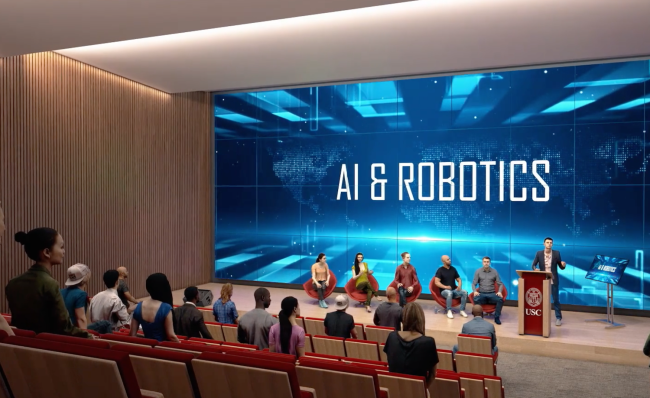
A simulation of the University of Southern California’s new seven-story “computation hall,” part of its more than $1 billion AI initiative, which also includes 90 new faculty members and a new school.USC

Excerpt (emphasis DSC):

The University at Albany, part of the State University of New York, will hire 27 new faculty members—all specializing in AI—in the largest cluster hire in the institution’s history. Purdue University will recruit 50 new AI faculty. Emory University will hire between 60 and 75 new faculty members, including an endowed chair, for its AI Humanity Initiative.

When it comes to artificial intelligence, some universities are going big—very big. The University of Southern California has invested more than $1 billion in its AI initiative that will include 90 new faculty members, a new seven-story building and a new school.

From DSC:
Time will tell whether colleges and universities will be able to find and hire these folks.  My guess? For the most part, no they won’t.

Such talent will likely go to deep-pocketed players, startups, and/or new alternatives to institutions of traditional higher education. The disparate salary levels, risk-averse nature, and overall culture of higher education may not be attractive to some of these individuals. Plus, the future of higher education is not looking as solid.


Introducing the ChatGPT app for iOS — from openai.com
The ChatGPT app syncs your conversations, supports voice input, and brings our latest model improvements to your fingertips.

Excerpt:

Since the release of ChatGPT, we’ve heard from users that they love using ChatGPT on the go. Today, we’re launching the ChatGPT app for iOS.

The ChatGPT app is free to use and syncs your history across devices. It also integrates Whisper, our open-source speech-recognition system, enabling voice input. ChatGPT Plus subscribers get exclusive access to GPT-4’s capabilities, early access to features and faster response times, all on iOS.


Spotlight: AI Myths and MisconceptionsYour Undivided Attention — from your-undivided-attention.simplecast.com

A few episodes back, we presented Tristan Harris and Aza Raskin’s talk The AI Dilemma. People inside the companies that are building generative artificial intelligence came to us with their concerns about the rapid pace of deployment and the problems that are emerging as a result. We felt called to lay out the catastrophic risks that AI poses to society and sound the alarm on the need to upgrade our institutions for a post-AI world.

The talk resonated – over 1.6 million people have viewed it on YouTube as of this episode’s release date. The positive reception gives us hope that leaders will be willing to come to the table for a difficult but necessary conversation about AI.

However, now that so many people have watched or listened to the talk, we’ve found that there are some AI myths getting in the way of making progress. On this episode of Your Undivided Attention, we debunk five of those misconceptions.


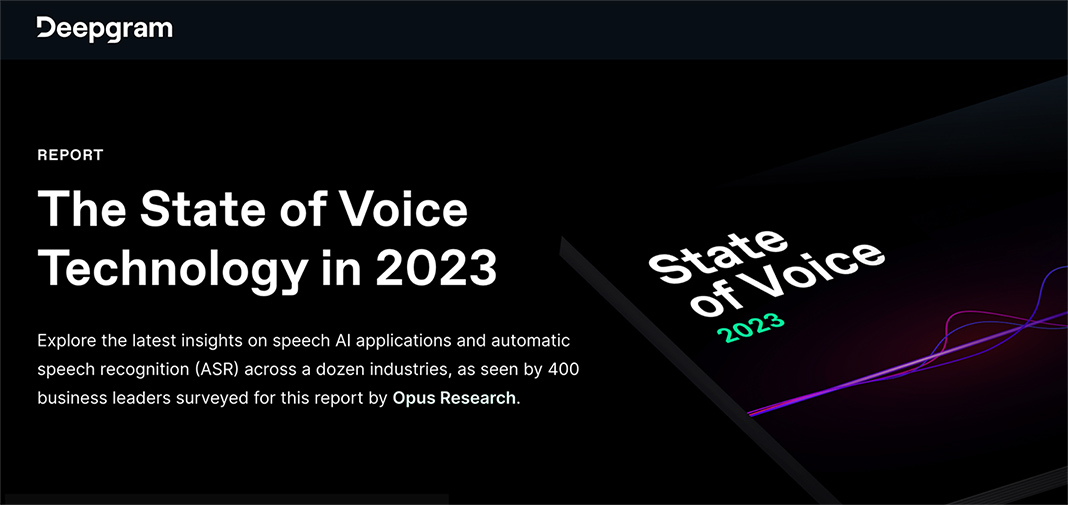
The State of Voice Technology in 2023 — from deepgram.com; with thanks to The Rundown for this resource
Explore the latest insights on speech AI applications and automatic speech recognition (ASR) across a dozen industries, as seen by 400 business leaders surveyed for this report by Opus Research.

Report -- State Of Voice Technology in 2023 -from Deepgram

Also relevant here, see:


Your guide to AI: May 2023 — from nathanbenaich.substack.com by Nathan Benaich and Othmane Sebbouh
Welcome to the latest issue of your guide to AI, an editorialized newsletter covering key developments in AI research (particularly for this issue!), industry, geopolitics and startups during April 2023. 


NYC Public Schools Drop Ban on AI Tool ChatGPT — from bloomberg.com


Red Sox Turn Fenway Park into “Learning Lab” for Boston 6th Graders — from by Ira Stoll
“The key to unlock opportunity is education and hard work,” students are told at launch event

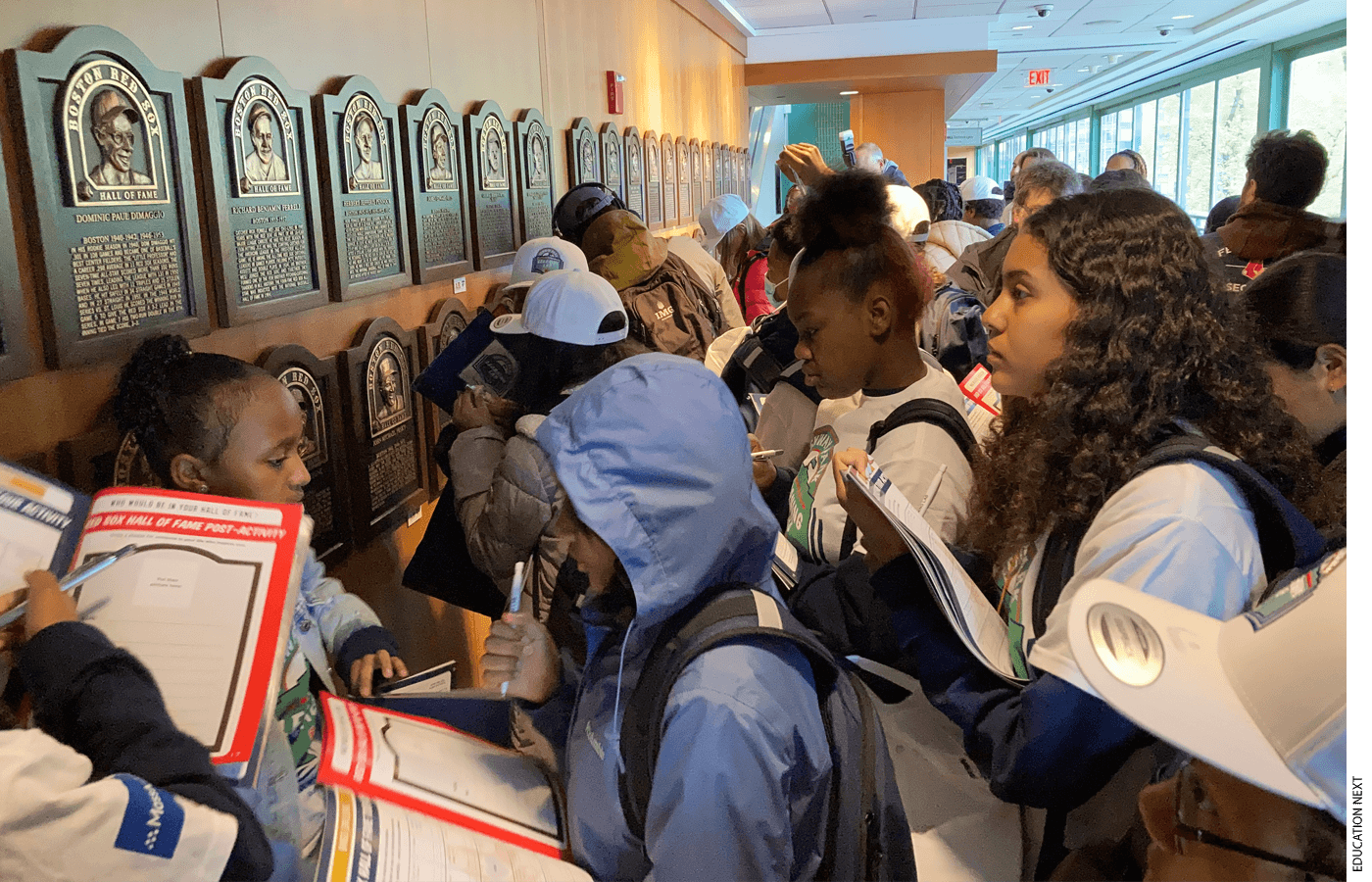
Students from the 6th grade at Nathan Hale School complete a “bingo challenge” as part of the Red Sox Hall of Fame stop on their guided tour of the Fenway Park Learning Lab.

Students from the 6th grade at Nathan Hale School complete a “bingo challenge” as part of the Red Sox Hall of Fame stop on their guided tour of the Fenway Park Learning Lab.

Excerpt:

The six-stop tour has students learning history, geography, math, and science. Student visitors get baseball caps, t-shirts, and a backpack full of other souvenir items like baseball cards, binoculars, a calculator, and a pen. The most important piece of equipment may be a 40-page, seriously substantive workbook, developed with the Boston Public Schools, that students work their way through along the hourlong guided tour.

From DSC:
Very interesting.


Apple reveals new accessibility features, like custom text-to-speech voices — from techcrunch.com by Amanda Silberling

Excerpt:

Apple previewed a suite of new features today to improve cognitive, vision and speech accessibility. These tools are slated to arrive on the iPhone, iPad and Mac later this year. An established leader in mainstream tech accessibility, Apple emphasizes that these tools are built with feedback from disabled communities.

Assistive Access, coming soon to iOS and iPadOS, is designed for people with cognitive disabilities. Assistive Access streamlines the interface of the iPhone and iPad, specifically focusing on making it easier to talk to loved ones, share photos and listen to music. The Phone and FaceTime apps are merged into one, for example.


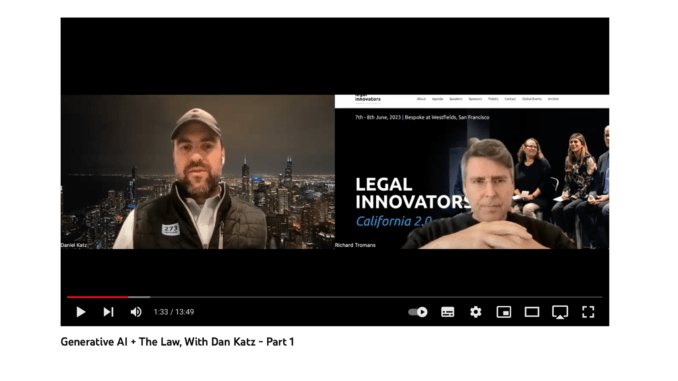
‘It’s a New Era for Legal Tech’ – Generative AI + The Law — from artificiallawyer.com by Artificial Lawyer (UK)  and Dan Katz

Law professor and legal AI expert, Dan Katz, talks to Artificial Lawyer about generative AI and the legal sector.

A New Dawn of Legal Technology — from globalbankingandfinance.com
Is the legal function finally ready to embrace legal tech and unlock tangible business value?

Excerpt:

In the mid-1980s, a bright red computer terminal that provided lawyers with online access to case law was an iconic status symbol. The UBIQ terminal hooked lawyers up to the Lexis service, at the time one of the first legal technology systems, using full-text search capabilities to provide rapid access to information.

It is extraordinary to consider what the legal industry could have achieved if the early adoption of legal tech had not stalled. Sadly, rather than being innovative and embracing the potential of digital records, the industry has underinvested in both legal technology and good data management for the past three decades. Generation after generation of lawyers have failed to take advantage of the power of legal tech to improve client services, reduce risk and enhance efficiency.

Also relevant/see:

 
© 2025 | Daniel Christian