The Evolution of Public Libraries — from designinglibraries.org.uk by Ayub Khan
Designing Libraries Director, Ayub Khan, looks at the evolution of public libraries – and the implications for library design

Reinvention
Public libraries have always adapted and reinvented themselves to the changing needs and preferences of their users – and they continue to do so. Books and reading remain central to what libraries do but – it’s a bit of a cliché to say so – they are not just about books nowadays. They are social places at the centre of their communities.

Having worked on the initial design concepts for the new Library of Birmingham, earlier in my career, I know books were only part of the plans. When I started out as a librarian around 75% of library spaces were for books and 25% for other activities and events. Now it’s the other way round.


From DSC:
I thought this was a really good idea from Dan Pontefact: “Why Experienced Employees Should Write Letters to New Team Members”

Excerpt:

Regardless of their age, an individual who is fresh to the team is given between five and ten pieces of advice from a more seasoned employee in the form of an email or letter. These tidbits of knowledge are what these seasoned professionals wish they had known when they first joined.

This is more than just a welcome; it’s a guide, a primer, offering an insider’s view of the organization and fostering a sense of camaraderie from the very beginning.


Actors say Hollywood studios want their AI replicas — for free, forever — from theverge.com by Andrew Webster
The reveal came as SAG-AFTRA actors confirmed they were going on strike.

When asked about the proposal during the press conference, Crabtree-Ireland said that “This ‘groundbreaking’ AI proposal that they gave us yesterday, they proposed that our background performers should be able to be scanned, get one day’s pay, and their companies should own that scan, their image, their likeness and should be able to use it for the rest of eternity on any project they want, with no consent and no compensation. So if you think that’s a groundbreaking proposal, I suggest you think again.”


The Future of Law: Embracing AI in the Legal Profession — from ethicalailawinstitute.com by Trent Kubasiak

Excerpt:

Improving Access to Justice:
One significant advantage of AI in the legal profession is its potential to improve access to justice. The high costs associated with legal services have traditionally created barriers for individuals with limited financial means. However, AI-powered solutions can help bridge this gap by providing affordable and accessible legal information and guidance. Virtual legal assistants and chatbots can assist individuals with legal queries, empowering them to navigate legal processes more effectively and make informed decisions. By leveraging AI, the legal profession can become more inclusive and ensure that legal services are available to a broader segment of society.


Also relevant/see:

Law Unlimited: Welcome to the re-envisioned legal profession — from jordanfurlong.substack.com by Jordan Furlong
Will Generative AI destroy law firms? Only if lawyers are too fixed in their ways to see the possibilities that lie beyond who we’ve always been and what we’ve always done.

Excerpt:

The immediate impact of Gen AI on legal services will be to introduce unprecedented efficiency to the production of countless legal documents and processes. For most of the last century, lawyers have personally performed this work, spending and billing hours or parts of hours to accomplish each task. Law firms have used this production method to provide on-the-job training for inexperienced lawyers and have leveraged those hours to generate profits for their partners. But LLMs can now do the same work in seconds, as effectively as lawyers can today and much better in the near future. This is, among other things, a very serious problem for law firms’ business models and talent development practices, not to mention a real challenge to lawyer education and training and potentially a revolution in access to justice.


So, you want to become an instructional designer? — from drlukehobson.com by Luke Hobson

Excerpt:

The most significant problem I’ve seen for aspiring instructional designers is that they don’t have a solid plan in place with how to make acquiring a new job a reality. What does this involve? A monumental portion of instructional design is knowing about how learning works. Yes, there are other components about instructional design like technology, project management, relationship management, research, but at the end of the day, you need to know how people learn to design meaningful learning experiences. So, think of your instructional design journey as a learning experience. How would you reverse engineer this process to help you obtain your goal? Let’s start by asking a few questions:


Commentary from Rick Seltzer re: “Public confidence in higher ed plunges — again” — from chronicle.com

Excerpt:

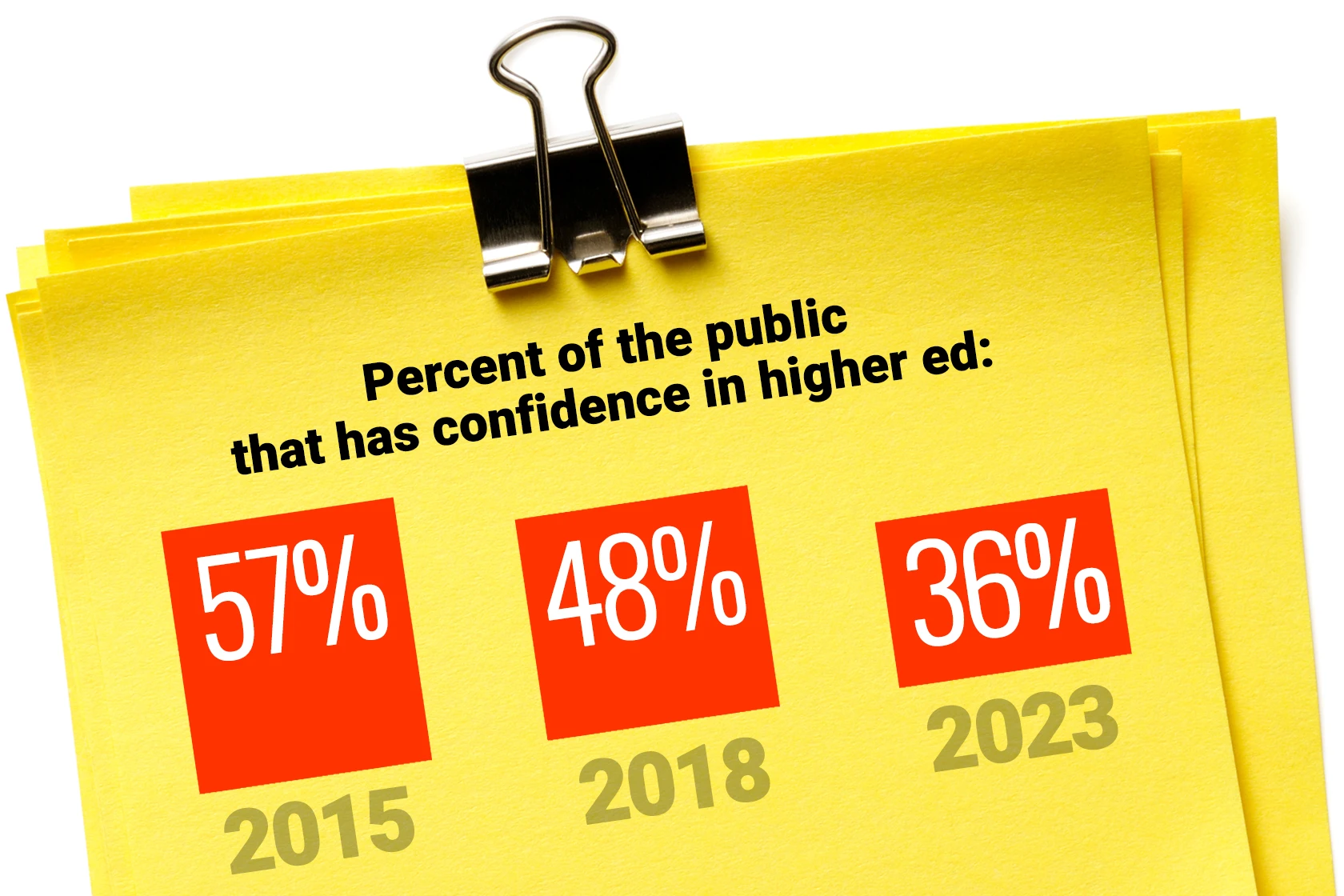
Only 36 percent of Americans say they have a great deal or quite a lot of confidence in higher education, according to a survey Gallup conducted in June. That’s down from 48 percent who said the same in 2018 and 57 percent in 2015.

It’s also broadly consistent with a March Wall Street Journal-NORC survey that found just 42 percent of respondents thought college was worth the cost because it improves career prospects.

Confidence waned among all major groups. Sharpest declines were among Republicans, those without a college degree, women, and the oldest respondents.

Rick links to Zachary’s article:

Public Trust in Higher Ed Has Plummeted. Yes, Again. — from chronicle.com by Zachary Schermele
Americans’ confidence in higher ed is continuing to shrivel — a troubling sign that could foreshadow further erosion of colleges’ enrollment, funding, and stature in the coming years.
.


Also relevant/see:


Animation Tips for eLearning — from learningguild.com by Bill Brandon

Excerpt:

Why use animation in eLearning? Many people may think of animation in terms of entertainment value alone. Animation is far more valuable for its ability to engage learners, explain or illustrate ideas, and improve recall of complex relationships, such as cause and effect.

Look up these specific animation types for use in your projects:

  1. Whiteboard animation: Not necessary to be able to draw the characters. Multiple brands.
  2. Stop-motion animation
  3. Animation programs for beginners
  4. Free animation software

Also relevant/see:

Be an eLearning Storyteller With Style and Confidence — from learningguild.com by Bill Brandon

Excerpt:

Humans are good storytellers, and humans respond well to stories. We know this from our own experience. Not only that, people remember stories for a long time, far longer than we remember a lot of teaching. Do you recall stories that someone in your family told you? Why don’t we remember lessons from school as long or as vividly? Stories are powerful if we know how to use them. In this article I will introduce you to a way to use stories to achieve outcomes.

Any time you are designing a course, a learning experience, or just pitching an idea to your boss or an L&D stakeholder, it’s a story. Even if it does not seem like one, a successful production—whether it is an animated presentation, a virtual supporting example or other content—is based on some fundamental storytelling tactics. It doesn’t have to begin “Once Upon A Time,” it just needs to be constructed the right way for your purpose – To make it a memory.


PROOF POINTS: Plenty of Black college students want to be teachers, but something keeps derailing them — from hechingerreport.org by Jill Barshay
Study inside Michigan’s teacher preparation programs sheds light on some of the reasons for the scarcity of Black teachers in America

There are many reasons for the paucity of Black teachers. But a June 2023 analysis of college students in Michigan highlights a particularly leaky part of the teacher pipeline: teacher preparation programs inside colleges and universities.


Neurodivergent Students Need Flexibility, Not Our Frustration — from chronicle.com by Katie Rose Guest Pryal
In negotiating accommodations, we need more communication and less suspicion.

Excerpt:

A quick note: When I refer to neurodivergent (ND) students, I mean people whose mental or neurological function is different from what is considered typical. This includes not only students with ADHD or autism, but also those with anxiety, depression, or other mental-health disorders. Crucially, I’m also writing here about the many college students who are struggling with their mental health for whatever reason, and need our understanding and care to prevent them from doing poorly, dropping out, or facing something much, much worse.

Two key messages underlie all of the advice that follows: More communication. Less suspicion.


Also from Katie Rose Guest Pryal out at The Chronicle, of Higher Education, see:


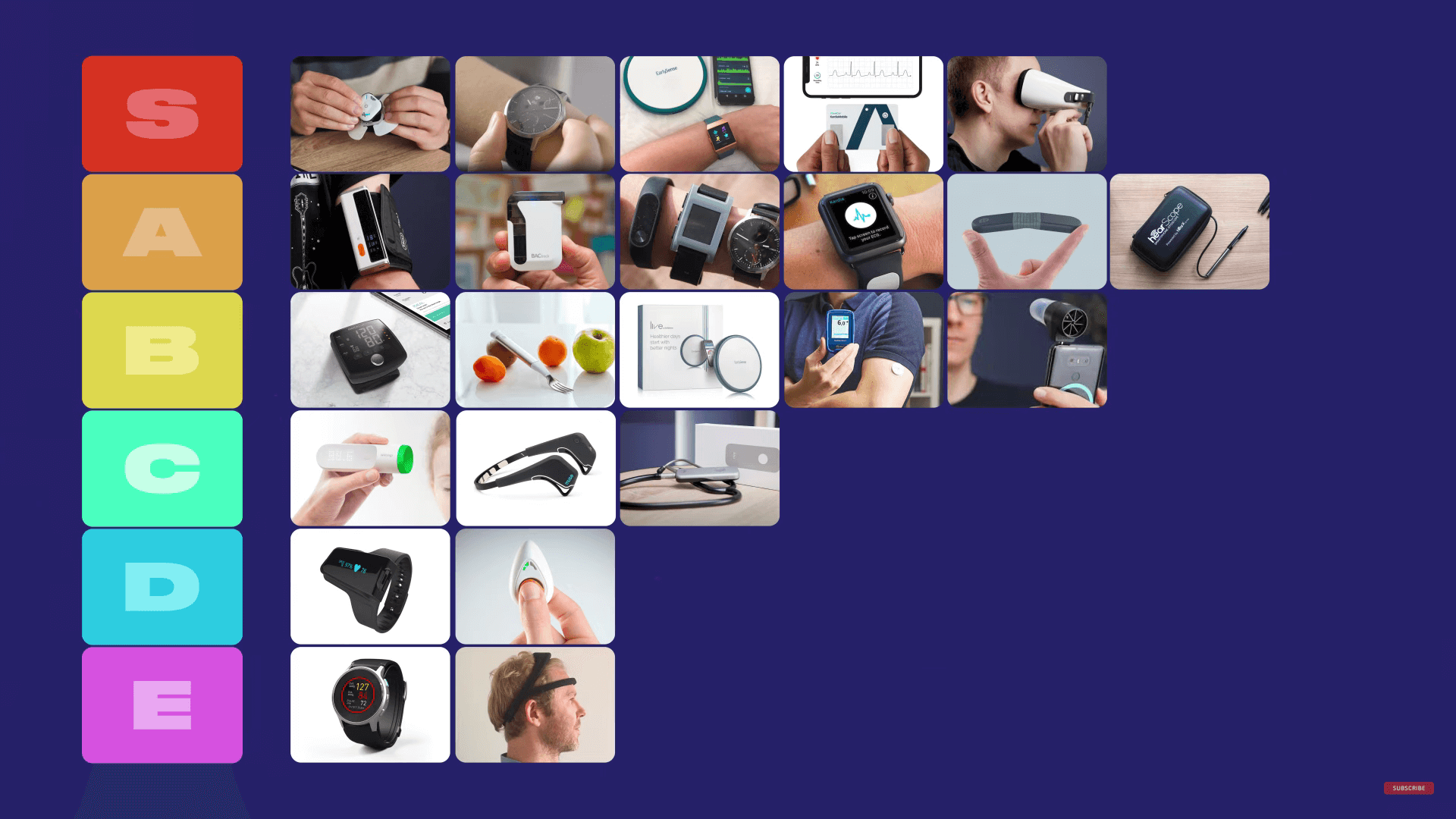
The Ultimate Tier List Of Digital Health Technologies — from medicalfuturist.com by Andrea Koncz
Dr Mesko ranked 24 digital health technologies to create the ultimate tier list of digital health devices


Building A Skills-Based Organization: The Exciting But Sober Reality — from joshbersin.com by Josh Bersin

Excerpt:

Fueled by new AI tools and skills technology, nearly every company wants to become a “skills-based organization.” Now that we’ve had a few years to study this trend, I’d like to share some of the realities and calm some of the hype.


Sources of Cognitive Load — from learningscientists.org

Excerpt:

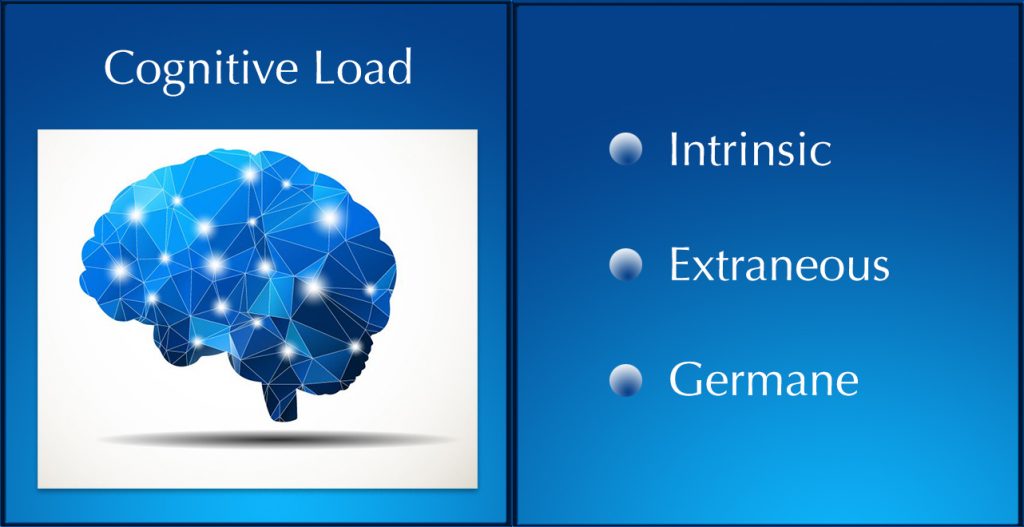
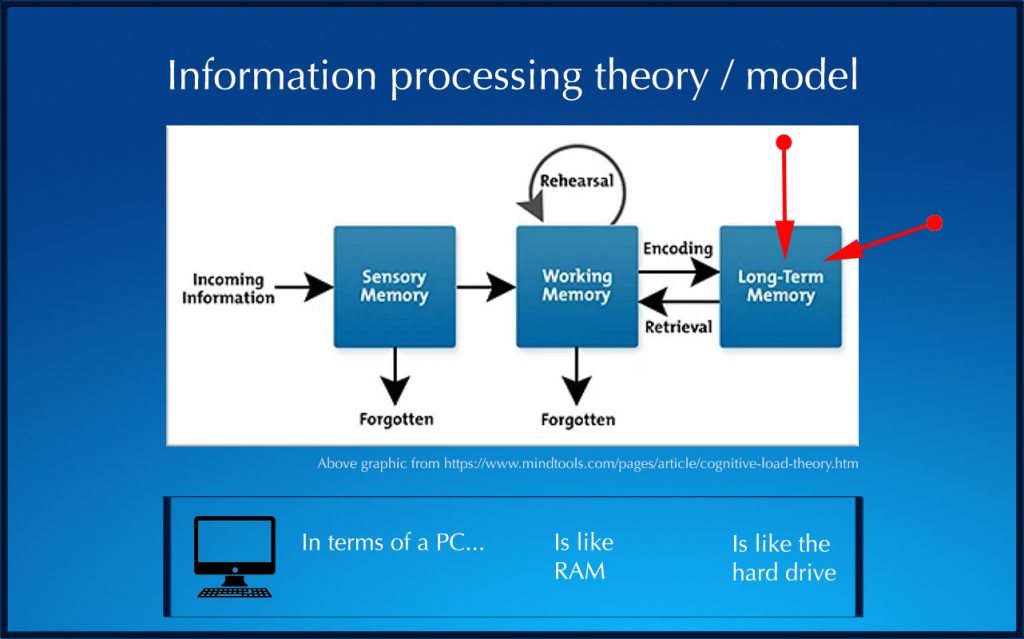
Cognitive Load Theory is an influential theory from educational psychology that describes how various factors affect our ability to use our working memory resources. We’ve done a digest about cognitive load theory here and talked about it here and here, but haven’t provided an overview of the theory so I want to give an overview here.

Cognitive load theory provides useful and dynamic model for how many different factors affect working memory and learning. Hopefully this post provides a useful overview of some of the main components of cognitive load!


From DSC:
Along these lines, a while back I put together a video regarding cognitive load. It addresses at least two main questions:

  1. What is cognitive load?
  2. Why should I care about it?


What is cognitive load? And why should I care about it?

What is cognitive load? And why should I care about it?

Transcript here.


How do I put it into practice?

  • Simplify the explanations of what you’re presenting as much as possible and break down complex tasks into smaller parts
  • Don’t place a large amount of text on a slide and then talk about it at the same time — doing so requires much more processing than most people can deal with.
  • Consider creating two versions of your PowerPoint files:
    • A text-light version that can be used for presenting that content to students
    • A text-heavy version — which can be posted to your LMS for the learners to go through at their own pace — and without trying to process so much information (voice and text, for example) at one time.
  • Design-wise:
    • Don’t use decorative graphics — everything on a slide should be there for a reason
    • Don’t use too many fonts or colors — this can be distracting
    • Don’t use background music when you are trying to explain something
 

YouTube tests AI-generated quizzes on educational videos — from techcrunch.com by Lauren Forristal

YouTube tests AI-generated quizzes on educational videos

YouTube is experimenting with AI-generated quizzes on its mobile app for iOS and Android devices, which are designed to help viewers learn more about a subject featured in an educational video. The feature will also help the video-sharing platform get a better understanding of how well each video covers a certain topic.


Incorporating AI in Teaching: Practical Examples for Busy Instructors — from danielstanford.substack.com by Daniel Stanford; with thanks to Derek Bruff on LinkedIn for the resource

Since January 2023, I’ve talked with hundreds of instructors at dozens of institutions about how they might incorporate AI into their teaching. Through these conversations, I’ve noticed a few common issues:

  • Faculty and staff are overwhelmed and burned out. Even those on the cutting edge often feel they’re behind the curve.
  • It’s hard to know where to begin.
  • It can be difficult to find practical examples of AI use that are applicable across a variety of disciplines.

To help address these challenges, I’ve been working on a list of AI-infused learning activities that encourage experimentation in (relatively) small, manageable ways.


September 2023: The Secret Intelligent Beings on Campus — from stefanbauschard.substack.com by Stefan Bauschard
Many of your students this fall will be enhanced by artificial intelligence, even if they don’t look like actual cyborgs. Do you want all of them to be enhanced, or just the highest SES students?


How to report better on artificial intelligence — from cjr.org (Columbia Journalism Review) by Syash Kapoor, Hilke Schellmann, and Ari Sen

In the past few months we have been deluged with headlines about new AI tools and how much they are going to change society.

Some reporters have done amazing work holding the companies developing AI accountable, but many struggle to report on this new technology in a fair and accurate way.

We—an investigative reporter, a data journalist, and a computer scientist—have firsthand experience investigating AI. We’ve seen the tremendous potential these tools can have—but also their tremendous risks.

As their adoption grows, we believe that, soon enough, many reporters will encounter AI tools on their beat, so we wanted to put together a short guide to what we have learned.


AI

.
DSC:
Something I created via Adobe Firefly (Beta version)


The 5 reasons L&D is going to embrace ChatGPT — from chieflearningoffice.com by Josh Bersin

Does this mean it will do away with the L&D job? Not at all — these tools give you superhuman powers to find content faster, put it in front of employees in a more useful way and more creatively craft character simulations, assessments, learning in the flow of work and more.

And it’s about time. We really haven’t had a massive innovation in L&D since the early days of the learning experience platform market, so we may be entering the most exciting era in a long time.

Let me give you the five most significant use cases I see. And more will come.


AI and Tech with Scenarios: ID Links 7/11/23 — from christytuckerlearning.com by Christy Tucker

As I read online, I bookmark resources I find interesting and useful. I share these links periodically here on my blog. This post includes links on using tech with scenarios: AI, xAPI, and VR. I’ll also share some other AI tools and links on usability, resume tips for teachers, visual language, and a scenario sample.


It’s only a matter of time before A.I. chatbots are teaching in primary schools — from cnbc.com by Mikaela Cohen

Key Points

  • Microsoft co-founder Bill Gates saying generative AI chatbots can teach kids to read in 18 months rather than years.
  • Artificial intelligence is beginning to prove that it can accelerate the impact teachers have on students and help solve a stubborn teacher shortage.
  • Chatbots backed by large language models can help students, from primary education to certification programs, self-guide through voluminous materials and tailor their education to specific learning styles [preferences].

The Rise of AI: New Rules for Super T Professionals and Next Steps for EdLeaders — from gettingsmart.com by Tom Vander Ark

Key Points

  • The rise of artificial intelligence, especially generative AI, boosts productivity in content creation–text, code, images and increasingly video.
  • Here are six preliminary conclusions about the nature of work and learning.

The Future Of Education: Embracing AI For Student Success — from forbes.com by Dr. Michael Horowitz

Unfortunately, too often attention is focused on the problems of AI—that it allows students to cheat and can undermine the value of what teachers bring to the learning equation. This viewpoint ignores the immense possibilities that AI can bring to education and across every industry.

The fact is that students have already embraced this new technology, which is neither a new story nor a surprising one in education. Leaders should accept this and understand that people, not robots, must ultimately create the path forward. It is only by deploying resources, training and policies at every level of our institutions that we can begin to realize the vast potential of what AI can offer.


AI Tools in Education: Doing Less While Learning More — from campustechnology.com by Mary Grush
A Q&A with Mark Frydenberg


Why Students & Teachers Should Get Excited about ChatGPT — from ivypanda.com with thanks to Ruth Kinloch for this resource
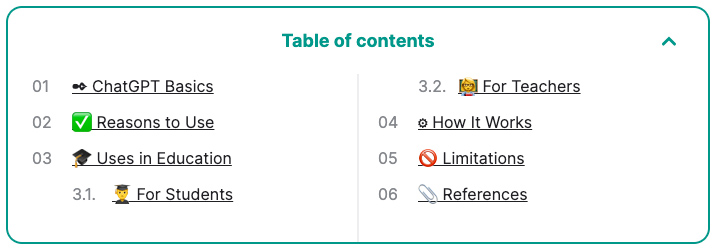
Table of Contents for the article at IvyPanda.com entitled Why Students & Teachers Should Get Excited about ChatGPT

Excerpt re: Uses of ChatGPT for Teachers

  • Diverse assignments.
  • Individualized approach.
  • Interesting classes.
  • Debates.
  • Critical thinking.
  • Grammar and vocabulary.
  • Homework review.

SAIL: State of Research: AI & Education — from buttondown.email by George Siemens
Information re: current AI and Learning Labs, education updates, and technology


Why ethical AI requires a future-ready and inclusive education system — from weforum.org


A specter is haunting higher education — from aiandacademia.substack.com by Bryan Alexander
Fall semester after the generative AI revolution

In this post I’d like to explore that apocalyptic model. For reasons of space, I’ll leave off analyzing student cheating motivations or questioning the entire edifice of grade-based assessment. I’ll save potential solutions for another post.

Let’s dive into the practical aspects of teaching to see why Mollick and Bogost foresee such a dire semester ahead.


Items re: Code Interpreter

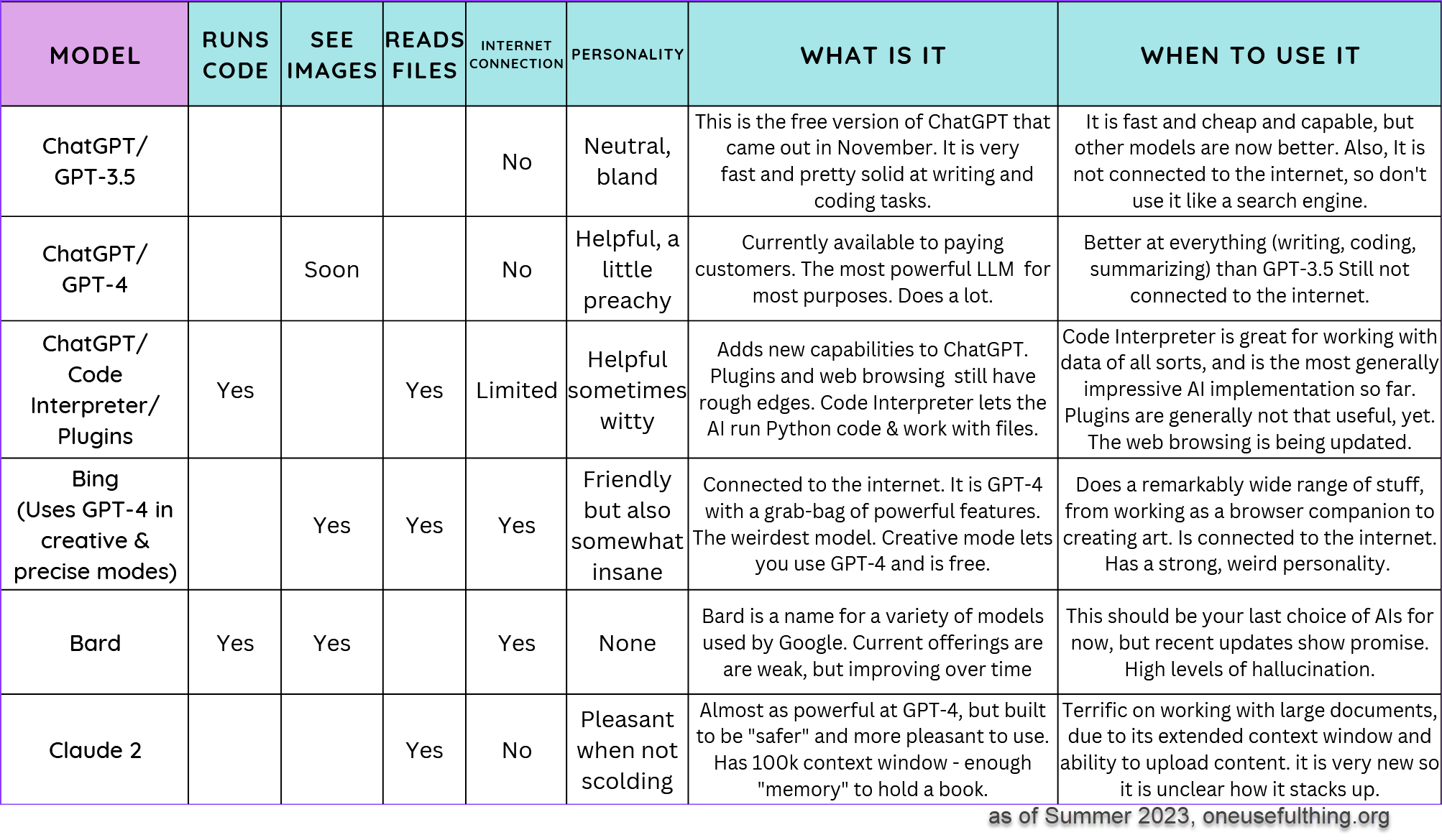
Code Interpreter continues OpenAI’s long tradition of giving terrible names to things, because it might be most useful for those who do not code at all. It essentially allows the most advanced AI available, GPT-4, to upload and download information, and to write and execute programs for you in a persistent workspace. That allows the AI to do all sorts of things it couldn’t do before, and be useful in ways that were impossible with ChatGPT.

.


Legal items


MISC items


Gen Z values education — but doesn’t think a four-year degree is the only option — from highereddive.com by Laura Spitalniak

Dive Brief:

  • The current cohort of high school students, part of Generation Z, values postsecondary education but is increasingly interested in alternatives to four-year colleges, according to a new report from ECMC Group, a nonprofit focused on student success, and Vice Media.
  • In 2023, 65% of surveyed students said they would need education beyond high school, compared to 59% pre-pandemic, the report said. But 59% said they could be successful if they don’t get a four-year degree
  • Almost half, 48%, of high schoolers said their postsecondary education would ideally take three years or less, and just over a third, 35%, said it should take two years or less.

From DSC:
And some further comments on that article:

Rather than looking to modify the traditional higher education structures for 18-year-olds fresh out of high school, the College for Adult Learners and Continuing Education will establish its own processes for the nontraditional student.

The average age of students enrolled in the Center for Distance Education is 32, and many have kids or other life responsibilities that impact their time and ability to focus on education, Seal explains.

“It’s not so much that we’re competing with other institutions [for adult learners], it’s that we’re competing with life,” Seal says. “They’re not leaving to go to another institution—they’re leaving because of life things.”


Some resources and reflections from Stephen Downes:


Online Learning Still in High Demand at Community Colleges — from insidehighered.com by Sara Weissman
Some colleges are still offering half or the majority of their classes online in response to student demand.

East Los Angeles College, the most populous campus in the California Community College system, offered 60 percent of its courses in a hybrid or online format this past spring, most of them asynchronous. Prior to the COVID-19 pandemic, fewer than a quarter of courses were offered online.

He said students have made their preferences clear via their enrollment trends—online course sections at the college have filled much more quickly lately than in-person courses.


Teaching: Does higher education value good teaching? — from chronicle.com by Beth McMurtrie; possible paywall but at least must have an account

Excerpt:

But the bigger question hanging over the conference was this: Do colleges actually value good teaching? On the one hand, it would seem obvious that they must. Undergraduate education is the central reason most colleges exist. How could you not value your core product?

But look below the surface and what do you see? An industry in which the majority of instructors are adjuncts who are often low-paid and unlikely to receive any sort of professional development, let alone an office in which to meet with students after class. At research universities you will find many tenure-track professors who were warned not to devote too much time to teaching before securing tenure, since scholarship is what’s rewarded. Promotion and tenure policies on many campuses, research-intensive or not, over-rely on student evaluations when it comes to judging teaching expertise or commitment. Finally, given that most doctoral programs devote a nominal amount of time to teaching students how to teach, it’s easy to see why many professors stick to how they were taught as students, whether or not those methods were effective.


© 2025 | Daniel Christian