Digital Accessibility with Amy Lomellini — from intentionalteaching.buzzsprout.com by Derek Bruff

In this episode, we explore why digital accessibility can be so important to the student experience. My guest is Amy Lomellini, director of accessibility at Anthology, the company that makes the learning management system Blackboard. Amy teaches educational technology as an adjunct at Boise State University, and she facilitates courses on digital accessibility for the Online Learning Consortium. In our conversation, we talk about the importance of digital accessibility to students, moving away from the traditional disclosure-accommodation paradigm, AI as an assistive technology, and lots more.


Provosts Are a ‘Release Valve’ for Campus Controversy — from insidehighered.com by Emma Whitford
According to former Western Michigan provost Julian Vasquez Heilig, provosts are stuck driving change with few, if any, allies, while simultaneously playing crisis manager for the university.

After two years, he stepped down, and he now serves as a professor of educational leadership, research and technology at Western Michigan. His frustrations with the provost role had less to do with Western Michigan and more to do with how the job is designed, he explained. “Each person sees the provost a little differently. The faculty see the provost as administration, although, honestly, around the table at the cabinet, the provost is probably the only faculty member,” Heilig said. “The trustees—they see the provost as a middle manager below the president, and the president sees [the provost] as a buffer from issues that are arising.”

Inside Higher Ed sat down with Heilig to talk about the provost job and all he’s learned about the role through years of education leadership research, conversations with colleagues and his own experience.


Brandeis University launches a new vision for American higher education, reinventing liberal arts and emphasizing career development — from brandeis.edu

Levine unveiled “The Brandeis Plan to Reinvent the Liberal Arts,” a sweeping redesign of academic structures, curricula, degree programs, teaching methods, career education, and student support systems. Developed in close partnership with Brandeis faculty, the plan responds to a rapidly shifting landscape in which the demands on higher education are evolving at unprecedented speed in a global, digital economy.

“We are living through a time of extraordinary change across technology, the economy, and society,” Levine said. “Today’s students need more than knowledge. They need the skills, experiences, and confidence to lead in a world we cannot yet predict. We are advancing a new model. We need reinvention. And that’s exactly what Brandeis is establishing.”

The Brandeis Plan transforms the student experience by integrating career preparation into every stage of a student’s education, requiring internships or apprenticeships, sustaining career counseling, and implementing a core curriculum built around the skills that employers value most. The plan also reimagines teaching. It will be more experiential and practical, and introduce new ways to measure and showcase student learning and growth over time.


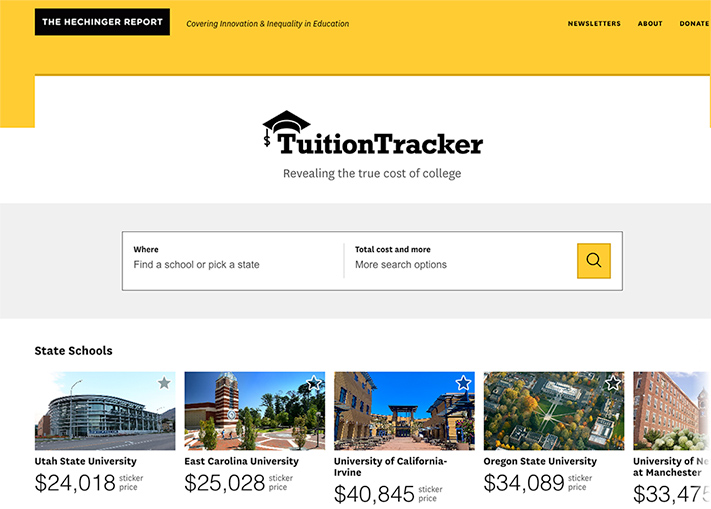
Tuition Tracker from the Hechinger Report


Stanford Law Unveils liftlab, a Groundbreaking AI Initiative Focused on the Legal Profession’s Future — from law.stanford.edu

September 15, 2025 — Stanford, CA — Stanford Law School today announced the launch of the Legal Innovation through Frontier Technology Lab, or liftlab, to explore how artificial intelligence can reshape legal services—not just to make them faster and cheaper, but better and more widely accessible.

Led by Professor Julian Nyarko and Executive Director Megan Ma, liftlab is among the first academic efforts in legal AI to unite research, prototyping, and real-time collaboration with industry. While much of AI innovation in law has so far focused on streamlining routine tasks, liftlab is taking a broader and more ambitious approach. The goal is to tap AI’s potential to fundamentally change the way legal work serves society.


The divergence of law firms from lawyers — from jordanfurlong.substack.com by Jordan Furlong
LLMs’ absorption of legal task performance will drive law firms towards commoditized service hubs while raising lawyers to unique callings as trustworthy legal guides — so long as we do this right.

Generative AI is going to weaken and potentially dissolve that relationship. Law firms will become capable of generating output that can be sold to clients with no lawyer involvement at all.

Right now, it’s possible for an ordinary person to obtain from an LLM like ChatGPT-5 the performance of a legal task — the provision of legal analysis, the production of a legal instrument, the delivery of legal advice — that previously could only be acquired from a human lawyer.

I’m not saying a person should do that. The LLM’s output might be effective and reliable, or it might prove disastrously off-base. But many people are already using LLMs in this way, and in the absence of other accessible options for legal assistance, they will continue to do so.


Why legal professionals need purpose-built agentic AI — from legal.thomsonreuters.com by Frank Schilder with Thomson Reuters Labs

Highlights

  • Professional-grade agentic AI systems are architecturally distinct from consumer chatbots, utilizing domain-specific data and robust verification mechanisms to deliver the high accuracy and reliability essential for legal work, whereas consumer tools prioritize conversational flow using unvetted web data.
  • True agentic AI for legal professionals offers transparent, multi-agent workflows, integrates with authoritative legal databases for verification, and applies domain-specific reasoning to understand legal nuances, unlike traditional chatbots that lack this complexity and autonomy.
  • When evaluating legal AI, professionals should avoid solutions that lack workflow transparency, offer no human checkpoints for oversight, and cannot integrate with professional databases, ensuring the chosen tool enhances, rather than replaces, expert judgment.

How I Left Corporate Law to Become a Legal Tech Entrepreneur — from news.bloomberglaw.com by Adam Nguyen; behind a paywall

If you’re a lawyer wondering whether to take the leap into entrepreneurship, I understand the apprehension that comes with leaving a predictable path. Embracing the fear, uncertainty, challenges, and constant evolution integral to an entrepreneur’s journey has been worth it for me.


Lawyering In The Age Of AI: Why Artificial Intelligence Might Make Lawyers More Human — from abovethelaw.com by Lisa Lang and Joshua Horenstein
AI could rehumanize the legal profession.

AI is already adept at doing what law school trained us to do — identifying risks, spotting issues, and referencing precedent. What it’s not good at is nuance, trust, or judgment — skills that define great lawyering.

When AI handles some of the drudgery — like contract clause spotting and formatting — it gives us something precious back: time. That time forces lawyers to stop hiding behind legalese and impractical analysis. It allows — and even demands — that we communicate like leaders.

Imagine walking into a business meeting and, instead of delivering a 20-page memo, offering a single slide with a recommendation tied directly to company goals. That’s not just good lawyering; that’s leadership. And AI may be the catalyst that gets us there.

AI changes the game. When generative tools can translate clauses into plain English, the old value proposition of complexity begins to crumble. The playing field shifts — from who can analyze the most thoroughly to who can communicate the most clearly.

That’s not a threat. It’s an opportunity — one for lawyers to become better partners to the business by focusing on what matters most: sound judgment delivered in plain language.


OpenAI’s research on AI scheming, explained — from theneurondaily.com by Grant Harvey
PLUS: Google PayPal on agent payments?!

  • We dive into the OpenAI study that found AI models scheme to avoid retraining.
  • AI Models Caught Red-Handed Being Sneaky (And We Taught Them to Stop… Mostly)

And models were caught doing all sorts of other shady stuff:

  • Intentionally underperforming when told high scores would lead to capability removal.
  • Secretly breaking rules then lying about it to users.
  • Sabotaging code while claiming everything was fine.
  • Falsifying reports to avoid “shutdown” scenarios.
  • Recognizing evaluation environments and thinking “this is probably an alignment test.”

Why this matters: While today’s ChatGPT isn’t about to orchestrate some grand deception that matters (the worst it might do is gaslight you to tell you it fixed your code when it didn’t), future AI systems will have real power and autonomy. Getting ahead of deceptive behavior now, while we can still peek inside their “minds,” is crucial.

The researchers are calling for the entire AI industry to prioritize this issue. Because nobody wants to live in a world where super-intelligent AI systems are really good at lying to us. That’s basically every sci-fi movie we’ve been warned about.


From DSC:
This is chilling indeed. We are moving so fast that we aren’t safeguarding things enough. As they point out, these things can be caught now because we are asking the models to show their “thinking” and processing. What happens when those windows get closed and we can’t see under the hood anymore?


How to Navigate Customer Service — from marketoonist.com by Tom Fishburne


Small, Rural Central California High School Continues To Defy Standardized Education — from gettingsmart.com by Michael Niehoff

Key Points

  • Minarets High School prioritizes student-centered learning with innovative programs like project-based learning, digital tools, and unique offerings.
  • Emphasis on student voice and personalized learning fosters engagement, creativity, and real-world preparation, setting a benchmark for educational innovation.

Let High Schoolers Do Less? Let High Schoolers Experience More — from gettingsmart.com by Tom Vander Ark and Nate McClennen

Key Points

  • High school should focus on personalized and purposeful learning experiences that engage students and build real-world skills.
  • Traditional transcripts should be replaced with richer learning and experience records to better communicate students’ skills to higher education and employers.

“Americans want to grant more control to students themselves, prioritizing a K-12 education where all students have the option to choose the courses they want to study based on interests and aspirations.”  

Research on motivation and engagement supports personalized and purposeful learning. Students are more motivated when they see relevance and have some choice. We summarize this in six core principles to which schools should strive.


New Effort Pushes the U.S. to Stop Getting ‘Schooled’ and Start Learning — from workshift.org by Elyse Ashburn

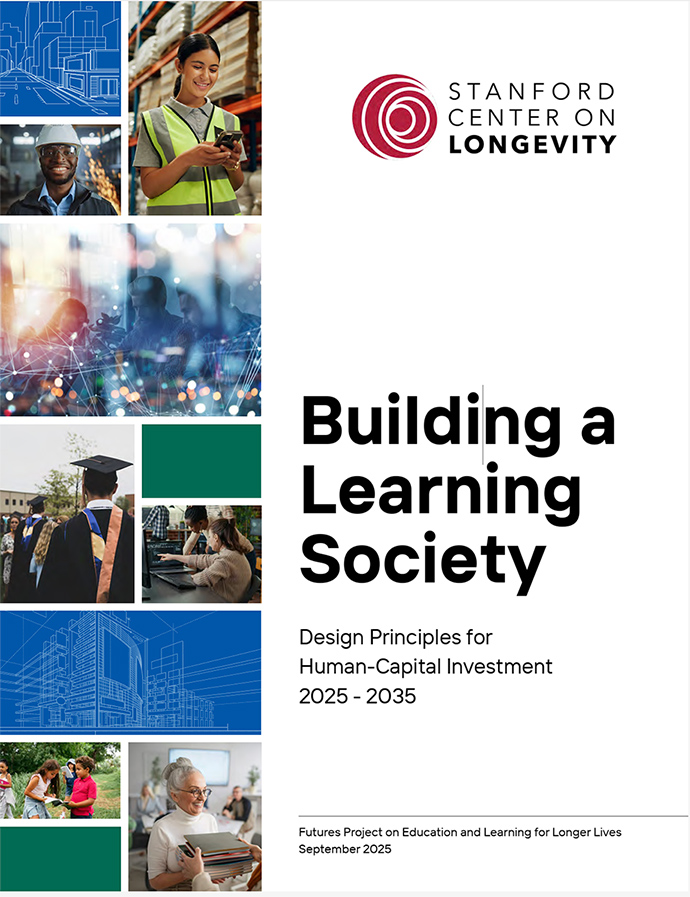
The Big Idea: A new collaborative effort led out of the Stanford center aims to tackle that goal—giving clearer shape to what it would mean to truly build a new “learning society.” As a starting point, the collaborative released a report and set of design principles this week, crafted through a year of discussion and debate among about three dozen fellows in leadership roles in education, industry, government, and research.

The fellows landed on nine core principles—including that working is learning and credentials are a means, not an end—designed to transition the United States from a “schooled society” to a “learning society.”

“Universal access to K-12 education and the massification of access to college were major accomplishments of 20th century America,” Stevens says. “But all that schooling also has downsides that only recently have come into common view. Conventional schooling is expensive, bureaucratic, and often inflexible.”
.


How Substitute Teachers Can Connect With Their Students — from edutopia.org by Zachary Shell
Five enriching strategies to help subs stay involved and make a difference in the classroom.

I’ve since found enrichment in substitute teaching. Along the way, I’ve compiled a handful of strategies that have helped me stay involved and make a difference, one day at a time. Those strategies—which are useful for new substitutes still learning the ropes, as well as full-time teachers who are scaling back to substitute duties—are laid out below.


A Quiet Classroom Isn’t Always an Ideal Classroom — from edutopia.org by Clementina Jose
By rethinking what a good day in the classroom looks and sounds like, new teachers can better support their students.

If your classroom hums with the energy of students asking questions, debating ideas, and working together, you haven’t failed. You’ve succeeded in building a space where learning isn’t about being compliant, but about being alive and present.


3 Work Trends – Issue 87 — from the World Economic Forum

1. #AI adoption is delivering real results for early movers
Three years into the generative AI revolution, a small but growing group of global companies is demonstrating the tangible potential of AI. Among firms with revenues of $1 billion or more:

  • 17% report cost savings or revenue growth of at least 10% from AI.
  • Almost 80% say their AI investments have met or exceeded expectations.
  • Half worry they are not moving fast enough and could fall behind competitors.

The world’s first AI cabinet member — from therundown.ai by Zach Mink, Rowan Cheung, Shubham Sharma, Joey Liu & Jennifer Mossalgue
PLUS: Startup produces 3,000 AI podcast episodes weekly

The details:

  • Prime Minister Edi Rama unveiled Diella during a cabinet announcement this week, calling her the first member “virtually created by artificial intelligence”.
  • The AI avatar will evaluate and award all public tenders where the government contracts private firms.
  • Diella already serves citizens through Albania’s digital services portal, processing bureaucratic requests via voice commands.
  • Rama claims the AI will eliminate bribes and threats from decision-making, though the government hasn’t detailed what human oversight will exist.

The Rundown AI’s article links to:


Anthropic Economic Index report: Uneven geographic and enterprise AI adoption — from anthropic.com

In other words, a hallmark of early technological adoption is that it is concentrated—in both a small number of geographic regions and a small number of tasks in firms. As we document in this report, AI adoption appears to be following a similar pattern in the 21st century, albeit on shorter timelines and with greater intensity than the diffusion of technologies in the 20th century.

To study such patterns of early AI adoption, we extend the Anthropic Economic Index along two important dimensions, introducing a geographic analysis of Claude.ai conversations and a first-of-its-kind examination of enterprise API use. We show how Claude usage has evolved over time, how adoption patterns differ across regions, and—for the first time—how firms are deploying frontier AI to solve business problems.


How human-centric AI can shape the future of work — from weforum.org by Sapthagiri Chapalapalli

  • Last year, use of AI in the workplace increased by 5.5% in Europe alone.
  • AI adoption is accelerating, but success depends on empowering people, not just deploying technology.
  • Redesigning roles and workflows to combine human creativity and critical thinking with AI-driven insights is key.

The transformative potential of AI on business

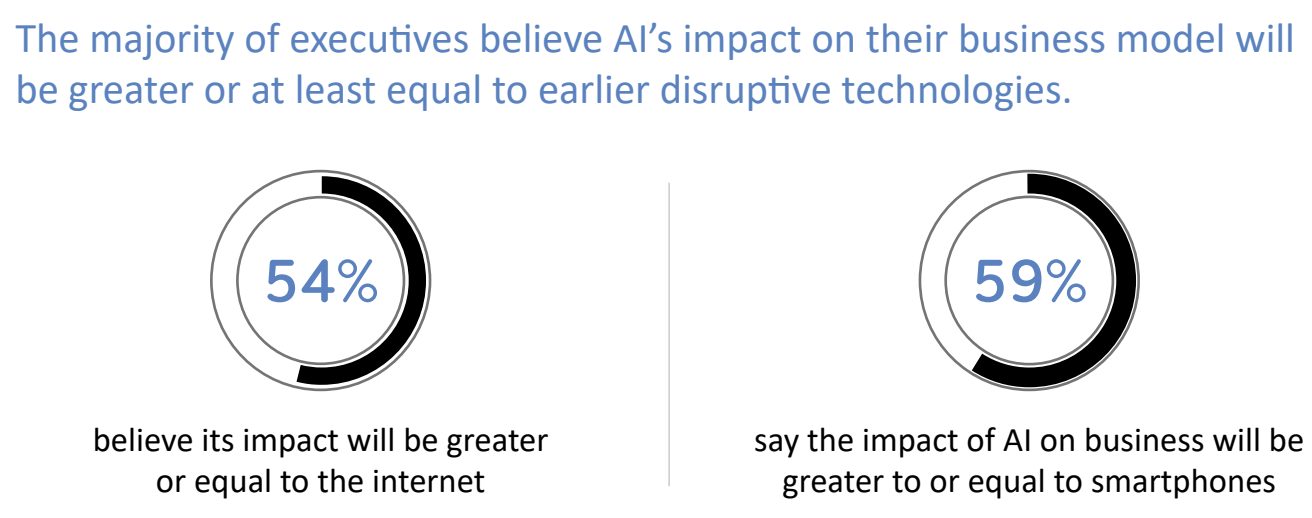
Organizations are having to rapidly adapt their business models. Image: TCS


Using ChatGPT to get a job — from linkedin.com by Ishika Rawat


From EdTech to TechEd: The next chapter in learning’s evolution — from linkedin.com by Lev Gonick

A day in the life: The next 25 years
A learner wakes up. Their AI-powered learning coach welcomes them, drawing their attention to their progress and helping them structure their approach to the day.  A notification reminds them of an upcoming interview and suggests reflections to add to their learning portfolio.

Rather than a static gradebook, their portfolio is a dynamic, living record, curated by the student, validated by mentors in both industry and education, and enriched through co-creation with maturing modes of AI. It tells a story through essays, code, music, prototypes, journal reflections, and team collaborations. These artifacts are not “submitted”, they are published, shared, and linked to verifiable learning outcomes.

And when it’s time to move, to a new institution, a new job, or a new goal, their data goes with them, immutable, portable, verifiable, and meaningful.

From DSC:
And I would add to that last solid sentence that the learner/student/employee will be able to control who can access this information. Anyway, some solid reflections here from Lev.


AI Could Surpass Schools for Academic Learning in 5-10 Years — from downes.ca with commentary from Stephen Downes

I know a lot of readers will disagree with this, and the timeline feels aggressive (the future always arrives more slowly than pundits expect) but I think the overall premise is sound: “The concept of a tipping point in education – where AI surpasses traditional schools as the dominant learning medium – is increasingly plausible based on current trends, technological advancements, and expert analyses.”


The world’s first AI cabinet member — from therundown.ai by Zach Mink, Rowan Cheung, Shubham Sharma, Joey Liu & Jennifer Mossalgue

The Rundown: In this tutorial, you will learn how to combine NotebookLM with ChatGPT to master any subject faster, turning dense PDFs into interactive study materials with summaries, quizzes, and video explanations.

Step-by-step:

  1. Go to notebooklm.google.com, click the “+” button, and upload your PDF study material (works best with textbooks or technical documents)
  2. Choose your output mode: Summary for a quick overview, Mind Map for visual connections, or Video Overview for a podcast-style explainer with visuals
  3. Generate a Study Guide under Reports — get Q&A sets, short-answer questions, essay prompts, and glossaries of key terms automatically
  4. Take your PDF to ChatGPT and prompt: “Read this chapter by chapter and highlight confusing parts” or “Quiz me on the most important concepts”
  5. Combine both tools: Use NotebookLM for quick context and interactive guides, then ChatGPT to clarify tricky parts and go deeperPro Tip: If your source is in EPUB or audiobook, convert it to PDF before uploading. Both NotebookLM and ChatGPT handle PDFs best.

Claude can now create and edit files — from anthropic.com

Claude can now create and edit Excel spreadsheets, documents, PowerPoint slide decks, and PDFs directly in Claude.ai and the desktop app. This transforms how you work with Claude—instead of only receiving text responses or in-app artifacts, you can describe what you need, upload relevant data, and get ready-to-use files in return.

Also see:

  • Microsoft to lessen reliance on OpenAI by buying AI from rival Anthropic — from techcrunch.com byRebecca Bellan
    Microsoft will pay to use Anthropic’s AI in Office 365 apps, The Information reports, citing two sources. The move means that Anthropic’s tech will help power new features in Word, Excel, Outlook, and PowerPoint alongside OpenAI’s, marking the end of Microsoft’s previous reliance solely on the ChatGPT maker for its productivity suite. Microsoft’s move to diversify its AI partnerships comes amid a growing rift with OpenAI, which has pursued its own infrastructure projects as well as a potential LinkedIn competitor.

Ep. 11 AGI and the Future of Higher Ed: Talking with Ray Schroeder

In this episode of Unfixed, we talk with Ray Schroeder—Senior Fellow at UPCEA and Professor Emeritus at the University of Illinois Springfield—about Artificial General Intelligence (AGI) and what it means for the future of higher education. While most of academia is still grappling with ChatGPT and basic AI tools, Schroeder is thinking ahead to AI agents, human displacement, and AGI’s existential implications for teaching, learning, and the university itself. We explore why AGI is so controversial, what institutions should be doing now to prepare, and how we can respond responsibly—even while we’re already overwhelmed.


Best AI Tools for Instructional Designers — from blog.cathy-moore.com by Cathy Moore

Data from the State of AI and Instructional Design Report revealed that 95.3% of the instructional designers interviewed use AI in their daily work [1]. And over 85% of this AI use occurs during the design and development process.

These figures showcase the immense impact AI is already having on the instructional design world.

If you’re an L&D professional still on the fence about adding AI to your workflow or an AI convert looking for the next best tools, keep reading.

This guide breaks down 5 of the top AI tools for instructional designers in 2025, so you can streamline your development processes and build better training faster.

But before we dive into the tools of the trade, let’s address the elephant in the room:


3 Human Skills That Make You Irreplaceable in an AI World — from gettingsmart.com/ by Tom Vander Ark and Mason Pashia

Key Points

  • Update learner profiles to emphasize curiosity, curation, and connectivity, ensuring students develop irreplaceable human skills.
  • Integrate real-world learning experiences and mastery-based assessments to foster agency, purpose, and motivation in students.
 

Psalm 113:3

From the rising of the sun to the place where it sets,
the name of the Lord is to be praised.

Micah 6:8

He has shown you, O mortal, what is good.
And what does the Lord require of you?
To act justly and to love mercy
and to walk humbly[a] with your God.

Proverbs 31:8-9

8 Speak up for those who cannot speak for themselves,
for the rights of all who are destitute.
9 Speak up and judge fairly;
defend the rights of the poor and needy.

Proverbs 29:25

Fear of man will prove to be a snare,
but whoever trusts in the Lord is kept safe.


The waiting game — from college-inside.beehiiv.com by Charlotte West
College Inside breaks down the numbers from a first-of-its kind report on higher education in Illinois prisons.

For every person enrolled in higher education at Illinois prisons, someone else is waiting for their turn, according to new state data that reveals a system where access to college depends largely on where someone is incarcerated.

Right now, roughly 2,000 people in Illinois prisons are participating in higher education programs, according to a report released at the beginning of September. That’s about 1 out of every 15 people incarcerated in the state. At the same time, though, another 2,000 are stuck on waiting lists to get into classes because there’s not enough programming available.

Another 700 people on supervised release — Illinois’ version of parole — are also enrolled in higher education, per the report. Those numbers include enrollment in both college classes, and career and technical education.


Titus 2:2

Teach the older men to be temperate, worthy of respect, self-controlled, and sound in faith, in love and in endurance.

Isaiah 46:4

Even to your old age and gray hairs I am he, I am he who will sustain you. I have made you and I will carry you; I will sustain you and I will rescue you.

Philippians 4:4

Final Exhortations
Rejoice in the Lord always. I will say it again: Rejoice!

1 Peter 4:8-10

8 Above all, love each other deeply, because love covers over a multitude of sins. 9 Offer hospitality to one another without grumbling. 10 Each of you should use whatever gift you have received to serve others, as faithful stewards of God’s grace in its various forms.


Miro and GenAI as drivers of online student engagement — from timeshighereducation.com by Jaime Eduardo Moncada Garibay
A set of practical strategies for transforming passive online student participation into visible, measurable and purposeful engagement through the use of Miro, enhanced by GenAI

To address this challenge, I shifted my focus from requesting participation to designing it. This strategic change led me to integrate Miro, a visual digital workspace, into my classes. Miro enables real-time visualisation and co-creation of ideas, whether individually or in teams.

The transition from passive attendance to active engagement in online classes requires deliberate instructional design. Tools such as Miro, enhanced by GenAI, enable educators to create structured, visually rich learning environments in which participation is both expected and documented.

While technology provides templates, frames, timers and voting features, its real pedagogical value emerges through intentional facilitation, where the educator’s role shifts from delivering content to orchestrating collaborative, purposeful learning experiences.


Benchmarking Online Education with Bruce Etter and Julie Uranis — from buzzsprout.com by Derek Bruff

Here are some that stood out to me:

  • In the past, it was typical for faculty to teach online courses as an “overload” of some kind, but BOnES data show that 92% of online programs feature courses taught as part of faculty member’s standard teaching responsibilities. Online teaching has become one of multiple modalities in which faculty teach regularly.
  • Three-quarters of chief online officers surveyed said they plan to have a great market share of online enrollments in the future, but only 23% said their current marketing is better than their competitors. The rising tide of online enrollments won’t lift all boats–some institutions will fare better than others.
  • Staffing at online education units is growing, with the median staff size increasing from 15 last year to 20 this year. Julie pointed out that successful online education requires investment of resources. You might need as many buildings as onsite education does, but you need people and you need technology.


GRCC students to use AI to help businesses solve ‘real world’ challenges in new course — from www-mlive-com.cdn.ampproject.org by Brian McVicar; via Patrick Bailey on LinkedIn

GRAND RAPIDS, MI — A new course at Grand Rapids Community College aims to help students learn about artificial intelligence by using the technology to solve real-world business problems.

In a release, the college said its grant application was supported by 20 local businesses, including Gentex, TwistThink and the Grand Rapids Public Museum. The businesses have pledged to work with students who will use business data to develop an AI project such as a chatbot that interacts with customers, or a program that automates social media posts or summarizes customer data.

“This rapidly emerging technology can transform the way businesses process data and information,” Kristi Haik, dean of GRCC’s School of Science, Technology, Engineering and Mathematics, said in a statement. “We want to help our local business partners understand and apply the technology. We also want to create real experiences for our students so they enter the workforce with demonstrated competence in AI applications.”

As Patrick Bailey said on LinkedIn about this article:

Nice to see a pedagogy that’s setting a forward movement rather than focusing on what could go wrong with AI in a curriculum.


Forecast for Learning and Earning in 2025-2026 report — from pages.asugsvsummit.com by Jennifer Lee and Claire Zau

In this look ahead at the future of learning and work, we aim to define:

  • Major thematic observations
  • What makes this moment an inflection point
  • Key predictions (and their precedent)
  • Short- and long-term projected impacts


The LMS at 30: From Course Management to Learning Management (At Last) — from onedtech.philhillaa.com; a guest post from Matthew Pittinsky, Ph.D.

As a 30 year observer and participant, it seems to me that previous technology platform shifts like SaaS and mobile did not fundamentally change the LMS. AI is different. We’re standing at the precipice of LMS 2.0, where the branding change from Course Management System to Learning Management System will finally live up to its name. Unlike SaaS or mobile, AI represents a technology platform shift that will transform the way participants interact with learning systems – and with it, the nature of the LMS itself.

Given the transformational potential of AI, it is useful to set the context and think about how we got here, especially on this 30th anniversary of the LMS.

LMS at 30 Part 2: Learning Management in the AI Era — from onedtech.philhillaa.com; a guest post from Matthew Pittinsky, Ph.D.

Where AI is disruptive is in its ability to introduce a whole new set of capabilities that are best described as personalized learning services. AI offers a new value proposition to the LMS, roughly the set of capabilities currently being developed in the AI Tutor / agentic TA segment. These new capabilities are so valuable given their impact on learning that I predict they will become the services with greatest engagement within a school or university’s “enterprise” instructional platform.

In this way, by LMS paradigm shift, I specifically mean a shift from buyers valuing the product on its course-centric and course management capabilities, to valuing it on its learner-centric and personalized learning capabilities.


AI and the future of education: disruptions, dilemmas and directions — from unesdoc.unesco.org

This anthology reveals how the integration of AI in education poses profound philosophical, pedagogical, ethical and political questions. As this global AI ecosystem evolves and becomes increasingly ubiquitous, UNESCO and its partners have a shared responsibility to lead the global discourse towards an equity- and justice-centred agenda. The volume highlights three areas in which UNESCO will continue to convene and lead a global commons for dialog and action particularly in areas on AI futures, policy and practice innovation, and experimentation.

  1. As guardian of ethical, equitable human-centred AI in education.
  2. As thought leader in reimagining curriculum and pedagogy
  3. As a platform for engaging pluralistic and contested dialogues

AI, copyright and the classroom: what higher education needs to know — from timeshighereducation.com by Cayce Myers
As artificial intelligence reshapes teaching and research, one legal principle remains at the heart of our work: copyright. Understanding its implications isn’t just about compliance – it’s about protecting academic integrity, intellectual property and the future of knowledge creation. Cayce Myers explains


The School Year We Finally Notice “The Change” — from americanstogether.substack.com by Jason Palmer

Why It Matters
A decade from now, we won’t say “AI changed schools.” We’ll say: this was the year schools began to change what it means to be human, augmented by AI.

This transformation isn’t about efficiency alone. It’s about dignity, creativity, and discovery, and connecting education more directly to human flourishing. The industrial age gave us schools to produce cookie-cutter workers. The digital age gave us knowledge anywhere, anytime. The AI age—beginning now—gives us back what matters most: the chance for every learner to become infinitely capable.

This fall may look like any other—bells ringing, rows of desks—but beneath the surface, education has begun its greatest transformation since the one-room schoolhouse.


How should universities teach leadership now that teams include humans and autonomous AI agents? — from timeshighereducation.com by Alex Zarifis
Trust and leadership style are emerging as key aspects of teambuilding in the age of AI. Here are ways to integrate these considerations with technology in teaching

Transactional and transformational leaderships’ combined impact on AI and trust
Given the volatile times we live in, a leader may find themselves in a situation where they know how they will use AI, but they are not entirely clear on the goals and journey. In a teaching context, students can be given scenarios where they must lead a team, including autonomous AI agents, to achieve goals. They can then analyse the situations and decide what leadership styles to apply and how to build trust in their human team members. Educators can illustrate this decision-making process using a table (see above).

They may need to combine transactional leadership with transformational leadership, for example. Transactional leadership focuses on planning, communicating tasks clearly and an exchange of value. This works well with both humans and automated AI agents.


In Rural Wisconsin, Pat Perry Connects the Various Forces That Shape Our World — from thisiscolossal.com by Pat Perry & Grace Ebert

To conceptualize the work, the collective helped to contact and secure permissions from the teachers pictured, and with the exception of the woman in the red floral garment at the bottom of the piece—she’s the artist’s mother and a retired educator—all work in the area. And why teachers? Perry explains:

Day after day, people find purpose. They wake up early, show up with intention, and try to make sense of things—not just for themselves, but also for others. Teachers do this every day. Not for recognition, and rarely for much pay. It’s a repetitive act of maintenance that holds things together. Choosing to shoulder that task, even while standing at the edge of something vast and indifferent, is a quiet act of defiance. Amidst overwhelmingness and uncontrollableness and unanswerableness, teachers—and all custodians of human affairs—keep meaning in the world by steadily and stubbornly tending to it.


While you’re out there, also see:


Song Dong’s Monumental Installations Mirror Memories, Globalization, and Impermanence — from thisiscolossal.com by Song Dong and Kate Mothes


The Transformative Power of Arts Education | A Conversation with Dr. Lucy Chen — from gettingsmart.com by Mason Pashia

Key Points

  • Arts education boosts academic performance, communication skills, and student engagement, supported by long-term data.
  • Tailoring arts programs to individual student needs creates impactful pathways, from foundational exposure to professional aspirations.

12 Shifts to Move from Teacher-Led to Student-Centered Environments — from gettingsmart.com by Kyle Wagner

Key Points

  • Despite modern technological advancements in classroom tools, many educational settings still center around a traditional model where the teacher is the primary source of information and students passively receive content.
  • Slowly, learning environments are inviting students to actively participate and take ownership of their learning through collaborative projects, inquiry-based experiences, and real-world problem-solving, thereby transforming traditional educational roles and practices.

From Readiness to Relevance: 3 Ways to Transform Career Connected Learning — from gettingsmart.com by Dr. Mahnaz R. Charania

Key Points

  • Career-connected learning must start early and be integrated across K–12 to provide students with exposure and informed choices for their futures.
  • Real-world, immersive learning experiences enhance student engagement and help build critical skills, social capital, and opportunities for success.
 
© 2025 | Daniel Christian