


15 Classroom Newsletter Ideas to Try This School Year — from classtechtips.com by Dr. Monica Burns
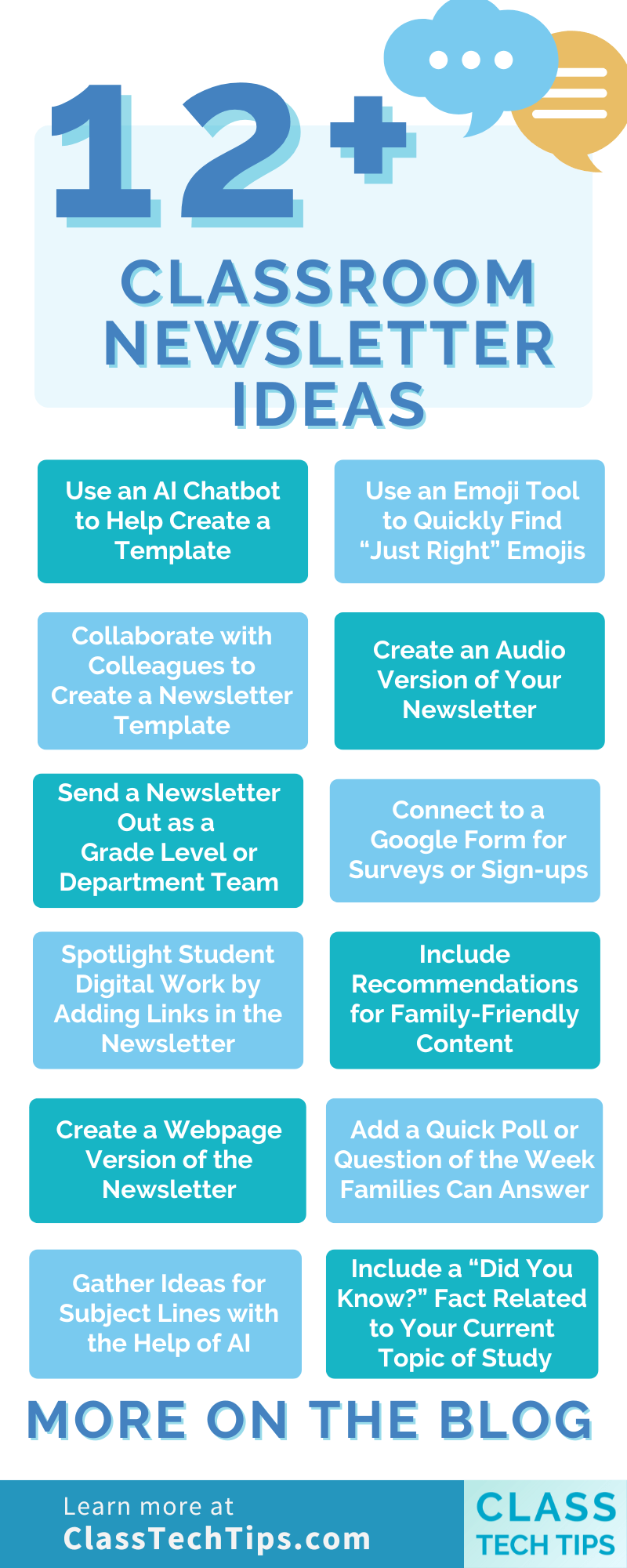
15 Classroom Newsletter Ideas to Try This School Year — from classtechtips.com by Dr. Monica Burns
Vernacular Architecture and Mossy Trees Fill Michael Davydov’s Tiny Worlds — from thisiscolossal.com by Michael Davydov and Kate Mothes
.

MoodleMoot Global Conference Notes 2025 — from onedtech.philhillaa.com by Glenda Morgan
It’s a long way from Me?rida to Edinburgh
.
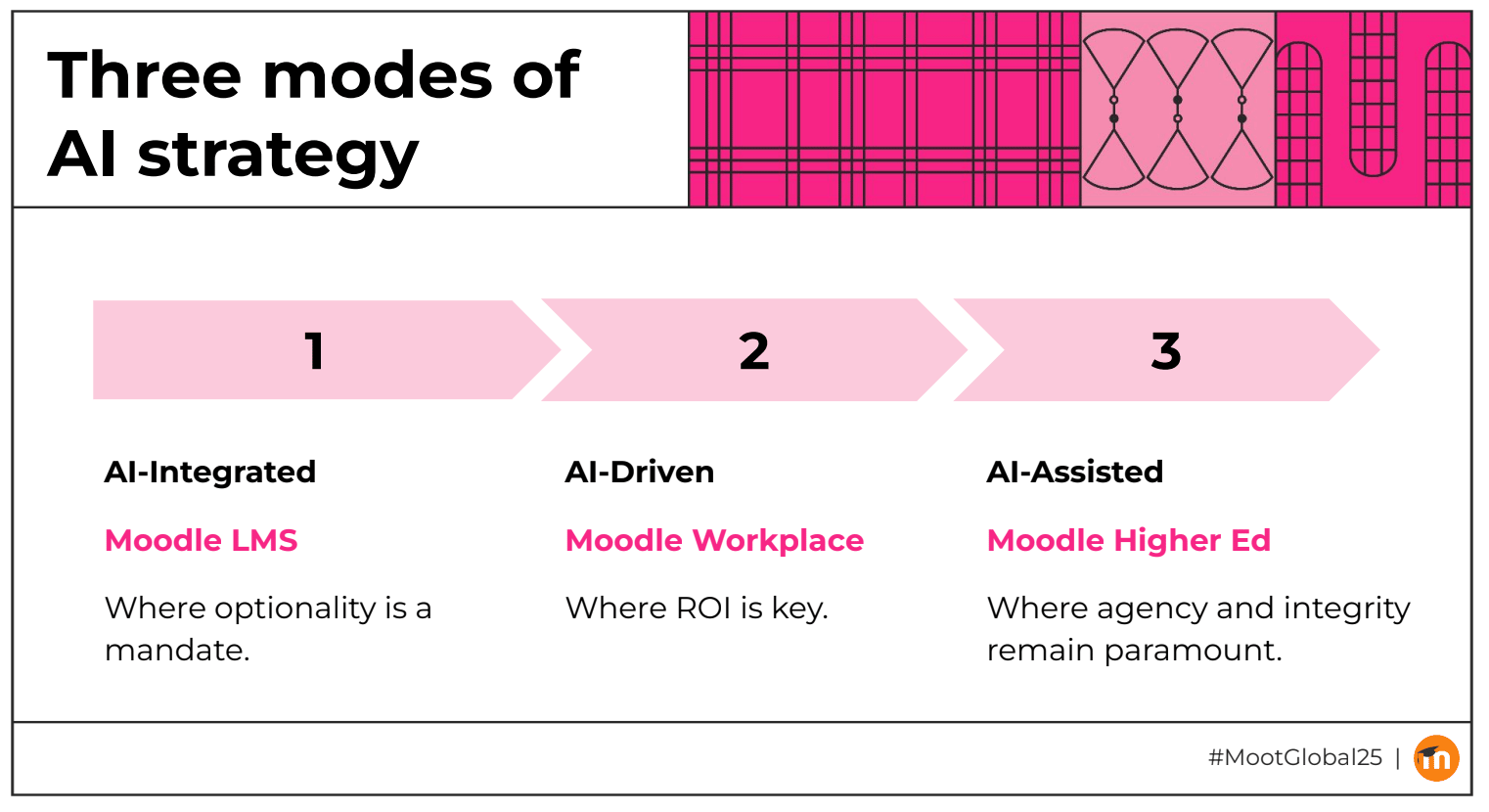
Moodle Higher Ed
This kept getting underplayed, probably because its exact shape is still undetermined and it will arrive “soon” (where, to quote Marie, “soon is a relative term”). But it’s big in that Moodle HQ is developing a premium product for higher education.
The Moodle execs were careful to say that Moodle Higher Ed won’t be an LMS, per se.
So over the next few years we’re bringing something new to the Moodle product ecosystem. A tailored solution for higher education. Just as Workplace is a specialized product built on top of Moodle LMS for corporate and government needs, we’re bringing that same philosophy to higher ed with an AI assistance strategy focused on point solutions that deliver real institutional value.
Also from Phil Hill on LinkedIn:
Top 50 Legal Employers Hiring Now: Where the Opportunities Are in 2025 — from jdjournal.com by Fatima E
For lawyers, paralegals, compliance professionals, and legal tech specialists, 2025 is shaping up to be a strong hiring year. According to a new LawCrossing report, the Top 50 Legal Employers Hiring Now highlights a wave of open positions across law firms, corporations, government agencies, and universities — a snapshot of where demand is highest and where job-seekers should be focusing their efforts.
…
The Types of Employers on the List
The Top 50 Legal Employers Hiring Now spans a diverse set of organizations:
This diversity means opportunities exist for professionals at many career stages, whether you are a new graduate seeking entry-level work, a mid-career attorney looking for stability, or a seasoned litigator hoping to move in-house.
Also see:
Law StudentsRecord-Breaking Law School Enrollment as Applicant Boom Reshapes Legal Education — from jdjournal.com by Fatima E
.

.
U.S. law schools are experiencing a surge unlike anything seen in over a decade, with first-year J.D. classes hitting record sizes this fall. The unprecedented boom follows an 18 % year-over-year jump in applications, fueled by a mix of economic uncertainty, political engagement, and strong job prospects for recent graduates.
Also see:
Lawyers Council Explores Legal Innovation with Arizona Chief Justice Timmer — from iaals.du.edu
On September 16, members of the IAALS Lawyers Council gathered in downtown Denver to discuss the growing momentum of alternative business structures with Arizona Chief Justice Ann A. Scott Timmer and Jess Bednarz, IAALS’ Director of Legal Services and the Profession.
Arizona is on the frontlines of this movement, and Chief Justice Timmer talked about how alternative business structures have led to meaningful innovations in how lawyers in Arizona provide legal services.
Chief Justice Timmer credits a culture of innovation in Arizona for providing the ability for lawyers and businesses to try new ways of delivering legal services. She emphasized that lawyers are still at the heart of the practice of law in these alternative business structures, and that the structures allow lawyers to have added resources to innovate and reach more clients. This creativity has led to businesses and innovations that make the legal system easier to access, like financial planners and lawyers combining businesses or an app that helps people start the process of expunging criminal records.
Tenderness and Empathy Prevail in Bisa Butler’s Nostalgic and Vibrant Quilts — from thisiscolossal.com by Bisa Butler and Kate Mothes

On LawNext: Justice Workers — Reimagining Access to Justice as Democracy Work, with Rebecca Sandefur and Matthew Burnett — from lawnext.com by Bob Ambrogi

With as many as 120 million legal problems going unresolved in America each year, traditional lawyer-centered approaches to access to justice have consistently failed to meet the scale of need. But what if the solution is not just about providing more legal services — what if it lies in fundamentally rethinking who can provide legal help?
In today’s episode, host Bob Ambrogi is joined by two of the nation’s leading researchers on access to justice: Rebecca Sandefur, professor and director of the Sanford School of Social and Family Dynamics at Arizona State University and a faculty fellow at the American Bar Foundation, and Matthew Burnett, director of research and programs for the Access to Justice Research Initiative at the American Bar Foundation and an adjunct professor of law at Georgetown University Law Center.
Guest post: IP professionals are enthusiastic about AI but should adopt with caution, report says — from legaltechnology.com by Benoit Chevalier
Aiming to discover more about AI’s impact on the intellectual property (IP) field, Questel recently released the findings of its 2025 IP Outlook Research Report entitled “Pathways to Productivity: AI in IP”, the much-awaited follow-up to its inaugural 2024 study “Beyond the Hype: How Technology is Transforming IP.” The 2025 Report (“the Report”) polled over 500 patent and trademark professionals from various continents and countries across the globe.
With AI, Junior Lawyers Will Excavate Insights, Not Review Docs — from news.bloomberglaw.com by Eric Dodson Greenberg; some of this article is behind a paywall
As artificial intelligence reshapes the legal profession, both in-house and outside counsel face two major—but not unprecedented—challenges.
The first is how to harness transformative technology while maintaining the rigorous standards that define effective legal practice.
The second is how to ensure that new technology doesn’t impair the training and development of new lawyers.
Rigorous standards and apprenticeship are foundational aspects of lawyering. Preserving and integrating both into our use of AI will be essential to creating a stable and effective AI-enabled legal practice.
The AI Lie That Legal Tech Companies Are Selling…. — from jdsupra.com
Every technology vendor pitching to law firms leads with the same promise: our solution will save you time. They’re lying, and they know it. The truth about AI in legal practice isn’t that it will reduce work. It’s that it will explode the volume of work while fundamentally changing what that work looks like.
New practice areas will emerge overnight. AI compliance law is already booming. Algorithmic discrimination cases are multiplying. Smart contract disputes need lawyers who understand both code and law. The metaverse needs property rights. Cryptocurrency needs regulation. Every technological advance creates legal questions that didn’t exist yesterday.
The skill shift will be brutal for lawyers who resist.
Finalists Named for 2025 American Legal Technology Awards — from lawnext.com by Bob Ambrogi
Finalists have been named for the 2025 American Legal Technology Awards, which honor exceptional achievement in various aspects of legal technology.
The awards recognize achievement in various categories related to legal technology, such as by a law firm, an individual, or an enterprise.
The awards will be presented on Oct. 15 at a gala dinner on the eve of the Clio Cloud Conference in Boston, Mass. The dinner will be held at Suffolk Law School.
Here are this year’s finalists:
Agentic AI and the New Era of Corporate Learning for 2026 — from hrmorning.com by Carol Warner
That gap creates compliance risk and wasted investment. It leaves HR leaders with a critical question: How do you measure and validate real learning when AI is doing the work for employees?
Designing Training That AI Can’t Fake
Employees often find static slide decks and multiple-choice quizzes tedious, while AI can breeze through them. If employees would rather let AI take training for them, it’s a red flag about the content itself.
One of the biggest risks with agentic AI is disengagement. When AI can complete a task for employees, their incentive to engage disappears unless they understand why the skill matters, Rashid explains. Personalization and context are critical. Training should clearly connect to what employees value most – career mobility, advancement, and staying relevant in a fast-changing market.
Nearly half of executives believe today’s skills will expire within two years, making continuous learning essential for job security and growth. To make training engaging, Rashid recommends:
Microsoft 365 Copilot AI agents reach a new milestone — is teamwork about to change? — from windowscentral.comby Adam Hales
Microsoft expands Copilot with collaborative agents in Teams, SharePoint and more to boost productivity and reshape teamwork.
Microsoft is pitching a recent shift of AI agents in Microsoft Teams as more than just smarter assistance. Instead, these agents are built to behave like human teammates inside familiar apps such as Teams, SharePoint, and Viva Engage. They can set up meeting agendas, keep files in order, and even step in to guide community discussions when things drift off track.
…
Unlike tools such as ChatGPT or Claude, which mostly wait for prompts, Microsoft’s agents are designed to take initiative. They can chase up unfinished work, highlight items that still need decisions, and keep projects moving forward. By drawing on Microsoft Graph, they also bring in the right files, past decisions, and context to make their suggestions more useful.
Chris Dede’s comments on LinkedIn re: Aibrary
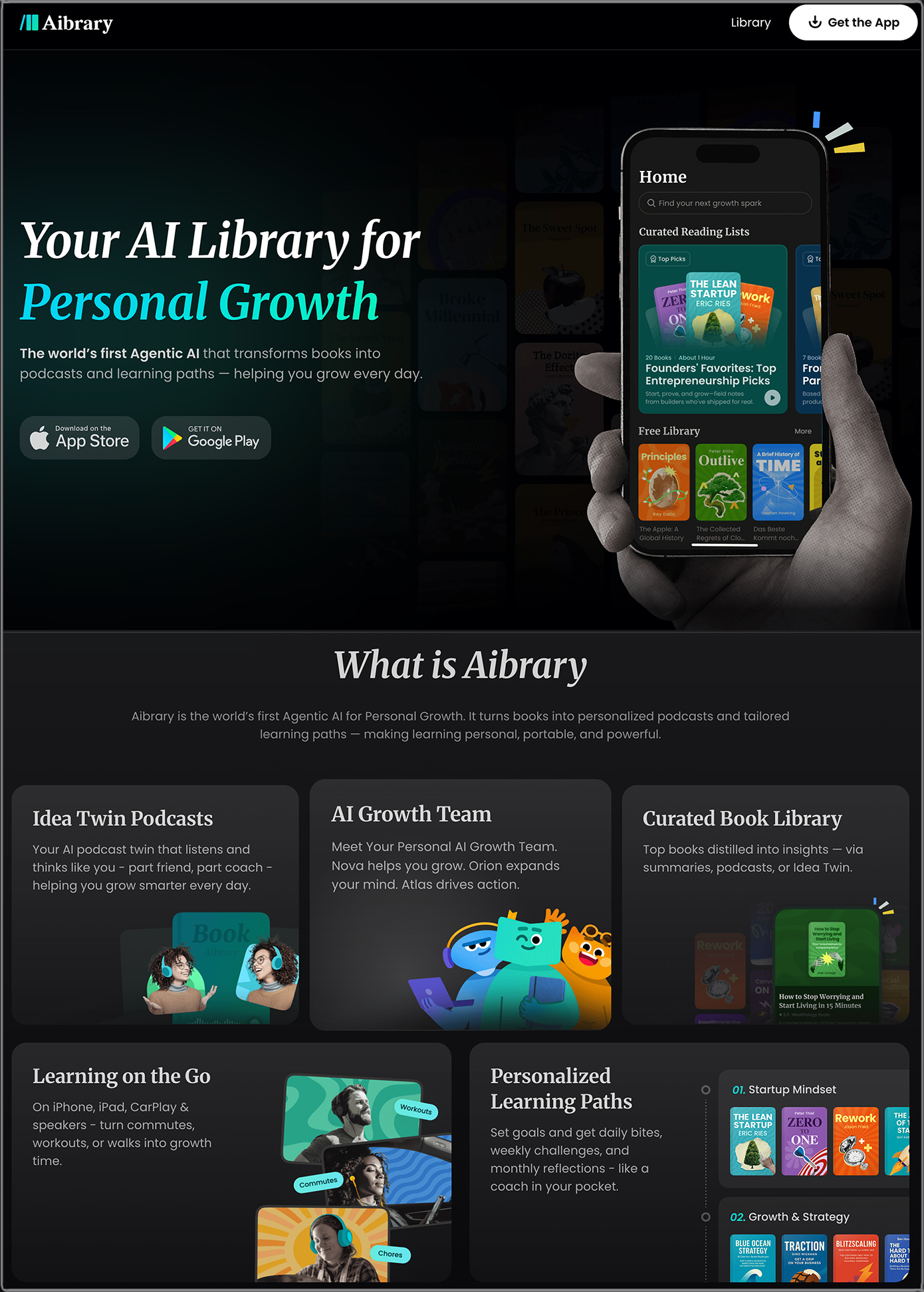
As an advisor to Aibrary, I am impressed with their educational philosophy, which is based both on theory and on empirical research findings. Aibrary is an innovative approach to self-directed learning that complements academic resources. Expanding our historic conceptions of books, libraries, and lifelong learning to new models enabled by emerging technologies is central to empowering all of us to shape our future.
.
Also see:
Why AI literacy must come before policy — from timeshighereducation.com by Kathryn MacCallum and David Parsons
When developing rules and guidelines around the uses of artificial intelligence, the first question to ask is whether the university policymakers and staff responsible for implementing them truly understand how learners can meet the expectations they set
Literacy first, guidelines second, policy third
For students to respond appropriately to policies, they need to be given supportive guidelines that enact these policies. Further, to apply these guidelines, they need a level of AI literacy that gives them the knowledge, skills and understanding required to support responsible use of AI. Therefore, if we want AI to enhance education rather than undermine it, we must build literacy first, then create supportive guidelines. Good policy can then follow.
AI training becomes mandatory at more US law schools — from reuters.com by Karen Sloan and Sara Merken
Sept 22 (Reuters) – At orientation last month, 375 new Fordham Law students were handed two summaries of rapper Drake’s defamation lawsuit against his rival Kendrick Lamar’s record label — one written by a law professor, the other by ChatGPT.
The students guessed which was which, then dissected the artificial intelligence chatbot’s version for accuracy and nuance, finding that it included some irrelevant facts.
The exercise was part of the first-ever AI session for incoming students at the Manhattan law school, one of at least eight law schools now incorporating AI training for first-year students in orientation, legal research and writing courses, or through mandatory standalone classes.
Cosmic Wonders Abound in the ZWO Astronomy Photographer of the Year Contest — from thisiscolossal.com by Kate Mothes and various/incredible photographers

Workday Acquires Sana To Transform Its Learning Platform And Much More— from joshbersin.com by J
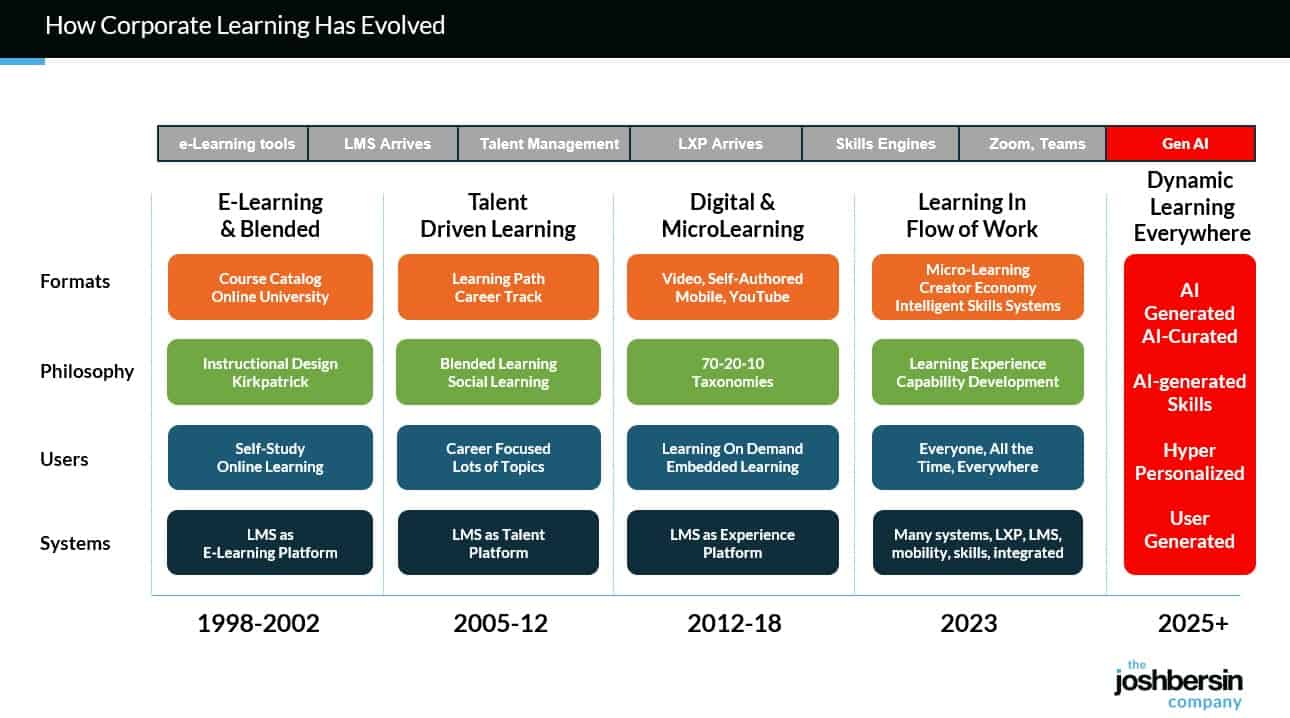
Well now, as the corporate learning market shifts to AI, (read the details in our study “The Revolution in Corporate Learning” ), Workday can jump ahead. This is because the $400 billion corporate training market is moving quickly to an AI-Native dynamic content approach (witness OpenAI’s launch of in-line learning in its chatbot). We’re just finishing a year-long study of this space and our detailed report and maturity model will be out in Q4.
.
.
With Sana, and a few other AI-native vendors (Uplimit, Arist, Disperz, Docebo), companies can upload audios, videos, documents, and even interviews with experts and the system build learning programs in minutes. We use Sana for Galileo Learn (our AI-powered learning academy for Leadership and HR), and we now have 750+ courses and can build new programs in days instead of months.
And there’s more; this type of system gives every employee a personalized, chat-based experience to learn.