As the healthcare world progresses from one focused on diagnostics to prognostics, the rise of agentic artificial intelligence (AI) is transforming medical technology into learning systems, a Google Cloud executive has said.
…
In a blog post, Shweta Maniar, Google Cloud’s global director of healthcare & life sciences, stated that the advancement of AI technology and healthcare ecosystems is drawing down on operational complexity for device companies and helping specialised expertise to reach more patients.
By embedding technology into medical devices, they are becoming more like pre-emptive learning systems, Shweta said.
“Looking forward, implants with monitoring capabilities will be able to track how your body reacts, how you heal, and when it’s safe to return to activities like running or surfing,” she explained.
“More importantly, they will gather data that improves the next version of that device for every future patient.”
University-run nutrition education programs are closing around the country following Trump administration funding cuts. That means low-income families are losing access to information about healthy eating and cooking.
“When you teach people how to eat healthier, the students do better in school, the parents do better at work, that feeds the economy,” Mark Lynch, director of advocacy, told the TV station. “Everybody lives longer and stays out of the doctor’s offices or the ERs.”
From DSC: “Everybody lives longer and stays out of the doctor’s offices or the ERs.”DC: Yup. We can pay up front and be healthier as a society, or we can try to get people their necessary healthcare later on (probably costing us much more on the aggregate).
The 4 Rs framework Salesforce has developed what Holt Ware calls the “4 Rs for AI agent success.” They are:
Redesign by combining AI and human capabilities. This requires treating agents like new hires that need proper onboarding and management.
Reskilling should focus on learning future skills. “We think we know what they are,” Holt Ware notes, “but they will continue to change.”
Redeploy highly skilled people to determine how roles will change. When Salesforce launched an AI coding assistant, Holt Ware recalls, “We woke up the next day and said, ‘What do we do with these people now that they have more capacity?’ ” Their answer was to create an entirely new role: Forward-Deployed Engineers. This role has since played a growing part in driving customer success.
Rebalance workforce planning. Holt Ware references a CHRO who “famously said that this will be the last year we ever do workforce planning and it’s only people; next year, every team will be supplemented with agents.”
Our latest video generation model is more physically accurate, realistic, and more controllable than prior systems. It also features synchronized dialogue and sound effects. Create with it in the new Sora app.
The Rundown: OpenAI just released Sora 2, its latest video model that now includes synchronized audio and dialogue, alongside a new social app where users can create, remix, and insert themselves into AI videos through a “Cameos” feature.
… Why it matters: Model-wise, Sora 2 looks incredible — pushing us even further into the uncanny valley and creating tons of new storytelling capabilities. Cameos feels like a new viral memetic tool, but time will tell whether the AI social app can overcome the slop-factor and have staying power past the initial novelty.
OpenAI Just Dropped Sora 2 (And a Whole New Social App) — from heneuron.ai by Grant Harvey OpenAI launched Sora 2 with a new iOS app that lets you insert yourself into AI-generated videos with realistic physics and sound, betting that giving users algorithm control and turning everyone into active creators will build a better social network than today’s addictive scroll machines.
What Sora 2 can do
Generate Olympic-level gymnastics routines, backflips on paddleboards (with accurate buoyancy!), and triple axels.
Follow intricate multi-shot instructions while maintaining world state across scenes.
Create realistic background soundscapes, dialogue, and sound effects automatically.
Insert YOU into any video after a quick one-time recording (they call this “cameos”).
The best video to show what it can do is probably this one, from OpenAI researcher Gabriel Peters, that depicts the behind the scenes of Sora 2 launch day…
Sora 2: AI Video Goes Social — from getsuperintel.com by Kim “Chubby” Isenberg OpenAI’s latest AI video model is now an iOS app, letting users generate, remix, and even insert themselves into cinematic clips
Technically, Sora 2 is a major leap. It syncs audio with visuals, respects physics (a basketball bounces instead of teleporting), and follows multi-shot instructions with consistency. That makes outputs both more controllable and more believable. But the app format changes the game: it transforms world simulation from a research milestone into a social, co-creative experience where entertainment, creativity, and community intersect.
Also along the lines of creating digital video, see:
What used to take hours in After Effects now takes just one text prompt. Tools like Google’s Nano Banana, Seedream 4, Runway’s Aleph, and others are pioneering instruction-based editing, a breakthrough that collapses complex, multi-step VFX workflows into a single, implicit direction.
The history of VFX is filled with innovations that removed friction, but collapsing an entire multi-step workflow into a single prompt represents a new kind of leap.
For creators, this means the skill ceiling is no longer defined by technical know-how, it’s defined by imagination. If you can describe it, you can create it. For the industry, it points toward a near future where small teams and solo creators compete with the scale and polish of large studios.
Something big shifted this week. OpenAI just turned ChatGPT into a platform – not just a product.With apps now running inside ChatGPT and a no-code Agent Builder for creating full AI workflows, the line between “using AI” and “building with AI” is fading fast. Developers suddenly have a new playground, and for the first time, anyone can assemble their own intelligent system without touching code. The question isn’t what AI can do anymore – it’s what you’ll make it do.
5 Your love, Lord, reaches to the heavens, your faithfulness to the skies. 6 Your righteousness is like the highest mountains, your justice like the great deep. You, Lord, preserve both people and animals. 7 How priceless is your unfailing love, O God! People take refuge in the shadow of your wings.
7 “Ask and it will be given to you; seek and you will find; knock and the door will be opened to you.8 For everyone who asks receives; the one who seeks finds; and to the one who knocks, the door will be opened.
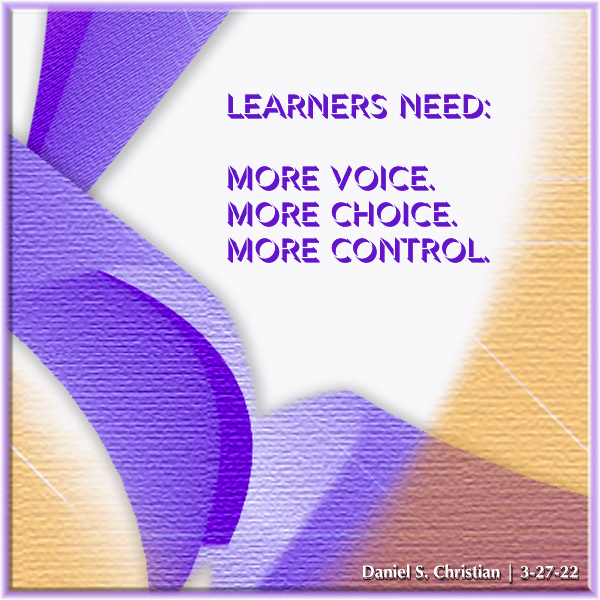
In our efforts to improve school, especially in the United States, student voice has really gotten lost. We focus on test scores, top-down curriculum, and measures of success that never quite get to the humanity of our students. Not only have these efforts not succeeded in raising test scores (Schwartz, 2025), they haven’t given us much satisfaction in other ways, either: In a recent survey, nearly half of educators reported that student behavior was worse than before the pandemic, and that number had grown since teachers were surveyed just two years earlier (Stephens, 2025).
Although there are most certainly individual schools where great things are happening, too many schools are still missing the mark. Too many schools keep trying to address these problems without hearing from the very people who are impacted most: the students.
But there is another way. Four years ago, I started talking a lot about a new book I’d read called Street Data.
K-12 education worldwide is facing a two-pronged dilemma: A global shortage of 44 million teachers by 2030 and not enough funding to train or retain them, according to a report released by UNESCO and the International Taskforce on Teachers for Education 2030 following the summit. Countries around the world risk not having enough teachers — or not enough high-caliber teachers — for the rising number of students expected to enter primary and secondary school within the next five years.
The report’s findings reflect what some school districts and states have been grappling with in the United States, where research has consistently shown that teachers face lower rates of well-being and satisfaction with pay than similarly employed workers in other fields.
The framework seems reasonable, overall, but I would have to ask why the model, which includes things like “dynamic, adaptive content” and “multiple perspectives and sources” and “cultivation of self-directed learning” needs to happen in a university as such. Why not develop something like this as a society-wide initiative, removing the barriers for entry, and making it an ongoing part of people’s lives?
From DSC: Why not develop something like this as a society-wide initiative, removing the barriers for entry, and making it an ongoing part of people’s lives?
There are those who draw a sharp distinction between formal academic papers and blog posts, and then there’s me, who reads something like this (16-page PDF), and sees nothing more than a set of short blog posts,where “writing was conducted in a sprint over the summer of 2025 using a shared Google doc.” I’m not saying this is bad (though the resulting article is a bit loose and unfocused) but I remind readers that academic research in this domain should properly consider, and credit, not only formal journal articles, but also the original blogs where so many of the ideas are originally posted.
From DSC: Preach it Stephen! Blogging counts — big time! In fact, I wish that many more faculty members, staff, provosts, and presidents would blog to publically share their thinking, knowledge, and reflections.
Anthology Inc., the Veritas Capital-backed education-software provider has sought Chapter 11 bankruptcy protection in the US after a failed attempt to sell the company or parts of the business outside of court protection.
The company filed for Chapter 11 in the United States Bankruptcy Court for the Southern District of Texas, according to a statement on Tuesday. It listed assets and liabilities of $1 billion to $10 billion each in its petition, court documents show.
As part of the process, the firm will focus on its core teaching and learning business, which will be recapitalized with at least $50 million of new cash and its debt completely written off, Anthology said in a press release. The deal is backed by investors that include Oaktree Capital Management LP and Nexus Capital Management, and expected to be completed by early 2026.
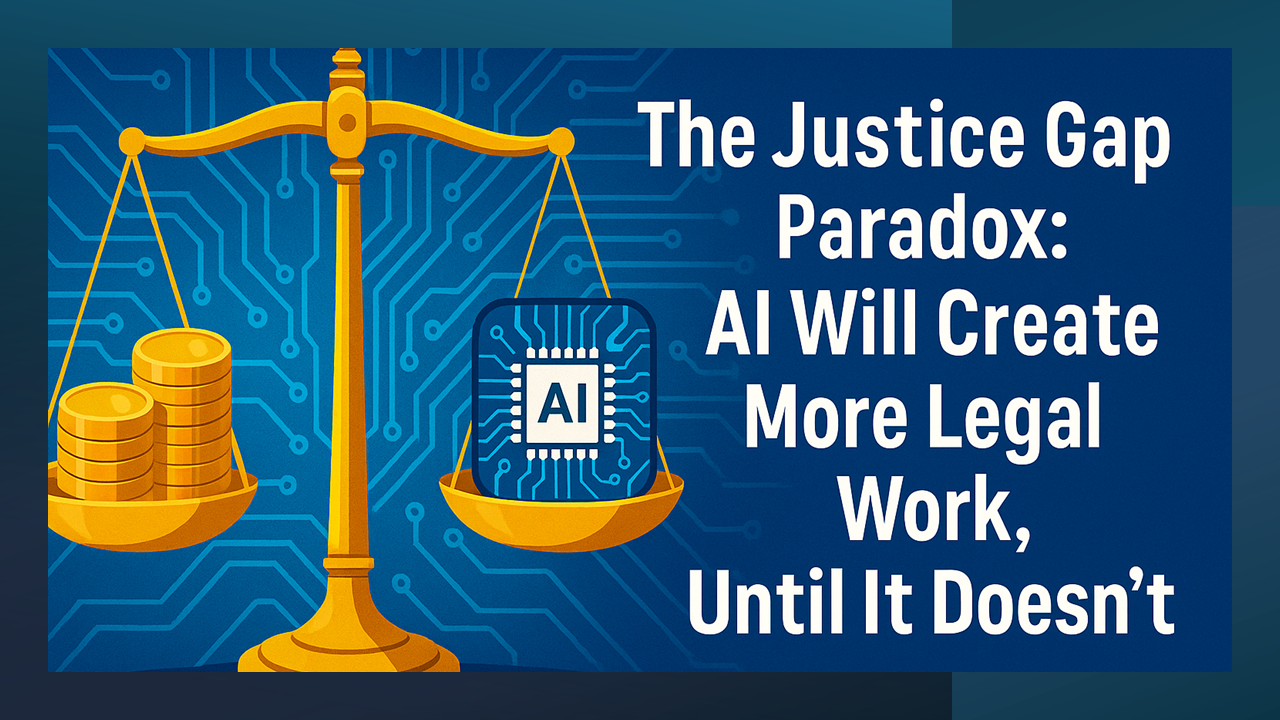
The numbers are stark: 92% of low-income Americans receive no help with substantial civil legal problems, while small claims filings have plummeted 32% in just four years. But AI is changing the game. By making legal procedures accessible to pro se litigants and supercharging legal aid organizations, these tools are reviving dormant disputes and opening courthouse doors that have been effectively closed to millions.
20+ Kid Tools for Better Screen Time — from wondertools.substack.com by Jeremy Caplan and Kevin Maguire Dad-tested apps to spark creativity (mostly free)
I had a fruitful recent conversation about resources for kids with a fellow dad, Kevin Maguire, who writes the great newsletter The New Fatherhood. If you’re a dad looking for great reads and a sense of community, check out Kevin’s newsletter. (Also read Recalculating, by Ignacio Pereyra). Kevin wrote the section below about simplifying screens and shared the tip about muted.io.
The rest of the apps and resources below are ones I’ve enjoyed in recent years with my wife and daughters. From coding with visual blocks to identifying plants on nature walks, these are some of our favorite tools for sparking creativity.
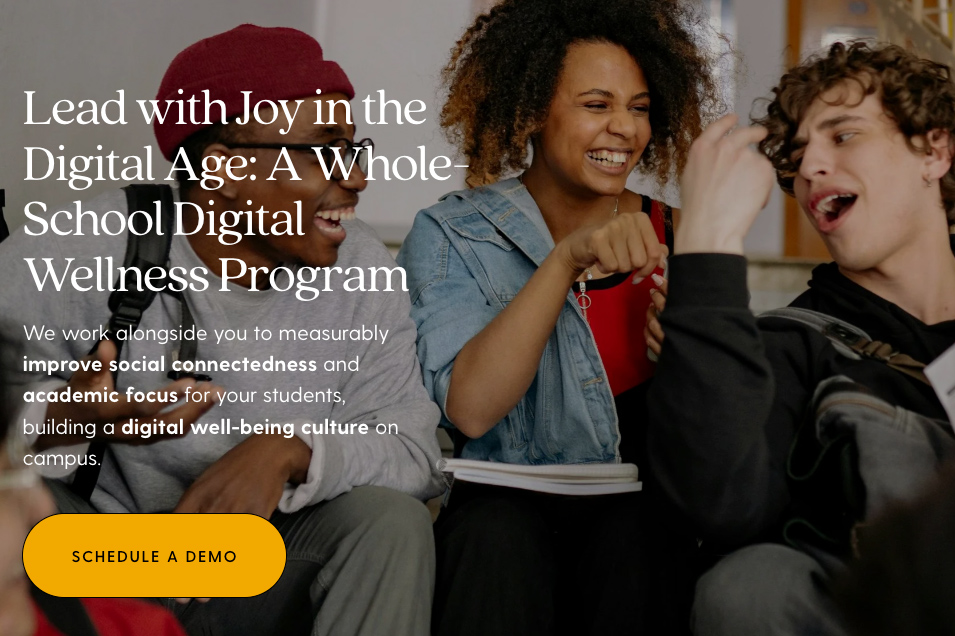
Take FOMO and flip it on its head. That’s JOMO – the Joy of Missing Out.
At JOMO(campus), we believe digital wellness isn’t just a curriculum—it’s a culture. One rooted in joy, human connection, and intentional living. We equip schools to lead with clarity, care, and courage—helping every member of your community ask: “Who am I becoming in the digital age?”
Our mission is to help school communities create a flourishing campus culture where students are happier, healthier, and more focused — empowering them to make the impact they were born to make.
Our mission is to make digital well-being accessible for every student, fostering resilience and the skills to thrive in a world where digital pressures are ever-present. By teaching digital self-awareness and cultivating joy, we’re committed to supporting students in navigating technology’s challenges with confidence and intentionality.
A growing number of U.S. law schools are now requiring students to train in artificial intelligence, marking a shift from optional electives to essential curriculum components. What was once treated as a “nice-to-have” skill is fast becoming integral as the legal profession adapts to the realities of AI tools.
From Experimentation to Obligation
Until recently, most law schools relegated AI instruction to upper-level electives or let individual professors decide whether to incorporate generative AI into their teaching. Now, however, at least eight law schools require incoming students—especially in their first year—to undergo training in AI, either during orientation, in legal research and writing classes, or via mandatory standalone courses.
Some of the institutions pioneering the shift include Fordham University, Arizona State University, Stetson University, Suffolk University, Washington University in St. Louis, Case Western, and the University of San Francisco.
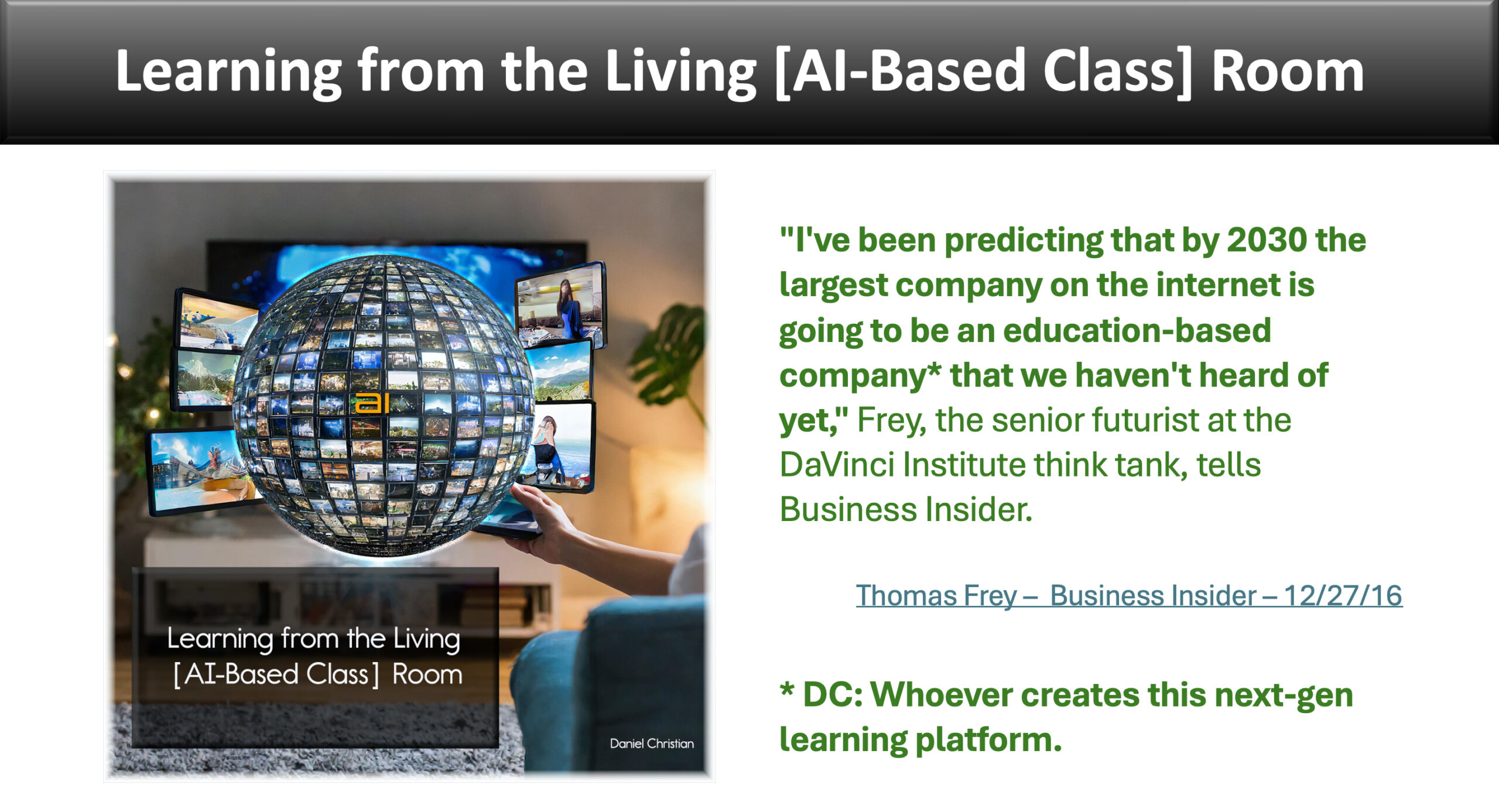
There’s a vision that’s been teased Learning & Development for decades: a vision of closing the gap between learning and doing—of moving beyond stopping work to take a course, and instead bringing support directly into the workflow. This concept of “learning in the flow of work” has been imagined, explored, discussed for decades —but never realised. Until now…?
This week, an article published Harvard Business Review provided some some compelling evidence that a long-awaited shift from “courses to coaches” might not just be possible, but also powerful.
…
The two settings were a) traditional in-classroom workshops, led by an expert facilitator and b) AI-coaching, delivered in the flow of work.The results were compelling….
TLDR: The evidence suggests that “learning in the flow of work” is not only feasible as a result of gen AI—it also show potential to be more scalable, more equitable and more efficient than traditional classroom/LMS-centred models.
The 10 Most Popular AI Chatbots For Educators — from techlearning.com by Erik Ofgang Educators don’t need to use each of these chatbots, but it pays to be generally aware of the most popular AI tools
I’ve spent time testing many of these AI chatbots for potential uses and abuses in my own classes, so here’s a quick look at each of the top 10 most popular AI chatbots, and what educators should know about each. If you’re looking for more detail on a specific chatbot, click the link, as either I or other Tech & Learning writers have done deeper dives on all these tools.
Generative artificial intelligence isn’t just a new tool—it’s a catalyst forcing the higher education profession to reimagine its purpose, values, and future.
…
As experts in educational technology, digital literacy, and organizational change, we argue that higher education must seize this moment to rethink not just how we use AI, but how we structure and deliver learning altogether.
Over the past decade, microschools — experimental small schools that often have mixed-age classrooms — have expanded.
…
Some superintendents have touted the promise of microschools as a means for public schools to better serve their communities’ needs while still keeping children enrolled in the district. But under a federal administration that’s trying to dismantle public education and boost homeschool options, others have critiqued poor oversight and a lack of information for assessing these models.
Microschools offer a potential avenue to bring innovative, modern experiences to rural areas, argues Keith Parker, superintendent of Elizabeth City-Pasquotank Public Schools.
Imagining Teaching with AI Agents… — from michellekassorla.substack.com by Michelle Kassorla Teaching with AI is only one step toward educational change, what’s next?
More than two years ago I started teaching with AI in my classes. At first I taught against AI, then I taught with AI, and now I am moving into unknown territory: agents. I played with Manus and n8n and some other agents, but I really never got excited about them. They seemed more trouble than they were worth. It seemed they were no more than an AI taskbot overseeing some other AI bots, and that they weren’t truly collaborating. Now, I’m looking at Perplexity’s Comet browser and their AI agent and I’m starting to get ideas for what the future of education might hold.
I have written several times about the dangers of AI agents and how they fundamentally challenge our systems, especially online education. I know there is no way that we can effectively stop them–maybe slow them a little, but definitely not stop them. I am already seeing calls to block and ban agents–just like I saw (and still see) calls to block and ban AI–but the truth is they are the future of work and, therefore, the future of education.
So, yes! This is my next challenge: teaching with AI agents. I want to explore this idea, and as I started thinking about it, I got more and more excited. But let me back up a bit. What is an agent and how is it different than Generative AI or a bot?
Supreme Court Allows Trump to Slash Foreign Aid — from nytimes.com by Ann E. Marimow The court’s conservative majority allowed the president to cut the funding in part because it said his flexibility to engage in foreign affairs outweighed “the potential harm” faced by aid recipients.
The Supreme Court on Friday allowed the Trump administration to withhold $4 billion in foreign aid that had been appropriated by Congress, in a preliminary test of President Trump’s efforts to wrest the power of the purse from lawmakers.
…
“The stakes are high: At issue is the allocation of power between the executive and Congress” over how government funds are spent, wrote Justice Elena Kagan, who was joined by Justices Sonia Sotomayor and Ketanji Brown Jackson.
“This result further erodes separation of powers principles that are fundamental to our constitutional order,” Nicolas Sansone, a lawyer with the Public Citizen Litigation Group who represents the coalition, said in a statement. “It will also have a grave humanitarian impact on vulnerable communities throughout the world.”
From DSC: Do your friggin’ job Supreme Court justices! Your job is to uphold the Constitution and the laws of the United States of America! As you fully well know, it is the Legislative Branch (Congress) that allocates funding — not the Executive Branch.
And there will be horrible humanitarian impacts that are going to be felt in many places because this funding is being withheld.
K-12 to Career — from the-job.beehiiv.com by Paul Fain Ohio eases eligibility rules for high school students to pursue college-level coursework in high-demand fields.
Three Ohio community colleges offer free industry-recognized credentials in manufacturing to more high school students. Also, new career-connected AP courses designed with industry input, a partnership on skilled trade prep for K-12 students, and essays on the race to define the future of credentials and how data and research can inform Workforce Pell.
Thanks for dropping by my Learning Ecosystems blog!
My name is Daniel Christian and this blog seeks to cover the teaching and learning environments within the K-12 (including homeschooling, learning pods/micro-schools), collegiate, and corporate training spaces -- whether those environments be face-to-face, blended, hyflex, or 100% online.
Just as the organizations that we work for have their own learning ecosystems, each of us has our own learning ecosystem. We need to be very intentional about enhancing those learning ecosystems -- as we all need to be lifelong learners in order to remain marketable and employed. It's no longer about running sprints (i.e., getting a 4-year degree or going to a vocational school and then calling it quits), but rather, we are all running marathons now (i.e., we are into lifelong learning these days).