


3 Work Trends – Issue 87 — from the World Economic Forum

1. #AI adoption is delivering real results for early movers
Three years into the generative AI revolution, a small but growing group of global companies is demonstrating the tangible potential of AI. Among firms with revenues of $1 billion or more:
- 17% report cost savings or revenue growth of at least 10% from AI.
- Almost 80% say their AI investments have met or exceeded expectations.
- Half worry they are not moving fast enough and could fall behind competitors.

The world’s first AI cabinet member — from therundown.ai by Zach Mink, Rowan Cheung, Shubham Sharma, Joey Liu & Jennifer Mossalgue
PLUS: Startup produces 3,000 AI podcast episodes weekly
The details:
- Prime Minister Edi Rama unveiled Diella during a cabinet announcement this week, calling her the first member “virtually created by artificial intelligence”.
- The AI avatar will evaluate and award all public tenders where the government contracts private firms.
- Diella already serves citizens through Albania’s digital services portal, processing bureaucratic requests via voice commands.
- Rama claims the AI will eliminate bribes and threats from decision-making, though the government hasn’t detailed what human oversight will exist.
The Rundown AI’s article links to:
- Albania appoints world’s first AI-made minister — from politico.eu by Alice Taylor
Diella, who is powered by artificial intelligence, will handle public procurement.
Anthropic Economic Index report: Uneven geographic and enterprise AI adoption — from anthropic.com
In other words, a hallmark of early technological adoption is that it is concentrated—in both a small number of geographic regions and a small number of tasks in firms. As we document in this report, AI adoption appears to be following a similar pattern in the 21st century, albeit on shorter timelines and with greater intensity than the diffusion of technologies in the 20th century.
To study such patterns of early AI adoption, we extend the Anthropic Economic Index along two important dimensions, introducing a geographic analysis of Claude.ai conversations and a first-of-its-kind examination of enterprise API use. We show how Claude usage has evolved over time, how adoption patterns differ across regions, and—for the first time—how firms are deploying frontier AI to solve business problems.
How human-centric AI can shape the future of work — from weforum.org by Sapthagiri Chapalapalli
- Last year, use of AI in the workplace increased by 5.5% in Europe alone.
- AI adoption is accelerating, but success depends on empowering people, not just deploying technology.
- Redesigning roles and workflows to combine human creativity and critical thinking with AI-driven insights is key.
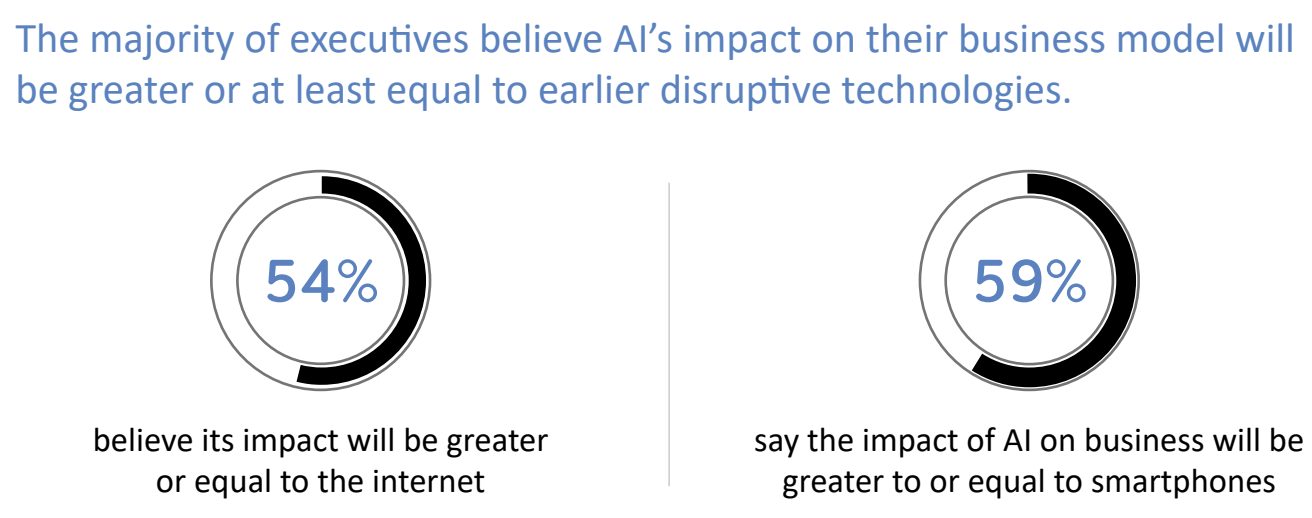
Organizations are having to rapidly adapt their business models. Image: TCS
Using ChatGPT to get a job — from linkedin.com by Ishika Rawat