How to Co-Design Curriculum: Fostering Inclusivity through Shared Family Narratives — from gettingsmart.com by Jimmy McCue

Key Points

  • Discover a learner-centric curriculum at Embark Education, where learners recently co-designed a transformative project centered around family narratives and recipes.
  • Explore the intersection of culinary traditions, empathy, and critical analysis as learners delve into the complexities of cultural revitalization, shifting demographics, and systemic inequities in their communities.
  • Engage with a hands-on approach to competency-based education, culminating in the creation of a culturally rich product in collaboration with local community partners, fostering a deep sense of pride and ownership among learners and their respective communities, alike.

From DSC:
I especially like the learner-centered approach, along with the collaboration with local community partners here. As described in Getting Smart’s Smart Update:

Microschool Spotlight: Embark Education


Getting Smart admires Embark Education’s innovative approach for reimagining the middle school experience, recognizing the pivotal nature of adolescence. With a commitment to providing personalized and relevant learning experiences, Embark supports learners in courageously exploring, engaging, and discovering their sense of self, contributing to the broader mission of revolutionizing education.

“We are anchored in the unwavering belief that by simply trusting learners, both youth and adults, we create the conditions for them to curiously and confidently unlock their potential – and that their potential is limitless.” – Brian Hyosaka, Head of School


Our AI predictions for 2024 — from superhuman.ai by Zain Kahn
ALSO: How to create videos with ChatGPT

  1. AI-generated video becomes a reality
  2. AI will become an essential skill for job seekers, as employers rush to adopt AI
  3. AI will unlock new use cases for smartphones, as more efficient models enable AI features on smaller devices
  4. AI models will become smaller, cheaper and multimodal
  5. Expect drama — a lot more drama

Morgan Stanley predicts that AI will affect 40% of the workforce in the next 3 years.


OpenAI’s app store for GPTs will launch next week — from techcrunch.com by Kyle Wiggers

OpenAI plans to launch a store for GPTs, custom apps based on its text-generating AI models (e.g. GPT-4), sometime in the coming week.

The GPT Store was announced last year during OpenAI’s first annual developer conference, DevDay, but delayed in December — almost certainly due to the leadership shakeup that occurred in November, just after the initial announcement.


How Workers Rise — from the-job.beehiiv.com by Paul Fain
A look forward at skills-based hiring and AI’s impacts on education and work.

Impacts of AI: Fuller is optimistic about companies making serious progress on skills-based hiring over the next five to 10 years. AI will help drive that transformation, he says, by creating the data to better understand the skills associated with jobs.

The technology will allow for a more accurate matching of skills and experiences, says Fuller, and for companies to “not rely on proxies like degrees or grade point averages or even the proxy of what someone currently makes or how fast they’ve gotten promoted on their résumé.”

Change is coming soon, Fuller predicts, particularly as AI’s impacts accelerate. And the disruption will affect wealthier Americans who’ve been spared during previous shifts in the labor market.

The Kicker: “When people in bedroom suburbs are losing their six-figure jobs, that changes politics,” Fuller says. “That changes the way people are viewing things like equity and where that leads. It’s certainly going to put a lot of pressure on the way the system has worked.”


From DSC:
As a bit of context here…

After the Jewish people had been exiled to various places, the walls of Jerusalem lay in ruins until the fifth century B.C.E.. At that point, a man named Nehemiah returned to Jerusalem as the provincial governor and completed the repairs of the walls. The verses below really stuck out at me in regards to what a leader should behave/look/be like. He was a servant leader, not demanding choice treatment, not squeezing the people for every last drop, and not using his position to treat himself extra right.

I don’t like to get political on this blog, as I already lose a great deal of readership due to including matters of faith. But today’s leaders (throughout all kinds of organizations) need to learn from Nehemiah’s example, regardless of whatever their beliefs/faiths may be.

14 Moreover, from the twentieth year of King Artaxerxes, when I was appointed to be their governor in the land of Judah, until his thirty-second year—twelve years—neither I nor my brothers ate the food allotted to the governor. 15 But the earlier governors—those preceding me—placed a heavy burden on the people and took forty shekels[a] of silver from them in addition to food and wine. Their assistants also lorded it over the people. But out of reverence for God I did not act like that. 16 Instead, I devoted myself to the work on this wall. All my men were assembled there for the work; we[b] did not acquire any land.

17 Furthermore, a hundred and fifty Jews and officials ate at my table, as well as those who came to us from the surrounding nations. 18 Each day one ox, six choice sheep and some poultry were prepared for me, and every ten days an abundant supply of wine of all kinds. In spite of all this, I never demanded the food allotted to the governor, because the demands were heavy on these people.

19 Remember me with favor, my God, for all I have done for these people.


Resisting the Youth Sports Industrial Complex — from educationnext.org by Jonathan V. Last; via the The Top 20 Education Next Articles of 2023 from educationnext.org
Children’s sports are corrupted, but parents don’t have to play along

Excerpt (emphasis by DSC):

That’s the point of Linda Flanagan’s Take Back the Game, a book about the corruption of youth sports. It should be required reading for every parent. It should be handed out in the hospital along with What to Expect the First Year and Healthy Sleep Habits, Happy Child.

Flanagan, a journalist and former running coach, has pulled off a rare trick: she diagnoses a societal sickness, traces the roots of the malady, and prescribes a cure.

The problem is that we have a Youth Sports Industrial Complex that forces kids into single-sport specialization before they hit middle school. It demands that children be involved in (expensive) club and travel sports programs starting in elementary school.

Her first dictum is to delay entry into organized sports as long as possible. Don’t sign them up for pee-wee soccer to get a jump on the club scene—send them out into the yard to kick the ball around. Have a catch with them. Shoot baskets. Let them tumble and do cartwheels in the grass. As Flanagan says, “Just let them play.”

Another key precept from Flanagan: The family is more important than kids’ sports.

Perhaps the most valuable lesson from Take Back the Game is that parents have agency.


Survey Results Predict Top Legal Technology Trends for 2024 — from jdsupra.com

In the 2023 Litigation Support Trend Survey, U.S. Legal Support asked lawyers and legal professionals what technology trends they observed in 2023, and how they expect their use of technology to change in 2024.

Now, the results are in—check out the findings below.

Topics included:

  • Use of Artificial Intelligence
  • Prevalence of Remote Depositions
  • Digital Reporting

Speaking of legaltech and/or how emerging technologies are impacting the legal realm, also see:


AI University for UK? — from donaldclarkplanb.blogspot.com by Donald Clark

Tertiary Education in the UK needs a fresh idea. What we need is an initiative on the same scale as The Open University, kicked off over 50 years ago.

It is clear that an educational vision is needed and I think the best starting point is that outlined and executed by Paul LeBlanc at SNHU. It is substantial, well articulated and has worked in what has become the largest University in the US.

It would be based on the competence model, with a focus on skills shortages. Here’s a starter with 25 ideas, a manifesto of sorts, based on lessons learnt from other successful models:

  1. Non-traditional students in terms of age and background
  2. Quick and easy application process
  3. Personalised learning using AI
  4. Multimodal from the start
  5. Full range of summarisation, create self-assessment, dialogue tools
  6. Focus on generative learning using AI
  7. …and Donald lists many more (ending at #25)
 

From DSC:
I can’t agree more with Stephen and Simon here:

I’ll never stop blogging: it’s an itch I have to scratch – and I don’t care if it’s an outdated format
Simon Reynolds, The Guardian, Dec 26, 2023

I have various blogs for different types of writing, some popular, some deliciously obscure. And there’s no such thing as an outdated format.  I write about what I like to write about.

Excerpt of the article by Simon Reynolds:

Even if nobody reads them, I’ll always be drawn to the freedom blogs offer. I can ramble about any subject I choose.

I miss the inter-blog chatter of the 2000s, but in truth, connectivity was only ever part of the appeal. I’d do this even if no one read it. Blogging, for me, is the perfect format. No restrictions when it comes to length or brevity: a post can be a considered and meticulously composed 3,000-word essay, or a spurted splat of speculation or whimsy. No rules about structure or consistency of tone.


Two other items from Stephen that caught my eye recently. The first item below is a great little AI tool that lets you input the URL of a video and receive a nice summary of the video.

Summarize.Tech
Summarize, LLC, Dec 23, 2023
Commentary by Stephen Downes

Newspocalypse now
Mike Orren, Nieman Lab, Dec 19, 2023
Commentary by Stephen Downes
.
This is significant because trends in education have pretty reliably followed trends in media by about ten years. Closed access classes and tuition revenue may feel pretty secure right now, but in a decade the bottom will be falling out of the market and higher education will be in the same shambles the news industry is today. “We will learn that the less something looks like what we have now, the better chance it has of being the thing on the other side of death.”


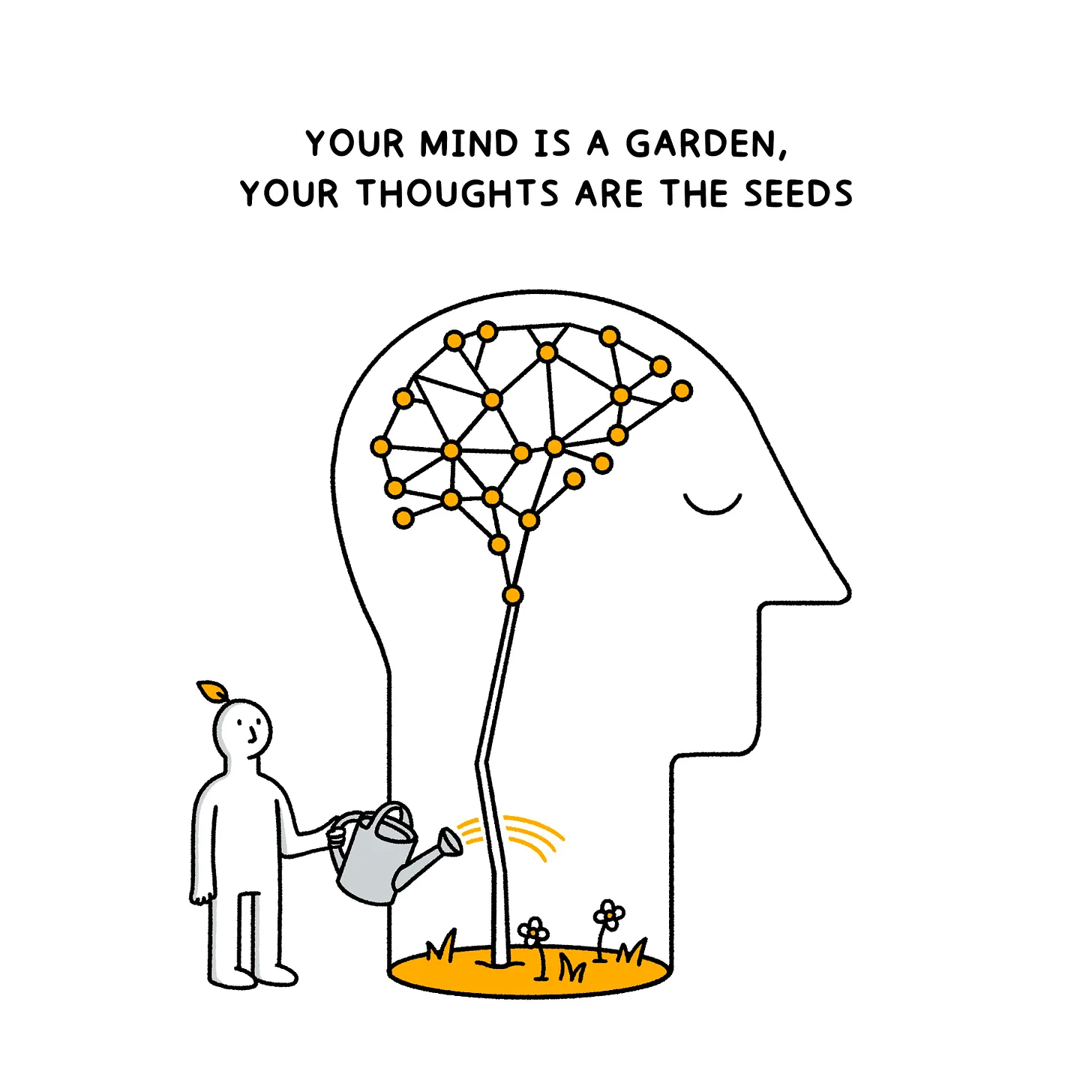
Your mind is a garden, your thoughts are the seeds. — from letter.visualgrowth.com by Ash Lamb
If you let other people plant those seeds for you, the garden, no matter how big or colorful, won’t be yours, it’ll be someone else’s.

Your mind is a garden, your thoughts are the seeds.

Your mind is a garden, your thoughts are the seeds.

What you think, you become.
.

Here’s a powerful mantra.

“I won’t outsource my thinking.”

Don’t let that popular influencer decide how you present yourself to the world.

Don’t allow some generic business guru to decide what type of business you should be focusing on.


From DSC:
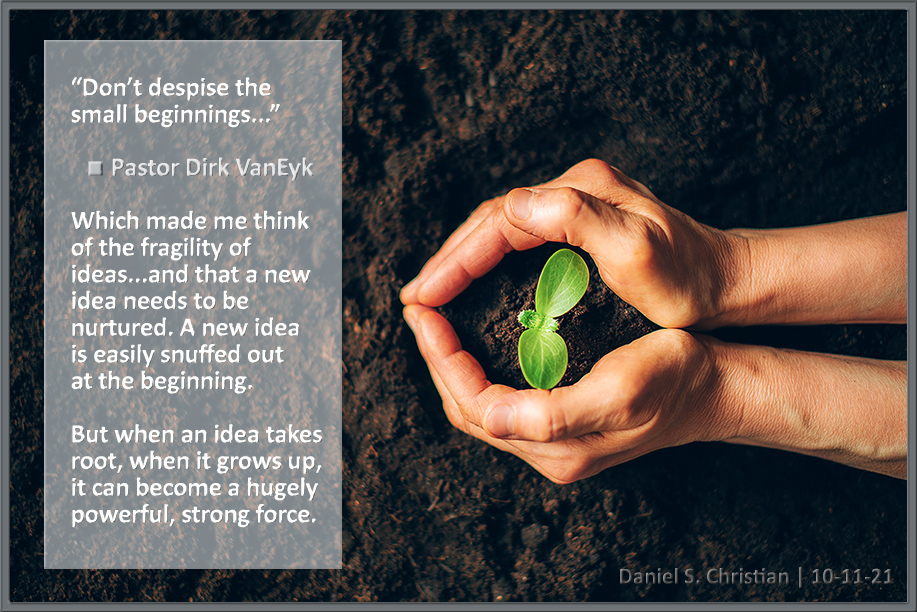
I thought that Ash Lamb had some solid points here. And as I’ve read the Scriptures through the years, I’ve realized that ideas are like seeds. Like seeds, ideas can:

  • start small
  • take root
  • grow
  • become powerful, while transforming something bit by bit

So ideas can start small and be fragile. Many get squashed and never make it. And others don’t have healthy soil in which to grow. But other seeds grow roots. 

I’ve learned that we are transformed when our THINKING is transformed.

Here are just a couple of verses of scripture that emphasize that point:

When they went across the lake, the disciples forgot to take bread. “Be careful,” Jesus said to them. “Be on your guard against the yeast of the Pharisees and Sadducees.”

They discussed this among themselves and said, “It is because we didn’t bring any bread.”

Aware of their discussion, Jesus asked, “You of little faith, why are you talking among yourselves about having no bread? Do you still not understand? Don’t you remember the five loaves for the five thousand, and how many basketfuls you gathered? 10 Or the seven loaves for the four thousand, and how many basketfuls you gathered? 11 How is it you don’t understand that I was not talking to you about bread? But be on your guard against the yeast of the Pharisees and Sadducees.” 12 Then they understood that he was not telling them to guard against the yeast used in bread, but against the teaching of the Pharisees and Sadducees.

Do not conform to the pattern of this world, but be transformed by the renewing of your mind. Then you will be able to test and approve what God’s will is—his good, pleasing and perfect will.

So ideas and thoughts/ways of thinking can be good/helpful or bad/not helpful. I just like the point that Ash Lamb made — to NOT outsource our thinking to others.

NOTE: The above thoughts aren’t just about our spiritual lives. People working in many types of organizations have witnessed some of these dynamics/phenomena with new ideas as well.


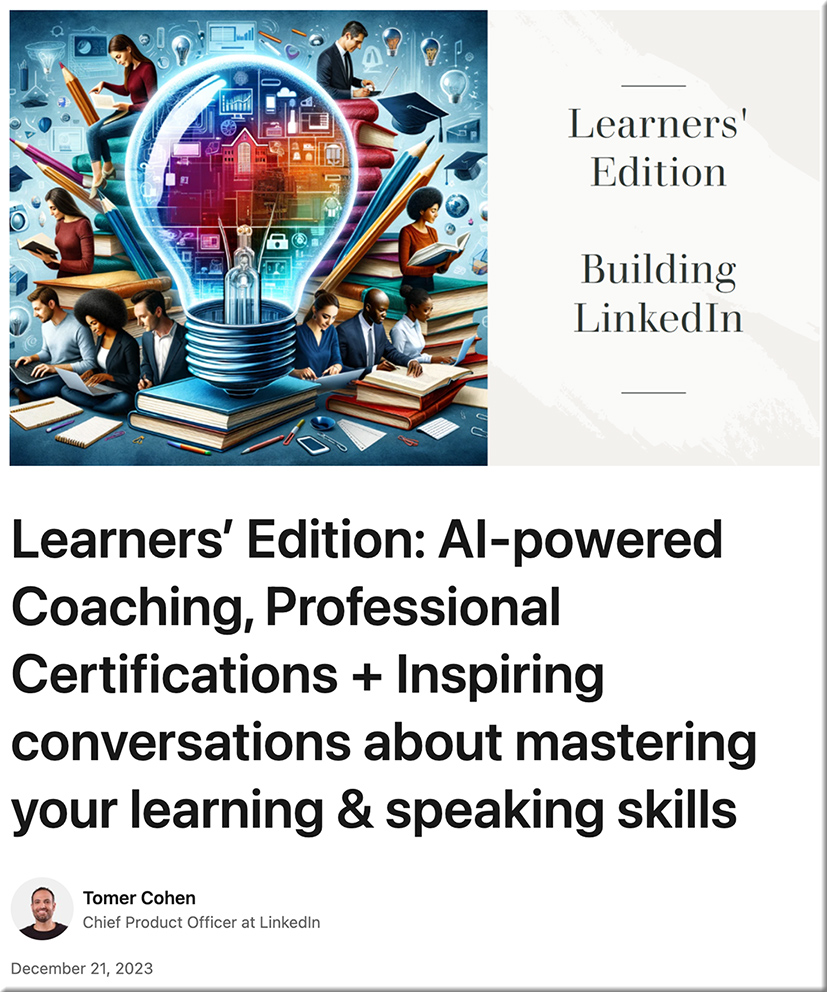
Learners’ Edition: AI-powered Coaching, Professional Certifications + Inspiring conversations about mastering your learning & speaking skills

Learners’ Edition: AI-powered Coaching, Professional Certifications + Inspiring conversations about mastering your learning & speaking skills — from linkedin.com by Tomer Cohen

Excerpts:

1. Your own AI-powered coaching
Learners can go into LinkedIn Learning and ask a question or explain a challenge they are currently facing at work (we’re focusing on areas within Leadership and Management to start). AI-powered coaching will pull from the collective knowledge of our expansive LinkedIn Learning library and, instantaneously, offer advice, examples, or feedback that is personalized to the learner’s skills, job, and career goals.

What makes us so excited about this launch is we can now take everything we as LinkedIn know about people’s careers and how they navigate them and help accelerate them with AI.

3. Learn exactly what you need to know for your next job
When looking for a new job, it’s often the time we think about refreshing our LinkedIn profiles. It’s also a time we can refresh our skills. And with skill sets for jobs having changed by 25% since 2015 – with the number expected to increase by 65% by 2030– keeping our skills a step ahead is one of the most important things we can do to stand out.

There are a couple of ways we’re making it easier to learn exactly what you need to know for your next job:

When you set a job alert, in addition to being notified about open jobs, we’ll recommend learning courses and Professional Certificate offerings to help you build the skills needed for that role.

When you view a job, we recommend specific courses to help you build the required skills. If you have LinkedIn Learning access through your company or as part of a Premium subscription, you can follow the skills for the job, that way we can let you know when we launch new courses for those skills and recommend you content on LinkedIn that better aligns to your career goals.


2024 Edtech Predictions from Edtech Insiders — from edtechinsiders.substack.com by Alex Sarlin, Ben Kornell, and Sarah Morin
Omni-modal AI, edtech funding prospects, higher ed wake up calls, focus on career training, and more!

Alex: I talked to the 360 Learning folks at one point and they had this really interesting epiphany, which is basically that it’s been almost impossible for every individual company in the past to create a hierarchy of skills and a hierarchy of positions and actually organize what it looks like for people to move around and upskill within the company and get to new paths.

Until now. AI actually can do this very well. It can take not only job description data, but it can take actual performance data. It can actually look at what people do on a daily basis and back fit that to training, create automatic training based on it.

From DSC:
I appreciated how they addressed K-12, higher ed, and the workforce all in one posting. Nice work. We don’t need siloes. We need more overall design thinking re: our learning ecosystems — as well as more collaborations. We need more on-ramps and pathways in a person’s learning/career journey.


Nearly half of companies say they plan to eliminate bachelor’s degree requirements in 2024 — from highereddive.com by Carolyn Crist
Many employers are dropping degree requirements to create a more diverse workforce and increase job candidate numbers, survey results show.

In 2023, 55% of companies removed degree requirements, particularly for entry-level and mid-level roles, the survey shows. Employers said they dropped these requirements to create a more diverse workforce, increase the number of applicants for open positions and because there are other ways to gain skills.

“Due to the expense of attending college, earning a bachelor’s degree is generally more difficult for people from traditionally marginalized groups and those from lower socioeconomic backgrounds,” Diane Gayeski, higher education advisor for Intelligent.com and professor of strategic communication at Ithaca College, said in a statement.


My 40 Most-Read Blog Posts This Year Tell A Story Of A Legal Industry Consumed With Generative AI — from lawnext.com by Bob Ambrogi

Look over this list of my blog posts that were most popular this year, and there is no doubt about the topic that most captivated the legal industry. Of my 40 most-read posts of 2023, 30 directly involved generative AI and others implicated it.


What I’m watching for in 2024 — from alexofftherecord.com by Alex Su
My view of the legal ecosystem, and why I’m going to pay close attention to generative AI, new Biglaw offerings, and the rise of “independent” attorneys

Today, instead of sharing my predictions about what’s coming to the legal industry, I’ll share where I think the most action will take place next year. In short, it’s (1) generative AI; (2) Biglaw firms adding low-cost capabilities; and (3) strong bench talent among independent attorneys. Before I get into why, I’ll share some observations on the past, and the trends I’m seeing take place right now.
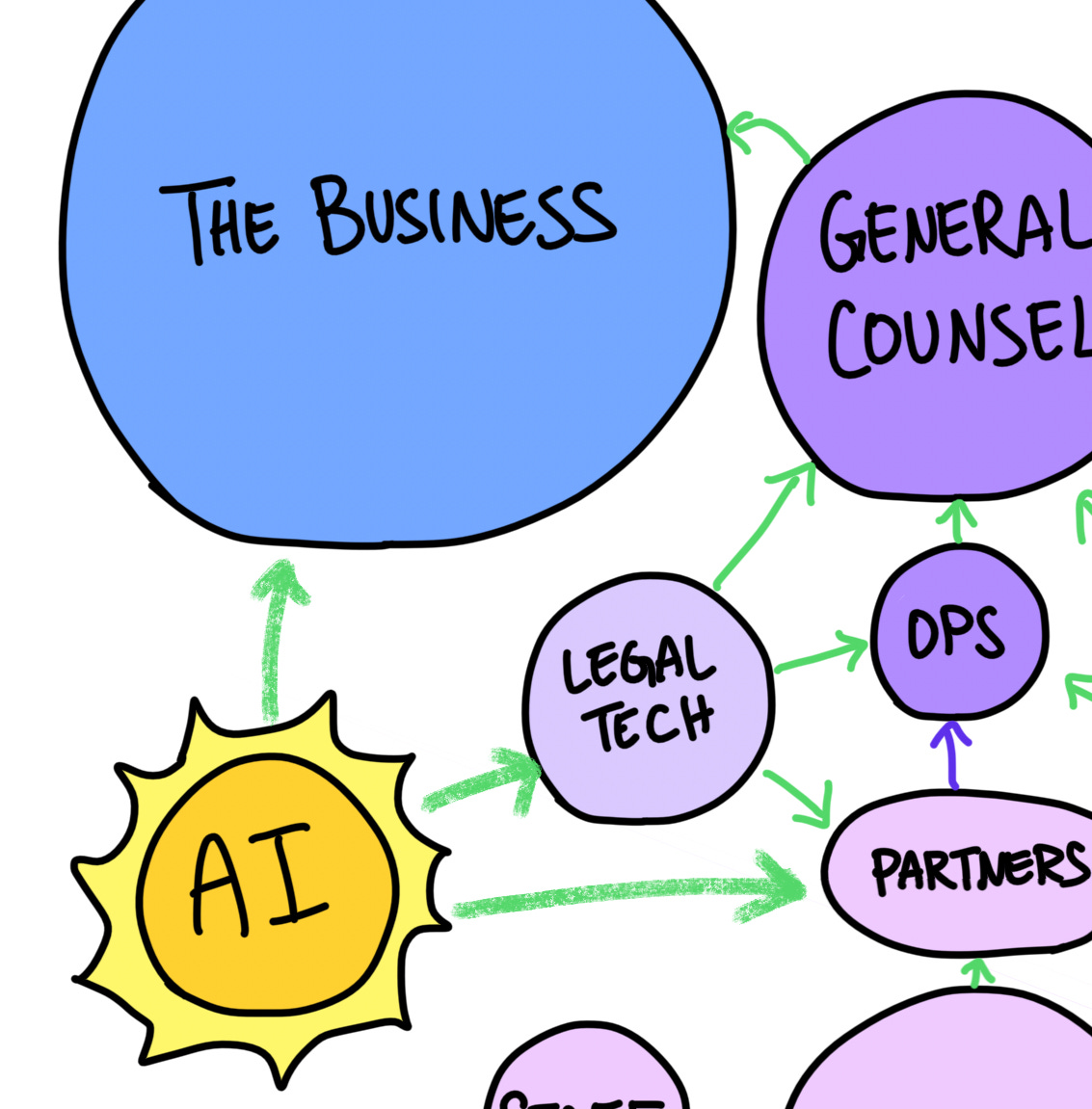

Navigating Ediscovery and AI in Legal Tech – 2023 Trends — from jdsupra.com

In 2023, the legal landscape has been significantly shaped by two key trends: the rapid evolution of Artificial Intelligence (AI) and the advancements in ediscovery. These developments have not only transformed legal processes but also presented new challenges and opportunities for legal professionals. As we delve into this first part of our series, we examine the top blogs that have been at the forefront of these trends. These articles offer a window into the current state of legal tech, providing invaluable insights into how these technological advances are reshaping the practice of law.


The Metaverse: A new dimension for legal services — from connections.nortonrosefulbright.com by Lena Haffner

Some of the topics mentioned include:

  • Virtual law offices
  • Enhanced client communication
  • Virtual pitches
  • Client education and workshops
  • Virtual asset inspections and tours
  • Enhanced due diligence

The Digital Era: How Technology is Changing the Way We Hire a Lawyer — from medium.com by Hire 4

In the fast-paced world of the digital era, technology is revolutionizing almost every aspect of our lives, and the legal field is no exception. The traditional process to hire a lawyer, once dominated by word-of-mouth referrals and physical law firm visits, is undergoing a transformation. This shift is not just changing how clients find and interact with legal professionals, but also how legal services are delivered and experienced. In this blog, we delve into the ways technology is reshaping the landscape of hiring a lawyer.


Finding The Right Virtual Assistant For Your Legal Practice — from forbes.com by Raquel Gomes

A virtual assistant can perform administrative tasks for a firm, from client communication and appointment scheduling to legal research, contract management and accounting. Delegating these tasks can be an effective way to free up lawyers to do what they do best. Based on my work with virtual assistants, here are some of the potential benefits and also tips on how you can find a VA who best fits the needs of your practice.


Addendum on 1/2/24:

YEAR IN REVIEW: The top legal technology trends of 2023 — from abajournal.com by Nicole Black

The changing mindset of lawyers toward technology
In 2023, there was a noticeable shift in the mindset of legal professionals. While its direct health impacts remain uncertain, the pandemic’s influence in accelerating technology adoption has been undeniable. Lawyers and judges, traditionally viewed as tech-averse, are now embracing tools like Zoom, iPads and smartwatches with surprising enthusiasm.

Post-pandemic, as lawyers returned to offices—often in a hybrid model—they displayed a newfound curiosity about technology. This change in attitude came at an opportune moment, coinciding with the introduction of new generative AI technologies in the legal field even as legal technology funding declined.


Addendum on 1/2/24:

US Supreme Court’s Roberts urges ‘caution’ as AI reshapes legal field — from reuters.com by John Kruzel

WASHINGTON, Dec 31 (Reuters) – Artificial intelligence represents a mixed blessing for the legal field, U.S. Supreme Court Chief Justice John Roberts said in a year-end report published on Sunday, urging “caution and humility” as the evolving technology transforms how judges and lawyers go about their work.

Roberts struck an ambivalent tone in his 13-page report. He said AI had potential to increase access to justice for indigent litigants, revolutionize legal research and assist courts in resolving cases more quickly and cheaply while also pointing to privacy concerns and the current technology’s inability to replicate human discretion.

“I predict that human judges will be around for a while,” Roberts wrote. “But with equal confidence I predict that judicial work – particularly at the trial level – will be significantly affected by AI.”


© 2025 | Daniel Christian