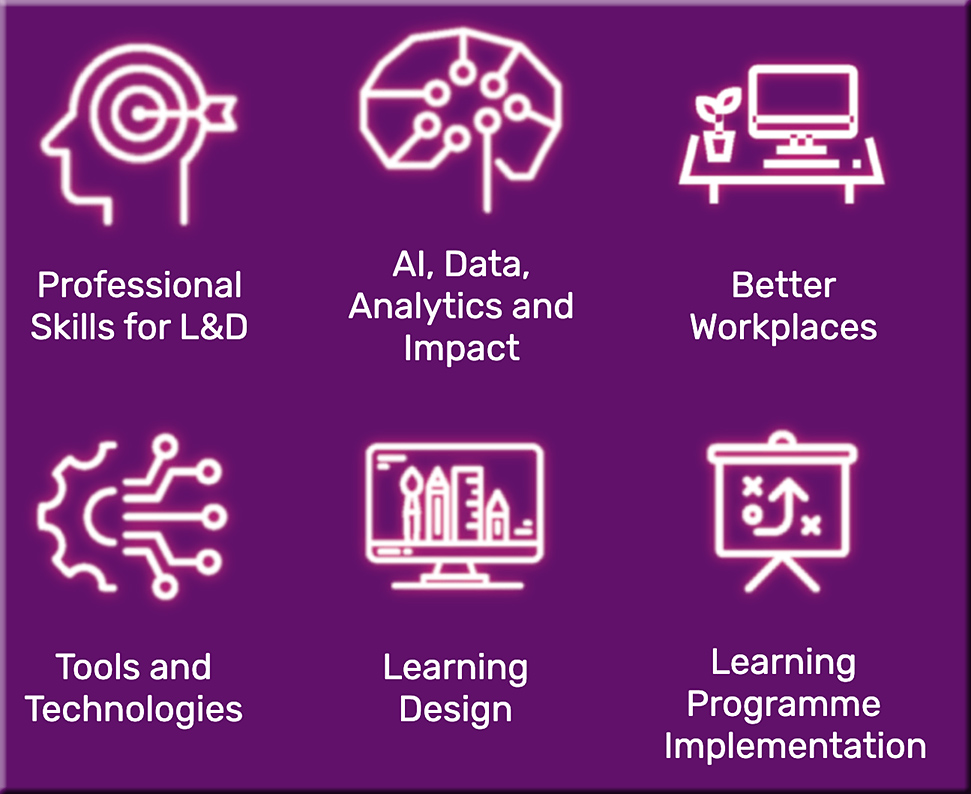
This unique free event is designed to give our learning community a chance to explore the most popular topics discussed at Learning Technologies.

The 2020 Learning Technologies Summer Forum (#LTSF20) takes place online, looking at some of the key topics we examined at February’s conference. Once again, the Summer event is an opportunity to interact, experiment and try some new things together.


To provide the best learning environment while keeping everyone safe, WMU-Cooley Law School made the decision to continue teaching classes ONLINE for the Fall 2020 semester.


From DSC:
We at the WMU-Cooley Law School are working hard to enhance and expand our teaching toolboxes, so that we can pivot as necessary in the future. 

DanielChristian-EnhancingOurTeachingToolboxes.jpg

Whether we need to deliver our cognitive-science based, modern legal education via 100% online-based means, or whether it’s a blended/hybrid approach, or whether it’s 100% face-to-face again at some point in the future, we need to be ready for multiple methods and modes of teaching and learning. 


But I have to say, the work is hard. There are more and different kinds of people on the front lines of this Covid-19 situation than just the wonderful folks in healthcare. Many Instructional Designers (IDs), Information Technology (IT)-related staff, faculty members, and members of administration and are working overtime, all-the-time. It’s not easy. That said, I do believe that there will be some silver linings in this situation. Many faculty members are coming to appreciate the teaching and learning power of some of these tools — and will likely integrate several of these new tools/methods even if and when they return to our face-to-face-based classrooms.


4 in 10 U.S. teens say they haven’t done online learning since schools closed — from kqed.org by Anya Kamenetz

Excerpt:

With most schools closed nationwide because of the coronavirus pandemic, a national poll of young people ages 13 to 17 suggests distance learning has been far from a universal substitute.


From DSC:
If you are able to — whether as a business or as an individual — please consider finding ways to help level the playing field in our nation by providing computers and broadband connectivity. Our society doesn’t need yet another gap, especially when you have this type of thing going on.

Online-based learning — along with blended learning — is likely a solid component of our learning ecosystems from here on out — but it’s not a level playing field out there right now.


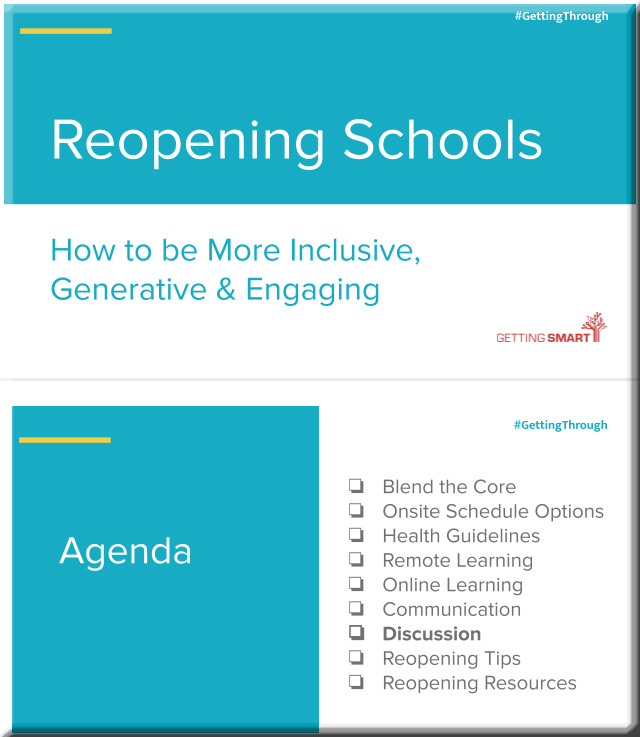
Reopening schools: A Getting Smart webinar recap — from gettingsmart.com by Getting Smart Staff

Reopening schools: A Getting Smart webinar recap -- from gettingsmart.com

“We must ensure that people who are furthest from educational justice have their learning needs met. You will then meet the needs of all learners.” – Kelly Niccolls


Everything you need to know about animation-based learning — from elearningindustry.com by Huong Giang Bui
When people talk about education, they often stress the formal side of learning like delivering knowledge, getting high scores on exams, etc. But animation-based education is here to up the game, with animation you can get fun, practical, and informative learning all at the same time!

Excerpt:

What Is Animation-Based Learning?
While it sounds like it, animation-based learning is not all about visual materials. Rather, resources such as videos, infographics, and GIFs are used in tandem with existing resources when employing this method. This can be applied to many different fields, from scientific visualizations to corporate training schemes; from motion-graphic narratives used in primary courses to university-level demonstrations.


“Many—perhaps millions—will need quick, job-focused upskilling and reskilling.”

— from The Indispensable Institution | Reimagining Community College
by Opportunity America


From DSC:
This is exactly the need that I’ve been getting at here. Many people don’t have the time — and now, the $$ — to take 4 years to get a college degree. Even 2 years is too long for many people these days. They need to be able to quickly reinvent themselves. As such, we need to tap into — and contribute to — streams of content. All. The. Time.

And do so, efficiently, safely, securely — and inexpensively!

Learning from the living class room


The 2020 Kessler Foundation National Employment & Disability Survey: Recent College Graduates — from kesslerfoundation.org; with thanks to Nicky Miller for this resource

Per Nicky:

In a nutshell, this first-of-its-kind survey revealed factors that help people with disabilities find employment, including the importance of higher education, advisory services and networking. Also discussed in detail, are myths and barriers that people with disabilities often face. Learn about our survey, visit: www.kesslerfoundation.org/kfsurvey2020

To highlight factors in our survey, we’ve interviewed three young adults with disabilities, who share their college to work experiences. They discuss in detail the ups and downs of their academic and employment careers. Watch here: Webinar Part 2 – The ADA Generation and the Workplace: Recent College Graduates with Disabilities Speak Out

In some cases throughout the years, people with disabilities were told they shouldn’t further their education, and in other instances, they are discouraged from working. This survey dispel these ideas. People with disabilities are conquering barriers and broadening their education.   


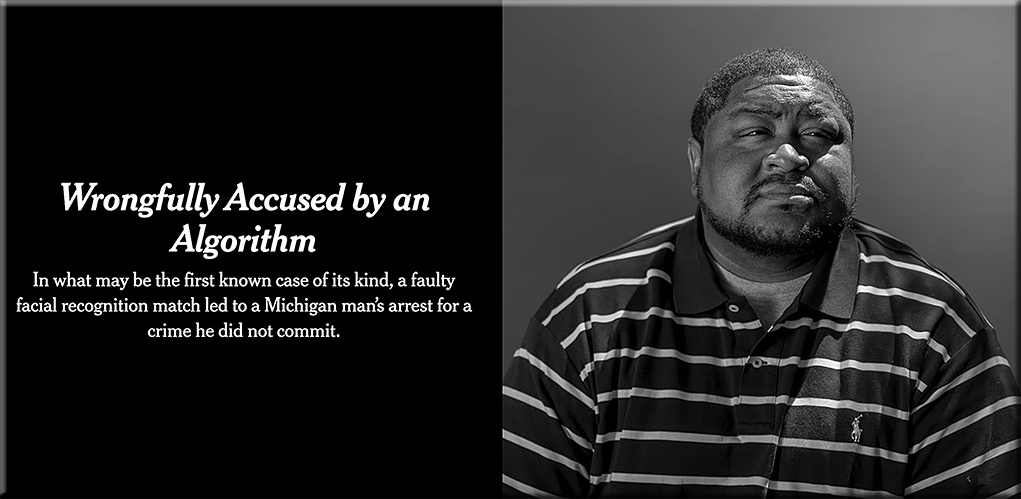
Wrongfully accused by an algorithm- from the New York Times

Wrongfully accused by an algorithm — from nytimes.com by Kashmir Hill

Excerpt:

On a Thursday afternoon in January, Robert Julian-Borchak Williams was in his office at an automotive supply company when he got a call from the Detroit Police Department telling him to come to the station to be arrested. He thought at first that it was a prank.

An hour later, when he pulled into his driveway in a quiet subdivision in Farmington Hills, Mich., a police car pulled up behind, blocking him in. Two officers got out and handcuffed Mr. Williams on his front lawn, in front of his wife and two young daughters, who were distraught. The police wouldn’t say why he was being arrested, only showing him a piece of paper with his photo and the words “felony warrant” and “larceny.”

His wife, Melissa, asked where he was being taken. “Google it,” she recalls an officer replying.

“Is this you?” asked the detective.

The second piece of paper was a close-up. The photo was blurry, but it was clearly not Mr. Williams. He picked up the image and held it next to his face.

“No, this is not me,” Mr. Williams said. “You think all black men look alike?”


Also relevant/see:

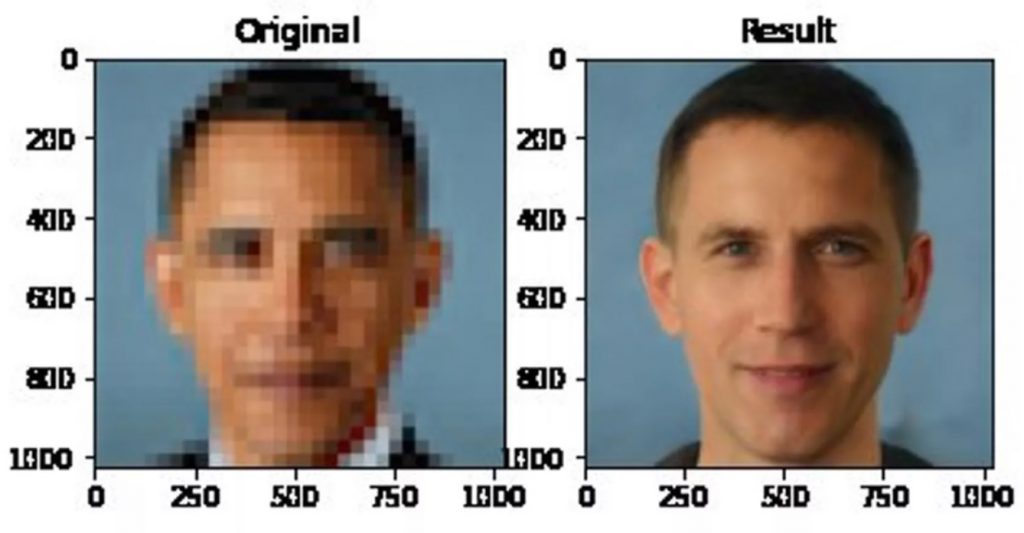
What a machine learning tool that turns Obama white can (and can’t) tell us about AI bias


The “new normal” paradox: What COVID-19 has revealed about higher education — from bigthink.com by Dr. Michael Crow, President of ASU

Excerpt:

Third, it is abundantly apparent that universities must leverage technology to increase educational quality and access. The rapid shift to delivering an education that complies with social distancing guidelines speaks volumes about the adaptability of higher education institutions, but this transition has also posed unique difficulties for colleges and universities that had been slow to adopt digital education. The last decade has shown that online education, implemented effectively, can meet or even surpass the quality of in-person instruction.

Digital instruction, broadly defined, leverages online capabilities and integrates adaptive learning methodologies, predictive analytics, and innovations in instructional design to enable increased student engagement, personalized learning experiences, and improved learning outcomes. The ability of these technologies to transcend geographic barriers and to shrink the marginal cost of educating additional students makes them essential for delivering education at scale.

Far too many higher education outcomes are determined by a student’s family income, and in the context of COVID-19 this means that lower-income students, first-generation students and students of color will be disproportionately afflicted. And without new designs, we can expect post-secondary success for these same students to be as elusive in the new normal, as it was in the old normal.

This is not just because some universities fail to sufficiently recognize and engage the promise of diversity, this is because few universities have been designed from the outset to effectively serve the unique needs of lower-income students, first-generation students and students of color.


Handheld retinal camera as an eye for innovation – D-EYE review — from medicalfuturist.com

The future of opthamology

Excerpt:

Sure, if something’s portable, easy to use and helps patients and doctors alike, it definitely ticks all our boxes. Does that mean we are going to test it though? Who are we kidding, of course it does! Join us on our journey to learn about the present and future of ophthalmology – and to get to know D-EYE, a new handheld digital retinal camera.

Ophthalmology can really profit from telemedicine. Recognising its potential, tech companies started targeting this medical sector, producing more and more interesting apps and devices. So, naturally, we’ve kept our eyes on ophthalmology for the past couple of years.


Colleges cut academic programs in the face of budget shortfalls due to Covid-19 — from cnbc.com by Jessica Dickler

Key points:

  • As colleges face extreme budget shortfalls, some institutions are cutting academic programs that were once central to a liberal arts education.
  • The University of Alaska system announced it will cut 39 academic departments in all, including sociology, creative writing, chemistry and environmental science.


Even before the global pandemic caused craters in the economy, some institutions were facing financial hardship after years of declines in state funding for higher education. A number of private schools had already made wrenching budget cuts, from curriculum changes to complete overhauls of their liberal arts programs.


From DSC:
A screenshot from the video (below) shows a new type of liberal arts program at Hiram College.
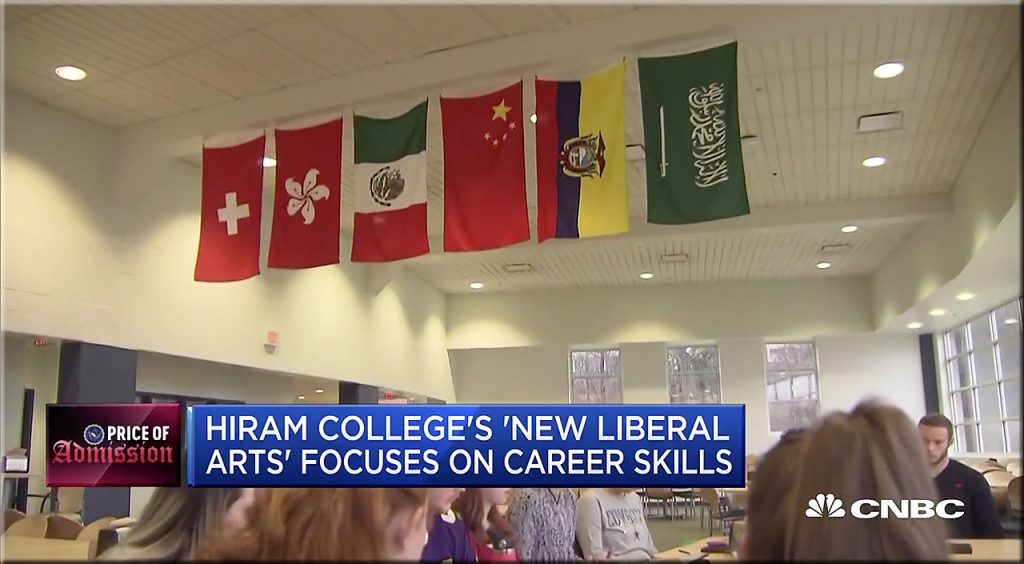
It could very well be that online-based learning turns out to save the liberal arts!!!!! How ironic is that!?!!

That is, many college presidents, provost, and faculty members — especially from smaller liberal arts types of schools — have disdained online-based learning for decades now. It was always viewed as “less than” in their minds…they didn’t want to go that route, as doing so would dilute their precious (and often overpriced) brands. (To be clear, this is not my view…but it was, and still is in many cases, their view.)

Anyway, it looks like more of these same folks will be losing their jobs in the next few years (if they haven’t already). At that point, we may see some of these same folks encounter a sudden paradigm shift. (A shift many of their colleagues have already gone through in prior years.) These same folks may come to appreciate that people will be willing to pay them for their knowledge — but only willing to do so at a much more affordable price…which will likely mean online.

Fewer people — especially when 47 million people in the U.S. alone have filed for unemployment over the last 14 weeks — can afford the cost of getting a degree. They are looking for inexpensive, convenient, efficient, effective means of reinventing themselves.

 

Huh…another potential irony here…it appears that colleges and universities are coming to know what many of us have known and experienced for years…and that is, the struggle to:

  • Reinvent oneself
  • Stay relevant
  • Survive
 

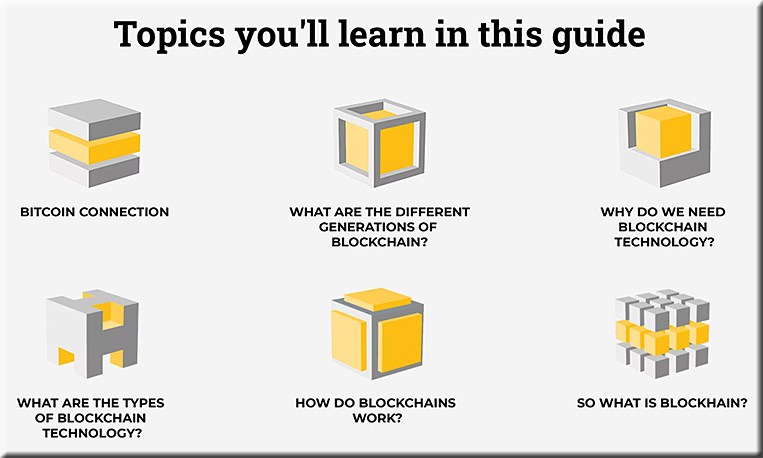
What is blockchain technology? The ultimate guide for beginners. — from cryptocoinsociety.com by Jesús Cedeño

Excerpt:

The purpose of this article is to address three central questions that should be discussed to fully understand and appreciate this revolutionary and disruptive technology called blockchain. This will include historical details about nascent technology and its evolutionary progress through the first decade of existence. We will also explore the different types of this technology and explain why the blockchain name is a misnomer and introduce a more proper name for the technology.

Why do we Need Blockchain Technology?
To answer this question we need to state what is the value proposition of Blockchain Technology. Blockchain’s value hinges on decentralization. Without decentralization blockchain technology is no different from regular databases. Decentralization removes the need to have an intermediary or a single authority that acts as gatekeepers of truth or having to trust an entity to ensure the trustworthiness of any transaction. Through blockchain, people will be able to transact with each other directly without having to worry that transactions will push through and will not be reversible.


Acts of meaning: How AI-based interviewing will transform career preparation in higher education — from er.educause.edu by Alan Jones, Suzan Harkness and Nathan Mondragon

Excerpt:

Machines parrot and correlate information. They do not comprehend or synthesize information the way humans do. Factors such as accents in pronunciation, word ambiguity (especially if a word has multiple meanings), deeply coded biases, limited association data sets, narrow and limited network layers used in job screening, and static translations will continue to provide valid ground for caution in placing too much weight or attributing too much confidence in AI in its present form. Nonetheless, AI has crept into job candidate screening, the medical field, business analytics, higher education, and social media. What is currently essential is establishing an understanding of how best to harness and shape the use of AI to ensure it is equitable, valid, and reliable and to understand the shifting paradigm that professional career counselors play on campus as AI becomes more ubiquitous.

There appear to be three points worth considering: the AI interview in general, the predominance of word choice, and expressiveness as read by facial coding.

From DSC:
Until there is a lot more diversity within the fields of computer science and data science, I’m not as hopeful that biases can be rooted out. My niece, who worked for Microsoft for many years, finally left the company. She was tired of fighting the culture there. The large tech companies will need to do a lot better if AI is going to make FAIR and JUST inroads.

Plus, consider how many biases there are!


Just-in-time online tutoring: Supporting learning anywhere, anytime — from er.educause.edu by Stefan Hrastinski

Excerpt:

What if learning could be supported anywhere, anytime, based on the needs of learners? This is a question that has been explored in different ways in research and teaching. Although an abundance of digital education resources are available online, learners have questions and need guidance when they are studying. Just-in-time online tutoring attempts to meet this need. It also has great potential as a complement to scheduled education.

Just-in-time learning has been defined as “anywhere, anytime learning that is just enough, just for me and just in time.”

 
© 2025 | Daniel Christian